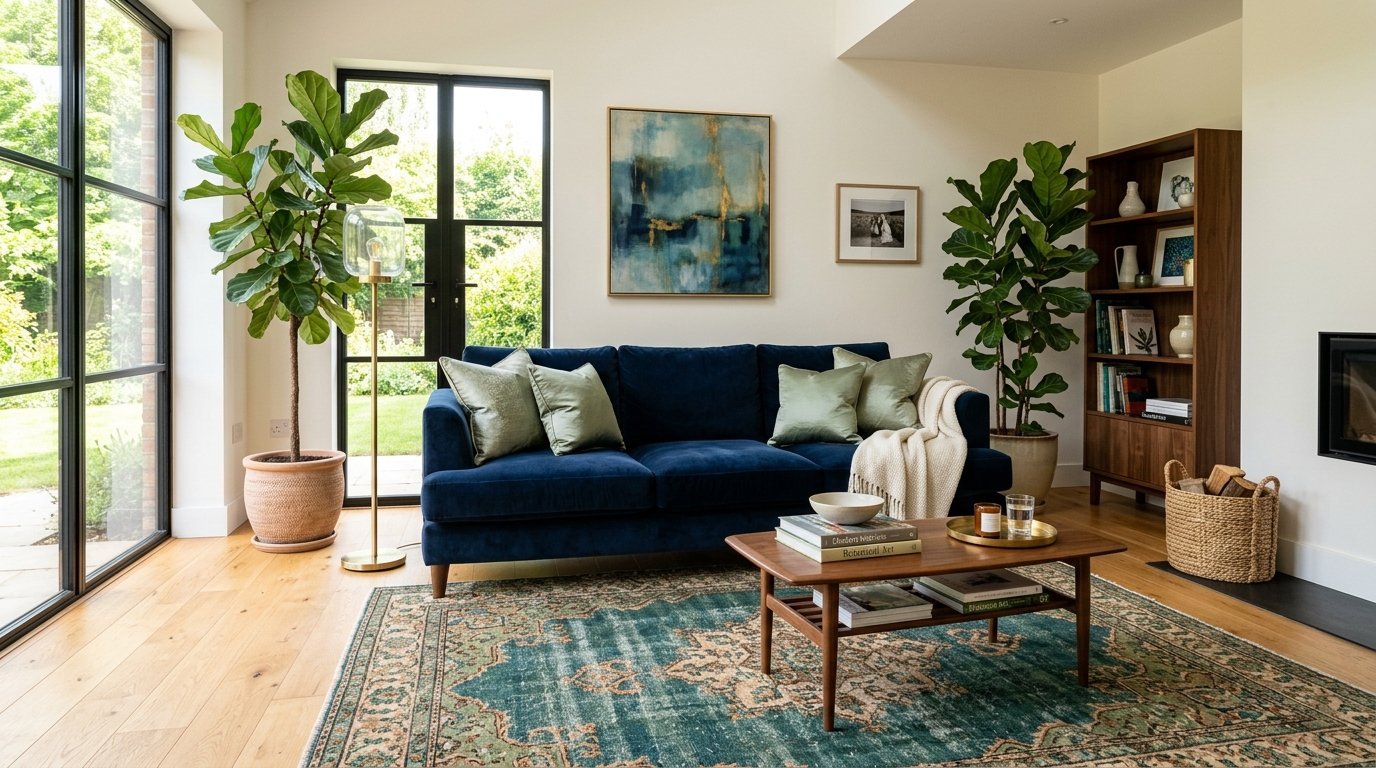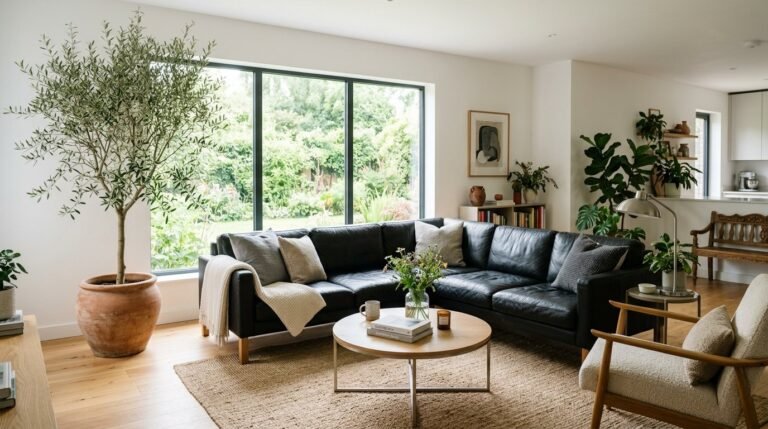
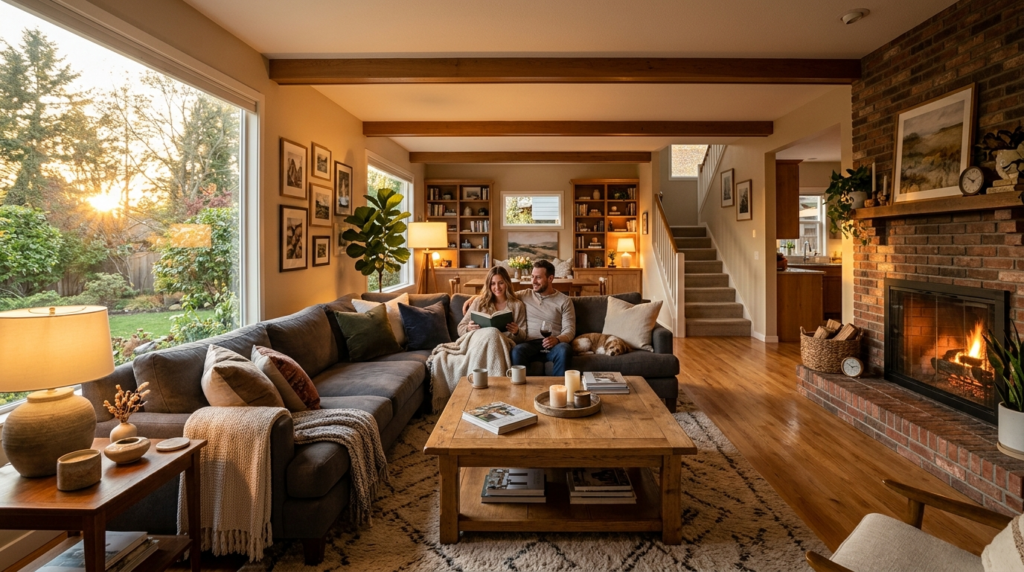
Big living rooms often feel like empty basketball courts. I see this mistake constantly. People buy a massive sectional and shove it against one wall. The middle of the room stays a cold, dead zone. Last year, I worked with a family in Austin who had a thirty-foot living space. They felt like they were shouting across a canyon. We moved their U-shaped sofa six feet away from the windows. Suddenly, the room felt intimate. Your floor plan needs a purpose. It needs flow. A large space is a gift, but only if you define the zones. You want your guests to feel cozy, not stranded.
Executive Summary
This guide provides twenty-five specific layouts for oversized spaces. You will find ways to use floating furniture, double seating zones, and corner focal points. I include exact measurements and placement tips for U-shaped, L-shaped, and modular sectionals. We cover open-concept challenges and fireplace alignment. You will see how to stop furniture from “hugging the walls.” These strategies work for modern, farmhouse, and traditional styles. I also compare the best modular brands like Lovesac and West Elm based on real-world durability. You will gain a clear plan to make your big room feel like a home.
1. The Floating Central Island
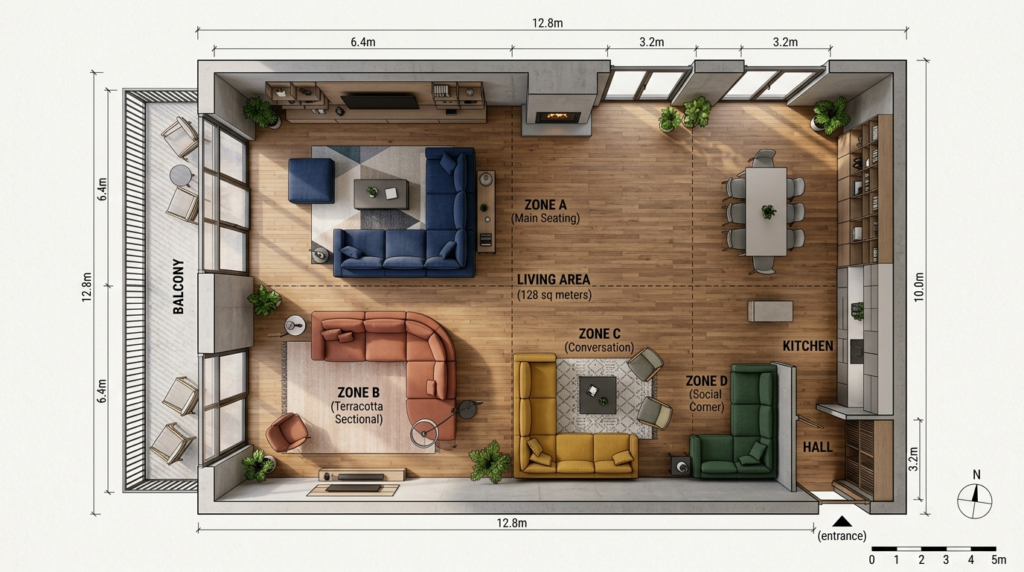
I love this setup for massive, open floor plans. You place your sectional right in the center of the room. It stays away from all walls. This creates a clear walking path around the entire seating area. It makes the room feel intentional and organized. I noticed that leaving at least three feet of space behind the sofa keeps the flow natural. It works best with a large area rug that anchors the whole piece. This layout forces the sectional to be the star of the show.
2. The Back-to-Back Double Zone
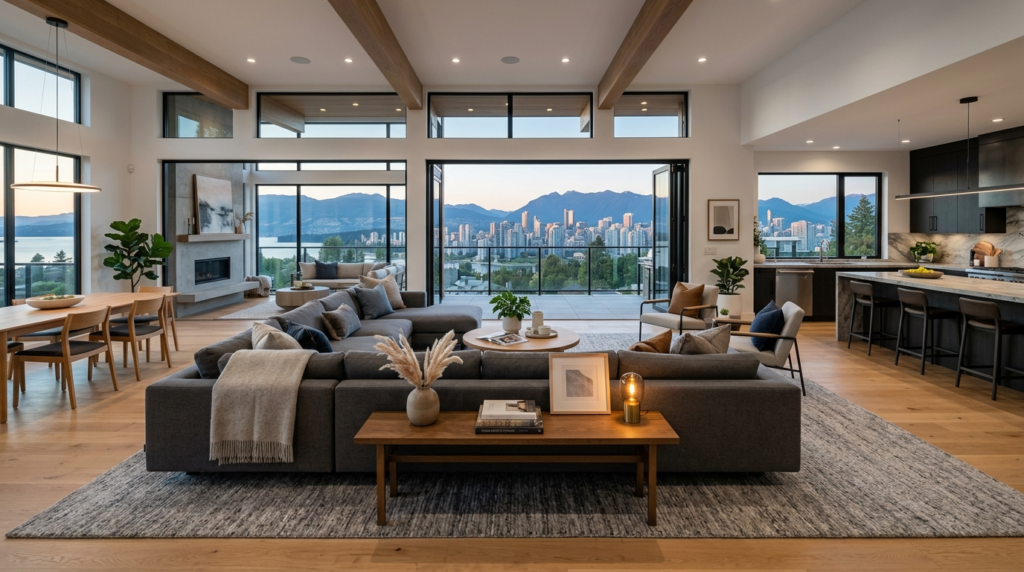
If your room is long and narrow, try two seating areas. Place a large sectional facing the TV or fireplace. Then, place a pair of chairs or a smaller sofa directly behind the sectional back. I saw this work perfectly in a Seattle loft. It created a movie-watching zone and a quiet reading nook in the same room. You get two rooms for the price of one. Use a thin console table between them to hide the back of the sectional. It adds a place for lamps or drinks.
3. The Symmetrical Mirror Image
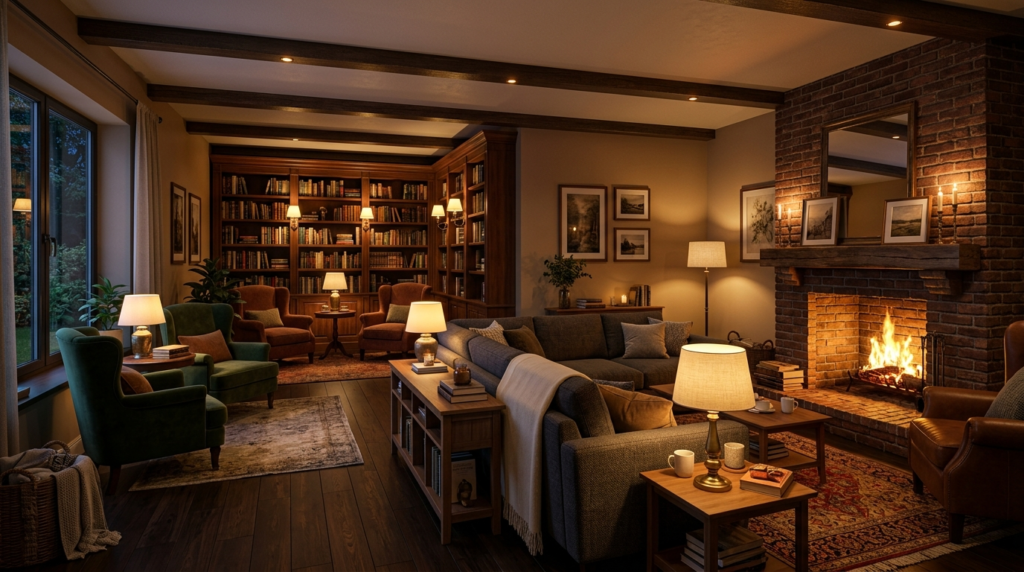
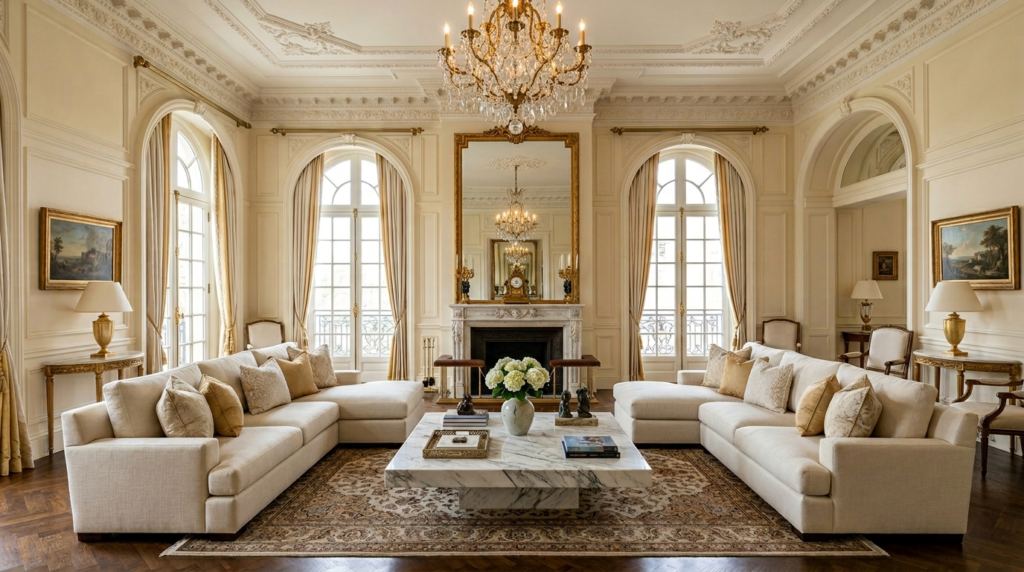
For a formal look, use two identical L-shaped sectionals. Face them toward each other with a large coffee table in between. This layout is a powerhouse for big families. It creates a square conversation pit that feels balanced. In my experience, this is the best way to handle a room with a central fireplace. It keeps the view clear and provides tons of seating. Make sure your rug is big enough to fit all feet of both sectionals.
4. The Deep U-Shape Pit
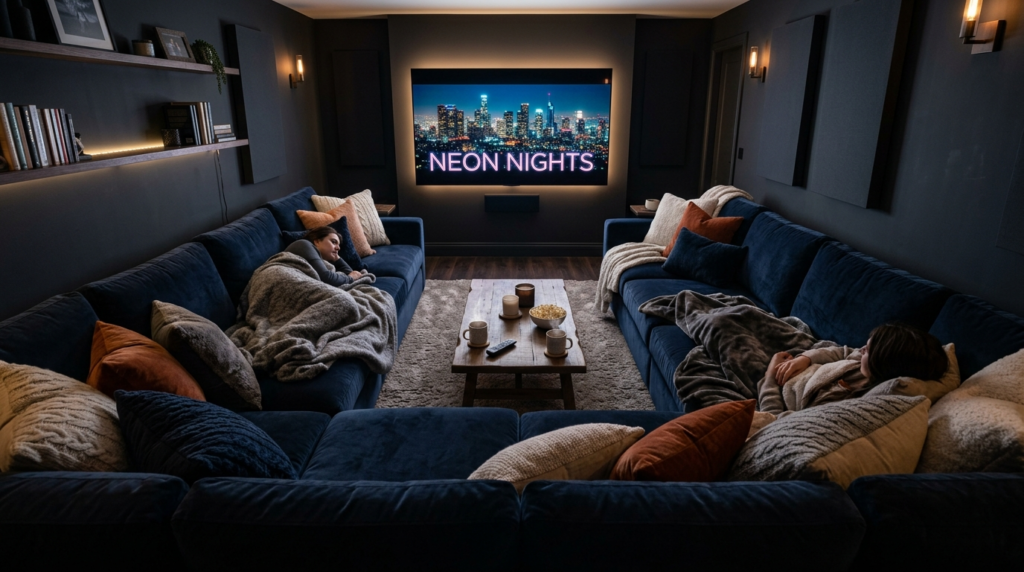
A U-shaped sectional is a classic for a reason. It encloses the space on three sides. In a big room, this creates a “room within a room” feeling. It stops the space from feeling too airy. I suggest using this if you have a dedicated media wall. It gathers everyone toward one point. Keep the open side of the “U” facing the entrance of the room. It feels more welcoming that way. I’ve seen clients add a large ottoman in the center for a true “pit” experience.
5. The Corner Window Retreat
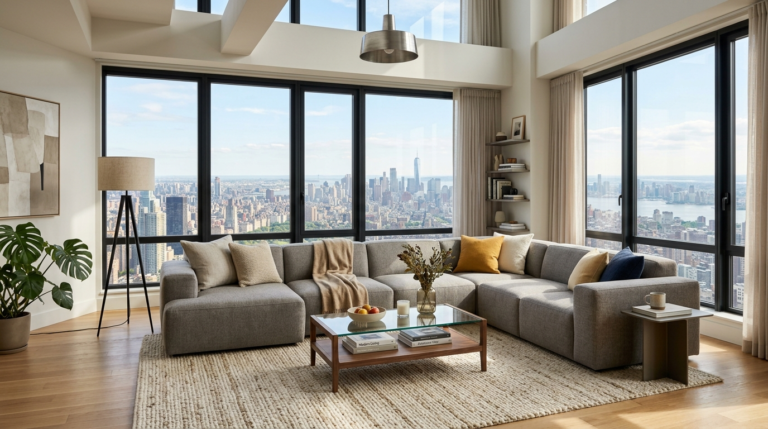
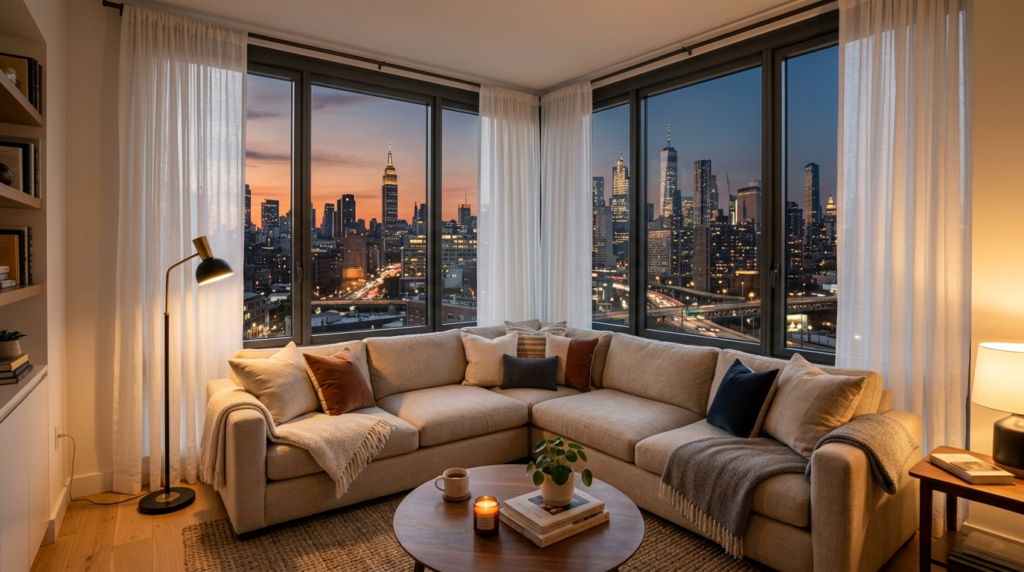
Do not block your best views. Place your sectional in a corner, but pull it six inches away from the glass. This protects your curtains and lets air circulate. Use a low-profile sectional so you don’t cut off the horizon. I tried this in a Florida home with floor-to-ceiling windows. The sectional felt like it was part of the outdoor patio. It makes the room feel even bigger while providing a cozy spot to watch the sunset.
6. The Offset Angled Layout
Standard straight lines can feel boring in a giant room. Try turning your sectional at a forty-five-degree angle. This breaks up the “boxy” feeling of a square room. It directs the eye toward a specific feature, like a grand staircase or a piece of art. I noticed that this layout works best with modular pieces. You can adjust the “tail” of the sectional to fit the walkway. It feels high-end and custom.
7. The Open Concept Divider
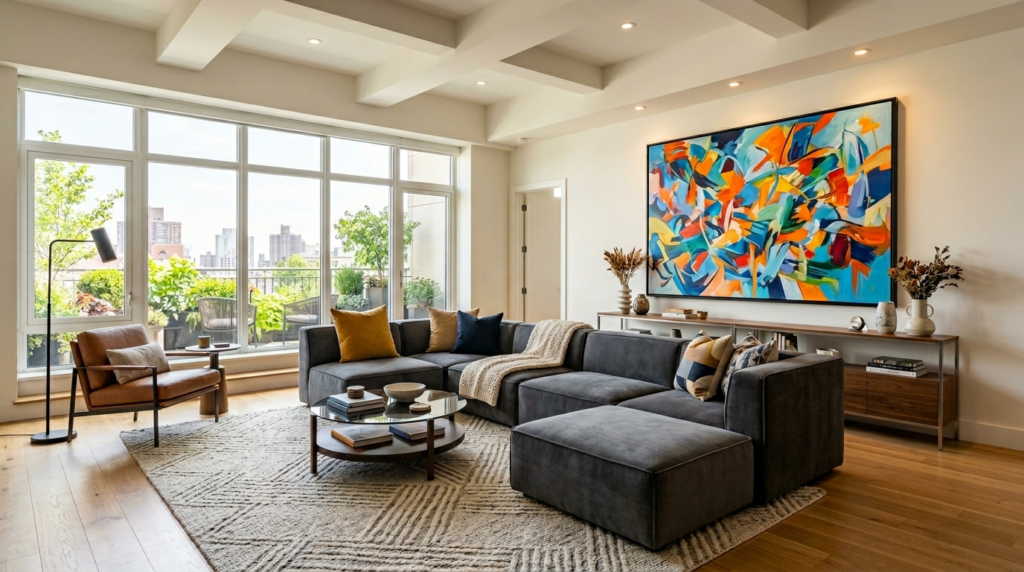
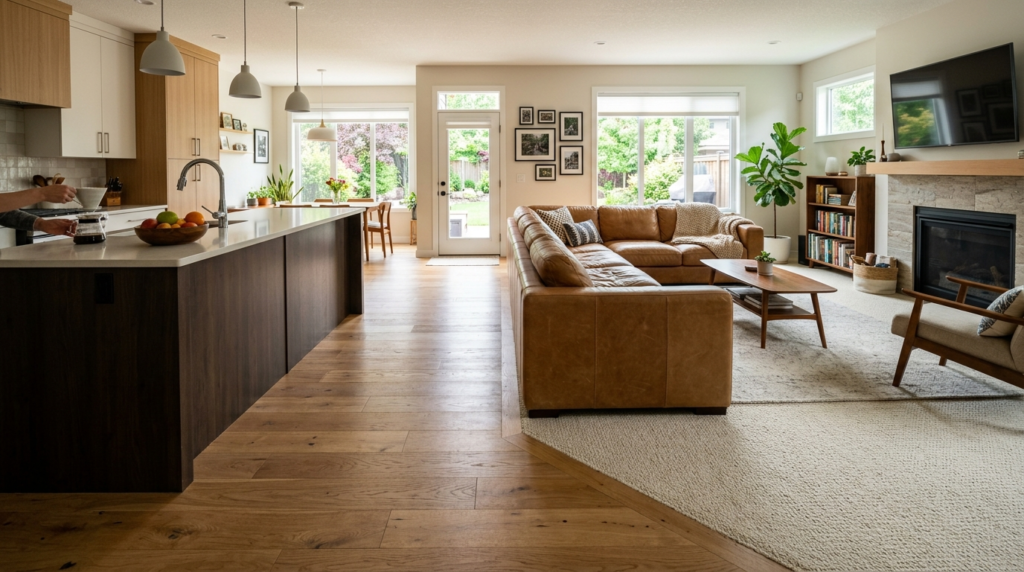
Many new homes have the kitchen and living room in one giant space. Use the back of your sectional as a wall. Position the long side of the couch to face away from the kitchen. This creates a mental boundary between cooking and relaxing. I see people try to use actual room dividers, but a sofa is much more functional. It keeps the light flowing but defines where the “work” ends and the “rest” begins.
8. The Fireplace and TV Split
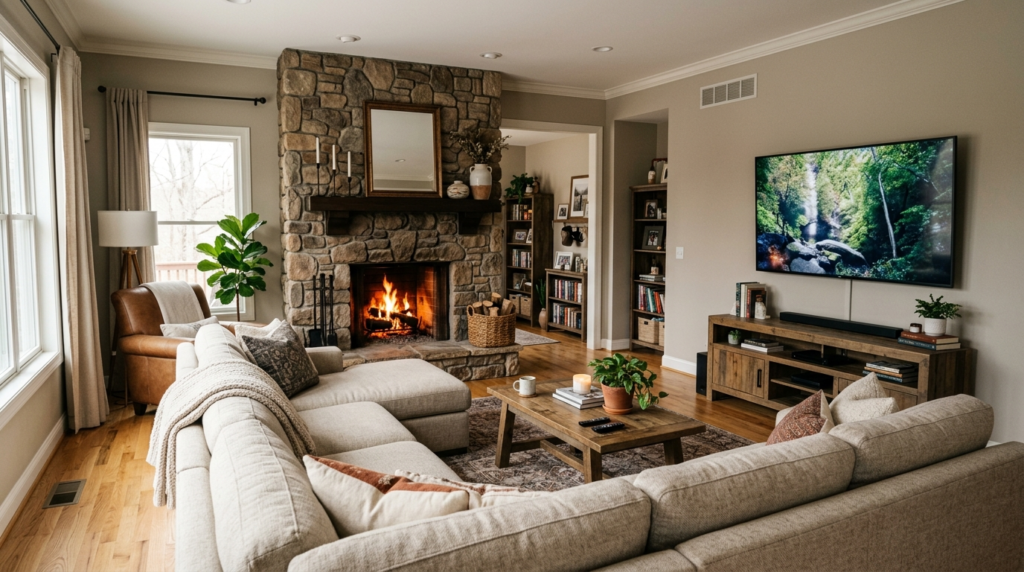
This is the hardest layout to master. Often, the fireplace is on one wall and the TV is on another. Use a large L-shaped sectional to bridge the gap. Place one side of the “L” facing the TV. Place the other side facing the fireplace. This allows people to choose their view. In my experience, a modular sectional is best here. You can swap the chaise to the side that needs more seating. It solves the “competing focal points” problem.
9. The Grand Entryway Statement
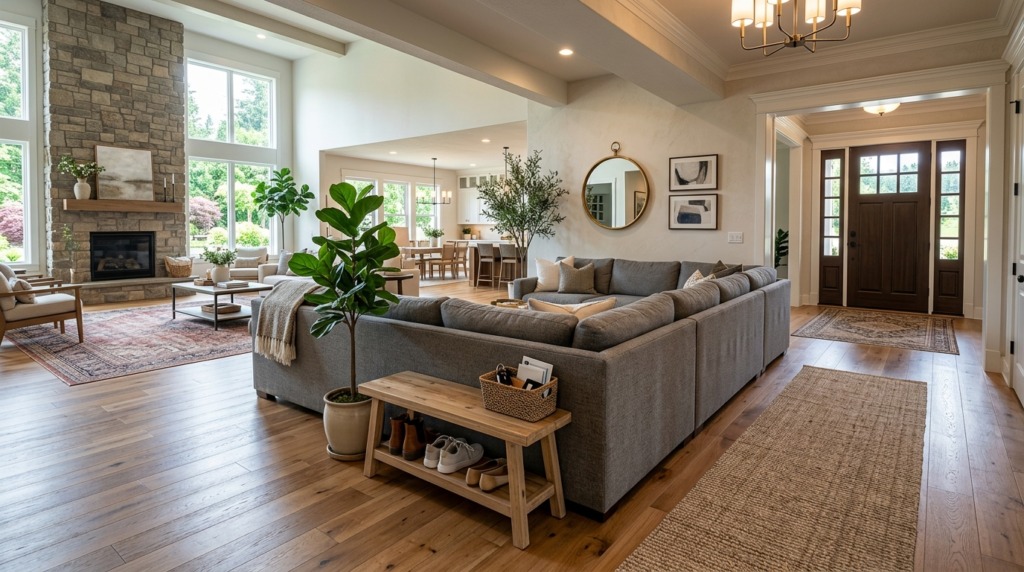
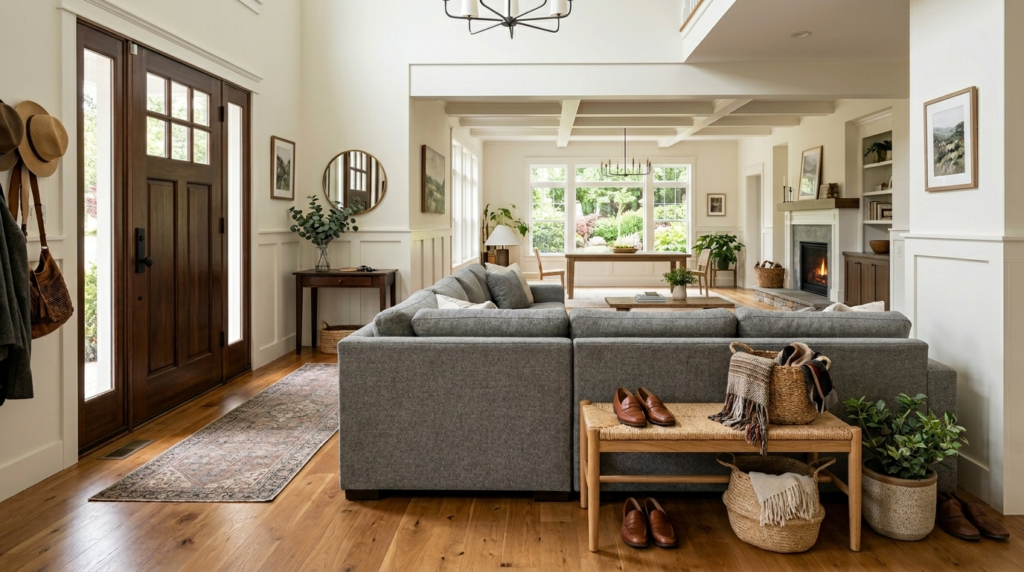
If your living room opens directly from the front door, use the sectional to create an entry hall. Place the back of the long section toward the door. This creates a corridor for people to walk through. It protects the privacy of those sitting on the couch. I saw this in a busy household in Chicago. It stopped the living room from feeling like a hallway. Add a bench or a row of baskets behind the sofa for shoes and bags.
10. The Triple Piece Modular Circle
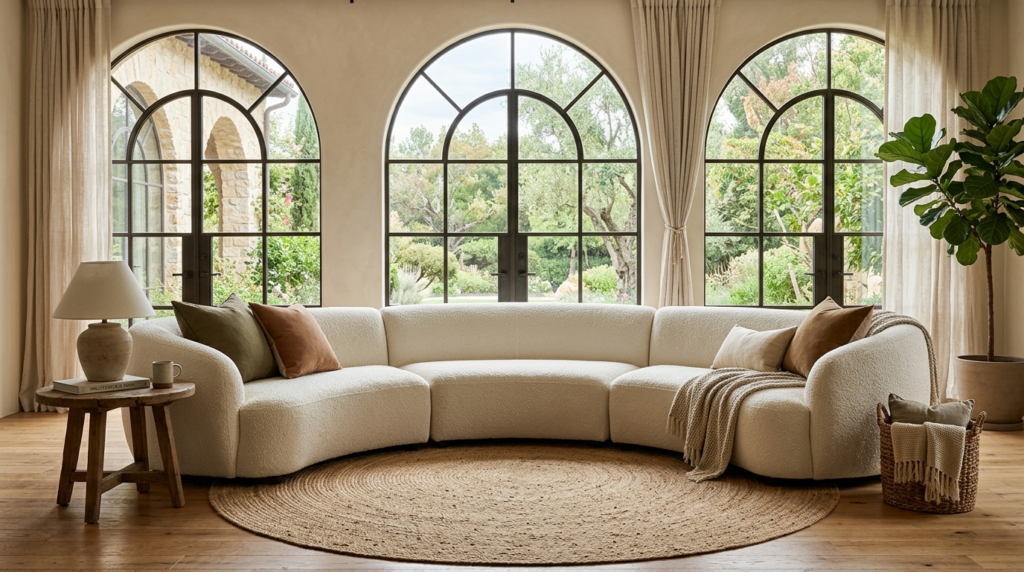
Some modern sectionals come in curved or multi-piece sets. In a massive room, spread these out slightly. Create a semi-circle around a circular rug. This feels less heavy than one giant block of furniture. It is great for hosting parties because people can move between the segments. I’ve used this in round rooms or homes with curved architectural details. It mirrors the shape of the house beautifully.
11. The Wrap Around Pillar Layout
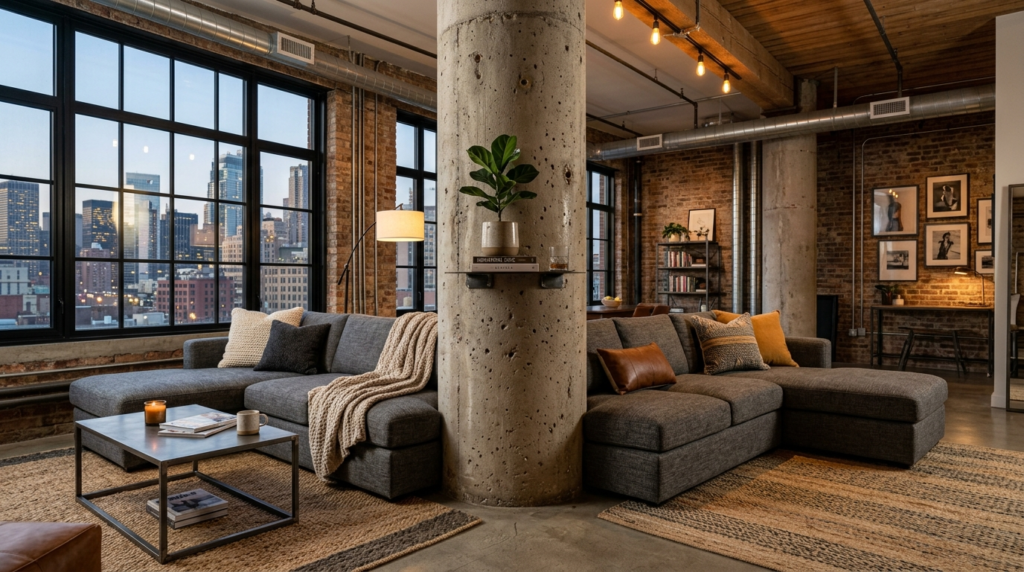
If your big room has structural columns, don’t fight them. Place your sectional so it “hugs” the pillar. This makes the column look like an intentional part of the design. I once saw a designer build a custom shelf around a pillar that met the height of the sectional back. It became a built-in side table. It turns a weird room quirk into a focal point.
12. The Oversized Ottoman Extension
In a big room, a standard coffee table looks tiny. Use a massive, matching upholstered ottoman instead. Push it right up against the inner corner of an L-shaped sectional. This turns the couch into a giant daybed. It is perfect for families who love movie marathons. I noticed that choosing a leather ottoman with a fabric sofa adds a nice texture contrast. It makes the furniture feel like a single, massive destination.
13. The Library Wall Setup
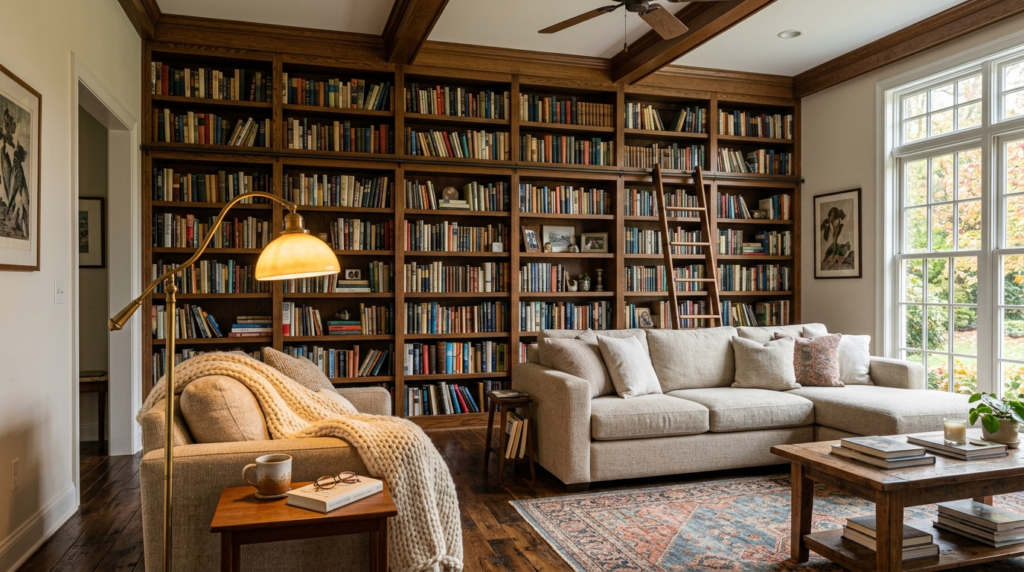
If you have a wall of bookshelves, place the sectional about four feet away from them. This creates a walking path to access the books. It makes the room feel like a sophisticated library lounge. I suggest putting a small floor lamp at the end of the sectional for reading. This layout works best in rooms with high ceilings. It fills the vertical and horizontal space effectively.
If you are struggling with the transition between spaces, check out these 22 dining room living room combo layouts that work for inspiration.
14. The Double Chaise Symmetry
Two chaises, one at each end of the sectional, create a balanced look. This is the “U-shape light” version. It gives two people a place to kick up their feet without the bulk of a full middle section. In a big room, this looks very clean and modern. I saw this work well in a minimalist home. It provides plenty of seating but keeps the center of the room open.
For those who prefer a warmer aesthetic, consider these 23 Rustic TV Wall Designs for a Cozy Living Room.
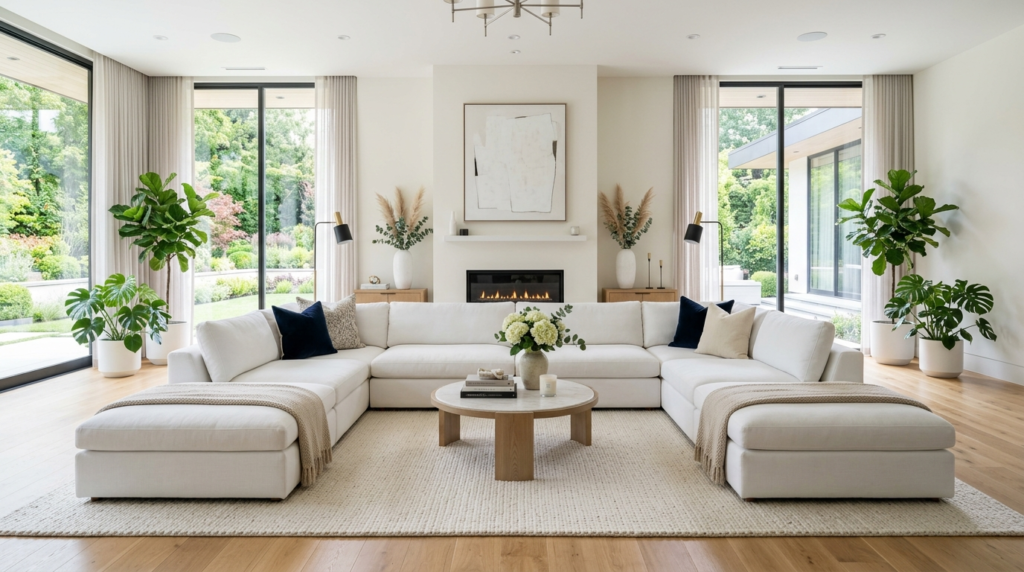
15. The Walk-Behind Console Path
In a large space, you can afford to lose two feet of floor. Place a long, tall console table directly behind the sectional. Use stools under the table. This creates a secondary seating area for eating or working. I love this for big rooms that also serve as a “man cave” or sports den. People can sit at the “bar” while others lounge on the couch. It uses the space behind the sofa which is usually wasted.
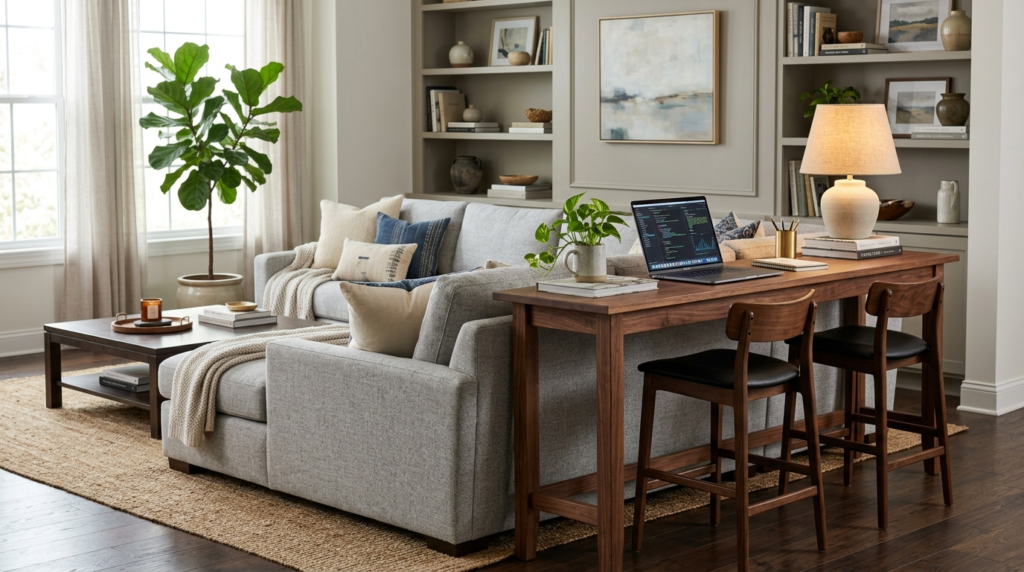
16. The Sunken Floor Mock-Up
If you don’t have a real sunken living room, you can fake it. Use a low-slung, “to-the-floor” sectional. Surround it with tall plants and large floor pillows. This creates a lower visual plane in a big room. It makes the ceiling feel even higher and the seating area feel like a private cove. I tried this with a client who had twenty-foot ceilings. It made the massive room feel much more human-scale.
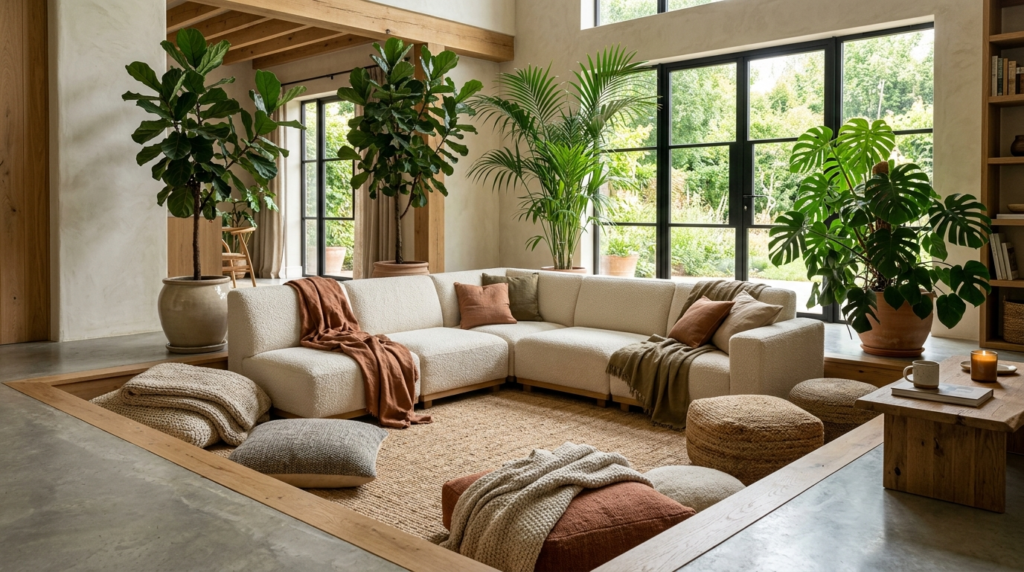
17. The Asymmetrical L-Shape
Not every side of the couch needs to be the same length. Use a very long “main” section and a short “return.” This works well if you have a doorway on one side of the room. It allows the couch to be huge without blocking the exit. I’ve seen this used to direct traffic toward a patio door. It feels natural and less forced than a perfect square.
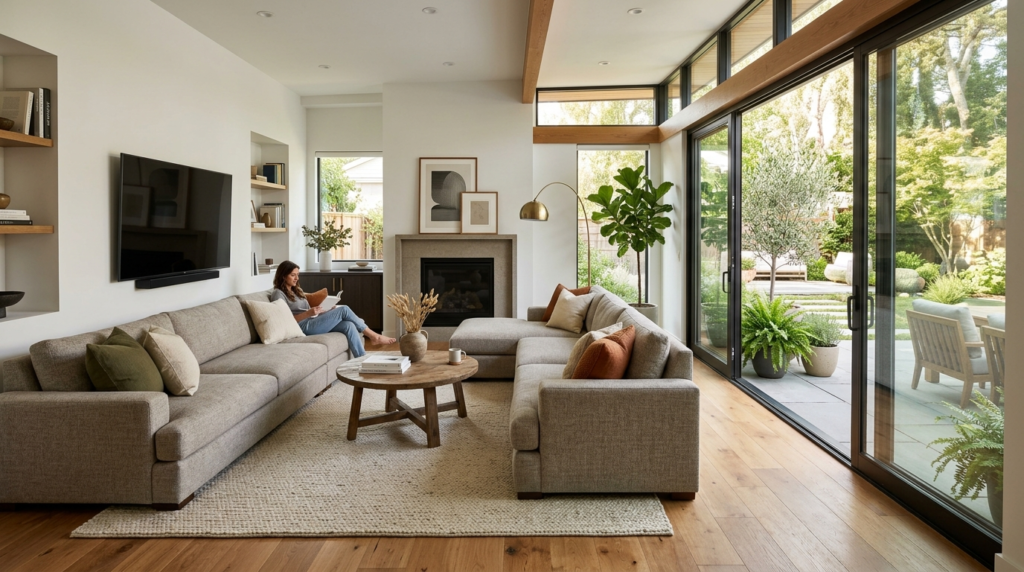
18. The Rug Layering Anchor
Big rooms need big rugs, but those are expensive. Use the sectional to anchor a layered rug look. Place a massive, neutral jute rug down first. Then, place a smaller, colorful rug under the sectional and coffee table. This defines the seating zone with visual borders. I noticed this helps ground the furniture so it doesn’t look like it is “drifting” in a sea of hardwood floor.
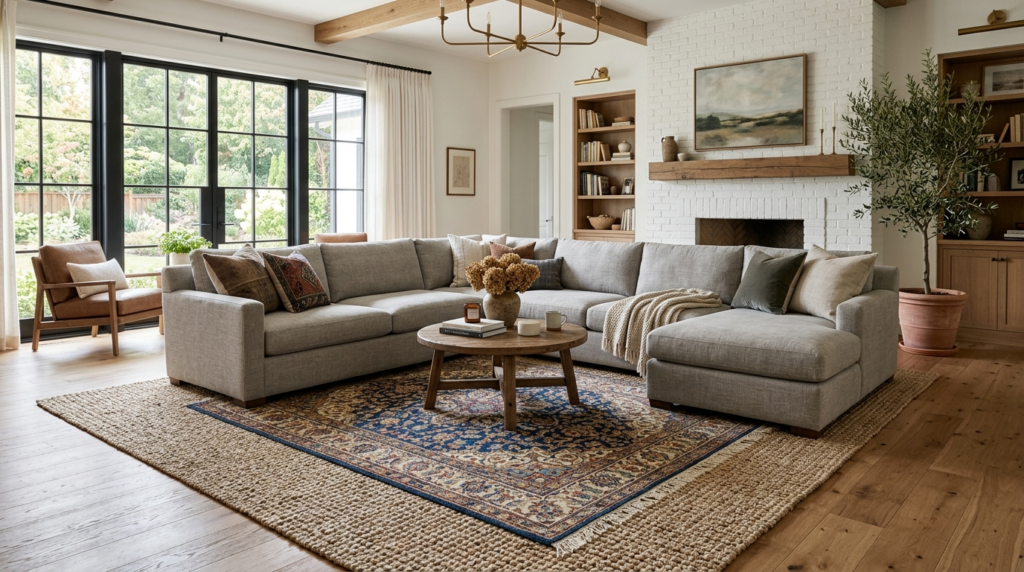
19. The Nested Club Chair Corner
Don’t let the sectional do all the work. At the open end of the sectional, place two large club chairs at an angle. This “closes” the conversation circle. In a big room, this adds much-needed variety in height and shape. I saw this in a mountain lodge. The sectional was for lounging, and the chairs were for morning coffee. It creates different “modes” of sitting.
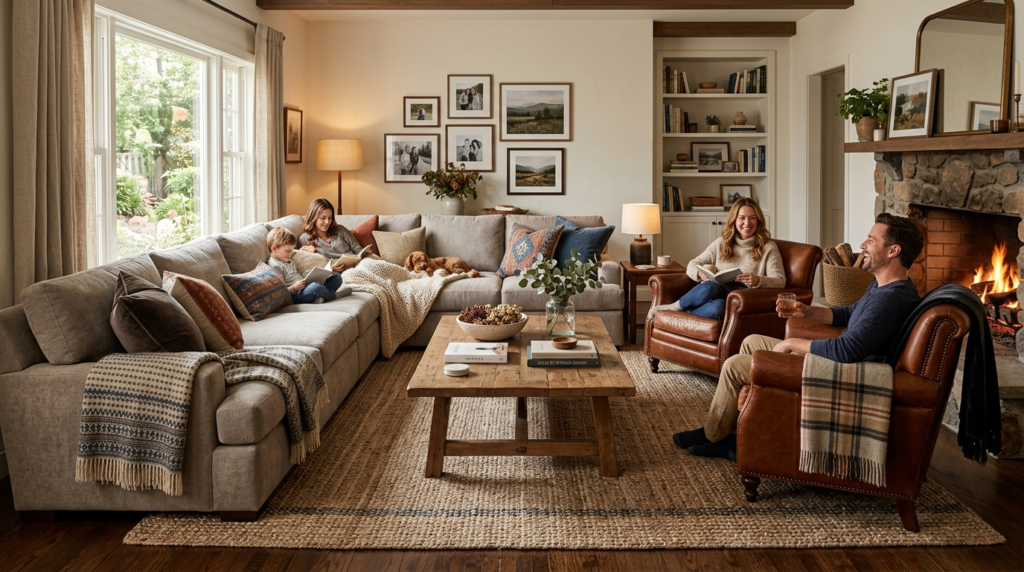
20. The Corner Fireplace Angle
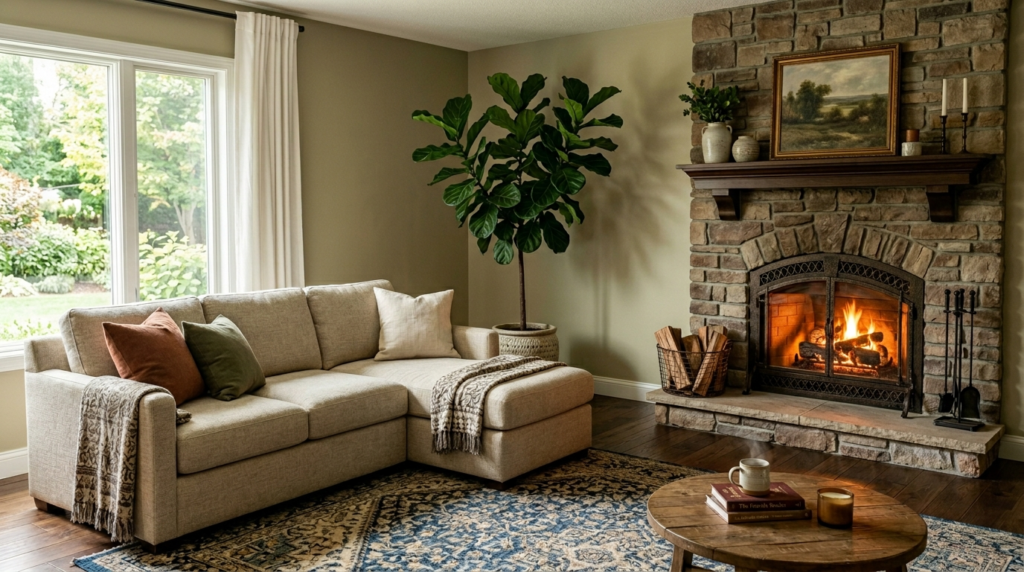
When the fireplace is tucked in a corner, your sectional should follow its lead. Position the sectional diagonally to face the hearth. This can leave a triangular “dead space” behind the couch. I usually fill that gap with a tall fiddle-leaf fig tree or a large floor lamp. It makes the corner feel like the heart of the home. It is a cozy way to handle a tricky room shape.
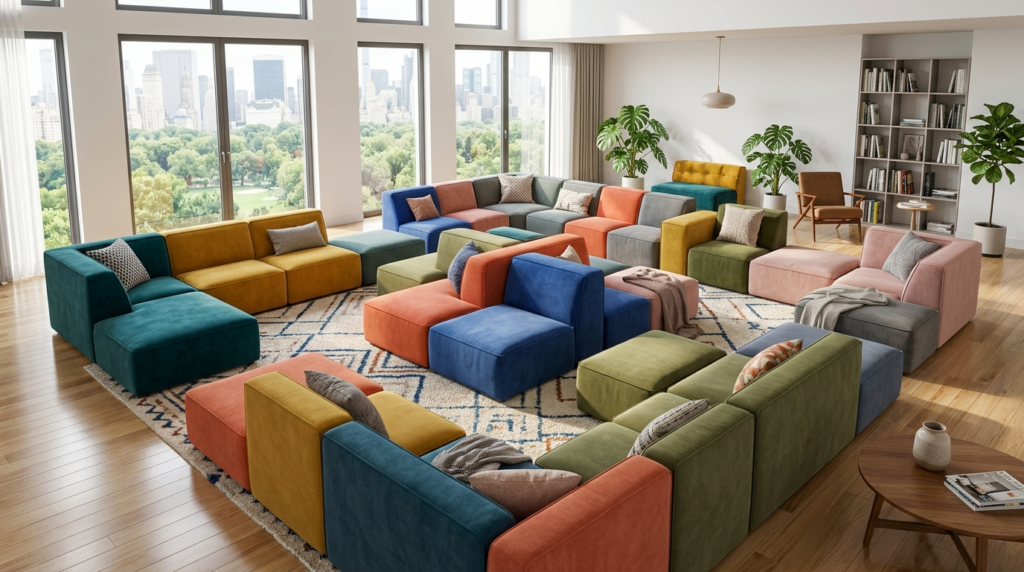
21. The Modular Maze
If you have a modular set like the Mario Bellini style, get creative. You don’t have to make a straight line. Create a “snake” shape or two separate islands. In a giant room, this looks like modern art. I worked with a gallery owner who used this to fill a massive white room. It was flexible, fun, and very functional for large parties. You can move the pieces whenever you get bored.
22. The Sofa and Bench Combo
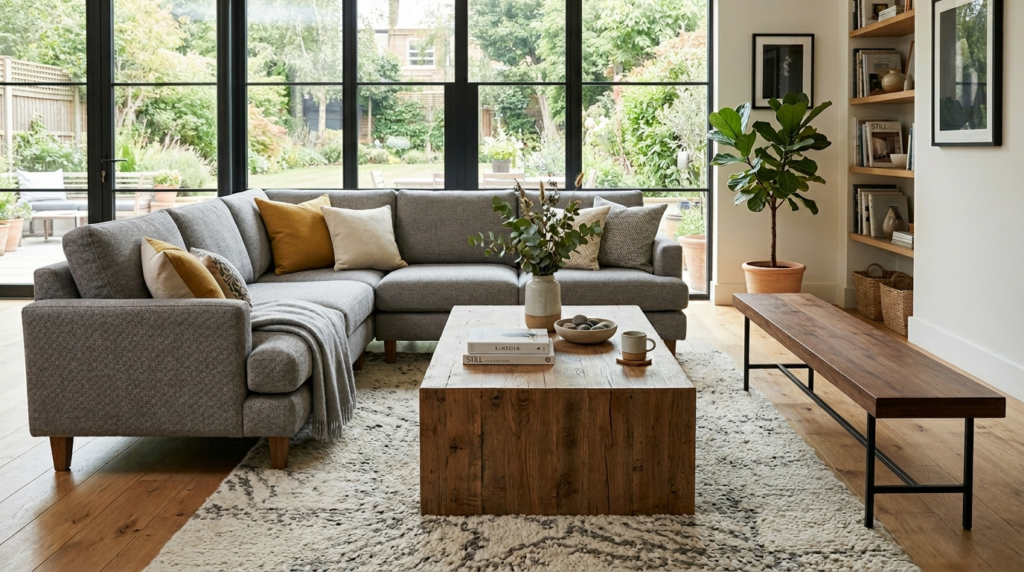
If you don’t want a full U-shape, use an L-shaped sectional and a backless bench on the third side. The bench keeps the sightlines open to the rest of the house. It provides extra seating without the visual weight of a sofa back. I see this a lot in modern farmhouses. It feels airy but still provides a clear boundary for the living area.
23. The Theater Style Tier
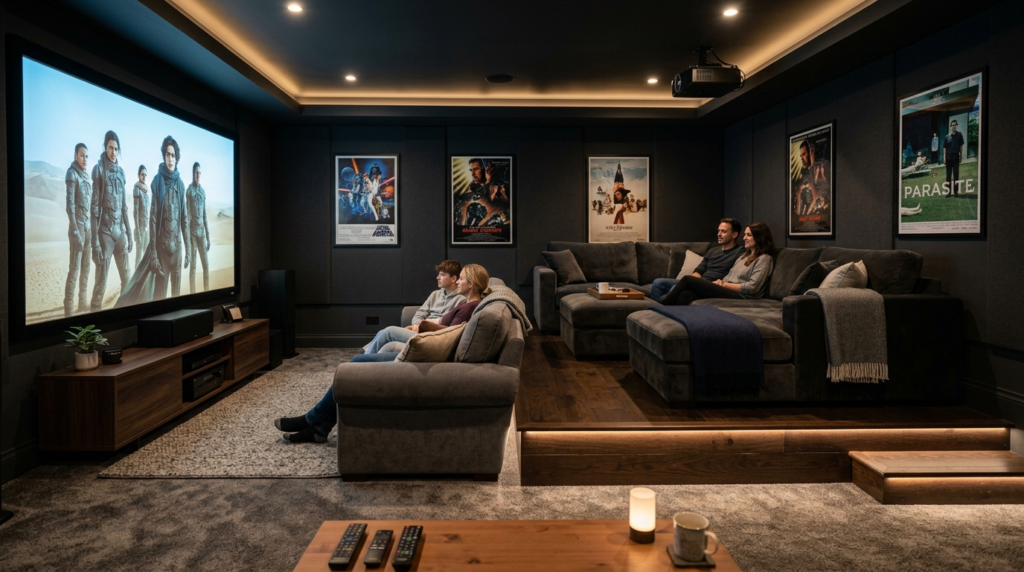
In very deep rooms, you can put a sectional on a small platform behind another sofa. This is for serious movie lovers. Even without a platform, placing a sectional behind a row of chairs creates a “tiered” feeling. I noticed that this works best if the back piece is slightly taller. It ensures everyone has a view of the screen.
24. The Geometric Contrast
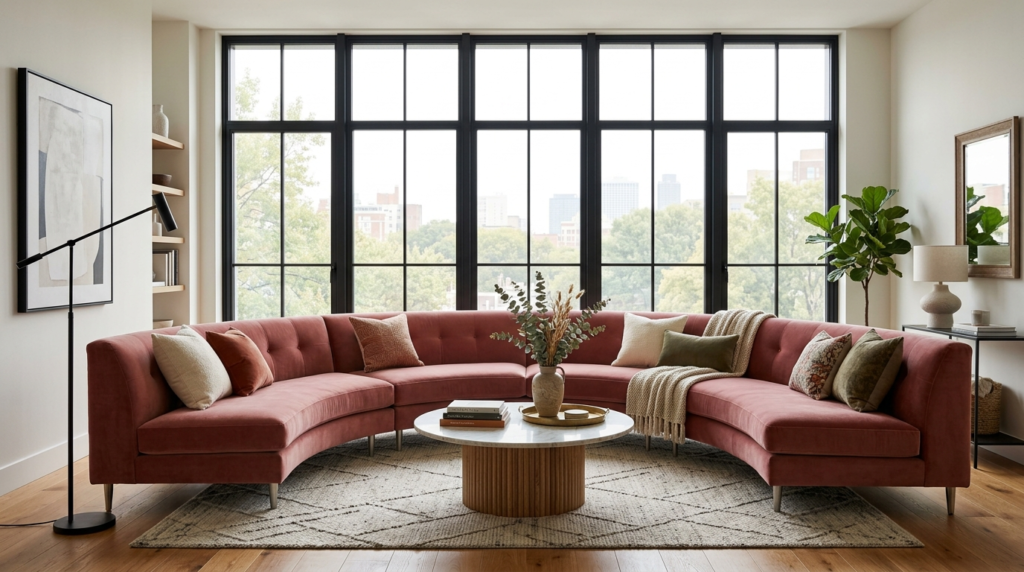
If your room is very rectangular, look for a sectional with soft, rounded edges. Place it slightly off-center. This contrast between the sharp room lines and the soft furniture makes the space feel designed. I saw a curved velvet sectional in a glass-walled condo. It broke up all the hard angles and made the space feel soft and inviting.
25. The Multi-Sectional Cluster
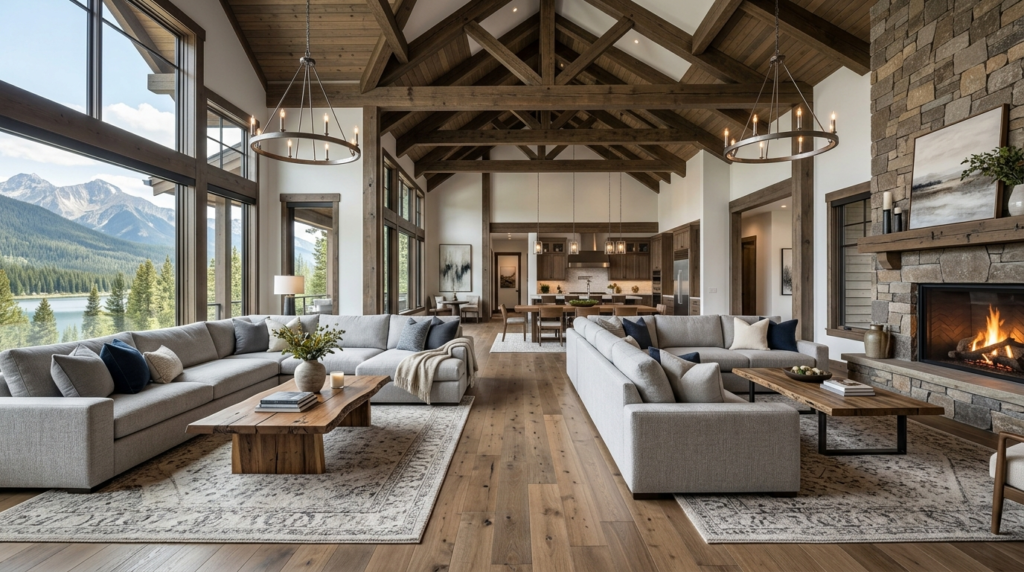
For truly massive rooms, one sectional isn’t enough. Use two smaller L-shaped sectionals in different parts of the room. One faces the TV. The other faces a window or a game table. Use the same fabric for both to keep the room cohesive. I did this for a client with a sixty-foot “great room.” It turned one giant, scary space into two manageable, cozy zones.
Layout Comparison Table
| Layout Type | Best Focal Point | Capacity | Space Required |
| Floating Island | Center Rug/Table | 6-8 People | Large Open Square |
| U-Shape Pit | TV / Media Wall | 8-10 People | Deep Rectangular |
| Back-to-Back | Fireplace + Nook | 10+ People | Long Narrow |
| Symmetrical Mirror | Fireplace | 12+ People | Formal Grand Room |
| Double Chaise | View / Window | 5-7 People | Modern Minimalist |
Real-World Tools for Planning
I always tell my clients to use a floor plan app before moving a single heavy piece. Moving a ten-foot sectional twice is a nightmare.
- MagicPlan: This app uses your phone camera to map the room. It is very accurate for big spaces.
- RoomPlanner (by IKEA): Even if you don’t buy IKEA, the tool is great for basic shapes.
- Blueprints and Painter’s Tape: My favorite low-tech move. Tape the “footprint” of the sectional on your floor. Walk around it for two days. If you keep tripping on the tape, the layout is too big.
Frequently Asked Questions
What is the best sectional shape for a large family?
A U-shaped sectional is usually the winner. It allows everyone to face each other. I suggest getting one with a deep seat. In my experience, the middle seats of an L-shape often go unused because people don’t like being “trapped” in the corner. The U-shape offers more “end” seats which people prefer.
Should I put my sectional against the wall in a big room?
Almost never. This is the biggest mistake I see. In a large room, furniture against the wall makes the center feel like a vacuum. Pull the couch at least two to three feet away. It creates a “walkway” and makes the room feel more professionally designed.
How do I choose the right rug for a giant sectional?
Your rug must be larger than the sectional. All feet of the furniture should sit comfortably on the rug. If the rug is too small, the sectional looks like it is outgrowing its clothes. For a big room, look for 10×14 or 12×15 foot rugs.
Can I mix two different sectionals in one room?
Yes, but keep the colors or textures similar. If you have a grey linen sectional, don’t pair it with a brown leather one unless the styles are identical. I’ve seen it work when both have the same leg style or height. It is a bold move that requires a very large space.
How much space should be between the sectional and the coffee table?
Aim for eighteen inches. This is the “golden rule.” It is close enough to reach your drink but far enough to walk through. In a big room, you might be tempted to spread things out. Don’t. Keep the “conversation core” tight even if the room is huge.
A big living room is a luxury. Do not let it intimidate you. Start with your focal point. Whether it is a fireplace, a TV, or a window, let that guide your first piece. Remember to leave room to breathe. Your home should feel like a sanctuary, not a furniture showroom. Pick a layout that fits your actual life. If you host parties, go for the Symmetrical Mirror. If you have kids and dogs, the U-Shape Pit is your best friend. Trust your gut. If a layout feels right when you walk through the room, it probably is.
If you need personalized help, our team offers professional design services to optimize your floor plan.

Sloane Whitaker is the Editor-in-Chief at Home Wall Trends, leading editorial direction with over a decade of experience in residential interior design and home styling. Her specialty is space planning and layout, the unglamorous fundamentals that make a beautiful room actually function. A graduate of the New York School of Interior Design, Sloane has styled over 200 client homes before turning her focus to digital publishing. Her editorial standard: “If a reader can’t picture themselves doing it on a Saturday afternoon, we haven’t explained it well enough.”