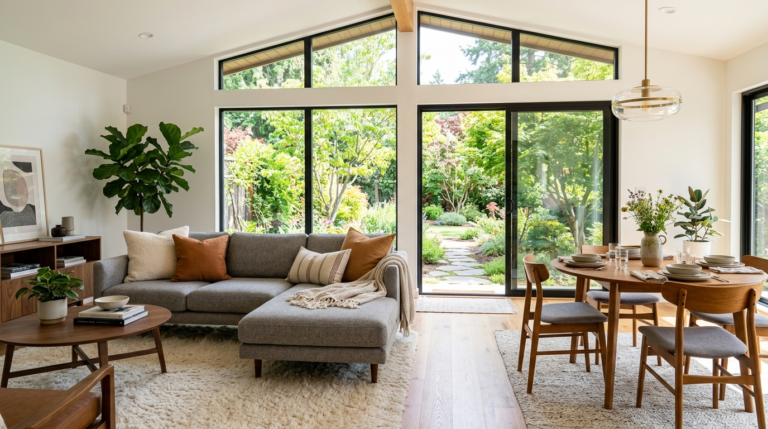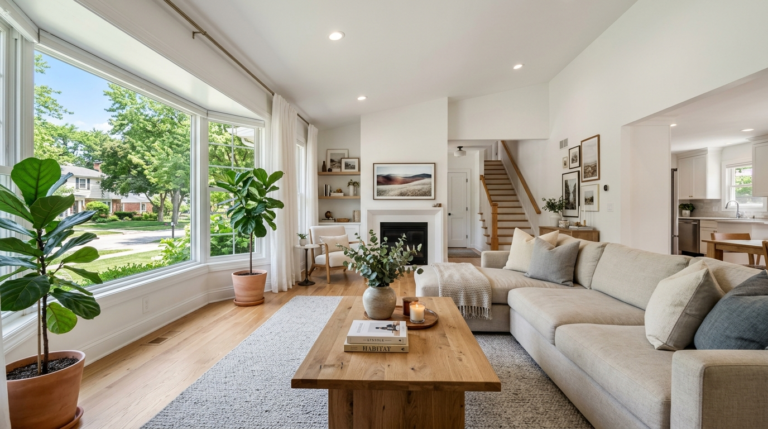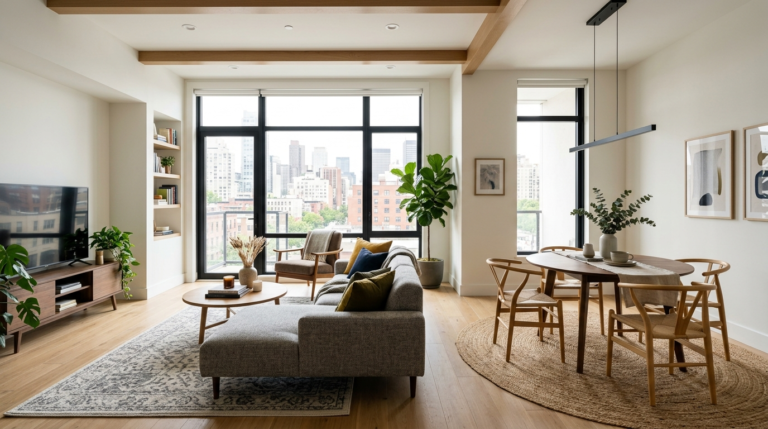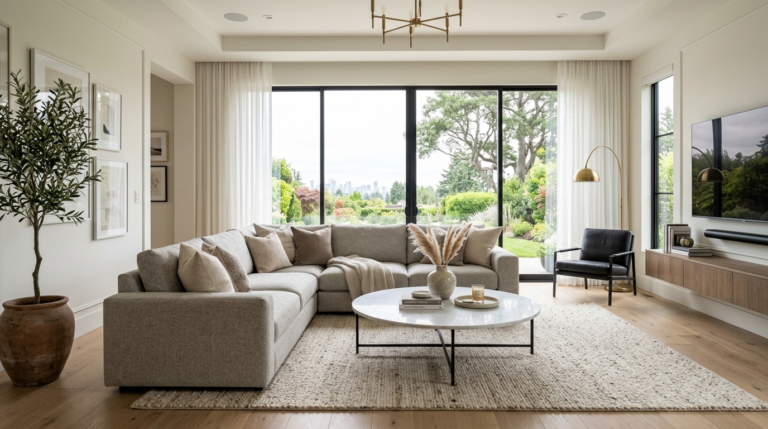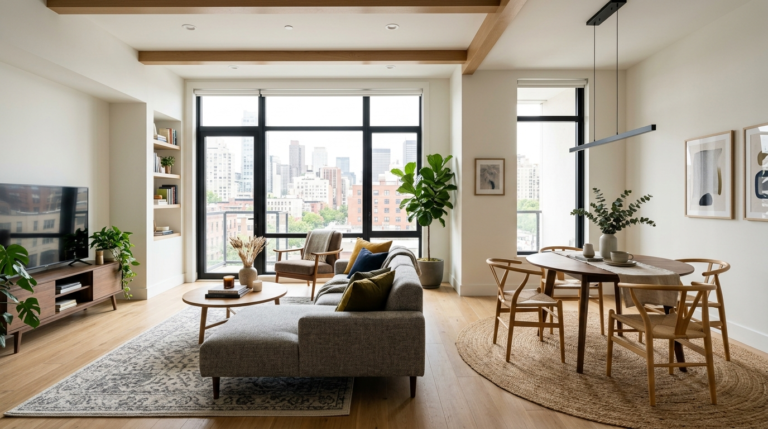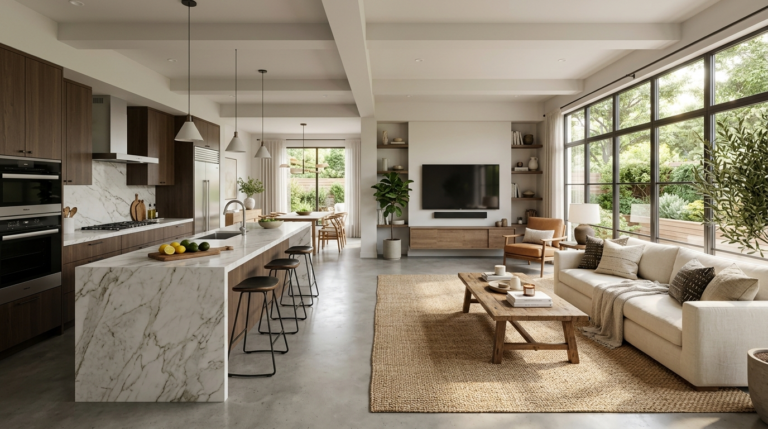
Working from a cramped couch ruins your focus and hurts your back. I know this because I spent three months balancing a laptop on a pillow. My productivity dropped while my neck pain soared. You want a workspace that feels like a natural part of your home. A living room office combo should look intentional rather than messy. Most people struggle to fit a desk into a small layout without it taking over the room. I have seen countless small apartments transformed by just a few smart layout shifts. This guide offers 25 proven ways to blend your work life with your relaxation space. You will find real examples and specific tools to help you succeed.
Executive Summary
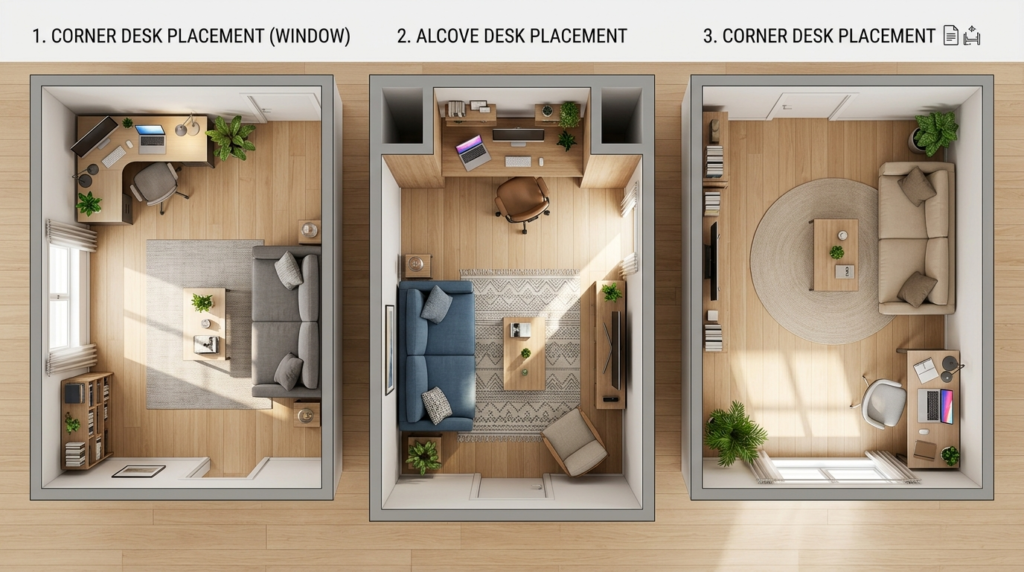
Creating a living room office combo requires a balance of function and style. This article explores 25 unique layouts designed for small floor plans. You will learn how to use vertical space and hidden corners. I include specific brand recommendations like IKEA and West Elm to suit different budgets. My research shows that zoning is the most critical factor for success. We will cover technical aspects like cable management and ergonomic seating. You can expect to find solutions that range from 100 dollars to 2000 dollars. This deep dive provides a roadmap for a professional home office that looks like an interior designer planned it.
1. The Behind the Sofa Console Workspace
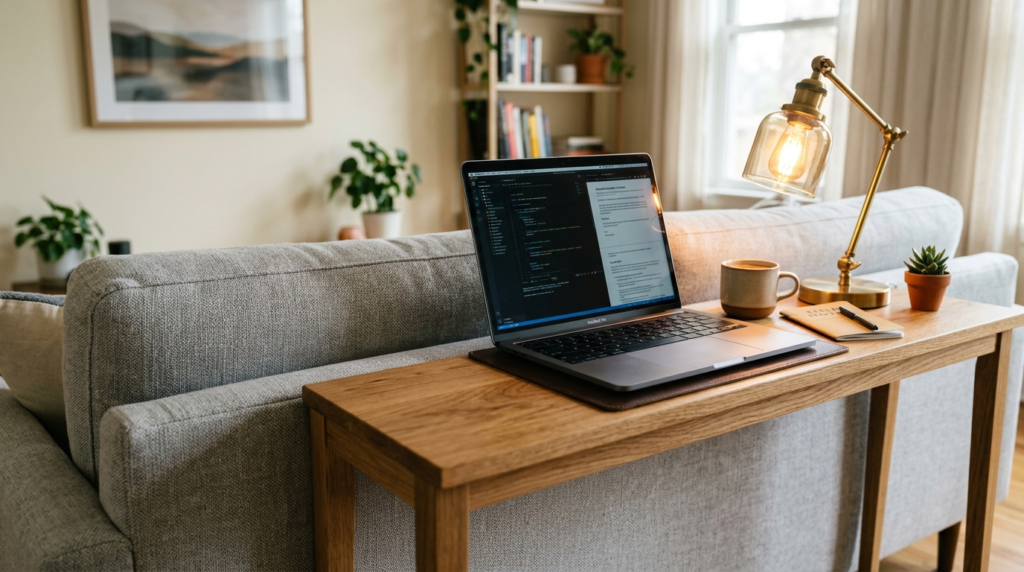
Placing a slim desk directly against the back of your couch is a smart move. I tried this in my first studio apartment. It creates a physical boundary between work and rest. You do not need a massive desk for this setup. A simple IKEA Malm console table often fits the scale of most sofas. This placement keeps the room feeling open because the furniture moves with the flow of the room. I noticed that using a chair without wheels prevents it from rolling into the lounge area. This layout works best if you have at least three feet of space behind the sofa. It turns dead space into a high functioning hub.
2. The Built In Closet Office Station
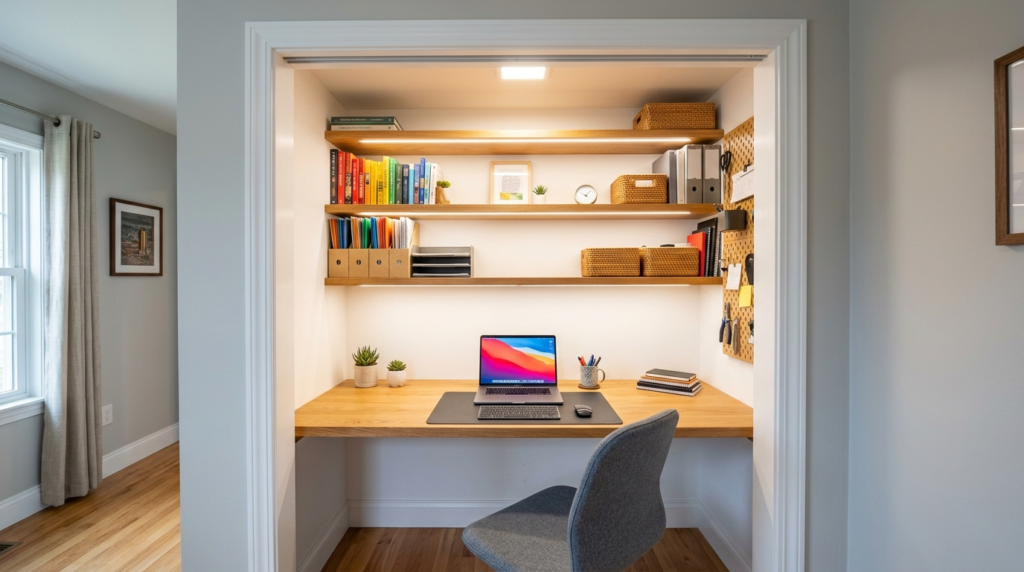
The cloffice is a classic solution for a reason. You can tuck your entire work life away by closing a door. I once helped a client convert a small hallway closet into a full workstation. We removed the lower shelves and installed a deep butcher block counter. You should use a bright paint color inside the closet to prevent it from feeling like a cave. I recommend the Elfa system from The Container Store for easy installation. This setup is perfect if you struggle to stop working at night. Once the doors shut your brain knows the work day is over.
3. The Dedicated Window Nook Hub
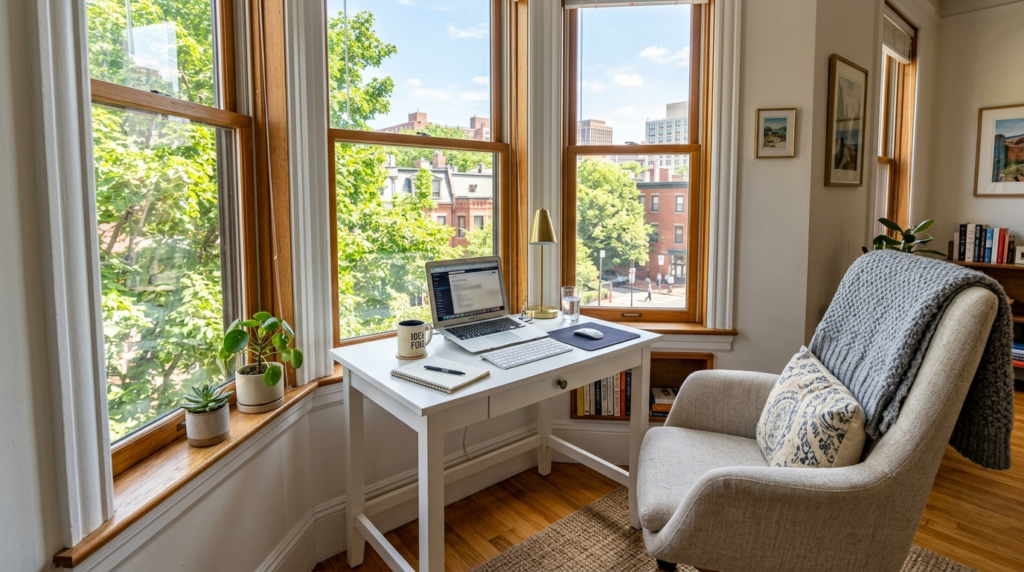
Natural light is a massive mood lifter for remote workers. I always look for unused space near windows first. A small desk placed right in a window nook provides a great view during breaks. It also helps with video call lighting. You should invest in a desk with a slim profile to avoid blocking the glass. I have seen the West Elm Mid Century Mini Desk work beautifully in these tight spots. Just make sure you have good blinds to manage glare during the afternoon. This setup turns a simple corner into a scenic retreat.
4. The Ladder Desk Minimalist Setup
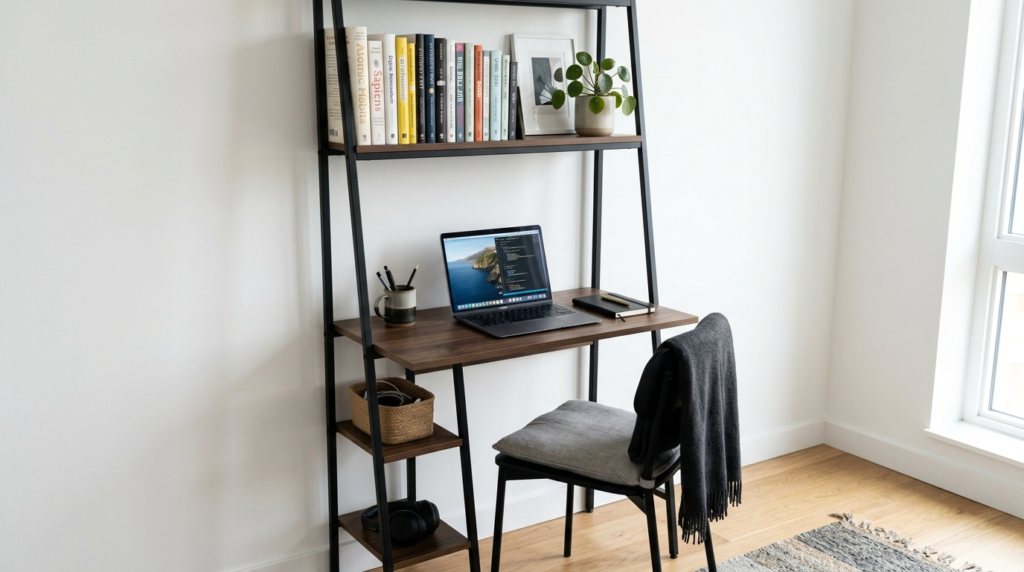
Ladder desks use vertical space without feeling heavy. They lean against the wall and offer shelves above the work surface. I noticed these are great for people who need to display books or plants. The Nathan James Theo ladder desk is a budget friendly option that looks high end. It has a small footprint but offers plenty of storage. In my experience these work best in corners where a traditional desk feels too boxy. You can easily match the wood tone to your existing coffee table for a cohesive look.
5. The Floating Wall Mounted Desk
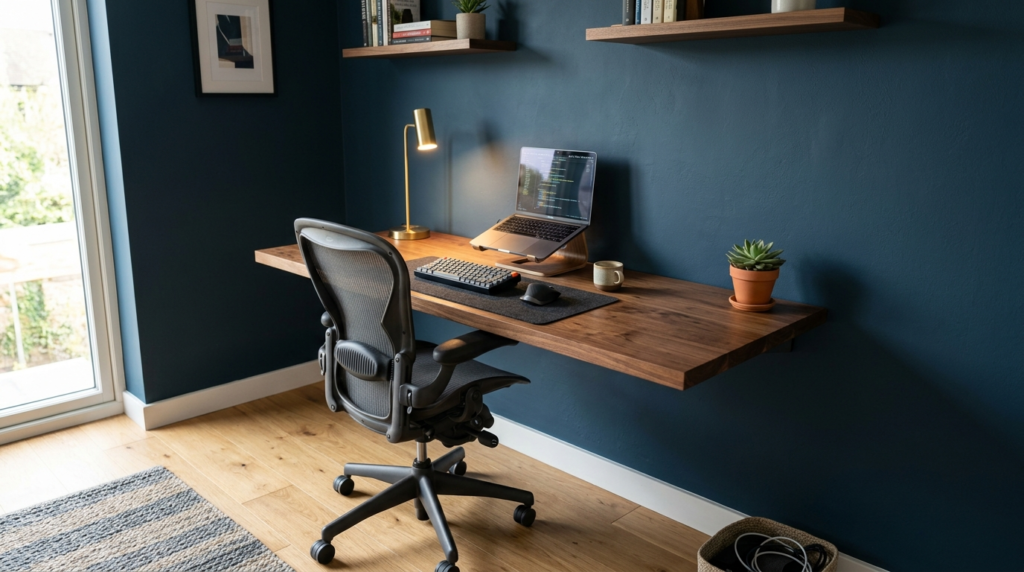
Floating desks are the ultimate space savers for tiny layouts. They have no legs which keeps the floor visible. This trick makes any small living room feel larger. I installed a floating desk in a guest nook last year. It was a simple heavy duty shelf supported by sturdy brackets. You can find ready made versions like the Prepac Wall Mounted Desk. This style is excellent for people who only use a laptop. It keeps the area clean and easy to vacuum. Just ensure you mount it into wall studs for safety.
6. The Corner Gallery Office Layout
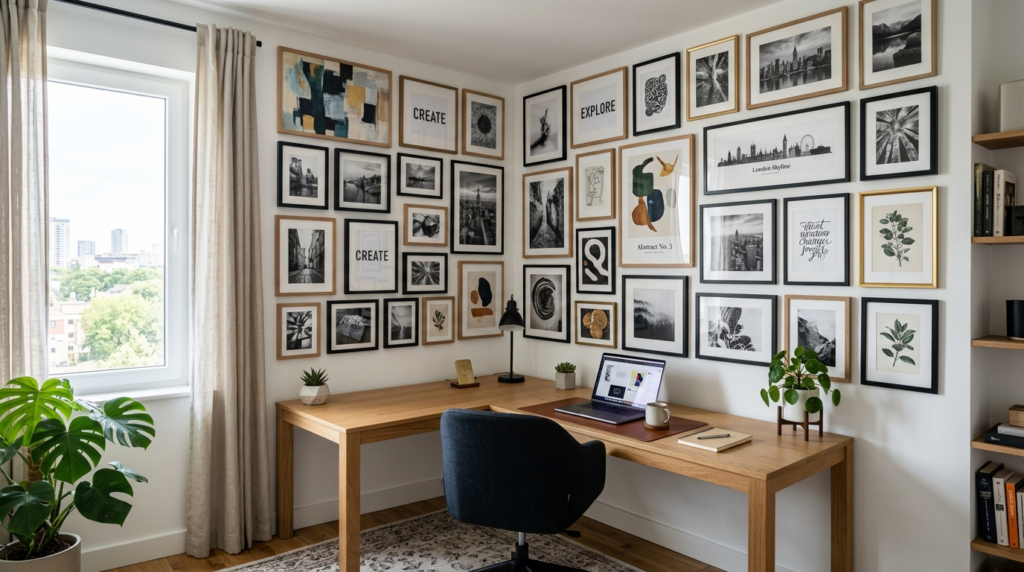
Corners are often wasted in living room designs. You can turn one into a focused work zone with a corner desk. I like to surround the desk with a gallery wall of art. This makes the office feel like a decorative choice rather than an afterthought. The Target Room Essentials Corner Desk fits into small angles perfectly. I have seen this work well when the desk color matches the wall color. This visual trick makes the furniture disappear. It is a great way to stay productive without cluttering the center of the room.
7. The Integrated Bookshelf Workspace
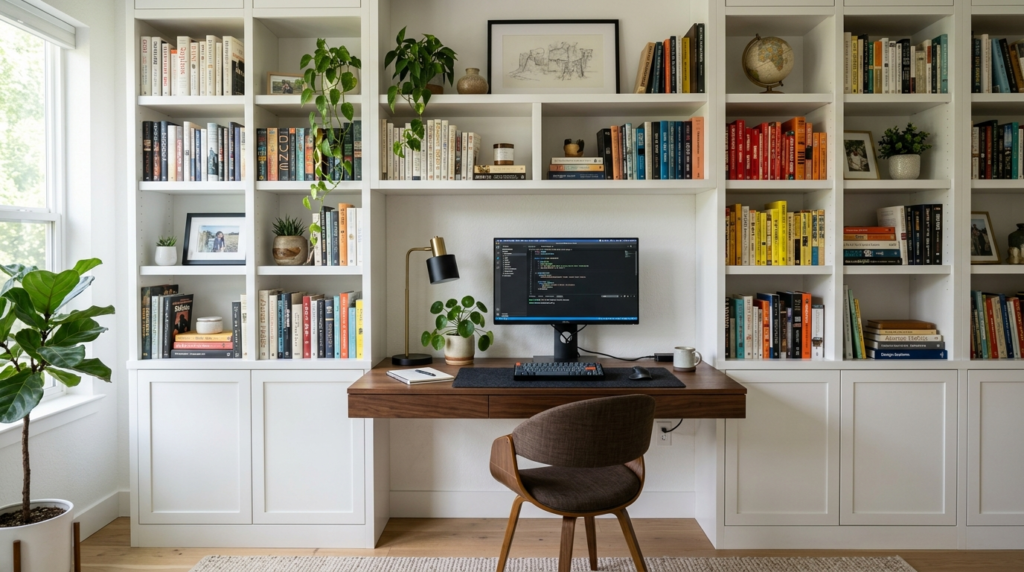
Combining your desk with your shelving creates a library feel. You can use a system like the IKEA Billy to surround a small desk. This provides tons of storage for files and office supplies. I found that keeping the desk and shelves the same color creates a seamless look. It prevents the room from looking like a furniture showroom. You can use the higher shelves for decor and the lower ones for work essentials. This setup is ideal for researchers or writers who need many books nearby.
8. The Fold Down Murphy Desk Solution
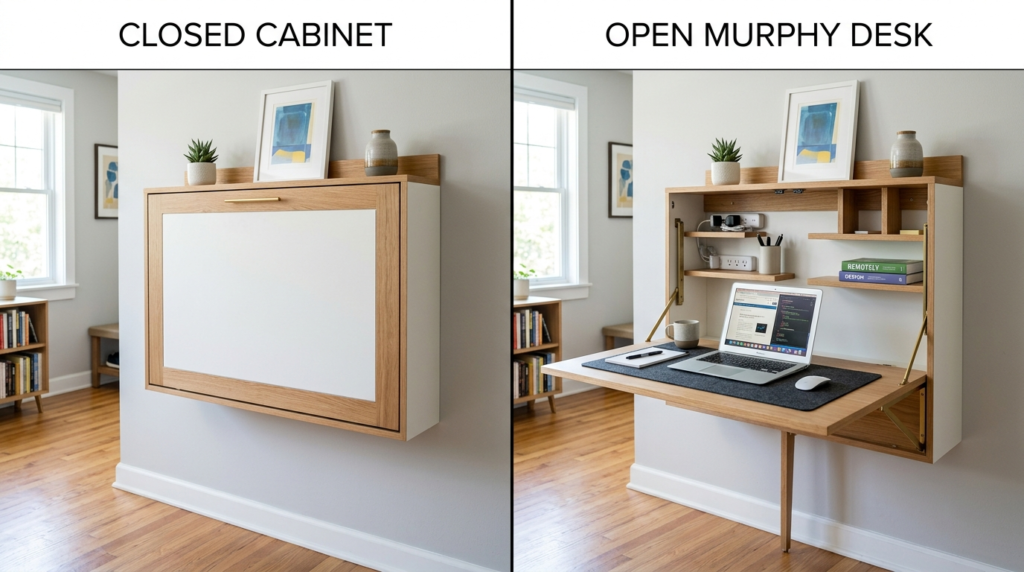
A Murphy desk stays flat against the wall until you need it. It is perfect for multi purpose rooms. I saw a great version of this in a tiny house tour recently. When the desk is up it looks like a simple cabinet or mirror. When it is down it provides a stable surface for a laptop. The Wallaroo Fold Down Desk is a popular choice for this style. This is the best option for people who hate looking at a desk on weekends. It completely removes the office from the living room environment.
9. The Room Divider Screen Zone
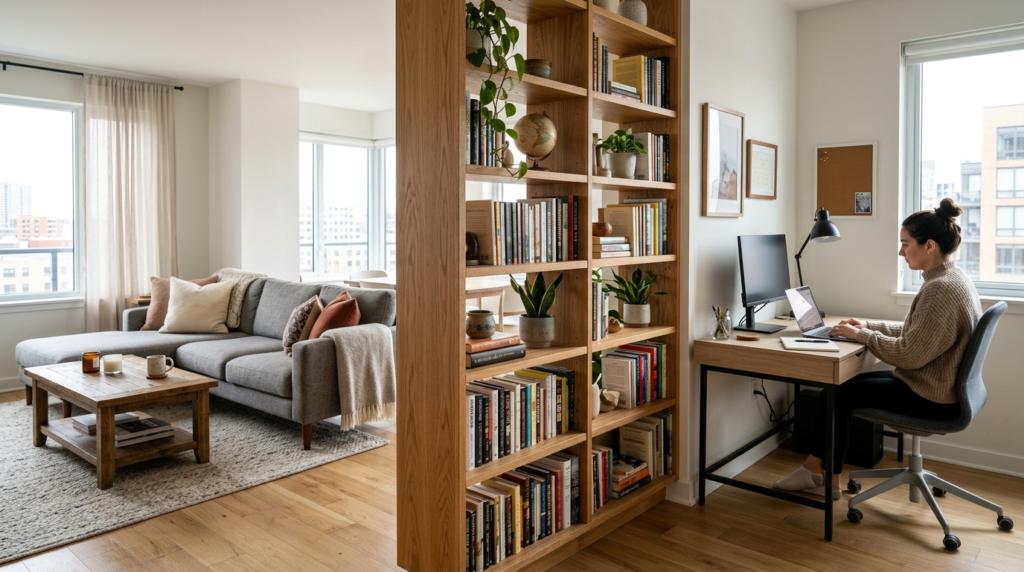
Using a physical divider helps separate work from play. You can use a folding screen or a tall plant stand. I prefer using an open shelving unit like the IKEA Kallax as a divider. It provides storage and creates a cubicle feel without blocking light. I have seen this work in long narrow living rooms. You place the desk on one side and the sofa on the other. This creates two distinct rooms in one single space. It is a cheap way to gain a private office.
10. The Antique Armoire Hidden Office
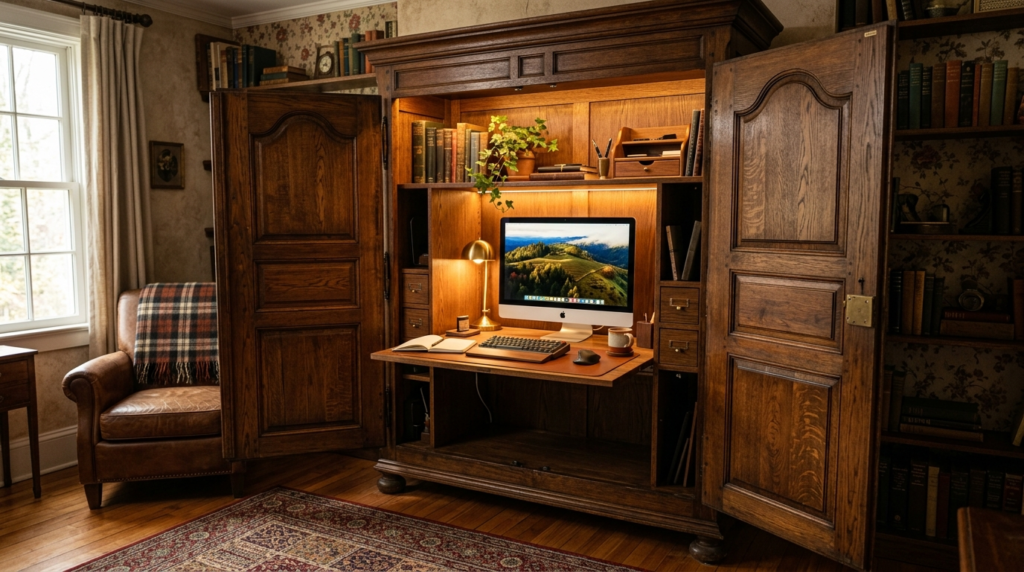
An old armoire can become a beautiful hidden desk. You simply open the doors to start your day. I found a vintage oak armoire at a thrift store and turned it into a station. We added a slide out tray for the keyboard and installed an LED light strip. This style adds character to your living room. It hides the messy computer wires and monitors perfectly. Brands like Sauder offer modern versions if you prefer a cleaner look. This is a top choice for traditional or rustic homes.
11. The Entryway Console Desk Hybrid
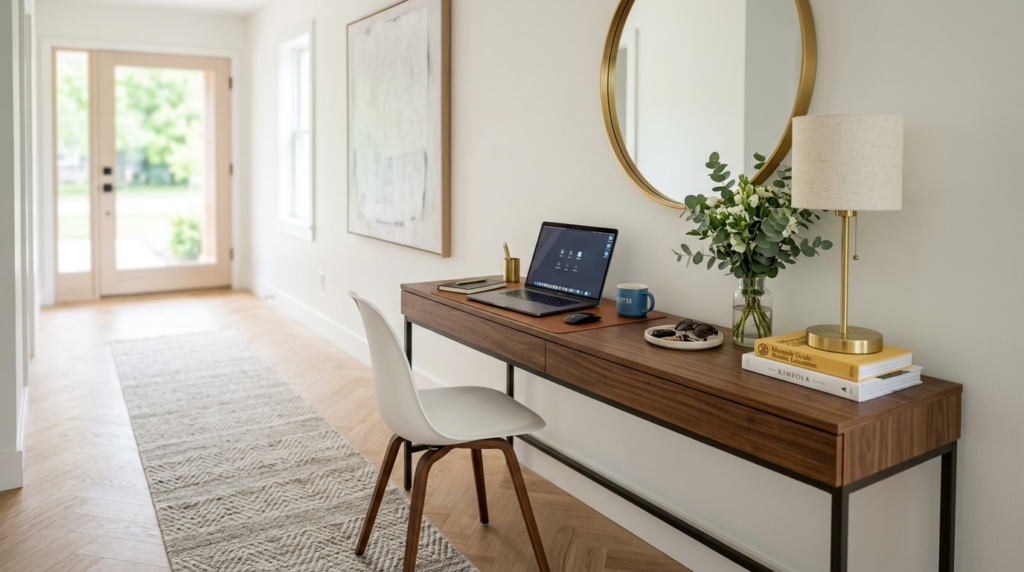
If your living room opens into an entryway you can use that space. A long and narrow console desk serves as a landing strip for keys. During the day it becomes your workstation. I recommend the Wayfair Trent Austin Design console for its industrial look. This layout keeps the desk out of the main seating area. It uses space that usually stays empty. Just make sure you have a comfortable chair that you can tuck away. A folding stool works well for this specific setup.
12. The Side Table Desk Transformation
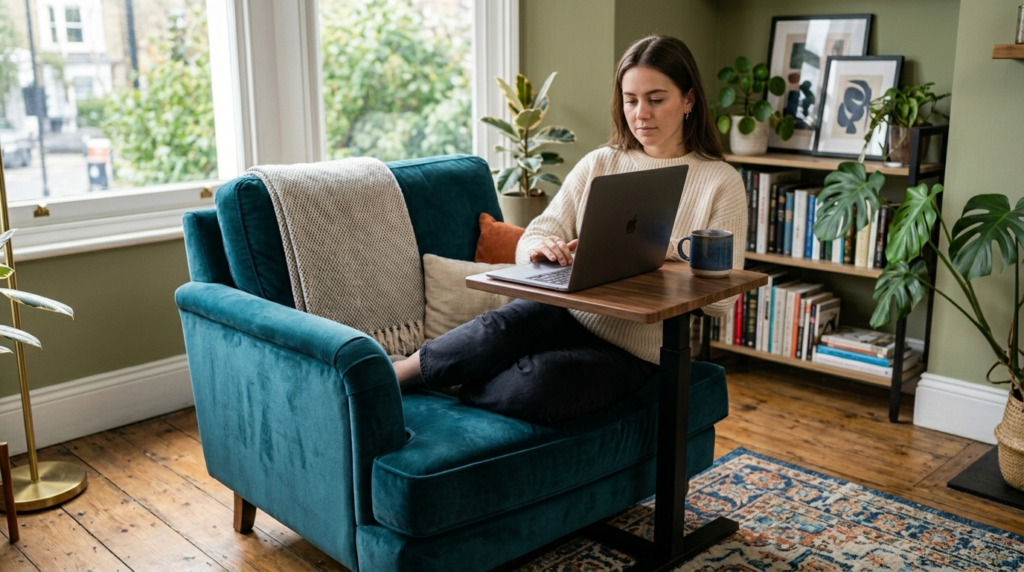
Sometimes a side table is all you need for a laptop. I have seen people use adjustable height side tables as desks. This allows you to work from your favorite armchair. The Fully Jarvis Side Table is a high quality option for this. It is sturdy enough for a monitor arm but small enough to move around. I noticed this is the best solution for people who do not want a fixed desk. You can slide it away when guests arrive. It is a flexible way to handle a 9 to 5 schedule.
13. The Rug Zoning Strategic Layout
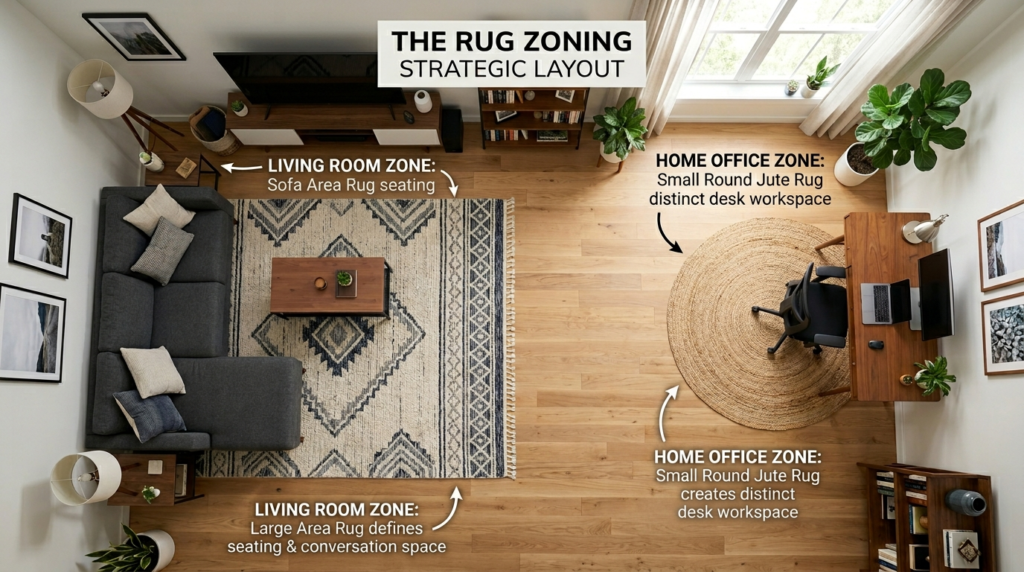
Rugs define areas without using walls. You should place a small rug under your desk and chair. This separates the office from the rest of the living room rug. I suggest using a low pile rug for the office area. This makes it easier to move your chair. I have tried using a round rug for the desk to contrast with a rectangular rug for the sofa. It looks intentional and stylish. This simple change tells your brain that the rug zone is for work only.
14. The Vertical Pegboard Command Center
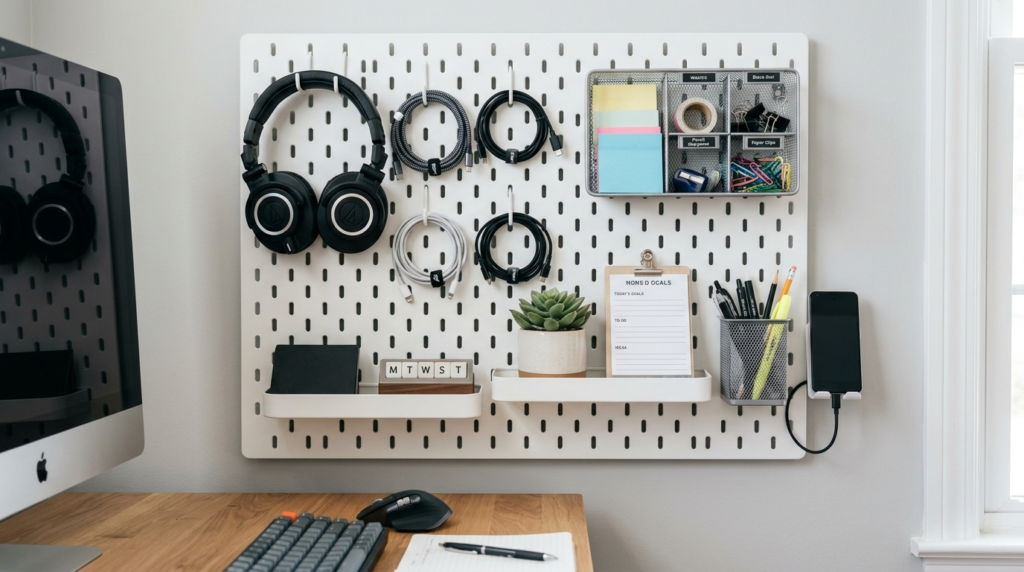
Pegboards turn your wall into a storage powerhouse. You can hang your headphones and pens and even small shelves. I love the IKEA Skadis system for this. It keeps your desk surface completely clear of clutter. This is vital in a small living room where every inch counts. I noticed that a clean desk makes the whole room feel more organized. You can even paint the pegboard to match your wall for a custom look. It adds a professional touch to a simple desk setup.
15. The Rolling Cart Mobile Office
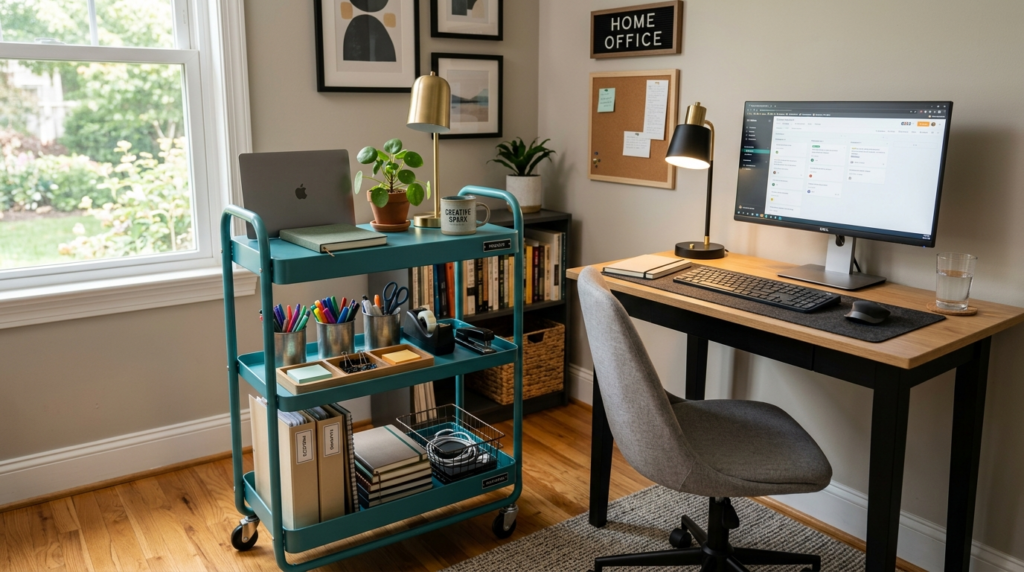
A rolling cart holds all your supplies so you can work anywhere. I use a three tier metal cart for my extra monitors and notebooks. You can roll it to the dining table or the sofa. The 10-drawer rolling cart from Michael’s is a staple for many home offices. This is the best choice if you do not have space for a permanent desk. You just need a surface and your cart. When you finish you roll the cart into a closet or corner. It is the ultimate flexible office solution.
16. The Under Stairs Command Hub
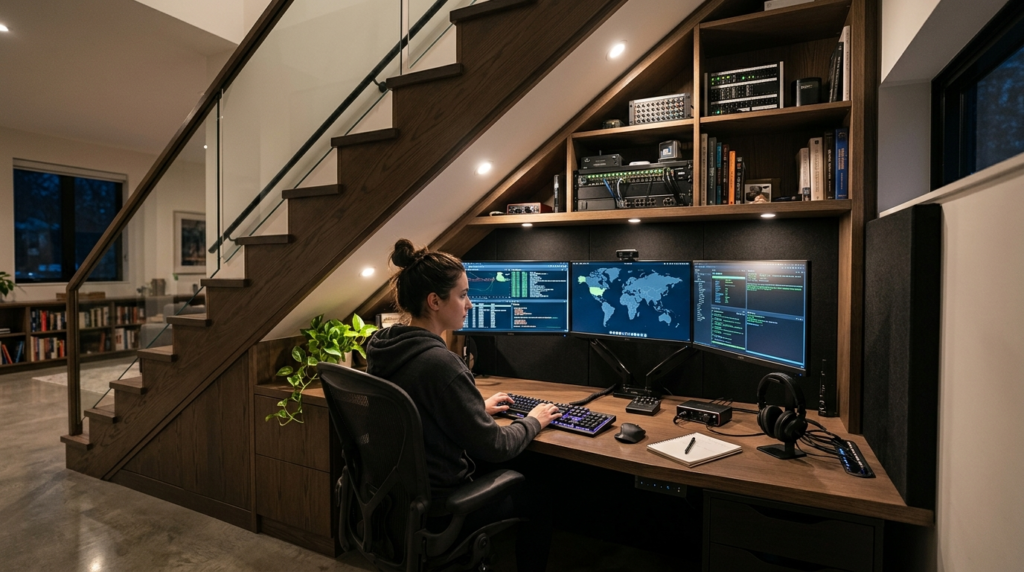
If your living room has a staircase you have a hidden office. The space under the stairs is often neglected. I helped a friend install a custom triangular desk in this spot. It felt like a cozy den rather than a hallway. You can use standard kitchen cabinets for the base to save money. I have seen this work well with bright task lighting. It makes use of architectural oddities in your home. This setup is quiet and tucked away from the main traffic flow.
17. The Back to Back Seating Arrangement
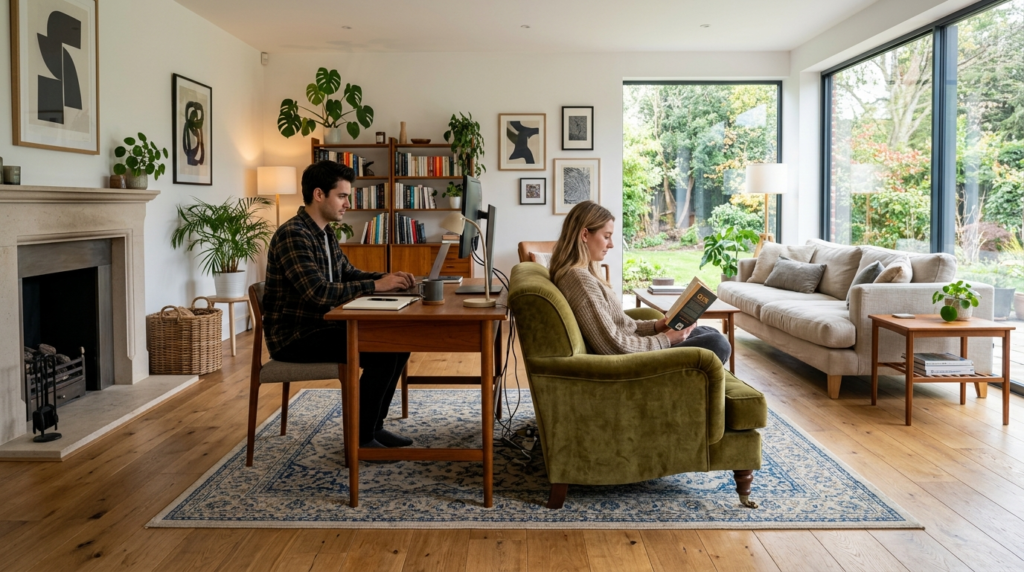
You can place your desk back to back with a chair or another desk. This creates a center island in your living room. I noticed this works best in larger living rooms that need more structure. It allows you to face the room rather than a wall. I recommend using a desk with a finished back like the Herman Miller Envelop. This prevents the room from looking messy from behind. It feels very professional and mimics a real office layout. You can even add a small lamp to the center for a balanced look.
18. The Monochromatic Color Block Trick
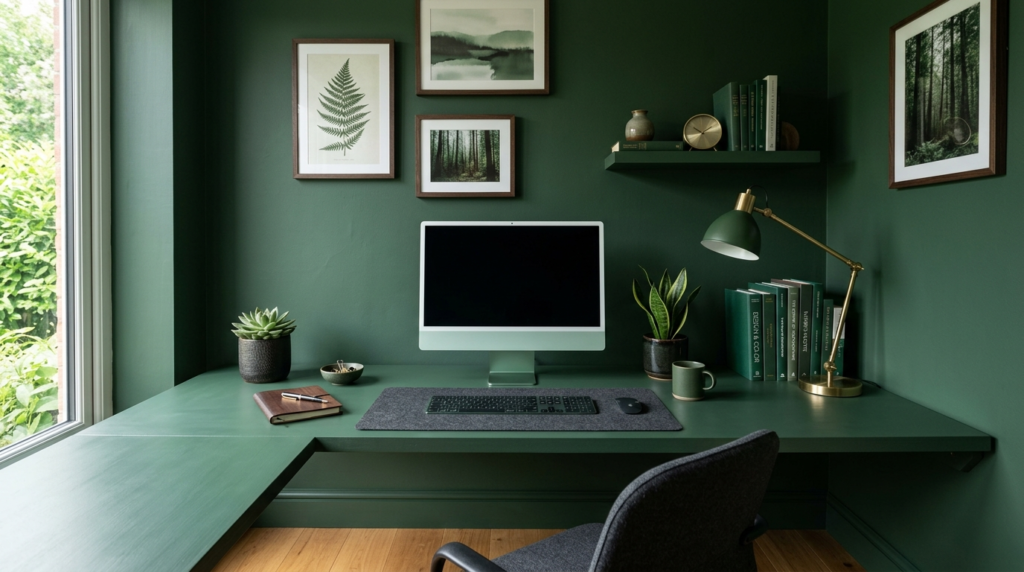
Painting your desk area the same color as the wall hides it. I have seen people paint a dark blue circle on the wall behind a blue desk. This creates a zone that feels like a separate room. It is a bold design choice that pays off. I noticed that white desks on white walls are the most popular for small spaces. It keeps the room light and airy. Use a high quality paint like Sherwin Williams for a durable finish. This trick is a favorite among Pinterest interior designers.
19. The Layered Lighting Strategy
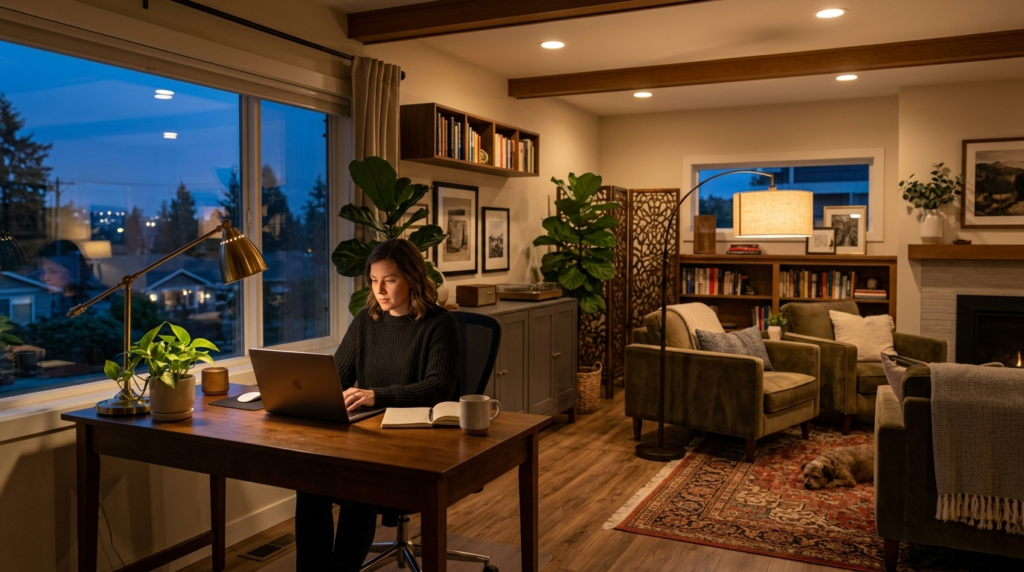
Good lighting is essential for a productive office. You need more than just the overhead living room light. I recommend a dedicated task lamp for your desk. The BenQ ScreenBar is a great tool that clips onto your monitor. It saves desk space and reduces eye strain. I also like to use warm floor lamps in the living room area. This creates a cozy vibe for the evening while your desk stays bright. Proper lighting helps you transition from work mode to relax mode.
20. The Hidden Cable Management Solution
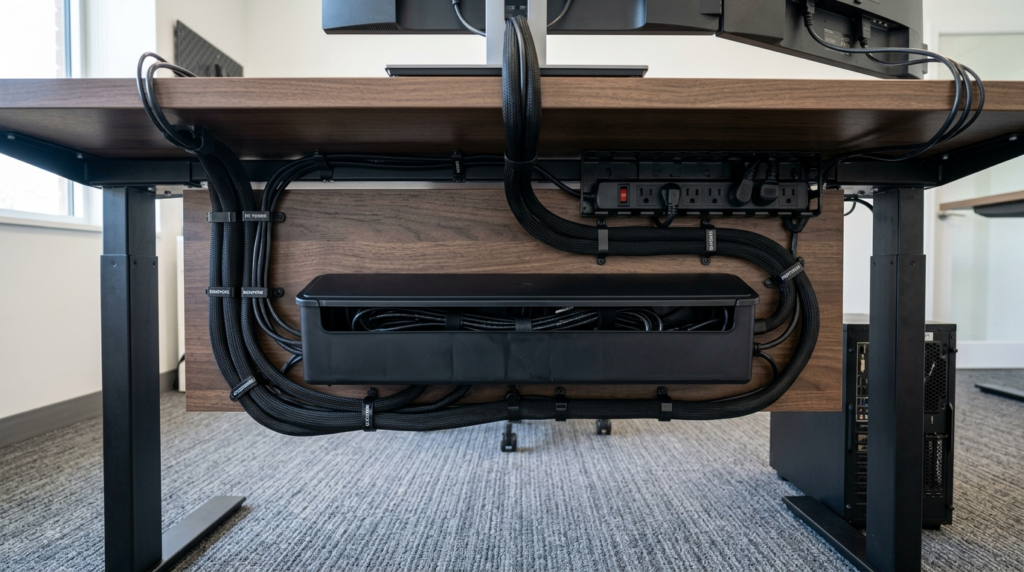
Visible wires make a living room look cluttered. You must hide your cords to maintain a clean aesthetic. I use cable sleeves and under desk trays for all my setups. The D-Line Cable Managment Box is a simple tool to hide power strips. I have seen people use decorative baskets to hold bulky chargers. Keeping wires out of sight makes the office blend into the decor. It is the most important step for a professional looking combo. Your living room will feel much more peaceful without a wire nest.
21. The Mirror Backed Desk Expansion
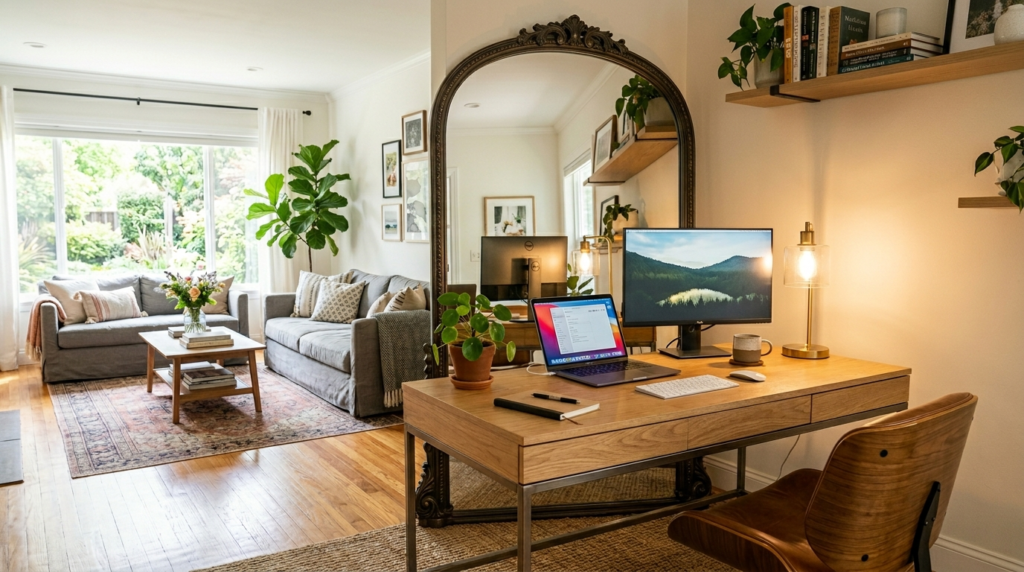
Placing a mirror behind your desk makes a small room feel double the size. I tried this in a dark corner and it brightened the whole space. It reflects the rest of the living room and adds depth. You can use a large floor mirror or a series of smaller wall mirrors. I noticed that this also helps you see who is coming up behind you. It creates a more open and less cramped feeling. A simple arched mirror from Amazon can transform the entire vibe of your workspace.
22. The Transparent Acrylic Furniture Choice
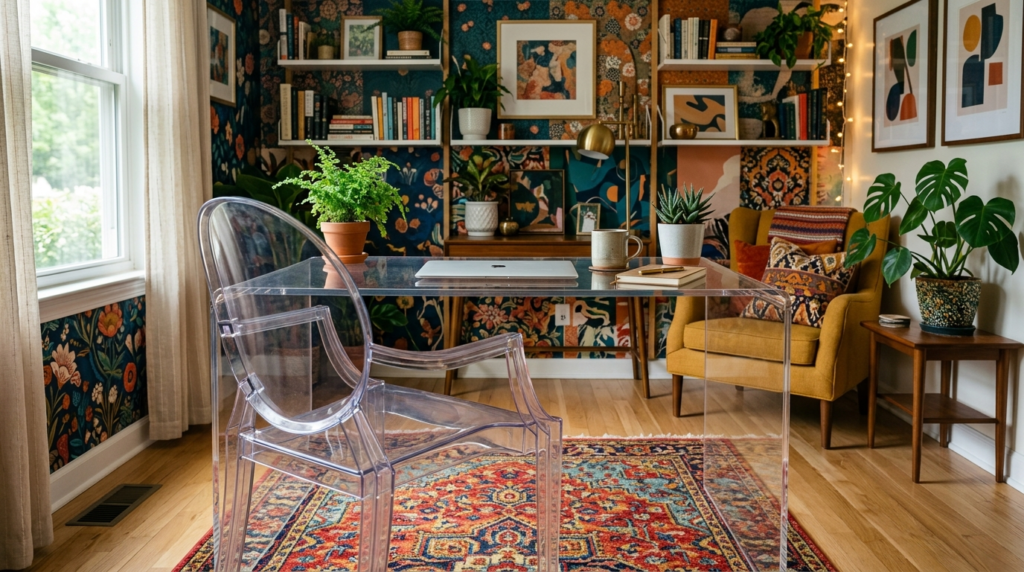
Acrylic desks and chairs are almost invisible. They do not take up visual weight in a small room. I recommend the Peek-a-Boo Acrylic Desk from CB2 for a modern look. It allows the beauty of your rug or floor to show through. I have seen these used in tiny apartments where a wood desk felt too heavy. They are easy to clean and very durable. This is a great choice if you want a desk but do not want to see it. It is a minimalist dream for small layouts.
23. The Double Duty Lift Top Coffee Table
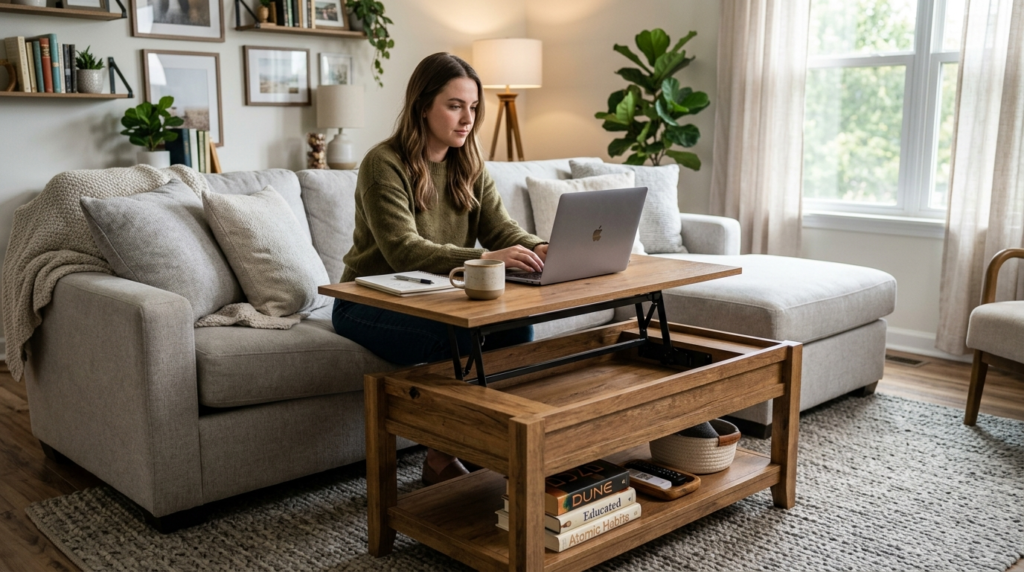
A lift top coffee table turns your sofa into a desk. The top lifts up and moves closer to you. I used one of these for a year while living in a studio. The West Elm Industrial Storage Pop-Up Coffee Table is a top tier version. It has hidden storage for your laptop and mouse. This is the best solution if you absolutely cannot fit a desk. It keeps your living room looking like a living room. Just ensure you have a comfortable sofa that supports your back.
24. The Alcove Library Office Nook
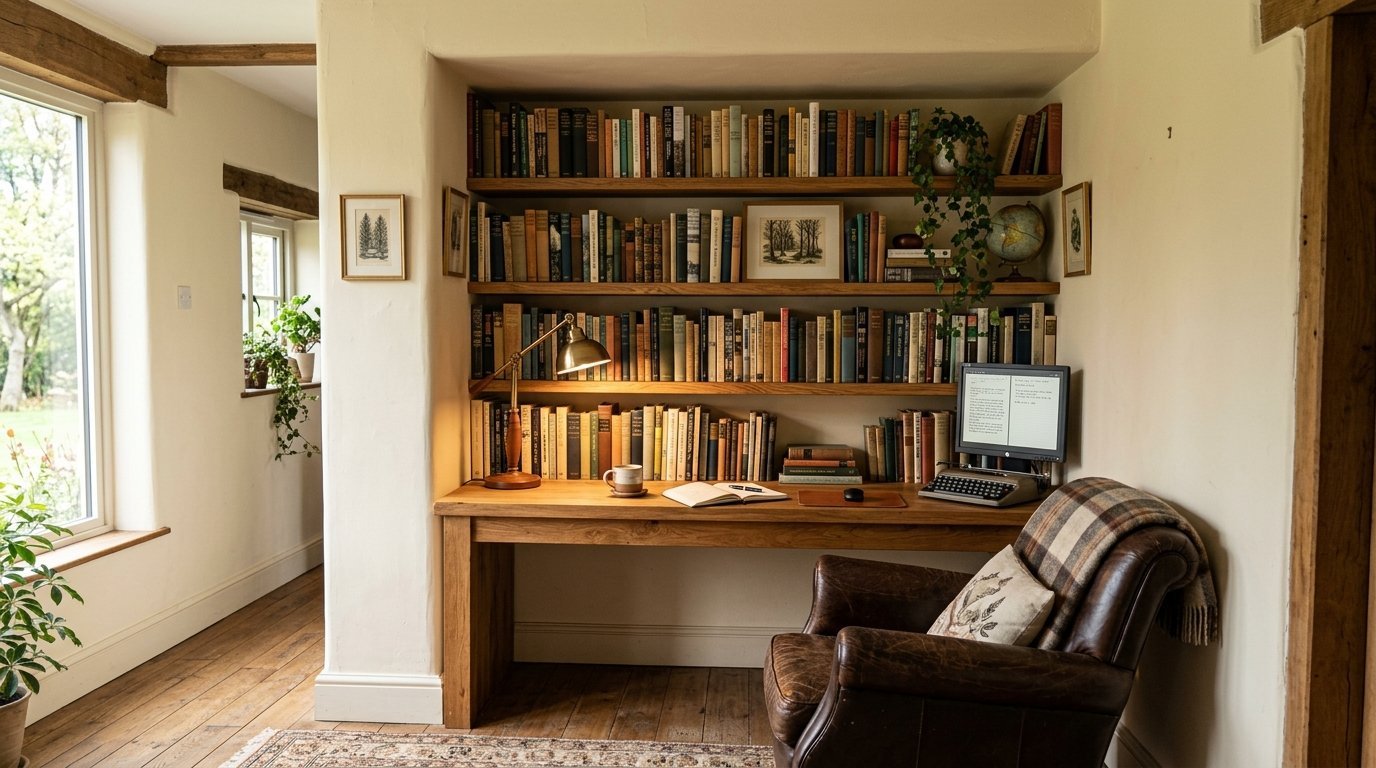
If you have a small indentation in your wall you have an alcove office. I love filling these spaces with floor to ceiling shelves. You can place a small desk right in the middle of the shelves. It feels like a custom built in unit. I noticed this adds value to your home and looks very expensive. You can use simple white boards from Home Depot to create the shelves. It is a great way to display your personality while staying productive. This setup is perfect for creative professionals.
25. The Shared Dual Station Layout
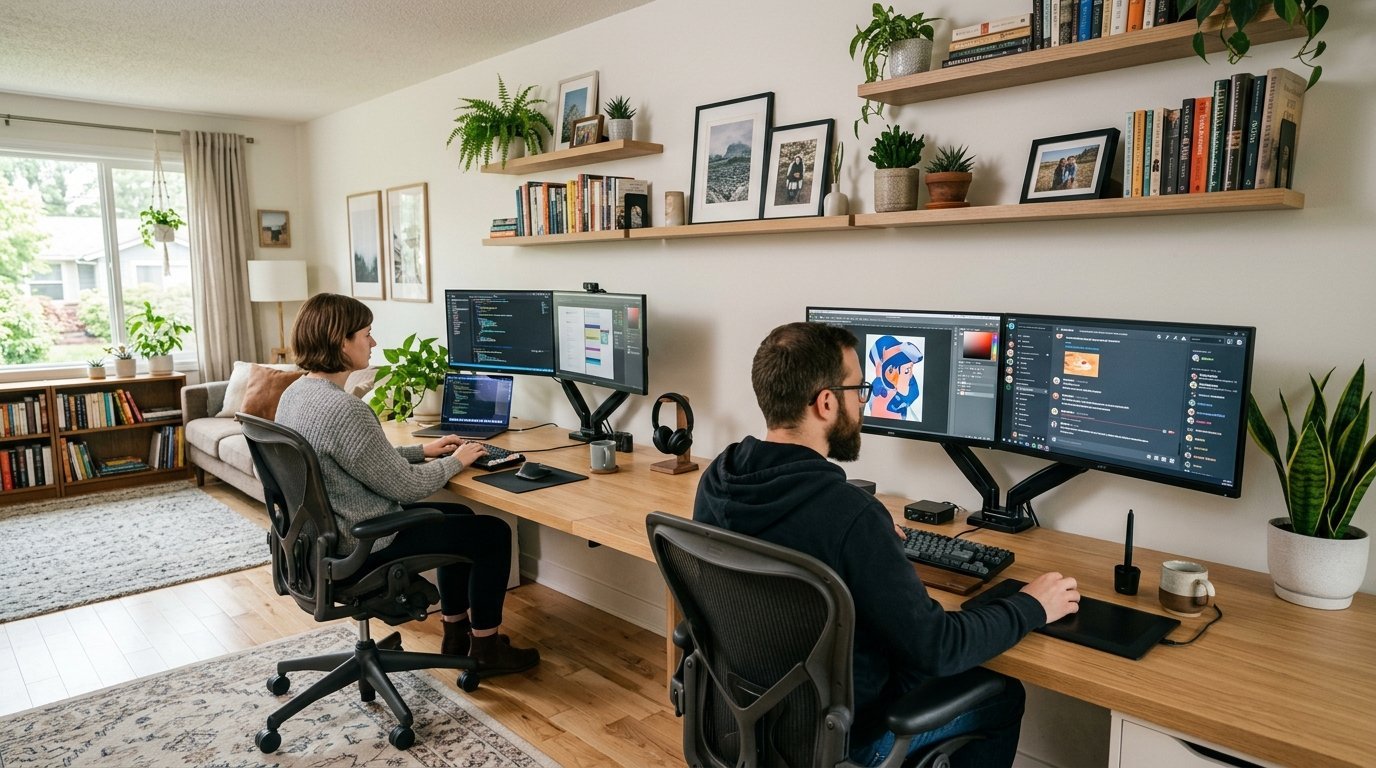
If two people work from home you need a shared setup. You can use one long desk along a main wall. I have seen people use a long kitchen countertop on two sets of drawers. This provides a massive work surface for two laptops. The IKEA Alex drawers are the gold standard for this. It keeps the living room organized because all the work stays in one line. You can place a tall plant in the middle to create a bit of privacy. It is a functional and social way to work together.
Comparison of Popular Small Space Desks
| Desk Type | Best Brand | Price Range | Top Benefit |
| Ladder Desk | Nathan James | $120 – $200 | Uses vertical space |
| Floating Desk | Prepac | $80 – $150 | No floor footprint |
| Corner Desk | Target | $100 – $180 | Fits awkward gaps |
| Mid Century | West Elm | $400 – $800 | High end aesthetic |
| Acrylic Desk | CB2 | $300 – $600 | Visually invisible |
Frequently Asked Questions
How do I hide my office in a living room?
You can use a folding room divider or a closet conversion. An armoire with doors also hides a desk perfectly. I have seen people use a large houseplant to block the view of a computer monitor. Another trick is to use furniture that matches your wall color to make it blend in.
Is it okay to put a desk in the living room?
Yes it is very common and can look great. The key is to make the desk look like part of the decor. Use a stylish chair and a desk that matches your existing furniture. I have noticed that a well styled desk can actually enhance the look of a room.
Where is the best place to put a desk in a small living room?
Behind the sofa or in a corner are the best spots. These areas are usually underused. Placing a desk near a window is also a great choice for natural light. I suggest avoiding the center of the room to keep the traffic flow open.
How can I make my living room office ergonomic?
Invest in a high quality chair like the Steelcase Series 1. Use a monitor riser to keep your screen at eye level. I also recommend a small footrest if your chair is high. Proper ergonomics prevent pain during long work hours.
Can I use a dining chair as an office chair?
You can for short periods but it lacks support for a full day. I suggest a task chair with lumbar support. Many modern office chairs now come in velvet or fabric that looks like home furniture. This gives you the best of both worlds.
Essential Tools for Your Office Combo
I have tested many tools to make a living room office work. Here are my top recommendations.
- Logitech MX Master 3S: A quiet mouse that works on any surface including glass.
- Fully Jarvis Standing Desk Converter: Turns any fixed desk into a standing desk.
- Elgato Key Light Air: Provides soft lighting for video calls without taking up space.
- Grovemade Desk Mat: Protects your furniture and adds a soft texture for your hands.
- Blue-Pippin Cable Clips: Small adhesive clips that keep your phone charger in place.
Conclusion
Creating a living room office combo is about making smart choices with your layout. You do not have to sacrifice your style for a productive workspace. Whether you choose a floating desk or a closet conversion the goal is balance. I have seen these 25 ideas work in real homes with great success. Start by looking at your corners and the space behind your sofa. With the right tools and a bit of creativity you can build an office you love. Your home should support your career and your relaxation equally.

Sloane Whitaker is the Editor-in-Chief at Home Wall Trends, leading editorial direction with over a decade of experience in residential interior design and home styling. Her specialty is space planning and layout, the unglamorous fundamentals that make a beautiful room actually function. A graduate of the New York School of Interior Design, Sloane has styled over 200 client homes before turning her focus to digital publishing. Her editorial standard: “If a reader can’t picture themselves doing it on a Saturday afternoon, we haven’t explained it well enough.”