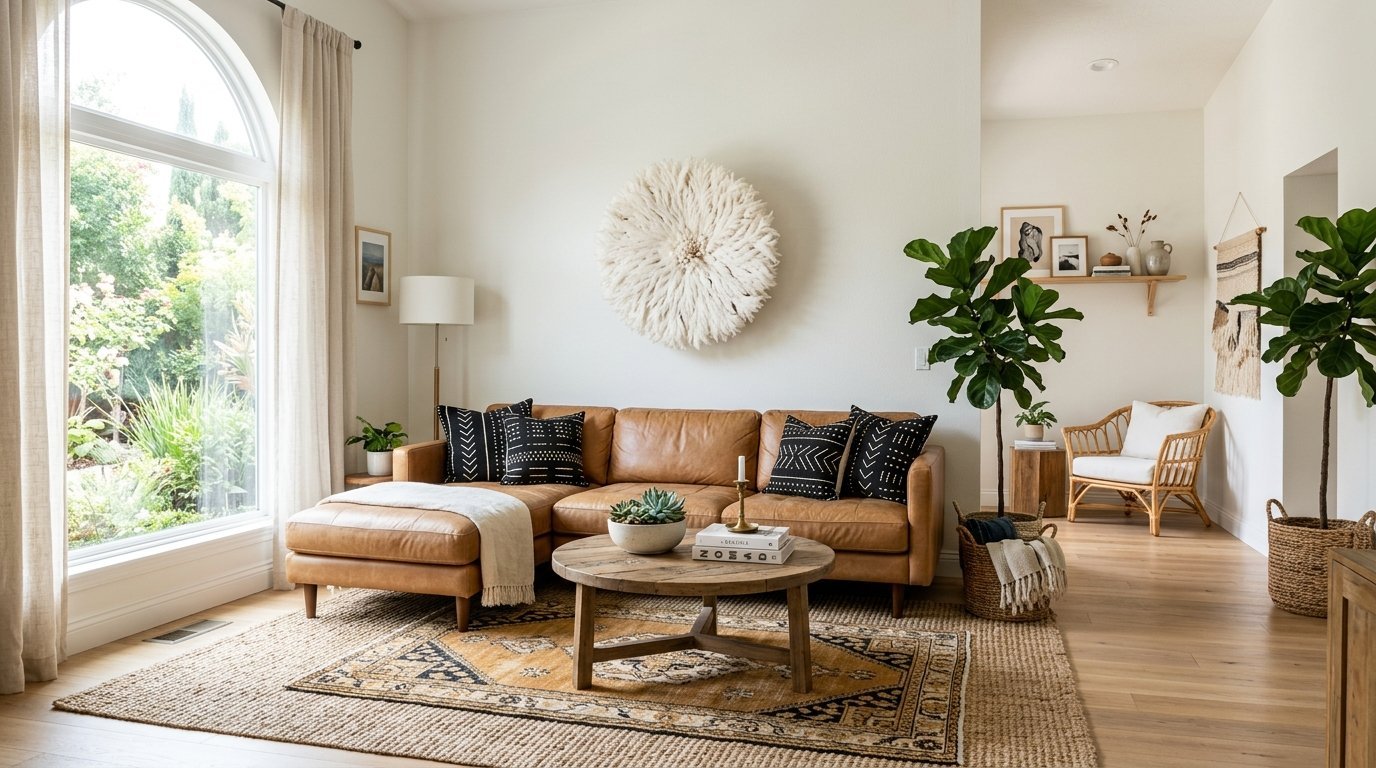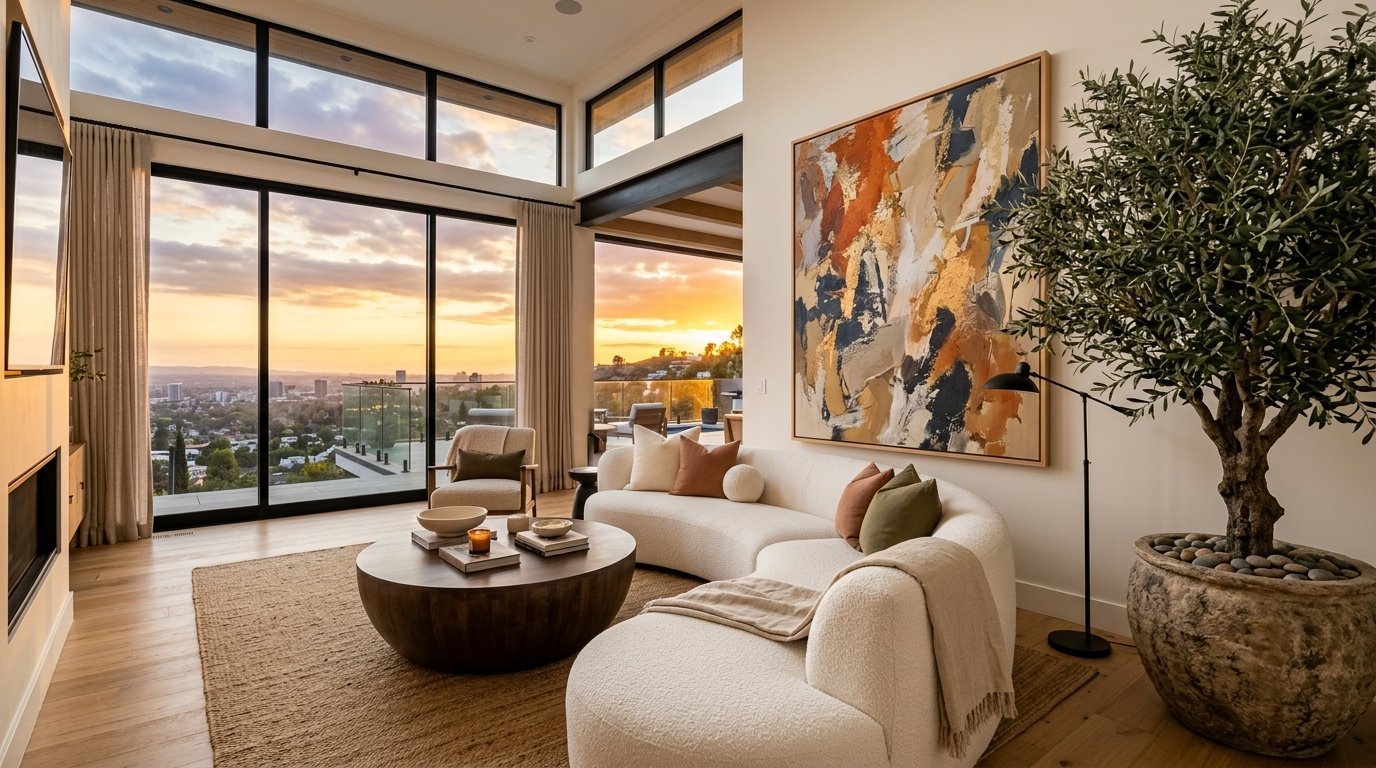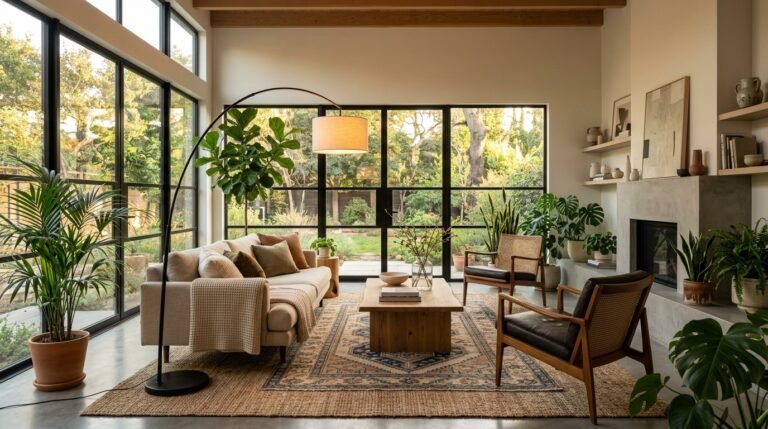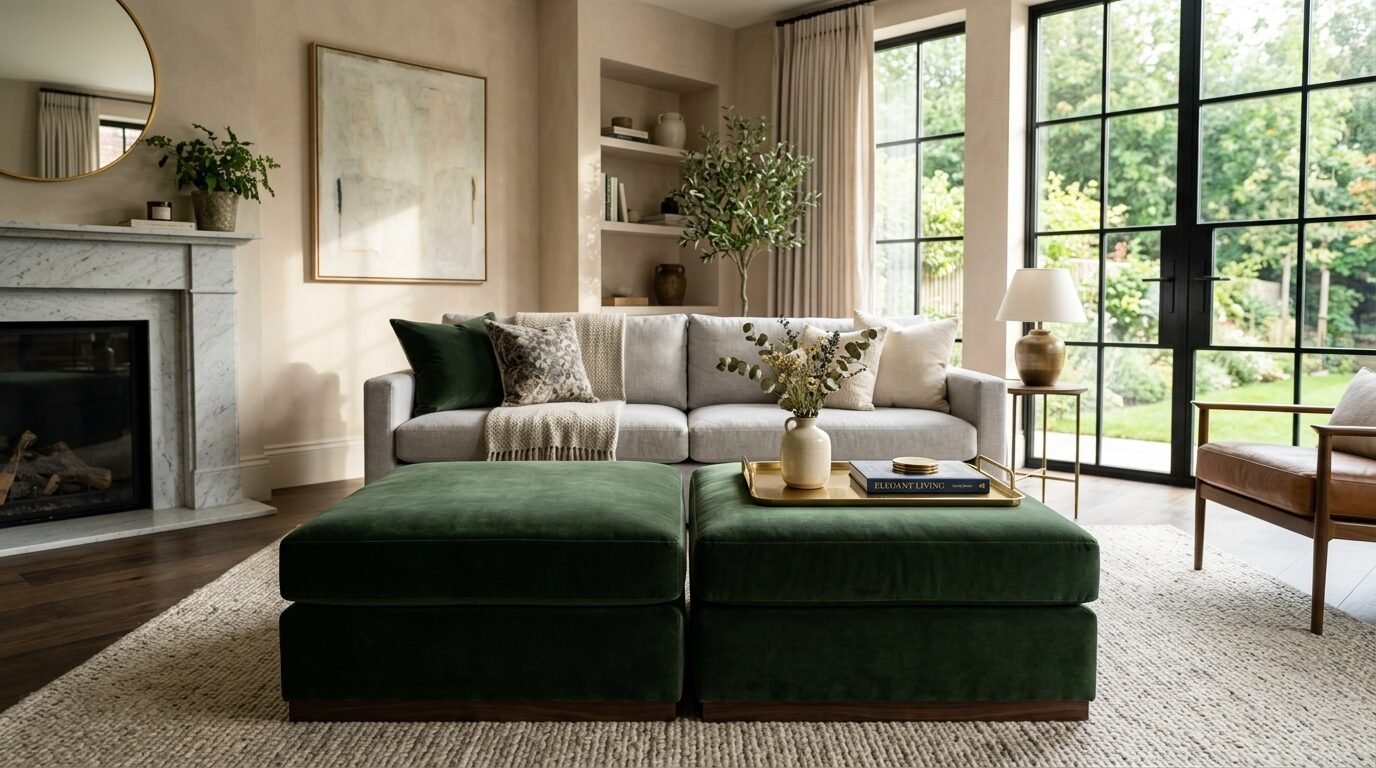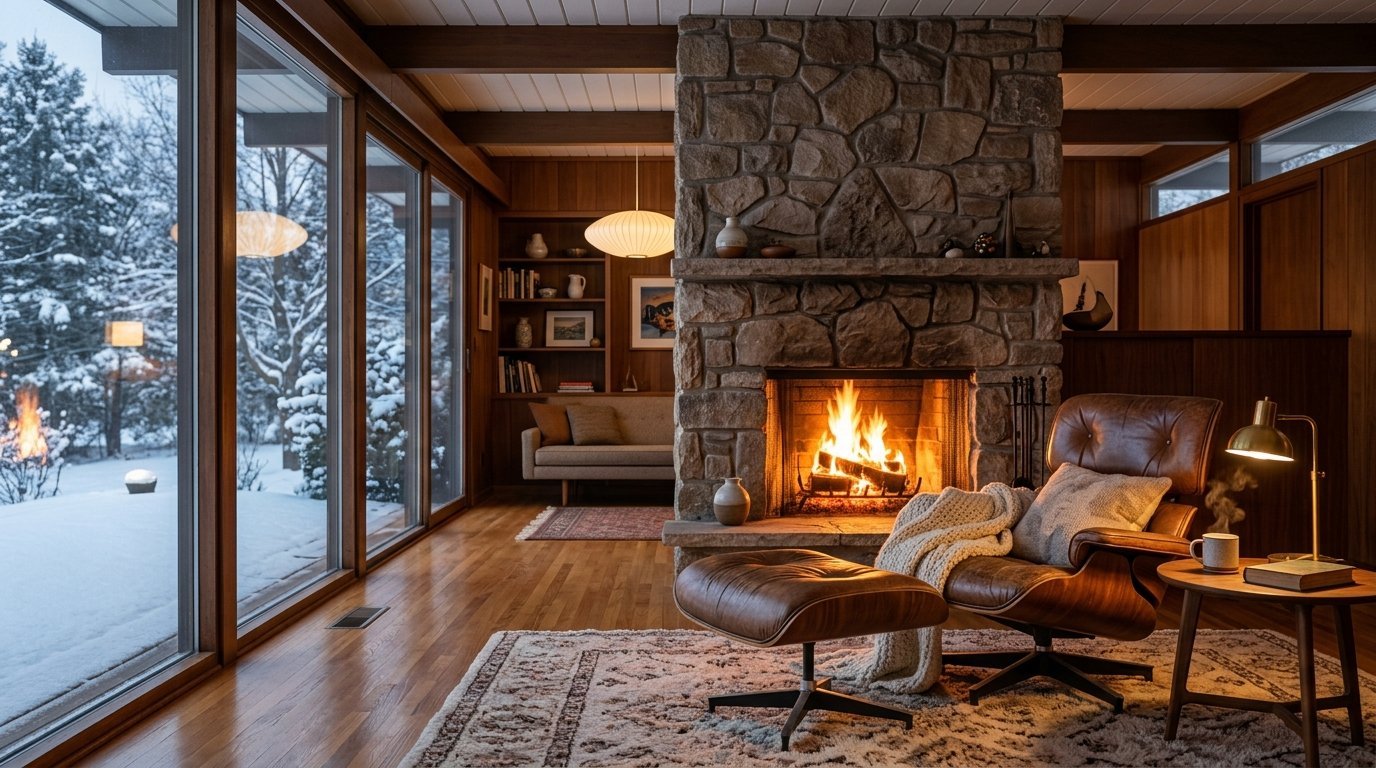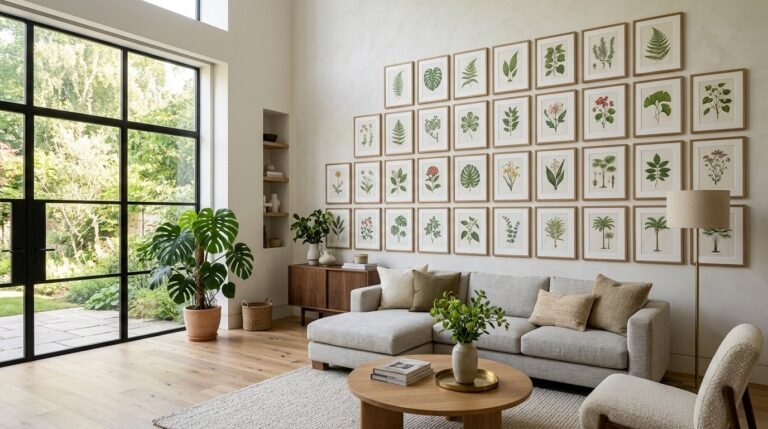
The evening light hit the hardwood floor of a client’s empty parlor, and the echo was deafening. They had spent $45,000 on a renovation but forgot the most important part: the human connection. A room can look like a museum, yet feel as cold as a meat locker. I watched them sit on opposite ends of a massive sofa, yelling across a six-foot gap just to discuss dinner. We fixed that room in forty-eight hours using a few of these specific sitting room ideas, and suddenly, the space felt like an invitation rather than an exhibition. Are you tired of furniture that looks good but makes conversation feel like a chore? Why do we prioritize “the look” of a magazine over the actual comfort of our guests?
Executive Summary
Transforming a sterile living area into a functional social hub requires more than just buying a matching set of chairs. You will find 23 actionable strategies that prioritize intimacy, comfort, and flow without requiring a massive architectural overhaul. We cover everything from the psychological impact of furniture grouping to the specific measurements needed for a modern reading nook. I share insights on why many high-end “indoor seating area” designs fail and how to fix them for under $200. You will learn to navigate layout traps, select the right cozy reading nook chair for adults, and create a sunroom sitting area that works year-round. This guide excludes major structural construction, focusing instead on design layouts, furniture selection, and atmosphere-building.
1. Conversation Circle
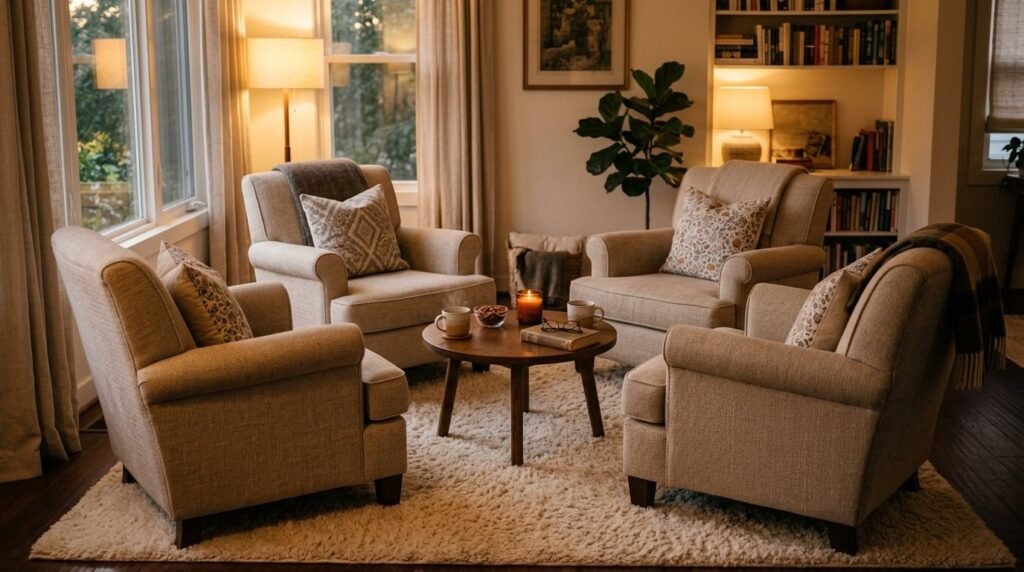
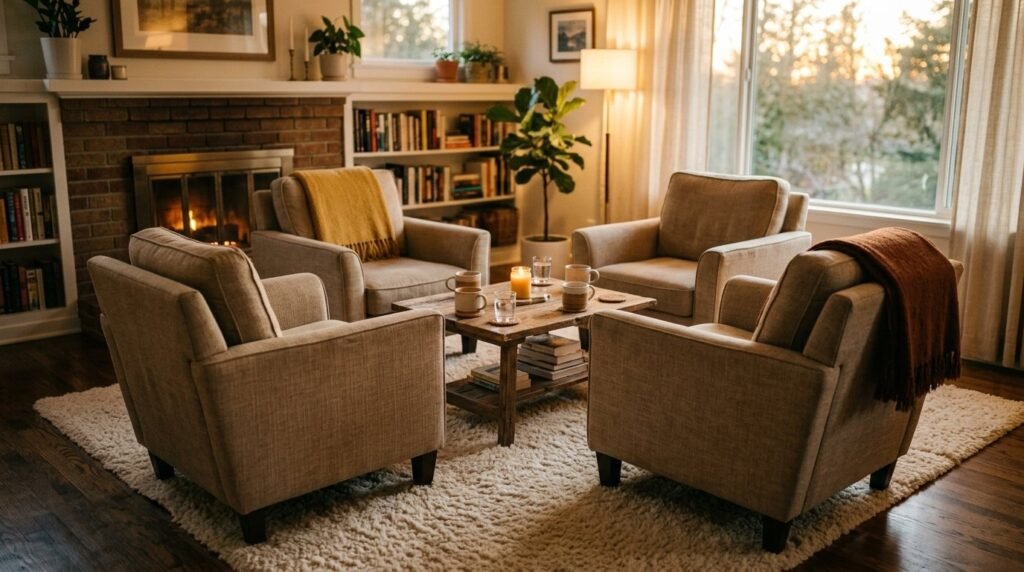
The most effective layout for social interaction places chairs in a tight, inward-facing ring where everyone is within arm’s reach. I once used four mismatched armchairs from a local thrift store, reupholstered them in identical navy velvet, and instantly turned a drafty basement into the house’s favorite spot. Move your seating away from the walls and toward a central point, like a low coffee table. A rug that fits all four chairs is essential for anchoring the group. Budget about $300 for a quality area rug to define the zone. A common mistake is leaving too much space between seats, which forces people to lean forward or shout.
2. Reading Nook Chair
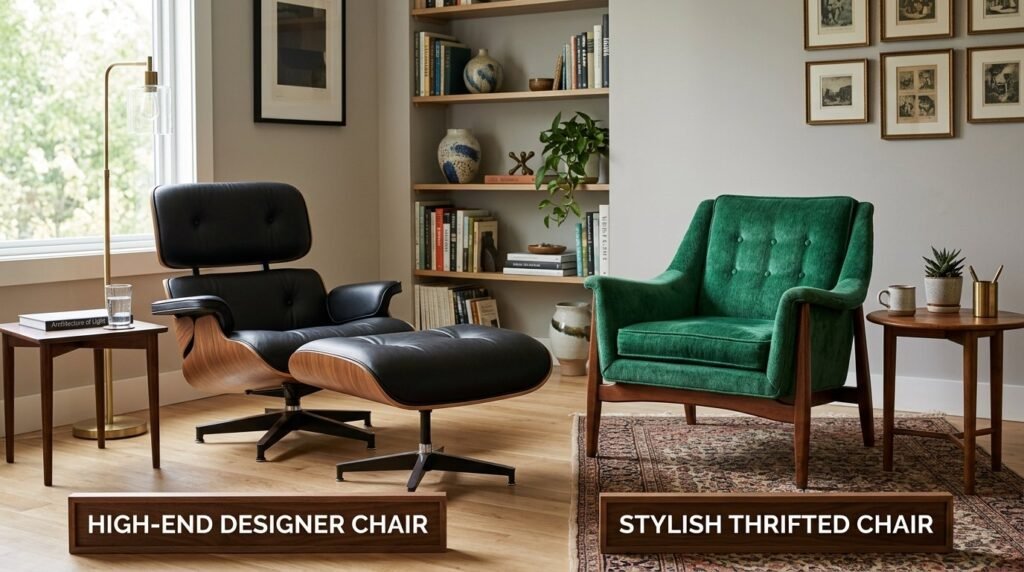
Selecting a chair for a reading area for adults requires a deeper seat and higher back than a standard guest chair. I prefer the Eames-style lounge or a wide wingback with enough room to tuck your legs up. Place this in a corner that receives soft, indirect light to reduce eye strain. Add a dedicated floor lamp with a warm bulb and a small side table for tea. High-quality chairs for this purpose typically range from $400 to $1,200 depending on the fabric. Don’t buy a chair just because it looks small and “cute”; if you can’t sit in it for two hours comfortably, it won’t be used.
3. Window Daybed
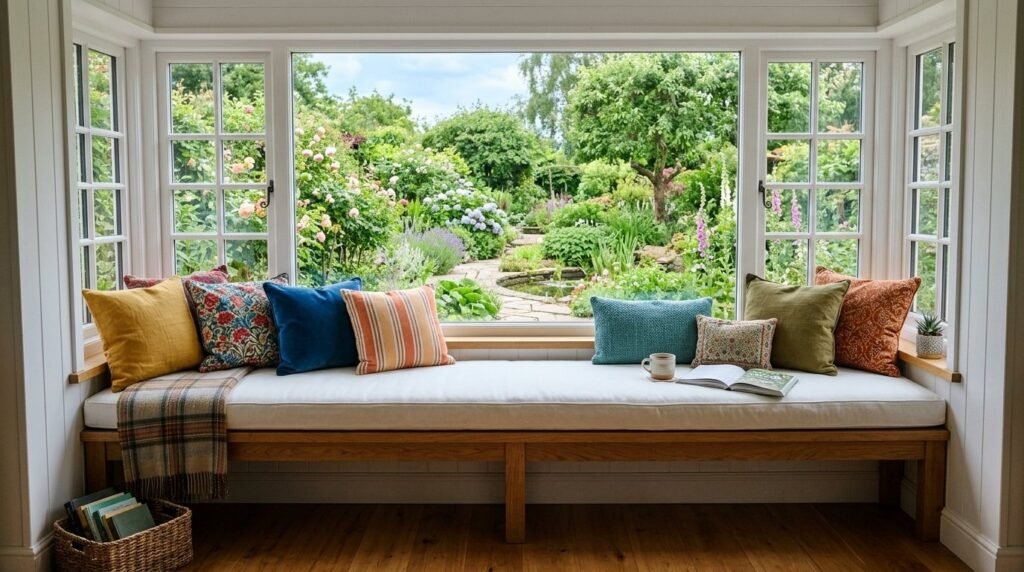
A built-in bench under a large window creates a sunroom sitting area feel even in a standard bedroom or lounge. Use a twin-sized mattress cut to fit the frame for maximum comfort, rather than thin foam pads that bottom out. This provides a secondary social spot when you have a crowd over. You can build a basic wooden frame for around $150 in materials. Ensure the height matches the window sill so people can lean back naturally. Many people forget to use outdoor-rated fabric here, but UV rays will fade indoor velvet or cotton within a single summer.
4. Floating Sofa Layout
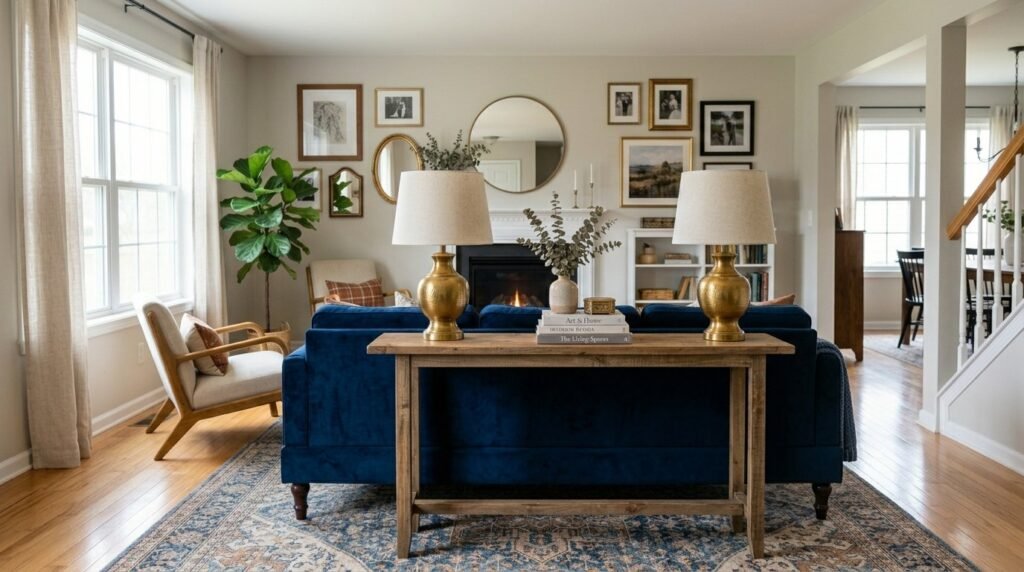
Pushing your couch against the wall is the fastest way to kill the energy of a room. Pull the sofa three feet away from the wall and place a slim console table behind it to create a walk-behind path. In my own home, this changed the flow from a dead-end room into a circular path that feels much larger. It costs nothing to move furniture, but a console table might run you $100. This works best in rooms at least 12 feet wide. The trap here is blocking the main entrance path, so measure your clearance before committing.
5. Indoor Seating Area Comparison
| Layout Style | Best For | Approx Cost | Difficulty | Social Impact |
| Symmetry Pair | Formal Coffee | $800+ | Low | High |
| Corner Nook | Solo Reading | $200+ | Low | Low |
| U-Shape Group | Game Nights | $1,500+ | Medium | Extreme |
| Back-to-Back | Open Concepts | $2,000+ | High | Medium |
| Window Bench | Small Spaces | $150+ | High | Medium |
6. Coffee Nook Window
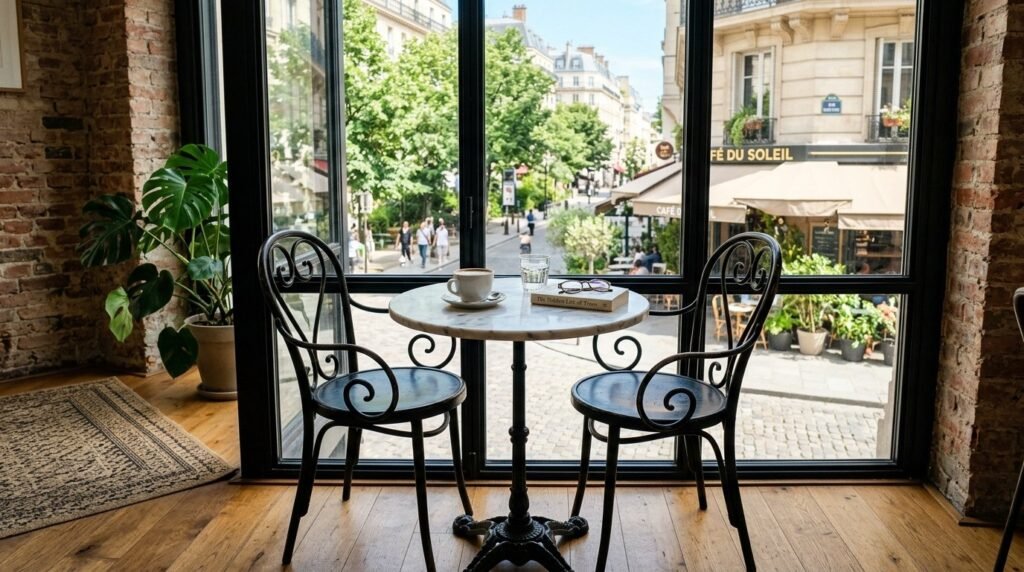
Create a morning ritual spot by placing two lightweight bistro chairs and a round table directly in front of your brightest window. I’ve found that a “coffee nook with window” setup encourages more face-to-face time than sitting at a large dining table. Use a table with a pedestal base to allow for more legroom in tight quarters. You can find vintage iron sets for under $100 at estate sales. Keep the tabletop clear of heavy decor so it remains functional for actual mugs. A frequent error is using chairs that are too heavy to move easily when guests arrive.
7. Casual Corner
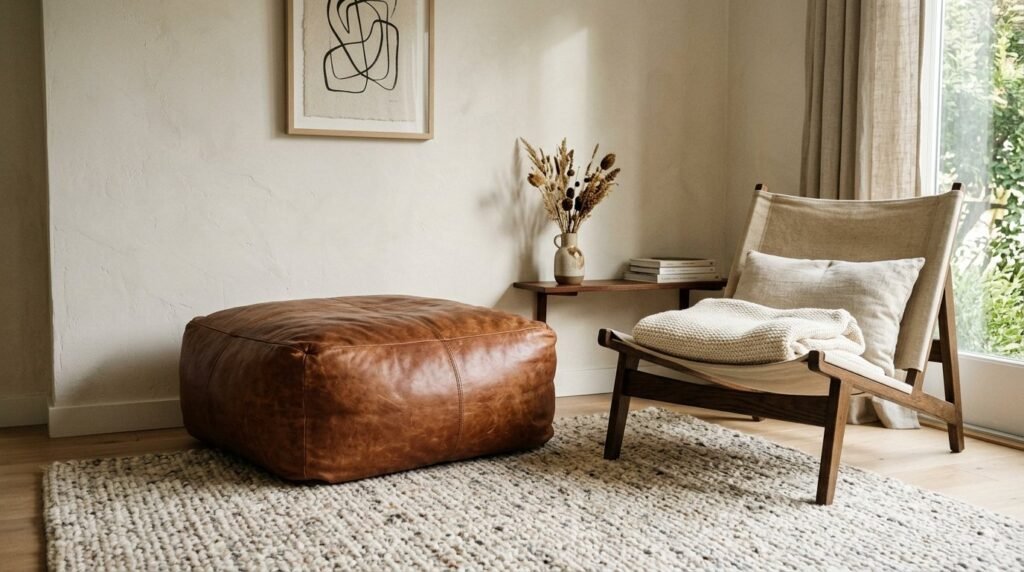
Every sitting room needs one “unstructured” spot with floor cushions or a low-profile bean bag chair for younger guests. I use oversized leather poufs from Morocco that serve as footstools when solo and seats during parties. This adds a layer of texture and breaks up the “wood and fabric” monotony of most rooms. Quality poufs cost about $80 each. Aim for materials that are easy to wipe down, as floor-level items attract dust and spills. People often buy cheap polyester bean bags that look messy; choose structured leather or heavy canvas instead.
8. Fireside Lounge
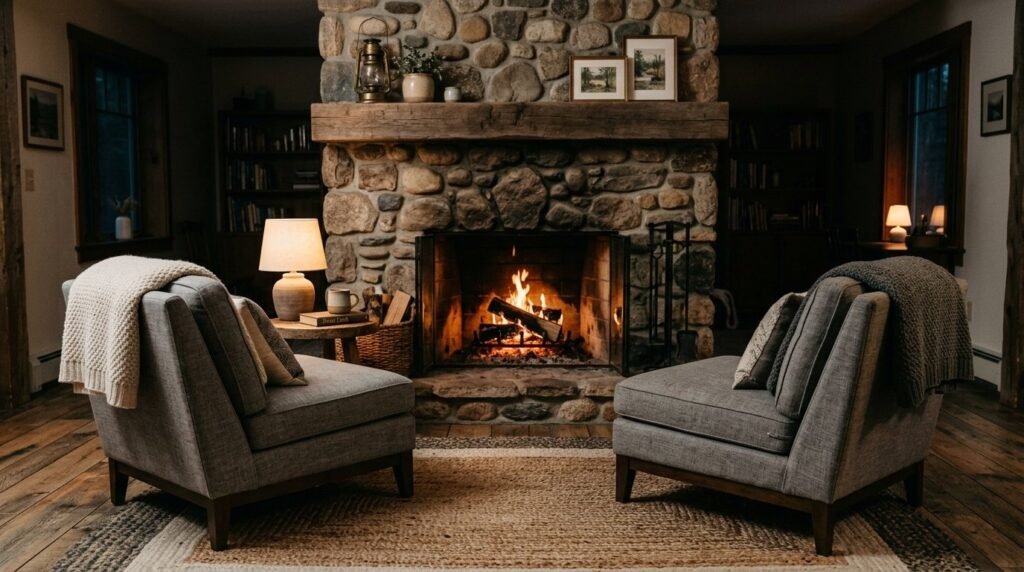
The hearth is the original social hub, but many people ruin the vibe by mounting a massive TV above it. Instead, face two low-slung chairs toward the fireplace and keep the mantle decorated with art or books. I recently replaced a TV with a large mirror in a client’s den, and the room went from a “media room” to a “sitting room” overnight. Firewood storage can double as a side table if you use a sturdy crate. Safety is the priority here; keep furniture at least 36 inches from the glass. Don’t neglect the lighting; dim the overheads to let the fire glow dominate.
9. Modern Reading Nook
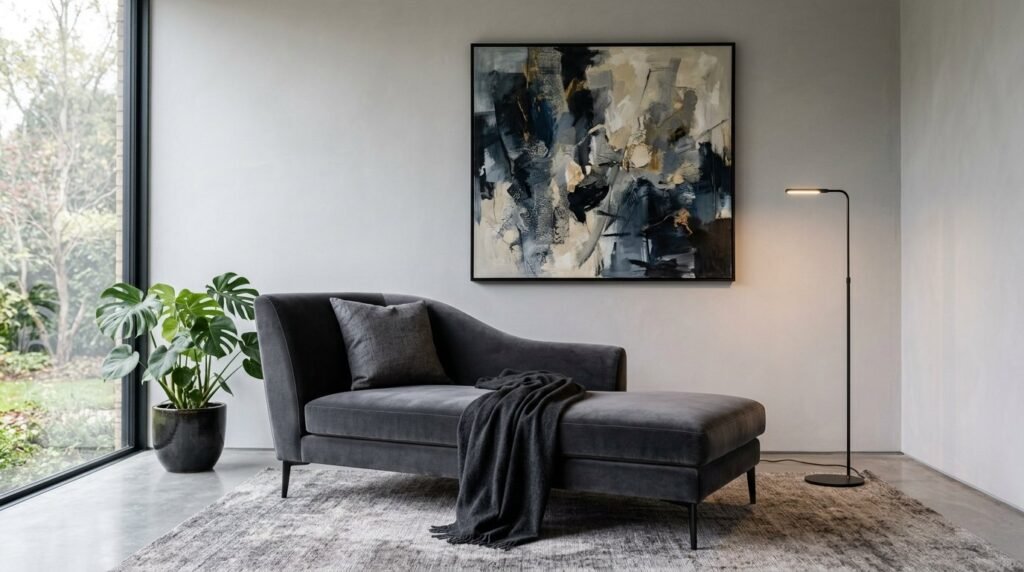
For a modern aesthetic, skip the ruffles and go for a sleek “comfy reading room” vibe with a velvet chaise longue. Use a monochromatic color palette—think charcoal grey or deep forest green—to keep the focus on the silhouette of the furniture. I recommend adding a minimalist LED task light that clips onto the shelf nearby. A high-end chaise usually starts at $600. The trick is to keep the surrounding area clutter-free so the architectural lines of the chair stand out. Avoid bulky “overstuffed” recliners if you want a truly modern look.
10. Case Study: The Cold Conservatory

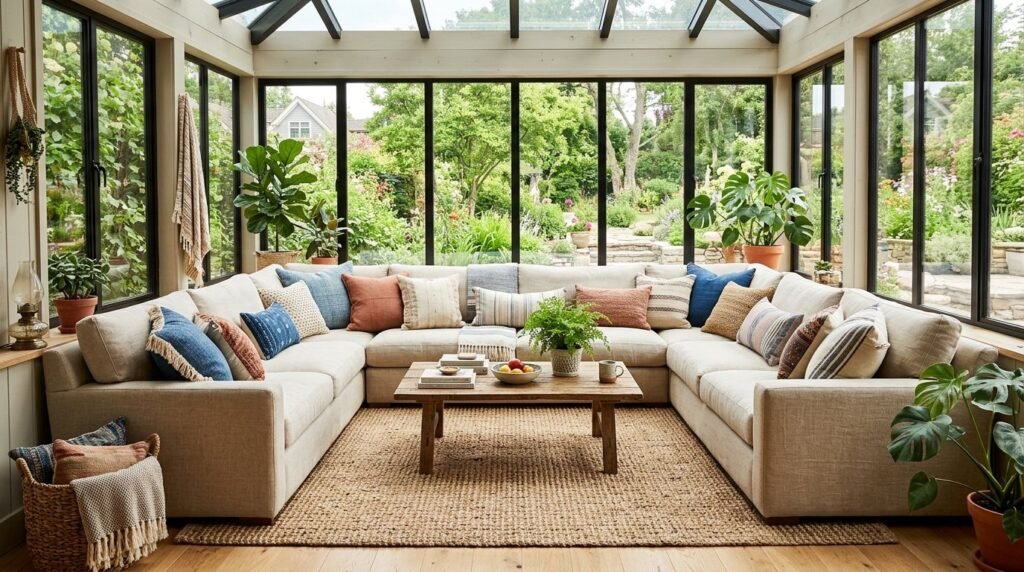
The Problem: A sunroom sitting area was beautiful but rarely used because the wicker furniture was “scratchy” and the room felt isolated from the rest of the house.
The Solution: We replaced the wicker with a deep-seated sectional and added a rug that extended into the adjacent living room to “pull” the space together.
The Outcome: Use increased by 400% within the first month.
The Cost: $1,800 for the sectional and $250 for the rug.
The Timeline: One weekend for assembly and styling.
11. Hidden Bar Area
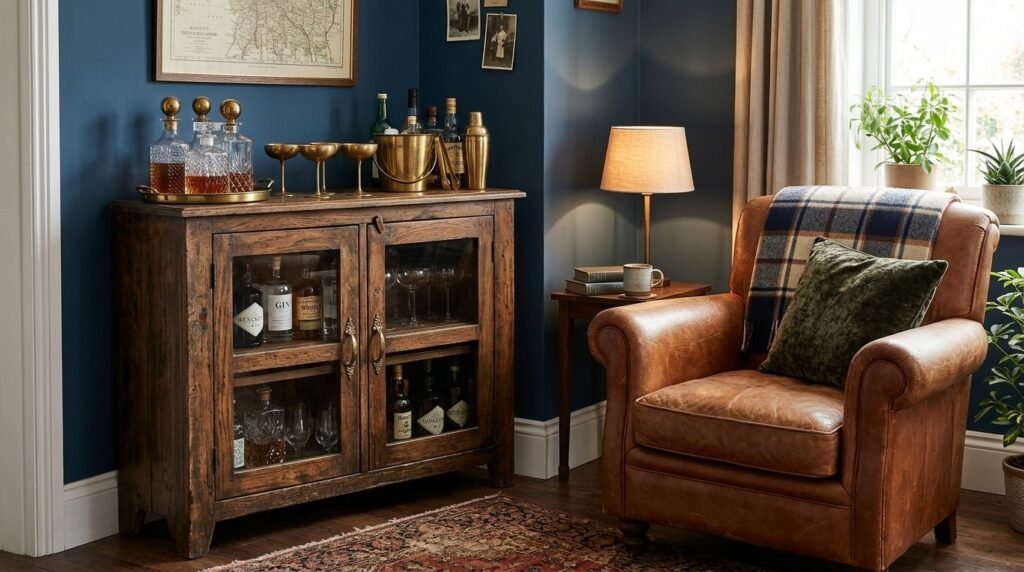
Socializing often involves drinks, so integrate a small bar cart or a repurposed cabinet into your seating group. I like to tuck a vintage wooden cabinet into a “casual corner” and stock it with high-quality glassware. This prevents people from drifting into the kitchen and breaking the flow of conversation. You can find unique cabinets at thrift stores for $50 and spend $20 on new hardware. Make sure the cabinet is at the same height as your chair arms for easy access. Avoid glass-topped carts if you have kids or pets, as they show every fingerprint and smudge.
12. Library Wall
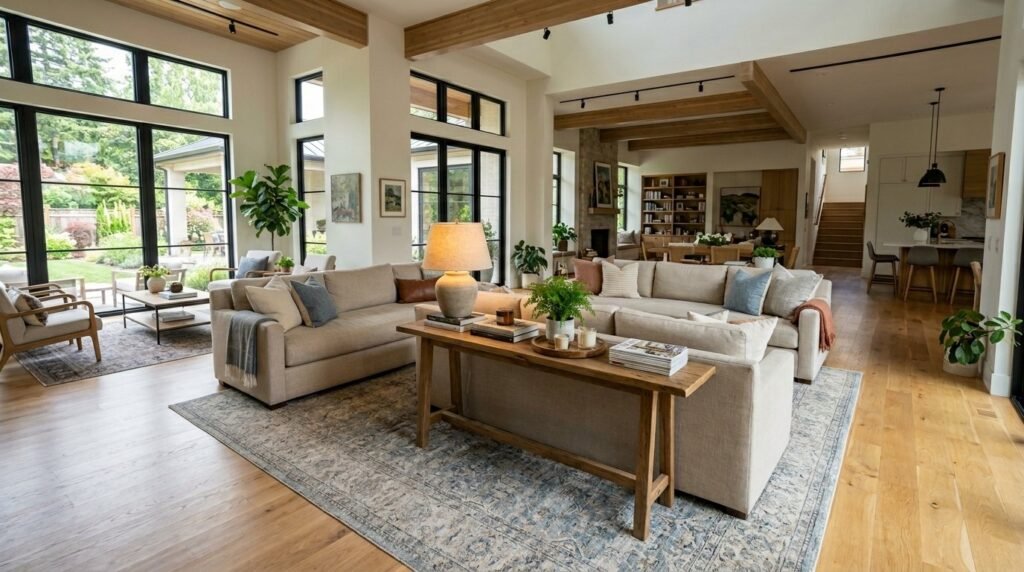
Line one entire wall with floor-to-ceiling shelving to create a “comfy reading room” atmosphere that feels academic yet cozy. I’ve seen standard IKEA Billy bookcases look like custom built-ins just by adding crown molding to the top. This adds massive visual weight and soundproofing to the room. Expect to spend $400 for a 10-foot wall of shelving. Place a small stool nearby so guests can browse the titles easily. Do not over-style the shelves with “knick-knacks”; books should be the primary stars of the show.
13. Back-to-Back Seating
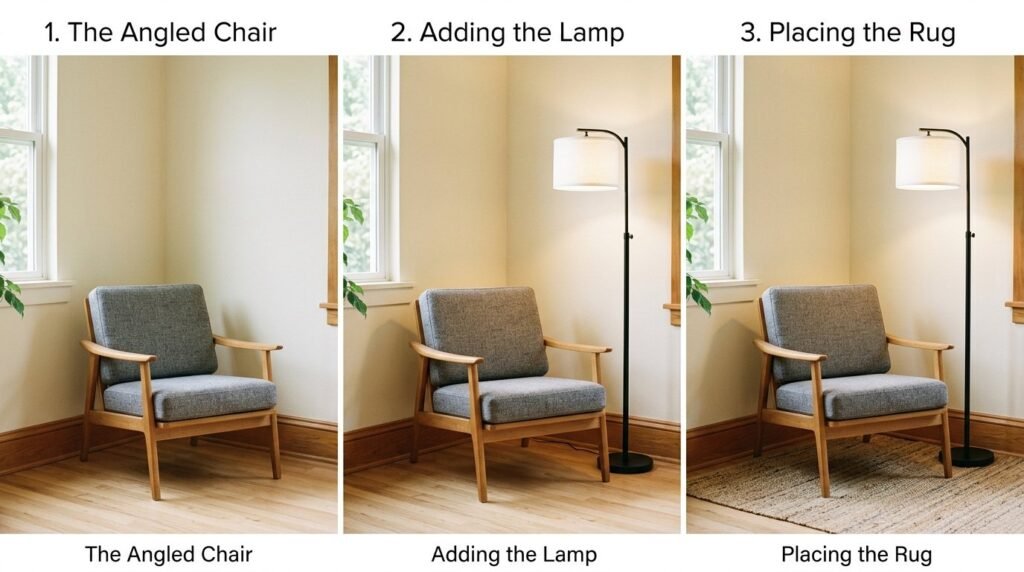
In very large rooms, place two sofas back-to-back in the center of the space to create two distinct social zones. I used this in a 30-foot living room to create one “quiet” side for reading and one “loud” side for games. Use a long console table between the sofas to act as a shared surface for lamps and drinks. This requires a larger budget, likely $2,500 for two sofas. Ensure there is at least 3 feet of walking space on all sides of the island. A mistake here is choosing two sofas of different heights, which looks disjointed from the side.
14. Step-By-Step: Creating a Floating Corner
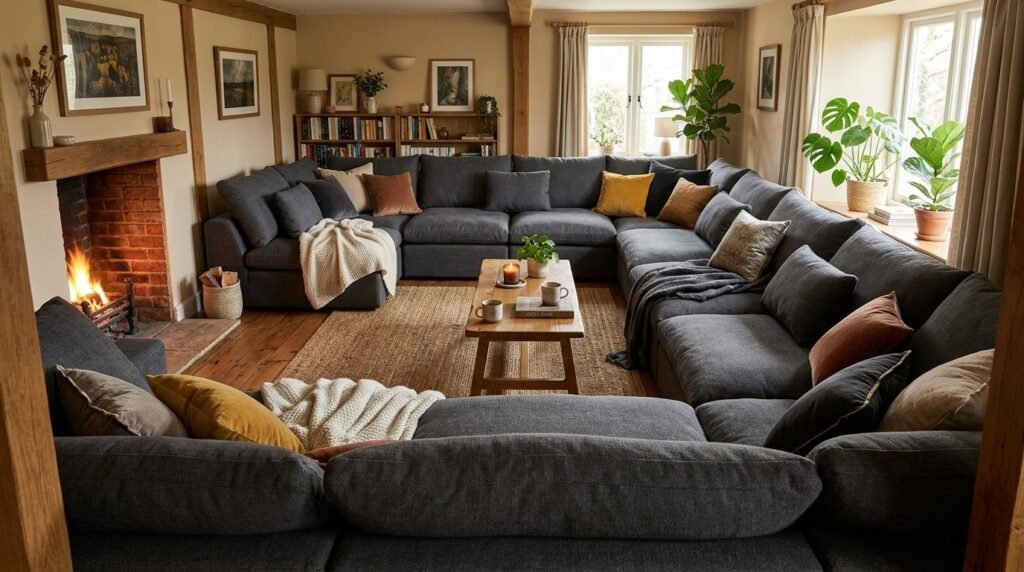
- Clear the Space: Remove all small items from a 6×6 foot corner of your room.
- Place the Anchor: Position a medium-sized armchair at a 45-degree angle to the corner.
- Add the Surface: Place a small round side table (18 inches high) on the side of the chair’s dominant hand.
- Light the Zone: Set a floor lamp behind the chair so the light falls over the shoulder.
- Texture Layer: Drape a wool throw over the back and place a small rug (3×5) under the front legs of the chair.
- Expected Outcome: A professional-looking “reading area for adults” that feels intentional, not cluttered.
15. Modular Pit Sectional
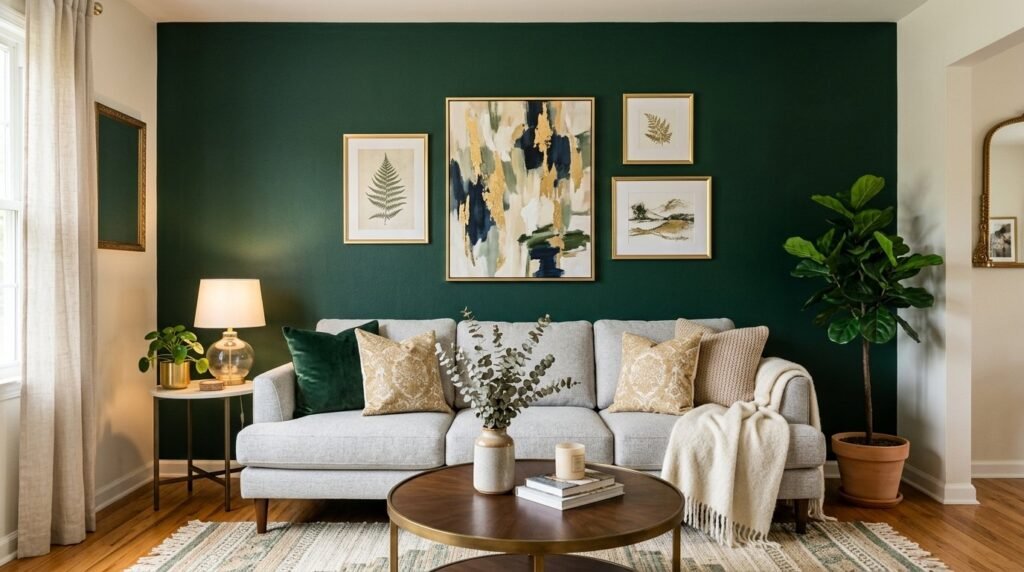
If your social space is strictly for family and close friends, a modular “pit” sofa allows everyone to lounge together without boundaries. I prefer styles where the ottomans can be moved to create a giant bed for movie nights. These are expensive, often starting at $2,000 for a quality set. Make sure the fabric is a high-performance weave to handle the inevitable snacks and feet. The downside is that these are hard for older guests to get out of because they sit low. Always keep two standard-height chairs nearby for guests who need more support.
16. Accent Wall Mood
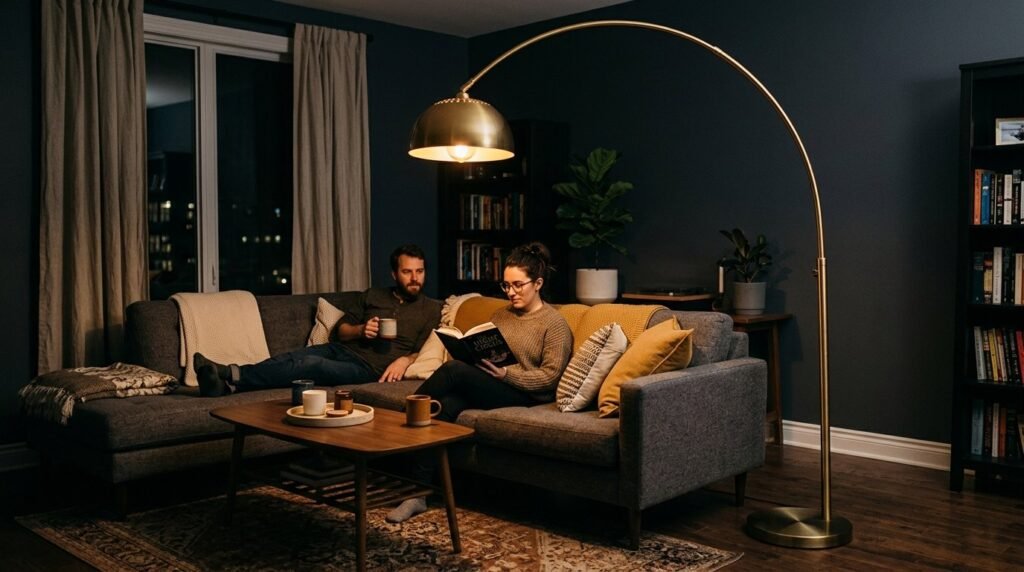
Use a deep, dark paint color on the wall behind your primary indoor seating area to create a “cocoon” effect. I’ve noticed that people stay longer in rooms with dark navy or charcoal walls because they feel more private and secure. A gallon of premium paint costs $70 and can be done in an afternoon. Choose a matte finish to hide wall imperfections and reduce glare from lamps. Don’t paint the whole room dark if it lacks natural light; one wall is usually enough to set the tone.
17. Indoor Swing Seat
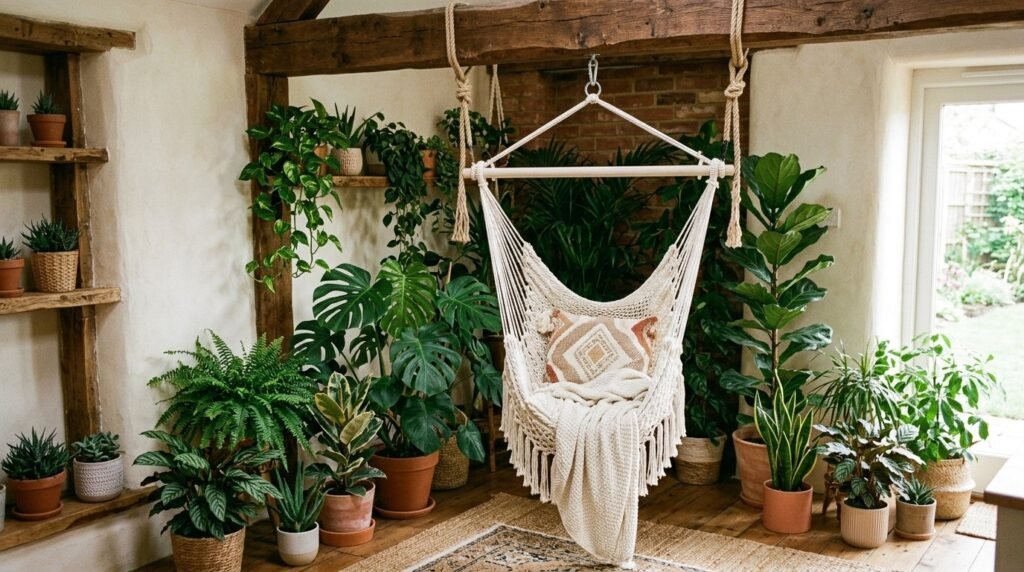
For a whimsical touch in a sunroom sitting area, hang a woven macramé swing or a rattan egg chair from a reinforced ceiling beam. I’ve installed these in several “casual corner” projects, and they are always the first place people sit. You must find a ceiling joist for safety, which might require a $50 stud finder and heavy-duty hardware. Total cost for a good chair and kit is around $250. Check the weight limit of the chair before purchasing. Never hang these from drywall or light-duty anchors, as they will eventually pull through the ceiling.
18. Layered Rug Technique
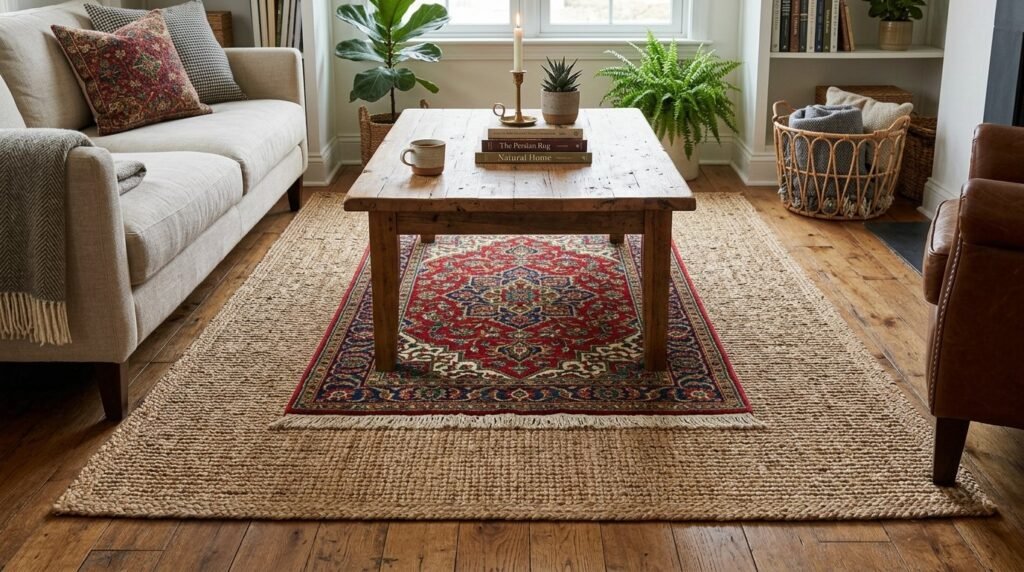
Small rooms can feel larger and more “designed” when you layer a small, patterned rug over a large, neutral jute rug. I use this to define a “cozy corner ideas living room” zone within a larger open-concept house. A large jute rug (8×10) is about $200, and a vintage topper can be found for $100. This adds instant warmth and improves the acoustics of the room. Ensure the top rug is thin enough that it doesn’t create a tripping hazard. Avoid using two thick shag rugs together, as the pile will shift and look messy.
19. Investment vs. Budget ROI
| Item | Invest ($$$) | Save ($) | Why? |
| Sofa/Chair | Yes | No | Comfort and durability are non-negotiable. |
| Side Tables | No | Yes | Thrifted wood looks better than cheap new veneer. |
| Rug | No | Yes | Natural fibers (jute/sisal) are cheap and stylish. |
| Lighting | Yes | No | High-quality warm LEDs change the entire mood. |
| Art | No | Yes | Personal photos or DIY canvases add more soul. |
20. Sculptural Floor Lamp
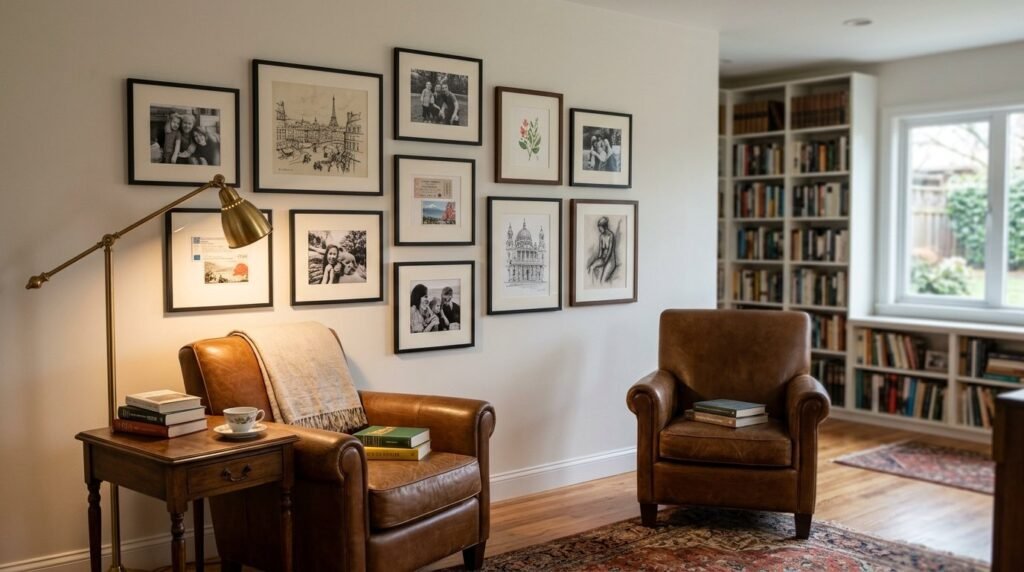
Lighting is the most underrated aspect of sitting room ideas. A large, arched floor lamp that “reaches” over a seating group provides intimate light without the harshness of overhead fixtures. I always look for lamps with a heavy marble base for stability. Expect to pay $150 to $300 for a statement piece. Position it so the shade is about 5 feet from the floor to avoid glare in people’s eyes. Don’t use “cool white” bulbs; they make a cozy room look like a hospital hallway.
21. Natural Element Integration
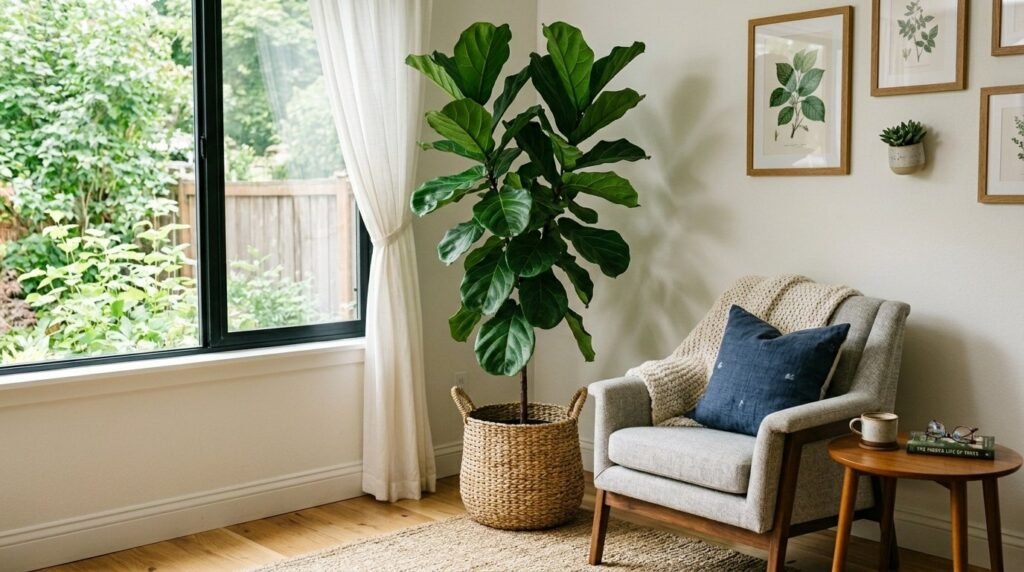
Bring the outdoors in by placing a large, potted tree like a Fiddle Leaf Fig or an Olive Tree behind your seating area. In my experience, greenery softens the hard edges of furniture and makes a “sunroom sitting area” feel more authentic. A 6-foot faux tree costs about $150, while a real one is $80 but requires maintenance. Use a basket or a ceramic pot to hide the plastic nursery tub. Ensure the plant doesn’t block the walking path. A common mistake is using tiny plants that get lost in the scale of the room.
22. Sound and Scent
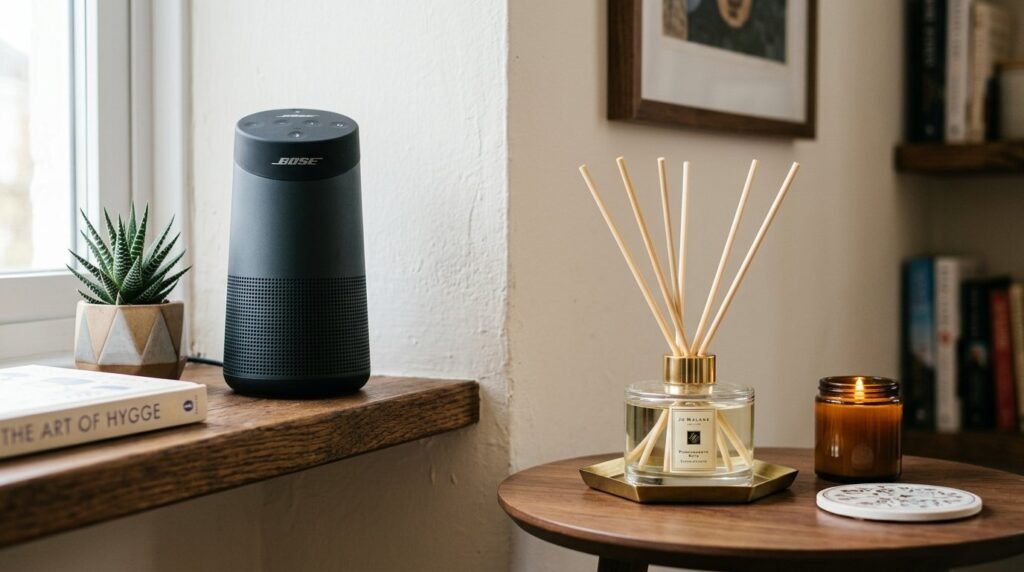
A social space isn’t just about what you see; it’s about how it feels to all your senses. I keep a high-quality Bluetooth speaker hidden on a bookshelf and a subtle reed diffuser on a side table. Scented candles are great, but diffusers provide a more consistent, lingering “comfy reading room” vibe. A good speaker is $150, and a diffuser is $30. Use woody or herbal scents like cedar or bergamol rather than sweet, fruity ones. Don’t blast the music; it should be a background layer that fills the silence, not a concert.
23. Personal Gallery Wall
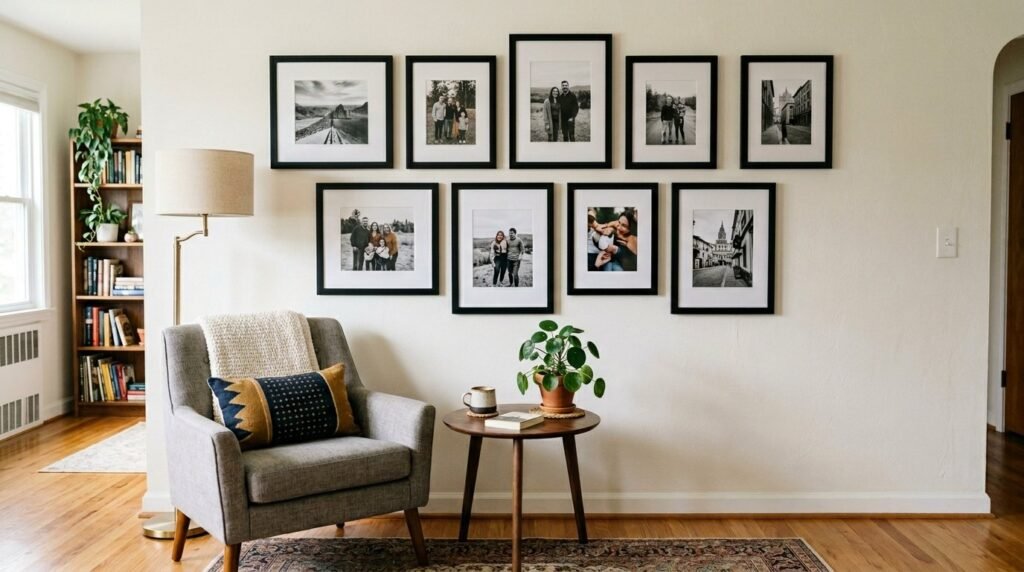
Instead of one giant piece of generic art, create a gallery wall of personal photos, travel mementos, and sketches around your “reading area for adults.” I find that this sparks more conversation among guests than any other design element. You can buy a set of 10 matching frames for $100. Layout the frames on the floor first to get the spacing right before hammering any nails. The trick is to keep the gap between frames consistent (about 2-3 inches). Avoid hanging art too high; the center of the gallery should be at eye level when standing.
Frequently Asked Questions
What is the ideal distance between chairs for conversation?
In my experience, the sweet spot is between 3 and 7 feet. Anything closer feels like you are invading personal space, and anything further forces guests to raise their voices. If you have a large room, don’t try to make one giant circle. Instead, create two smaller, intimate clusters. This allows for multiple simultaneous conversations during a party and makes the room feel much more intentional.
How do I choose the best cozy reading nook chair?
Look for three things: seat depth (at least 22 inches), armrest height (must be natural for your elbows), and fabric breathability. Avoid sticky leathers or “scratchy” wools if you plan on spending hours there. I’ve seen many people buy beautiful chairs that are too upright for lounging. If you can’t comfortably curl your legs up in the seat, it isn’t a true reading chair.
Are indoor seating area rugs necessary on carpet?
Yes, absolutely. Layering a rug over wall-to-wall carpet is a professional secret for defining a specific zone like a “casual corner.” It adds a necessary pop of color and texture that helps separate the “social space” from the rest of the floor. Just make sure to use a rug-to-carpet pad to prevent the top rug from “creeping” or wrinkling as people walk across it.
How can I make a window nook feel warmer in winter?
The biggest issue with a “coffee nook with window” in winter is the draft. I recommend using heavy velvet curtains that can be pulled tight at night and adding a high-quality faux fur throw to the seating. You can also place a small, stylish electric space heater nearby. In my own home, I swap out light linen cushions for heavier wool ones as soon as the temperature drops.
What are common mistakes in sunroom sitting area layouts?
The most frequent error is over-furnishing. Because sunrooms usually have lots of glass, they can feel cluttered very quickly. Keep the furniture low-profile so you don’t block the views. Another mistake is using furniture that isn’t UV-resistant. Even if the room is “indoor,” the constant sun will destroy standard fabrics in a few seasons. Look for “indoor/outdoor” performance fabrics that have a soft touch but high durability.
I’ve seen how shifting a single chair by two feet can completely change the way a family uses their home. Your sitting room shouldn’t be a museum; it should be the backdrop for your best memories and most meaningful conversations. Whether you’re building a “modern reading nook” or a full “fireside lounge,” prioritize how people will feel when they are actually in the space. Use these sitting room ideas to experiment with your layout this weekend. Start with one small corner, see how it changes the energy of your home, and then keep going. Don’t forget to save this guide to your Pinterest boards so you can reference these measurements and layouts when you’re out shopping for your next perfect chair.

Amelia Hart is the Senior Design Editor at Vellora Interiors, where she curates small-space and apartment content. With a background in color theory and years spent designing under-500-square-foot rentals, she’s the editor who’ll tell you exactly which paint sheen, curtain length, and lamp height to choose, no guessing. A former design lead at a boutique studio, her work has been featured in several home and lifestyle publications. Her guiding belief: “Good design isn’t about more, it’s about choosing better.”