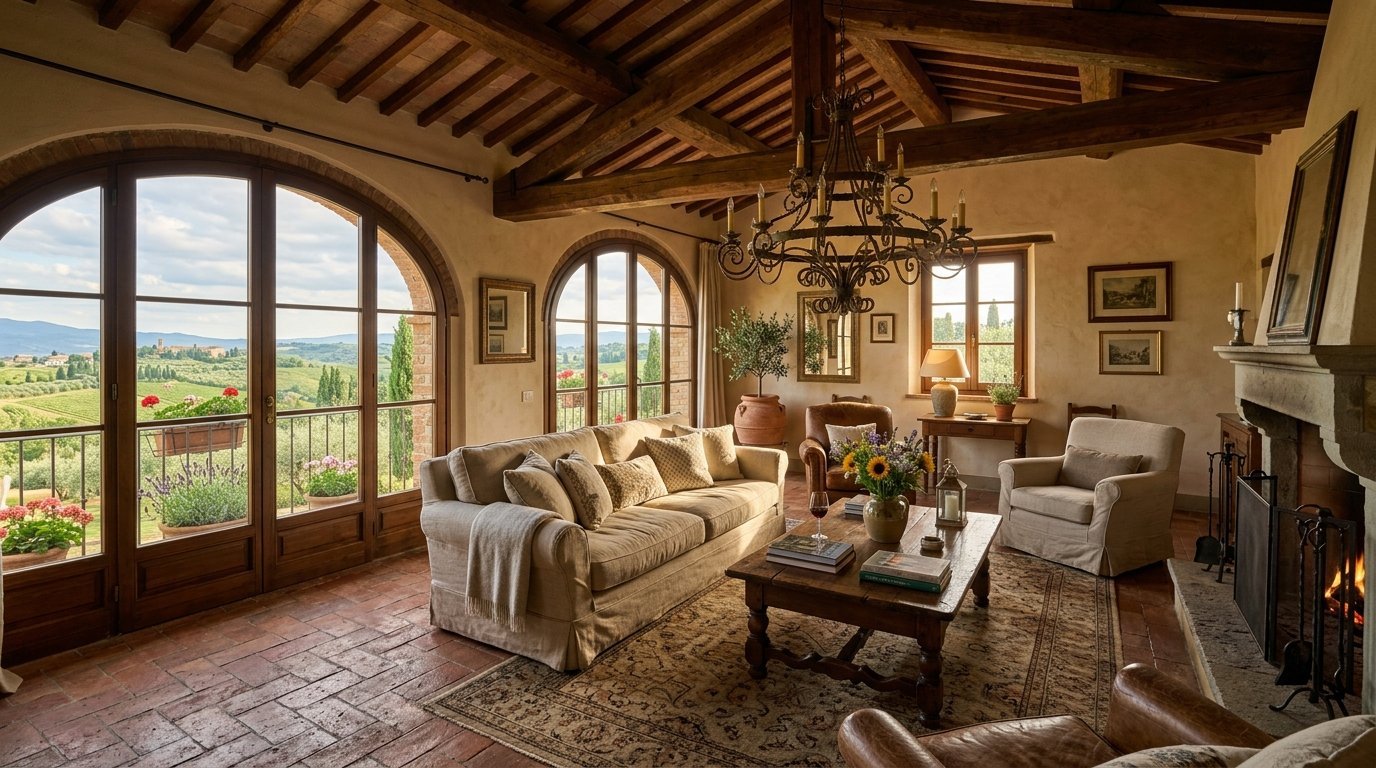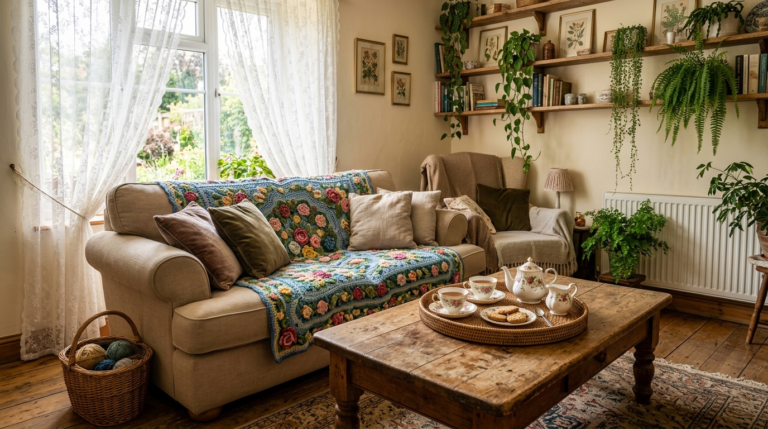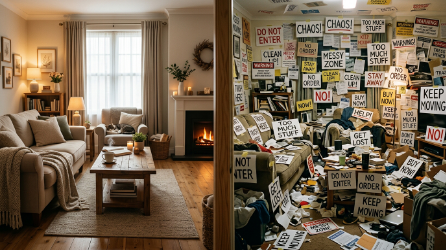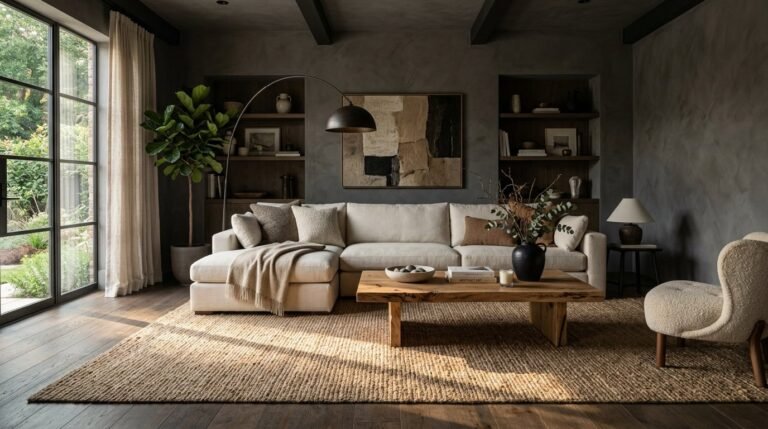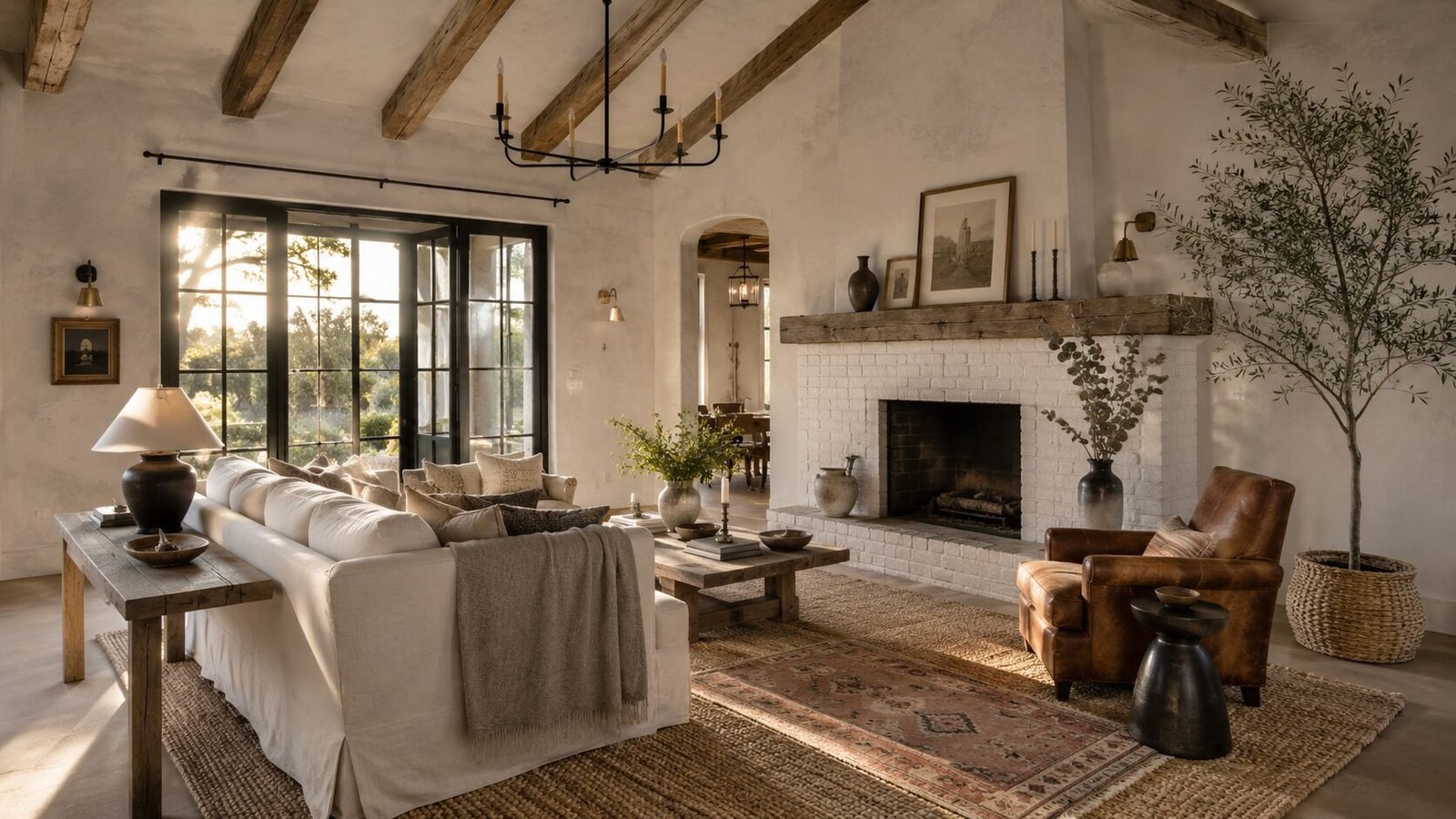
Walking into a cold, sterile living room after a long day feels draining. I remember visiting a friend who had just finished a modern renovation that felt more like a tech lobby than a home. The echoing floors and white walls lacked soul. We sat on a grey sectional that felt stiff, and the conversation struggled to find a spark. It reminded me of why I turned to Mediterranean decor in my own house years ago. There is a specific kind of comfort found in the sun-soaked hills of Italy that modern minimalism simply cannot replicate. By bringing in textures that feel lived-in and colors that mimic the earth, you change the entire emotional frequency of your space. This guide provides the exact roadmap to move from a chilly atmosphere to an authentic Italian sanctuary.
Executive Summary
Creating a home with a cozy house feel requires a shift toward natural materials and soft lighting. In the next few thousand words, you will discover how to implement 24 distinct elements that define the luxury living room aesthetic without requiring a villa budget. We cover everything from foundational terracotta choices to the nuance of wrought iron accents. You will see why many homeowners fail by choosing high-gloss finishes when a matte, weathered look is the true secret to authenticity. We examine cost-effective ways to add character, including specific paint brands like Sherwin Williams and lighting setups that cost under $200. Whether you live in a suburban tract home or an urban apartment, these strategies help you ground your environment in warmth and history.
1. Terracotta Flooring
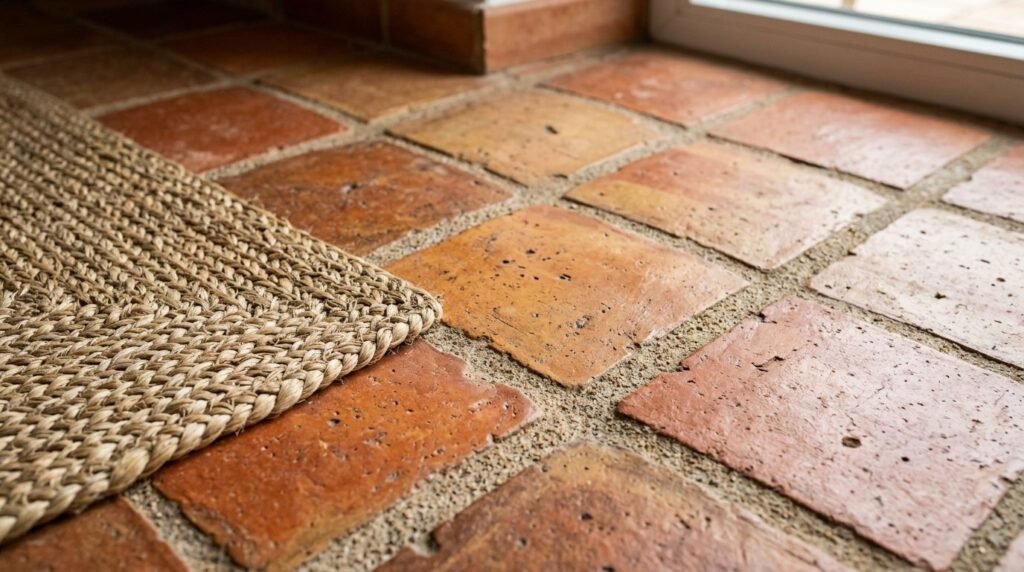
Authentic Italian spaces start from the ground up with clay-based tiles. I have found that Saltillo tiles or handmade terracotta from brands like Arto provide the necessary variation in tone that machine-made tiles lack. You want a matte finish that feels cool underfoot in summer and holds warmth in winter.
- Actionable Step: Choose a wide grout line in a sandy tan color to make the tiles look like they have been there for decades.
- Cost/Time: Expect to pay $8 to $15 per square foot for quality materials. Installation takes three to five days.
- Contrarian Note: Avoid high-gloss sealants. They make the room look like a 1990s fast-food restaurant rather than a rustic retreat.
2. Exposed Ceiling Beams
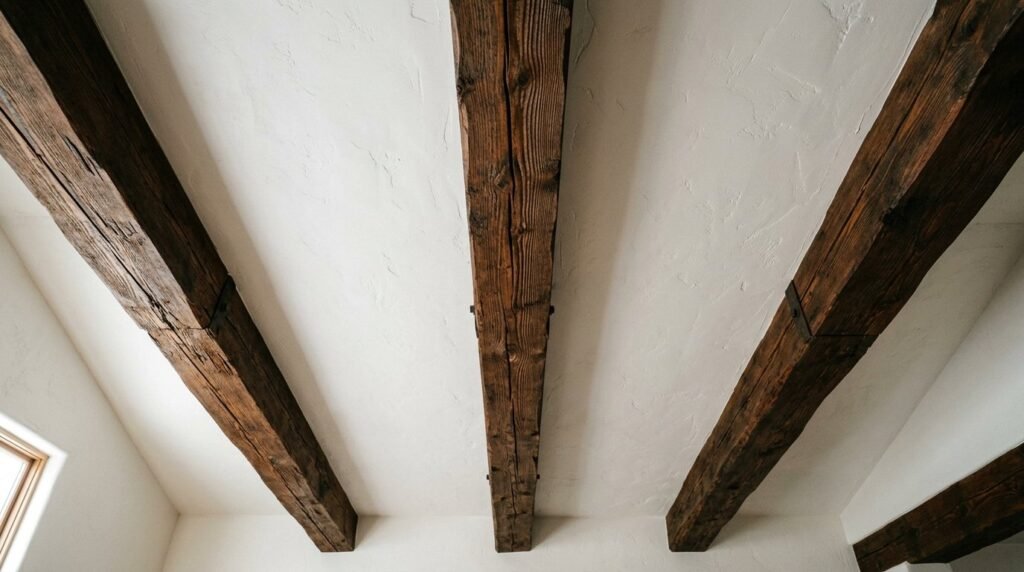
Wooden beams add immediate structural history to a flat ceiling. If your home lacks real timber supports, high-quality faux beams from Barron Designs offer a realistic look that won’t strain your rafters. Dark walnut or weathered oak finishes provide the best contrast against light plaster.
- Actionable Step: Install beams perpendicular to the longest wall to make the room feel wider.
- Cost/Time: Faux beams cost about $200 per ten-foot span. Professional installation usually takes one day.
- Contrarian Note: Do not paint your beams white. The goal is to see the grain and the “weight” of the wood.
3. Plaster Wall Finishes
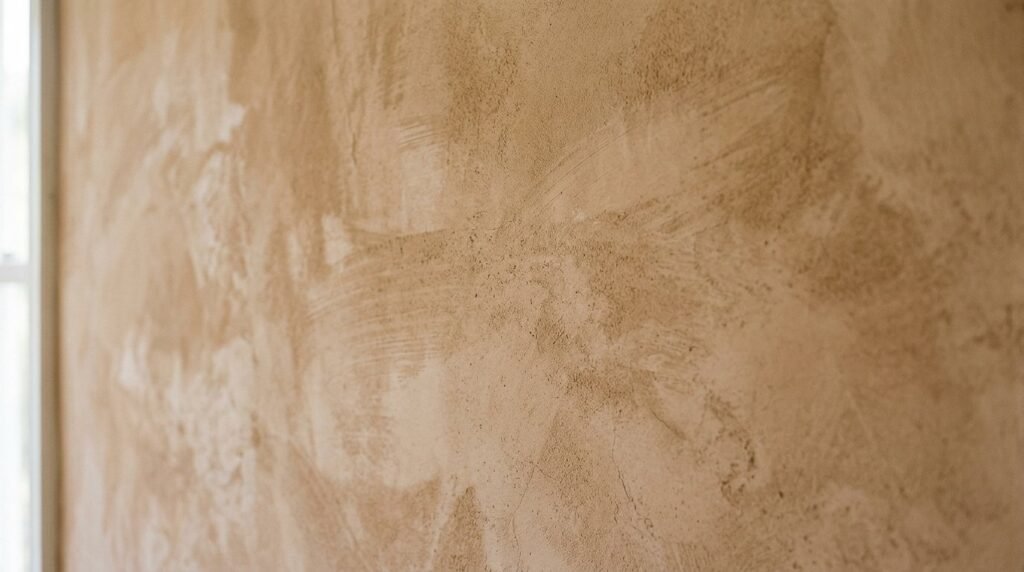
Flat drywall is the enemy of the Mediterranean decor vibe. Using a lime wash paint from a company like Portola Paints creates a soft, chalky texture that reacts beautifully to light. This finish allows the walls to breathe and adds a subtle movement that flat latex paint cannot achieve.
- Actionable Step: Use a large masonry brush and apply the paint in random “X” patterns to create natural depth.
- Cost/Time: A gallon of lime wash costs roughly $80 and covers about 250 square feet.
- Contrarian Note: Avoid heavy “popcorn” or “orange peel” textures. Real Italian plaster is smooth to the touch but visually deep.
4. Wrought Iron Accents
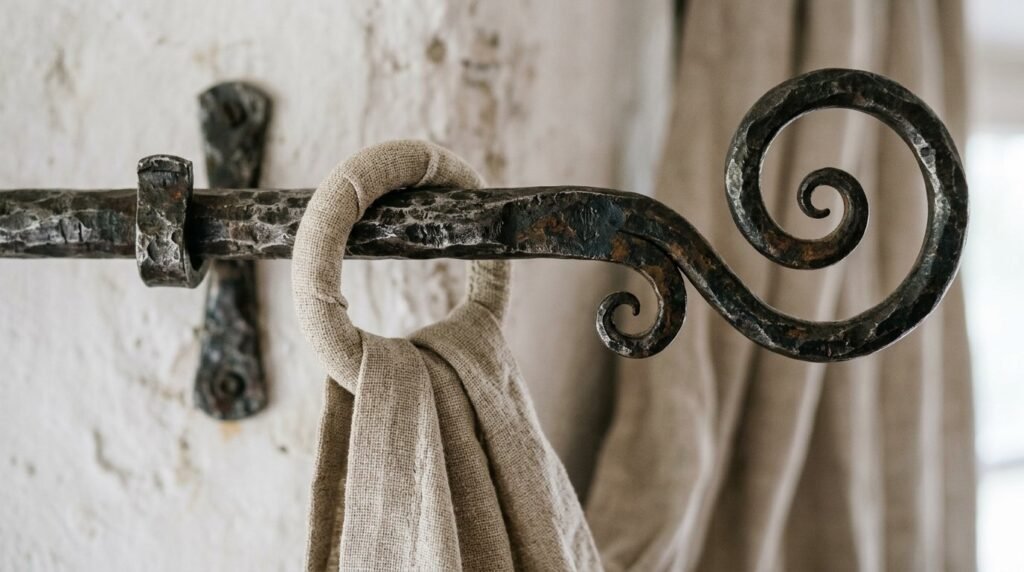
Metalwork should feel heavy and hand-forged. Incorporating a curtain rod or a large floor lamp in a scrolled iron design anchors the lighter fabrics in the room. I often suggest looking for vintage pieces at estate sales that have a natural patina rather than buying shiny black spray-painted versions.
- Actionable Step: Replace standard brass cabinet hardware with hammered iron pulls for an instant upgrade.
- Cost/Time: Small hardware updates cost $50 to $100. A large light fixture may range from $400 to $900.
- Contrarian Note: Limit the scrolls. Too many curly iron details can make the room look dated rather than classic.
5. Antique Walnut Furniture
The wood in a Tuscan-style room should be dark and sturdy. A large credenza or a coffee table made from walnut or chestnut provides a sense of permanence. Brands like Restoration Hardware often mimic this look, but a local antique shop usually has a more authentic piece for half the price.
- Actionable Step: Look for “distressed” edges where the wood shows natural wear from years of use.
- Cost/Time: Budget $500 to $1,500 for a significant focal piece.
- Contrarian Note: Do not match your coffee table to your side tables. A mix of woods makes the room feel like it was collected over generations.
6. Stone Fireplace Surround
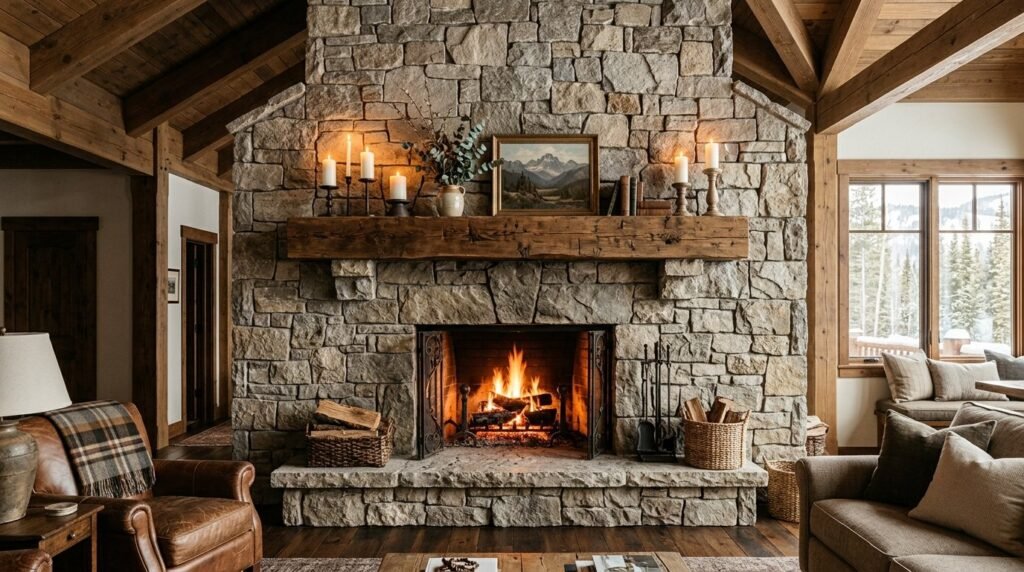
The fireplace is the heart of any cozy house. Using fieldstone or travertine to wrap a standard fireplace insert creates a massive visual anchor. I’ve seen homeowners use stone veneer from Eldorado Stone to get the look of a heavy hearth without the need for additional structural support.
- Actionable Step: Extend the stone all the way to the ceiling to draw the eye upward and emphasize height.
- Cost/Time: Stone veneer materials for a standard fireplace cost around $600.
- Contrarian Note: Avoid perfectly square or uniform stones. Real Tuscan masonry uses irregular shapes and varying thicknesses.
7. Sun-Drenched Palettes
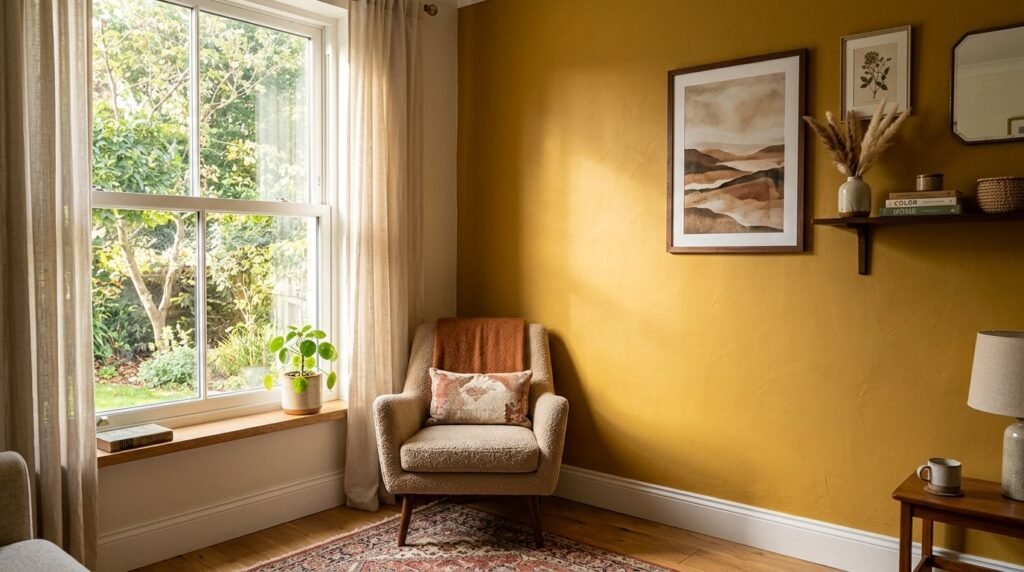
Earthy colors like ochre, burnt sienna, and olive green should dominate the space. These tones mimic the Italian countryside at sunset. I recommend Benjamin Moore’s “Spanish Galleon” or “Pueblo Brown” for a rich but balanced background that doesn’t feel too dark.
- Actionable Step: Paint a small sample board and move it around the room at different times of day to ensure the yellow undertones don’t turn muddy.
- Cost/Time: Painting a standard room costs $100 in materials if you do it yourself.
- Contrarian Note: Avoid bright lemon yellows. They are too jarring. Stick to gold and mustard tones for warmth.
8. Linen Drapery Panels
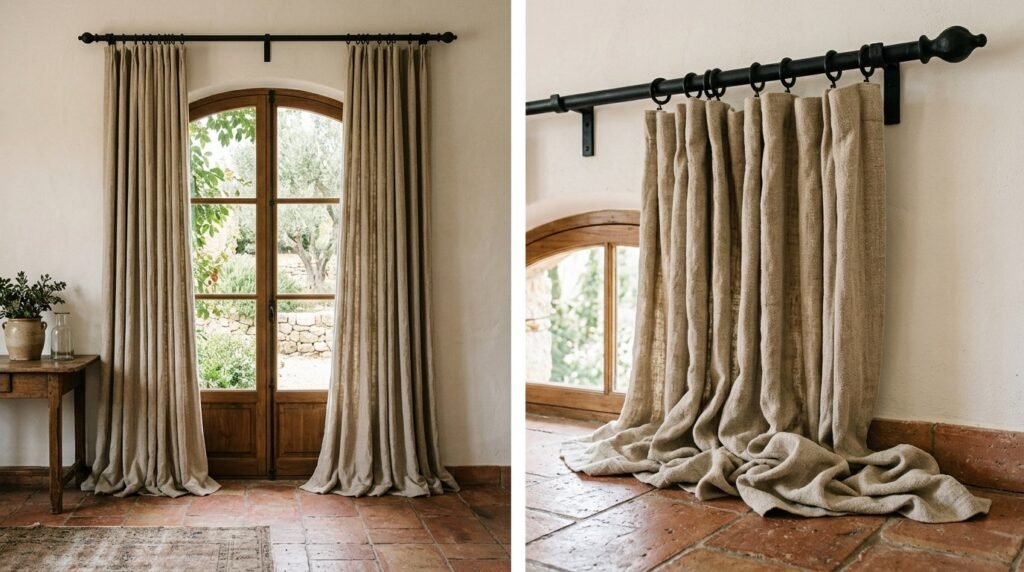
Softness is required to balance the stone and wood. Heavy linen curtains in an oatmeal or cream color allow light to filter through while maintaining privacy. They should be hung high and wide to frame the windows and add a vertical element of fabric.
- Actionable Step: Let the curtains “puddle” on the floor by two or three inches for a relaxed, European look.
- Cost/Time: High-quality linen panels from West Elm or Pottery Barn cost about $120 per panel.
- Contrarian Note: Skip the heavy valances or formal swags. Simple rings on an iron rod are far more authentic.
9. Hand-Painted Ceramics
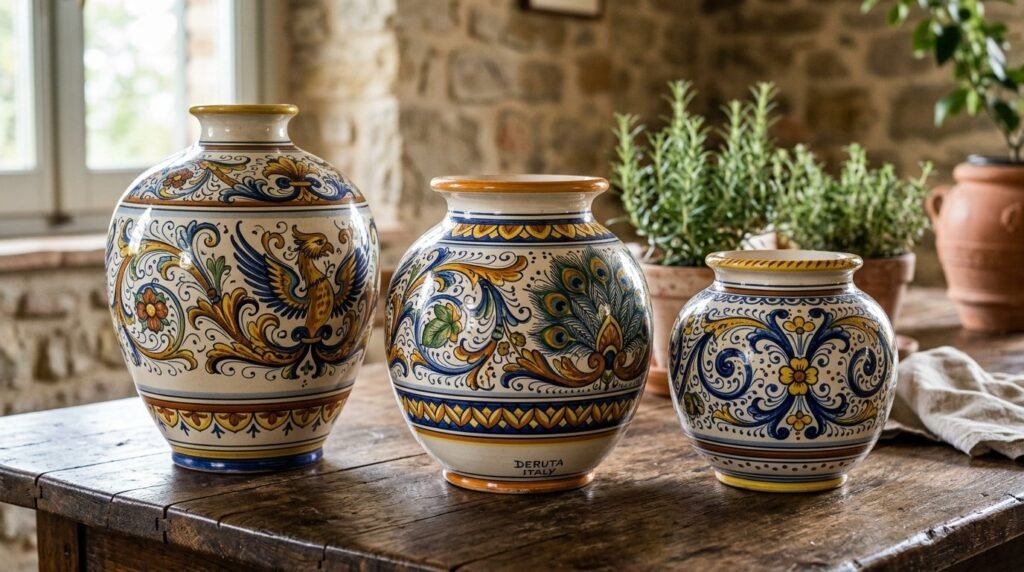
Vases and platters from the Deruta region of Italy are iconic. Placing a large, colorful ceramic bowl on a coffee table introduces a splash of artistry. These pieces often feature intricate patterns in blue, orange, and yellow that pull the room’s palette together.
- Actionable Step: Group three ceramic jars of varying heights on a mantel for a balanced vignette.
- Cost/Time: Authentic Deruta pieces start around $75 for small bowls and can go up to $500 for large urns.
- Contrarian Note: Don’t buy “Tuscan” themed kitchen sets from big-box stores. One real piece of Italian pottery is better than ten cheap replicas.
10. Arched Doorway Designs
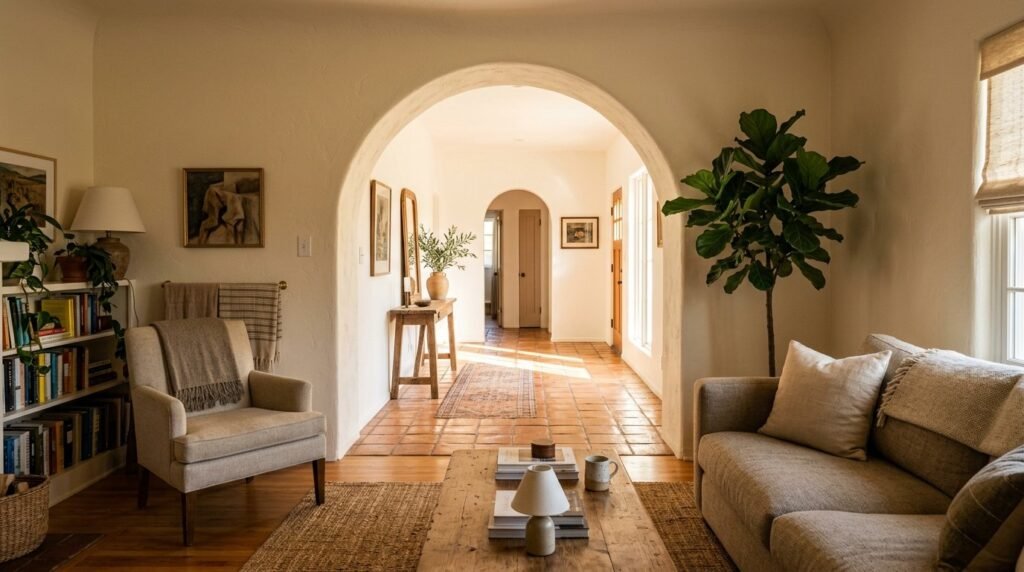
Architecture in Italy often favors curves over sharp corners. If you are remodeling, converting a standard rectangular doorway into a soft arch changes the flow of the house. It creates a sense of mystery and elegance as you move from one room to another.
- Actionable Step: Use a “pre-fab” arch kit like those from Archways & Ceilings to simplify the framing process.
- Cost/Time: A DIY arch kit costs about $150, but drywall finishing requires skill and time.
- Contrarian Note: Only arch the main thoroughfares. Arching every closet door becomes overwhelming and loses its impact.
11. Woven Rattan Details
Bringing in natural fibers like rattan or seagrass prevents the room from feeling too heavy. A set of woven baskets for firewood or a rattan chair in the corner adds a casual, breezy element that suggests a coastal Mediterranean influence.
- Actionable Step: Use a large seagrass basket to hide messy electronics or remote controls near the sofa.
- Cost/Time: Baskets range from $30 to $80.
- Contrarian Note: Ensure the rattan has a warm, honey-colored stain. Grey-toned wicker looks too “modern farmhouse” for this style.
12. Potted Olive Trees
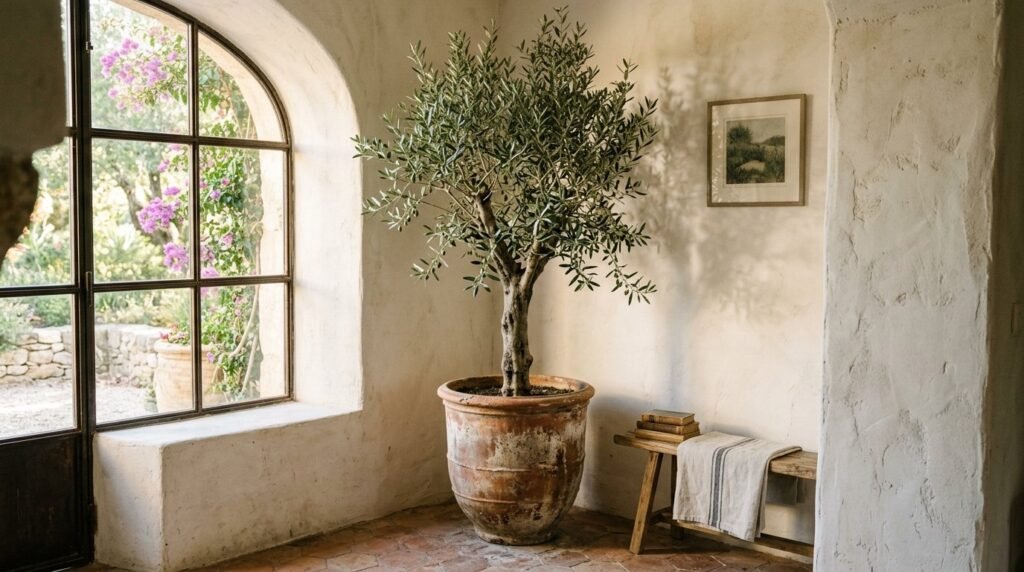
Nothing says Italian countryside like an olive tree. If you have enough natural light, a real Arbequina olive tree can thrive indoors. For those with less light, high-quality silk trees from brands like Nearly Natural offer a realistic silhouette with silvery-green leaves.
- Actionable Step: Place the tree in a large, aged terracotta pot to hide the plastic base.
- Cost/Time: A six-foot faux tree costs roughly $150. A real tree is about $60.
- Contrarian Note: Avoid small, “topped” topiaries. Let the tree look wild and slightly asymmetrical for a more natural feel.
13. Distressed Wood Mantels
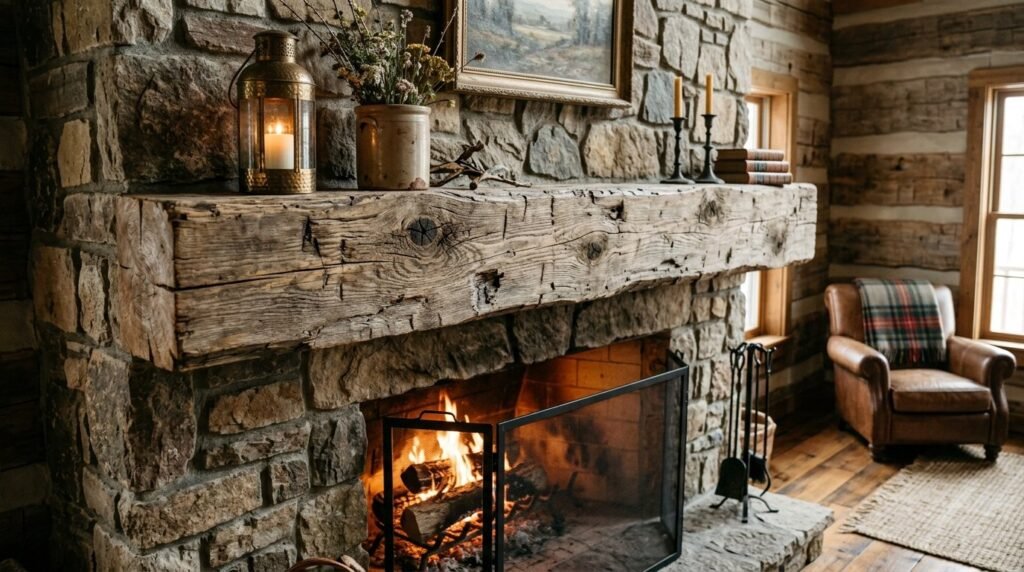
A thick, hand-hewn beam used as a mantel adds instant age to the fireplace. I’ve found that searching local lumber yards for “reclaimed” wood often yields better results than buying a finished product online. The more knots and cracks in the wood, the better.
- Actionable Step: Use invisible “floating” brackets to mount the beam so the focus remains on the wood itself.
- Cost/Time: A reclaimed beam can cost $100 to $300 depending on the size and wood species.
- Contrarian Note: Do not sand it perfectly smooth. The texture is what provides the character.
14. Copper Lighting Fixtures
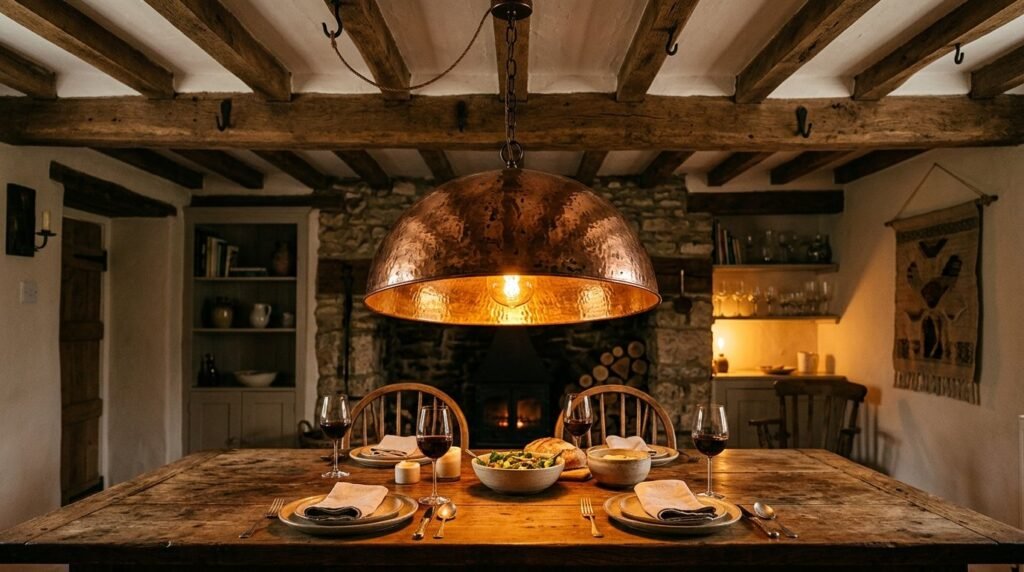
Copper introduces a metallic warmth that feels more traditional than chrome. A large copper pendant light or even copper-clad lanterns on the wall provide a glow that complements the earthy colors of the walls. Over time, the copper will develop a dark patina that looks even better.
- Actionable Step: Clean copper with lemon and salt if you want to keep it bright, or leave it alone for a rustic look.
- Cost/Time: Quality copper pendants from lighting showrooms usually start around $250.
- Contrarian Note: Do not mix too many metals. If you choose copper for lights, stick to iron for the hardware.
15. Mosaic Tile Inlays
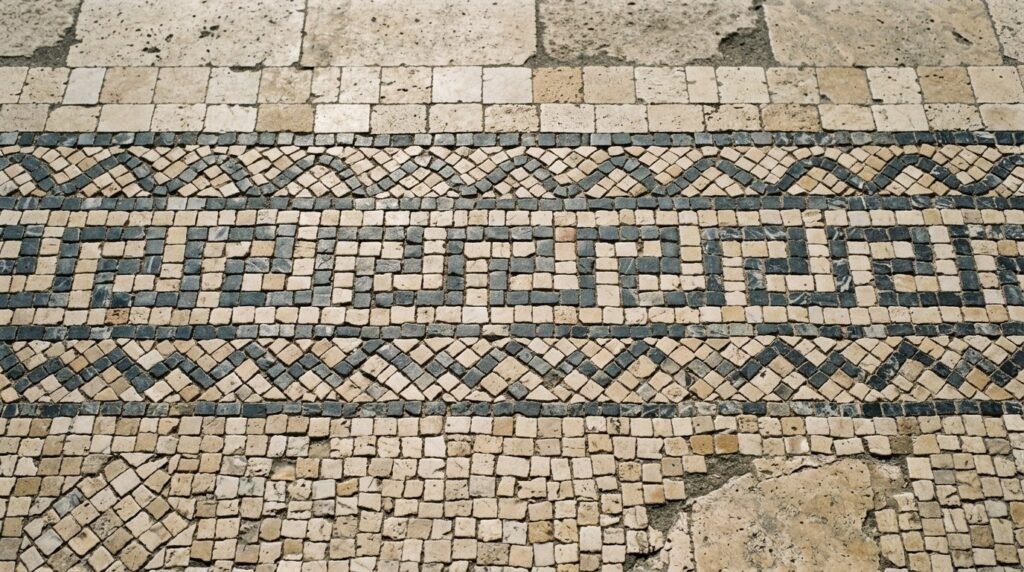
A small section of mosaic tile, perhaps as a border around the fireplace or an inset in the floor, adds a Roman-inspired detail. Use natural stone tiles in muted shades rather than bright glass mosaics to keep the look grounded and historical.
- Actionable Step: Use a “pre-meshed” mosaic sheet to ensure the pattern remains perfectly aligned during installation.
- Cost/Time: Mosaic sheets cost $15 to $30 each.
- Contrarian Note: Keep the mosaic area small. It should be a discovery, not the main event.
16. Oversized Wall Tapestries
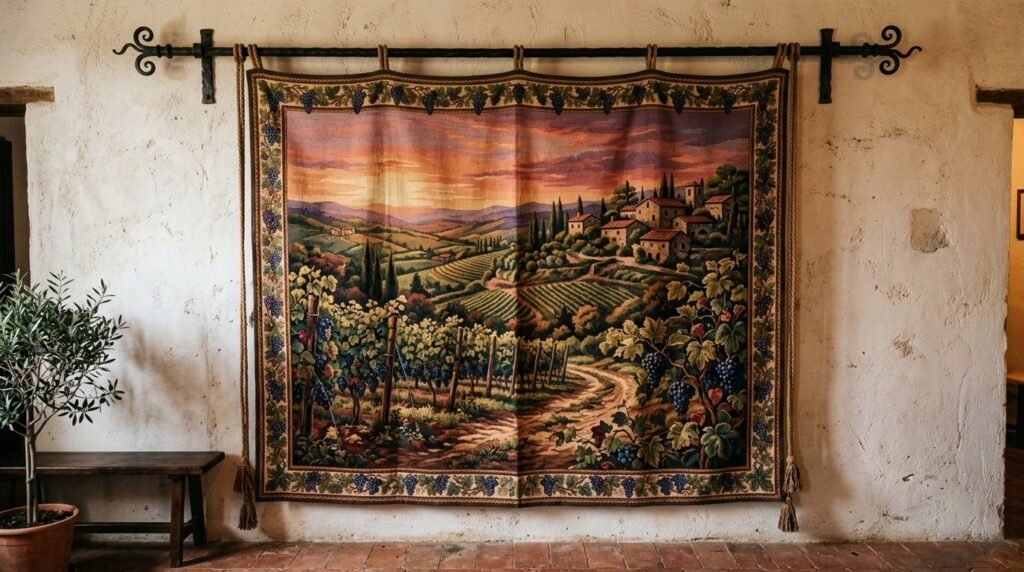
In many old Italian villas, tapestries were used to keep the heat in. Today, they serve as large-scale art that softens the acoustics of a room with hard floors. Look for scenes of rolling hills or floral motifs in faded, antique tones.
- Actionable Step: Hang the tapestry using a heavy iron rod that matches your curtain rods for visual consistency.
- Cost/Time: Large tapestries can range from $200 to $1,000 depending on the weave quality.
- Contrarian Note: Avoid cheap, thin printed tapestries. They look like dorm room decor. Go for woven fabrics with actual weight.
17. Leather Seating Options
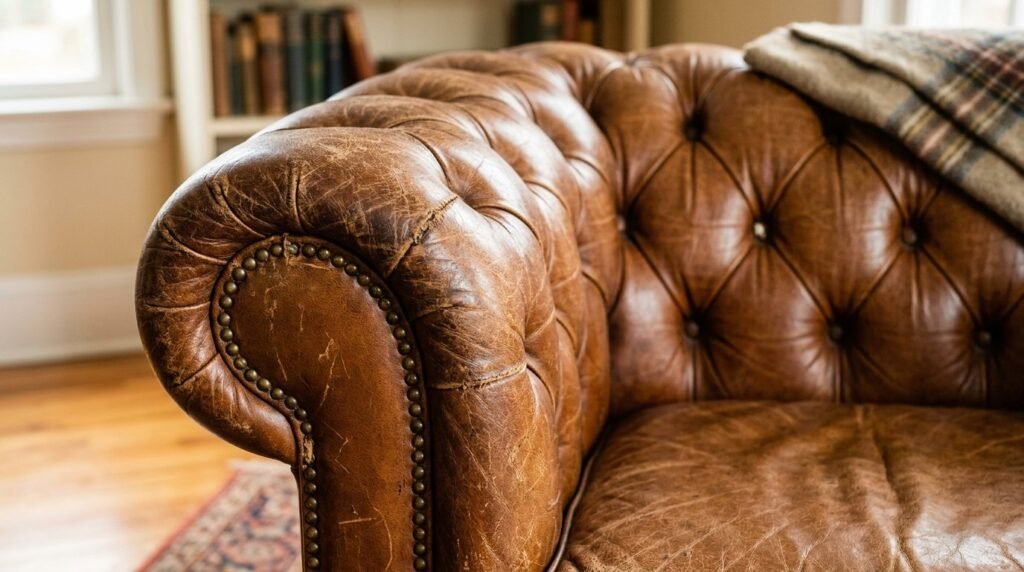
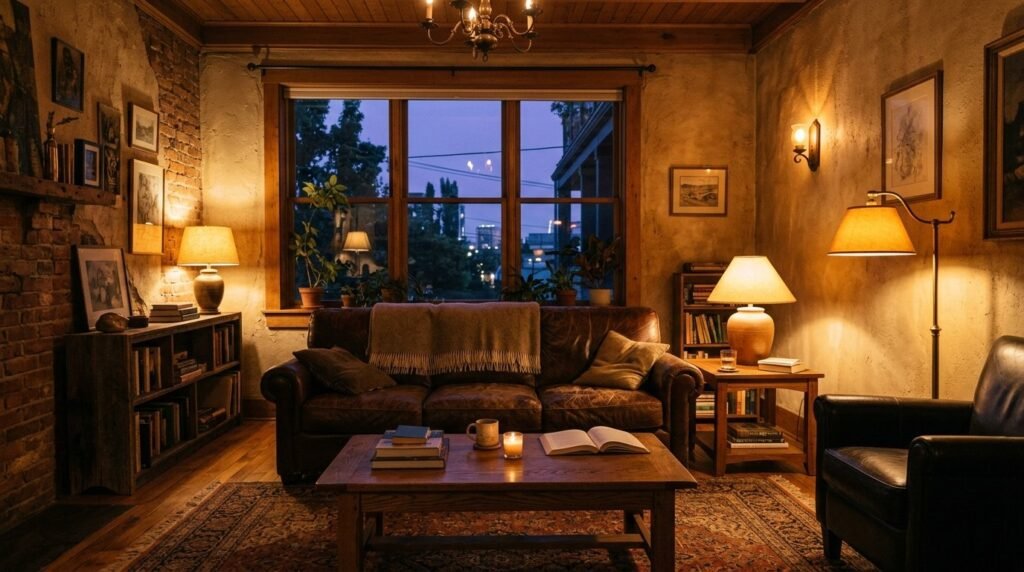
Distressed leather in a “cigar” or “cognac” shade is the perfect partner for Tuscan decorating. A leather armchair or a tufted ottoman adds a sense of luxury living room comfort that only gets better as the leather scratches and wears over time.
- Actionable Step: Apply a leather conditioner once a year to keep the hide supple without making it look new.
- Cost/Time: A high-quality leather chair from a brand like Article or Arhaus costs between $800 and $1,800.
- Contrarian Note: Avoid black leather. It is too modern and cold for this specific aesthetic.
18. Open Shelving Displays
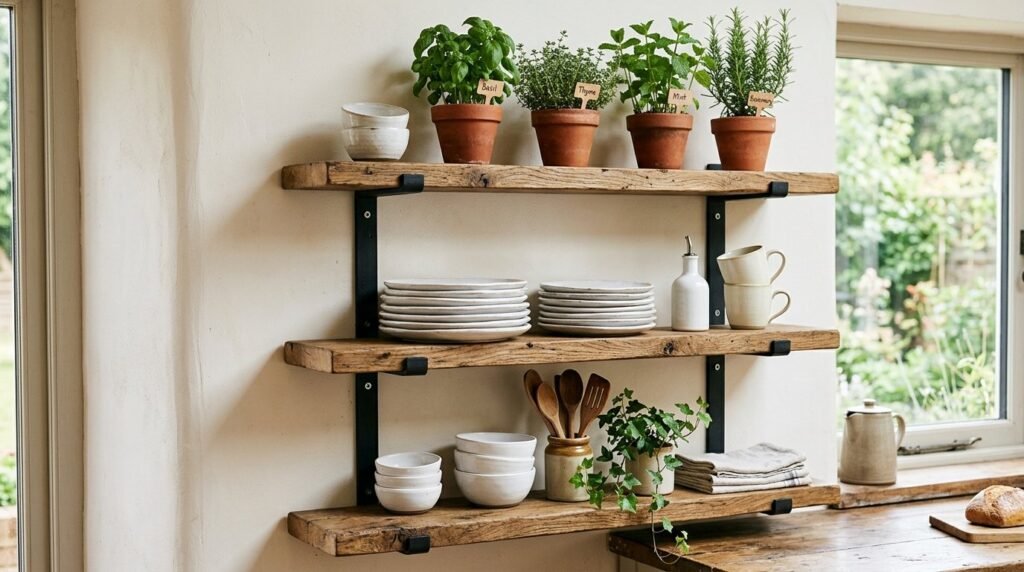
Instead of hidden cabinets, use open wooden shelves to display your ceramics and books. This creates a “lived-in” feel that is central to Italian culture. Thick timber shelves supported by iron brackets look best against a plaster wall.
- Actionable Step: Mix functional items like stacks of plates with decorative items like small oil paintings.
- Cost/Time: Each shelf setup costs about $60 in materials and takes two hours to install.
- Contrarian Note: Don’t clutter the shelves. Leave “white space” so the eye can appreciate the individual pieces.
19. Layered Wool Rugs
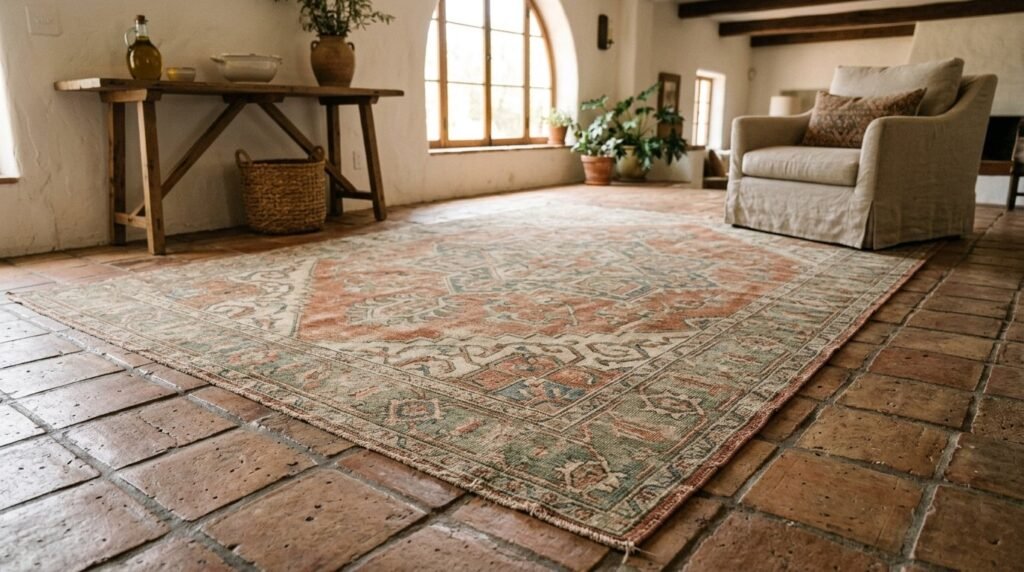
While terracotta floors are beautiful, they can feel hard. Layering a large, flat-weave wool rug over the seating area defines the space. I suggest patterns that are faded or “over-dyed” to look like heirlooms. Brands like Loloi have several collections that fit this look perfectly.
- Actionable Step: Ensure the rug is large enough so that at least the front legs of all furniture pieces sit on it.
- Cost/Time: A 9×12 rug of good quality will cost $400 to $800.
- Contrarian Note: Avoid shaggy rugs. They trap dust and look too mid-century for a Mediterranean theme.
20. Rustic Shutters Inside
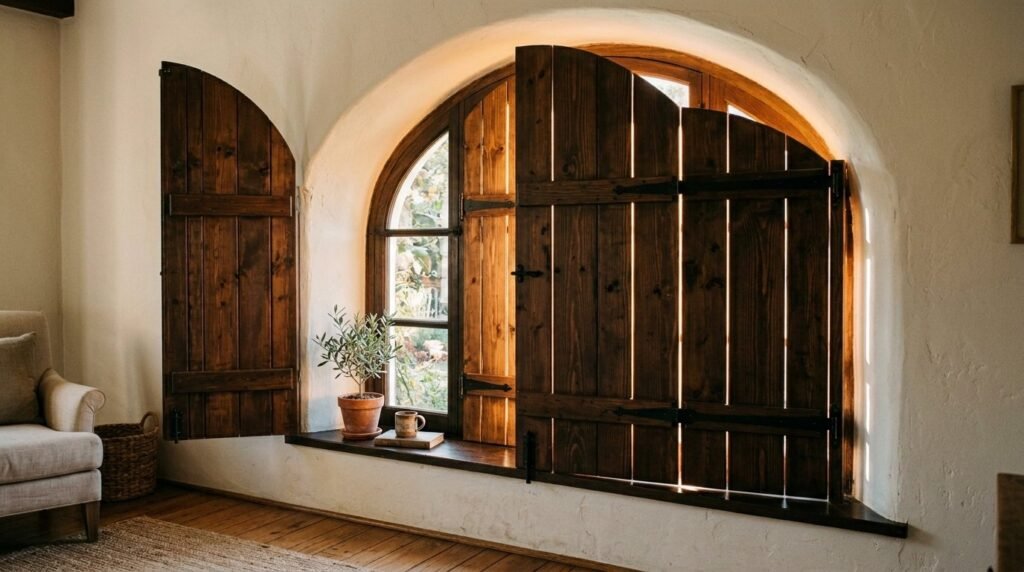
Wooden shutters, often called “plantation shutters” but in a more rugged, plank-style finish, add architectural interest to windows. They provide excellent light control and echo the shutters found on the exteriors of Italian homes.
- Actionable Step: Paint the shutters a slightly darker shade than the walls to make them pop.
- Cost/Time: Custom shutters can be expensive, roughly $20 to $40 per square foot.
- Contrarian Note: Avoid white plastic shutters. They look like they belong in a suburban office, not a warm home.
21. Soft Amber Lighting
The color of the light is just as important as the fixture. Always use “warm white” bulbs (2700K). This creates a golden hour glow that makes the Earthy Colors of the room feel rich. Avoid “daylight” bulbs which make everything look blue and clinical.
- Actionable Step: Put all your lamps and overhead lights on dimmer switches to control the mood.
- Cost/Time: Dimmer switches cost $15 each. Bulbs are a few dollars.
- Contrarian Note: Never rely on a single overhead light. Use at least three different light sources at varying heights.
22. Gallery Wall Frames
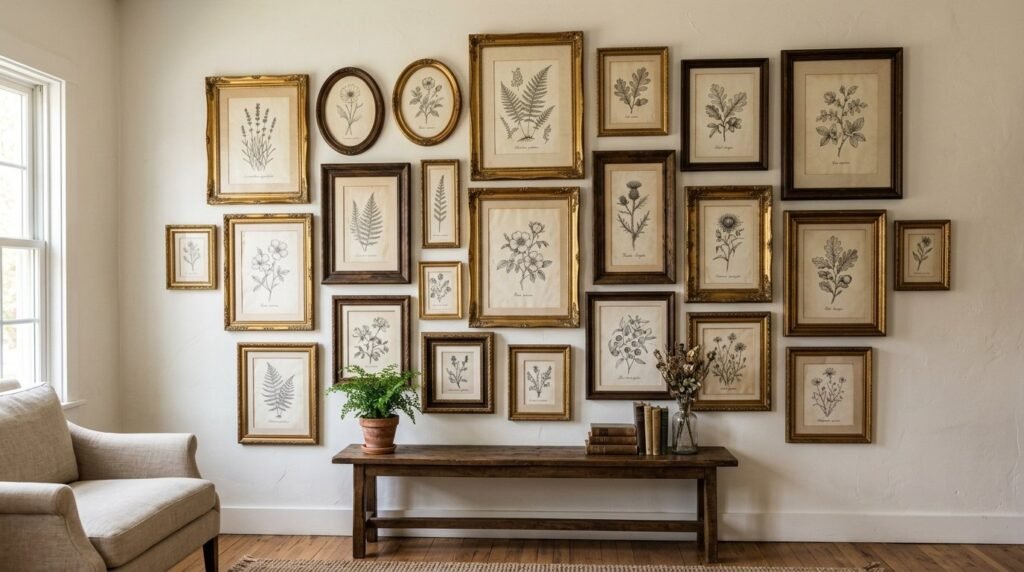
Displaying art in thick, ornate gold or dark wood frames adds a layer of history. Instead of a single large print, a collection of smaller sketches or botanical prints makes the room feel personal and curated over time.
- Actionable Step: Lay the frames out on the floor first to find the right arrangement before hammering nails into the wall.
- Cost/Time: Thrifted frames cost $5 to $20 each. Spray paint can unify them if they are too different.
- Contrarian Note: Don’t use “matching” sets of frames. Variation in size and thickness is what makes a gallery wall look authentic.
23. Lavender Floral Arrangements

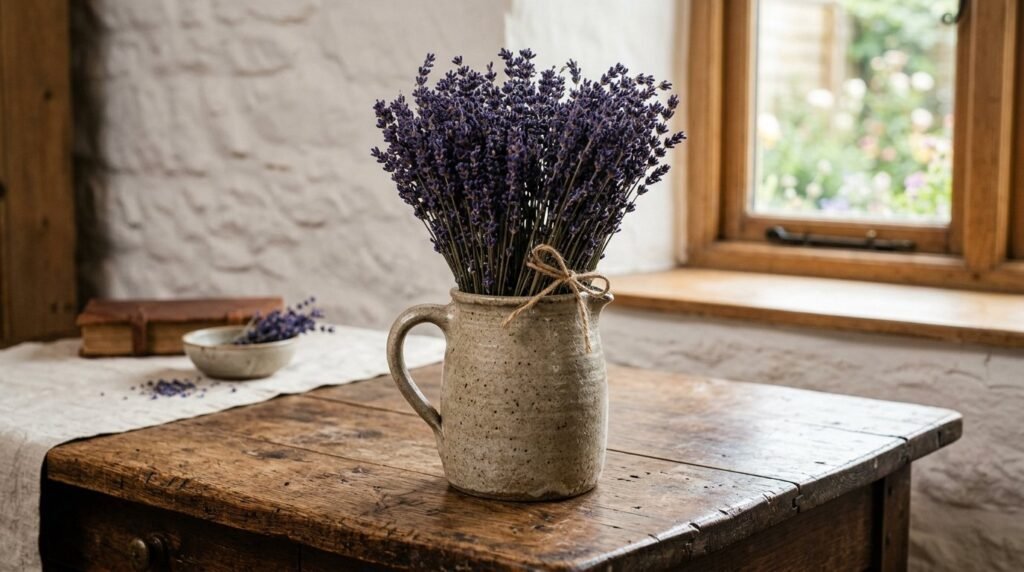
Scent is a powerful tool in Mediterranean decor. Dried lavender in a simple stone pitcher brings the smell of the Tuscan countryside into your home. It lasts for months and the muted purple color provides a nice contrast to the oranges and browns in the room.
- Actionable Step: Bundle the lavender with twine and hang it upside down for a few weeks before placing it in a vase to ensure it keeps its shape.
- Cost/Time: A large bundle of dried lavender costs about $20.
- Contrarian Note: Avoid fake plastic flowers. They collect dust and look artificial. Dried real plants are always better.
24. Vintage Gold Patina
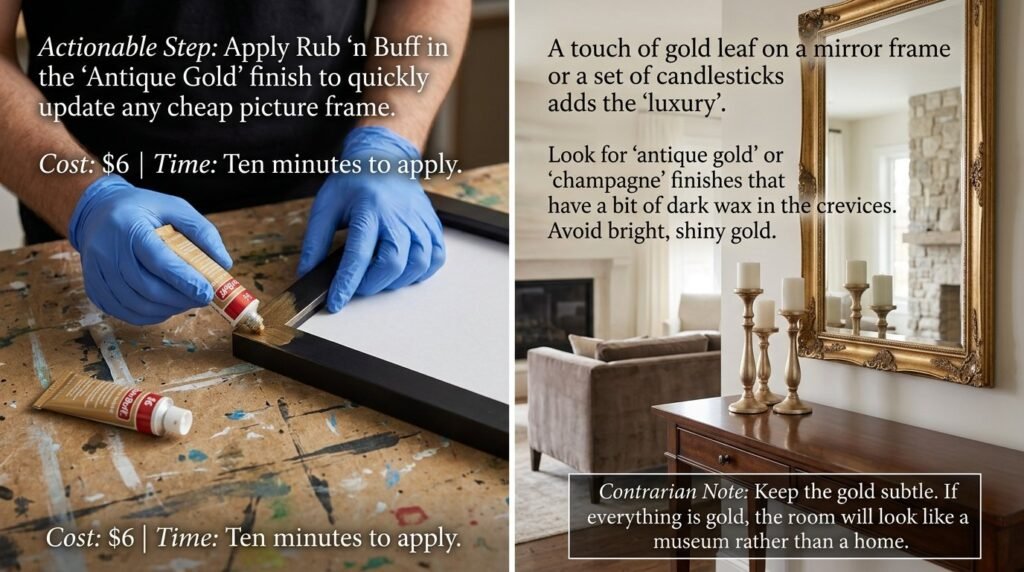
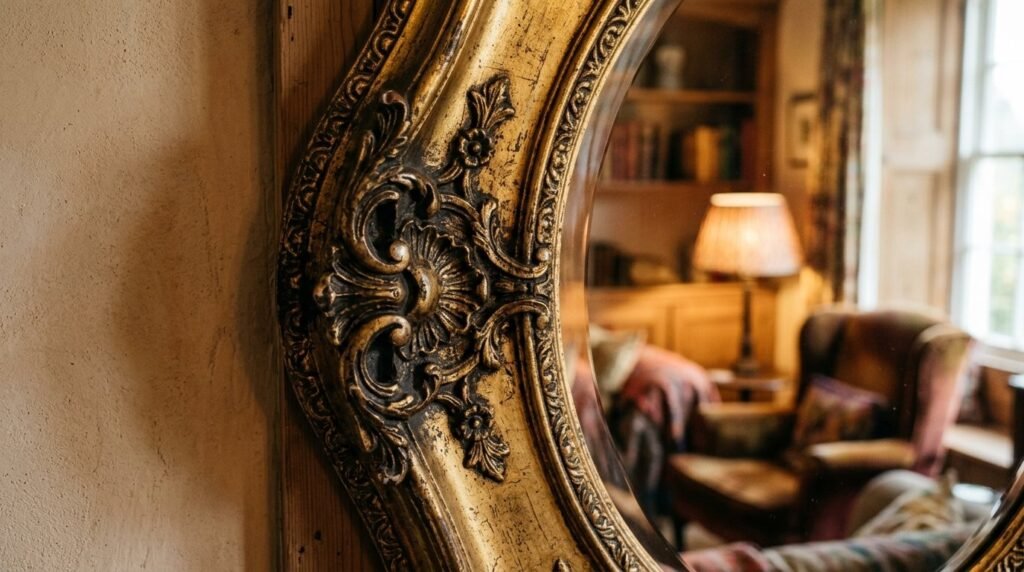
A touch of gold leaf on a mirror frame or a set of candlesticks adds the “luxury” to a luxury living room. You don’t want bright, shiny gold; look for “antique gold” or “champagne” finishes that have a bit of dark wax in the crevices.
- Actionable Step: Use Rub ‘n Buff in the “Antique Gold” finish to quickly update any cheap picture frame.
- Cost/Time: A tube of Rub ‘n Buff costs $6 and takes ten minutes to apply.
- Contrarian Note: Keep the gold subtle. If everything is gold, the room will look like a museum rather than a home.
Frequently Asked Questions
Is Tuscan style still in fashion for 2026?
The “old world” Tuscan look is seeing a massive resurgence because people are tired of cold, grey interiors. While the heavy, dark trends of the early 2000s have evolved, the core elements—natural stone, warm wood, and earthy tones—are timeless. Today’s version is lighter and less cluttered, focusing on authentic materials rather than fake plastic grapes. It’s about creating a space that feels permanent and connected to nature.
How do I make my living room look Tuscan on a small budget?
The most impactful changes are also the cheapest. Paint is the number one tool; choosing a warm ochre or a soft tan immediately changes the vibe. Second, focus on lighting. Swap out harsh white bulbs for warm amber ones. Finally, hit the thrift stores for wrought iron and heavy wood furniture. You can often find high-quality pieces that just need a bit of dark wax to look like expensive Italian imports.
Can I mix modern furniture with Tuscan decor?
Absolutely. This is often called “Modern Mediterranean.” The key is to keep the large architectural elements—like the floors and walls—traditional, then bring in a clean-lined sofa or modern art. The contrast between a sleek, modern sectional and a rough, stone fireplace is incredibly sophisticated. Just ensure the color palette remains cohesive across both styles.
What are the best paint colors for a Tuscan living room?
Look for colors that sound like food or earth. Terracotta, sage green, mustard gold, and warm cream are the foundation. Avoid anything with a blue or grey undertone. Brands like Farrow & Ball offer “Setting Plaster” which is a perfect muted pink-tan, or “Hay” for a soft, sunny gold. These colors react well to the soft lighting typical of this style.
How do I add wooden beams if my ceiling is low?
If you have eight-foot ceilings, you can still use beams, but they should be thinner. Instead of massive 8×8 timbers, use 4×6 faux beams. This adds the texture without making the ceiling feel like it is falling on you. Also, paint the space between the beams a very light cream to keep the room feeling airy.
Are terracotta floors hard to maintain?
They require a bit more care than ceramic tile, but they are very durable. You need to seal them every few years to prevent staining from spills. However, many people believe that the stains and wear are part of the “patina” and only add to the beauty of the room. Regular sweeping and a damp mop with mild soap are usually enough for daily cleaning.
What kind of lighting is authentic to Italy?
Think about fixtures that look like they could have held candles 200 years ago. Wrought iron chandeliers, copper lanterns, and thick pillar candles are all great choices. Avoid recessed “can” lights if possible, or at least keep them on a very low dimmer. The goal is to create “pools” of light rather than an even, bright wash.
What fabrics should I use for pillows and upholstery?
Natural fibers are the priority. Linen, wool, and heavy cotton are perfect. For patterns, look for subtle damasks, stripes, or solid colors with a heavy weave. Avoid shiny fabrics like polyester or satin, as they feel too artificial for a rustic Italian setting.
How can I make a new house feel like an old Italian villa?
Focus on texture. New houses are often too “perfect.” Use lime wash on the walls to add movement. Install a reclaimed wood mantel. Add thick rugs to soften the new floors. By introducing materials that have imperfections, you trick the eye into thinking the home has a history.
Is olive green a good color for this style?
Olive green is perhaps the most important secondary color in Mediterranean decor. It represents the vegetation of the region and pairs perfectly with terracotta and gold. Use it for accent walls, velvet pillows, or even as the color for your window shutters. It adds a sophisticated, cool element to an otherwise warm room.
Should I use real stone or veneer for my walls?
If you have the budget and structural support, real stone is always best. However, modern stone veneer is so realistic that most people cannot tell the difference once it is installed and grouted. Veneer is much lighter and easier to install on a standard drywall surface, making it the practical choice for most homeowners.
How do I decorate a Tuscan mantel?
Keep it simple. A large mirror with a gold frame, a few pieces of hand-painted pottery, and a trailing plant like ivy or jasmine are all you need. Avoid “seasonal” decor that clutters the space. The mantel should look like a permanent display of beautiful objects.
Can I have a Tuscan living room if I have grey carpet?
Grey carpet is a challenge for this style because it is a cool tone. The best way to fix this without replacing the floor is to use a very large, warm-toned area rug that covers as much of the grey as possible. Then, use warm colors on the walls and furniture to pull the focus away from the floor.
What are common mistakes in Tuscan decorating?
The biggest mistake is over-decorating with “themed” items. You don’t need posters of wine bottles or fake ivy wrapped around everything. Another mistake is using colors that are too bright or “neon.” Real Italian style is faded and muted by the sun. Finally, avoid anything that looks too mass-produced or “plastic.”
How do I choose the right wrought iron?
Look for “hammered” finishes. This means the metal has small indentations from where a blacksmith would have worked it. It looks much more authentic than perfectly smooth, round iron rods. The weight is also a giveaway—real iron is heavy.
Conclusion
Transforming your home into a Mediterranean sanctuary is more than just a design choice; it is an investment in your daily well-being. By moving away from cold, flat surfaces and embracing the warmth of 24 Tuscan Living Room Ideas, you create a space that actually welcomes you back at the end of the day. I have seen how small changes, like swapping a light bulb or adding a single terracotta pot, can completely change how a family uses their room. These ideas are designed to be layered over time, allowing your home to grow and develop its own history. Save this post on Pinterest so you can refer back to it as you build your dream space, and try starting with just one or two changes this weekend. Your cozy, authentic Italian escape is much closer than you think

Sloane Whitaker is the Editor-in-Chief at Home Wall Trends, leading editorial direction with over a decade of experience in residential interior design and home styling. Her specialty is space planning and layout, the unglamorous fundamentals that make a beautiful room actually function. A graduate of the New York School of Interior Design, Sloane has styled over 200 client homes before turning her focus to digital publishing. Her editorial standard: “If a reader can’t picture themselves doing it on a Saturday afternoon, we haven’t explained it well enough.”