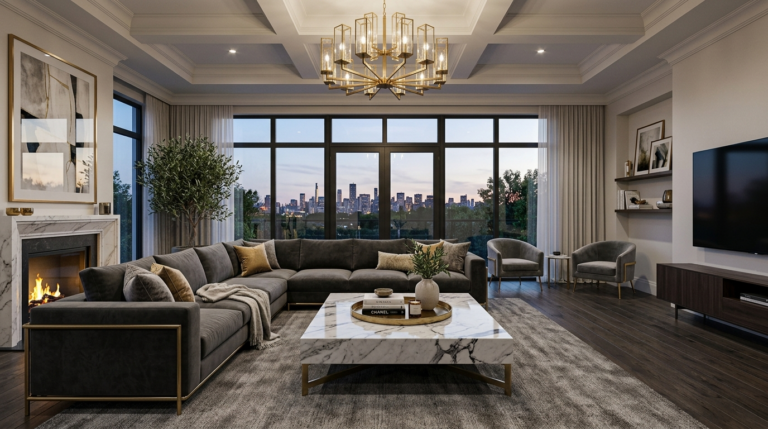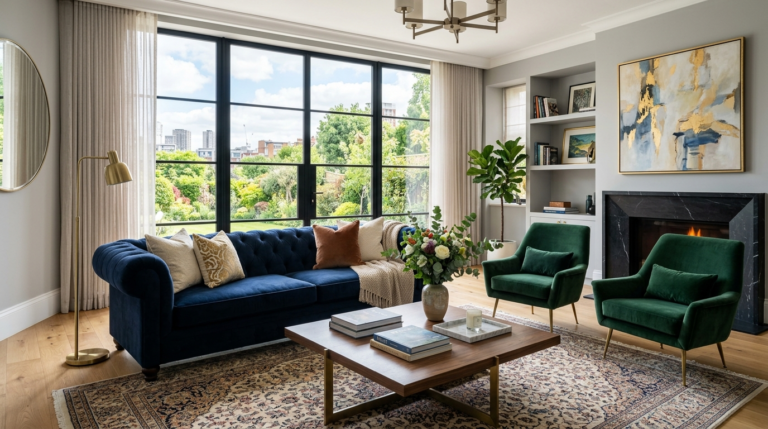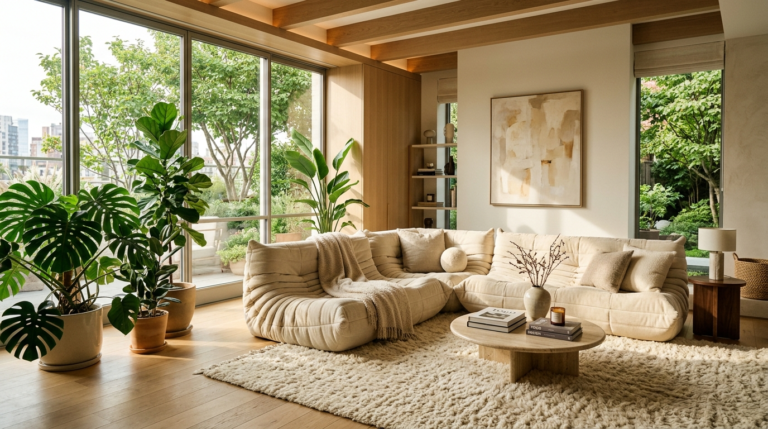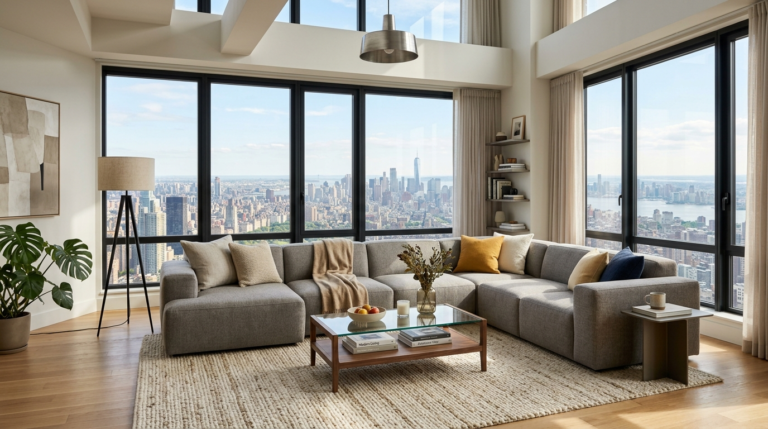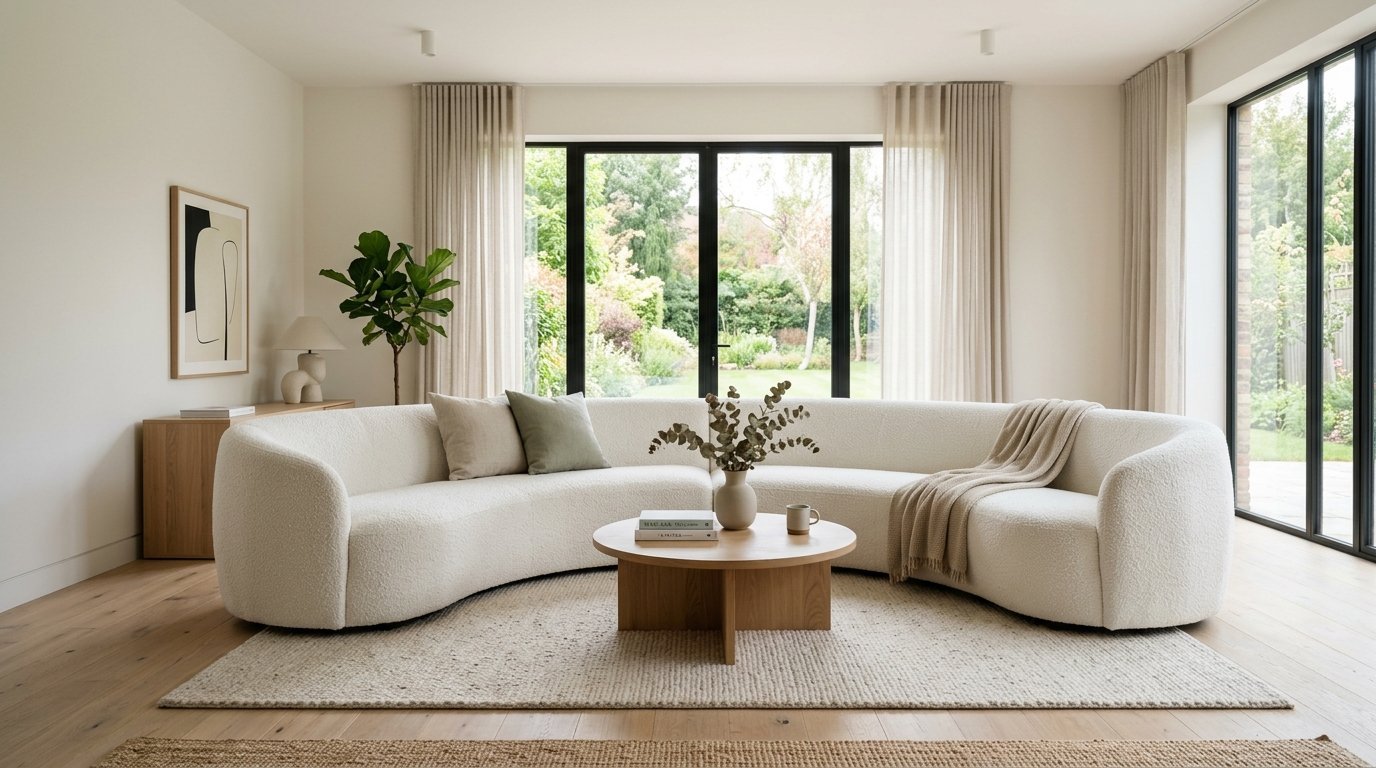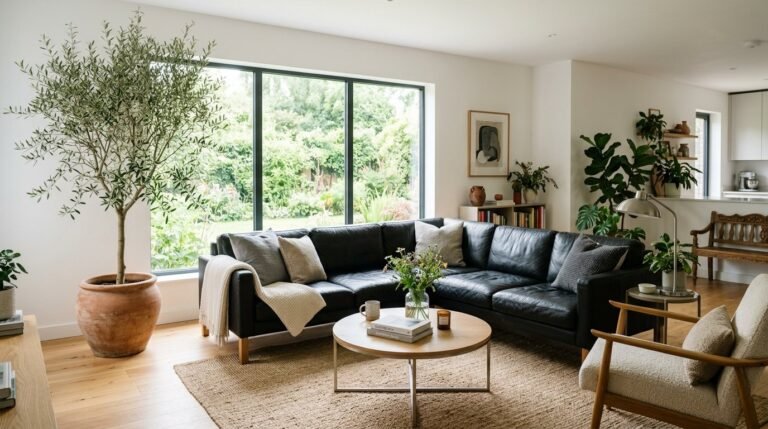
A few months ago I walked into a dated living room in suburban Ohio that felt heavy and uninspired. The owner had a $4,000 budget but wanted a high end look that typically costs five figures. We replaced the beige sectional with a deep emerald piece and the entire atmosphere shifted instantly. Finding the right green couch living room aesthetic is about more than just a piece of furniture. It is about creating a mood that feels grounded and expensive without actually breaking your bank account. You can achieve a professional designer look for much less than you think. In my experience most people overcomplicate the process and waste money on items that clash with their main focal point. I have noticed that a few strategic choices make all the difference.
Executive Summary
This guide outlines exactly how to style a space that feels curated and cohesive around a green focal point. You will discover 23 distinct design elements that range from botanical accents to vintage pairings. We cover everything from brass hardware selections to specific rug textures that anchor a room. Most of these upgrades cost under $200 but yield results that look like a professional magazine spread. We intentionally excluded major structural renovations to focus on styling and affordable furniture swaps. By following these steps you can expect to cut your decor spending by 60% while achieving a more authentic home feel. You will find practical advice on lighting, color palettes, and textiles that work with various shades of green furniture.
1. Dark Botanical Wallpaper
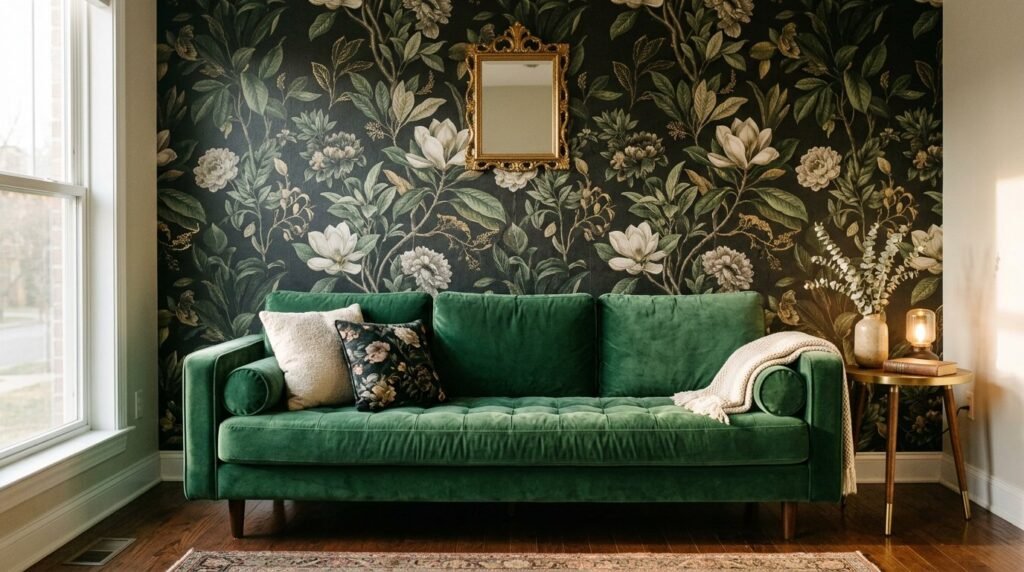
Deep floral patterns create an immediate sense of luxury behind a sofa. I recently saw a project using a $120 peel and stick mural from Etsy that looked identical to custom hand painted designs. You should choose a pattern with small gold or cream details to highlight the fabric of your furniture. Most people make the mistake of choosing a pattern that is too busy and small. A larger scale print actually makes a small room feel much more spacious. Expect to spend about four hours on installation for a single accent wall. This provides a moody backdrop that hides minor wall imperfections perfectly.
2. Brass Floor Lamps
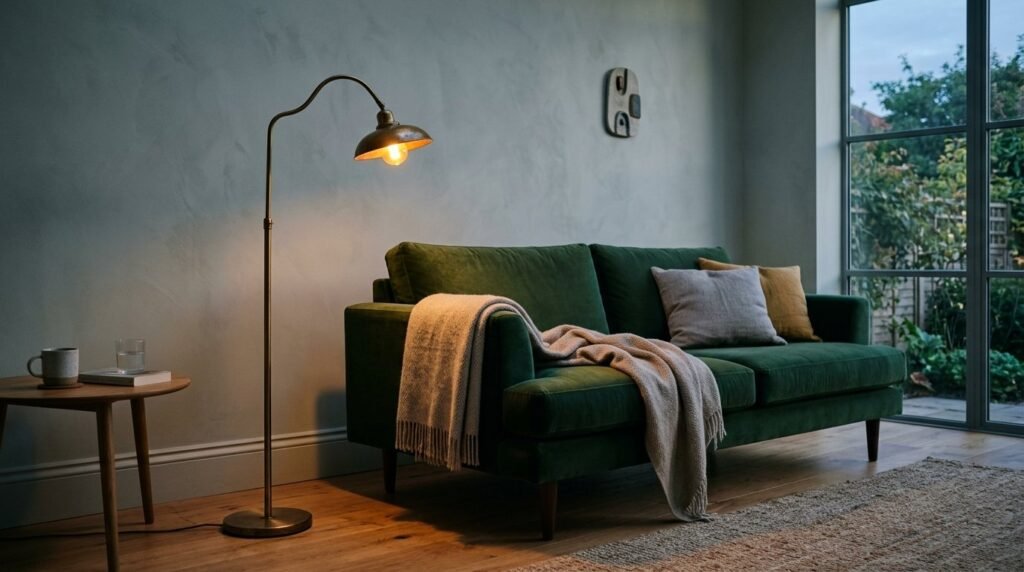
Metallic accents provide a necessary contrast to the cool tones of green fabric. A slim pharmacy style lamp in an antique brass finish adds a vintage touch for around $85 at Target or Amazon. Place the lamp at the edge of the couch to create a cozy reading nook. This simple addition introduces a different texture and breaks up the solid blocks of color in the space. In my experience people often choose silver finishes which can look a bit cold next to deep green. I have tried both and the warmth of brass or gold always wins for a cozy vibe.
3. Persian Style Rugs
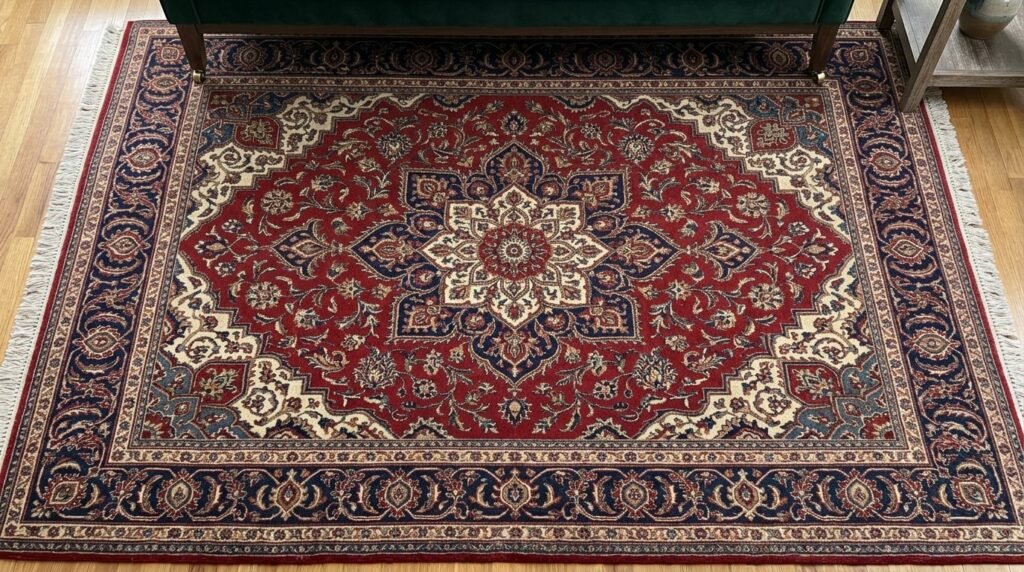
A traditional rug with red and cream tones anchors a living room with green furniture beautifully. You can find high quality distressed rugs for $300 that look like they came from an antique shop in Europe. Look for a rug that is large enough for all front legs of your furniture to sit on the pile. This creates a unified seating area and prevents the room from looking disjointed. Many homeowners buy rugs that are too small which actually makes the couch look bulky. A larger rug provides a sense of scale and luxury that feels intentional.
4. Natural Oak Flooring
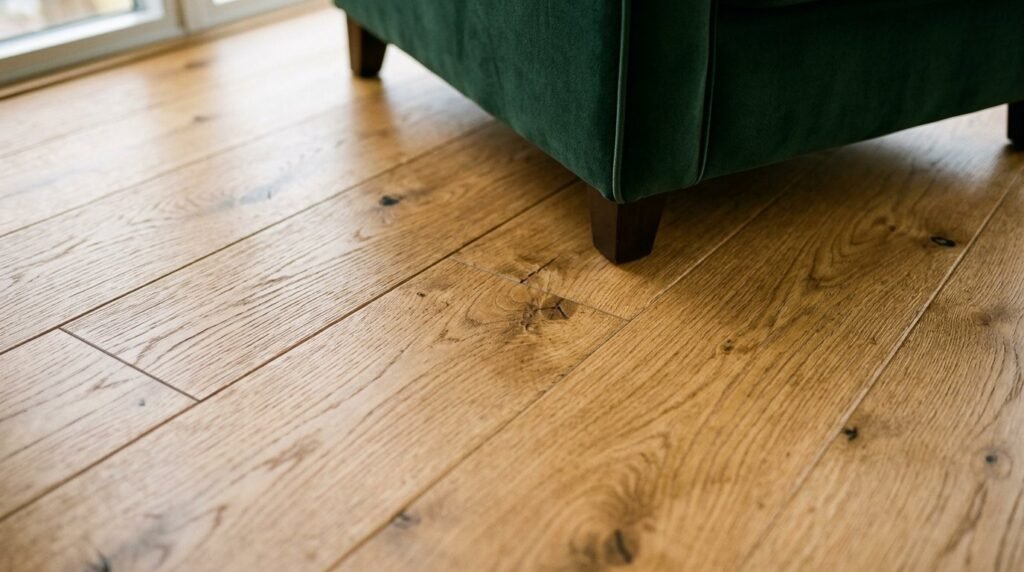
Light wood tones balance the weight of a dark velvet or leather sofa. If you are on a budget you can use high quality laminate planks for about $3 per square foot. The warmth of the oak keeps the room from feeling too dark or cave like in the evening. I have seen this work exceptionally well in colonial style homes where traditional elements are celebrated. Avoid very dark espresso floors if your couch is a deep forest green. Too much dark surface area can make the room feel heavy and less inviting for guests.
5. Velvet Accent Pillows
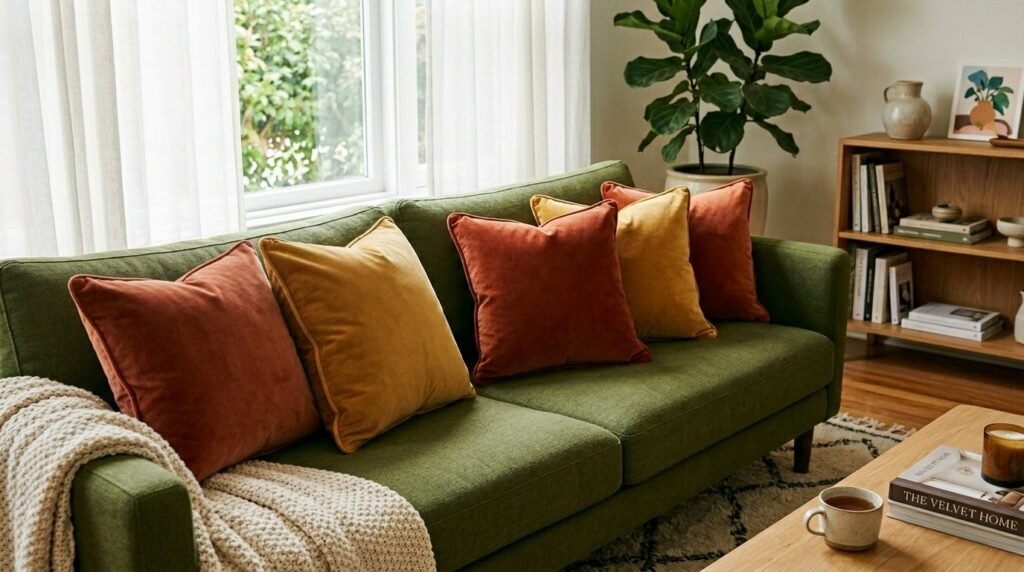
Layering different shades of the same color adds depth to your seating area. Buy three or four pillows in mustard yellow or terracotta to provide a pop of contrast for roughly $60 total. I recommend using feather inserts instead of polyester for a much more high end look and feel. You can easily swap these out seasonally to refresh the space without buying new furniture. A common mistake is using pillows that are the exact same shade as the couch. This makes the furniture look like one big blob of color rather than a styled piece.
6. Gallery Wall Frames
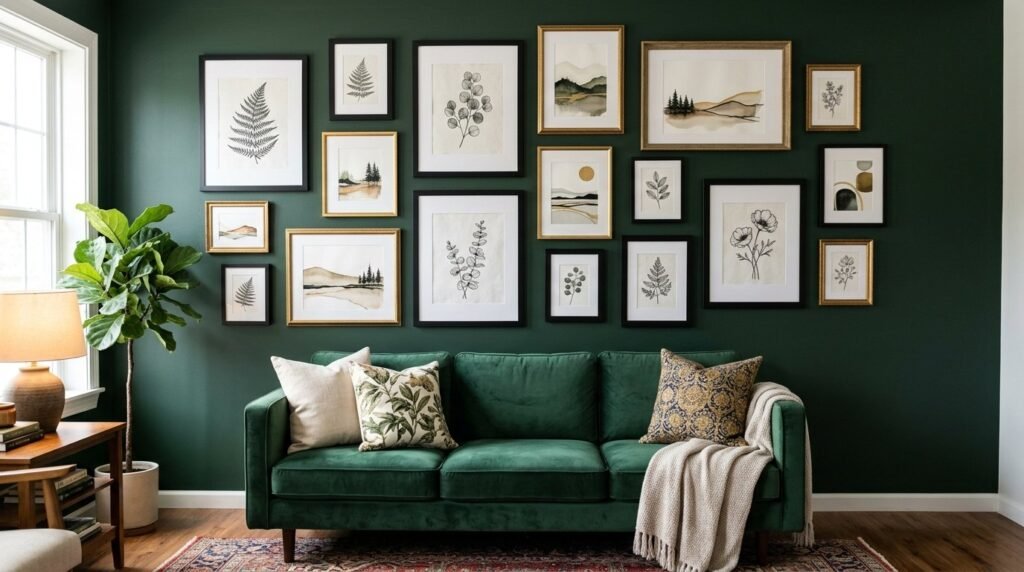
Wood frames in various sizes help draw the eye upward and fill vertical space. You can source vintage frames from local thrift stores for $5 each and spray paint them a uniform black or gold. Arrange them in a loose grid above the sofa to tell a personal story through art and photos. This project takes an afternoon and costs less than $100 including the prints. I have noticed that people often hang their art too high above the furniture. Keep the bottom of the lowest frame about six to eight inches above the back of the couch.
7. Terracotta Planters
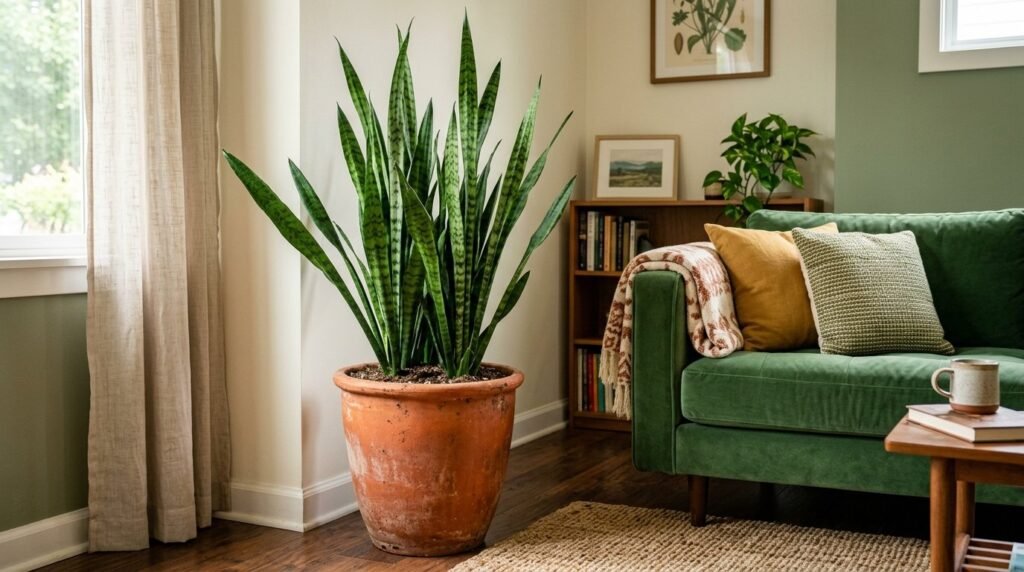
Earth tones naturally complement any shade of green sofa. Large clay pots cost about $40 at home centers and bring a rustic organic feel to the corners of your room. Fill them with hardy plants like a snake plant or a fiddle leaf fig for a lush look. The orange hue of the clay is a direct color wheel opposite to green which makes both items stand out. Many designers forget to include these natural elements which results in a room that feels sterile. Real plants also improve air quality and add a sense of life to the decor.
8. Linen Throw Blankets
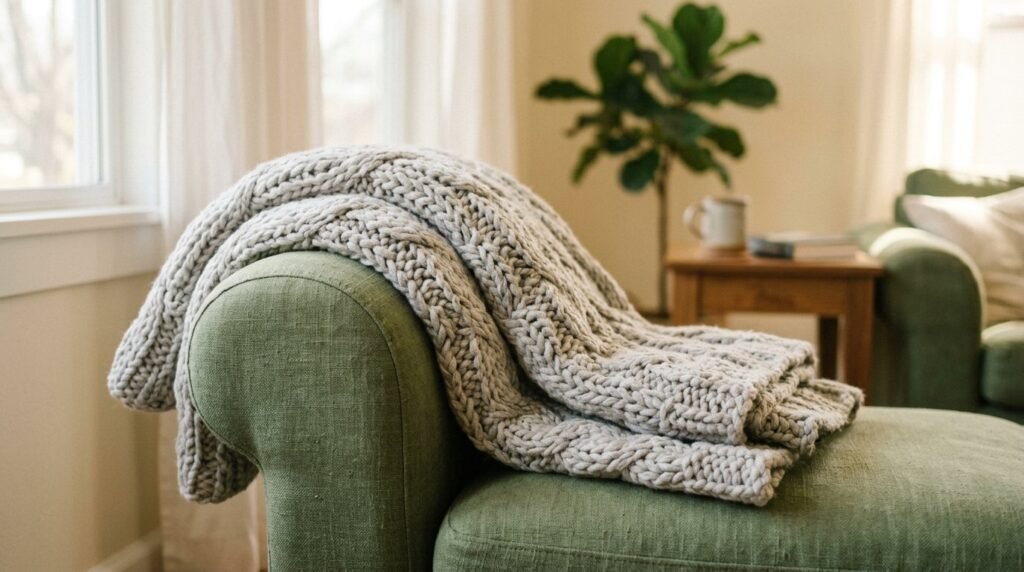
A textured throw adds a soft layer of comfort for those movie nights at home. A high quality linen or chunky knit blanket usually runs about $70 and lasts for many years. Drape it over one arm of the sofa to soften the hard lines of the furniture. This is an immediate way to make a modern piece feel more lived in and welcoming. I’ve tried many different fabrics and linen always provides the best balance of breathability and style. Avoid cheap acrylic blankets that pill easily and look worn after just a few weeks.
9. Matte Black Sconces
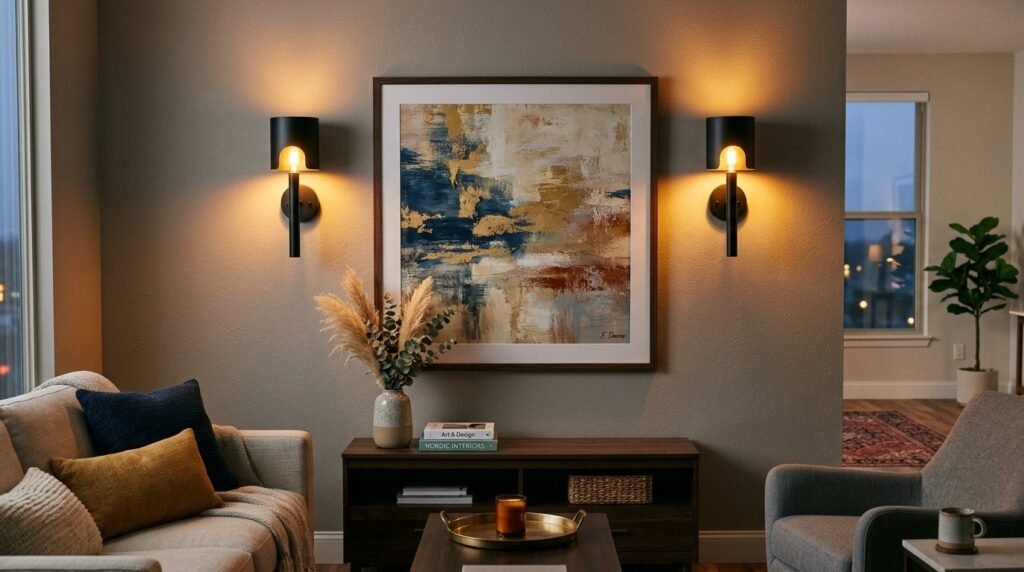
Modern lighting fixtures give an old soul couch a fresh contemporary edge. You can find battery operated wall sconces for $90 a pair that require zero electrical wiring work. Mount them on either side of your main art piece to create a focal point in the room. This adds a sophisticated layer of light that is perfect for evening relaxation. Most people rely solely on overhead lighting which can be harsh and unflattering. Layered lighting makes the green velvet couch living room feel much more expensive and professionally designed.
10. Mid Century Sideboards
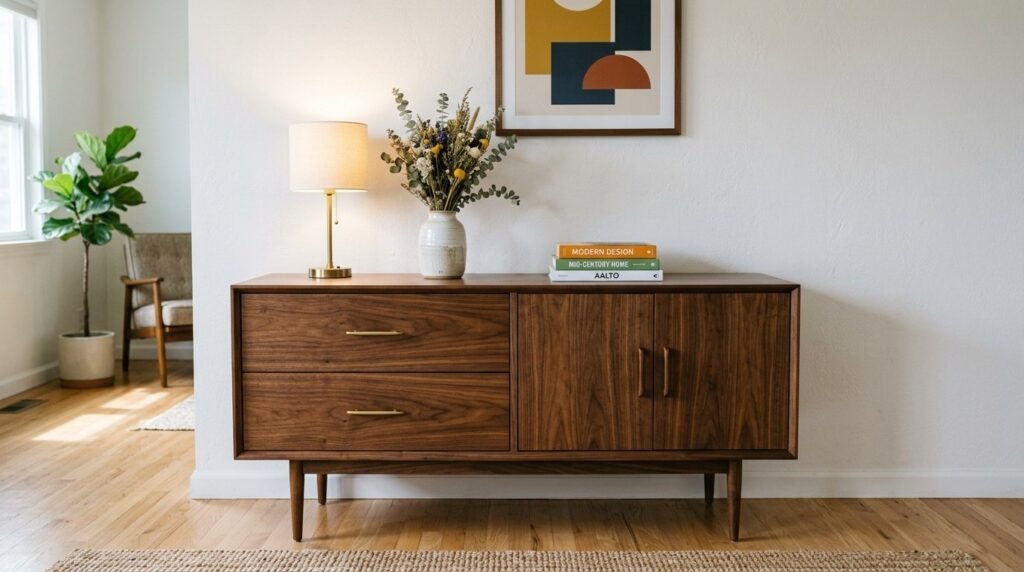
A teak or walnut cabinet provides storage and a surface for styling accessories. You can often find these at estate sales for $400 which is a steal compared to new designer versions. The clean lines and tapered legs of mid century pieces match the aesthetic of vintage green sofas perfectly. Use the top of the sideboard to display a small lamp and a few coffee table books. I have seen many people clutter their coffee tables when they should be using a sideboard instead. This keeps the center of the room open and organized.
11. Floating Wood Shelves
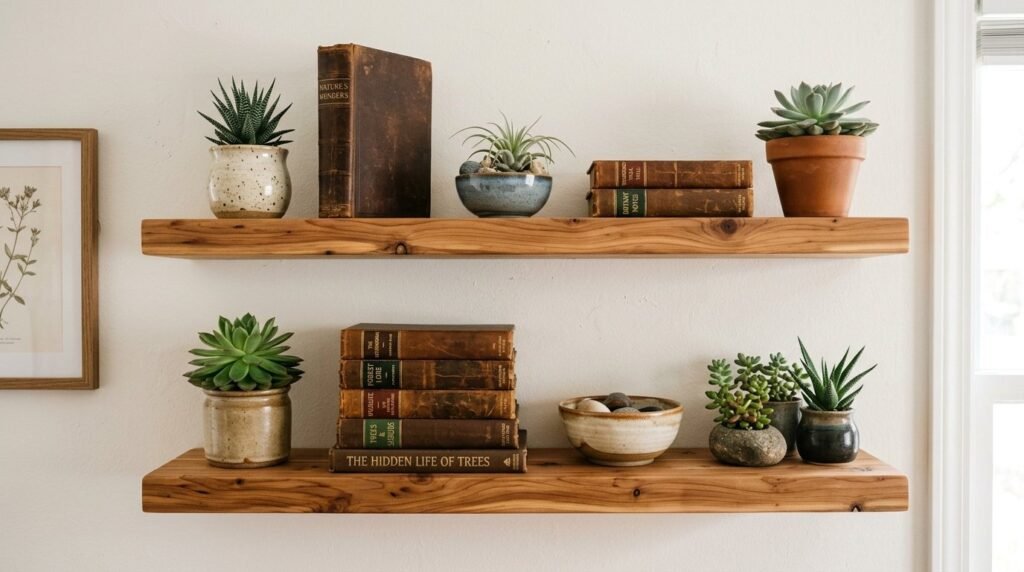
Open shelving allows you to display curated decor without taking up any floor space. Three foot cedar shelves cost about $50 each and are easy to install with a basic power drill. Place them on a wall adjacent to the couch to hold small plants and ceramic bowls. This adds architectural interest to a plain white wall and provides a place for seasonal updates. Make sure to use wall anchors so the shelves can hold the weight of heavier books. A common mistake is overfilling the shelves which creates visual clutter.
12. Rattan Side Tables
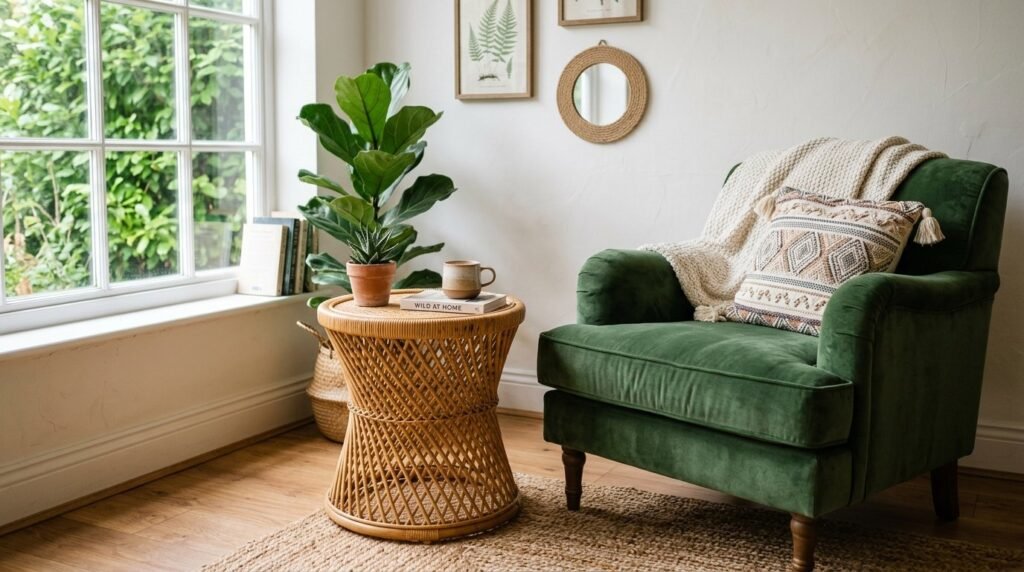
Natural fibers bring a light and airy feel to a cozy vintage living room with green furniture. A small rattan table costs around $110 and adds a bohemian touch to the space. It is lightweight and easy to move around when you have extra guests over for coffee. The texture of the wicker contrasts beautifully with smooth leather or plush velvet fabrics. I have noticed that people often stick to all wood furniture which can feel a bit monotonous. Mixing in woven materials adds a layer of visual interest that feels very intentional.
13. Wool Area Rugs
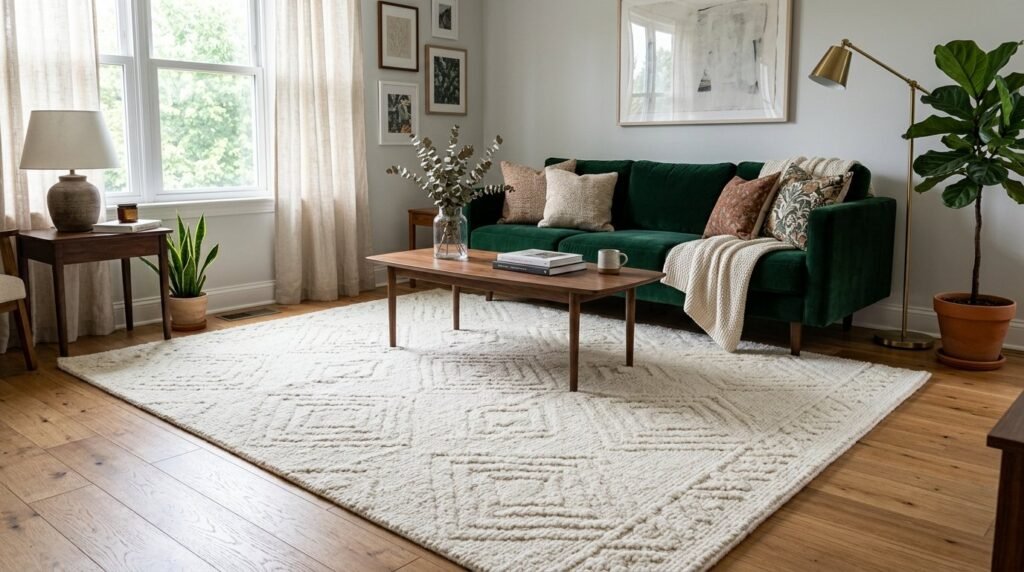
A high pile wool rug provides maximum comfort underfoot for a busy family room. While a good wool rug might cost $500 it is a durable investment that resists stains and wear. Choose an ivory or light grey color to brighten up the floor area around a dark sofa. This creates a clean base that allows the color of the couch to really shine. I have seen this work well in modern homes where simplicity is the primary goal. Be sure to use a rug pad to prevent slipping and to add extra cushion.
14. Woven Wall Hangings
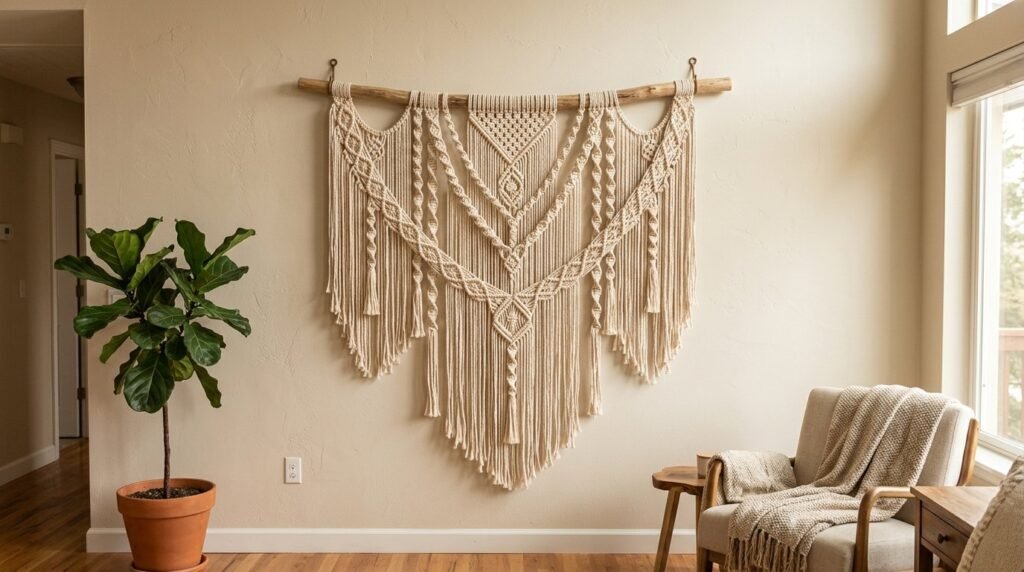
Large scale textile art adds warmth and sound dampening to a room with high ceilings. You can find beautiful macrame or woven pieces for $130 on artisan websites like Etsy. This is a great alternative to heavy framed art if you want a softer and more relaxed vibe. It fills large empty wall spaces effectively without requiring multiple nail holes. I have tried this in several client homes and it always receives compliments for its unique texture. Avoid hangings that are too small as they can look like an afterthought on a large wall.
15. Antique Mirror Accents
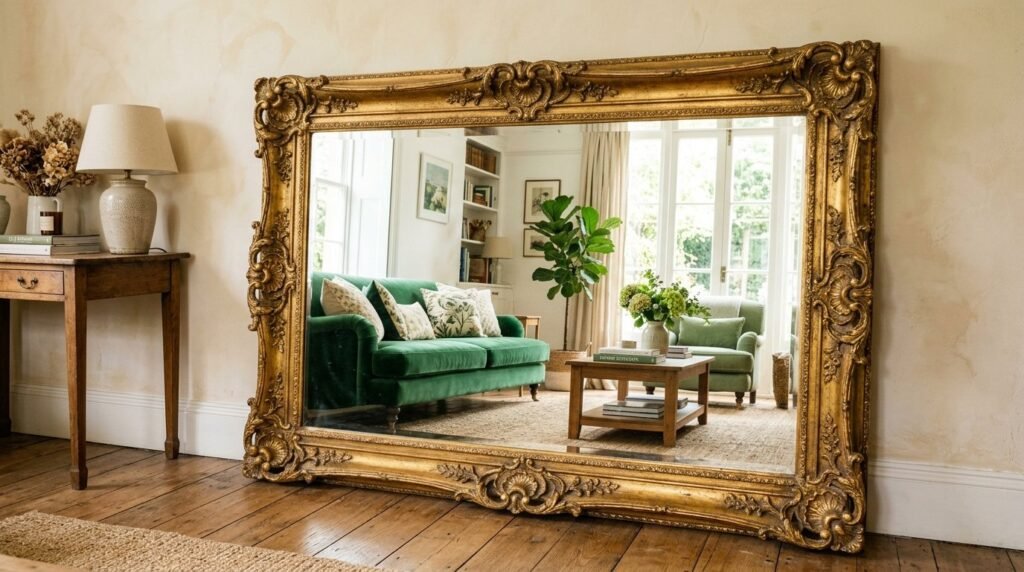
A large gold leaf mirror reflects light and makes a small living room feel twice as big. Look for ornate frames at antique malls where you can often find them for under $200. Lean a floor mirror against the wall or hang a round one above the sideboard. This helps bounce natural light from the windows onto the green furniture during the day. Many people forget that mirrors are a functional decor tool as well as a styling choice. In my experience a well placed mirror is the best way to brighten a moody room.
16. Marble Coffee Tables
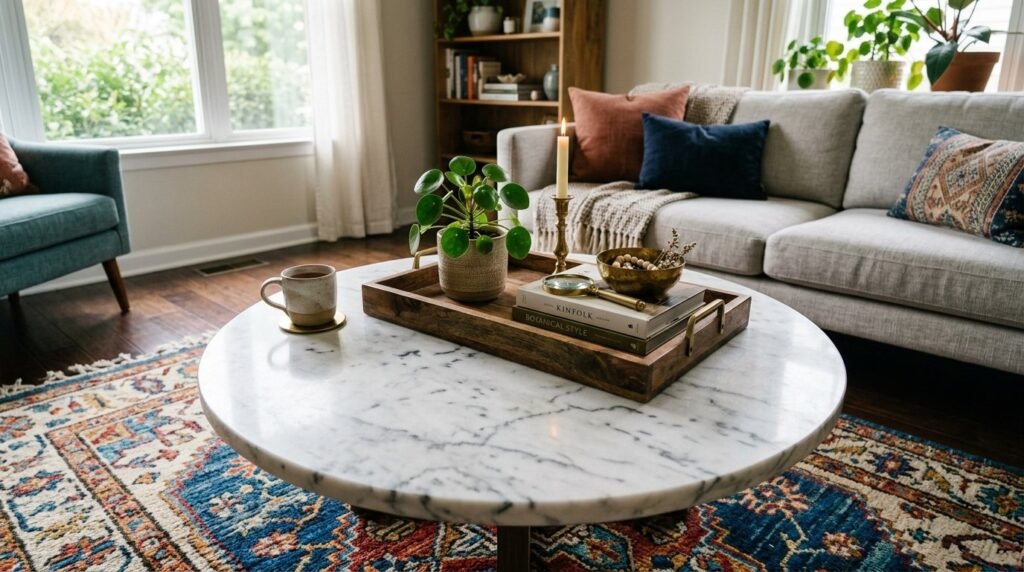
A white stone surface provides a cool and crisp contrast to warm green tones. You can find marble topped tables for $250 that add a sense of permanence and luxury to the space. The natural veining in the stone often includes grey or green hints that tie the room together. Use a tray on top to organize remotes and coasters to keep the surface looking tidy. I have seen people worry about staining marble but a quick sealer application once a year prevents most issues. It is a classic choice that never goes out of style.
17. Industrial Metal Lighting
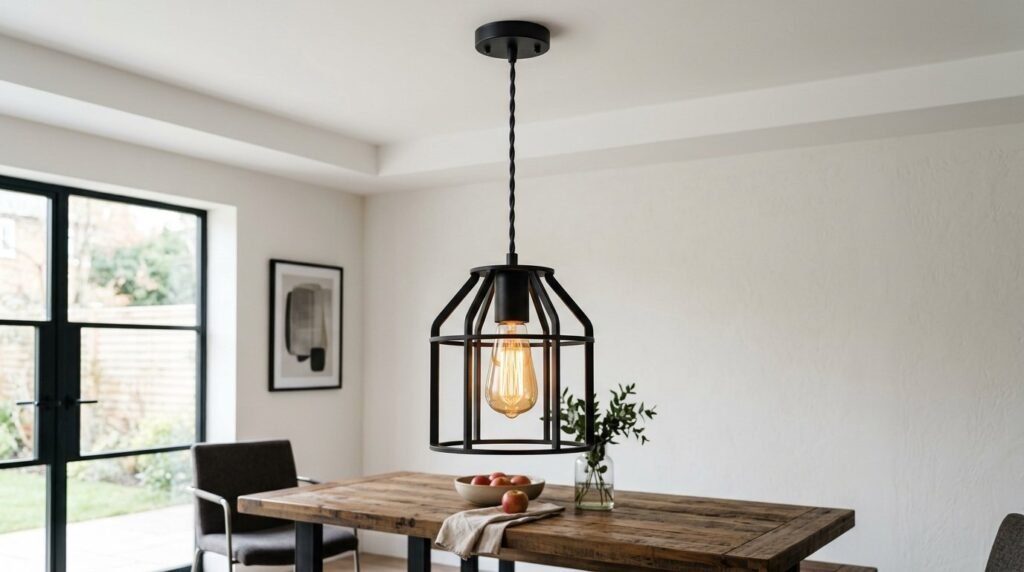
Black iron fixtures add a bit of grit and structure to a soft and cozy space. A simple pendant light with an Edison bulb costs about $65 and changes the entire look of the ceiling. This works particularly well if you are going for a vintage green couch living room look. The dark metal coordinates with black picture frames or furniture legs for a cohesive finish. Most homeowners overlook their ceiling fans or basic light fixtures during a room refresh. Swapping these out is a fast way to upgrade the overall aesthetic of the home.
18. Scandi Plywood Benches
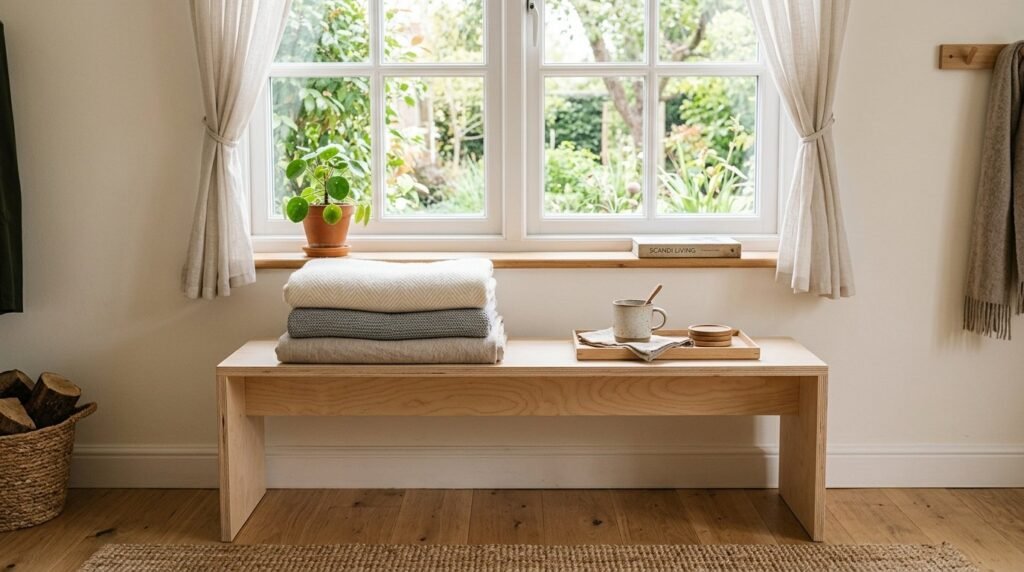
Minimalist wood furniture keeps the focus on the statement couch while adding extra seating. You can build a simple bench for $40 in materials or buy a pre-made version for $150. The light blonde wood characteristic of Scandinavian design prevents the room from feeling too traditional. Place it under a window or at the foot of the couch to hold extra pillows or books. I have noticed that this look is very popular with younger homeowners who want a clean and modern feel. It provides a functional solution that does not crowd the floor plan.
19. Leather Ottoman Seats
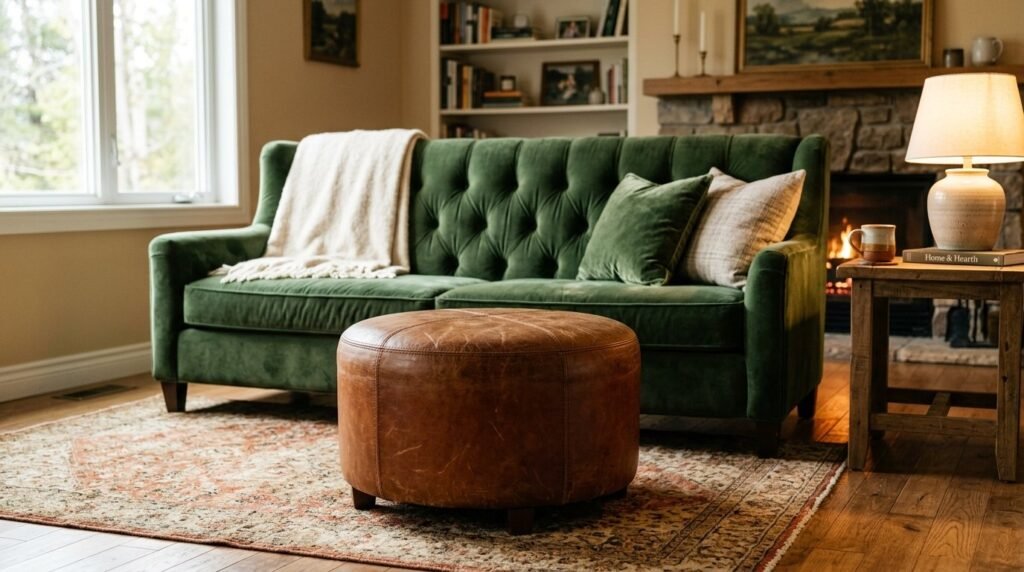
Adding a different type of upholstery introduces a sophisticated masculine touch to the room. A cognac leather ottoman costs around $180 and serves as both a footrest and a coffee table. The warm brown leather is a classic pairing with any shade of green sofa. This material is very durable and actually looks better as it ages and develops a patina. I have tried using fabric ottomans but they often get stained or worn much faster than leather. It is a practical choice for homes with pets or small children.
20. Built-in Bookcase Shelving
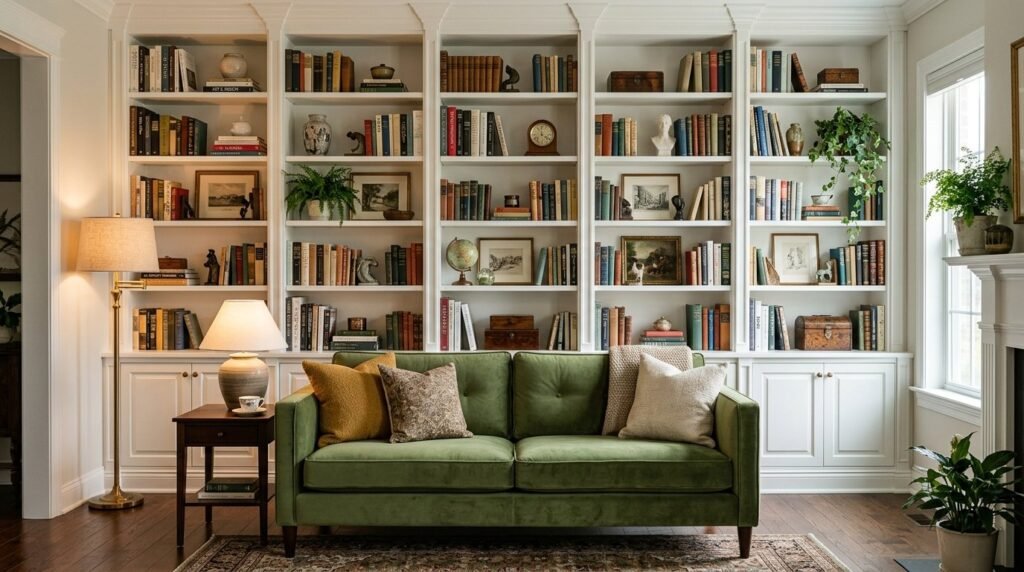
Creating a library feel adds a massive amount of character to a living room with green velvet couch. You can use standard IKEA Billy bookcases and add trim to make them look like custom built-ins for $300 total. Paint the back of the shelves a dark color to make your books and decor items pop. This provides a massive amount of storage while acting as a beautiful backdrop for your seating area. Many people assume custom shelving costs thousands but the DIY approach is very affordable. It completely transforms the architecture of a standard rectangular room.
21. Taper Candle Holders
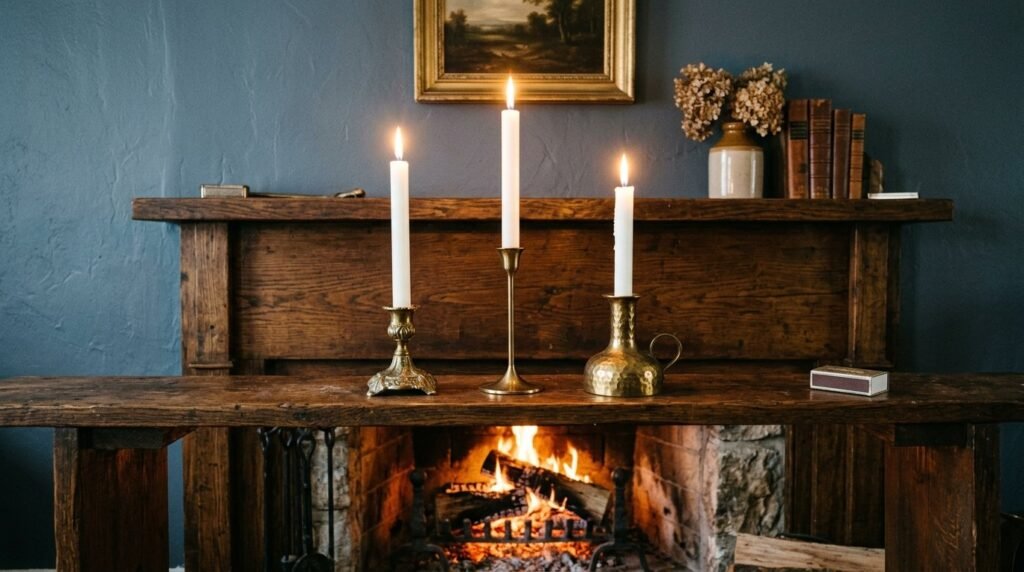
Small details on a mantel or coffee table provide a sense of elegance and height. A set of three mismatched brass candle holders costs $30 at a thrift store or home shop. Use tall white or dark green candles to add a flickering light source during dinner parties. This is one of the cheapest ways to make a room feel like a high end hotel lounge. In my experience the simplest items often provide the most emotional impact in a space. Avoid scented candles that can be overwhelming in a small seating area.
22. Jute Floor Runners
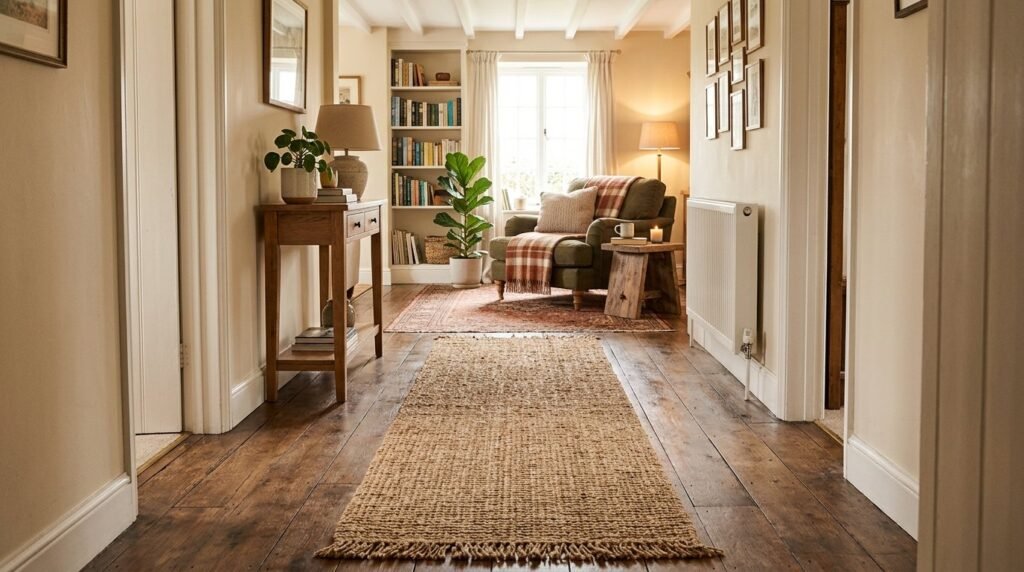
Natural fiber rugs are perfect for high traffic areas like the path leading to the couch. A long jute runner costs about $55 and adds a rugged organic texture to the floor. It protects your main rug from wear and tear while adding a casual coastal vibe to the room. The tan color of the jute is a perfect neutral that goes with absolutely everything. I have seen these used in many colonial house living room designs to add a bit of warmth. They are easy to clean and very affordable to replace if needed.
23. Velvet Drapes Selection
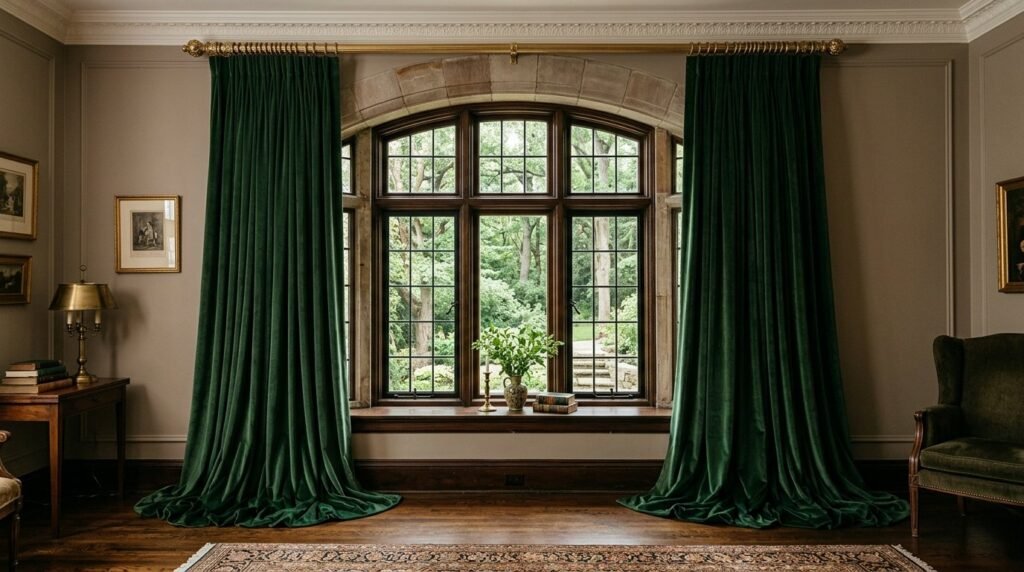
Finish the room with floor to ceiling curtains that match or complement your sofa. A pair of heavy velvet drapes costs $90 and provides excellent light blocking and insulation. Hang the curtain rod higher and wider than the window to make the window appear much larger. This creates a dramatic and cozy atmosphere that feels like a private sanctuary. I have noticed that cheap thin curtains can ruin the look of an expensive couch. Investing in a bit more fabric weight makes a huge difference in the final result.
Frequently Asked Questions
What color walls go best with a green couch?
Light neutrals like cream, off-white, and pale grey are the safest choices for a bright and airy feel. If you want a more dramatic look consider deep navy or even a dark forest green for a monochromatic style. In my experience a warm white with a hint of beige provides the best contrast without feeling too stark. This allows the furniture to remain the star of the room while keeping the space feeling open.
Is a green velvet couch hard to keep clean?
Modern polyester velvet is actually very durable and easy to maintain with a simple brush and vacuum. Most spills can be blotted away with a damp cloth if you catch them quickly. I have seen many families with pets use velvet because the tight weave prevents claws from snagging the fabric. You should avoid cheap cotton velvets which tend to crush and stain much more easily than synthetic versions.
How do I make my green couch living room feel cozy?
Layering is the key to a comfortable and inviting space. Use a mix of textures like wool rugs, linen throws, and velvet pillows to create physical warmth. I have tried adding soft lighting through lamps and candles which makes a big difference in the evening mood. Avoid using too many cold surfaces like glass or shiny metal which can make a room feel uninviting.
What wood tones work best with green furniture?
Medium to light wood tones like oak, walnut, and teak provide a beautiful natural contrast. I have noticed that very dark woods like mahogany or espresso can sometimes clash with deep green hues. Light wood keeps the room feeling fresh and modern while dark wood leans toward a more traditional or colonial aesthetic. Choose one primary wood tone and use it consistently throughout the room for a cohesive look.
Can I mix different shades of green in one room?
Yes, mixing shades like olive, emerald, and sage can create a sophisticated layered effect. Just make sure to include some neutral colors like cream or tan to break up the greenery. In my experience using different textures for each shade helps the colors look intentional rather than messy. For example a velvet sofa with a linen pillow and a ceramic vase in various greens looks very curated.
What metal finishes should I use?
Brass and gold are the most popular choices because they add a warm glow that complements green beautifully. Matte black is also a great option for a more modern or industrial feel. I have seen silver and chrome used but they often feel a bit too clinical for a cozy living space. Stick to one or two metal finishes to keep the design looking unified and professional.
Should my rug be patterned or solid?
Both can work depending on the other elements in your room. A patterned Persian or oriental rug adds a lot of character and hides dirt well in high traffic areas. A solid neutral rug provides a clean and modern base that lets the couch stand out more. I have noticed that people often prefer patterns if they have a minimalist sofa and solids if they have a lot of art.
How do I style a green couch in a small room?
Keep the surrounding furniture light and use a large mirror to create the illusion of more space. Avoid bulky side tables and opt for slim legged pieces that allow you to see more of the floor. In my experience keeping the walls a light color helps prevent the green furniture from feeling overwhelming in a tight area. Use vertical storage like floating shelves to keep the floor clear of clutter.
What are common mistakes when styling a green sofa?
One of the biggest mistakes is using too many small decor items which makes the room look cluttered. Another common error is choosing a rug that is far too small for the seating area. I have also seen people use lighting that is too dim or too harsh which ruins the color of the fabric. Make sure to consider the scale of your furniture in relation to the size of your room.
Is a green couch a trendy or timeless choice?
Green is widely considered a “new neutral” in the design world and has remained popular for decades. While specific shades like emerald or sage might trend, the color itself is very grounded in nature and tends to age well. I have seen green sofas in homes from the 1920s and the 2020s alike. It is a versatile choice that works with many different architectural styles.
How do I choose the right shade of green?
Consider the amount of natural light your room receives before making a final decision. Darker rooms benefit from lighter greens like sage or mint to keep the space from feeling gloomy. Bright rooms can easily handle deep forest or emerald tones without feeling too dark. I have tried bringing fabric swatches home to see how they look at different times of the day.
Can I put a green couch in a colonial style home?
Absolutely, as green is a very traditional color often found in historic interior design. Pair it with dark wood furniture and brass accents to lean into the colonial house living room aesthetic. I have noticed that velvet or leather fabrics work particularly well in these older homes. It adds a sense of luxury and history that feels very appropriate for the setting.
The key to a successful green couch living room aesthetic is balance and personal expression. By combining textures and being mindful of your color palette you can create a space that feels both high end and incredibly comfortable. I have seen how small changes like new pillows or a vintage lamp can completely transform a room. Mentioning your green couch living room aesthetic as a design goal helps keep your project focused and cohesive. Save this post on Pinterest so you can refer back to these ideas during your next shopping trip. Try one or two of these tips this weekend and see how it changes the energy of your home. Share this article with a friend who is looking for some fresh interior design inspiration.

Amelia Hart is the Senior Design Editor at Vellora Interiors, where she curates small-space and apartment content. With a background in color theory and years spent designing under-500-square-foot rentals, she’s the editor who’ll tell you exactly which paint sheen, curtain length, and lamp height to choose, no guessing. A former design lead at a boutique studio, her work has been featured in several home and lifestyle publications. Her guiding belief: “Good design isn’t about more, it’s about choosing better.”