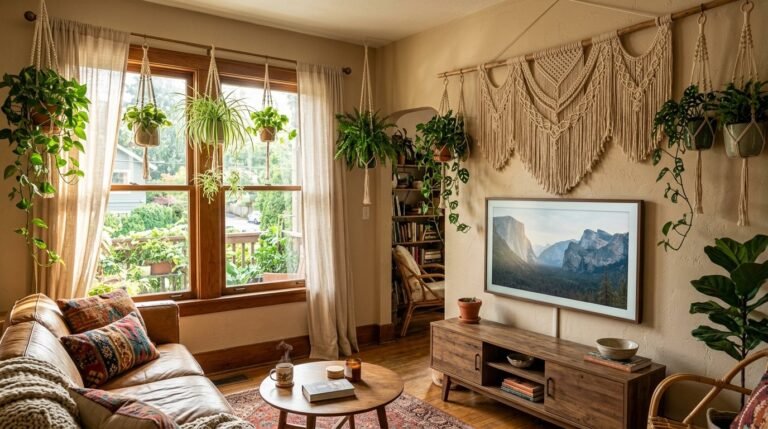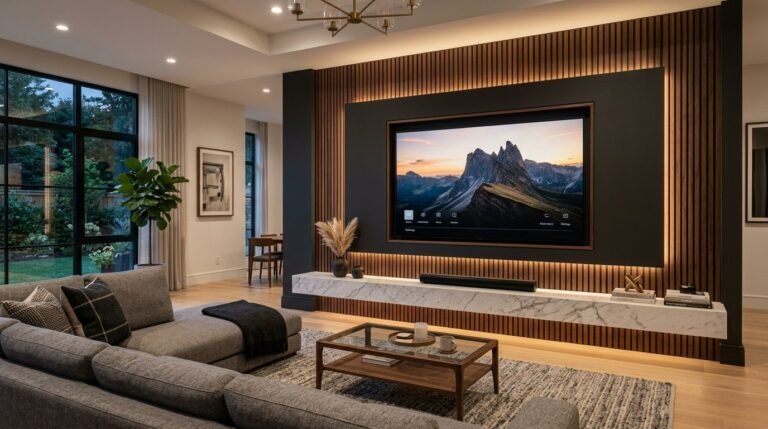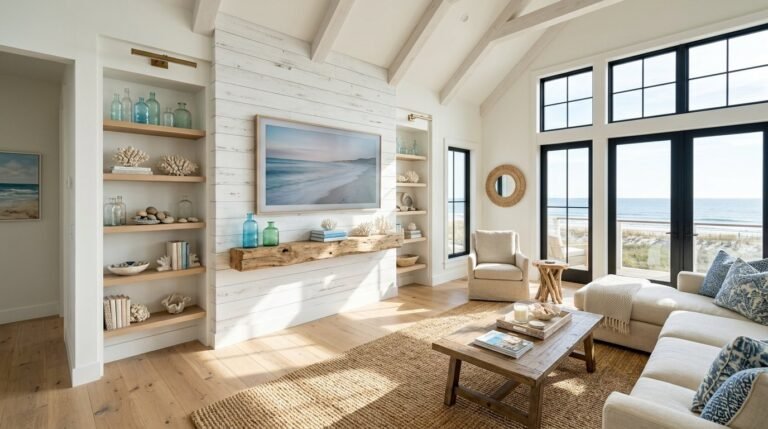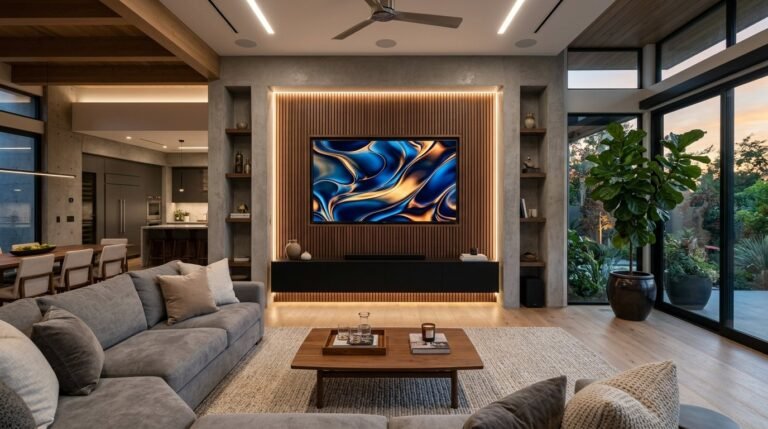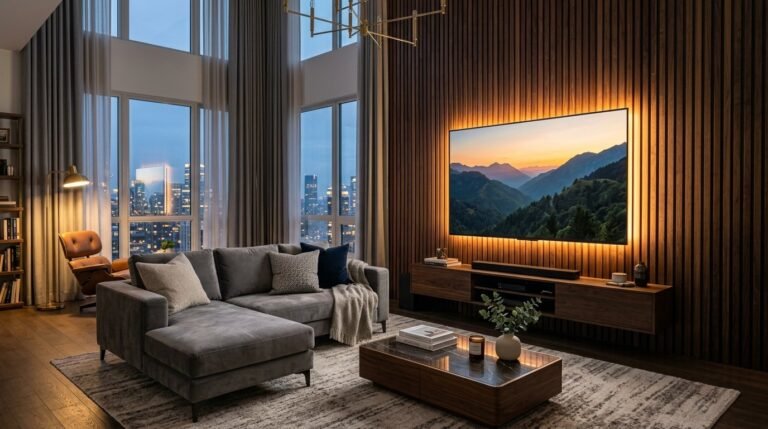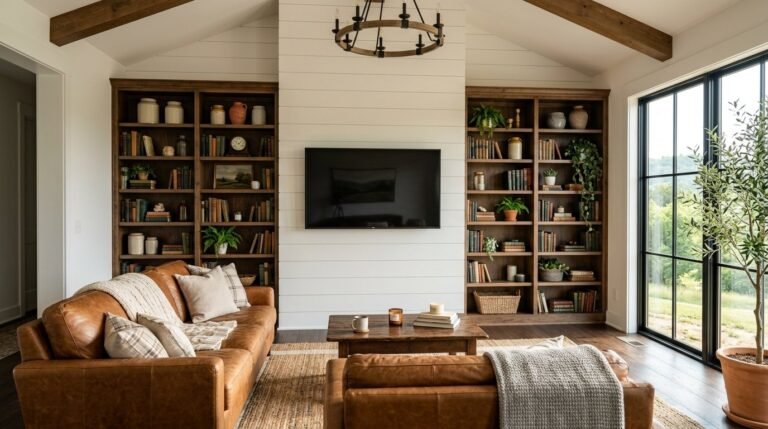
Your living room wall is a blank page that defines your home. Last year, I visited a client in Chicago who spent thousands on a sofa but left her TV hanging on a bare white wall. It felt cold. The moment we added a textured walnut panel, the entire room felt expensive. Most people forget that the TV is the focal point for hours every day. A luxury panel turns a black plastic rectangle into a piece of gallery art. You want a space that feels like a five-star hotel suite but stays cozy enough for a Sunday movie marathon. High-stakes design starts with the wall behind the screen.
Executive Summary
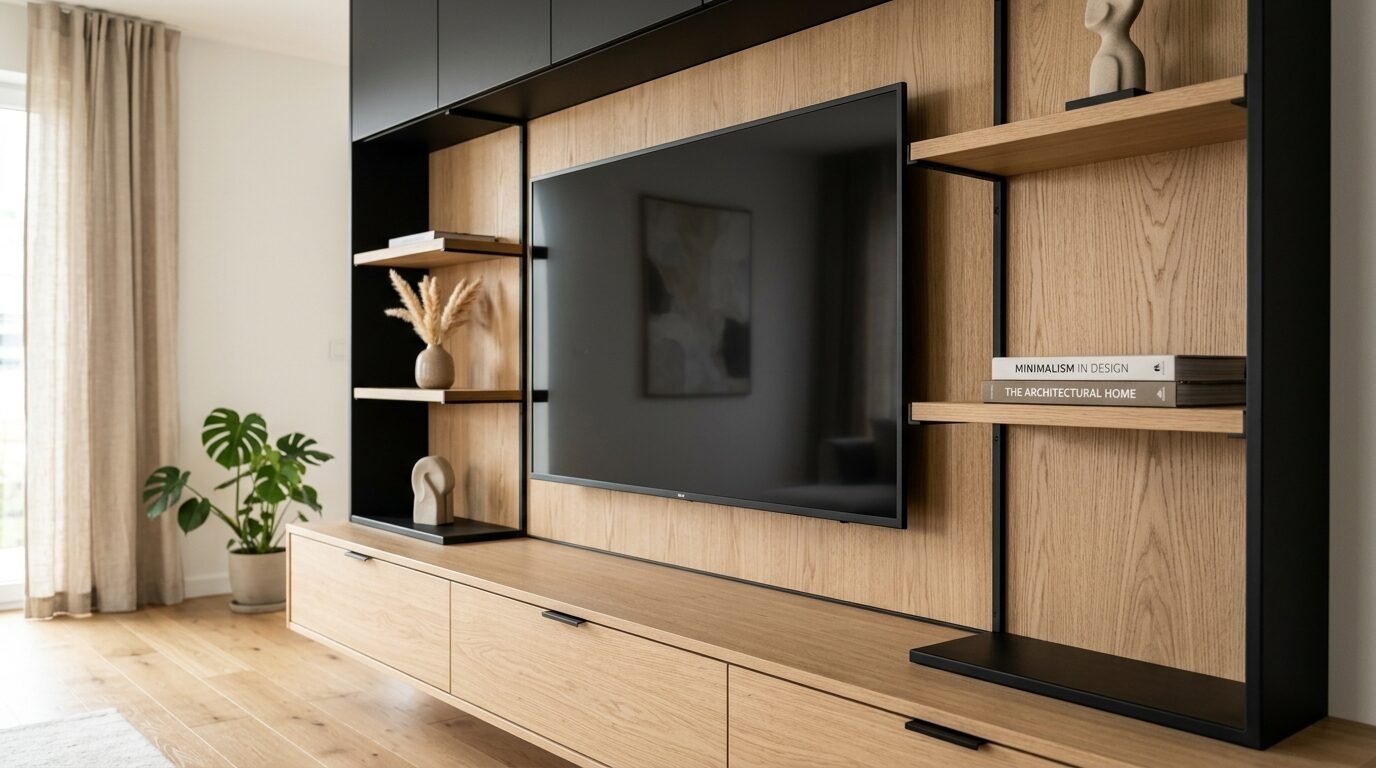
Luxury home design centers on the media wall. This guide gives you 22 specific ways to change your space using stone, wood, metal, and light. You will see how to hide messy wires and create storage that looks like decor. I cover costs ranging from DIY wood slats at 400 dollars to full marble slabs costing over 5000 dollars. In my experience, the right panel adds 10 percent to the felt value of a room. We will look at brands like Govee for lighting and IKEA for base frames. This article shows you how to pick materials that last. You will learn to mix textures without making the room look cluttered or busy.
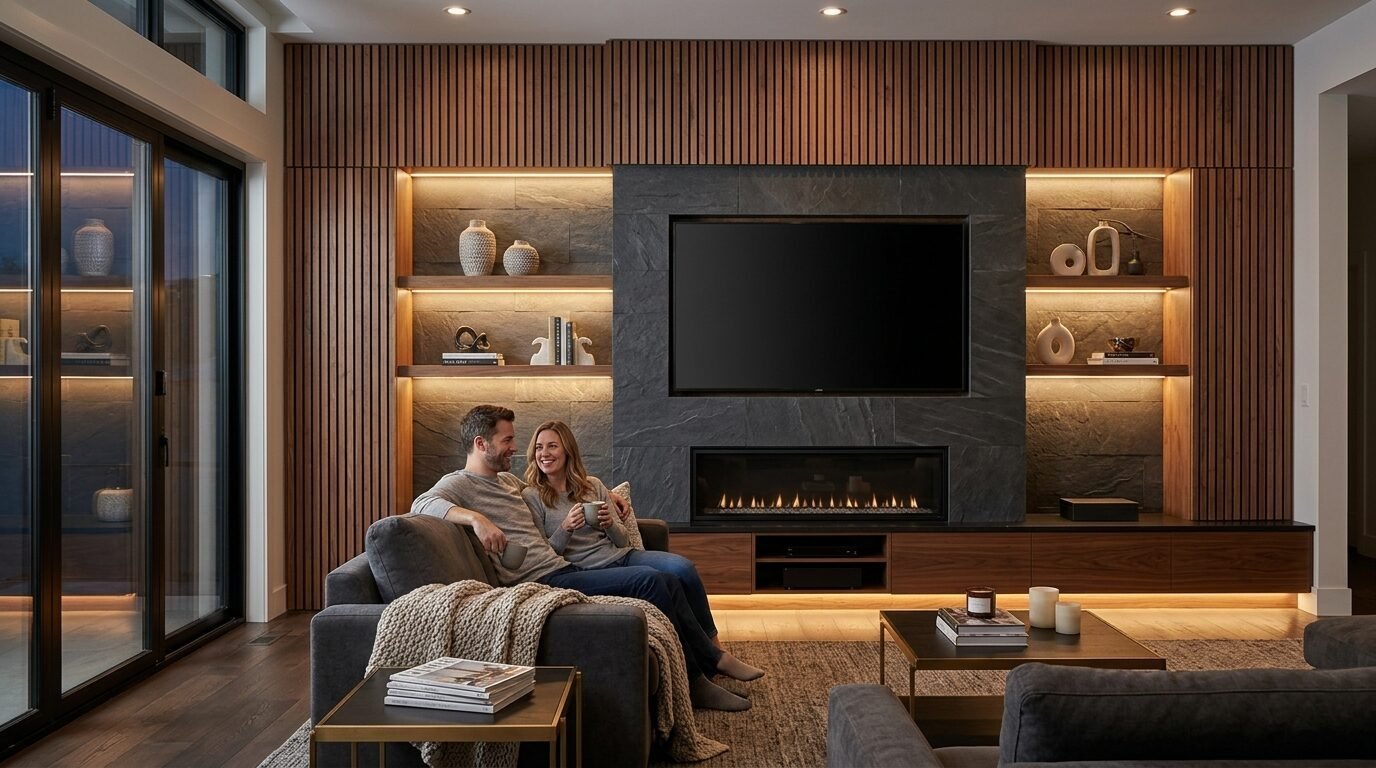
1. Vertical Walnut Wood Slats
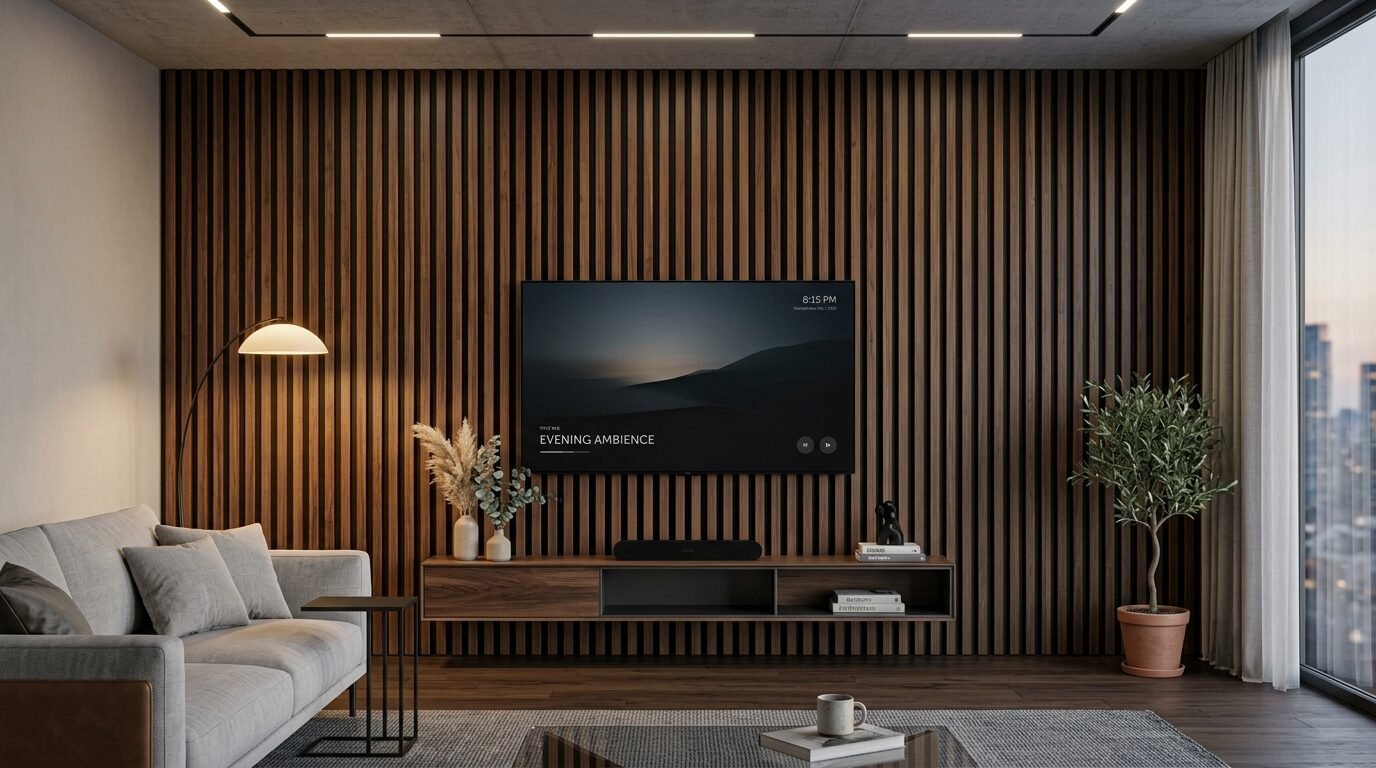
Walnut wood slats are the gold standard for modern luxury. I saw this work perfectly in a Manhattan loft where the high ceilings felt too empty. The dark brown tones add instant warmth to a cold room. You should use real wood veneer rather than cheap plastic stickers. The texture creates deep shadows that make the wall look three dimensional.
How to style it:
- Space the slats 0.5 inches apart.
- Use a matte black backer board to hide the wall behind.
- Run the slats from floor to ceiling to make your room look taller.
I’ve noticed that walnut pairs best with grey stone floors. It balances the coolness of the rock. You can find pre-made panels at Home Depot or local lumber yards. Real walnut is pricey but the smell and feel are worth every cent.
2. Bookmatched Calacatta Marble Slabs
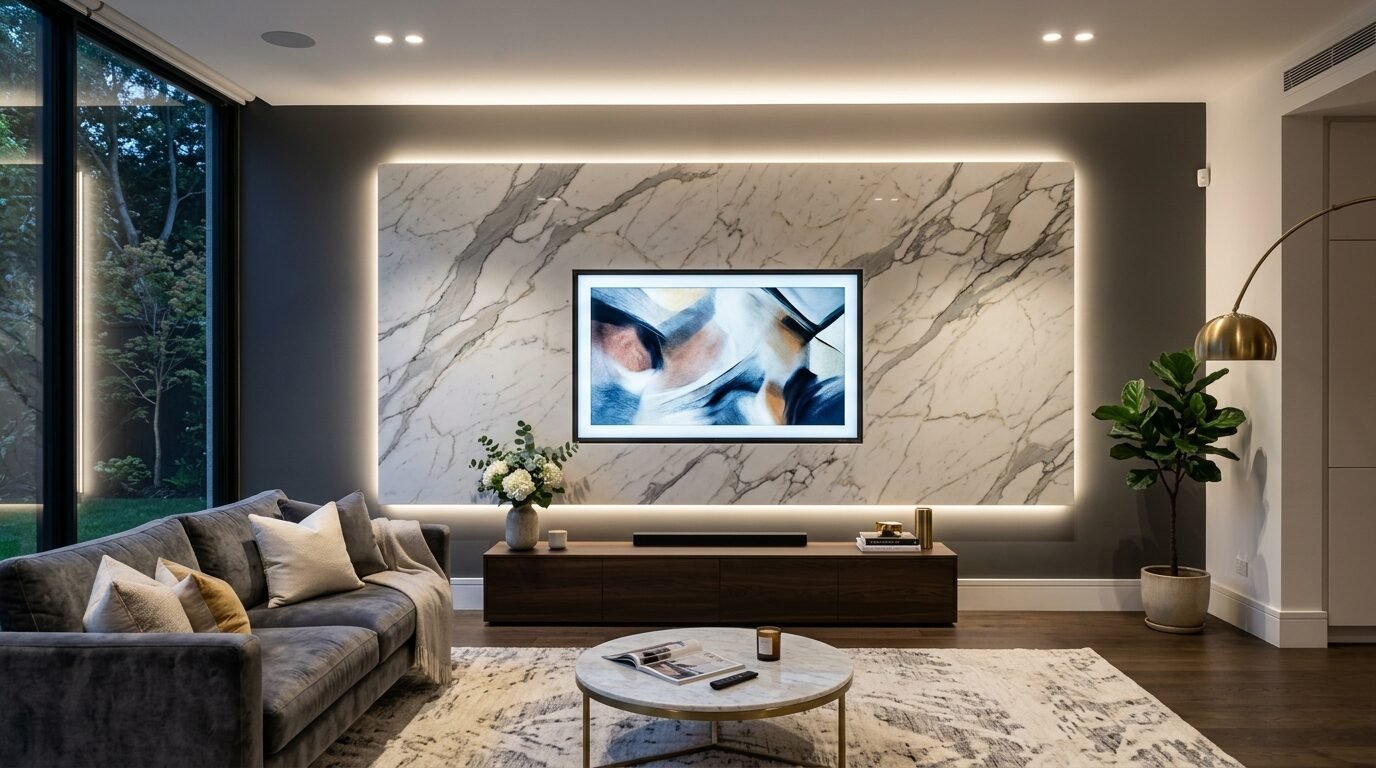
Nothing says luxury like a continuous piece of Italian marble. Bookmatching means the veins in the stone line up like a mirror image. I’ve seen this used in high-end condos in Miami to create a massive “wow” factor. It is heavy and requires professional installation with steel braces.
The details:
- Choose Calacatta Borghini for thick gold and grey veins.
- Keep the TV mount recessed so the screen sits flush with the stone.
- Add a simple white floating ledge at the bottom.
In my past projects, I’ve seen homeowners try to use marble wallpaper. Don’t do it. The shine of real stone cannot be faked under living room lights. If the cost is too high, look at large format porcelain tiles that mimic the look for half the price.
3. Integrated Electric Fireplace Units
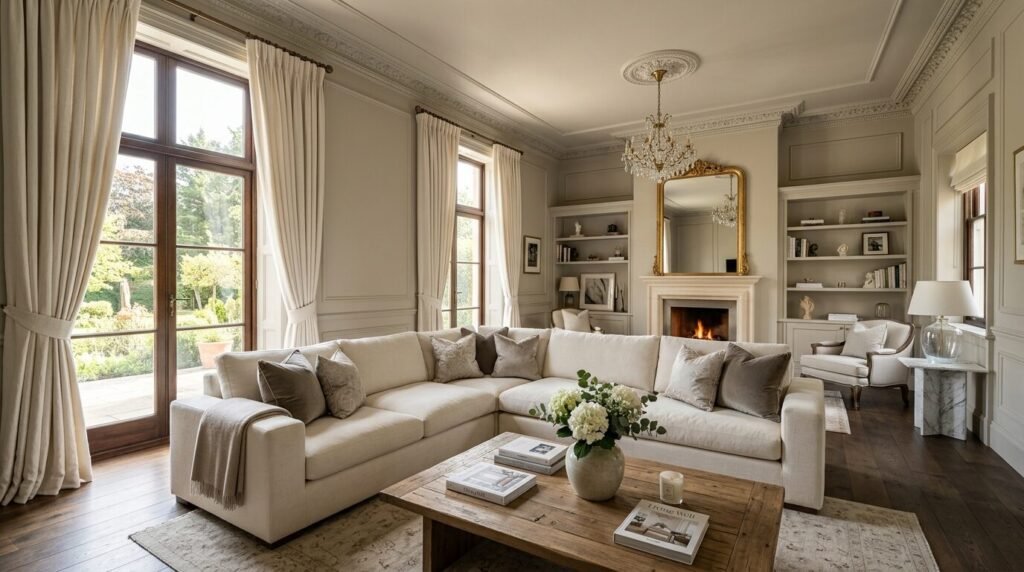
Combining fire and film is the ultimate comfort move. A long, thin electric fireplace sitting directly under the TV creates a balanced vertical line. I’ve seen this setup in new luxury builds across the suburbs. It makes the media wall the heart of the home during winter.
Implementation steps:
- Buy a “cool-to-the-touch” glass fireplace like the Dimplex IgniteXL.
- Ensure the TV is at least 12 inches above the heat vent.
- Frame the entire unit in heat-resistant drywall or stone.
I’ve tried placing the fireplace too high before, and it ruins the neck angle for watching TV. Keep the fire low. This setup hides all the ugly black boxes and wires inside the wall cavity. It looks clean and stays functional.
4. Floating Backlit LED Panels
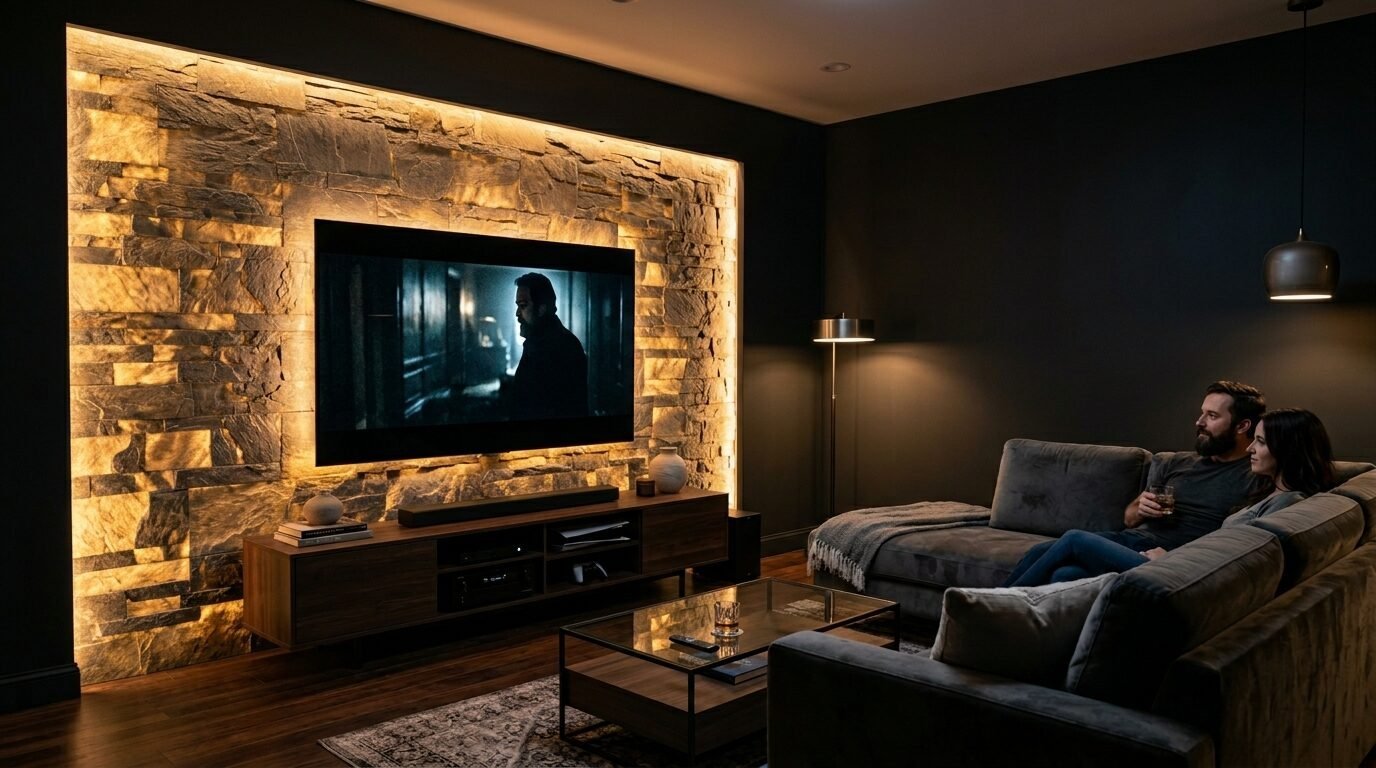
Backlighting is the cheapest way to make a TV panel look expensive. By pulling the panel 4 inches away from the wall, you create space for LED strips. The glow softens the harsh light of the screen, which helps your eyes during late-night shows.
Pro tips:
- Use Philips Hue Gradient strips for light that syncs with your movie colors.
- Paint the main wall a dark color like charcoal so the light “pops.”
- Hide the power outlet directly behind the floating panel.
I once worked on a media room where we used RGB lights. It felt like a tech lab. Stay with “warm white” or “natural white” for a true luxury feel. It feels more like a high-end lounge and less like a gaming basement.
5. Hidden Push-to-Open Storage
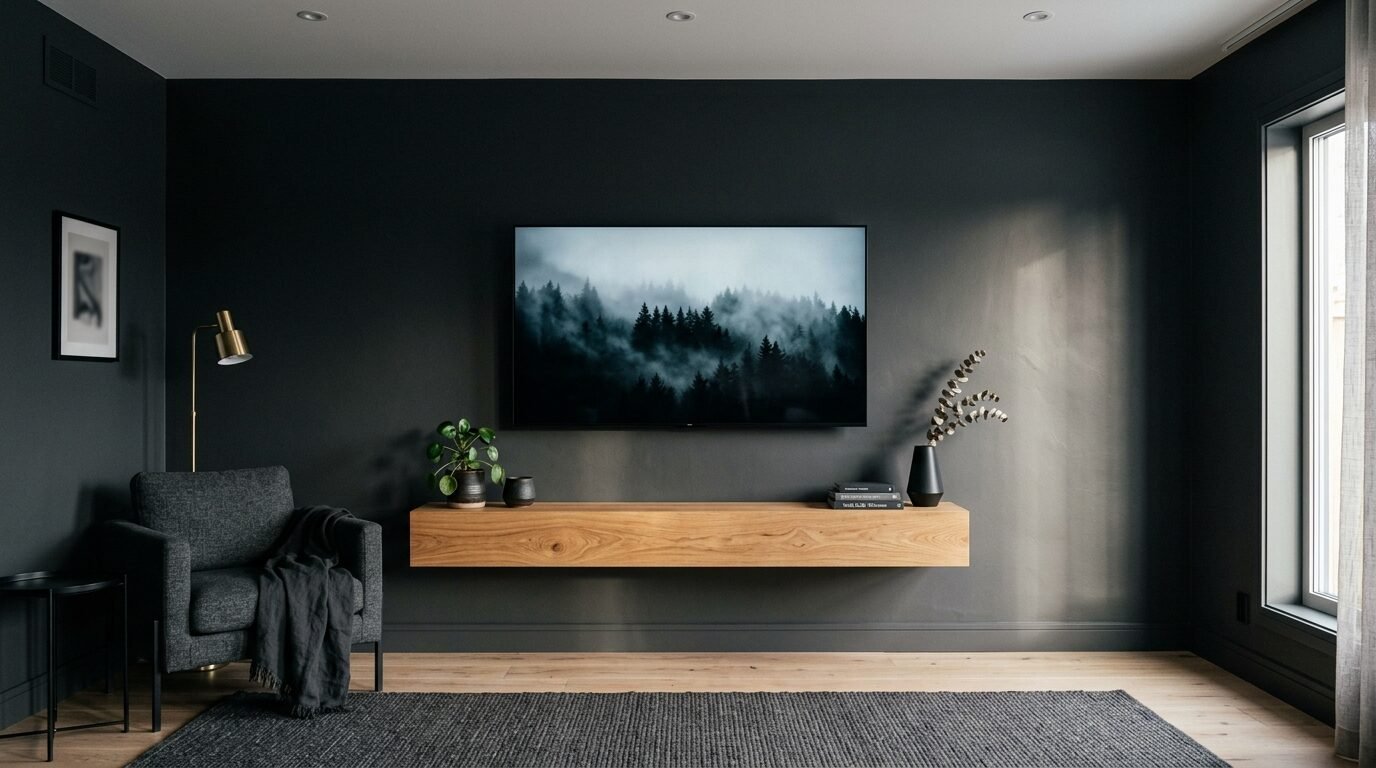
Luxury is often about what you don’t see. A panel that looks like a solid wall but hides cabinets is a win for small apartments. I’ve seen clients store entire vinyl collections and gaming consoles behind these seamless doors. Use “touch latches” so you don’t need handles.
Design choices:
- Use MDF panels painted in a soft “greige” color.
- Align the door seams with the edges of the TV.
- Keep the depth at 10 inches to avoid a bulky look.
In my experience, the biggest mistake is using cheap hinges. High-quality hinges from Blum ensure the doors stay perfectly level. If the doors sag even a little, the “hidden” look is ruined.
6. Industrial Raw Concrete Finish
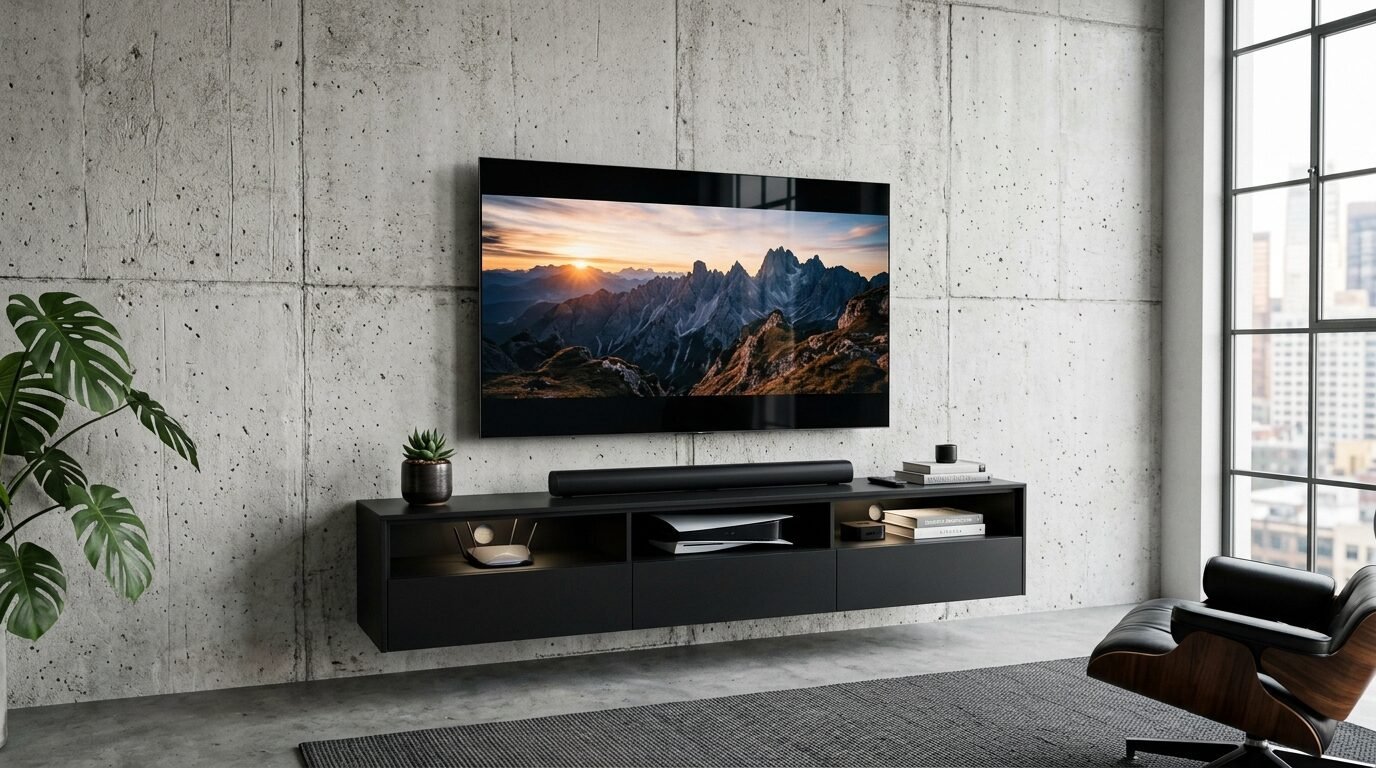
For a modern, “brutalist” luxury look, raw concrete is king. It looks cold but feels very high-fashion. I’ve seen this used in renovated warehouses where the owner wanted a gritty yet polished vibe. You don’t need a real concrete wall; high-end micro-cement finishes work on standard drywall.
Style guide:
- Apply the cement in large, sweeping motions to create natural “movement.”
- Pair with black metal shelves for a sharp contrast.
- Add a cognac leather chair nearby to warm up the grey tones.
I’ve seen people try to paint concrete patterns. It always looks fake. Use a real cement overlay kit. It feels rough to the touch and reflects light in a way that paint never can.
7. Gold and Brass Metallic Inlays
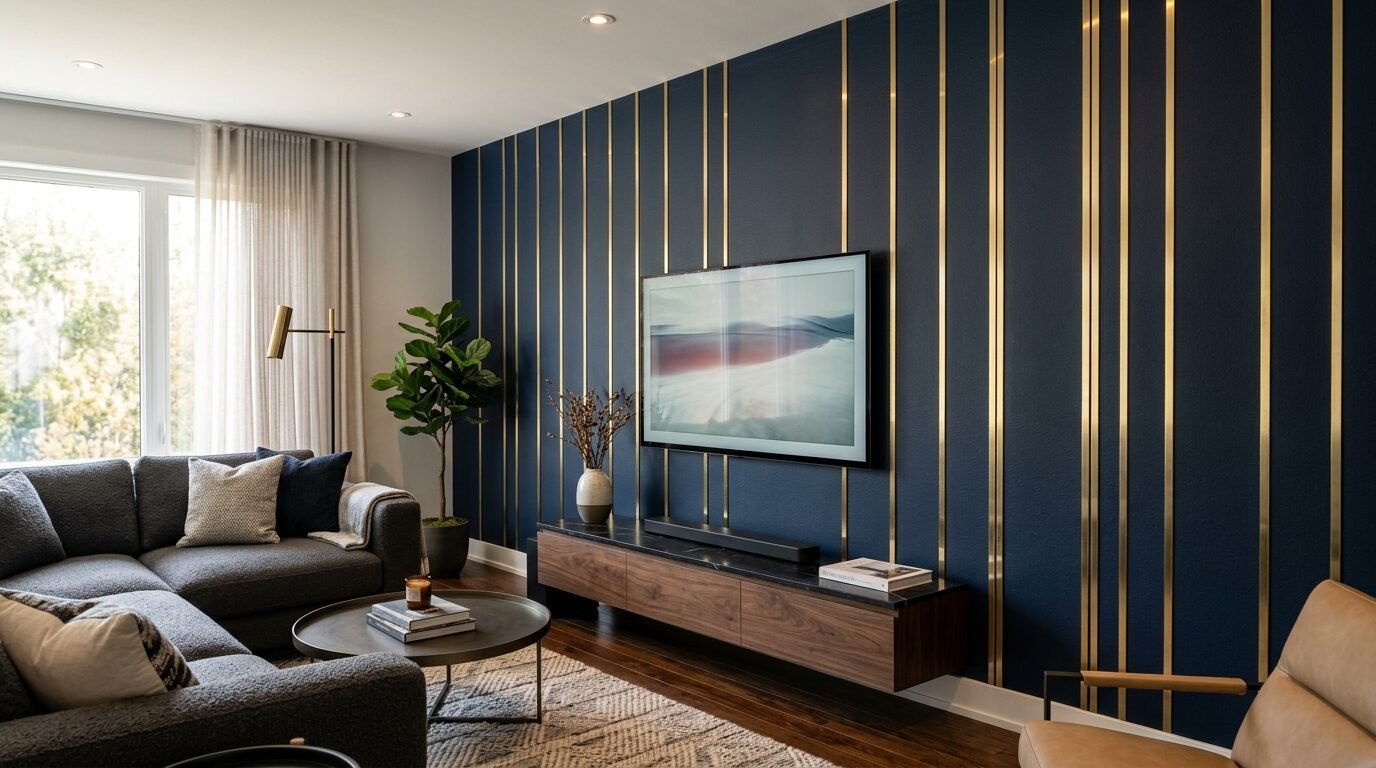
Thin gold lines can turn a simple grey panel into a piece of jewelry for your home. I’ve noticed this trend in boutique hotels in Dubai. You can buy T-shaped brass profiles that sit between wood or stone panels.
Details to watch:
- Keep the brass lines thin, around 0.25 inches.
- Create a geometric pattern like a chevron or a simple grid.
- Match the brass to your floor lamps or coffee table legs.
I’ve seen gold leaf used, but it’s too fragile. Solid brass inserts stay shiny for years and handle the heat from the TV much better. It adds a “bespoke” feel that looks custom-made.
8. Full Mirror Glass Backing
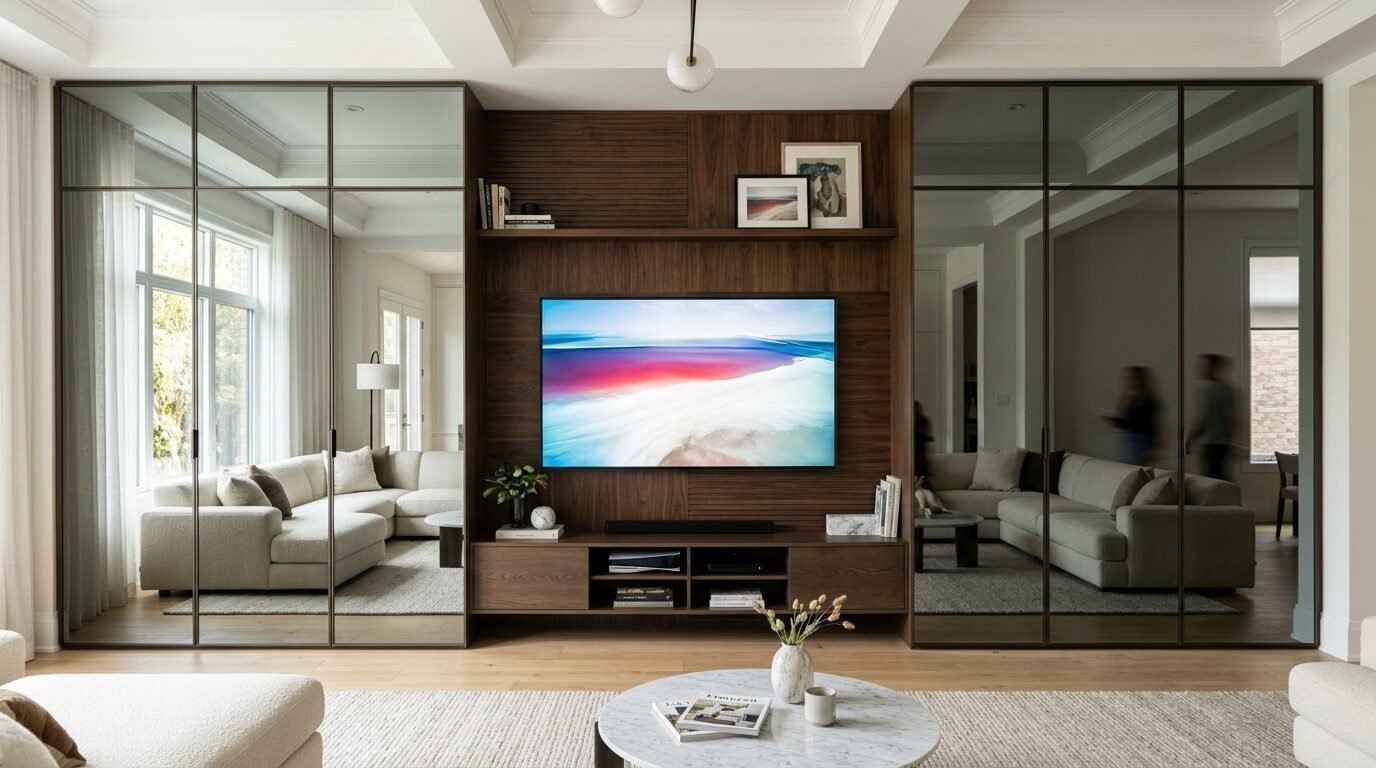
Using mirrors behind a TV makes a small living room feel twice as large. I’ve seen this work in tight city condos. Use “smoked” or “antique” mirror glass so the reflection isn’t too distracting while you watch your favorite show.
Set up:
- Use 24×24 inch mirrored tiles for an Art Deco look.
- Glue the mirrors to a sturdy plywood backing before mounting to the wall.
- Clean with a microfiber cloth to keep the luxury shine.
I once used clear mirrors for a client, and they hated it because they could see themselves eating snacks while watching TV. Smoked grey glass is the better choice. It hides the TV cords perfectly and looks like a dark crystal wall when the screen is off.
9. Textured Grasscloth Wallpaper Panels
Luxury isn’t always hard surfaces. A framed panel covered in high-end grasscloth wallpaper adds a soft, organic feel. I’ve seen this used in coastal homes to bring in natural fibers. It absorbs sound, which makes your TV audio sound better and less echoey.
How to do it:
- Build a shallow wooden frame that is 2 feet wider than the TV.
- Wrap the frame in Phillip Jeffries grasscloth.
- Mount the TV on a long-arm bracket that pulls through the paper.
I’ve noticed that cats love to scratch this material. If you have pets, keep the wallpapered section higher up on the wall. The texture looks amazing when hit by side lighting from a window.
10. Arched Plaster Recesses
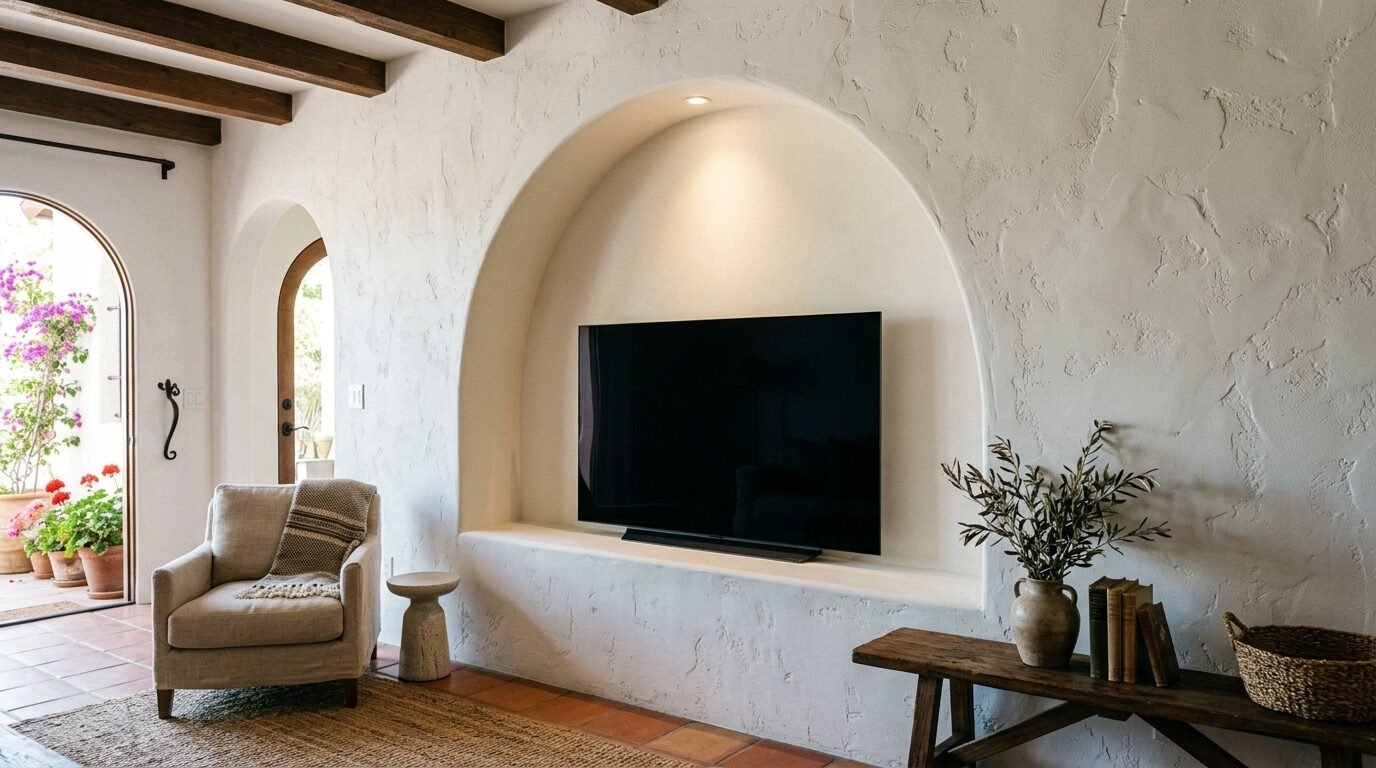
Arches are back in a big way for 2026. A soft, curved recess in the wall creates a “niche” for the TV. It feels Mediterranean and high-end. I’ve seen this in villas where the owner wanted to move away from sharp, boxy corners.
Construction tips:
- Use flexible drywall to create the curve.
- Paint the inside of the arch one shade darker than the rest of the room.
- Place a small spotlight at the very top of the arch.
In my experience, the arch must be perfectly symmetrical. Even a small tilt will be visible because the TV is a perfect rectangle. Use a laser level for the framing. It’s a cheap way to get a custom architectural look.
11. Floor-to-Ceiling Slate Stone
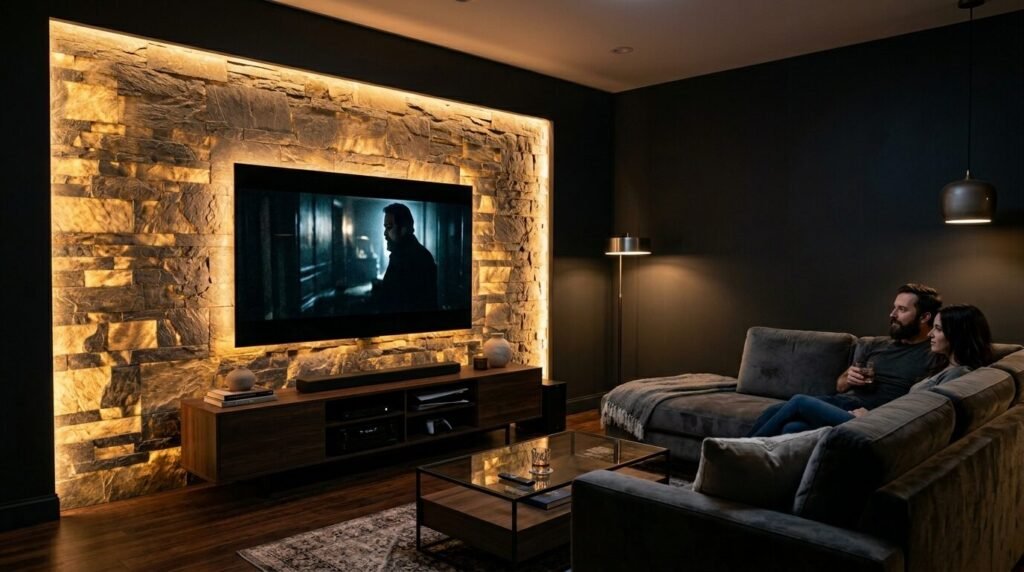
Slate offers a dark, moody luxury that works well in large houses. The natural cleft of the stone catches light and creates a rugged beauty. I’ve seen this used in mountain cabins to bridge the gap between the outdoors and the living room.
Key features:
- Use thin slate veneers to save on weight.
- Go for deep charcoals or rusted copper tones.
- Install the stone without grout lines for a “stacked” look.
I’ve seen slate look too “heavy” if the room is small. If you go with stone, make sure you have plenty of natural light. It looks best when the sun hits the ridges of the rock during the afternoon.
12. Minimalist White-on-White 3D Panels
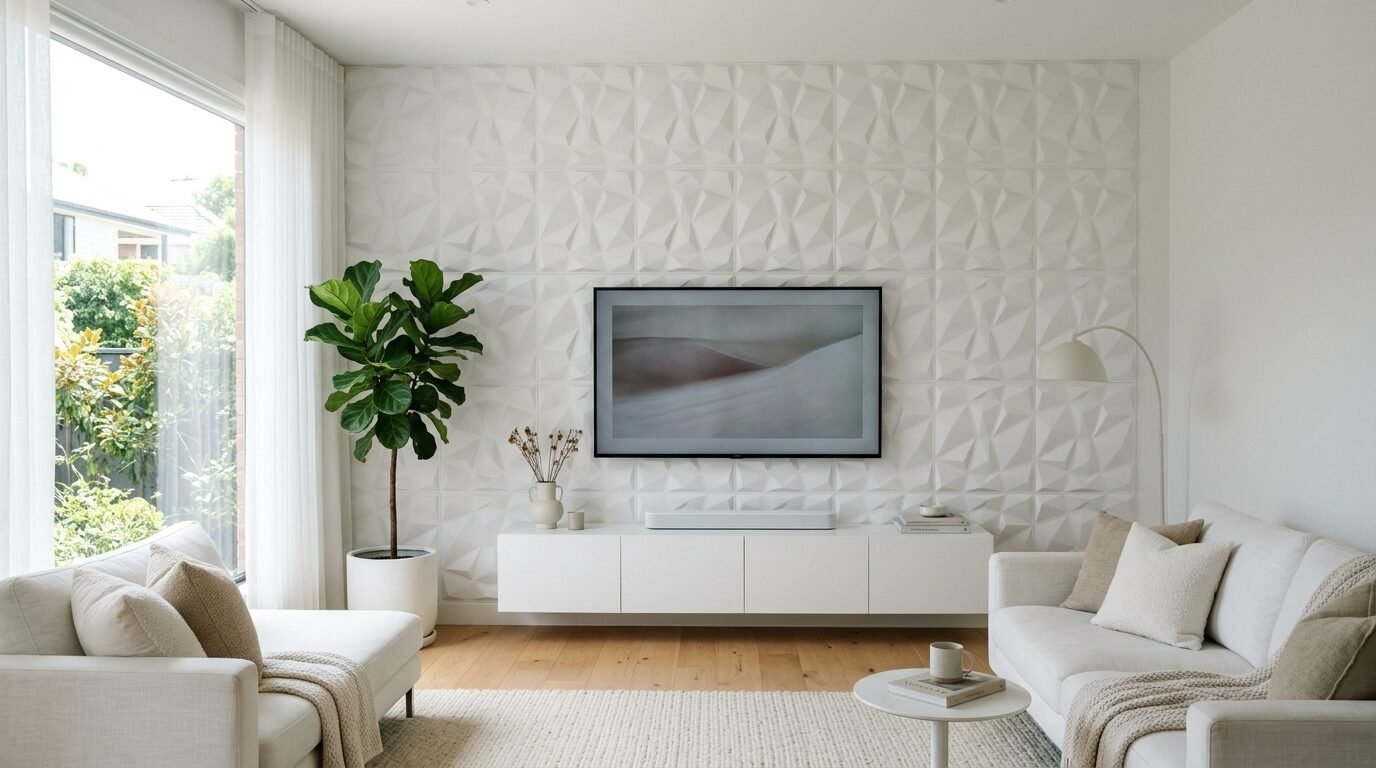
If you love a “clean” look, 3D wall panels in matte white are perfect. They feature waves or geometric shapes that change as the sun moves across the room. I’ve seen these in modern Miami homes where white is the main color.
Setup ideas:
- Choose a “dune” or “wave” pattern.
- Use a white TV frame like the Samsung Frame TV.
- Keep all wires hidden inside the wall for a “floating” effect.
I’ve noticed that dust settles in the ridges of these panels. You will need a duster with a long handle. However, the way the shadows move on the white surface is pure luxury. It is subtle and sophisticated.
13. Dark Charcoal Matte Panels
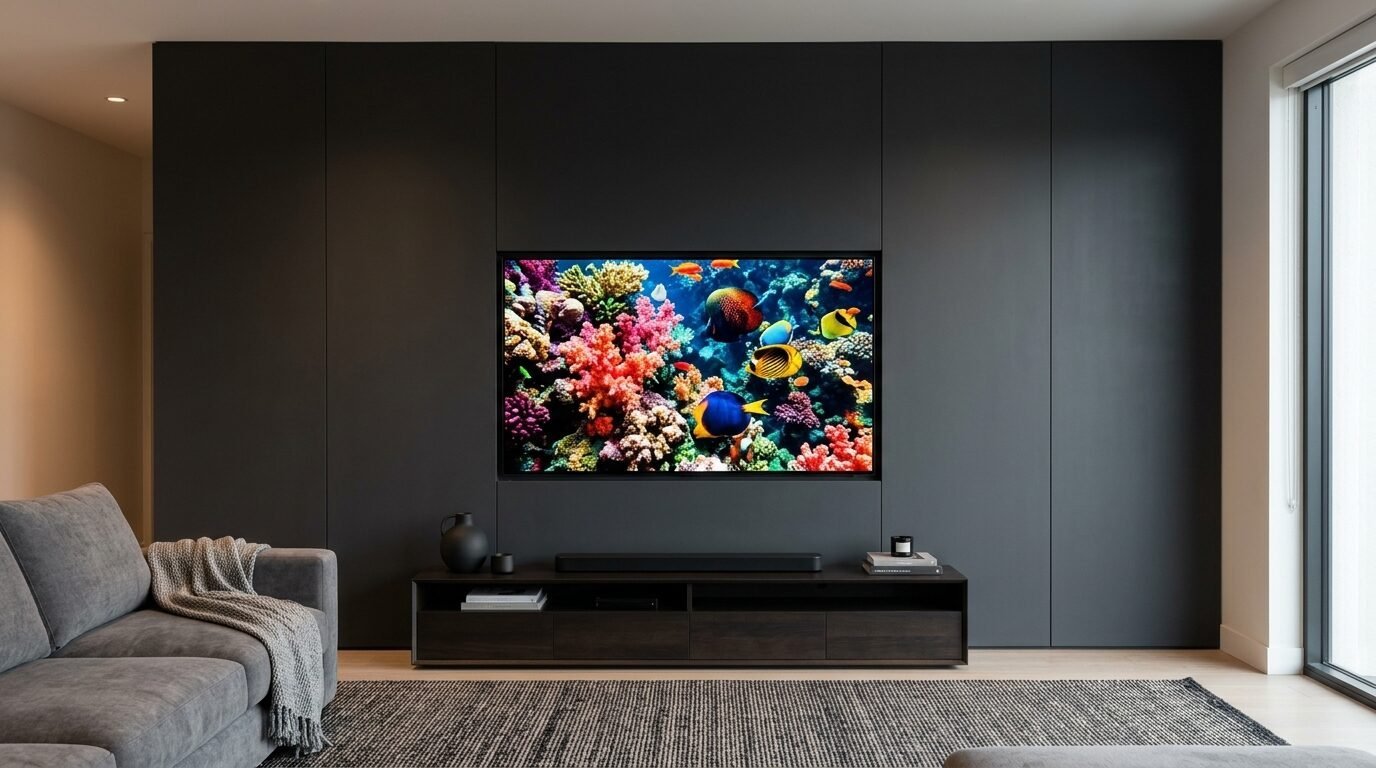
A dark background makes the colors on your TV screen look 20 percent more vivid. I’ve seen pro cinema rooms use deep charcoal because it doesn’t reflect light back at the viewer. It makes the TV “disappear” into the wall when it’s turned off.
Material choice:
- Use Fenix NTM or other “anti-fingerprint” matte laminates.
- Pair with a light oak floor to keep the room from feeling like a cave.
- Use black outlets and switches so they don’t stand out.
I’ve tried using black paint, but it often shows every smudge and fingerprint. High-end matte panels feel like silk and stay clean much longer. It’s a very “boss” look for a modern bachelor pad or a sleek family room.
14. Mid-Century Modern Teak Slats
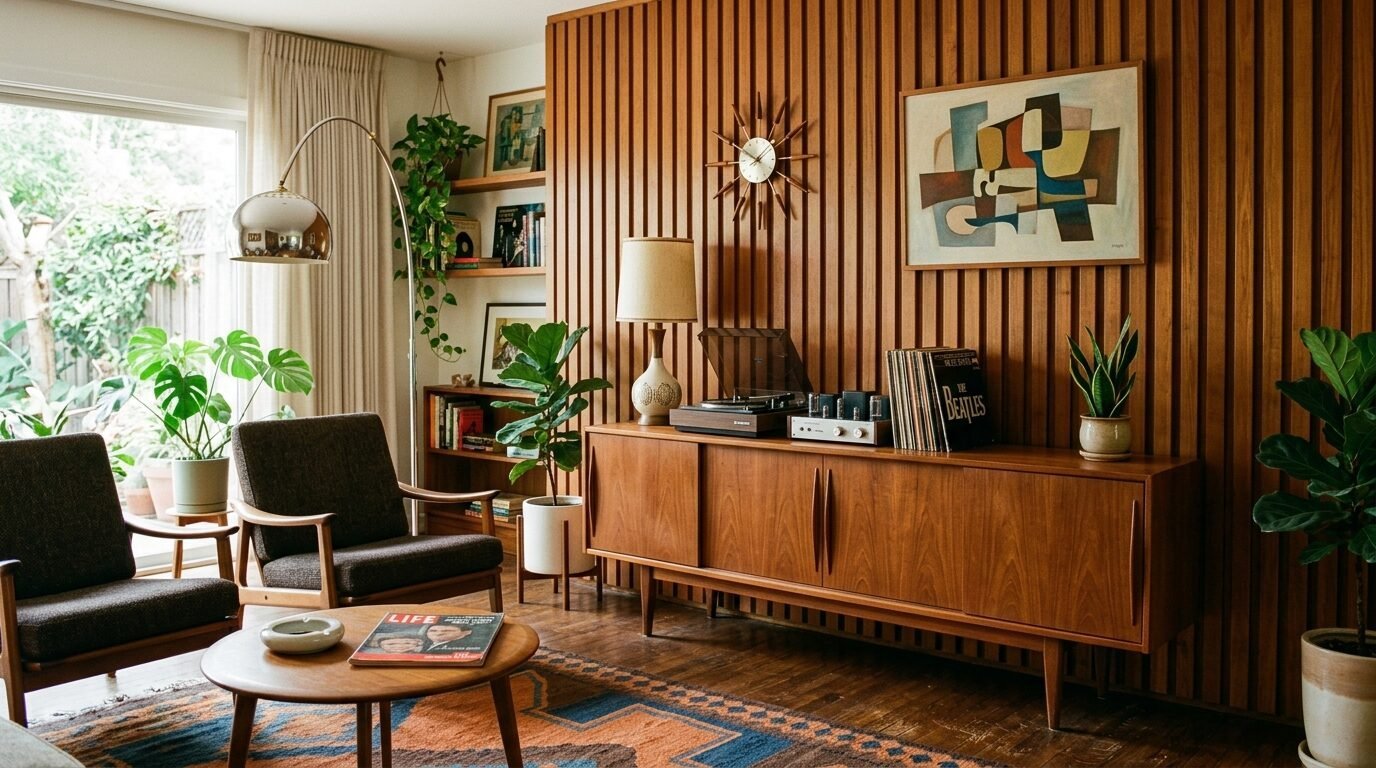
Teak wood has a warm, orange-brown glow that feels like a vintage 1960s lounge. I’ve seen this work in homes with “Eames” style furniture. It’s a classic luxury that never goes out of style.
Design tips:
- Use wider slats than the modern walnut style.
- Finish with a clear oil to let the natural grain shine.
- Add a floating “credenza” at the base with tapered legs.
In my experience, teak is hard to find and expensive. You can use cherry wood as a cheaper alternative if you stain it correctly. It gives that “old money” vibe that feels very grounded and stable.
15. Open Glass Shelving Units
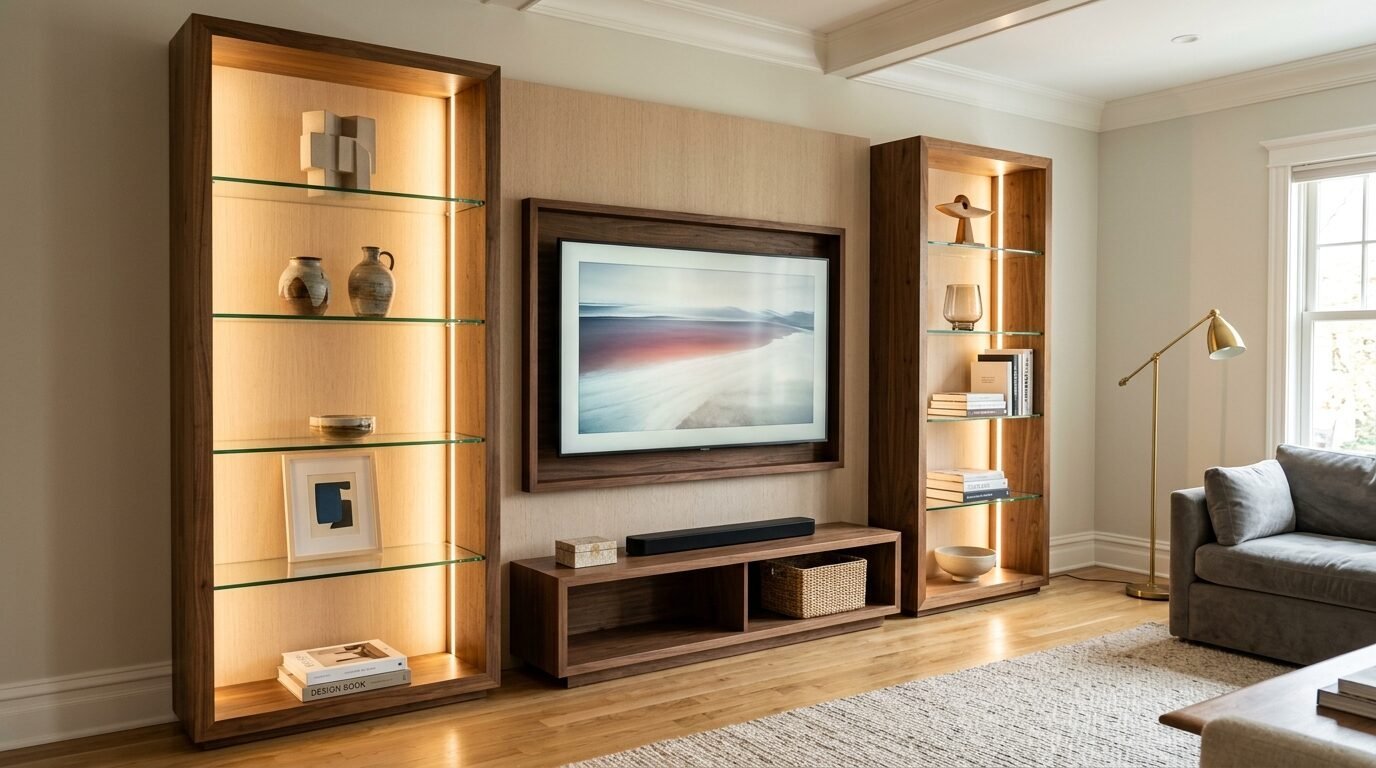
If you have a collection of art or books, integrate them into the TV panel. I’ve seen luxury homes use 1-inch thick glass shelves with built-in lights. It turns the TV wall into a display case.
Arrangement:
- Place the TV in the center and shelves on both sides.
- Use “low-iron” glass so there is no green tint on the edges.
- Keep the items on the shelves minimal to avoid distraction.
I’ve seen these get cluttered very fast. Use the “rule of three” for styling: three items of different heights on each shelf. It keeps the luxury look tidy. Glass shelves also help the room feel light and airy.
16. Leather Padded Wall Panels
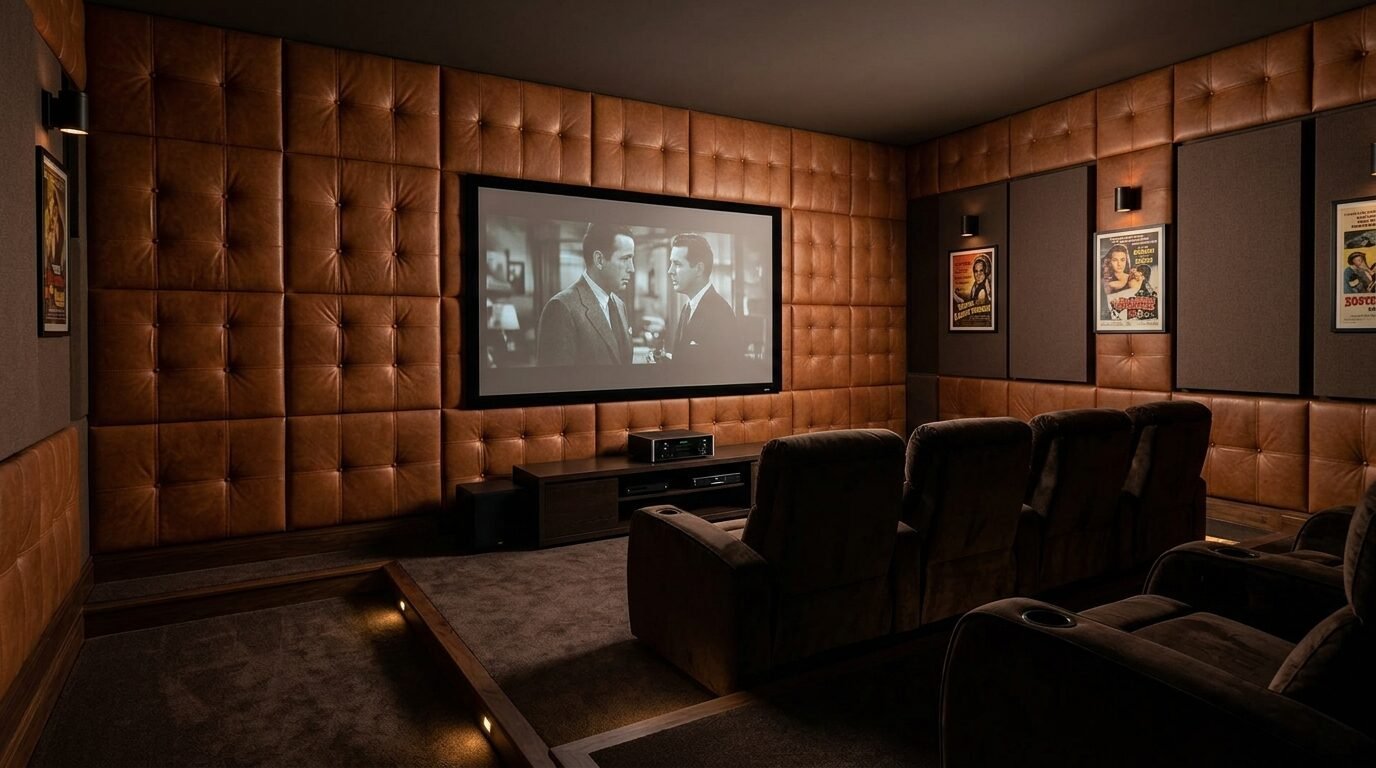
For a high-end “cigar lounge” or “private club” feel, use leather panels. I’ve seen this in luxury basements and home theaters. It feels incredibly expensive and soft to the touch. It also acts as a great sound insulator.
Selection:
- Use faux leather (vegan leather) for easier cleaning.
- Go with a “tufted” look or large flat squares.
- Deep burgundy or navy blue looks the most expensive.
I once worked on a room with real leather, and the smell was amazing for weeks. But real leather can fade in the sun. If your TV wall is near a window, stick with high-quality synthetic options that handle UV light better.
17. Asymmetrical Floating Shelves
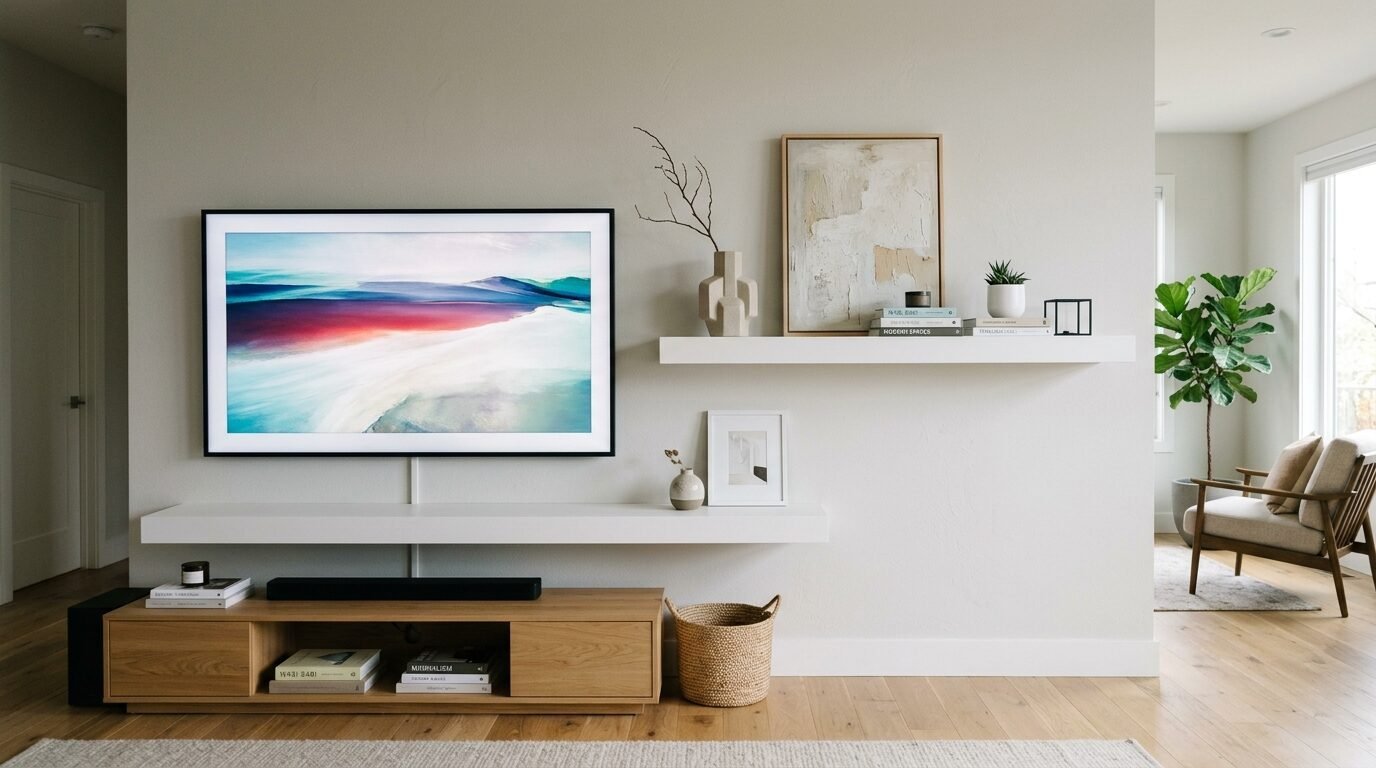
Modern luxury often breaks the rules of symmetry. I’ve seen panels where the TV is slightly off-center, balanced by a long shelf on the opposite side. It feels like an art installation.
The look:
- One long shelf at the bottom, one short shelf high up.
- Use thick “chunky” shelves (3 inches deep).
- Keep the colors neutral so the shape does the talking.
I’ve seen people get nervous about things not being centered. Trust the process. Asymmetry feels more “designer” and less “big box store.” It’s a great way to handle a wall that has a window on one side.
18. Integrated Soundbar Recess
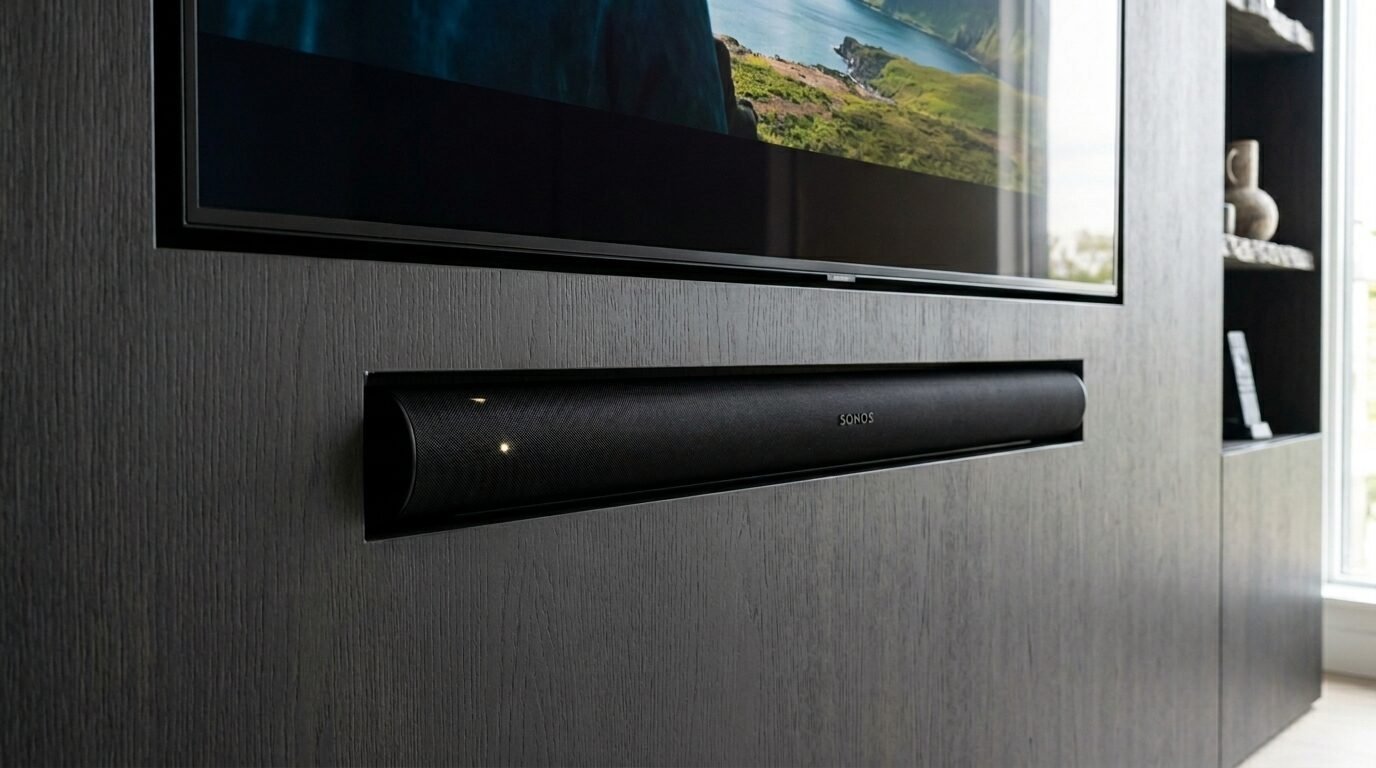
Nothing ruins a luxury panel like a bulky soundbar hanging off the bottom. I’ve seen custom units where a “slot” is cut into the panel specifically for the speaker. It sits perfectly flush.
Details:
- Measure your soundbar twice before cutting.
- Leave 1 inch of space on all sides for air.
- Cover the slot with acoustically transparent black fabric.
I’ve seen people upgrade their soundbar and then it doesn’t fit the hole. My advice is to make the recess slightly larger than you need. You can always fill the gap with a foam spacer. It looks much more professional.
19. Sliding Art Panels (Hide the TV)
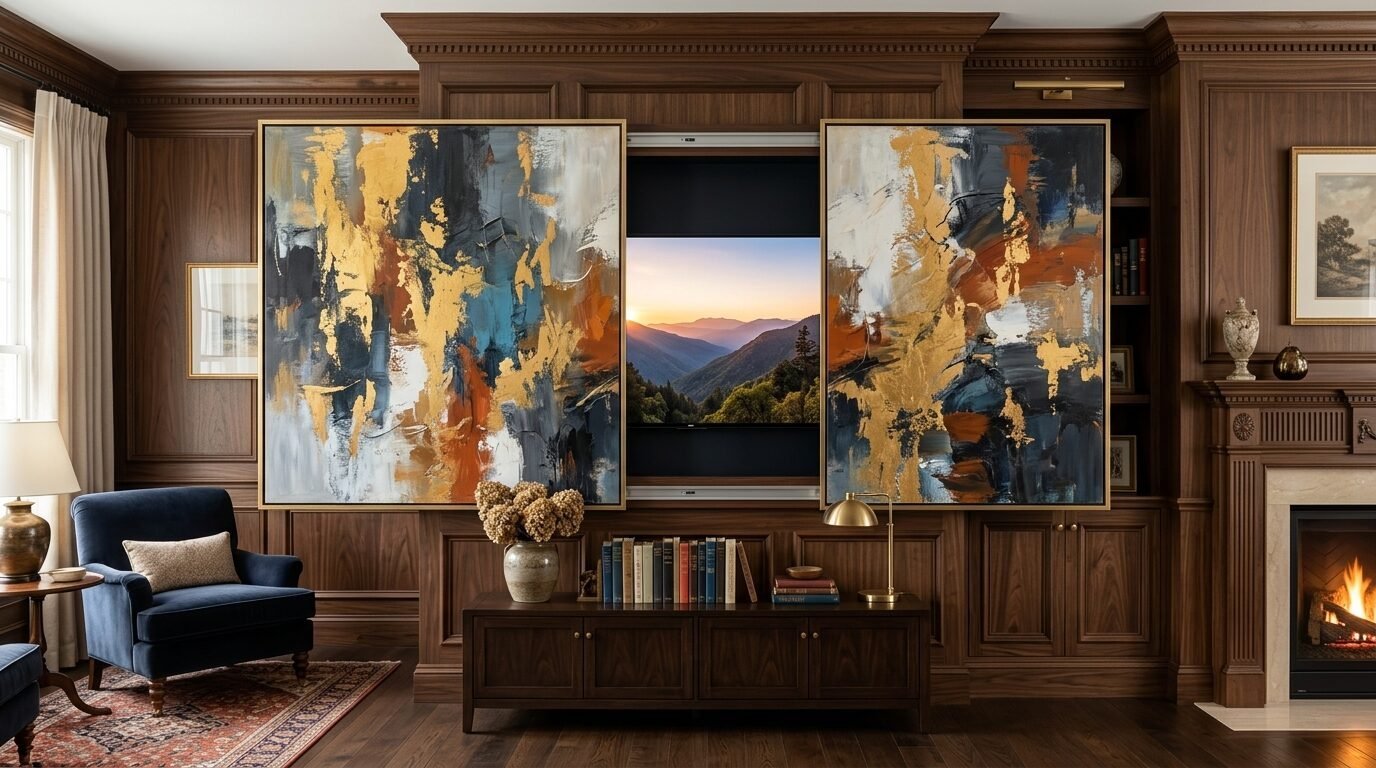
The ultimate luxury is the TV you only see when you want to. I’ve seen panels where two pieces of art slide apart to reveal the screen. It’s a “James Bond” move that always impresses guests.
How it works:
- Use a motorized rail system like those from Nexus 21.
- Pick a large canvas painting that fits your room style.
- Ensure the TV is recessed deep into the wall.
In my experience, the motor can be noisy. Spend the extra money on a “silent” rail system. It’s perfect for formal living rooms where you don’t want a “black hole” (the TV) to be the main focus when you are hosting a dinner.
20. Velvet Fabric Paneling
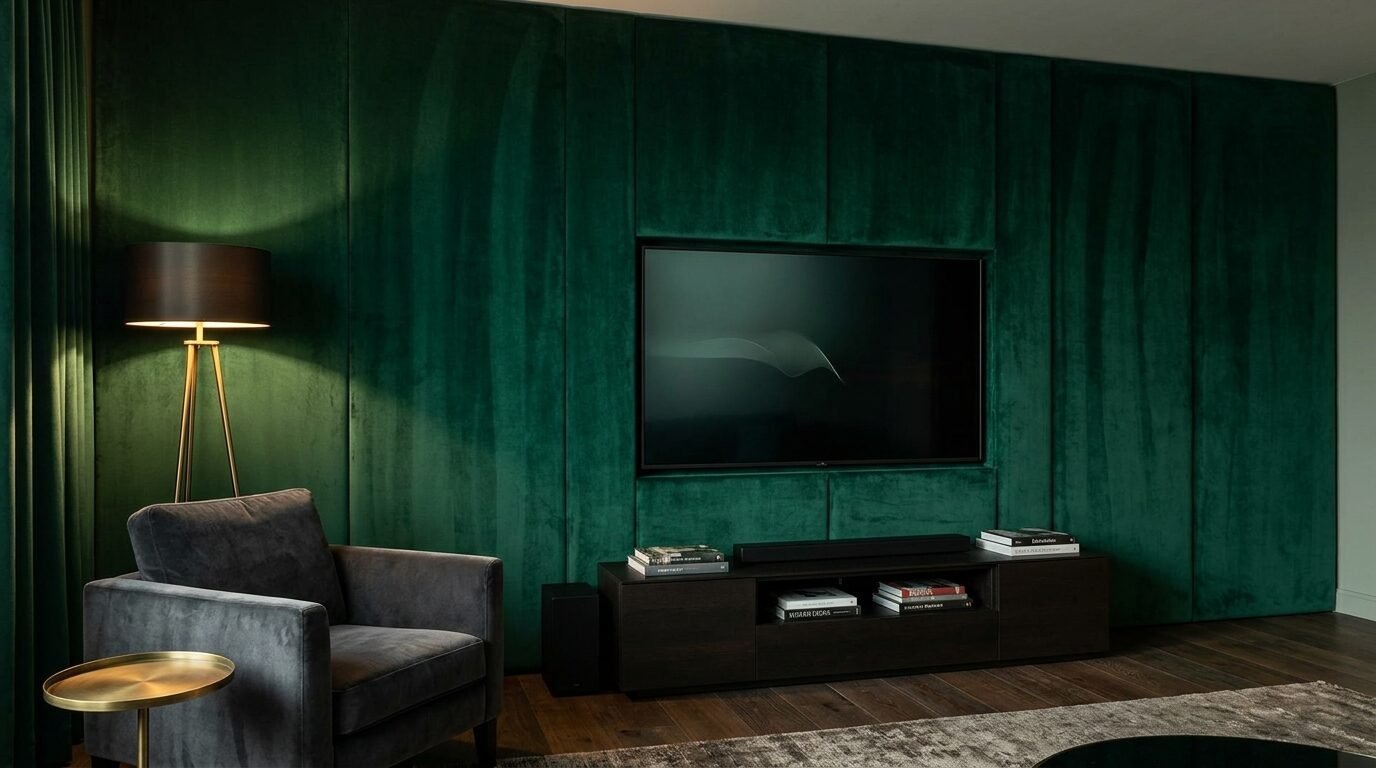
Velvet adds a deep, rich texture that stone or wood cannot match. I’ve seen this in “jewel-box” style media rooms. It looks stunning in emerald green or royal blue. It makes the room feel quiet and cozy.
Style tips:
- Use 12×12 inch velvet squares for a grid pattern.
- Make sure the TV is on a mount that keeps it cool.
- Vacuum the panels once a month to keep them fresh.
I’ve seen velvet look dusty if it’s black. Stick to mid-tones like forest green or rust. The way velvet catches the light from your TV creates a soft glow around the screen that feels very high-end.
21. Brass Framed Units
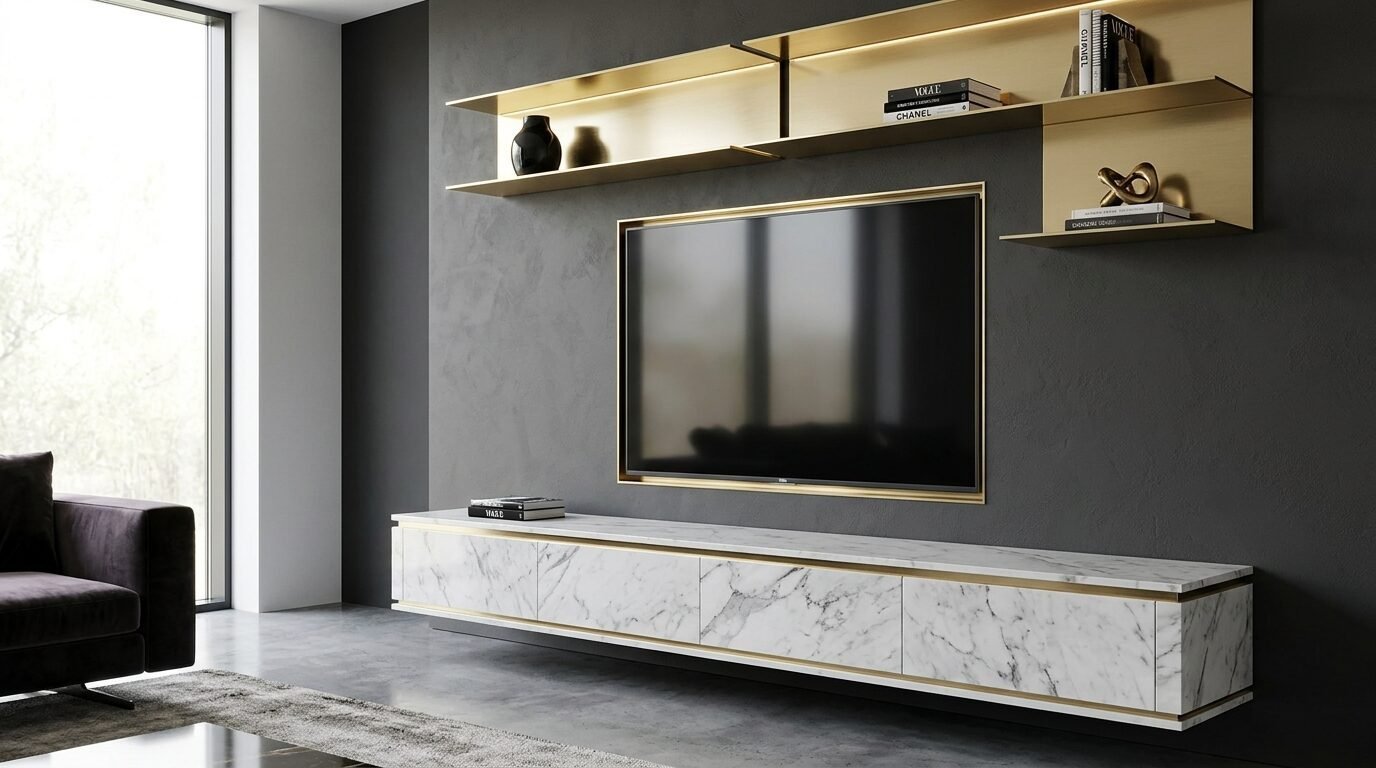
Instead of a full wall panel, a thin brass frame around the TV and the base unit looks very sleek. I’ve seen this in “New York” style apartments. It’s a mix of industrial and luxury.
The setup:
- Use square brass tubing to build a frame.
- Mount the TV inside the frame with 2 inches of “breathing room.”
- Pair with a marble base for a heavy, expensive feel.
I’ve noticed that brass can tarnish. Use a “lacquered” brass so you don’t have to polish it every week. It looks sharp against a dark navy or black wall. It’s a great way to add “shine” without using mirrors.
22. Biophilic Greenery Panels
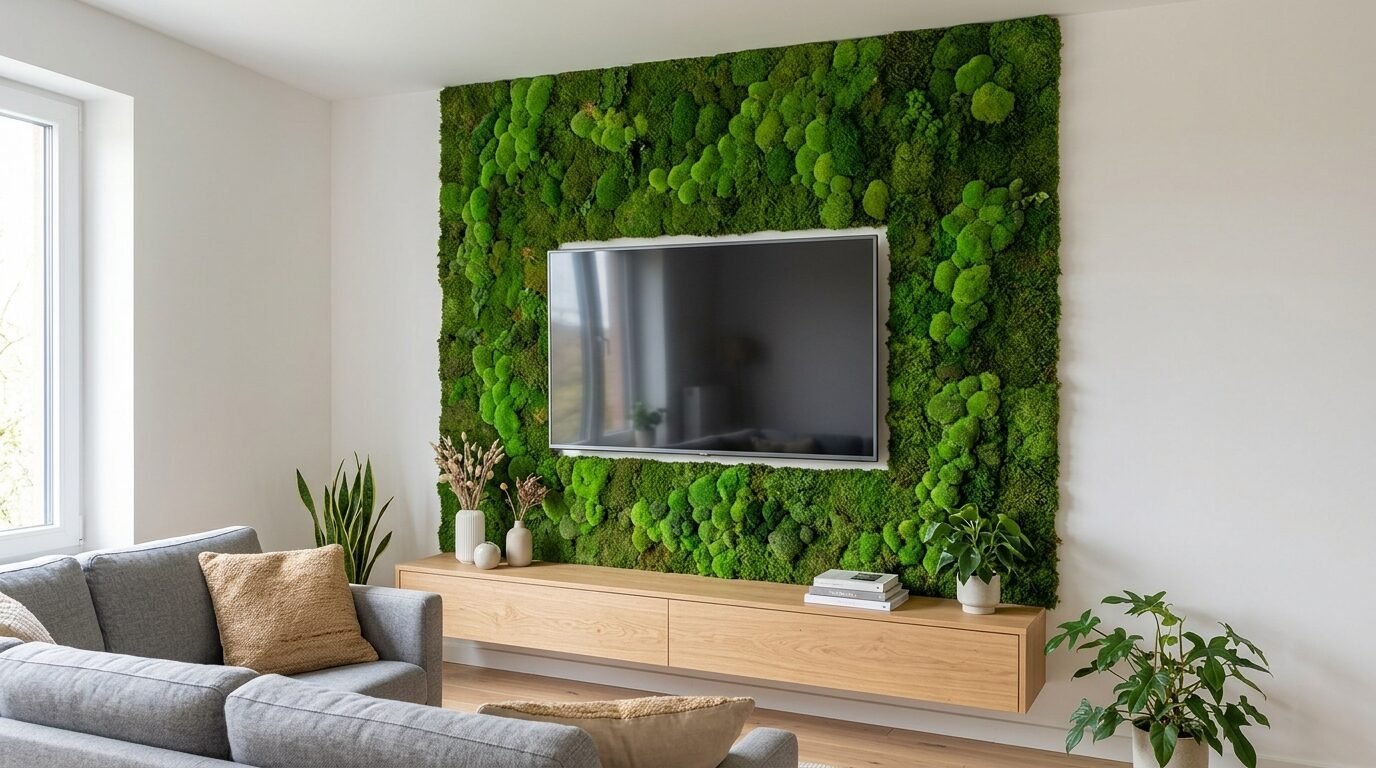
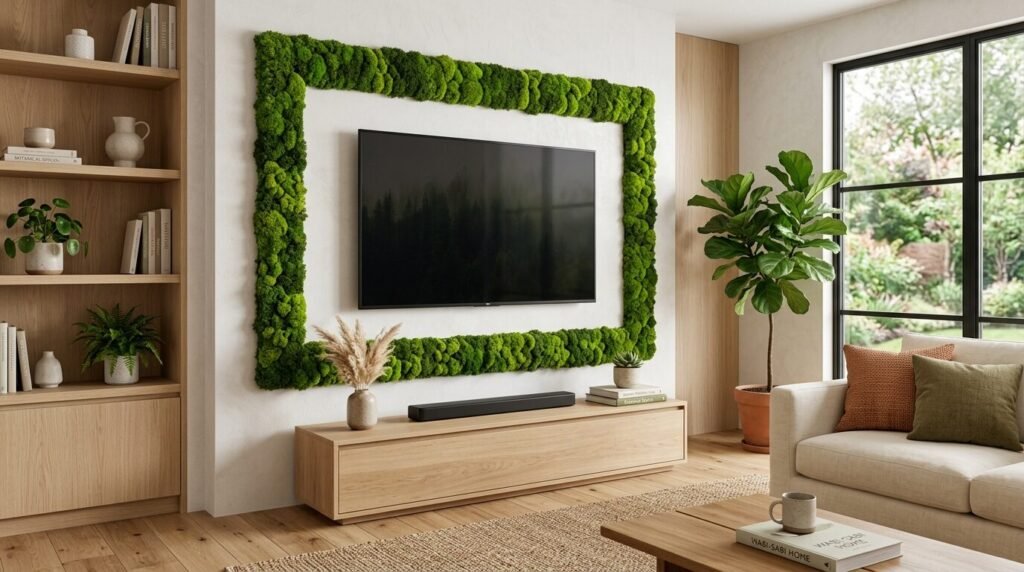
Bringing nature indoors is the new luxury. I’ve seen “preserved moss” panels used around TVs in modern eco-homes. It stays green for years without water. It looks like a living forest wall behind your screen.
Details:
- Use “reindeer moss” or “sheet moss.”
- Keep the moss away from the TV vents to avoid drying it out.
- Pair with light wood like ash or maple.
I’ve seen people use fake plastic plants. They look cheap and gather a lot of static dust. Preserved moss is real plant matter that has been treated. It feels soft and looks 100 percent natural. It’s a great conversation starter.
Frequently Asked Questions
What is the best height for a luxury TV panel?
The center of your TV should be at eye level when you are sitting down. For most sofas, this means the bottom of the TV is about 24 to 30 inches off the floor. I’ve seen many people mount their TV too high, like over a high fireplace. This causes neck pain and ruins the “luxury” vibe. Keep it low for a sleek, modern look.
How do I hide wires in a TV wall panel?
The most professional way is to run cables through the wall using “brush plates.” If you are building a wood or stone panel, leave a 2-inch gap between the panel and the drywall. This “service gap” lets you hide power bricks and HDMI cords. I’ve seen people use plastic cord covers, but they look cheap. Always hide wires behind the surface for a true luxury finish.
Are wood slat panels still in style for 2026?
Yes, but the trend has moved toward “fluted” wood and thinner slats. I’ve noticed that natural walnut and oak are more popular than dark stained woods. People want a “warm minimalist” look. In my experience, wood slats are a safe investment because they add texture that works with almost any furniture style.
Which material is best for sound quality?
Fabric panels like velvet or grasscloth are best for sound. They stop the audio from bouncing off hard walls. Stone and marble look amazing but can make your room sound “echoey.” If you use stone, I’ve seen that adding a thick rug and heavy curtains helps balance the acoustics.
How much does a custom TV media wall cost?
A basic DIY wood slat wall can cost around 500 to 800 dollars. A custom-built unit with marble, integrated lighting, and storage usually costs between 4000 and 12000 dollars. I’ve seen high-end motorized art panels go for over 20000 dollars. It depends on the materials and if you need a professional installer.
Can I install a TV panel myself?
Wood slats and wallpaper are great DIY projects. Stone slabs and electrical work for fireplaces should be left to pros. I once tried to hang a large stone tile alone and it cracked. It’s better to pay for an expert for heavy or complex materials.
Conclusion
A luxury TV panel is the most effective way to upgrade your living room. Whether you choose the warmth of walnut slats or the cold beauty of marble, the goal is to create a focal point that reflects your style. I’ve seen these designs change a house from “basic” to “magazine-worthy” in just one weekend. Start by looking at your room’s light and picking one material that makes you feel good. Don’t be afraid to mix wood with metal or stone with light. Your entertainment space should feel as good as it looks. Which of these 22 ideas will you try first?

Amelia Hart is the Senior Design Editor at Vellora Interiors, where she curates small-space and apartment content. With a background in color theory and years spent designing under-500-square-foot rentals, she’s the editor who’ll tell you exactly which paint sheen, curtain length, and lamp height to choose, no guessing. A former design lead at a boutique studio, her work has been featured in several home and lifestyle publications. Her guiding belief: “Good design isn’t about more, it’s about choosing better.”