Three months ago I stood in a dark guest bath holding a flashlight. The bad lighting completely ruined the space. Your kitchen layout suffers the exact same fate without proper illumination. Lighting shifts everything. You spend hours picking countertops and cabinets. Then bad ceiling fixtures cast harsh shadows over your beautiful kitchen island decor. I have seen countless beautiful homes fail because of poor lighting choices. You need fixtures that look expensive but fit your daily life.
You get exactly 25 specific fixture styles that upgrade your home instantly. I share exact sizing rules and material choices that look high-end. Expect clear pricing brackets and installation rules for modern luxury kitchen spaces. You get clear instructions on why certain finishes fail and others last decades. We cover timeless kitchen choices that bypass fast fads. Say goodbye to harsh shadows and cheap-looking glass. You get exactly what you need to buy right now.
1. The Oversized Matte Brass Dome
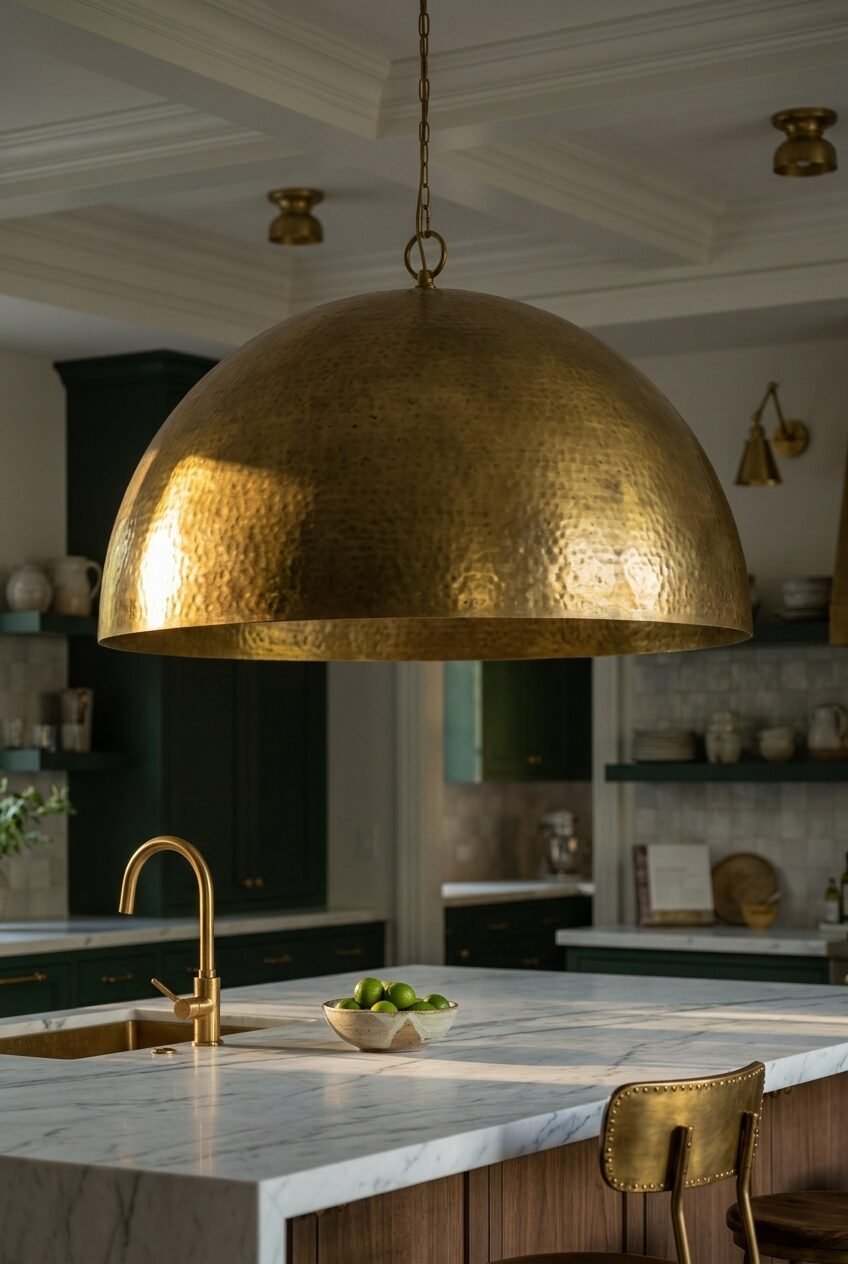
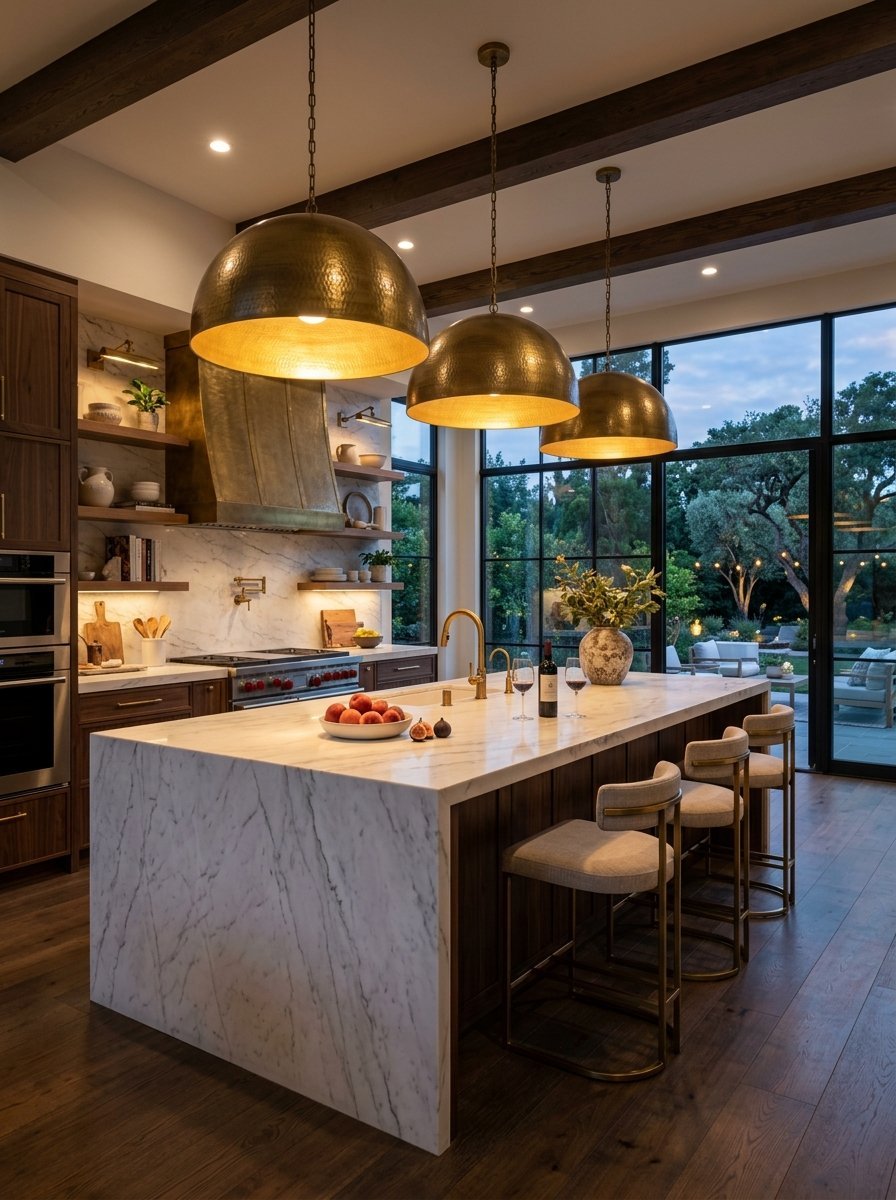
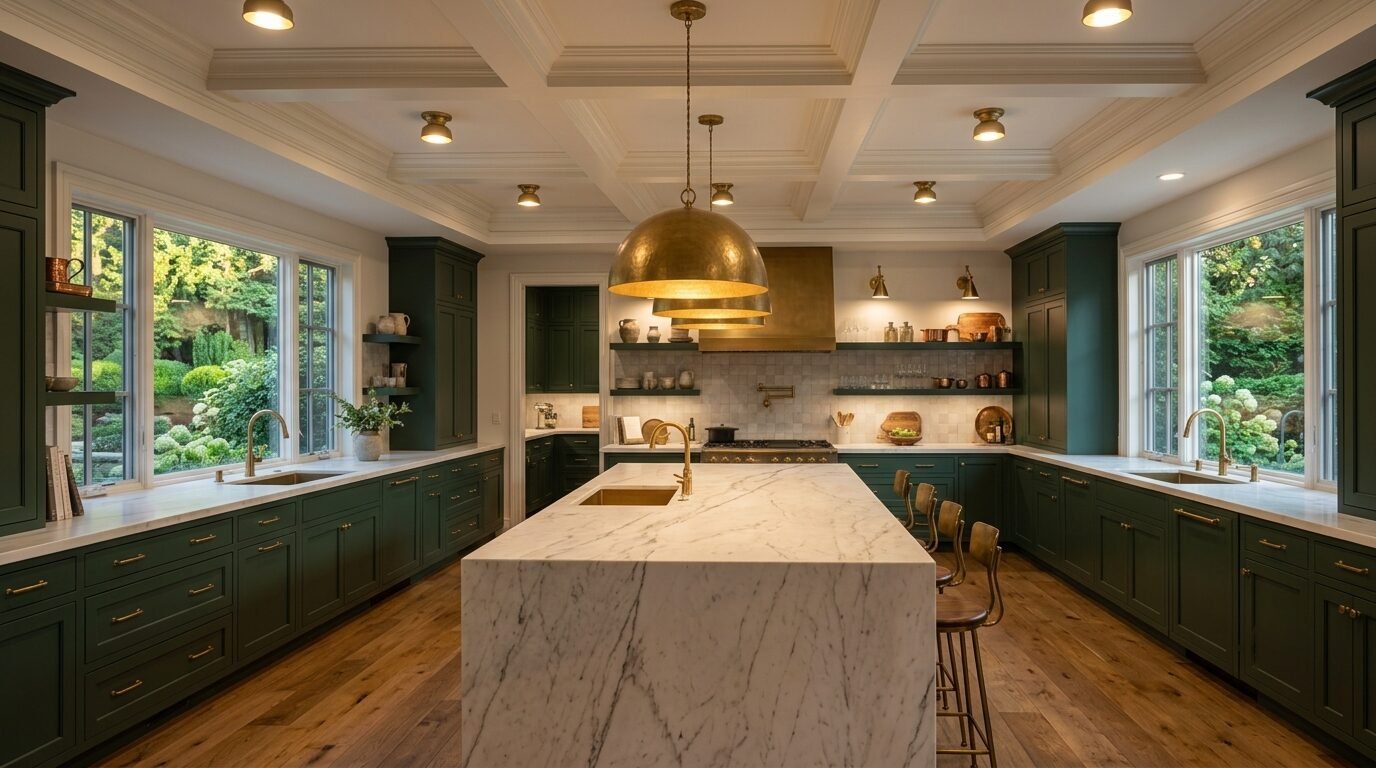
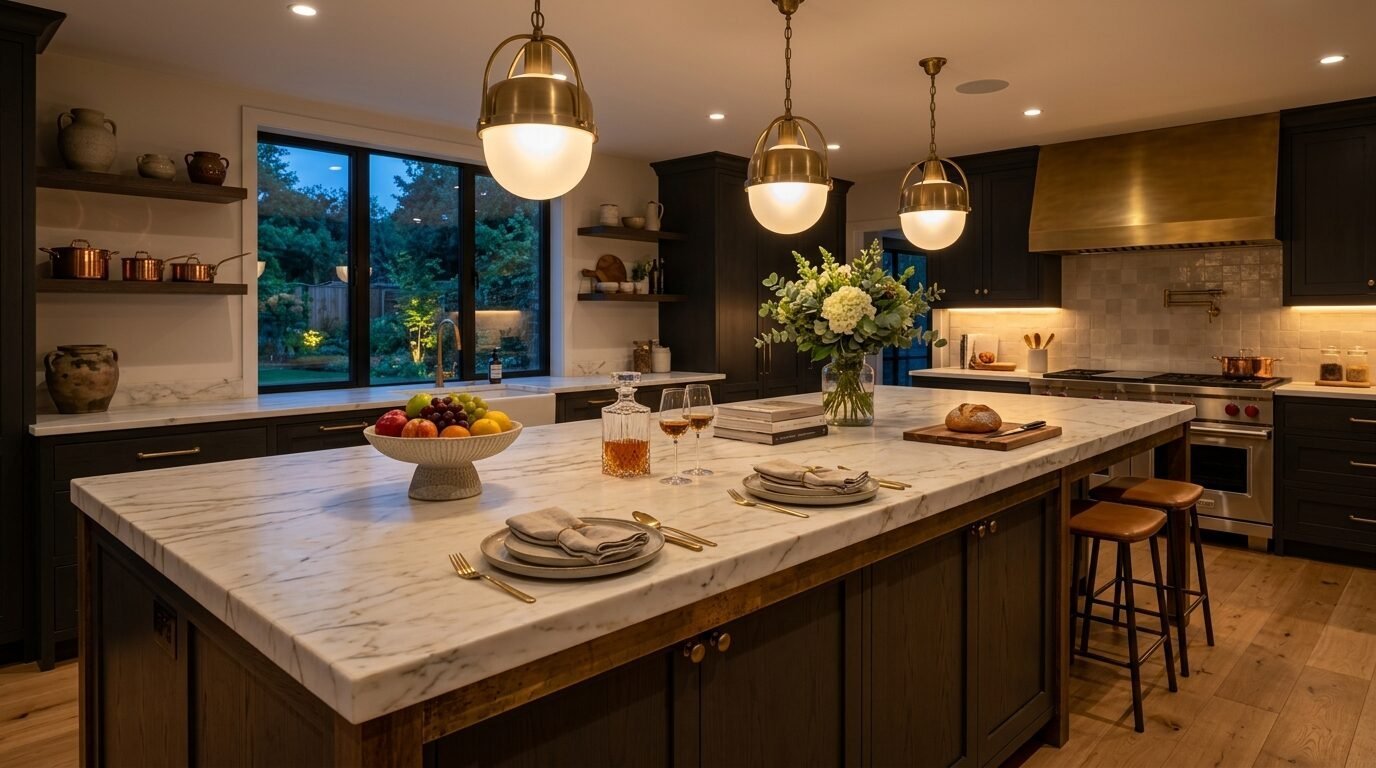
Big fixtures make a room feel custom. Small fixtures look like an afterthought. I always tell people to scale up. An oversized brass dome over a vast marble island anchors the entire room. The heavy metal construction stops light from spilling onto the ceiling. This keeps the room feeling moody and focused. The matte finish hides fingerprints and dust perfectly. Look for fixtures wider than 18 inches. Hang them 30 inches above the counter surface. This scale blocks harsh glare while washing the workspace in warm light. Brass warms up cool white cabinets instantly. Expect to pay around $400 to $800 for high-end brass. Avoid shiny brass. It dates the room quickly. Matte brass ages gracefully and fits a timeless kitchen perfectly.
2. The Ribbed Glass Globe
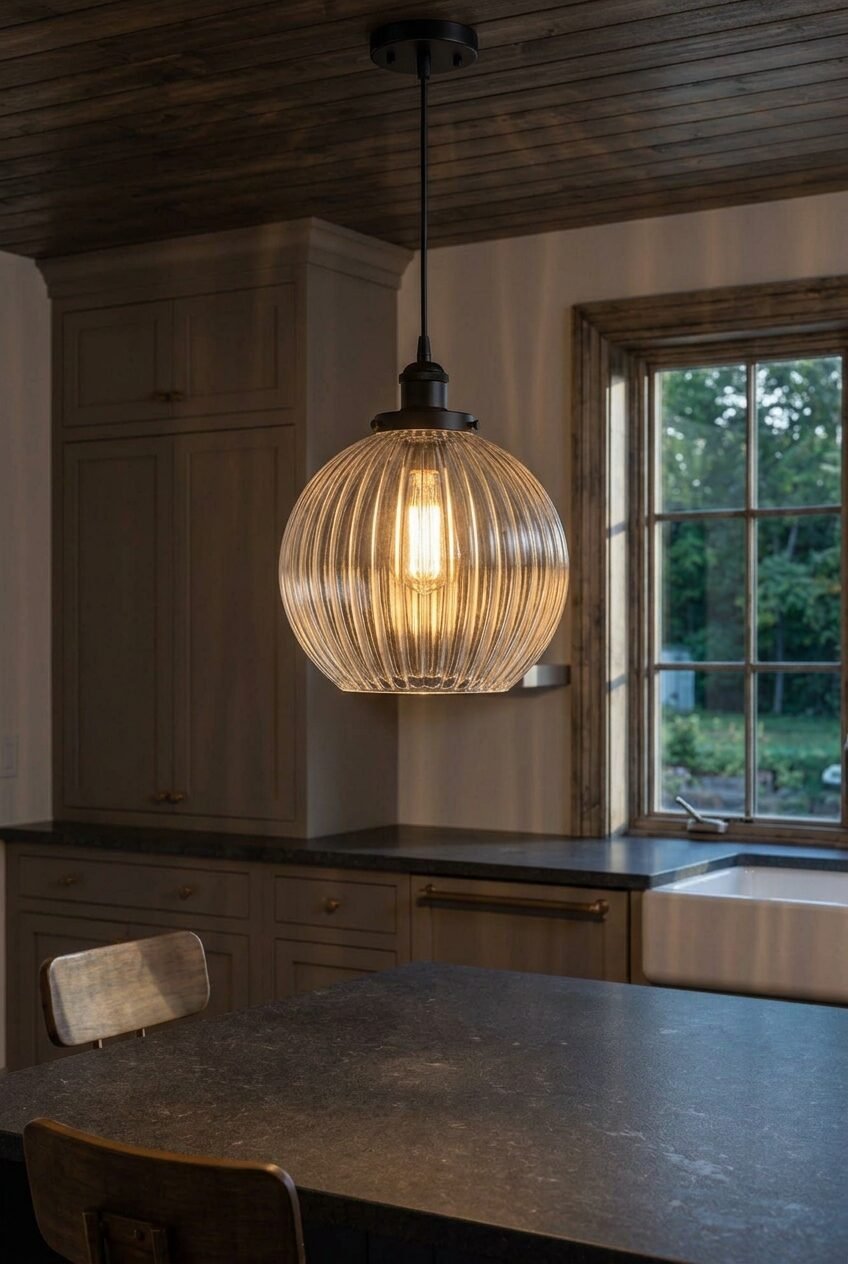
Clear glass requires constant cleaning. In my experience, a dusty frame or cloudy glass ruined the feel of my home last year. Ribbed glass hides dust while bending light beautifully. The texture scatters the bulb’s glare. You get a soft glow instead of a blinding beam. Hang two large ribbed globes over a standard island. Ribbed glass fits beautifully in both modern and traditional homes. The vertical lines draw the eye up toward the ceiling. Keep the hardware minimal. Matte black or brushed nickel pairs perfectly with textured glass. You can find excellent options around $250. Clean them with Sprayway glass cleaner. It prevents streaks and keeps the ridges looking sharp. This texture screams modern luxury kitchen.
3. The Woven Rattan Basket
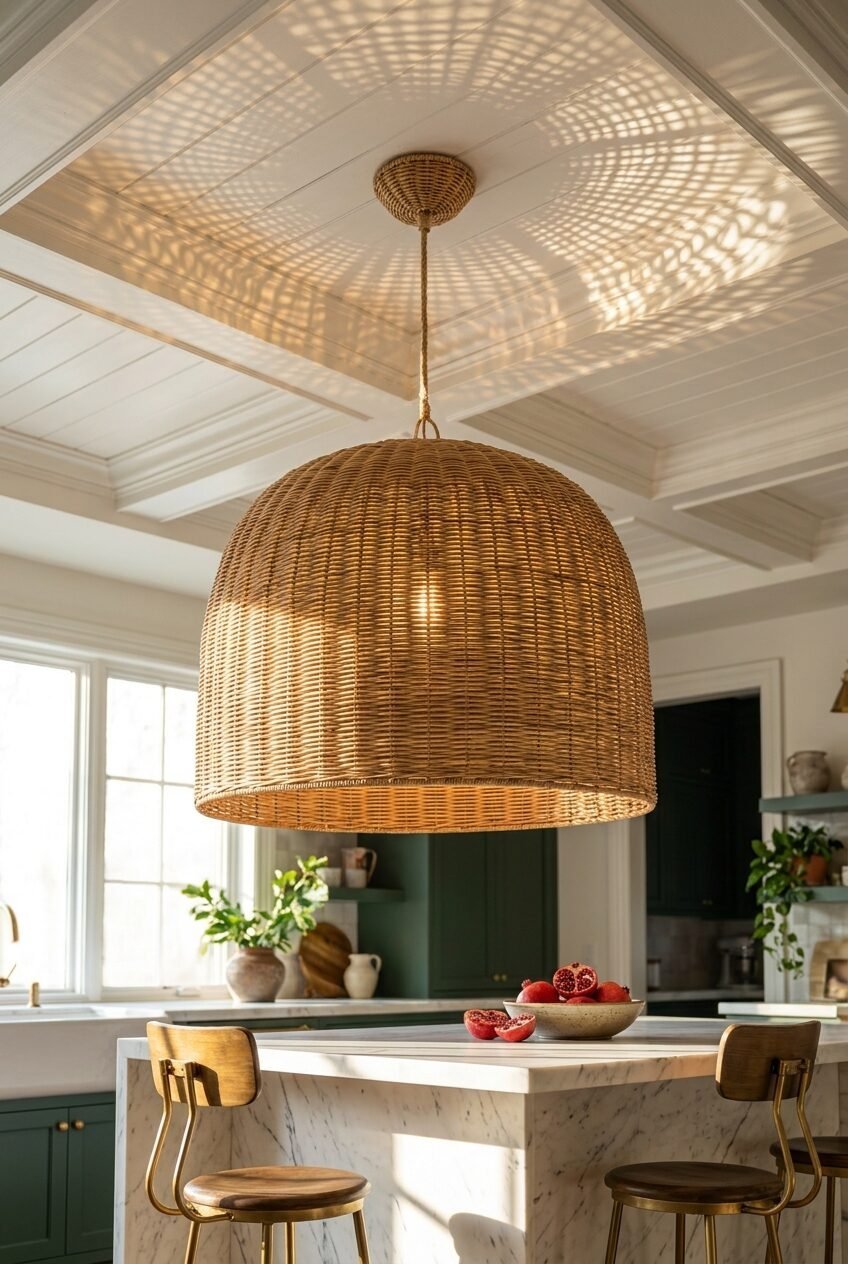
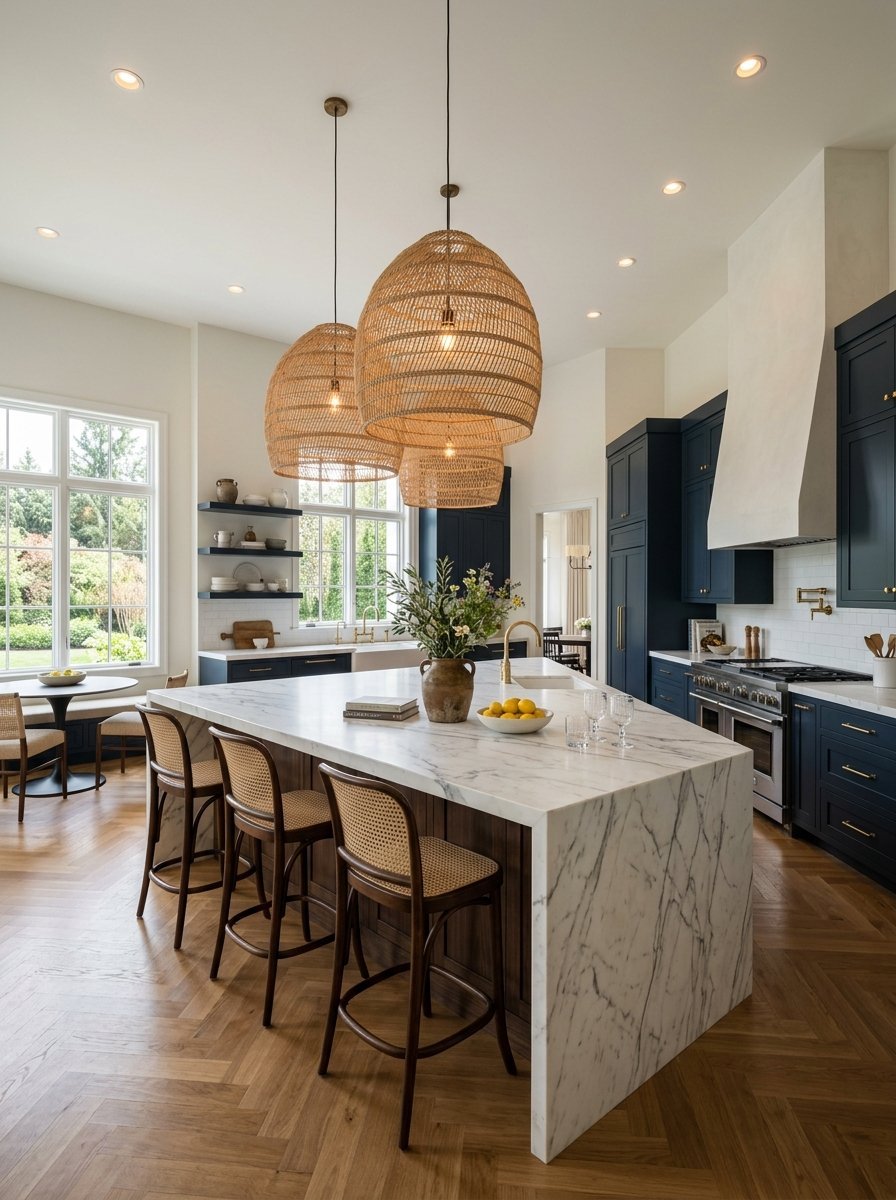
Organic materials soften rigid cabinet lines. Rattan pendants fit perfectly into a boho or relaxed modern space. I love how the woven pattern casts beautiful shadows on the ceiling. You must choose a tight weave. Loose weaves look messy and cheap. Look for oversized basket shapes. Three small baskets look cluttered. Two massive ones look intentional. They cost between $150 and $500. Keep them away from the stove. Grease and woven materials mix poorly. Use these specifically over the seating area of your island. Rattan gives a vacation-like feel to your daily routine. Pair them with a warm 2700K LED bulb. The warmth makes the rattan glow naturally.
4. The Minimalist Linear LED Bar
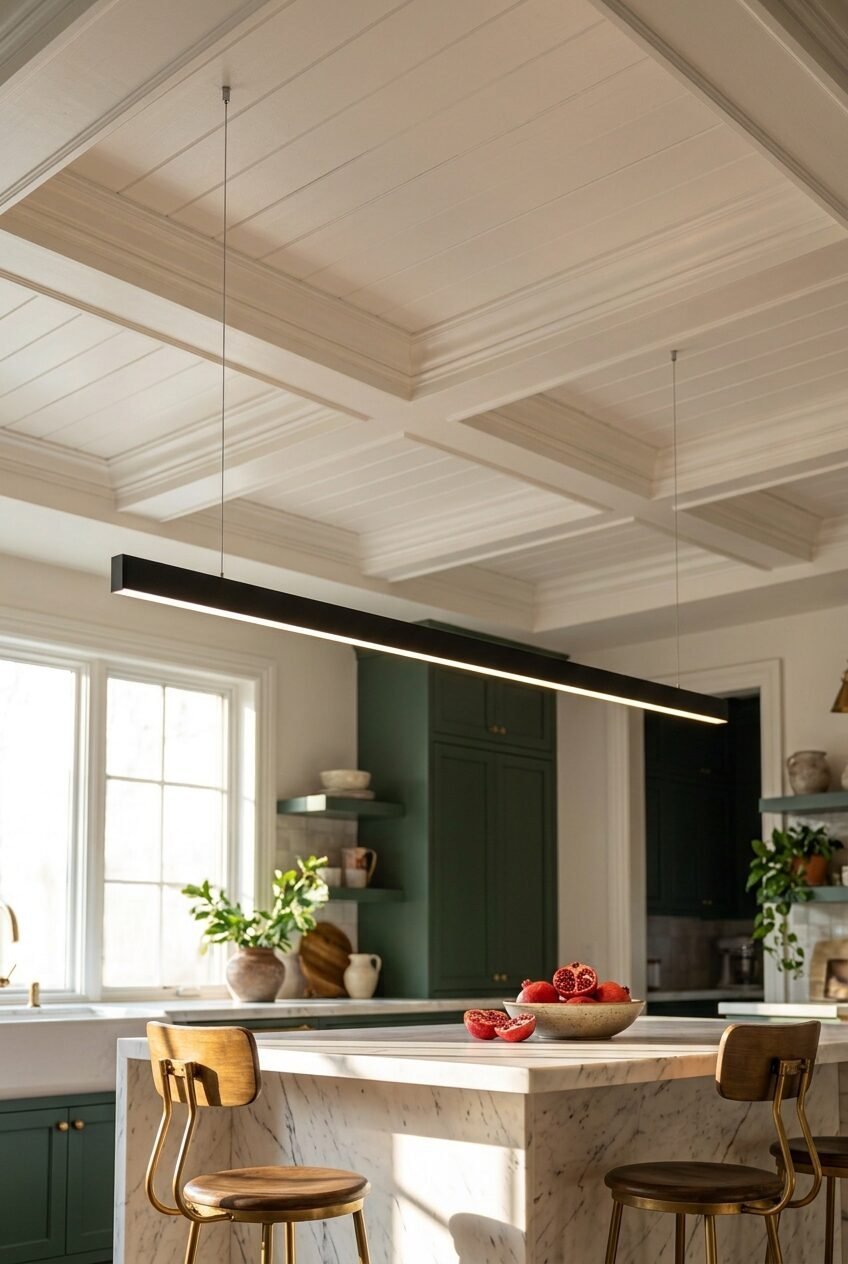
Clean lines define modern luxury. A single linear suspension light replaces multiple pendants. The look is incredibly clean and quiet. It leaves your sightlines completely open. If you have beautiful windows or a statement range hood, install a linear light. It refuses to compete for attention. You need one that spans at least two-thirds of your island length. High-quality linear fixtures start around $600. Cheap ones have visible LED dots. You want a continuous, flawless band of light. Choose a matte black or brass finish. Make sure it is dimmable. Bright linear lights can feel clinical without a dimmer switch. The right dimmer makes the fixture glow beautifully.
5. The Plaster Cone
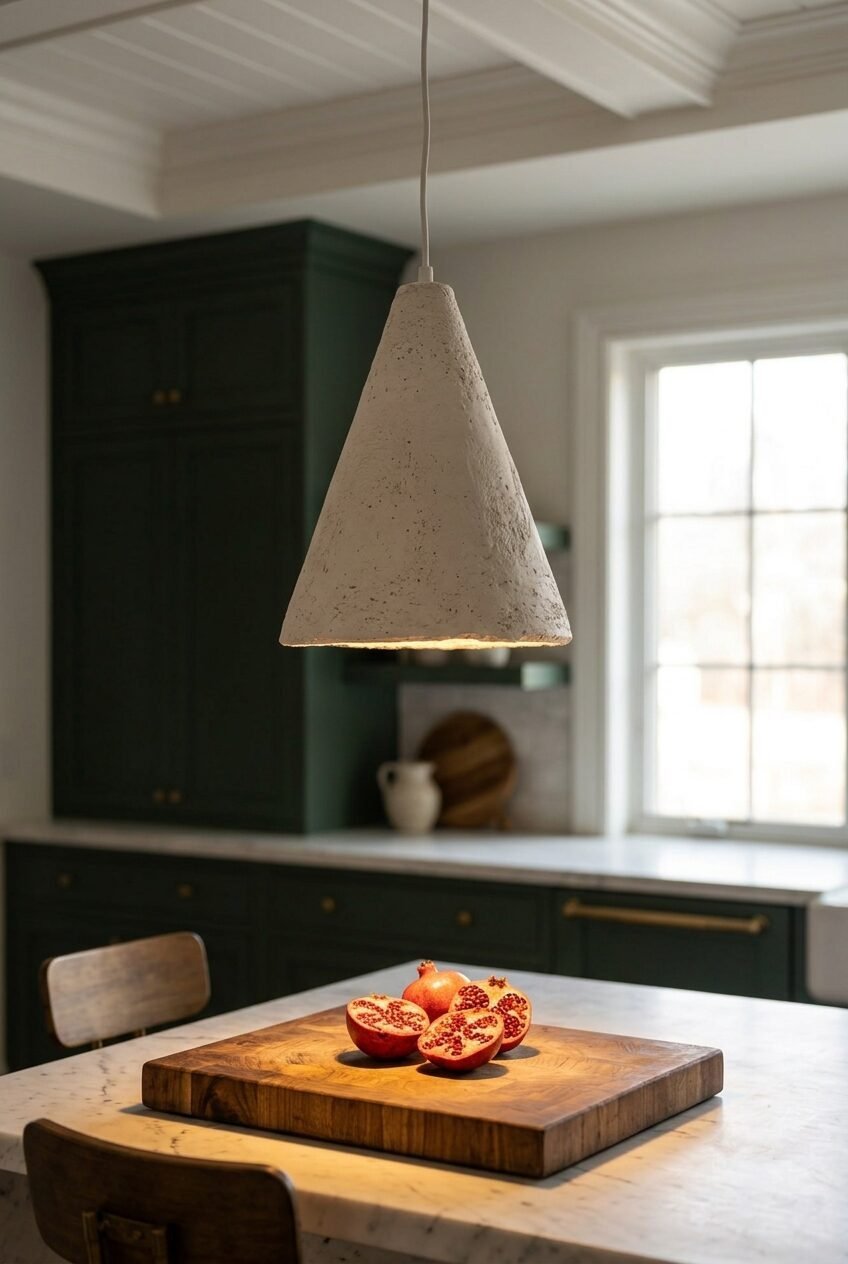
Plaster feels earthy and architectural. The chalky white finish blends perfectly into white ceilings. It gives texture without color. This makes it perfect for a minimalist layout. The light directs straight down. This gives you excellent task illumination for chopping vegetables. Plaster fixtures often cost over $500 because they require hand-finishing. Hang three identical cones over a long island. Space them exactly 24 inches apart. The repetition looks incredibly high-end. Dust them with a dry microfiber cloth. Never use wet chemicals on raw plaster. The raw texture elevates a timeless kitchen. You will love how the plaster looks completely different depending on the sunlight.
6. The Smoked Glass Cylinder
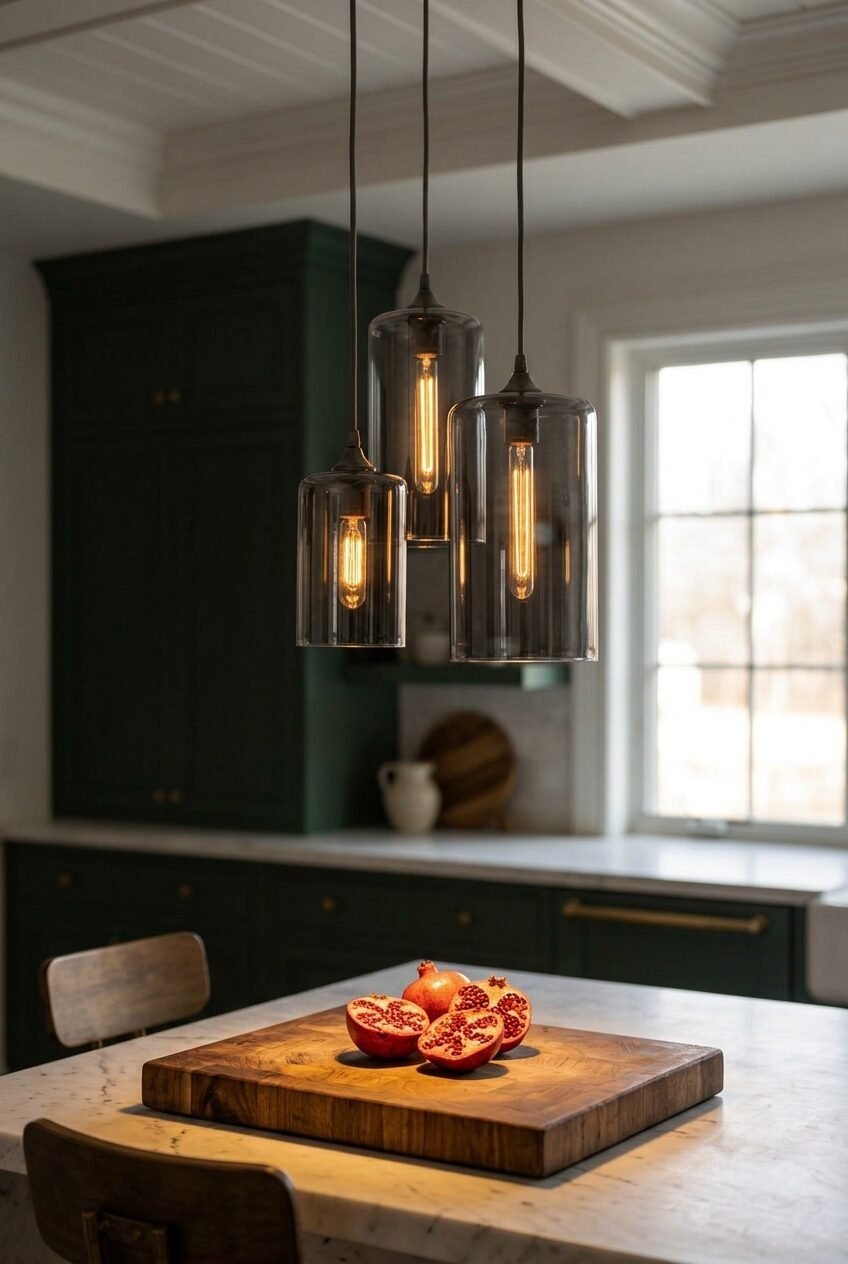
Smoked glass feels moody and expensive. It filters the light, giving the room a lounge-like atmosphere. Clear glass can feel cold. Smoked glass warms the space even when turned off. Pair smoked glass with matte black hardware for a tailored look. Use tubular Edison bulbs inside. Standard bulbs look awkward in a cylinder. I always use Sprayway on these. Streaks show up fast on dark glass. A quick wipe keeps them looking pristine. Expect to spend $200 to $400 per fixture. Hang three of them at varying heights for a custom cluster, or keep them in a strict, uniform line. They anchor a light room instantly.
7. The Hammered Copper Bowl
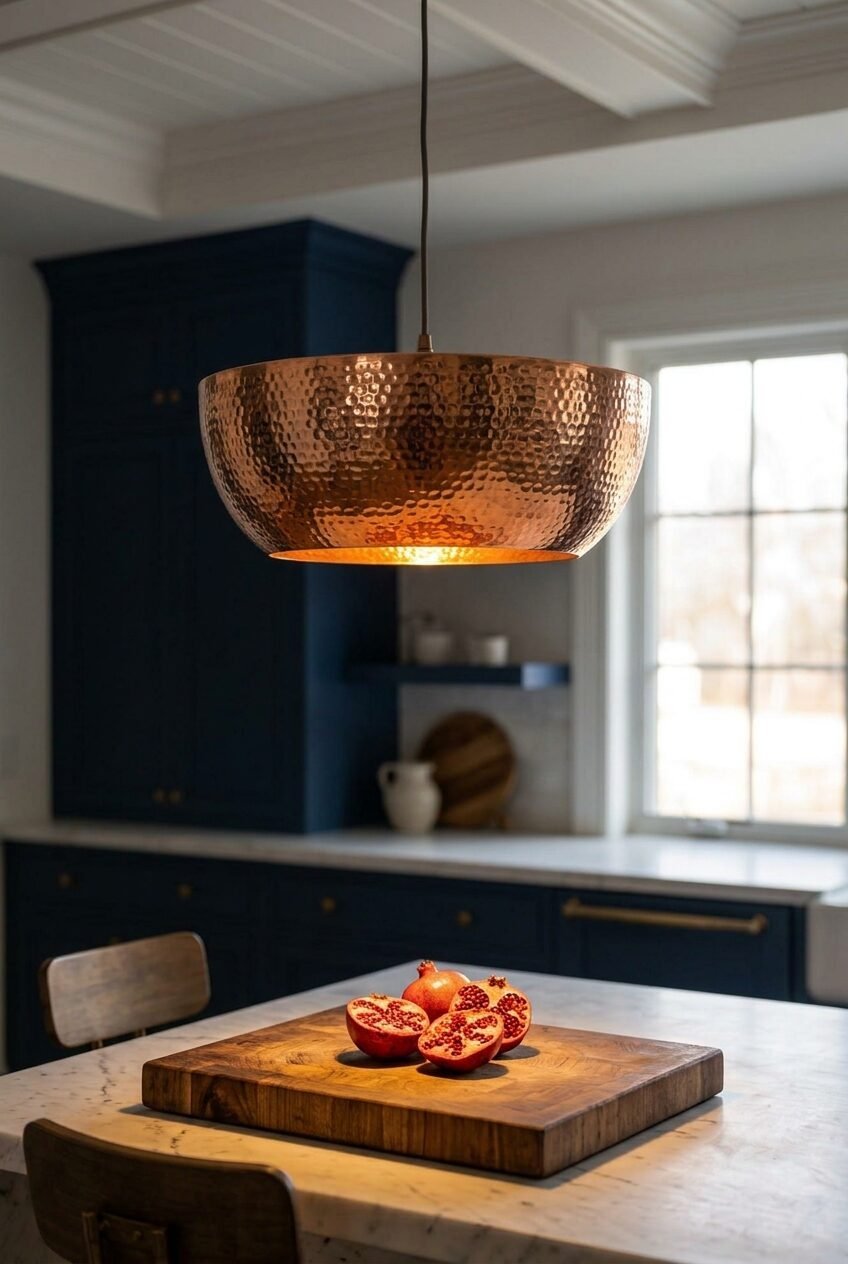
Copper supplies unbelievable warmth to a room. Hammered textures catch light from windows during the day. At night, the polished inside reflects a fiery, warm glow. This works beautifully in darker, moody spaces. You can pair copper with deep green or navy cabinets. The contrast is stunning. High-quality hammered copper starts around $350. Beware of fake copper finishes. They peel and look terrible after a year. Real copper develops a patina. You can polish it or let it age naturally. Hang two large bowls over a wood island. The metallic warmth pairs perfectly with natural wood grain. It makes a house feel like a true home.
8. The Alabaster Stone Disc
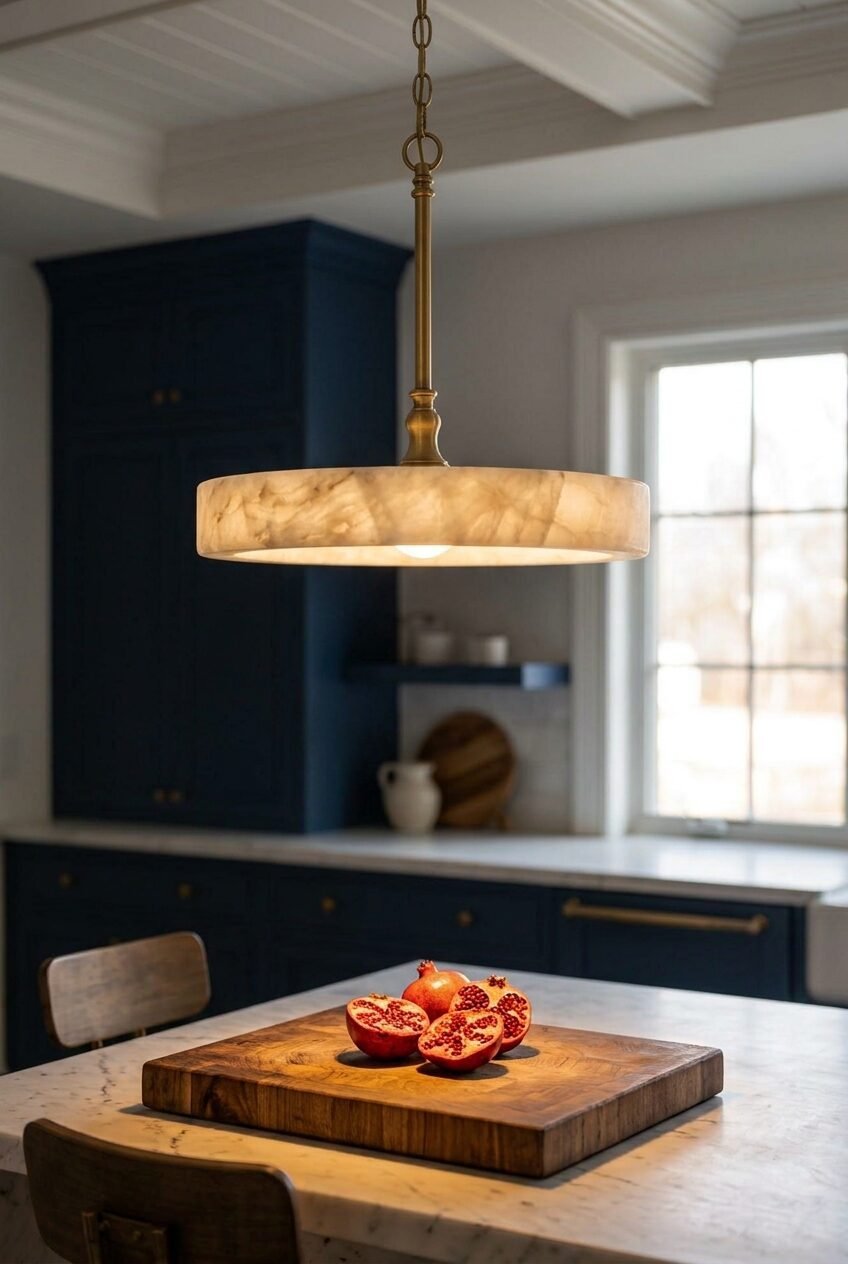
Nothing feels more luxurious than real stone glowing from within. Alabaster has natural veining. Every single fixture is completely custom by nature. When lit, the stone diffuses the bulb into a soft, ethereal glow. This is the definition of a modern luxury kitchen. Genuine alabaster is heavy and expensive. Prices easily reach $800 to $1200 per pendant. You must secure them directly to ceiling joists. Do not rely on drywall anchors. The thick stone disc profile looks incredibly sleek. Brass hardware compliments the creamy stone perfectly. This material requires zero maintenance. It just looks quietly expensive every single day.
9. The Industrial Factory Shade
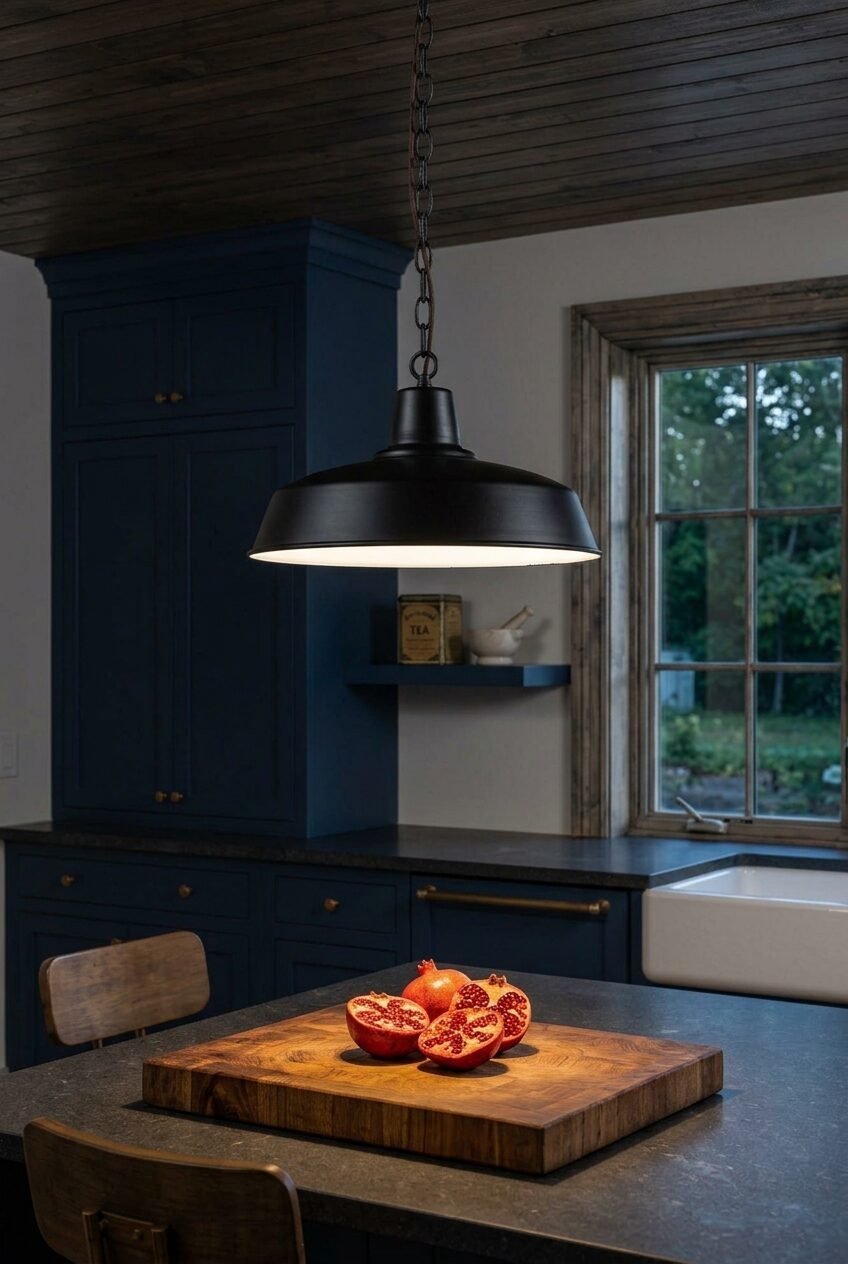
Factory shades offer classic utility. They direct all light downward. This gives you perfect visibility for cooking and reading recipes. The thick metal construction lasts forever. Three months ago, I threw a fresh piece of pine right into the trash. I tried to craft a farmhouse welcome sign and it looked cheap. Authentic materials matter. Buy real enamel-coated steel, not painted plastic. True industrial shades cost around $250. Look for a white enamel interior. The white inside bounces light beautifully. A black exterior with a white interior is a classic combination. It grounds a bright white room effortlessly.
10. The Fluted Ceramic Bell
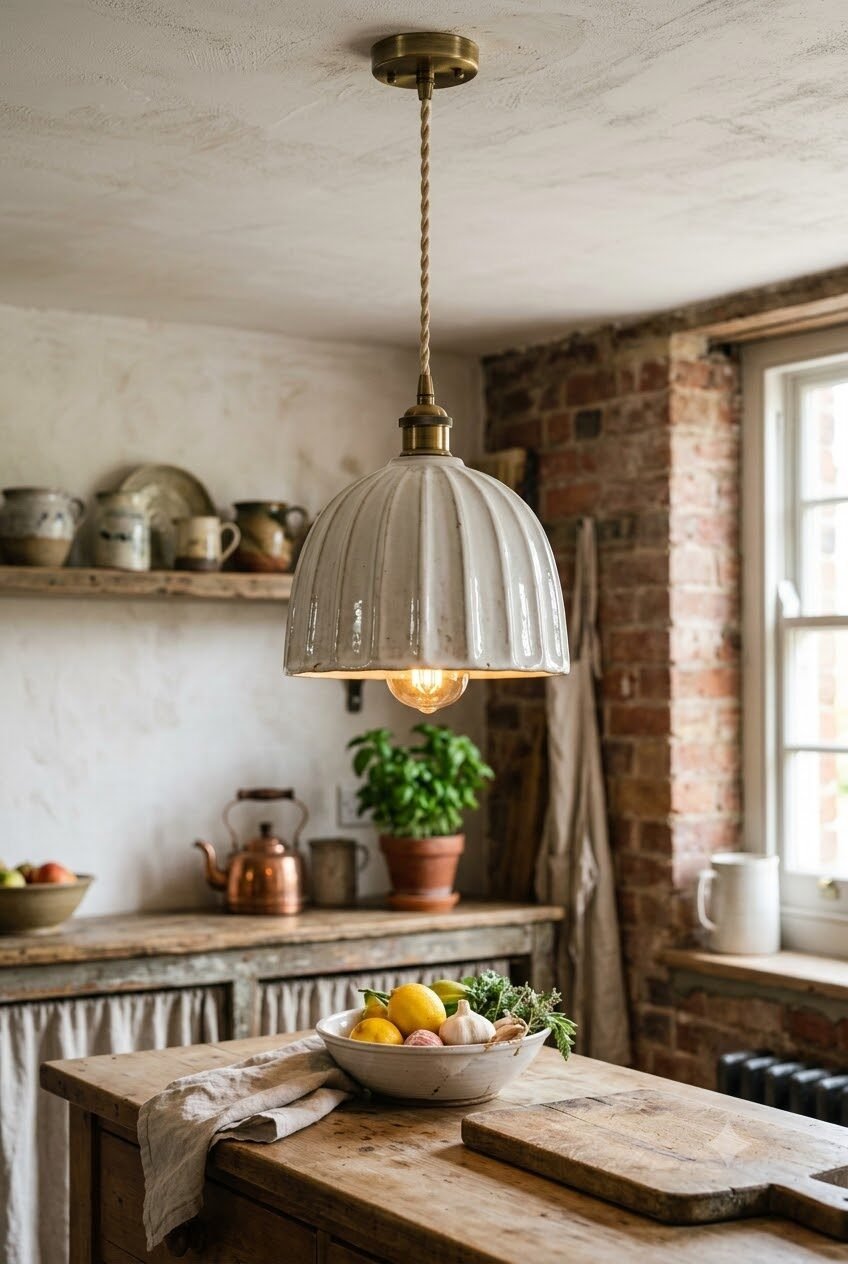
Ceramic supplies a handmade, artisan feel. Fluted edges catch shadows and inject subtle architectural detail. Glossy ceramic reflects natural daylight beautifully. Matte ceramic feels more muted and modern. You can find these starting around $150. They work perfectly in a cozy, timeless kitchen layout. Hang three small ceramic bells over a standard counter. Use a warm white bulb. Ceramic blocks light from the sides. You only get downward light. This means your ceiling might look dark. Pair these with good recessed lighting to balance the room. The artisan look never goes out of style.
11. The Aged Iron Lantern
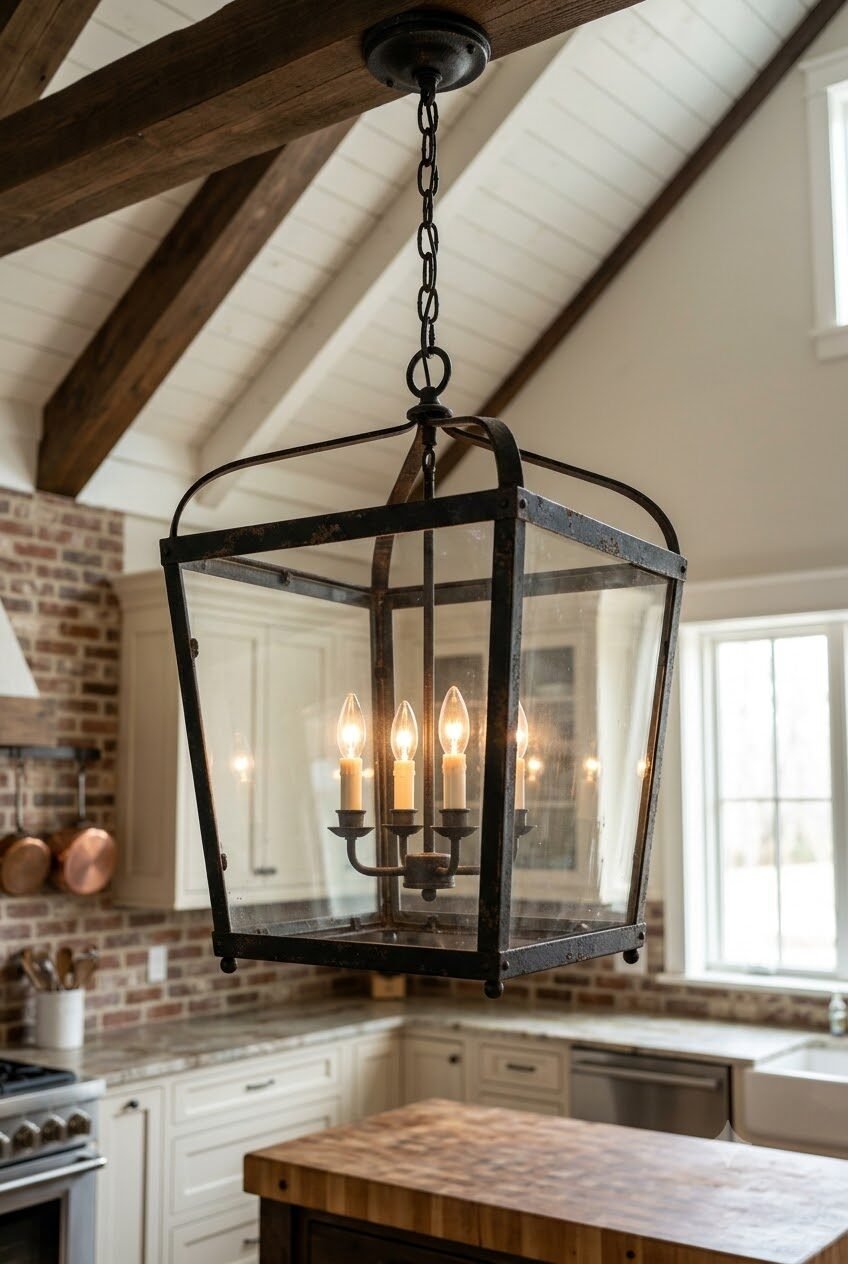
Lanterns fill vertical space beautifully without blocking views. The open frame design feels light and airy. Aged iron gives the room a grounded, historical feel. This works well in homes with high ceilings. If your ceiling is under nine feet, lanterns often look too bulky. Quality iron lanterns start around $400. Cheap ones use thin, flimsy metal. You want thick, heavy iron. Use candelabra bulbs inside. Put them on a dimmer. When dimmed, they look like real candlelight. Keep the glass panes perfectly clean. I recommend Method brand glass cleaner. It smells great and leaves zero residue on lantern glass.
12. The Tiered Art Deco Chandelier
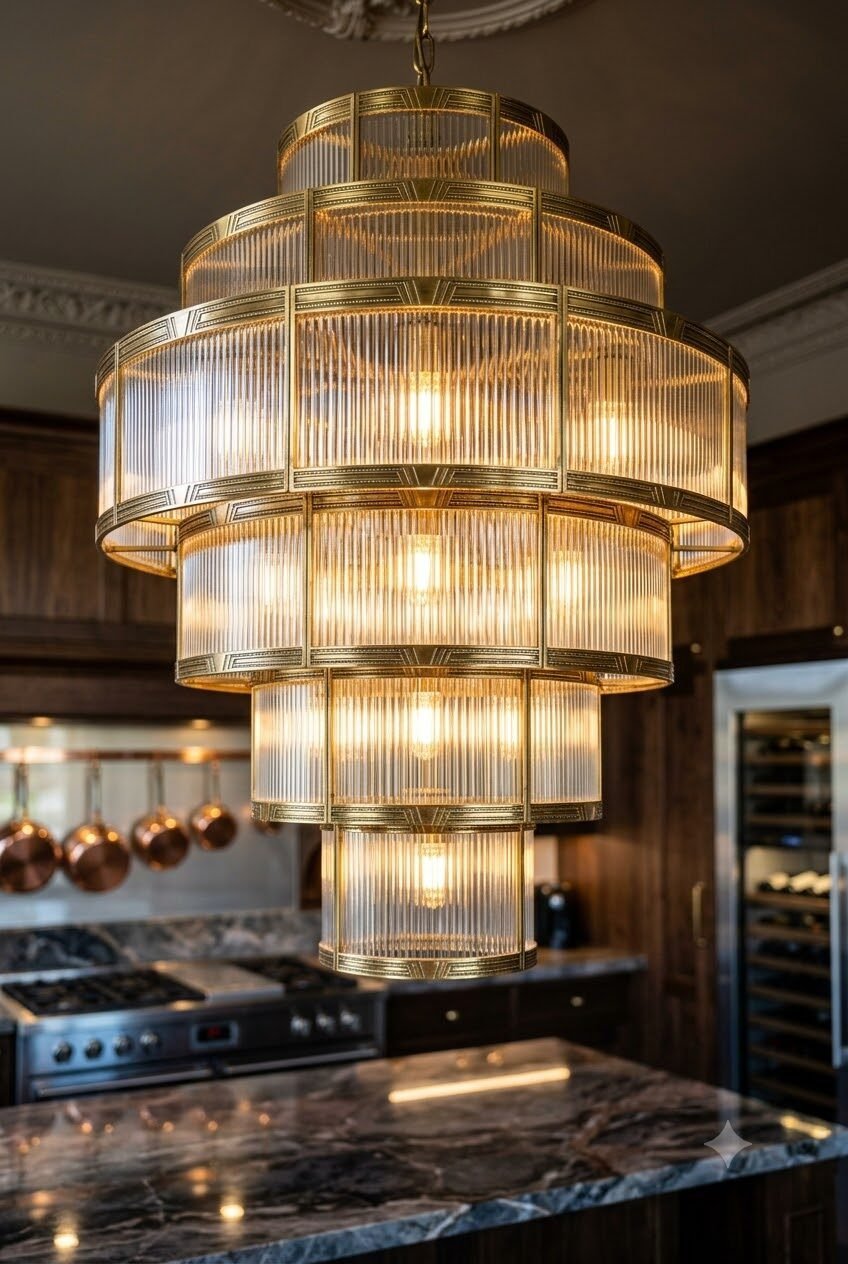
Sometimes an island needs a true statement piece. A tiered Deco fixture commands attention. It features cascading layers of glass or brass. This fits perfectly into a modern luxury kitchen. It acts as the primary focal point. Keep your cabinet hardware very simple if you choose a bold fixture. You do not want elements competing. Good Deco pieces cost over $1000. They require careful installation. Hang a single, long rectangular tiered fixture over the center of the island. It replaces the need for multiple pendants. Dusting the tiers takes time. A long-handled feather duster makes the job quick and painless.
13. The Sculptural Wood Ribbon
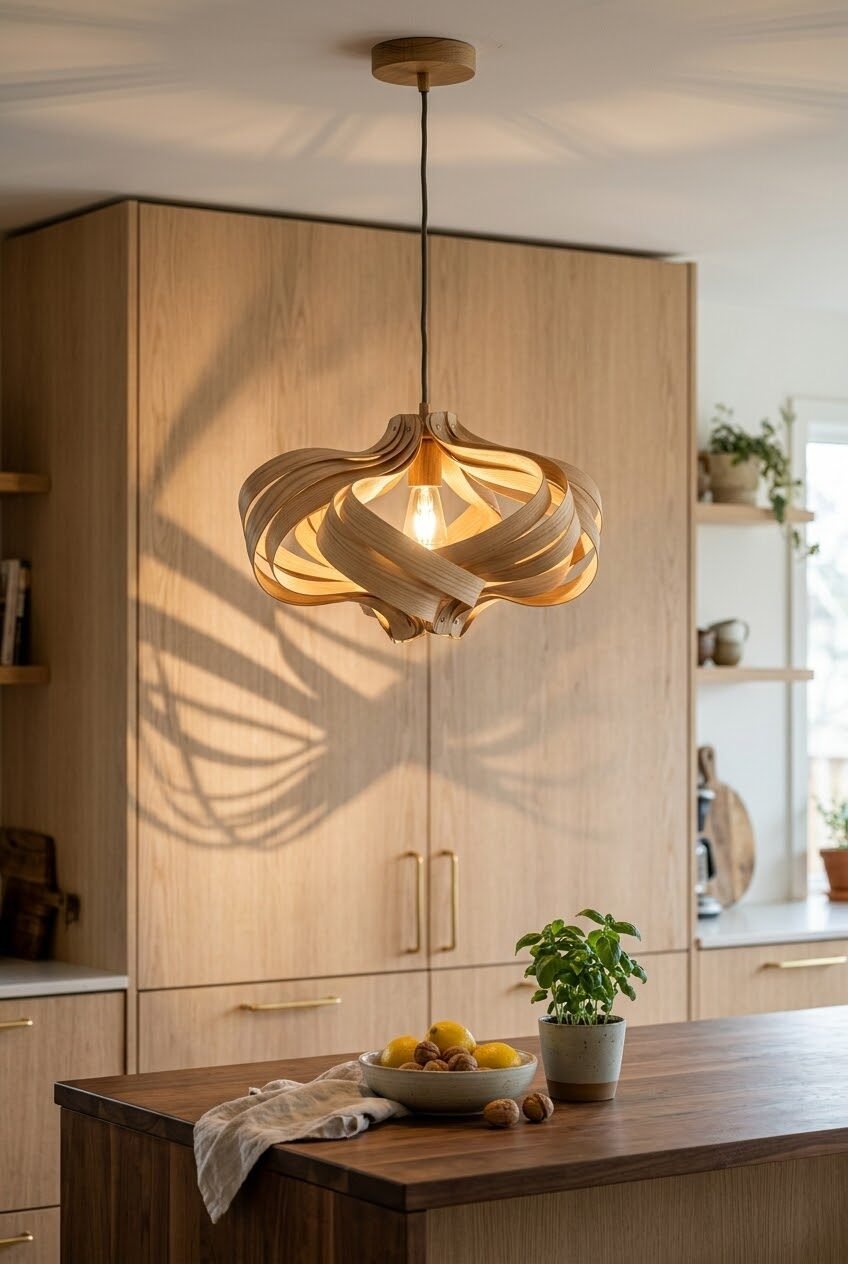
Bent wood fixtures look like modern art. Steam-bent ash or walnut curls into beautiful, fluid shapes. They soften the harsh right angles of cabinets and counters. Wood carries nature indoors. A large wood ribbon fixture costs around $600 to $900. The craftsmanship dictates the price. Hang one large sculptural piece off-center for an asymmetrical, artistic layout. The light escapes through the wooden slats. This casts incredible shadow patterns on the walls. Pair this with sleek, flat-panel cabinets. The contrast between strict lines and fluid wood makes the room feel completely custom and highly considered.
14. The Milk Glass Schoolhouse Globe
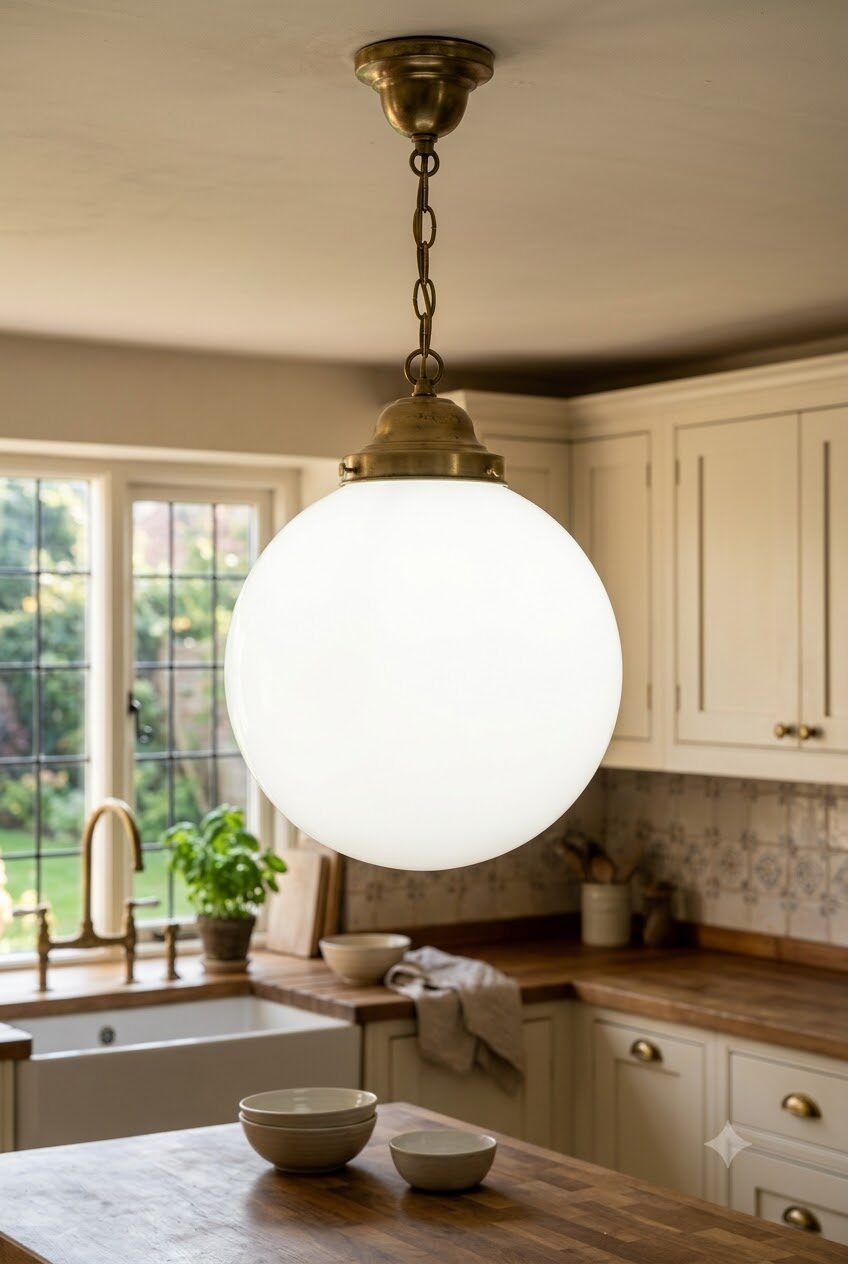
Schoolhouse fixtures provide intense nostalgic charm. The opaque white glass hides the bulb entirely. You get a soft, even glow in every direction. This style has survived for a century because it works perfectly. It defines the timeless kitchen aesthetic. You can find authentic reproductions for about $150. Brass fitters look best with milk glass. Hang three of them evenly spaced. They are incredibly easy to clean. A simple wipe down with a damp cloth removes grease. The opaque glass never shows streaks. This is the safest, most reliable design choice for a traditional or transitional home.
15. The Asymmetrical Mobile
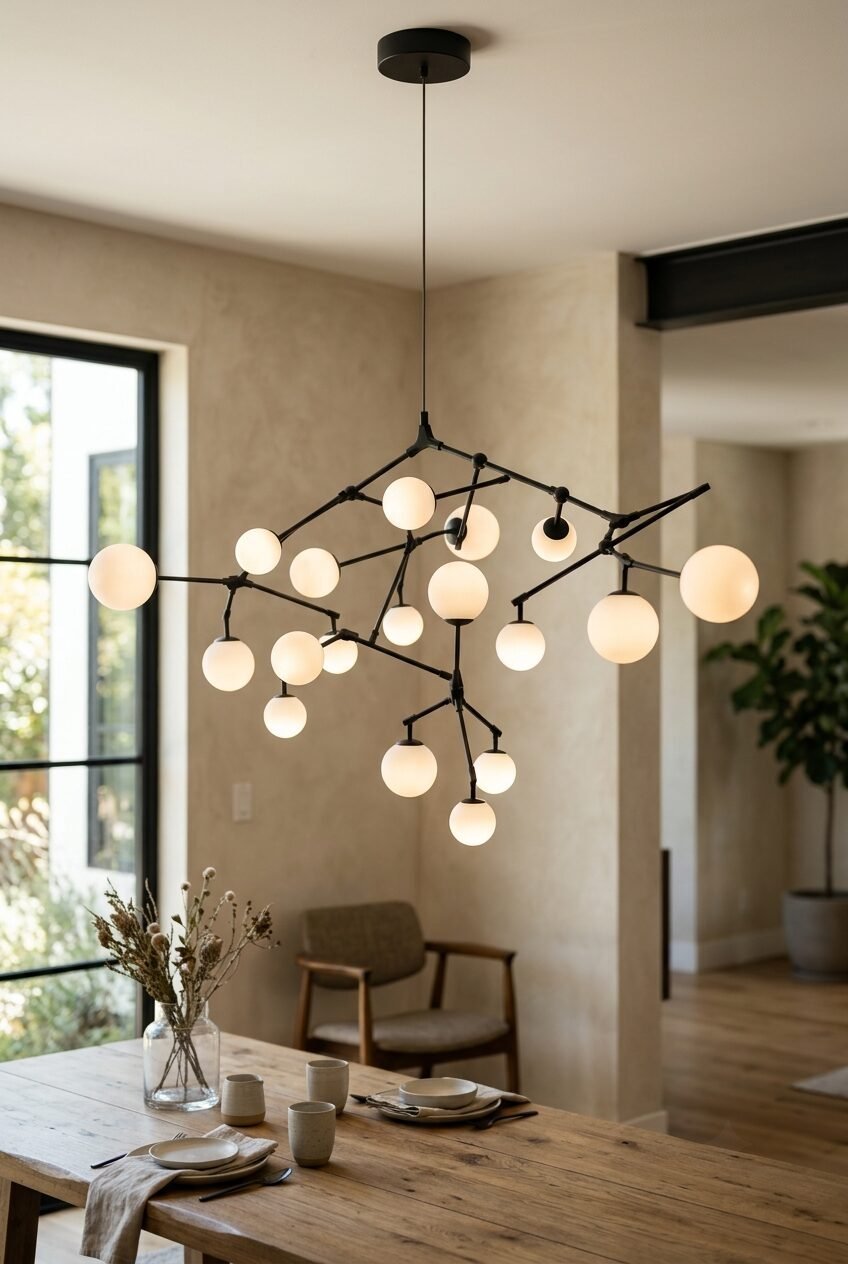
Mobiles look like floating sculptures. Metal arms extend in different directions with glowing orbs on the ends. They balance perfectly in mid-air. This style breaks up the rigid grid of a standard kitchen layout. Expect to pay $500 to $800 for a well-balanced mobile. Put one large mobile fixture over a square island. It fills the space beautifully. Use frosted bulbs. Clear bulbs on a mobile create harsh glares right at eye level. Matte black or antique brass arms look best. The floating design draws the eye up, making your ceiling feel much higher.
16. The Fluted Brass Tube
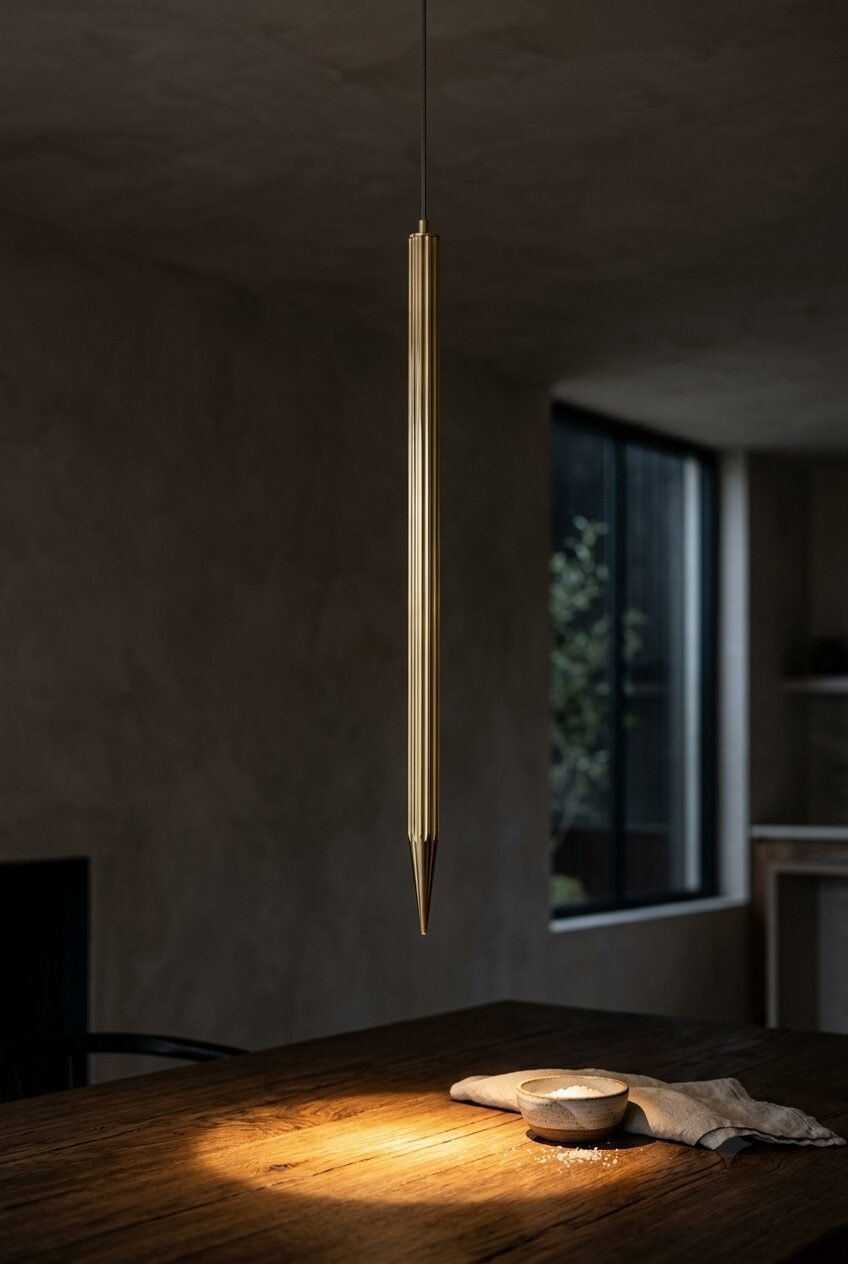
Skinny brass cylinders look razor-sharp and modern. They drop down like glowing stalactites. The footprint is tiny, making them perfect for smaller islands. You can hang five or seven of them in a row. The repetition creates a dramatic curtain of light. High-quality solid brass tubes cost around $300 each. The heavy metal hangs perfectly straight. Cheap metal bends and hangs crooked. The light from a skinny tube is highly concentrated. It creates a small pool of light on the counter. You absolutely must supplement these with strong recessed ceiling lights for overall room illumination.
17. The Concrete Dome
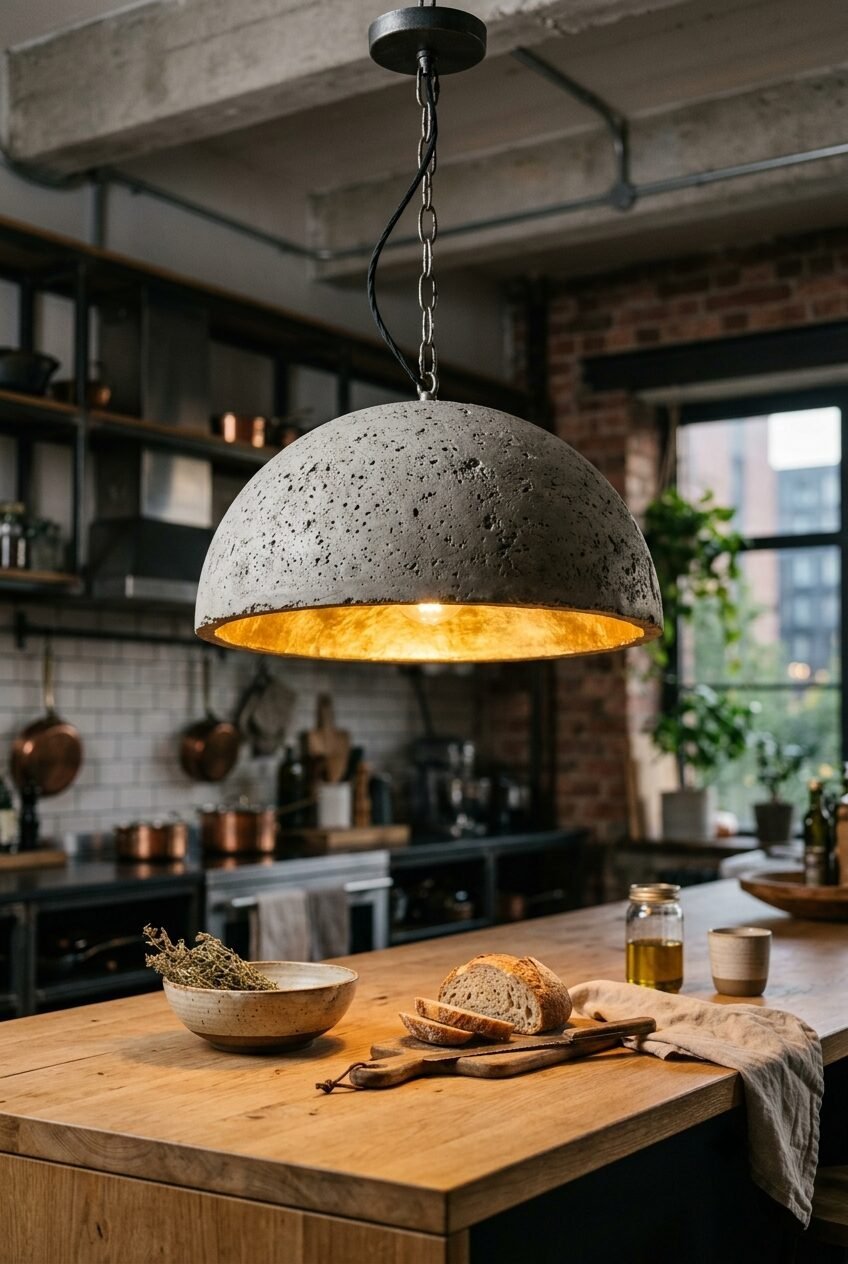
Concrete feels heavy, raw, and industrial. It grounds a bright, airy room instantly. The porous texture contrasts beautifully with smooth quartz countertops. Small concrete pendants cost around $150. They are quite heavy. Ensure your ceiling box can hold the weight. The inside is often left raw, absorbing light. For better brightness, look for concrete domes painted white or gold on the inside. The gold interior warms up the light beautifully. Hang three of these over a light wood island. The mix of raw concrete and warm wood creates a very relaxed, yet highly intentional aesthetic.
18. The Opal Glass Teardrop
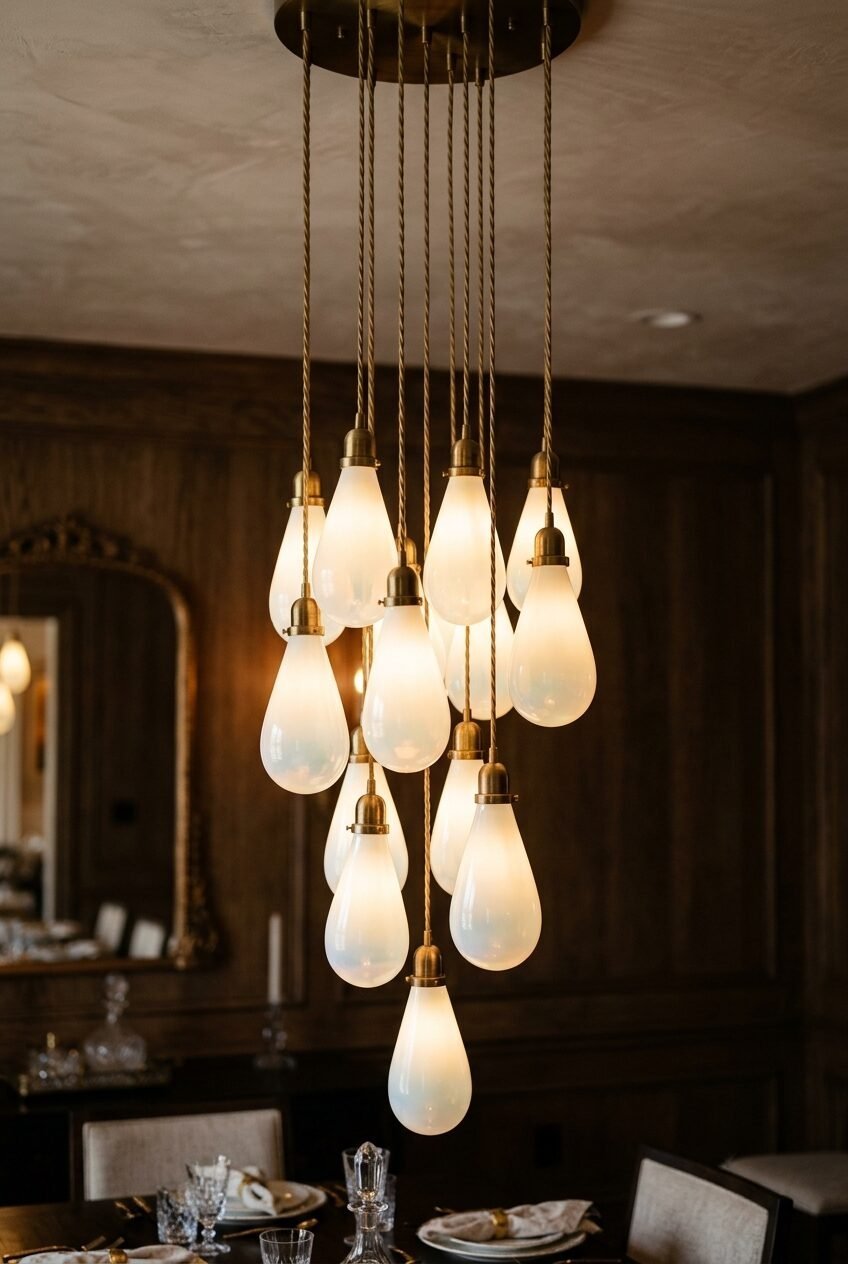
Teardrop shapes draw the eye downward smoothly. The elegant curve feels very sophisticated. Opal glass diffuses light perfectly, hiding the bulb and creating a soft ambiance. A single teardrop looks lonely. Hang them in clusters. Stagger three teardrops at slightly different heights. This creates a custom chandelier effect. Quality opal glass fixtures start around $200. Dust glides right off the smooth glass surface. They require very little maintenance. Pair them with brushed brass hardware. The combination of creamy white glass and soft gold metal defines the modern luxury kitchen look perfectly.
19. The Perforated Metal Cone
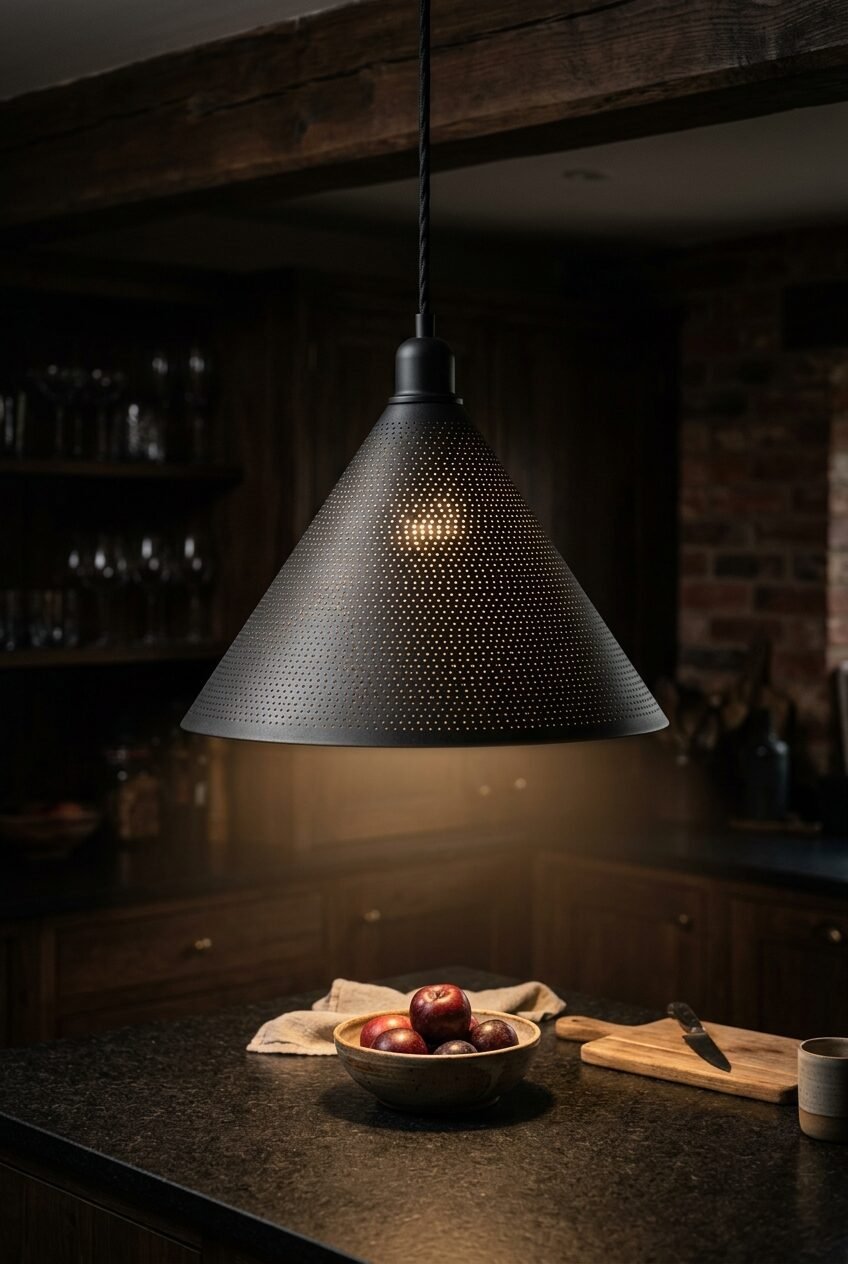
Tiny holes punched into a metal shade create magic. When the light turns on, the shade glows like a starry night. The perforations let just enough light escape to lighten the heavy metal look. This works exceptionally well in matte black. The fixtures cost around $250. You get strong downward light for tasks, plus a beautiful ambient glow. Hang two large perforated cones over a dark island. The speckled light effect injects texture to plain walls. Dusting the holes can be annoying. Use a vacuum with a brush attachment to keep the perforations clear of dust and cobwebs.
20. The Stacked Geometric Shape
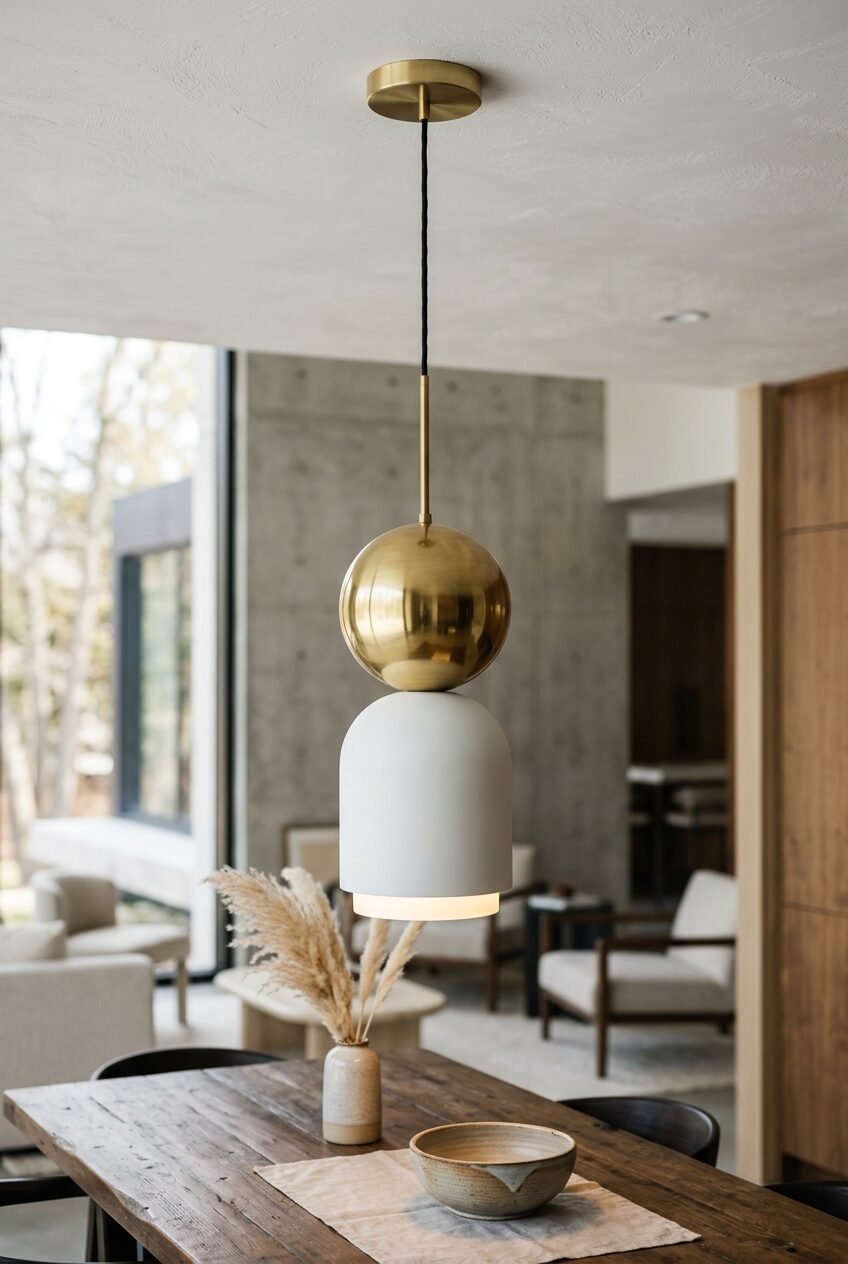
Stacked shapes look playful and architectural. Imagine a sphere sitting on top of a cylinder. Mixing shapes creates visual tension. Designers love this look right now. It feels fresh and bold. Expect to pay $400 to $700 for good geometric fixtures. Keep the colors simple. Monochromatic finishes let the shapes do the talking. Hang two identical geometric pendants over a long counter. They act as art pieces during the day. At night, they provide excellent targeted lighting. This style demands attention. Keep your backsplash simple if you choose a loud, geometric ceiling fixture.
21. The Seeded Glass Box
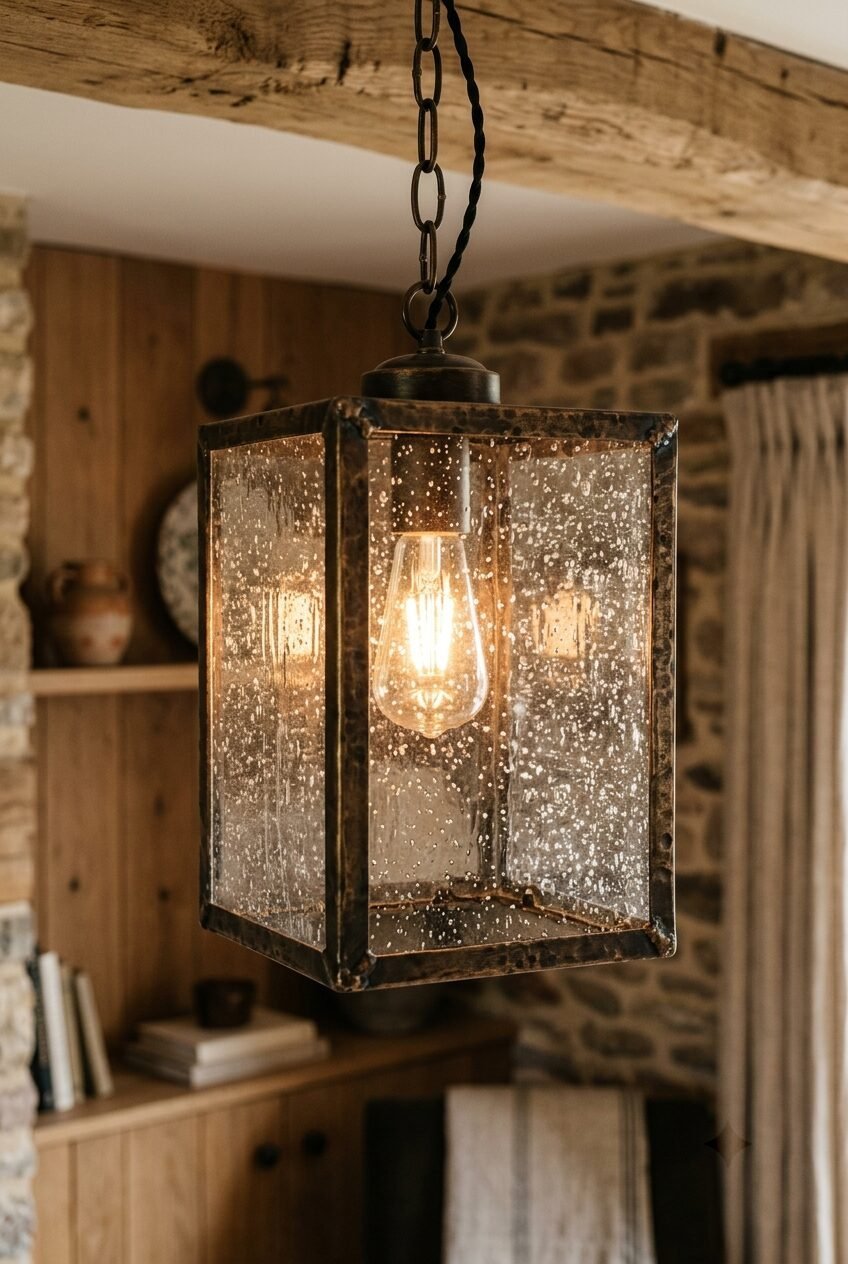
Seeded glass contains tiny air bubbles. It looks like water droplets frozen in time. The bubbles obscure the bulb slightly and scatter the light. It feels more rustic than clear glass. Put seeded glass in a square metal frame. It looks like a classic outdoor lantern brought inside. These cost around $300. I saw moisture destroy a beautiful decorative mirror piece in my hallway three years ago. Kitchens also generate heavy moisture. The textured glass hides water spots and dust better than clear glass. Use a soft microfiber cloth and Method spray to keep the glass looking brilliant.
22. The Porcelain Plate
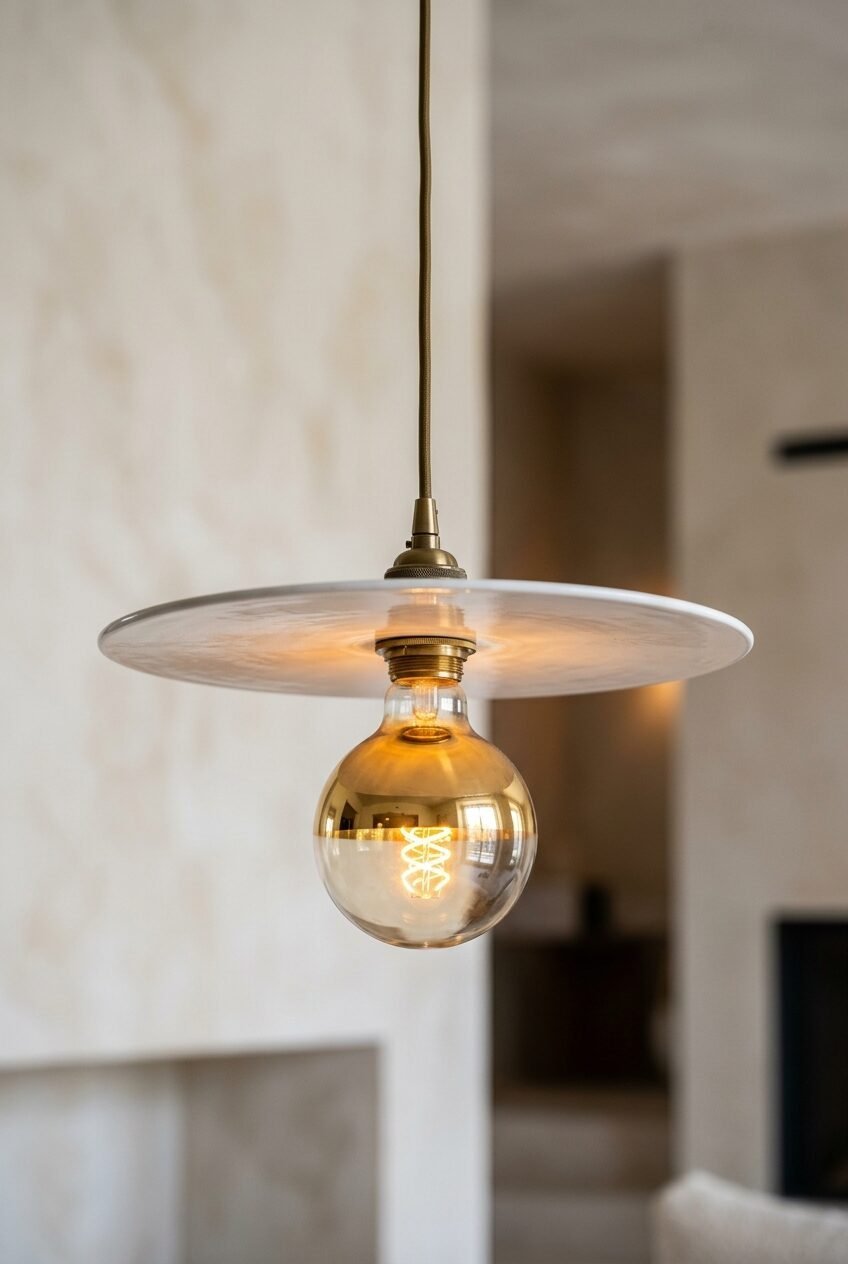
A flat porcelain disc with an exposed bulb beneath it looks incredibly minimal. The plate acts as a reflector, bouncing light down. This leaves the ceiling in shadow, creating a moody vibe. Porcelain has a beautiful, subtle sheen. These fixtures start around $180. You must use a decorative bulb. The bulb is fully exposed. A half-chrome or half-gold bulb looks amazing here. It bounces the light back up into the porcelain plate. Hang three plates in a row. The ultra-thin profile keeps the room feeling vast and open. It is a highly refined aesthetic.
23. The Woven Leather Strap
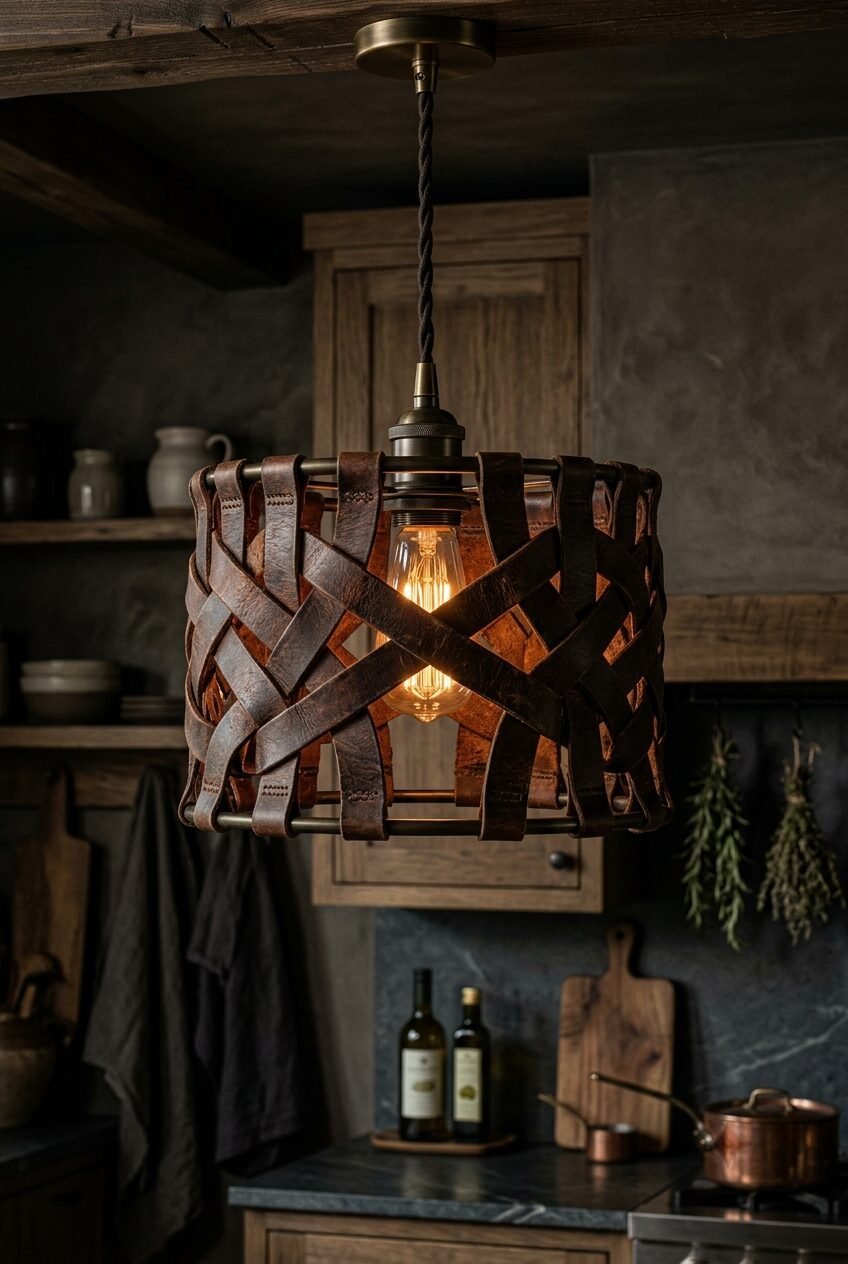
Leather delivers unexpected warmth to ceiling fixtures. Straps of saddle leather woven around a metal frame look rugged yet expensive. The leather ages beautifully, getting darker and richer over time. These are rare and cost upward of $800. They fit perfectly into a high-end, organic layout. Do not use these if you fry food often. Airborne grease ruins raw leather quickly. Keep them in a well-ventilated space. The smell of genuine leather mixed with a warm glowing bulb feels incredibly luxurious. Pair these with dark wood cabinets and brass hardware for a rich, moody environment.
24. The Clear Acrylic Cylinder
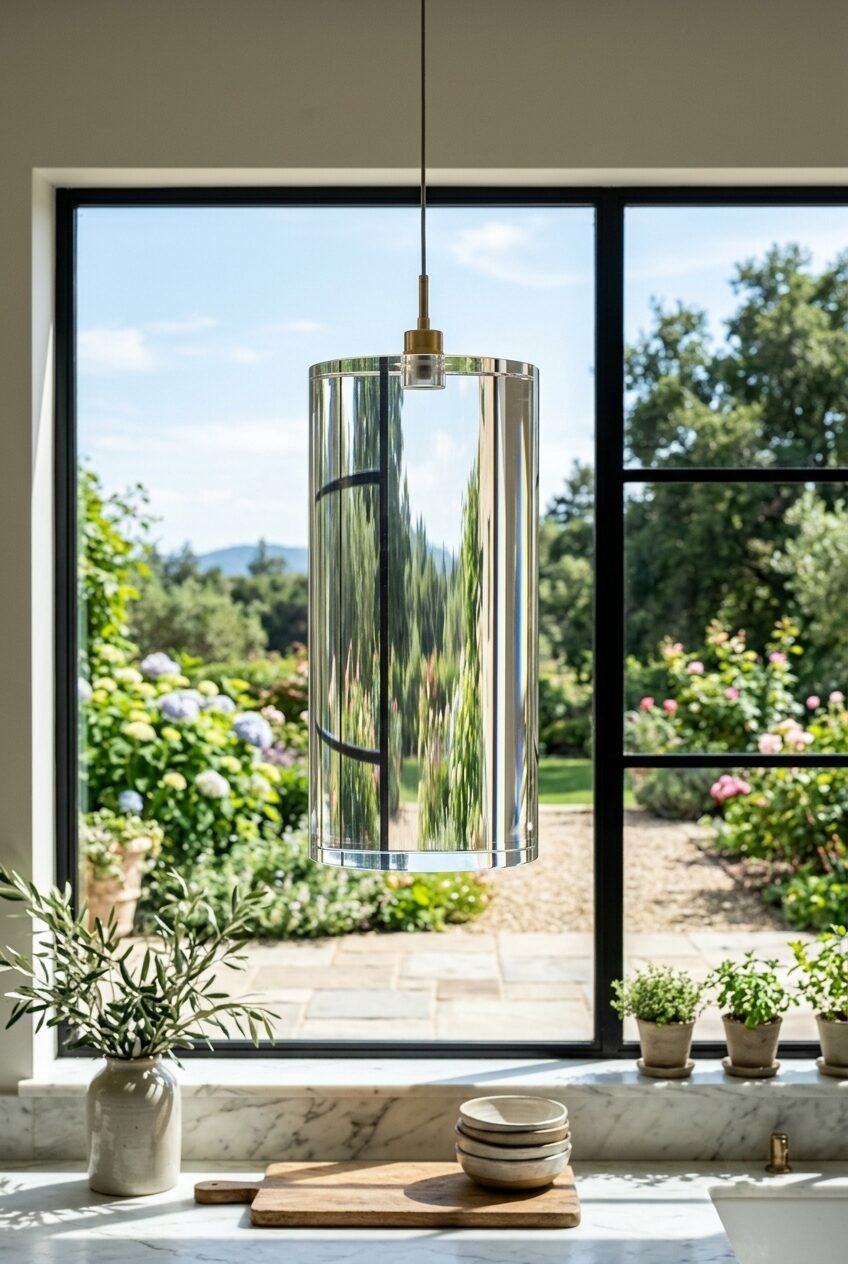
Acrylic looks like glass but weighs practically nothing. Thick slabs of clear acrylic bend light like a prism. When paired with brass, it looks like high-end jewelry. Acrylic fixtures cost around $400. They look completely invisible during the day. This keeps your kitchen feeling massive. At night, the edges of the acrylic catch the light and glow. Never use harsh chemicals on acrylic. It will cloud and crack. Use only mild soap and water. The clear design works flawlessly in a modern layout where you want the backsplash or the view outside to remain the star.
25. The Two-Tone Metal Dome
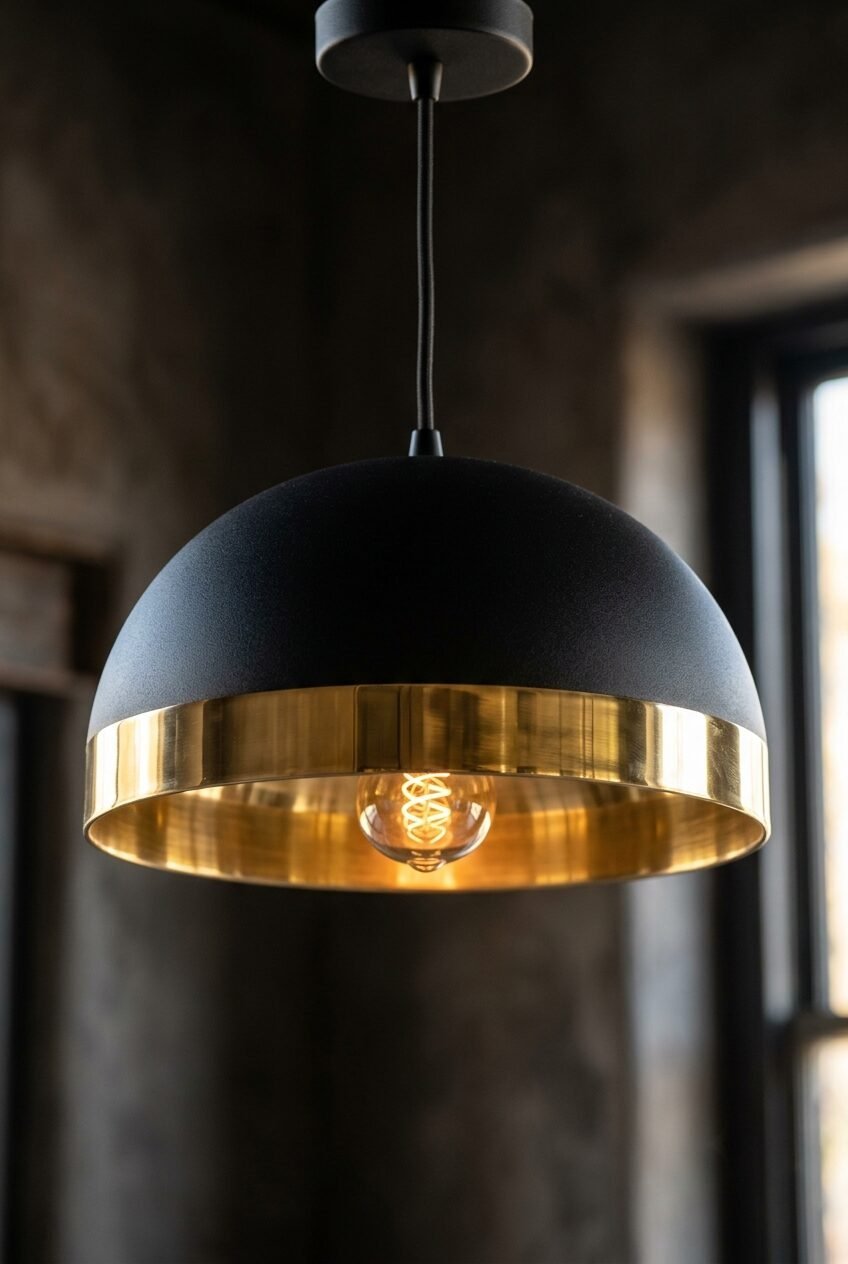
Mixing metals creates instant depth. A dome that is black on top and brass on the bottom looks tailored. The brass rim catches the light, while the black top fades into the background. This fixes the trouble of matching hardware. You can have black cabinet pulls and a brass faucet. The two-tone pendant ties both finishes together. These cost around $300. Hang two oversized two-tone domes over a white island. The bold contrast anchors the room. It feels incredibly intentional and custom. It bridges the gap between classic design and modern luxury gracefully.
Frequently Asked Questions
How high should I hang my kitchen pendant lights?
Hang them exactly 30 to 36 inches above the countertop. This height keeps the fixture out of your direct sightline while cooking. It also prevents tall guests from bumping their heads.
How many pendants do I need for a 10-foot island?
You need three large fixtures or two oversized ones. Spacing dictates the rule. Keep at least 24 inches of space between each fixture to avoid a cluttered ceiling.
Are clear glass pendants hard to keep clean?
Yes. Clear glass shows every speck of dust and grease. You must wipe them weekly. Use a high-quality aerosol glass cleaner like Sprayway to prevent hazy streaks.
Should my lighting match my cabinet hardware exactly?
No. Matching everything looks flat and dated. Mix metals intentionally. Pair matte black hardware with brass lighting. This creates visual depth and makes the room look professionally styled.
What is the best light bulb color temperature for kitchens?
Use 2700K to 3000K LED bulbs. This range provides a warm, inviting glow. Anything above 3500K looks blue, harsh, and clinical. Warm light makes food look much more appetizing.
Can I use fabric lampshades in a kitchen?
Avoid fabric over the stove or island. Fabric absorbs cooking grease and traps odors. If you want fabric, use it only in a designated dining nook far from the grease zone.
How do I clean raw brass fixtures without ruining the finish?
Never use harsh chemical sprays on raw brass. Wipe them gently with a dry microfiber cloth. Let the brass age naturally. The natural patina makes the fixture look expensive and authentic.
Do I need a dimmer switch for my island lights?
Yes. Dimmers are mandatory. Bright light works for chopping vegetables. Dim light works for evening entertaining. A dimmer gives you total control over the mood of the room.
What is the difference between task lighting and ambient lighting?
Task lighting shines directly down onto your workspace. Ambient lighting glows outward, illuminating the whole room. Your island needs task lighting. Your ceiling needs ambient recessed lighting.
Why do my new LED bulbs flicker when dimmed?
Your dimmer switch is likely outdated. Old switches cannot handle low-voltage LED bulbs. You must install an LED-compatible dimmer switch to stop the flickering entirely.
Are linear suspension lights going out of style?
No. Linear lights fit the minimalist aesthetic perfectly. They provide massive amounts of light without cluttering the ceiling. They remain a top choice for modern luxury kitchen designs.
Can I install heavy stone pendants on my own?
No. Alabaster and concrete fixtures weigh too much for standard drywall anchors. You must attach them directly to the wooden ceiling joists. Hire a licensed electrician for heavy fixtures.
Final Thoughts
Lighting dictates how your entire home feels. You can spend thousands on marble countertops, but cheap lighting ruins the investment instantly. I have seen the right oversized brass dome completely reframe a basic room into a modern luxury kitchen. Start by measuring your island, then scale your fixtures up. Do not fear mixing metals. Embrace textures like ribbed glass or raw plaster to bypass fast fads. The right timeless kitchen lighting makes every meal and every morning coffee feel highly considered.

Amelia Hart is the Senior Design Editor at Vellora Interiors, where she curates small-space and apartment content. With a background in color theory and years spent designing under-500-square-foot rentals, she’s the editor who’ll tell you exactly which paint sheen, curtain length, and lamp height to choose, no guessing. A former design lead at a boutique studio, her work has been featured in several home and lifestyle publications. Her guiding belief: “Good design isn’t about more, it’s about choosing better.”