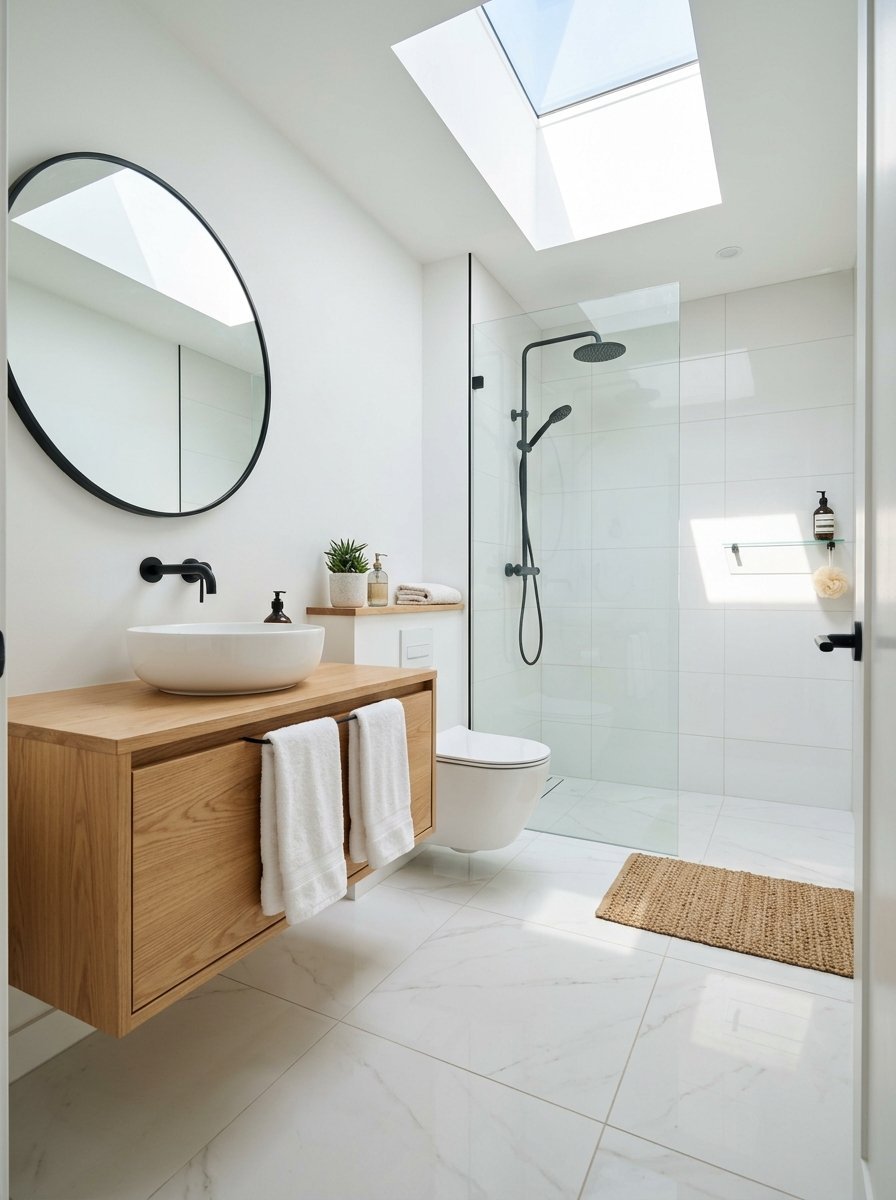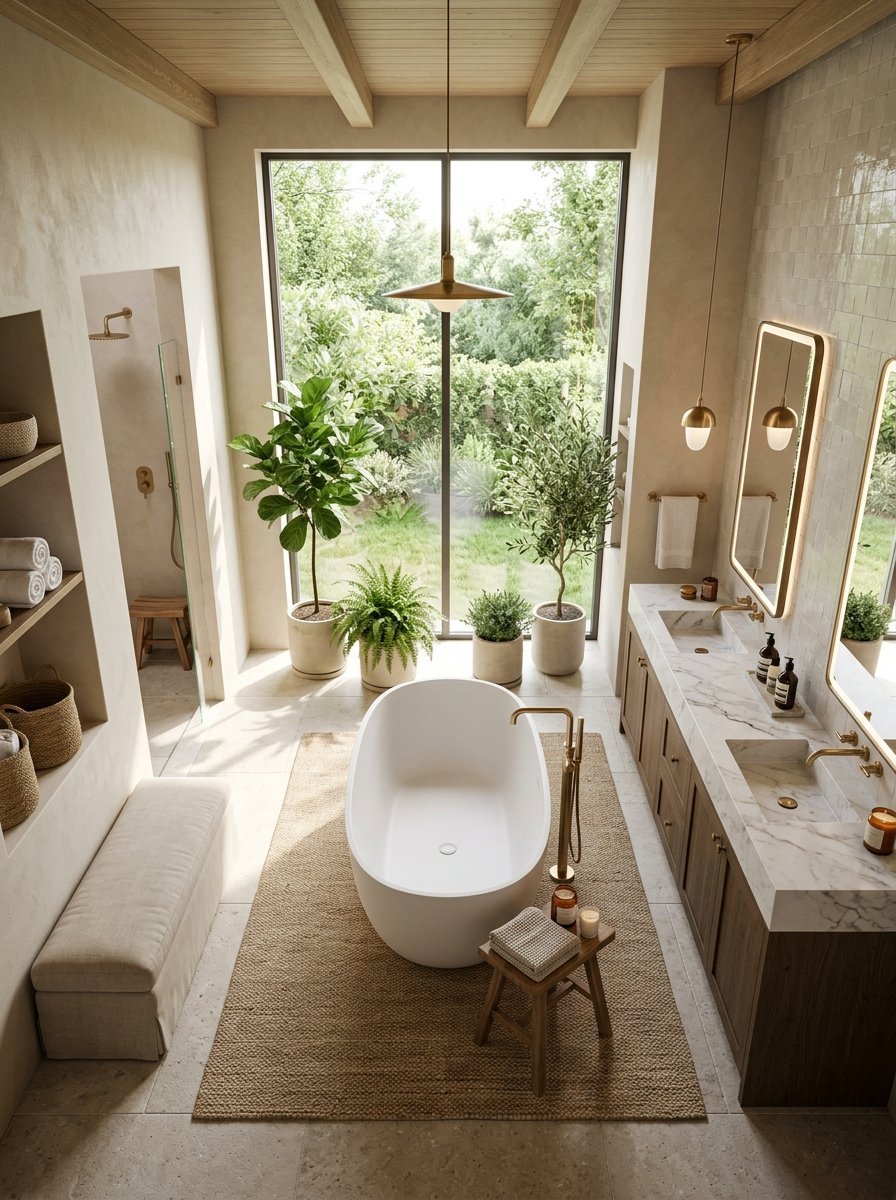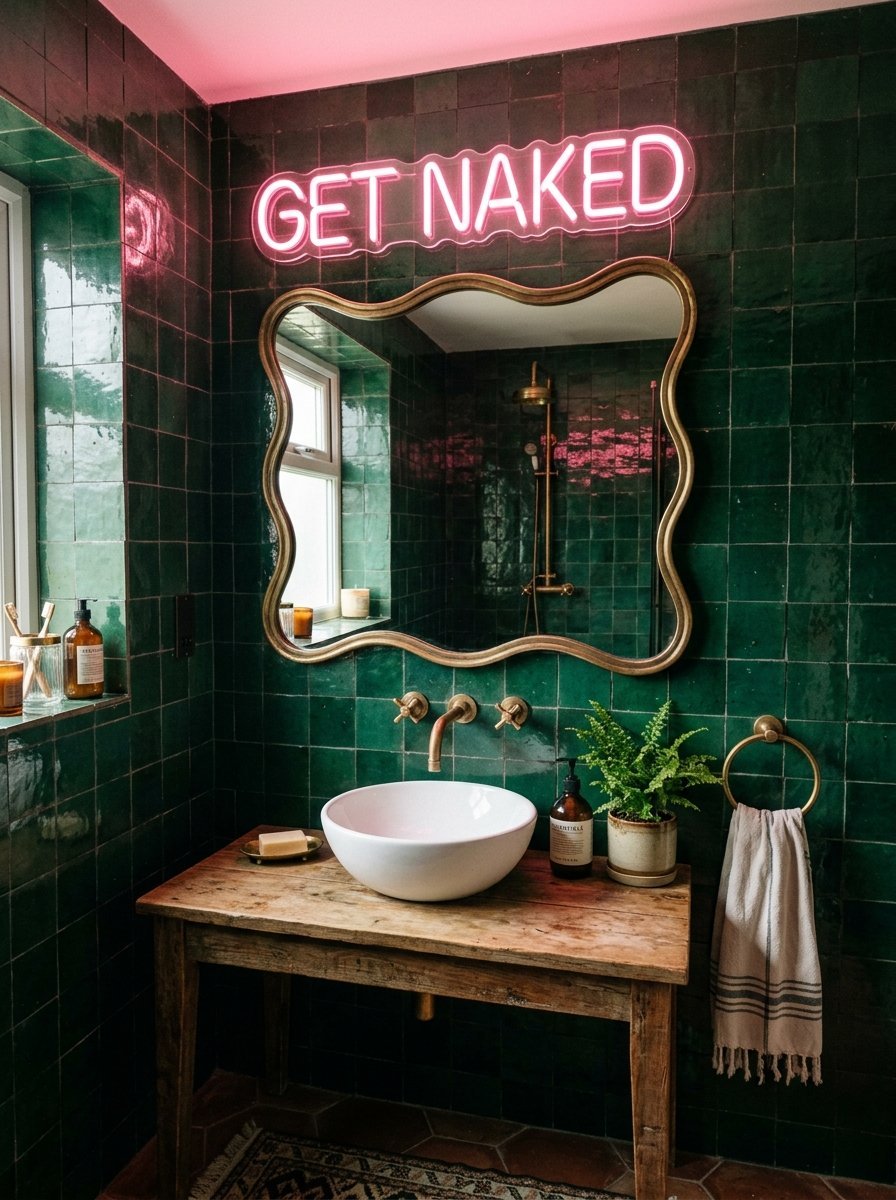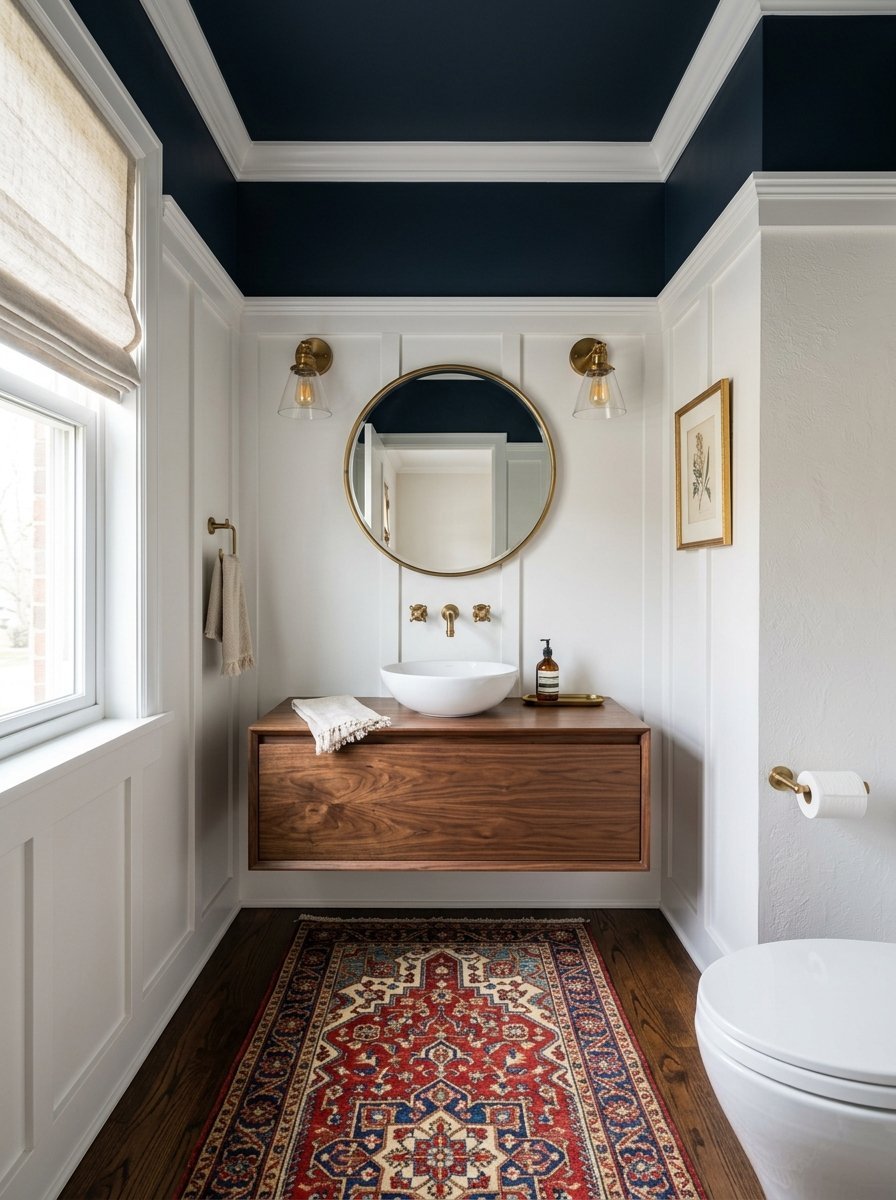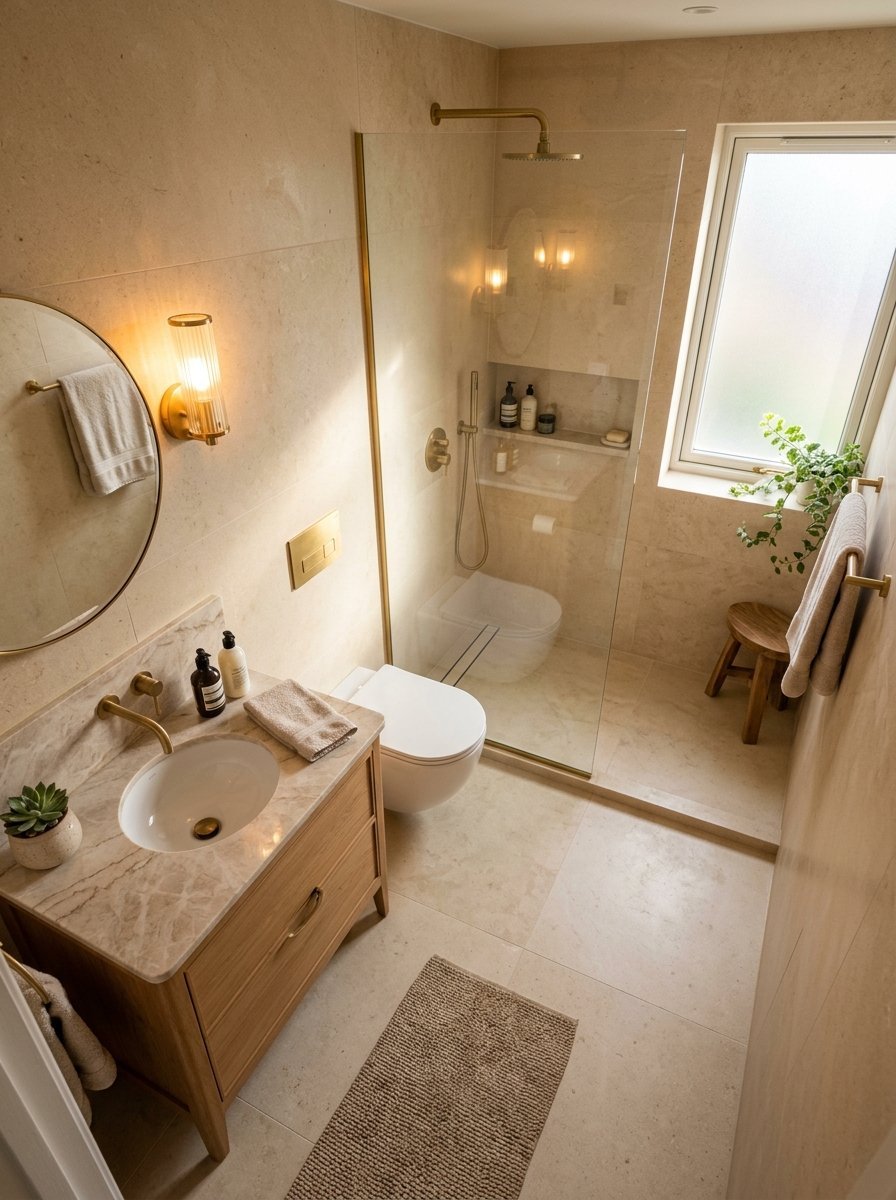
Three months ago a client handed me a blank blueprint. They wanted a dream bathroom packed into a tiny space. I stared at the floor plan for hours. Most people stare at empty rooms and freeze. I’ve seen this happen a hundred times. You want a massive shower but the walls feel tight. You want two sinks but the plumbing says no. I’ve tried fixing bad architectural floor plans after the framing goes up. Tearing down walls costs a fortune. Getting your bathroom plan right on paper saves thousands of dollars.
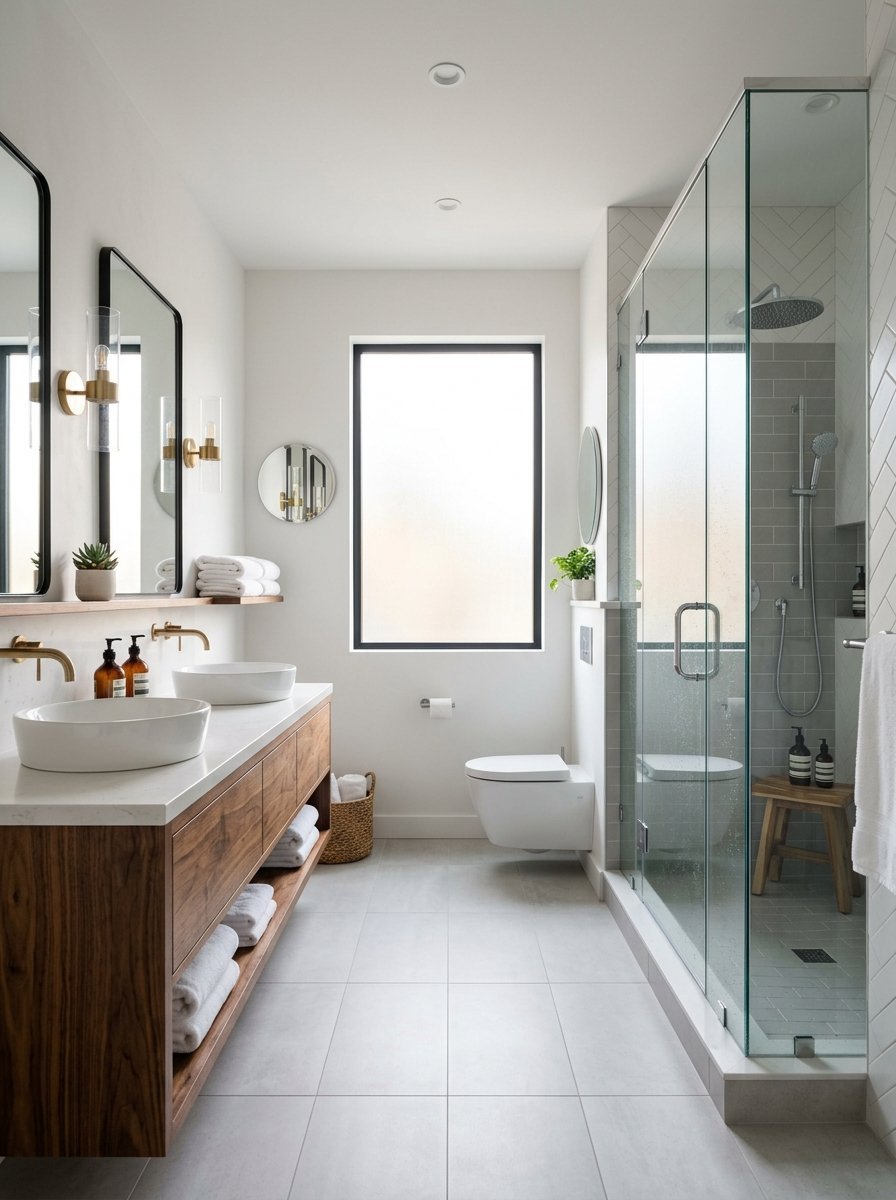
Here are twenty-two precise layouts you can copy right now. You will see exact measurements for everything from a powder room to a primary suite. I share exact clearance rules for toilets and sinks. You will find cost estimates based on current market rates. I break down where a pocket door saves space and where it causes trouble. These bathroom layout plans stop costly contractor mistakes. Pick the one that fits your square footage. Hand it to your contractor. Watch your space become exactly what you want.
1. The Classic 5×8 Tub and Shower Combo
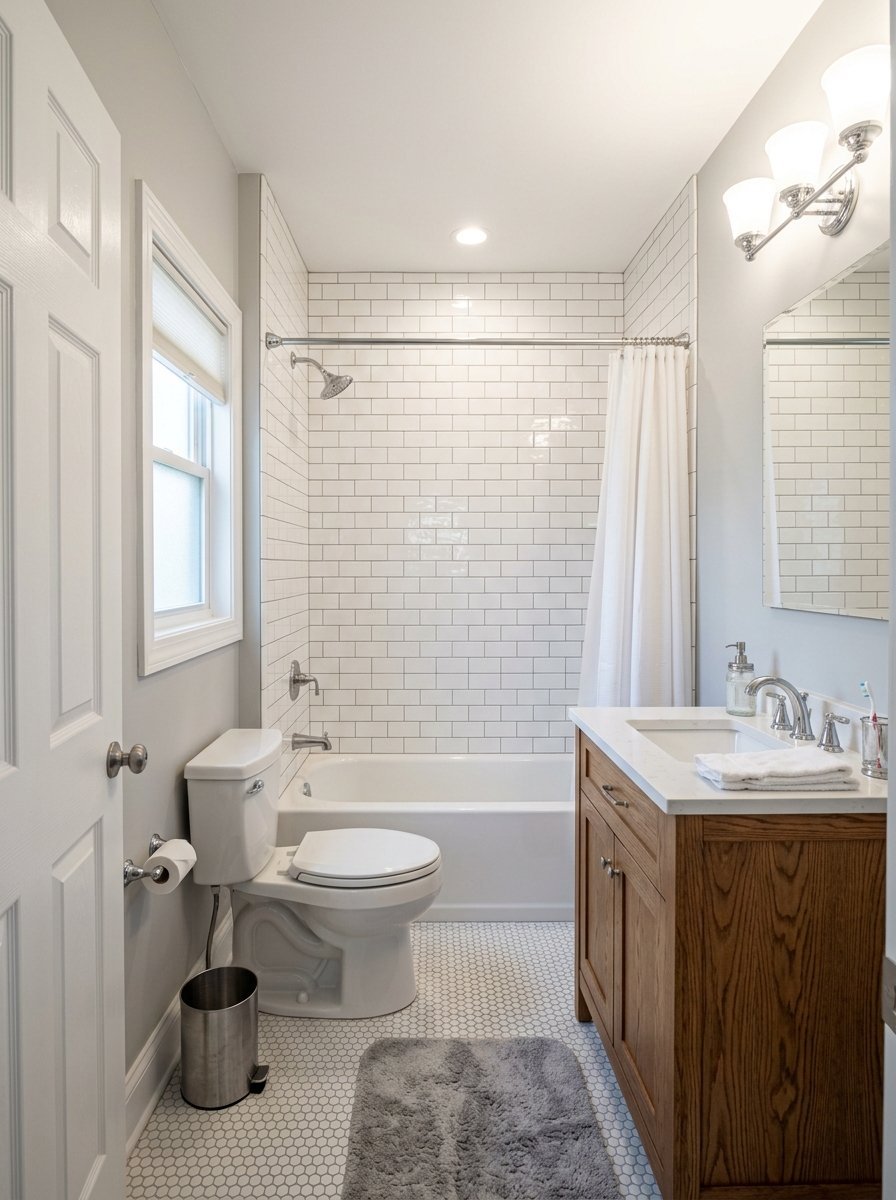
Most contractors default to this specific bathroom plan. You get forty square feet of usable space. The door usually sits in the middle of the long wall. You walk in and see the vanity straight ahead. The toilet sits to one side. The tub occupies the entire short wall at the back. I’ve noticed this layout works perfectly for guest spaces. The plumbing all runs along one single wall. Keeping pipes together keeps your contractor bills low. A basic finish here runs about $8,000 as of early 2024.
- One wet wall keeps contractor costs down
- Fits a full tub in a tight footprint
- Two people cannot stand at the sink at once
- Floor space feels cramped near the door
I’ve tried fitting double vanities in this space. They never fit right. Stick to a single thirty-inch sink. A heavy sliding glass door will make the room feel closed off. Hang a light curtain instead to trick the eye. Your bathroom dimensions matter deeply here. You need exactly sixty inches of width to fit a standard tub.
2. The 3×5 Half Bath Powder Room
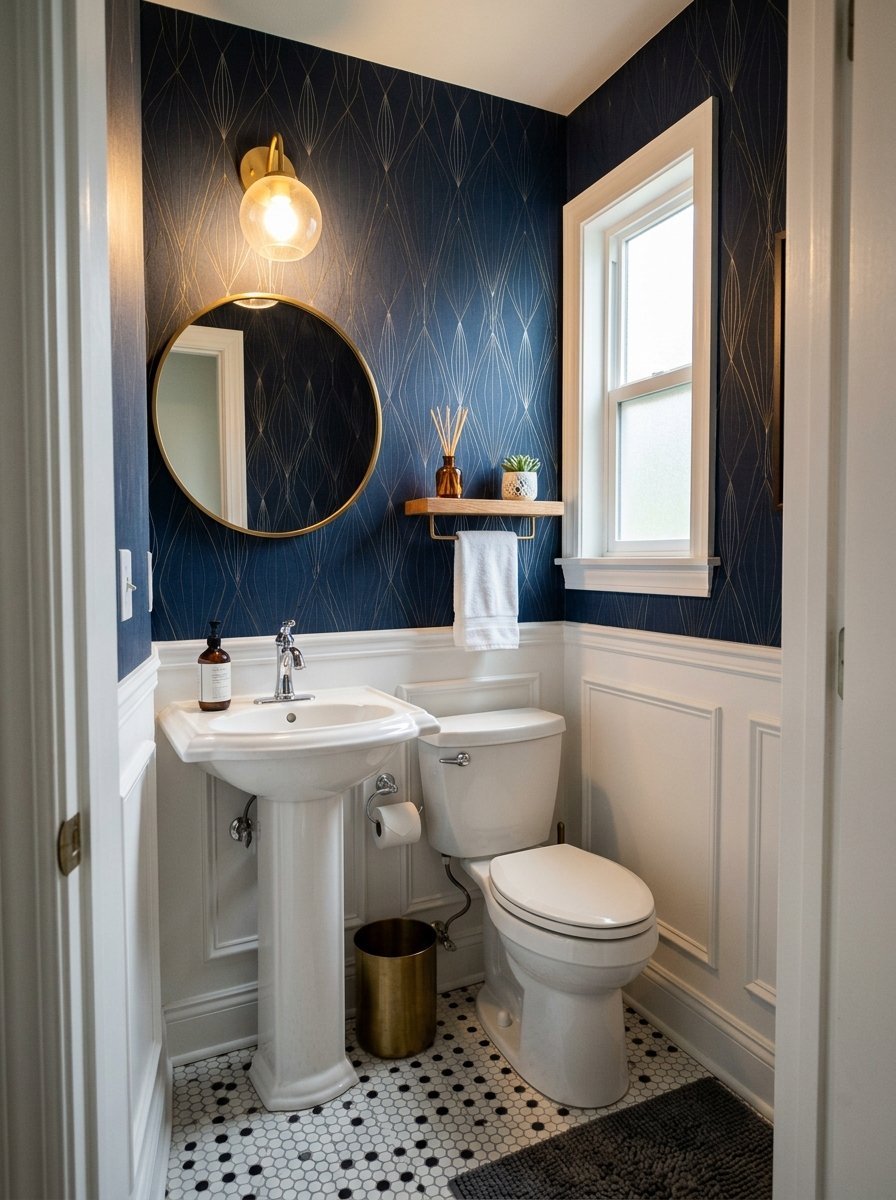
This small bathroom layout fits into a tiny closet footprint. You place the door on the long wall. The sink sits on one end. The toilet goes on the other end. I’ve seen this exact setup tucked under stairs and in tight hallways. Fifteen square feet is all you need to make it work. Clearance dictates everything here. You need twenty-one inches of clear space in front of the toilet bowl. A pedestal sink works best to keep the floor visible. A bulky vanity makes the room feel like a tiny box.
- Fits almost anywhere inside a house
- Very cheap to finish with basic tile
- Storage space does not exist
- Knees might hit the wall if placed poorly
In my experience a pocket door saves this layout. A swinging door eats up half the walking space. You spend around $3,000 to finish this room. You do not need a shower. Just put bold wallpaper on the ceiling to give the eye a place to look.
3. The 8×10 Primary Walk-In Shower Plan
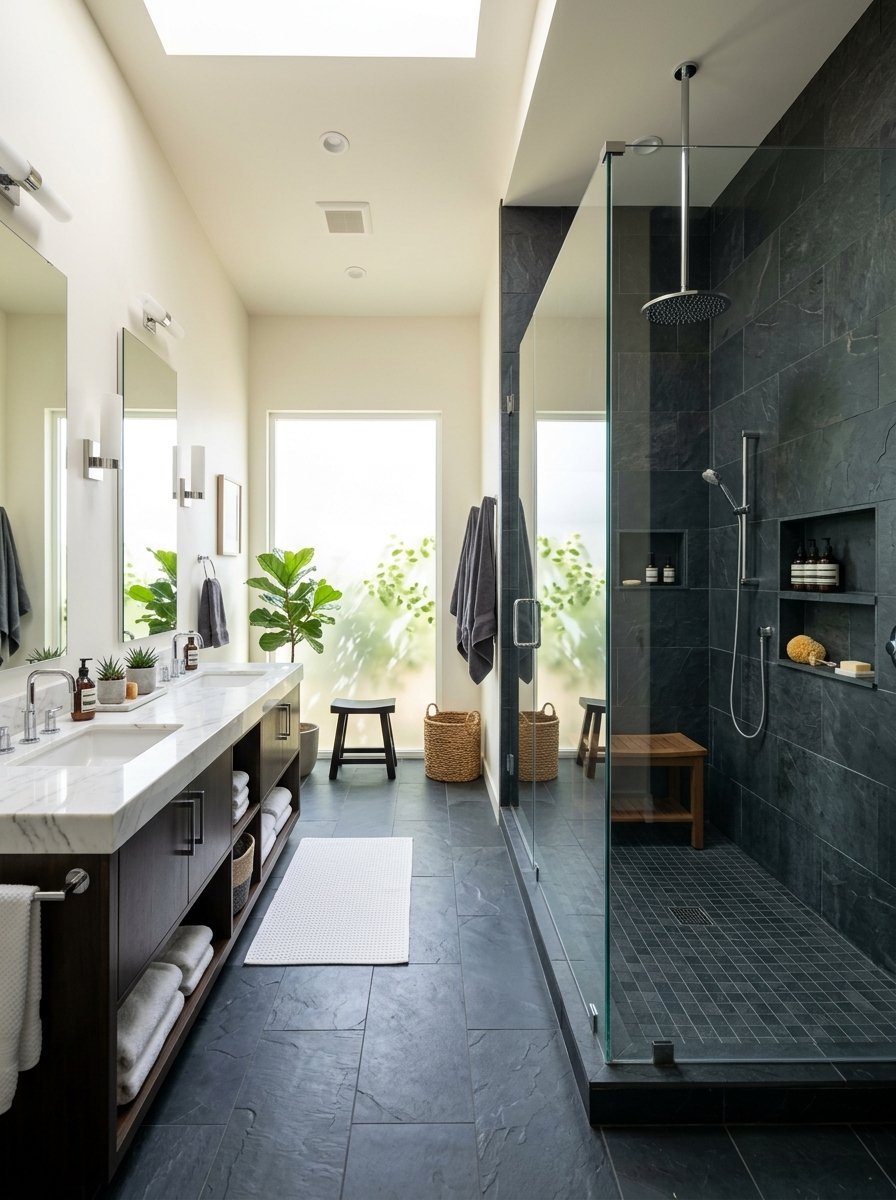
Eighty square feet gives you serious breathing room. This bathroom layout gives you a massive walk-in shower instead of a bulky tub. I’ve noticed people rarely use soaking tubs anymore. You put a six-foot shower enclosure against the back wall. A double vanity spans the left side. The toilet sits in a private nook on the right. You get clear walking paths between every fixture. The cost for this setup usually hits $18,000 depending on glass choices.
- Massive shower replaces unused tubs
- Lots of room for two people to get ready
- Requires a larger room footprint
- Glass enclosures require constant wiping
I’ve tried putting a permanent bench in showers this big. You want at least fifteen inches of depth for a comfortable seat. Your architectural floor plans need heavy tweaking to frame a mud pan correctly. Dropping the floor joists stops water from escaping. A single large glass panel looks cleaner than a full door with heavy metal hinges.
4. The Jack and Jill Shared Corridor
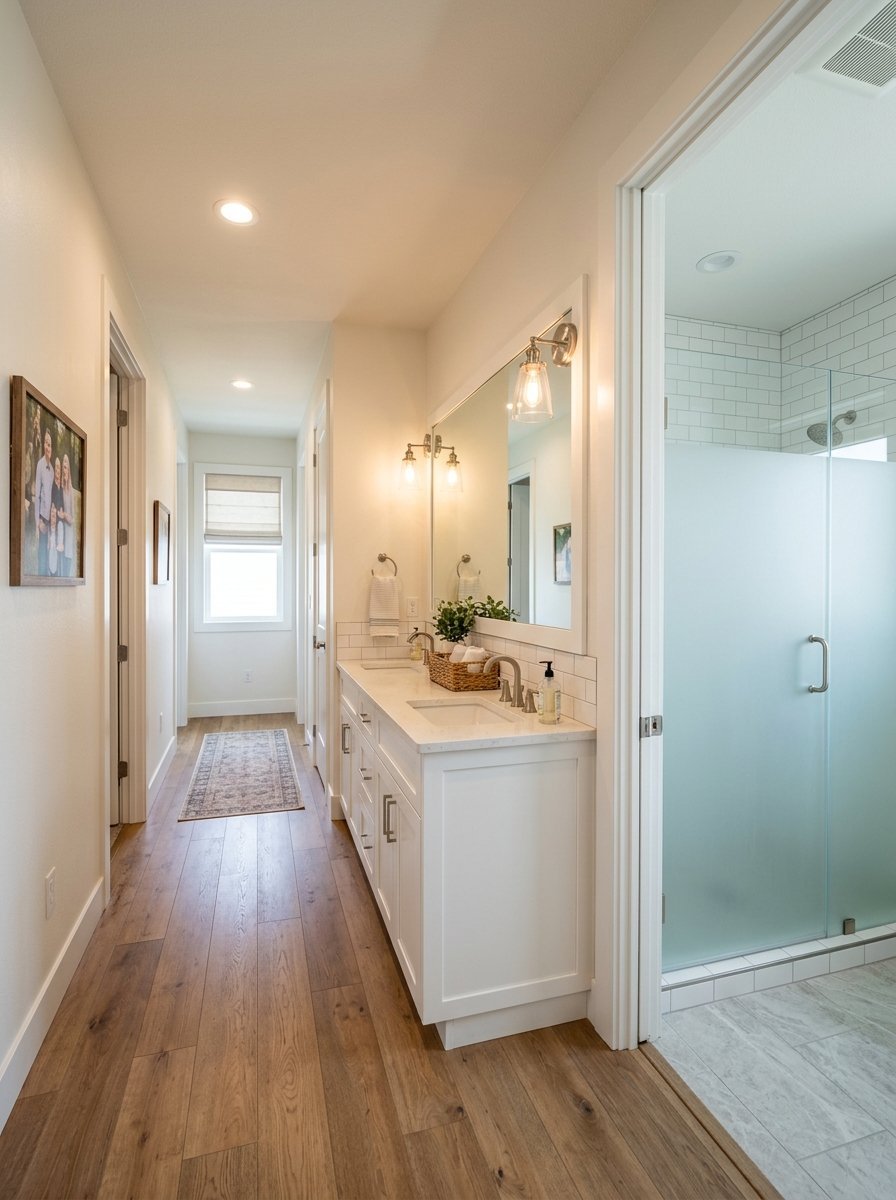
Two bedrooms share one central bathroom plan. You need at least forty-five square feet to make this work. Each bedroom gets its own entry door. The vanity usually sits in the middle area. The toilet and shower sit behind a secondary interior door. I’ve seen this layout save families from loud morning arguments. One person takes a shower while someone else brushes their teeth. You get two distinct functions happening at once.
- Two bedrooms use one plumbing stack
- Private wet zone separates sink users
- Three doors take up a lot of wall space
- Locking doors causes endless confusion
In my experience you must install locks on both sides. A smart lock system stops people from getting locked out of their own rooms. This setup costs about $12,000 to finish. You save money by running both bedrooms to one single plumbing stack. Pick a heavy solid core door for the middle room. Hollow doors let shower noise echo into the sleeping areas.
5. The 6×6 Corner Shower Setup
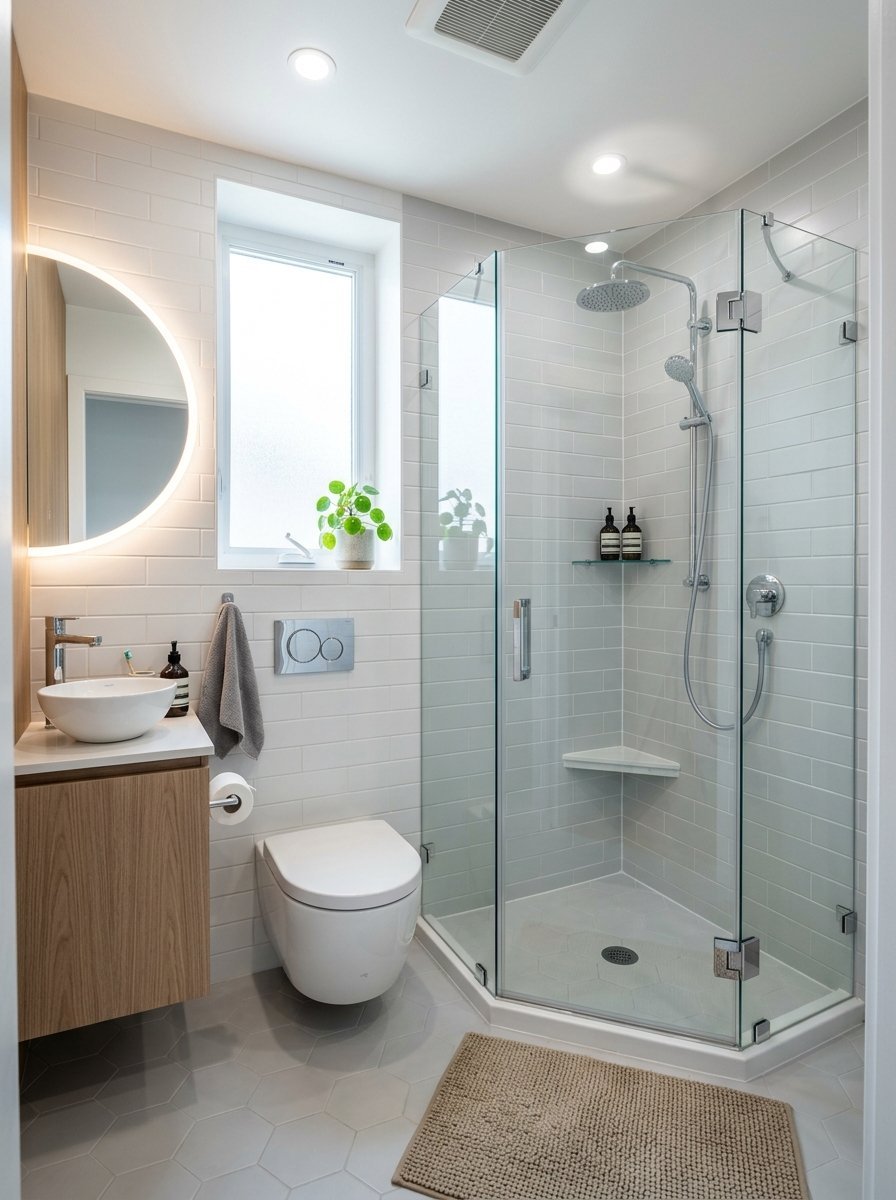
Thirty-six square feet makes a perfect square. This shape ruins standard rectangular plans. You must use a corner shower stall to save the layout. A neo-angle shower cuts off the sharp corner and saves clear floor space. You place the sink and toilet on the flat walls next to the door. I’ve noticed this layout works great in basement finish projects. You leave the center floor completely open for walking.
- Square footprint fits weird house corners
- Center floor space feels very open
- Corner showers feel tight inside
- Finding perfectly sized corner pans gets tricky
I’ve tried pouring custom tile pans for these. Buying an acrylic base saves you about $1,200 right off the bat. Corner showers feel tight inside. Your elbows might hit the glass when you wash your hair. Keep the sink very small to leave room for the toilet. A round toilet bowl takes up less room than an elongated bowl. Every single inch counts in a perfect square.
6. The Long Narrow 4×9 Galley
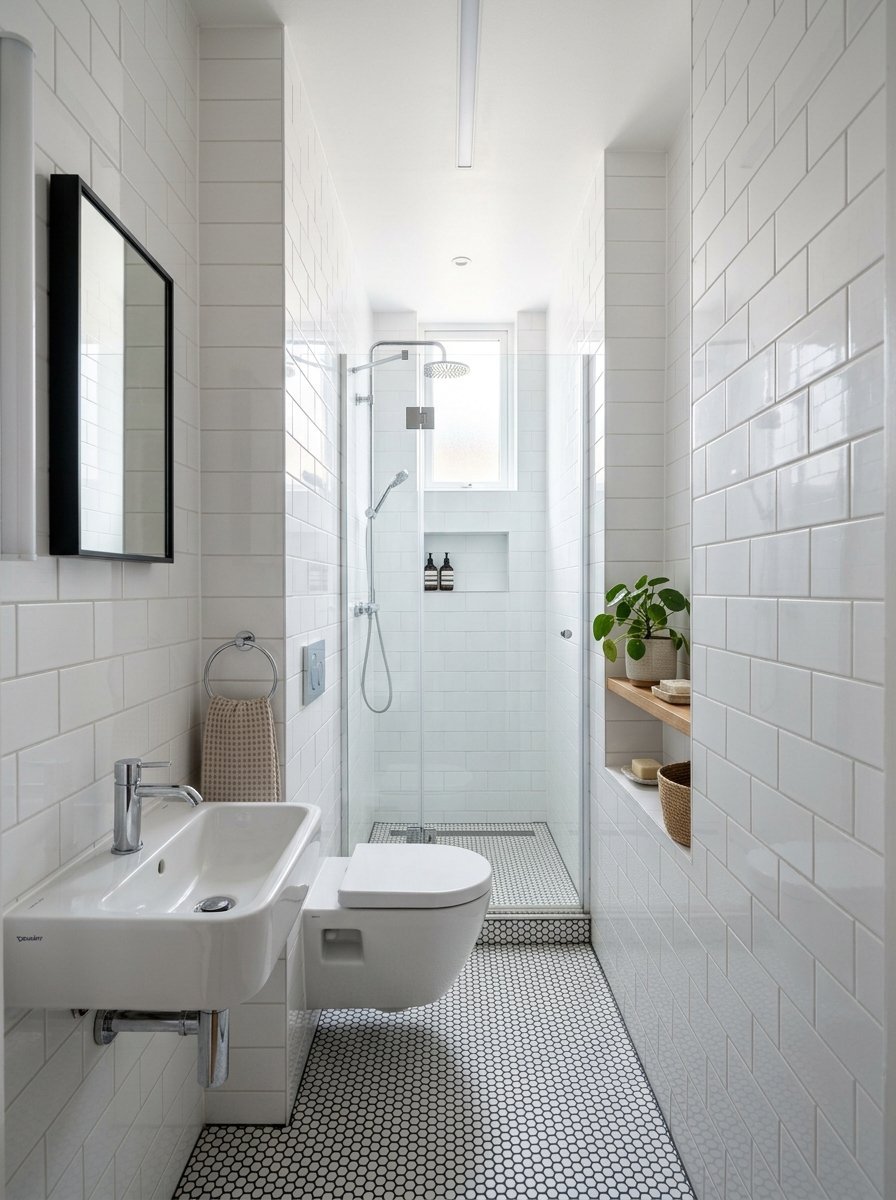
Some houses give you a hallway instead of a room. This small bathroom layout lines everything up in a straight row. You open the door on the short end. First comes the sink. Next sits the toilet. The shower takes up the far back wall. You only need a thirty-inch walking path straight down the middle. I’ve seen this setup in old urban apartments. You cannot fit two people side by side anywhere in this room.
- Fits perfectly in narrow unused hallways
- Very clear straight walking path
- You look at a toilet upon entering
- Very little elbow room at the sink
In my experience a wall-mounted toilet makes this space look much bigger. Showing the floor underneath tricks the human eye. You spend roughly $9,000 to finish this long room. Hang mirrors on the long blank wall. The reflection makes the hallway feel twice as wide. Never put a swinging shower door here. The glass will hit the toilet bowl every time.
7. The 10×12 Luxury Freestanding Tub Design
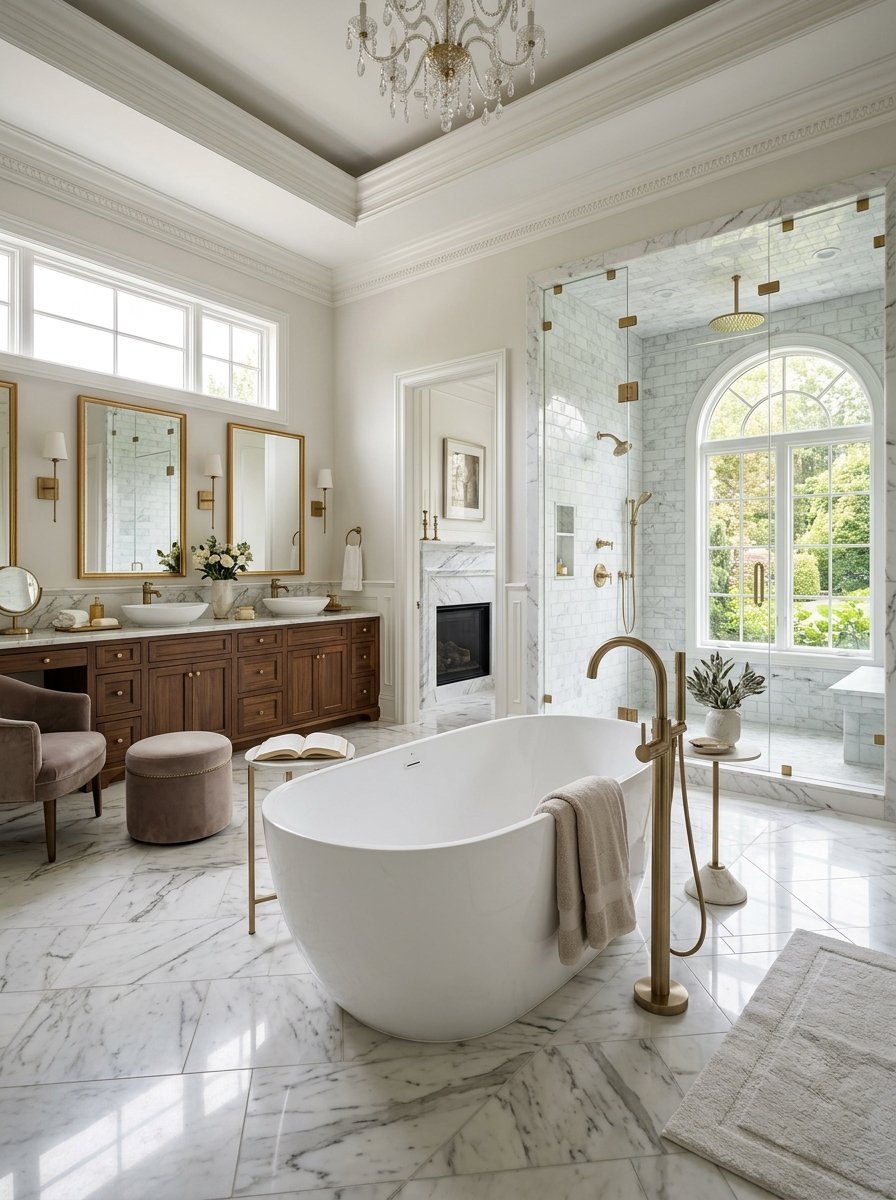
One hundred twenty square feet equals a true dream bathroom. You place a massive freestanding tub right in the center of the room. The tub becomes the centerpiece the second you walk in. A large double vanity spans the left wall. A huge shower sits in the back right corner. I’ve noticed luxury buyers look for this exact setup today. You will spend around $35,000 to get this right.
- Freestanding tub acts as a visual centerpiece
- Enough room for multiple people at once
- Requires massive open floor space
- Cleaning around the back of the tub gets annoying
I’ve tried keeping tubs close to the wall. You must leave at least four inches of space to fit a mop back there. A freestanding tub needs space to breathe. You place a floor-mounted tub filler right next to the drain. This layout requires a very heavy subfloor to support the water weight. Check your architectural floor plans to verify joist strength before buying a cast iron tub.
8. The L-Shaped Corner Vanity Layout
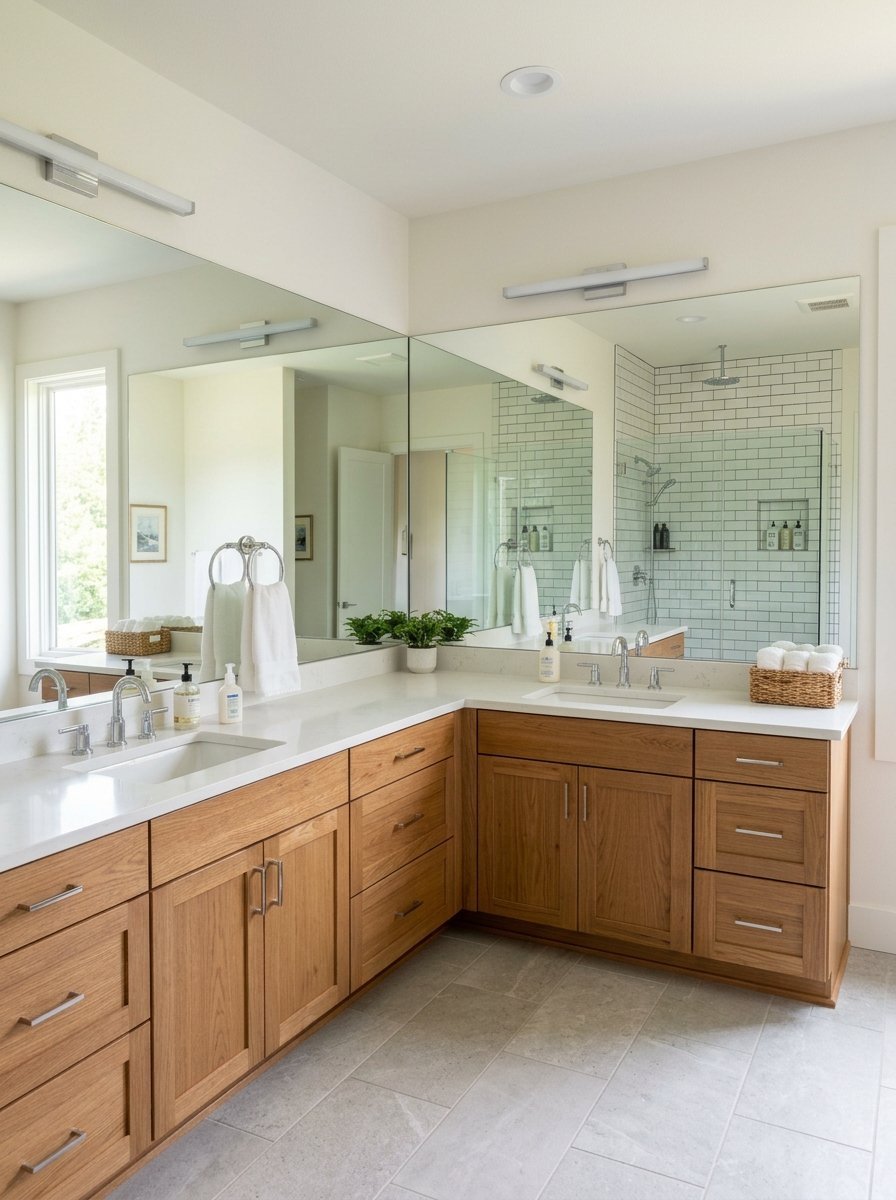
This architectural floor plan bends right around a corner. The door opens into a large central square. A large L-shaped vanity hugs two intersecting walls. The shower and toilet tuck into the remaining empty corners. This layout gives you massive continuous counter space. I’ve seen families use this setup when they have lots of hair tools and products. The continuous counter stops items from falling off the edge.
- Massive amount of usable counter space
- Tons of drawer storage underneath
- Custom corner cabinets cost extra money
- Bending the plumbing runs raises contractor prices fast
In my experience corner sinks never work. Place the sinks on the flat runs and leave the corner for deep storage. Custom corner cabinets cost extra money. Bending the plumbing runs raises contractor prices fast. You look at a $22,000 bill for this much custom cabinetry. Run a massive mirror across both walls to tie the whole corner together. It grabs light and bounces it around.
9. The Basement Plumb-In Setup
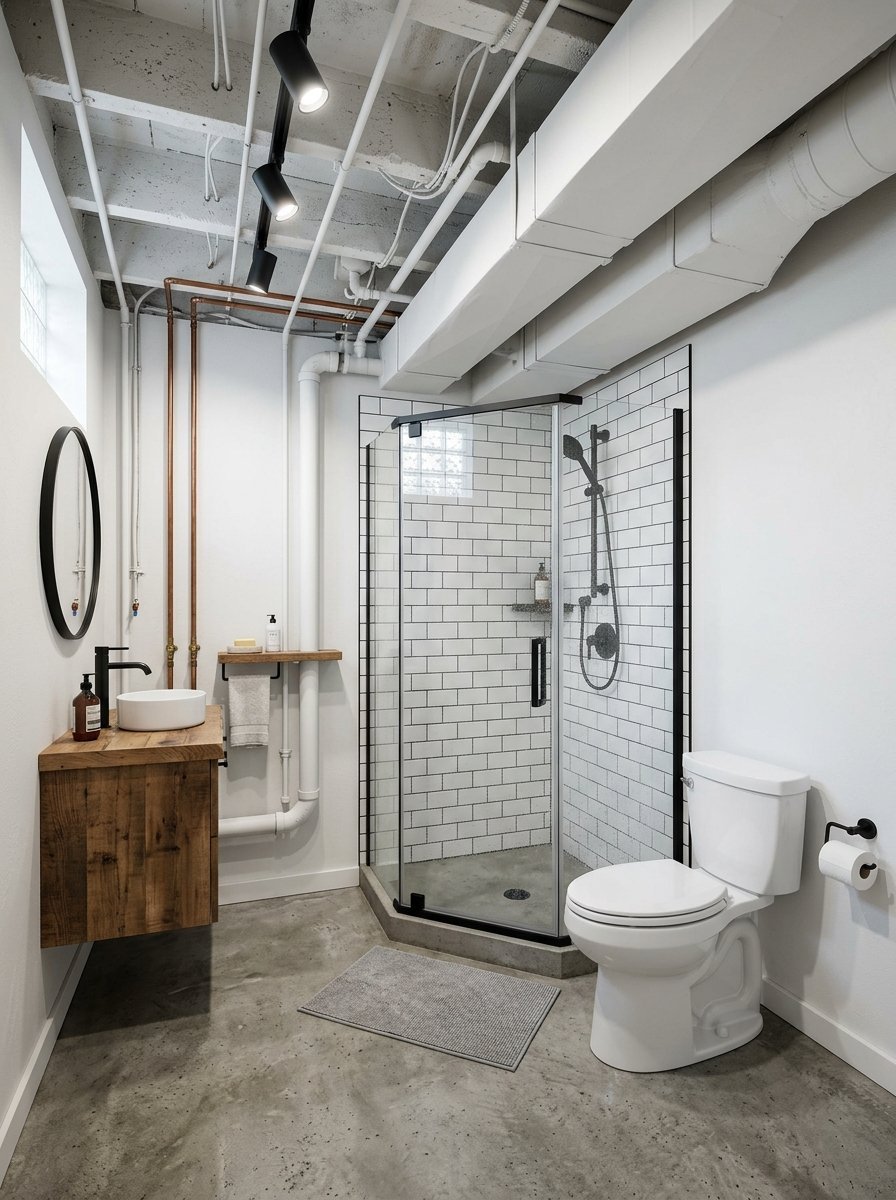
Basement concrete dictates exactly where things go. You must group the toilet and shower directly over the buried drain lines. This bathroom layout usually groups the wet zone tightly in one corner. You want the sink placed as close to the door as possible. I’ve noticed tearing up concrete costs an arm and a leg. You let the existing underground pipes dictate the design.
- Saves thousands on concrete breaking
- Keeps water away from drywall edges
- Layout might feel awkward or forced
- Ceiling heights get compromised by overhead ductwork
I’ve tried fighting basement plumbing. It never pays off. Work with the pipes you have and hide the ugly spots with very good lighting. Breaking concrete tacks on $4,000 to your bill instantly. Ceiling heights get compromised by overhead ductwork. Place your shower head on the highest ceiling section. Keep the toilet under the low ducts since you sit down anyway. A dark basement needs heavy white paint to feel clean.
10. The 4×4 Micro Toilet Room
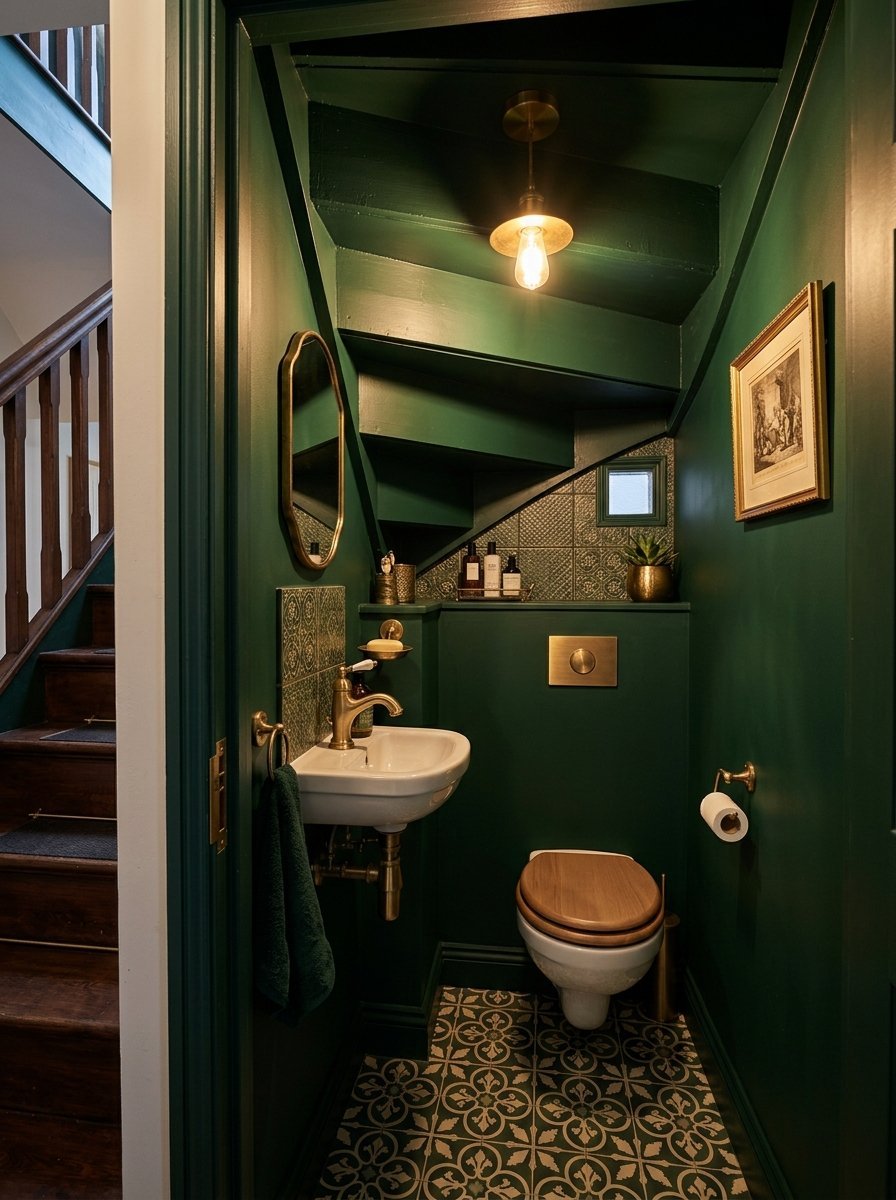
Sixteen square feet acts as a tiny half bath. You find these in older homes tucked beneath the main stairs. You get exactly enough room for a toilet and a tiny corner sink. There is zero walking room. You step in and close the door immediately. I’ve seen these rooms wrapped in bold dark wallpaper to make them feel like a jewel box.
- Fits into completely unused closets
- Great second toilet for house guests
- Feels exactly like a tiny closet
- Hard to clean around the toilet base
In my experience a tiny corner sink saves this layout. A standard sink blocks your knees when you sit down. You can finish this room for about $2,500. A standard door swings out into the main hallway. You cannot swing a door inward here. The door will hit the toilet and trap you outside. A tiny ceiling vent fan pulls out odors fast. Just make sure the fan runs quietly.
11. The Double Vanity Symmetrical Plan
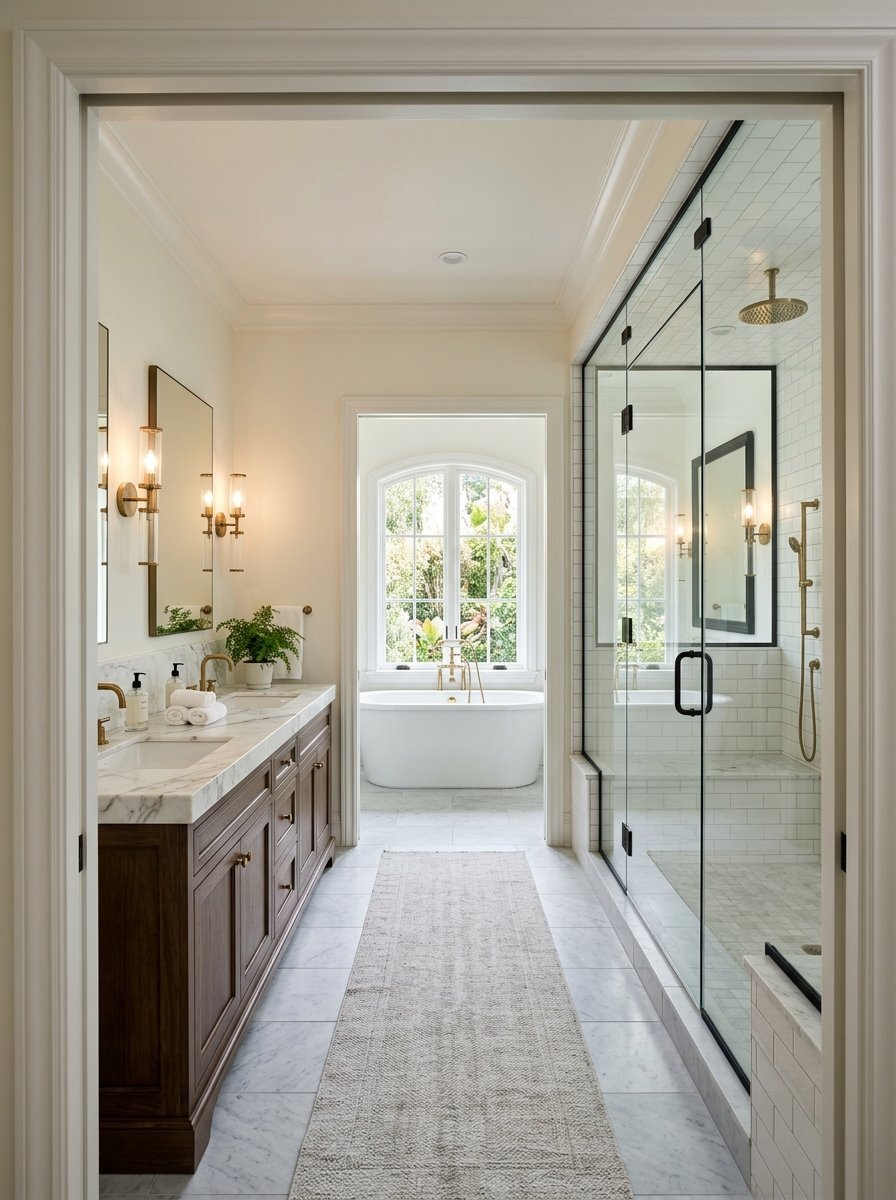
Symmetry makes a room feel very calm. This square setup places a large double vanity exactly opposite a large shower. The door sits perfectly in the middle of the adjacent wall. When you walk in, the room feels perfectly balanced on both sides. I’ve noticed married couples love this layout. Each person gets their own exact half of the room.
- Beautiful clear visual balance
- Equal space for two people
- Requires perfectly square room dimensions
- Toilet usually sits awkwardly in the open
I’ve tried hiding the toilet in symmetrical rooms. A small pony wall next to the vanity provides just enough cover. You need an eight by eight foot room to make this work. The bathroom plan costs around $16,000 to finish nicely. Run exactly matching tile on the shower wall and the vanity wall. This pulls the eye back and forth. Symmetrical rooms look terrible if the framing sits off by an inch. Plumb your walls perfectly.
12. The T-Shaped Privacy Layout
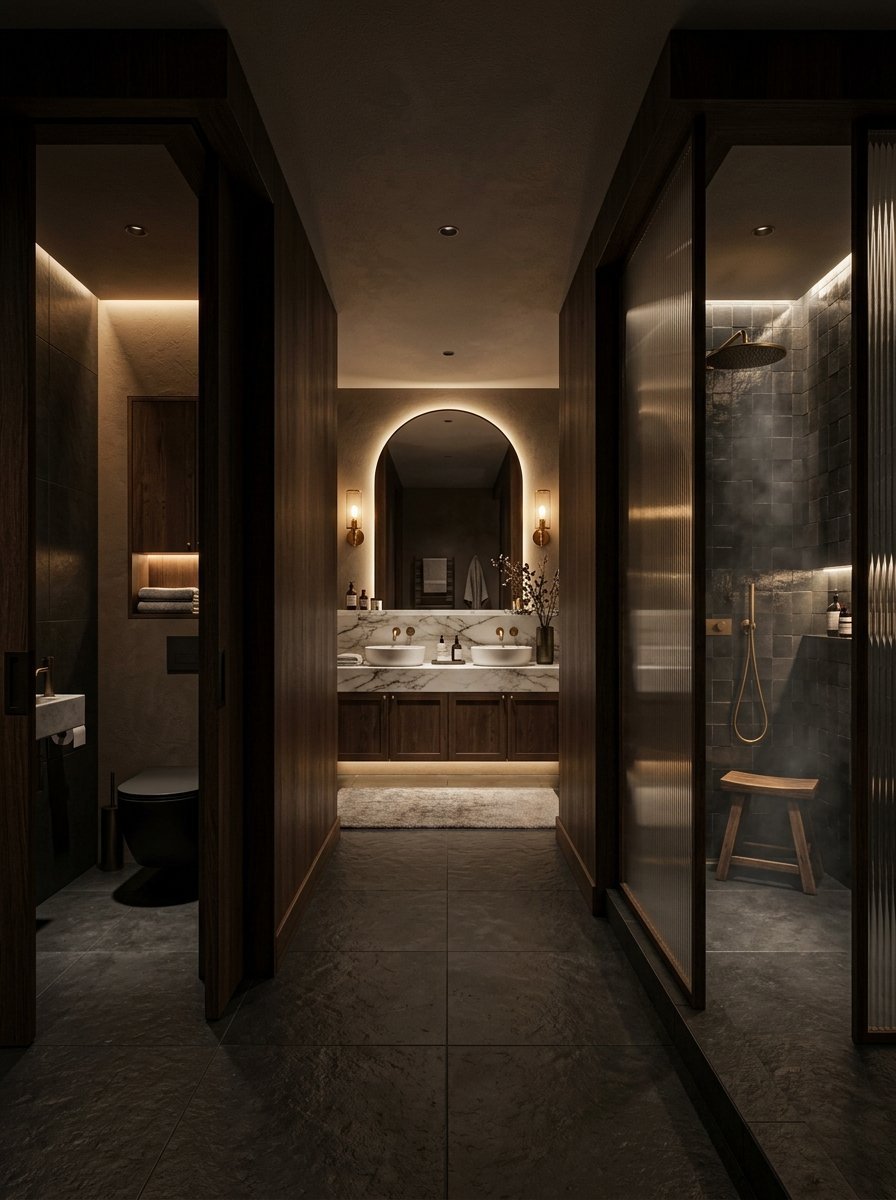
This bathroom layout plans for total absolute privacy. The room forms a literal T-shape. The door opens at the bottom leg of the T. The main vanity sits right in front of you. The toilet sits hidden far in the left arm. The shower sits hidden far in the right arm. I’ve seen this exact setup in heavy new construction homes. You get privacy without needing extra interior doors.
- Toilet stays completely out of sight
- Shower gets its own private wing
- Hard to light the hidden corners
- Wastes some floor space in the middle walking zone
In my experience you need excellent lighting in both hidden wings. Recessed cans over the shower and toilet fix the dark shadows. You waste a little floor space right in the middle walking zone. The framing costs jump up because of the extra corners. Expect to pay $20,000 for this footprint. You never look at a toilet bowl from the hallway. That alone makes the shape worth it.
13. The Wet Room Open Concept
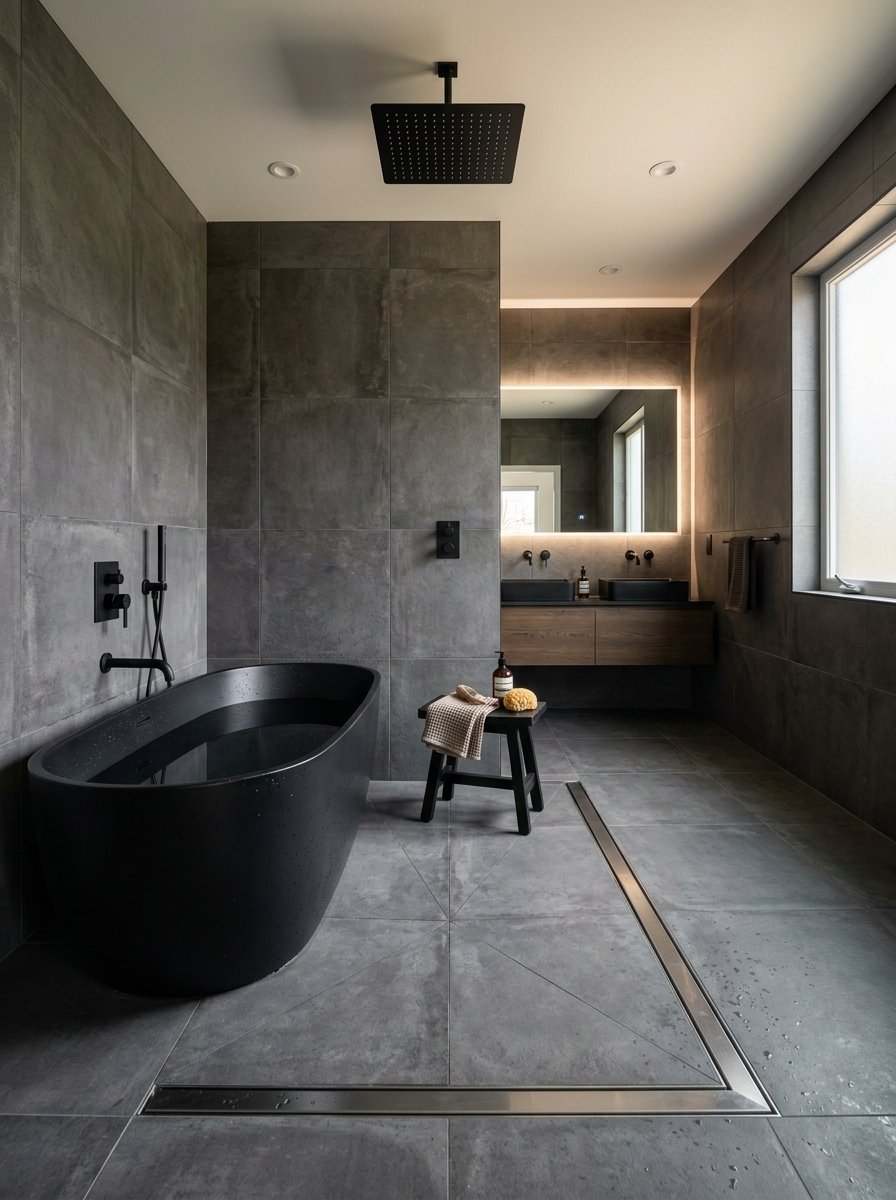
You waterproof the entire room from floor to ceiling. The shower has no glass walls and no heavy floor curb. The tub sits right inside the open shower area. Water splashes freely across the entire floor. You slope the entire floor gently to one central drain. I’ve noticed this layout makes a small space feel completely massive. There are no visual barriers cutting the room in half.
- Feels incredibly open and large
- Extremely easy to clean the floors
- Waterproofing costs a lot of money
- Toilet paper can get wet if placed poorly
I’ve tried doing this without a secondary door drain. You must install a long linear drain near the door to stop water from escaping into the hall. Waterproofing an entire room costs a lot of money. You will spend $28,000 to finish a proper wet room. Keep your toilet paper far away from the shower head. A soaking wet roll of paper ruins your morning very fast.
14. The Under-Stairs Sloped Ceiling Bath
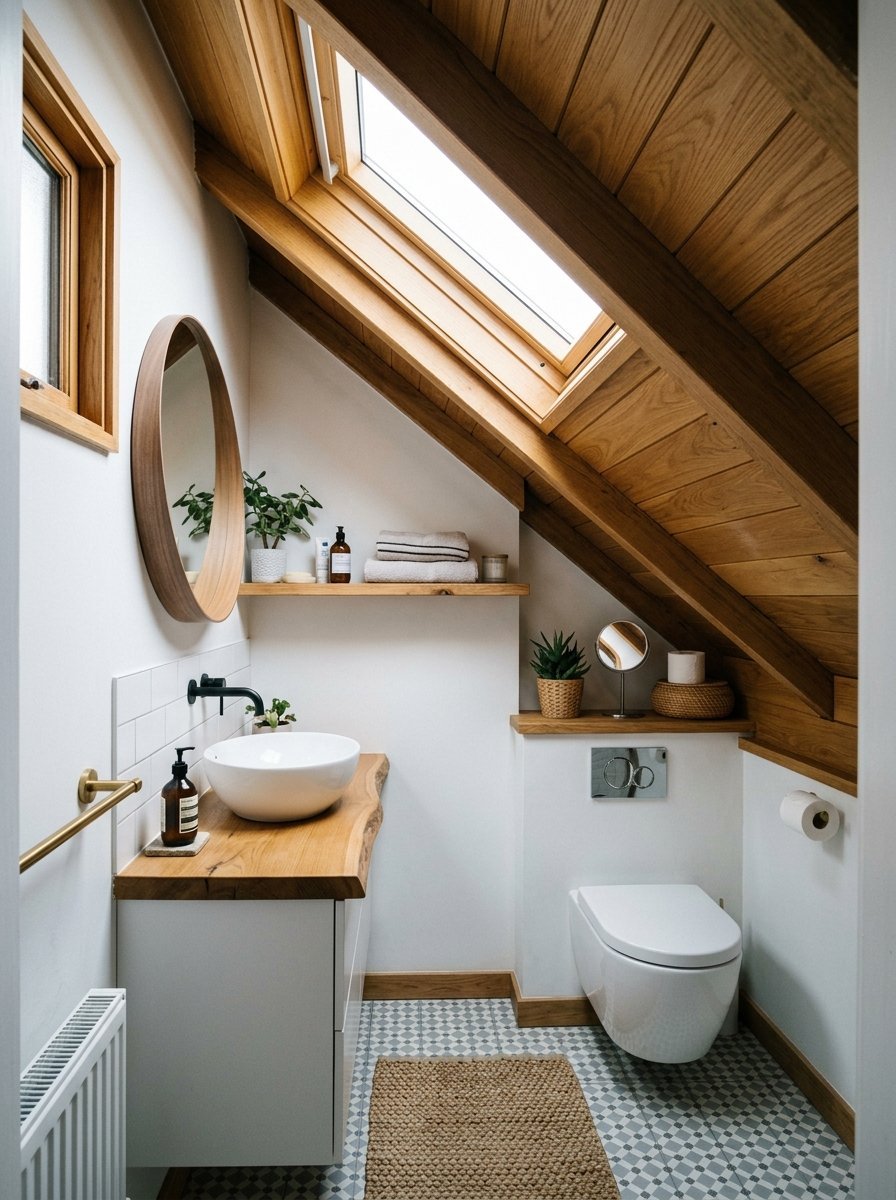
The ceiling drops very low on one side of this room. You place the toilet tightly against the lowest wall. You need full standing room at the sink and shower. This small bathroom layout forces you to get very creative with space. I’ve seen contractors use the absolute lowest spots for custom towel cubbies.
- Uses totally wasted dead space
- Creates a cozy hidden feeling
- Tall people will hit their heads
- Shower placement is heavily restricted
In my experience you must measure the toilet clearance perfectly. You need at least five feet of ceiling height right where you stand up. Banging your head in the morning gets old fast. A custom slanted glass shower door costs $3,000 on its own. You follow the roofline to keep the visual flow. Keep the wall colors very light. Dark paint makes a sloped ceiling feel like it is crushing you. Put a skylight right above the walking path.
15. The 7×7 Square Symmetrical Bathroom
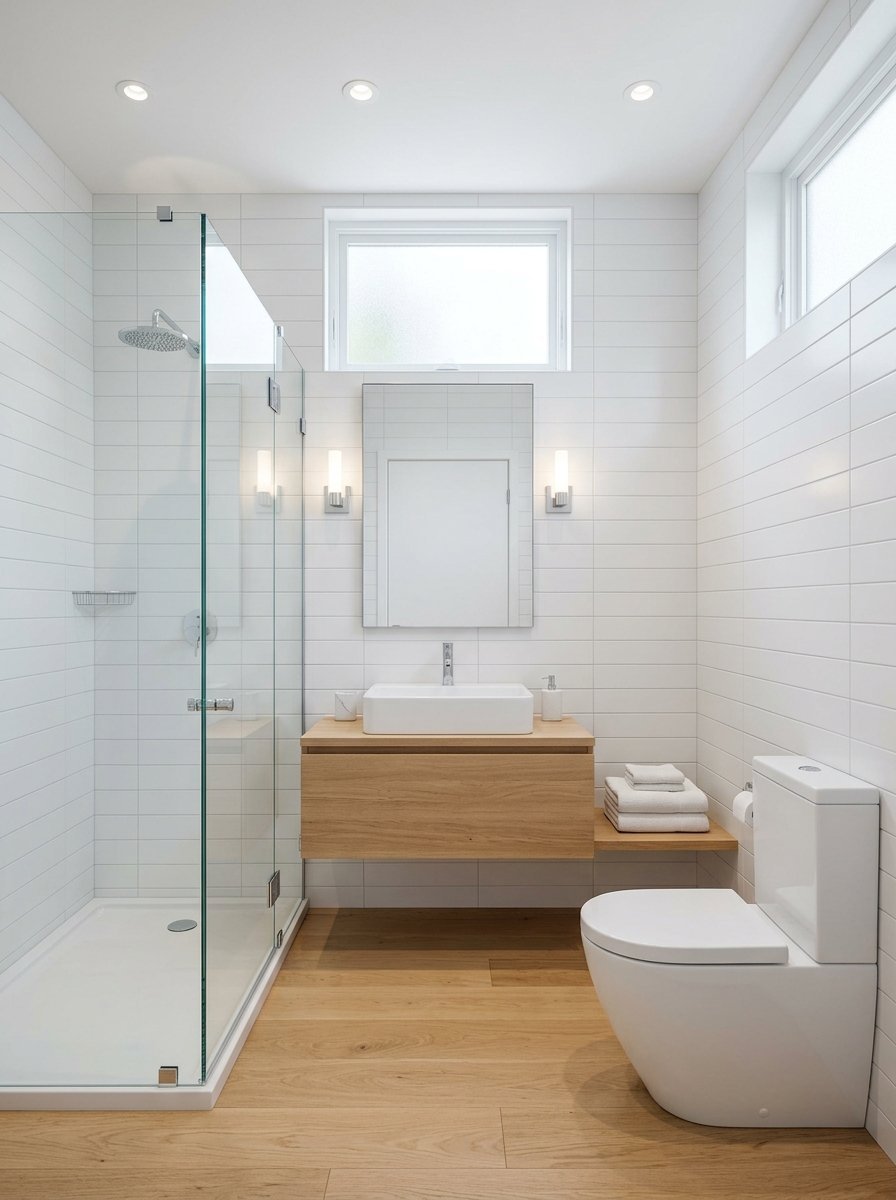
Forty-nine square feet presents a very tricky box. You place the door right in the center of one wall. A corner shower goes left. The toilet goes right. A thirty-inch vanity sits straight ahead. This provides a very clear triangular walking path. I’ve noticed this works much better than putting everything in a straight row.
- Clear walking paths in the middle
- Symmetrical look feels very clean
- Limited counter space on the sink
- Hard to fit a full-size tub
I’ve tried forcing a tub into a square space. You end up blocking the door completely. Stick to a shower only. This simple bathroom dimensions guide keeps your room usable. A square room costs about $11,000 to complete. You have limited counter space with a small sink. Mount medicine cabinets inside the wall cavity to hide your daily products. Keep the center floor completely bare. A rug in the middle just trips you up when walking in a triangle.
16. The Split-Level Primary Bath
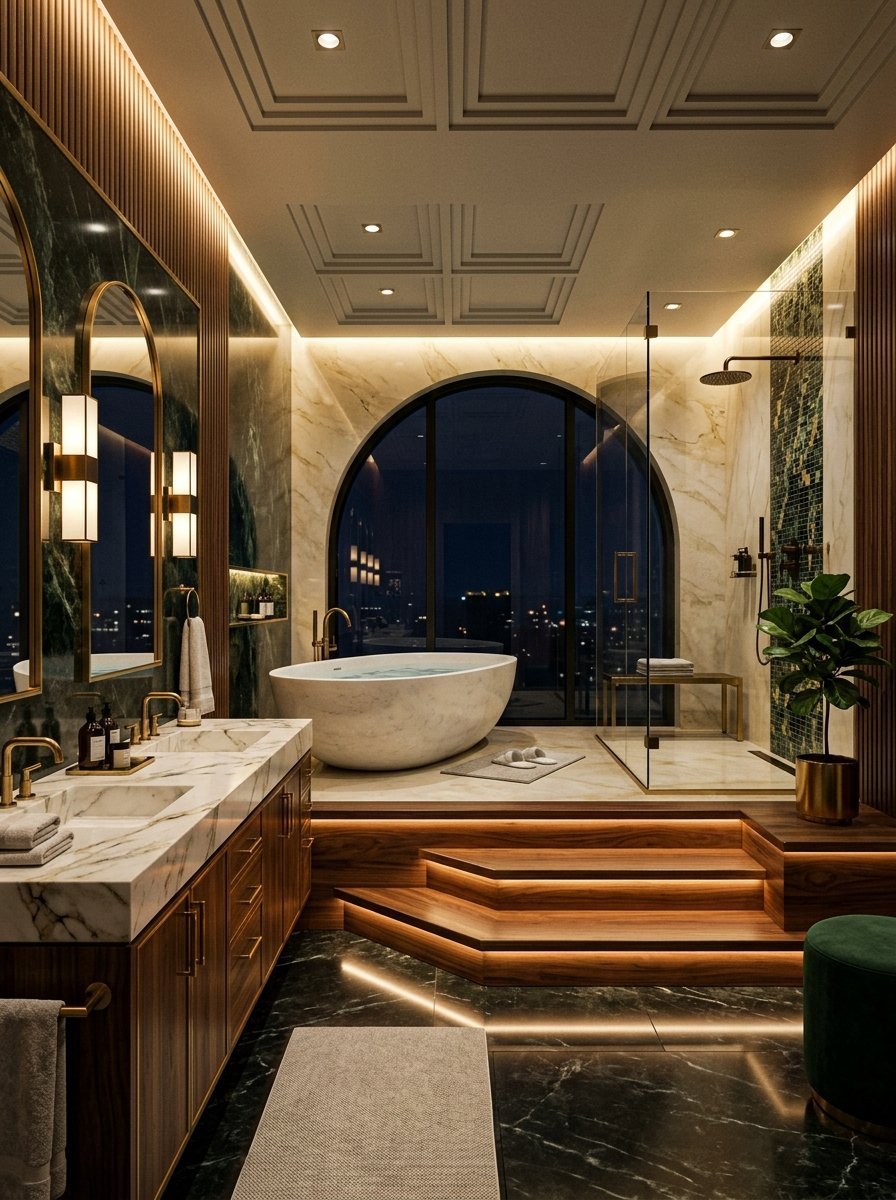
Two small stairs divide the room totally in half. The vanity and toilet sit safely on the lower level. A massive tub and shower sit on a raised custom platform. This creates a literal stage for the wet zone. I’ve seen this in eighties custom homes, and people are copying it again right now.
- Creates a dramatic luxury look
- Hides complex plumbing in the platform
- Tripping hazard in the middle of the night
- Raised ceiling required over the wet zone
In my experience you must install low-level tread lights. Lighting the steps stops people from falling hard in the dark. You hide complex plumbing pipes easily inside the wooden platform. This bathroom plan costs $24,000 because of the custom stair framing. You must have very high ceilings to pull this off. A raised platform puts your head too close to a standard eight-foot ceiling. Your dream bathroom needs volume to handle different floor heights safely.
17. The Offset Door Clearance Plan
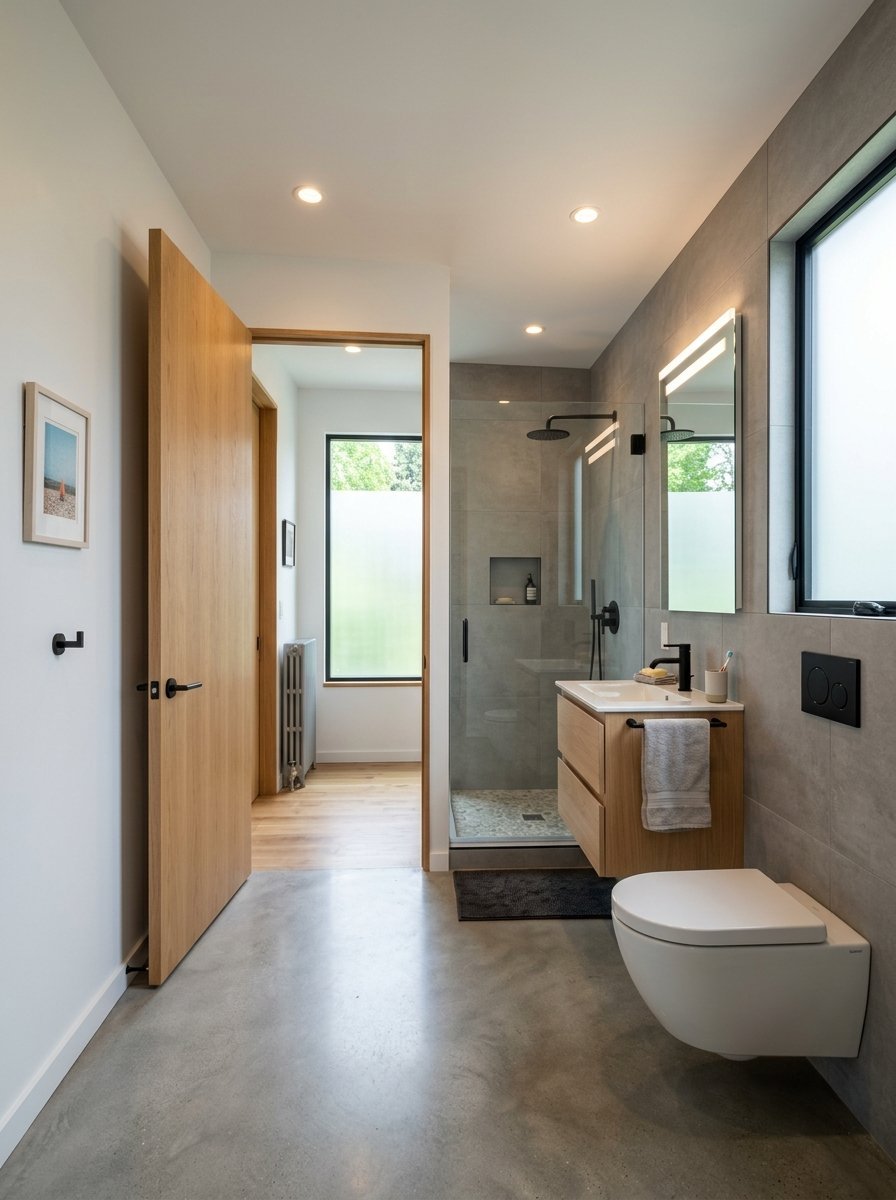
The door sits completely tight in the corner of the room. You open it flat against a blank wall. The plumbing sits entirely on the opposite wall. This creates a totally unblocked entry path. I’ve noticed doors hitting toilets causes endless daily frustration. This bathroom plan stops the door banging altogether.
- Door never hits anything inside the room
- Leaves three full walls for plumbing fixtures
- Creates a dead zone behind the open door
- Can make the sink feel far away
I’ve tried using the dead space hiding behind the door. A shallow six-inch shelving unit holds toilet paper perfectly. You leave three full walls wide open for plumbing fixtures. A large vanity easily fits on the long wall. You will spend $10,000 for this clean setup. The sink might feel a bit far away when you first walk in. Place a heavy hook on the back of the door for robes. The door hides the messy robes when left open.
18. The Hidden Toilet Pocket Door Design
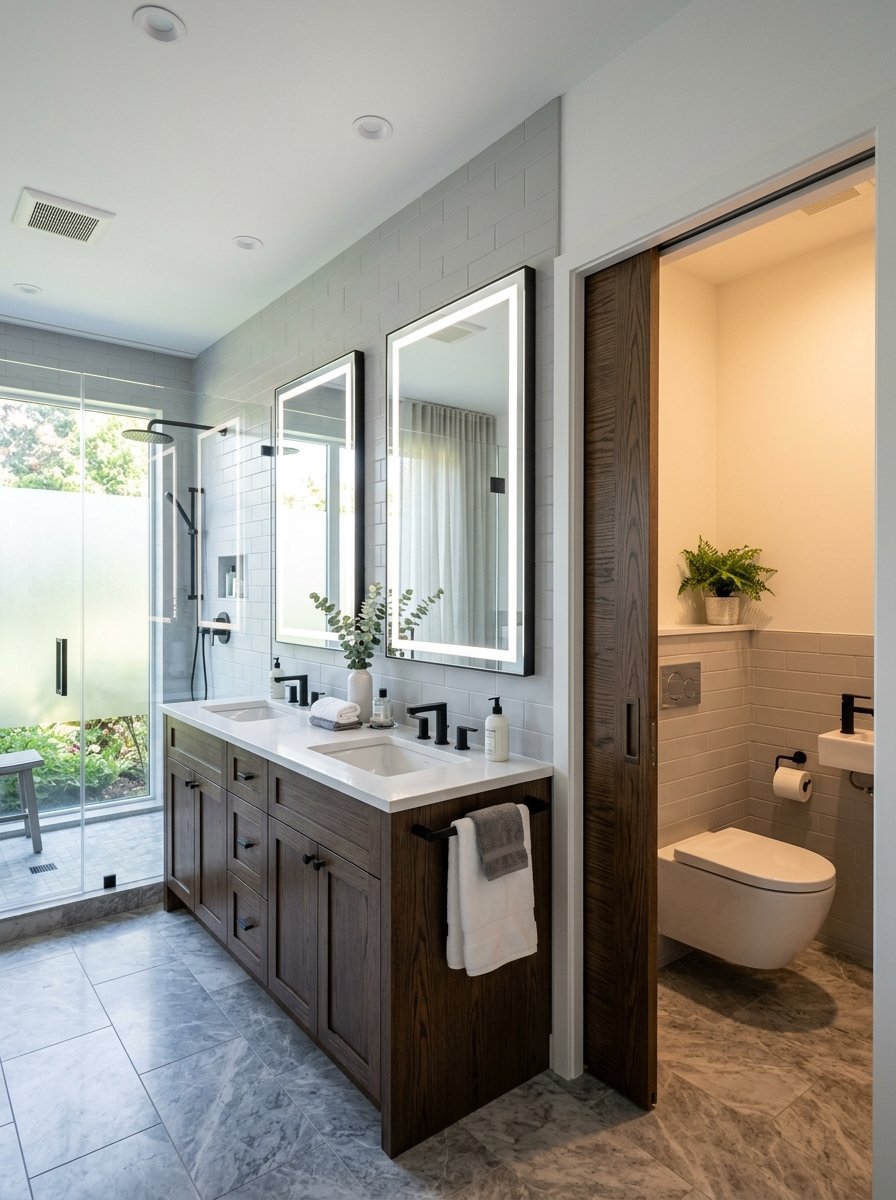
A small rectangular room sits inside the main bathroom. A pocket door slides quietly closed to hide the toilet. The rest of the bathroom stays completely open. Someone can use the sink while someone else uses the toilet in private. I’ve seen this layout save marriages on busy mornings.
- Total privacy for the toilet user
- Frees up the sinks for a second person
- Requires thick walls for the pocket track
- Pocket door tracks get stuck over time
In my experience cheap pocket hardware breaks within one single year. Spend the extra money on heavy-duty ball-bearing tracks. You must frame thick walls to hold the pocket track system. The framing alone tacks on $1,500 to the bill. Put an exhaust fan directly inside the hidden toilet room. A separate light switch inside the pocket room keeps things comfortable. You get total privacy without giving up the entire large room. The double sinks stay completely accessible all morning long.
19. The 9×9 Peninsula Vanity Layout
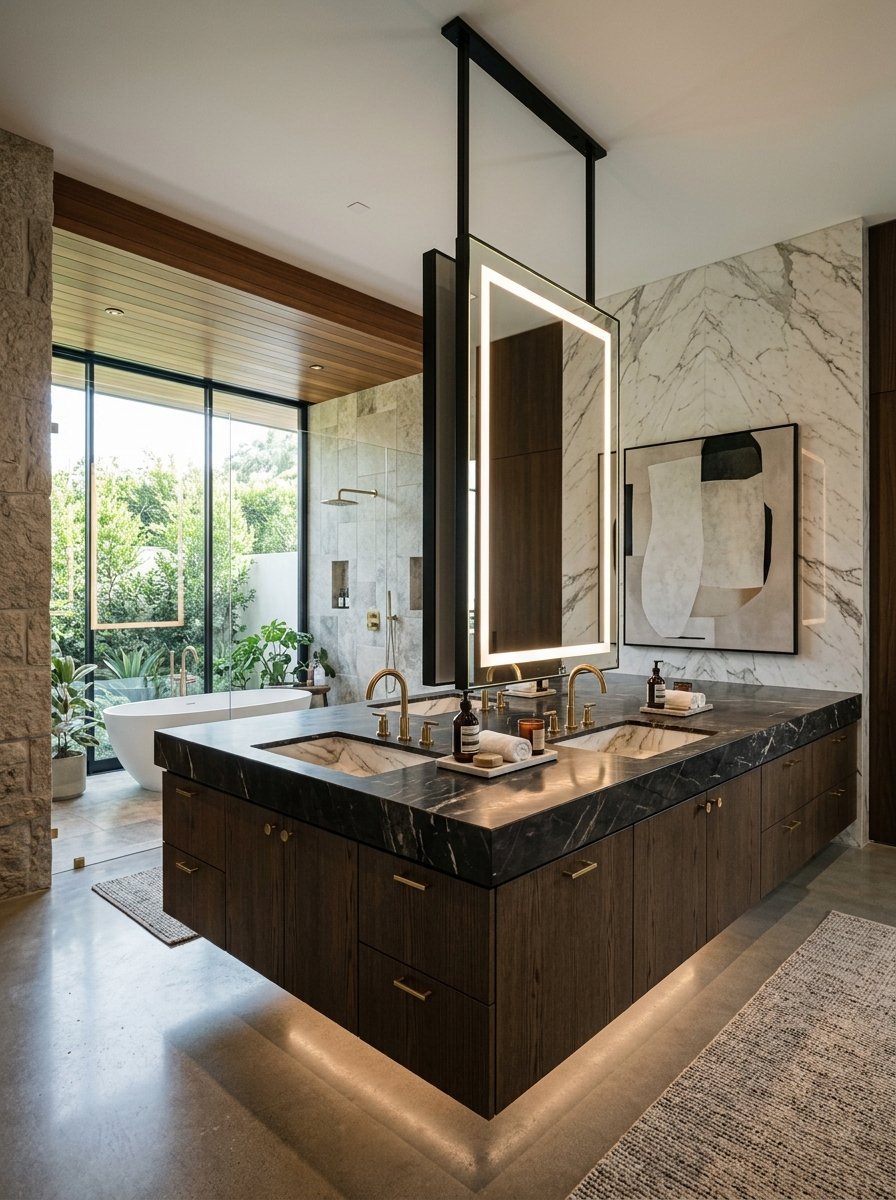
The vanity sticks right out from the wall like a kitchen island. Two sinks sit on opposite sides facing each other. A heavy mirror hangs straight from the ceiling in the middle. You get a cool walk-around sink station. I’ve noticed this gives two people their own distinct getting-ready zones.
- Very striking visual design
- Total separation for two users
- Plumbing must run up through the floor
- Hanging mirrors block eye contact
I’ve tried running water pipes through thin pony walls for this. You need a thick base cabinet to hide the ugly drain stacks. Plumbing must run straight up through the floor joists. This bold architectural floor plan runs around $19,000 to finish. A hanging mirror blocks eye contact across the room. The layout takes up a massive amount of center floor space. You place the shower against the back wall to anchor the whole visual look.
20. The Aging-in-Place Accessible Layout
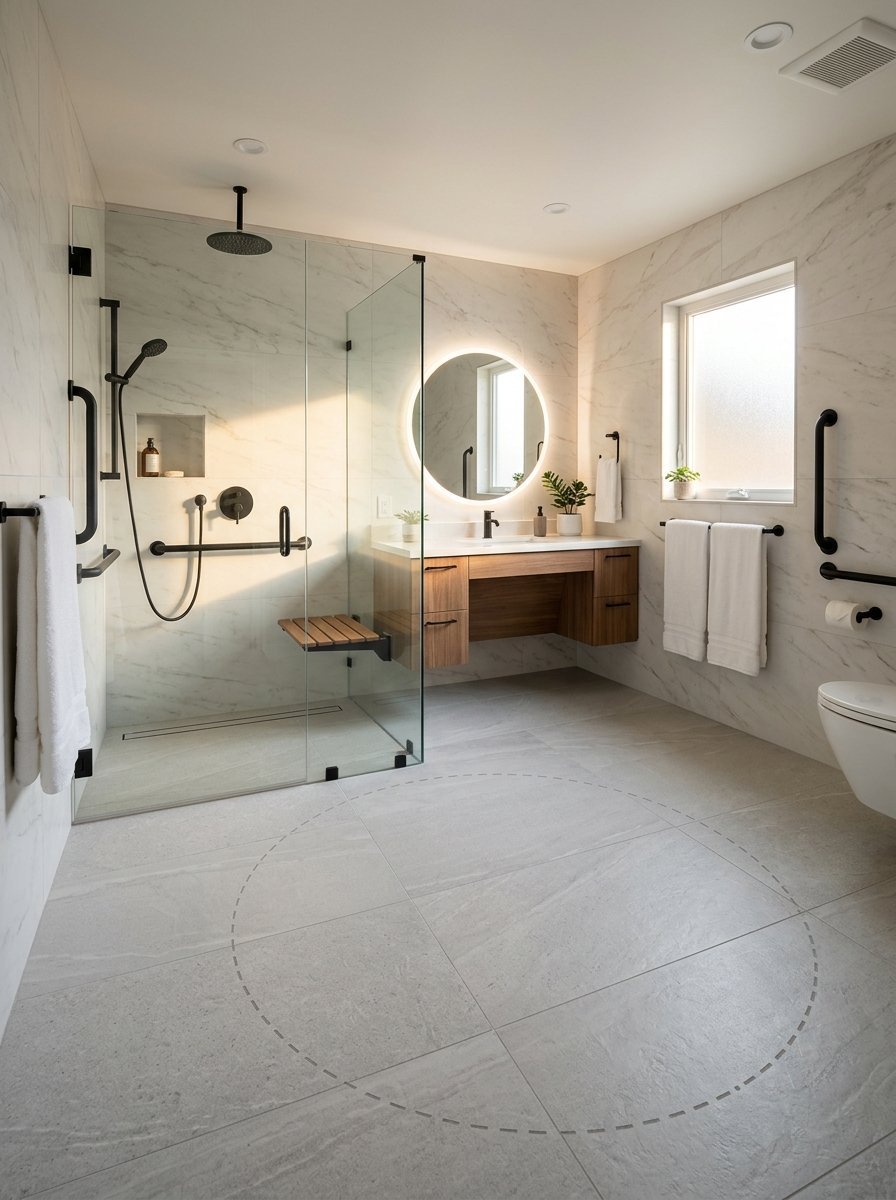
You design this room specifically for a wheelchair to turn around. You need a full sixty-inch clear circle right in the middle. The shower has no floor curb and a very wide opening. The sink floats safely on the wall with absolutely nothing underneath. I’ve seen these layouts keep people in their own homes for ten extra years.
- Wheelchair access everywhere in the room
- Very safe with no tripping hazards
- Requires a massive footprint to work
- Grab bars can look clinical
In my experience matte black or solid gold grab bars fix the hospital look. They just look like heavy-duty towel bars to guests. You must plan for a massive footprint. The clear floor space dictates the whole bathroom plan. Expect to pay $25,000 for heavy structural reinforcement. The walls must hold hundreds of pounds of pulling force. A handheld shower wand keeps everything within easy grasp for someone sitting down.
21. The Attic Conversion Bath
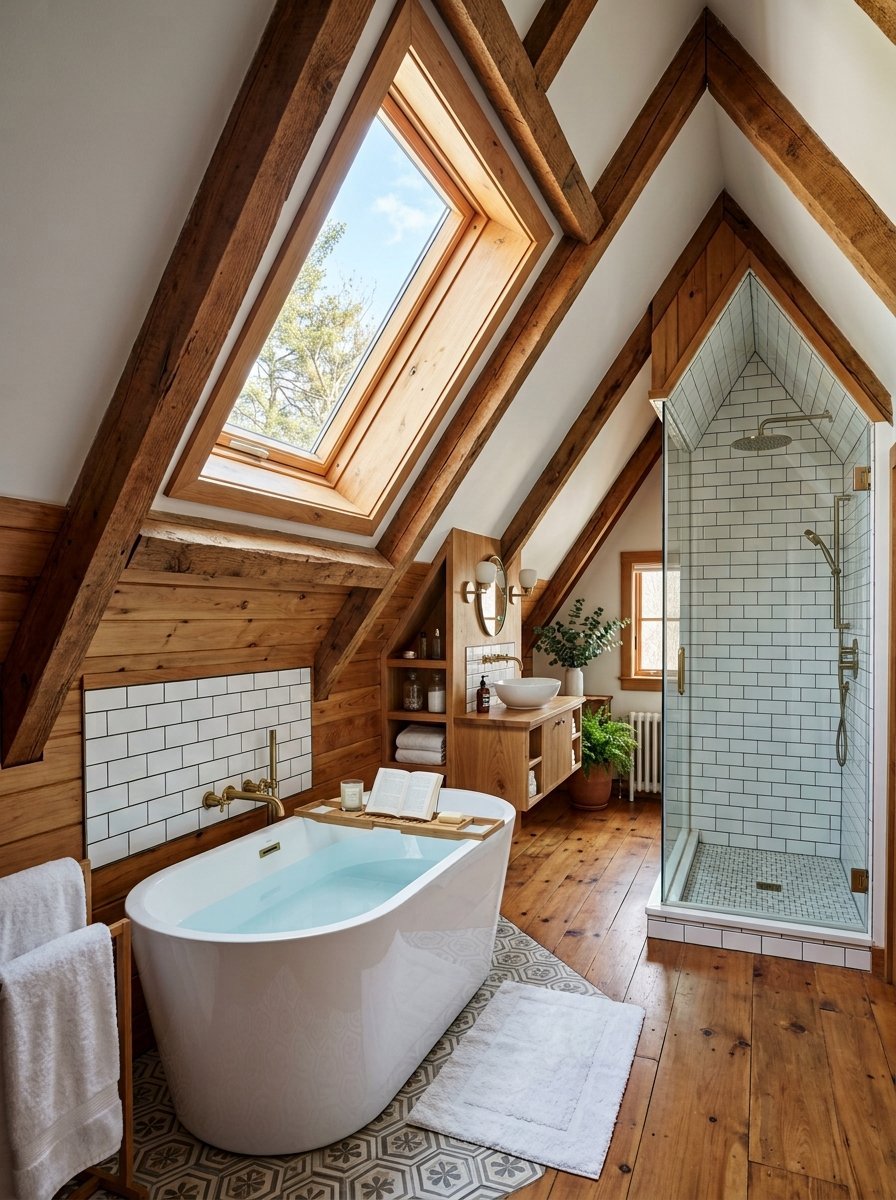
Slanted ceilings dictate the entire layout of this room. You place a deep soaking tub right under the lowest window. You place the standing shower right at the tallest peak of the roof. You must map out exactly where a tall person stands. I’ve noticed attic roofs waste a lot of usable floor space.
- Uses completely empty house volume
- Skylights flood the room with heavy sun
- Very low head clearance on the sides
- Venting the exhaust fan gets tricky
I’ve tried putting sinks directly under slanted roofs. You bash your head every single time you spit out toothpaste. Put your sinks on the tall vertical walls. An attic bathroom costs $22,000 because running pipes up three floors gets very hard. Venting the exhaust fan gets tricky through a hot roof. Skylights flood the dark room with heavy morning sun. You use completely empty house volume to finish a gorgeous private retreat.
22. The Closet-to-Bath Conversion Plan
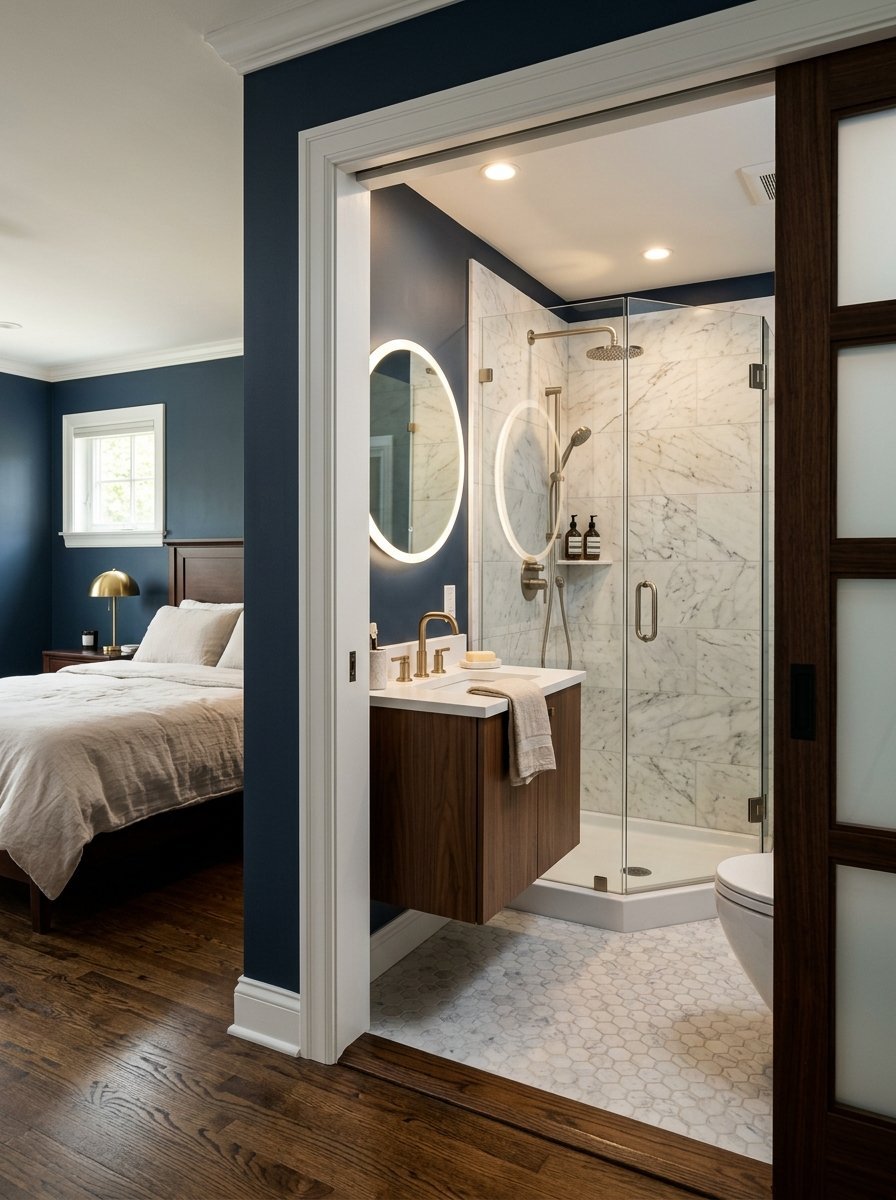
You literally steal a walk-in closet from a primary bedroom. A standard five by six footprint happens very often. You can fit a tiny shower stall, a corner sink, and a basic toilet. You run all plumbing straight through the adjoining bedroom wall. I’ve seen this turn a standard house into a high-end luxury suite.
- Puts massive resale value directly into the house
- Gives you a private attached suite
- You lose all your clothing storage
- Sound travels easily into the bedroom
In my experience you must insulate the interior walls heavily. Hearing a toilet flush from your bed ruins the luxury feeling fast. You put massive resale value directly into the house. You lose all your clothing storage in the process. You can finish this for $14,000 depending on pipe access. A pocket door works perfectly to save walking space here. Match the bathroom floors to the bedroom floors for a clean look.
Frequently Asked Questions
How much space do I need in front of a toilet?
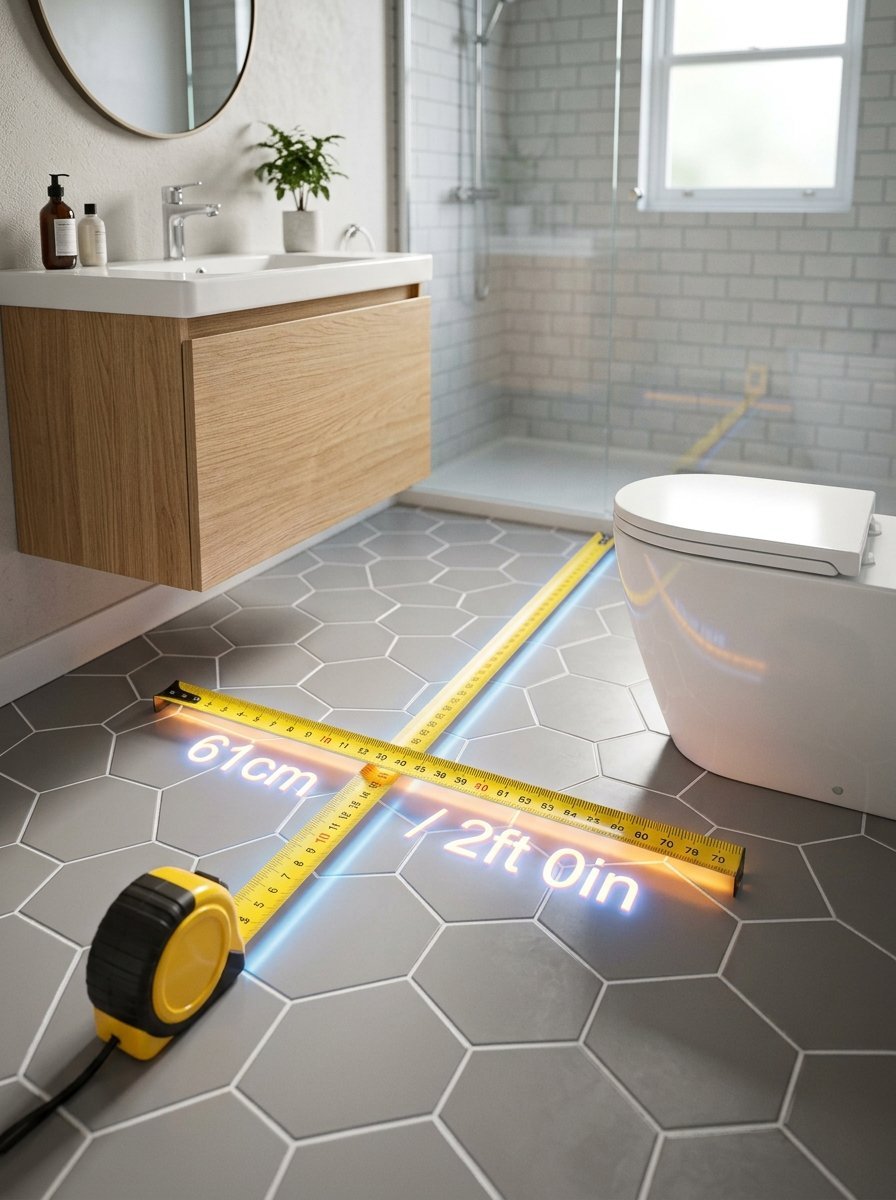
You must leave at least twenty-one inches of clear walking space in front of the bowl. Thirty inches feels much better. City codes mandate these exact clearances. A cramped toilet makes the whole room feel tiny.
What is a good size for a walk-in shower?
A standard walk-in shower needs at least thirty-six by thirty-six inches. A luxury shower should measure forty-eight by sixty inches. You need room to lift your arms. Tight showers cause elbows to hit the glass.
Can a pocket door save space?
A pocket door clears up ten square feet of floor space. Standard doors swing wide and block cabinets. You must buy heavy-duty hardware. Cheap pocket doors break fast and jam inside the walls.
How do you fit two sinks in a small bathroom layout?
You need a vanity measuring at least sixty inches wide. Anything smaller pushes the sinks too close together. You will bump elbows with the other person. Stick to one large sink if your wall measures under sixty inches.
Where should a bathroom exhaust fan go?
Place the fan directly above the shower or just outside the glass. The fan pulls the steam right at the source. This stops moisture from hitting your mirrors. Condensation destroys paint very fast.
Does a house need a bathtub for resale?
Real estate agents tell you to keep at least one tub in the house. Families with young babies look for tubs. You can pull the tub out of your primary suite. Just keep a small tub in the guest corridor.
How high should a bathroom mirror hang?
Mount the bottom edge of the mirror forty inches off the floor. The center of the glass should sit at eye level. Tall people hate bending down to see their faces. Leave space between the faucet and the glass for easy wiping.
Can you move bathroom plumbing easily?
Moving pipes across a room costs thousands of dollars. You must tear up the subfloor and drill through floor joists. Keeping the new fixtures near the old pipes keeps your bills low. Concrete basement floors cost even more to break.
What size tile works best in a small bathroom?
Large format tiles make tight spaces look much bigger. Fewer grout lines trick the eye into seeing a wide floor. Tiny mosaic tiles make the floor look busy. Busy floors make the room feel like a tiny box.
How wide should a shower door be?
A standard shower door measures twenty-four to twenty-eight inches wide. You must leave enough room for a person to walk through without turning sideways. Measure your shoulders. The door needs to clear your body easily.
Should you tile the entire bathroom wall?
Tiling all the way to the ceiling stops water damage completely. It costs more upfront but saves your drywall. Paint peels very fast in steamy rooms. Tile wipes down in seconds.
What is the best lighting for a vanity?
Sconces placed on both sides of the mirror cast even light across your face. Overhead lights cast dark shadows under your eyes. You want the light hitting your face directly. I’ve noticed side lighting makes shaving much easier.
How deep are standard bathroom cabinets?
A bathroom vanity measures exactly twenty-one inches deep. Kitchen cabinets measure twenty-four inches. Do not put kitchen boxes in a bathroom plan. They eat up too much walking space.
Can I put a window inside a shower?
You can put a window in the wet zone if you use vinyl frames. Wood frames rot fast when water hits them. You must install frosted glass for privacy. I’ve seen water destroy wood sills in three months.
The Final Choice on Your Bathroom Space
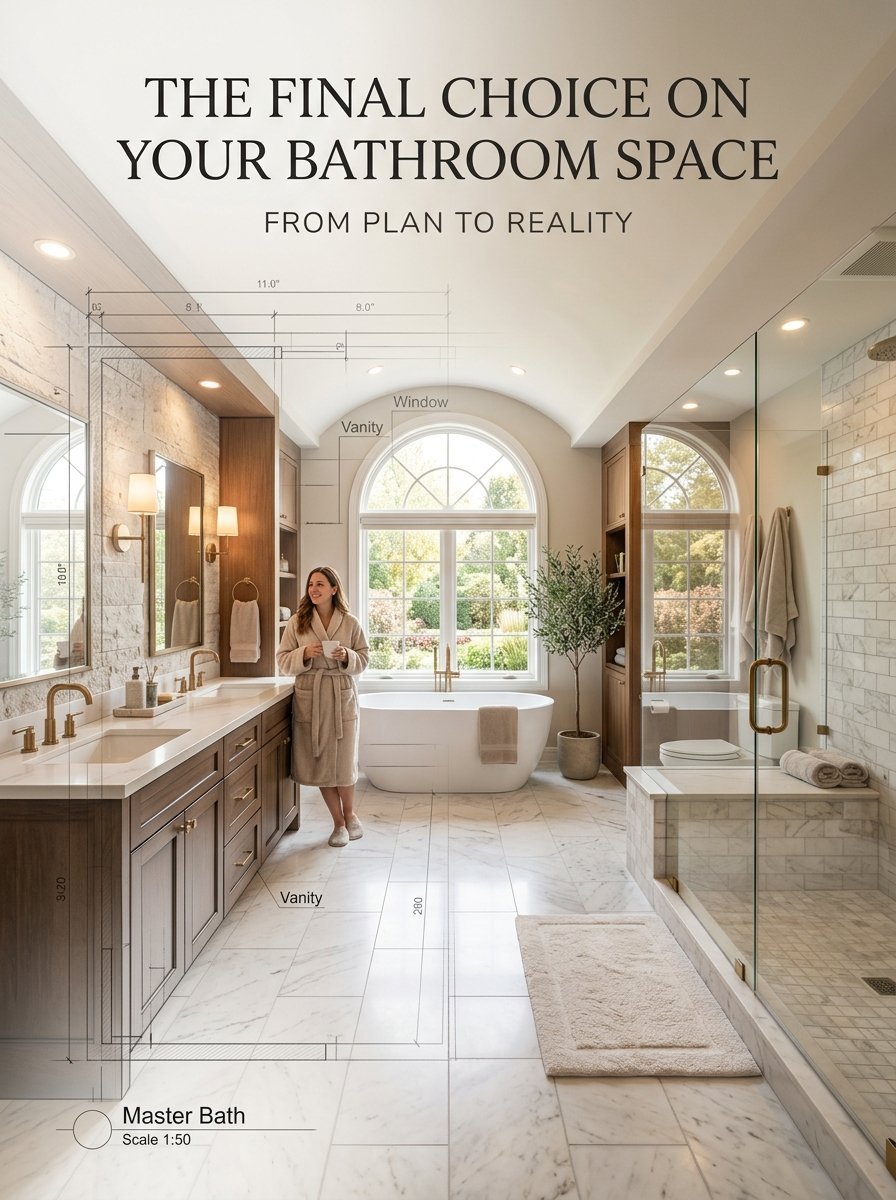
You just looked at twenty-two exact ways to lay out your room. Stop guessing where the walls should go. Pick the architectural floor plans that match your exact square footage. I’ve watched homeowners waste thousands by changing their minds halfway through framing. Lock in your bathroom dimensions right now. Hand the clear bathroom plan to your contractor on day one. A dream bathroom happens when you control the math before you buy the tile. Start measuring your walls today and get that layout on paper.

Amelia Hart is the Senior Design Editor at Vellora Interiors, where she curates small-space and apartment content. With a background in color theory and years spent designing under-500-square-foot rentals, she’s the editor who’ll tell you exactly which paint sheen, curtain length, and lamp height to choose, no guessing. A former design lead at a boutique studio, her work has been featured in several home and lifestyle publications. Her guiding belief: “Good design isn’t about more, it’s about choosing better.”