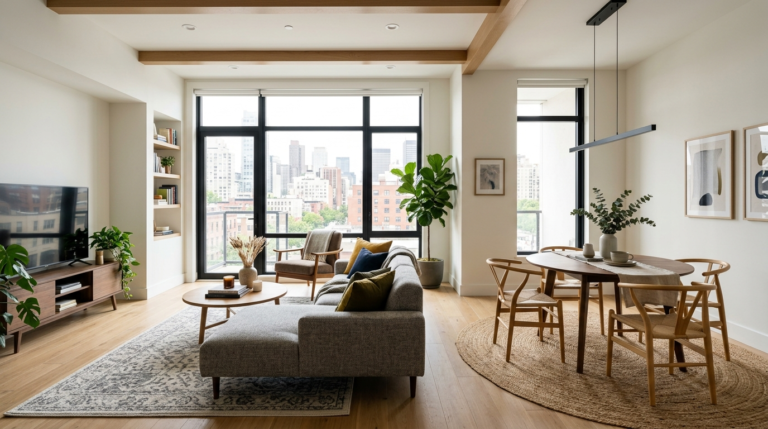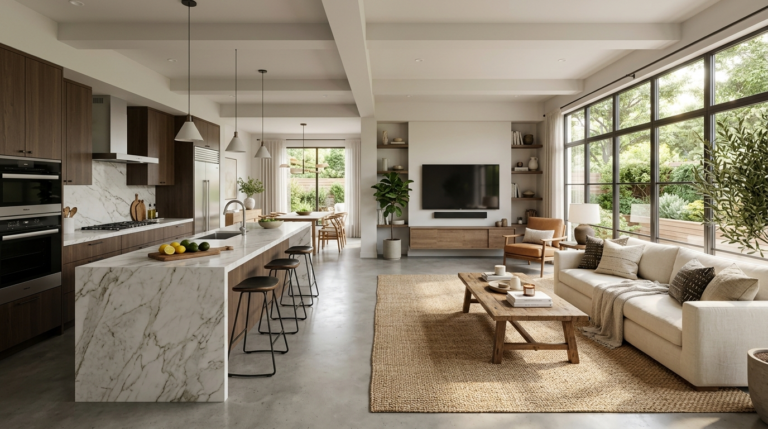
Your open floor plan feels like a vast desert. You have a sofa. You have a table. But the space feels awkward. Maybe you bump into the chairs while walking to the kitchen. Or your living room feels like it is floating in space. I have been there. I remember staring at my first open apartment for three days. I moved my heavy oak table four times before I found the sweet spot. Creating a cohesive 22 dining room living room combo layouts that work is about flow and feeling. It is about making sure you can watch TV while someone else finishes coffee at the table.
In this guide, you will find 22 proven ways to arrange your space. We will look at real examples using brands like West Elm and IKEA. You will see how to use rugs as anchors. We will talk about the exact measurements that prevent traffic jams. I have tested these in small studios and large suburban homes. By the end, your room will feel like a home instead of a furniture showroom.
1. The Classic Back to Back Sofa
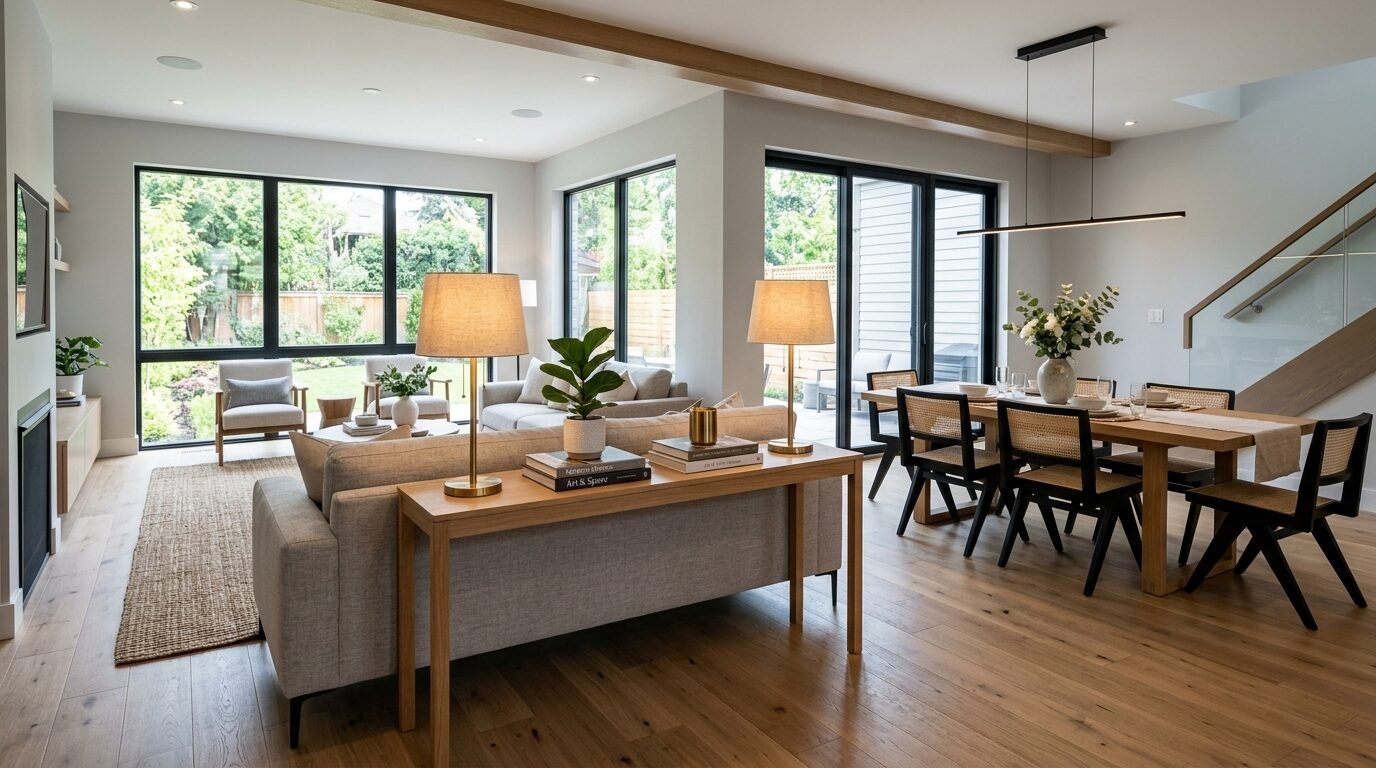
This is the most popular layout for a reason. You place the sofa with its back to the dining area. This creates a clear physical wall without using a real wall. I saw this work perfectly in a narrow townhouse in Seattle. The owners used a low profile sofa from Article. It kept the sightlines open to the windows.
Behind the sofa, they placed a slim console table from Target. This gave them a spot for lamps and drinks. It also acted as a buffer. You want at least three feet of walking space between the sofa and the dining chairs. This ensures nobody gets trapped when someone pulls out a chair. This layout works best in long, rectangular rooms. It defines two distinct zones while keeping the room airy.
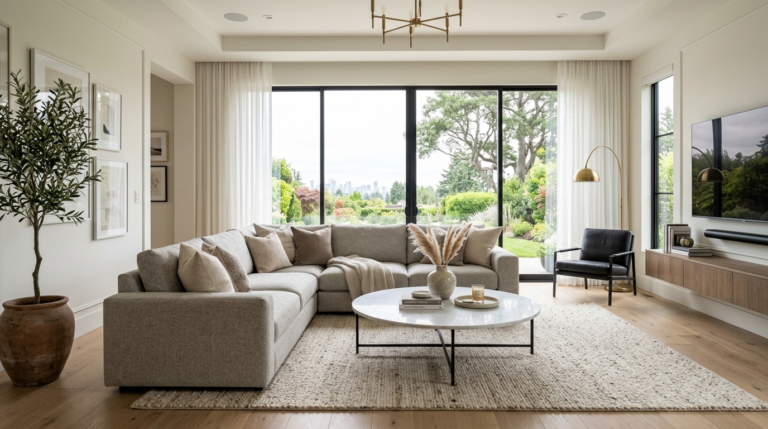
2. The L Shaped Sectional Divide
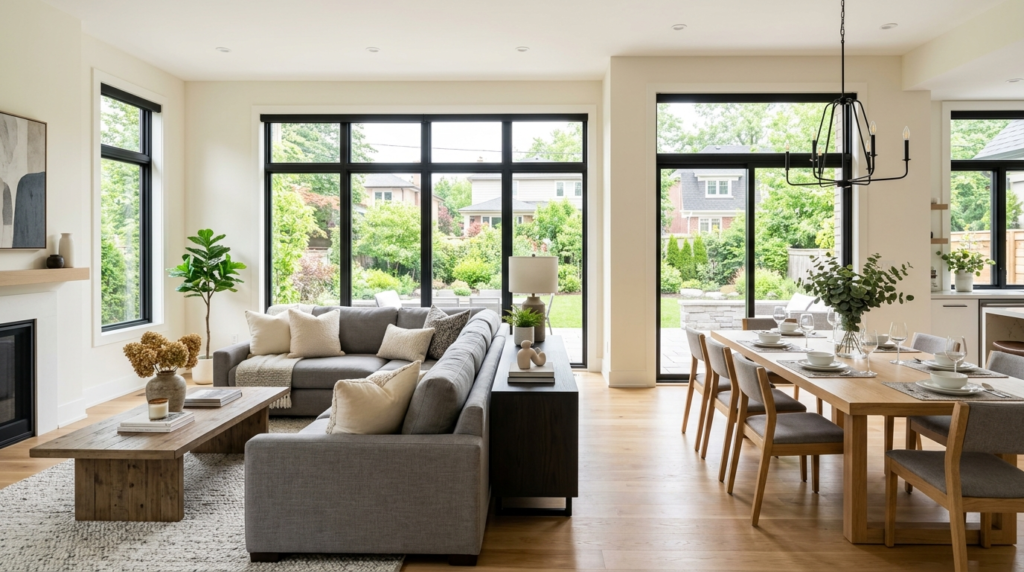
A sectional is a powerful tool for zoning. Place the long side of the sectional perpendicular to the wall. This creates a natural corner for the living area. I tried this in a square living room last year. We used a sectional from Burrow. The shorter “L” part faced the dining table.
This setup makes the living room feel like a cozy nest. It separates it from the “work” of the dining room. Use a large rug to go under the entire sectional. This pulls the seating area together. For the dining side, use a round table. Round tables soften the sharp angles of a sectional. It prevents the room from looking too boxy. I noticed this helps people move around more easily in tight corners.
3. The Rug Anchor Method
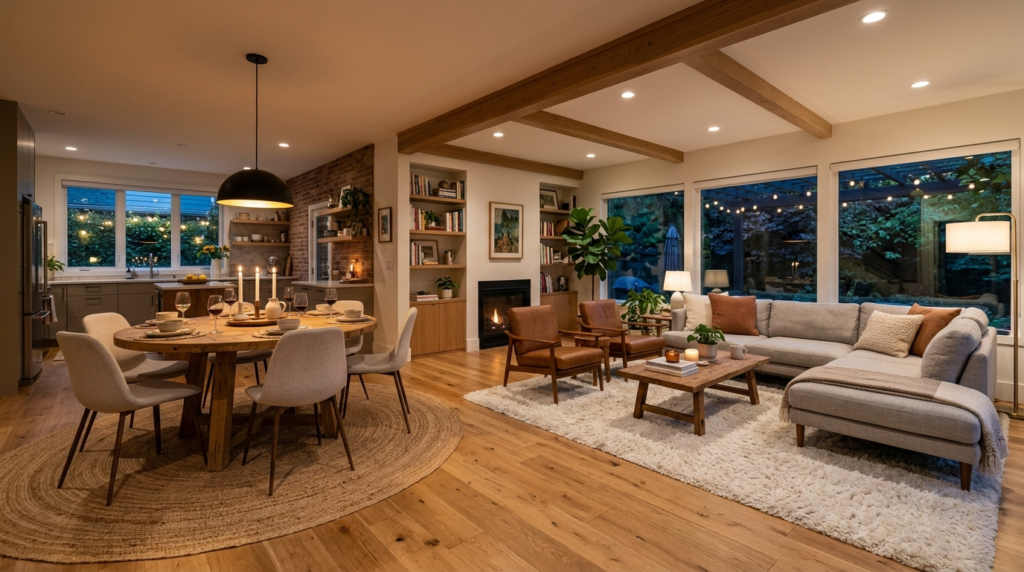
Rugs are the most important part of any combo layout. Without them, your furniture looks like it is drifting at sea. Use two different rugs to define your two zones. I once saw a designer use a jute rug for the dining side and a plush rug for the living side. This tells your brain where one room ends and the next begins.
The dining rug must be big. All chair legs should stay on the rug even when pulled out. This usually means a rug that is four feet wider than your table. For the living room, use a Ruggable rug for easy cleaning. Make sure the rugs have a similar color palette. If they clash, the whole room feels chaotic. I usually suggest keeping one rug neutral if the other has a bold pattern.
4. The Floating Console Bridge
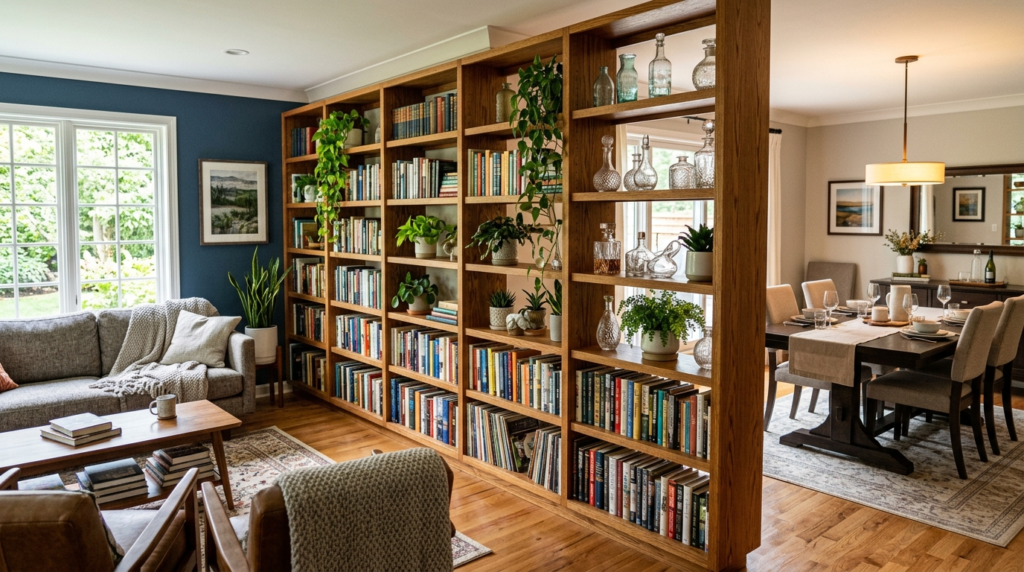
If you have a very large space, your furniture might feel too far apart. Use a long console table or a low bookshelf as a bridge. Place it between the sofa and the dining table. This gives you a place for decor and storage. I used an IKEA Kallax unit for this in a client’s loft. We laid it on its side.
It provided a “spine” for the room. On the living side, we tucked the sofa against it. On the dining side, it held extra plates and napkins. This layout is great for families. It gives kids a place to store toys near the living area while keeping the dining area formal. Keep the bridge low. You still want to see over it when you are sitting down. This maintains the “open” feel of the 22 dining room living room combo layouts that work.
5. The Parallel Path Layout
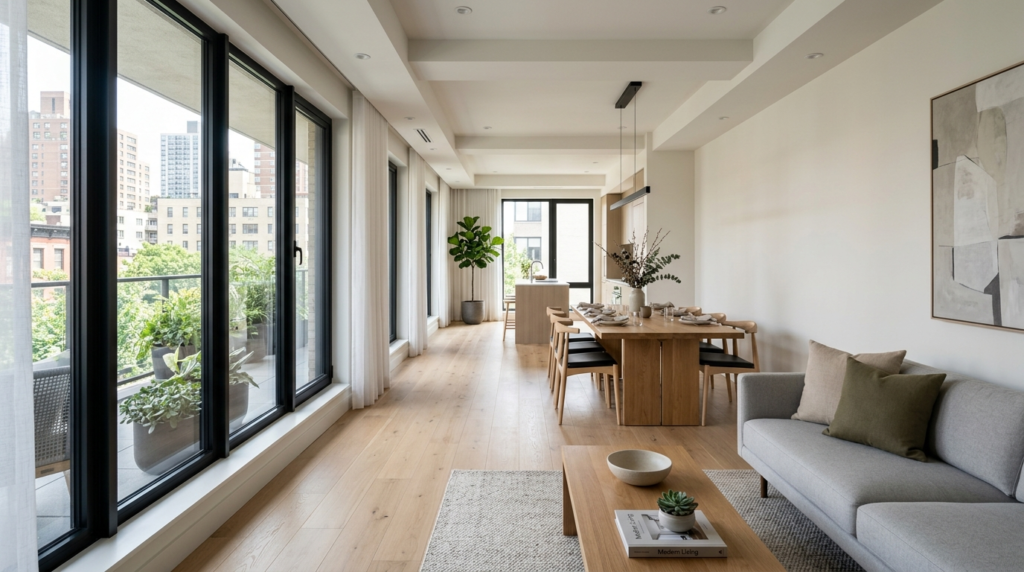
In narrow rooms, you have to work with the length. Place the sofa against the long wall. Place the dining table parallel to it on the opposite side or further down the wall. This creates a clear walkway down the middle. I saw this in a 500 square foot apartment in San Francisco.
The owner used a slim dining table from West Elm that doubled as a desk. To make this work, you need to keep the center of the room clear. Do not put a coffee table in the middle of the path. Use side tables instead. This layout feels very organized. It works well if your kitchen is at one end and your balcony is at the other. It keeps the flow of traffic straight and simple.
6. The Corner Nook Squeeze
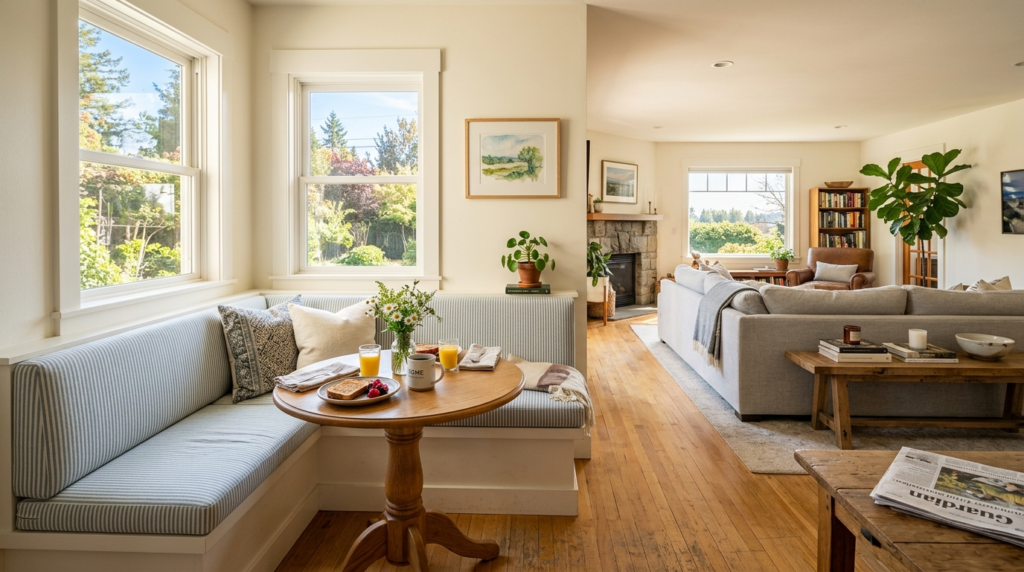
Small spaces need smart corners. Move your dining area into a corner using a banquette or a bench. This frees up the rest of the room for a larger living area. I once built a custom bench for a corner in a small condo. We paired it with a round pedestal table from Crate and Barrel.
This allowed us to fit a full sized sofa and two armchairs in the living zone. When you push the seating against the wall, you gain floor space. Use wall mounted lights over the table to save more room. This layout feels intimate. It reminds me of a cozy bistro. It is perfect for couples who do not host large dinner parties often but want a comfortable place to eat.
7. The Central Dining Hub
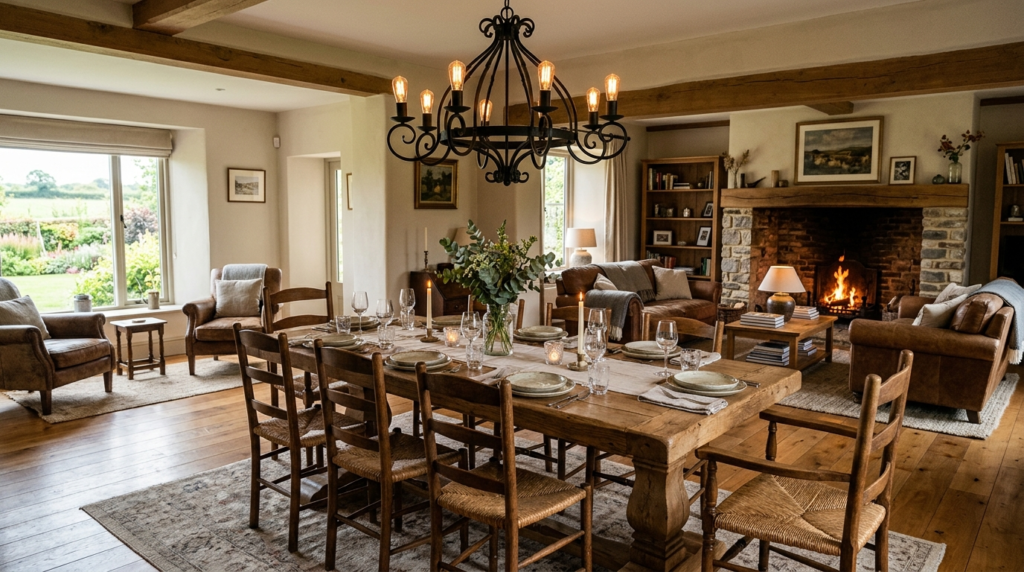
Most people put the living room in the middle. Try the opposite. Put the dining table in the center of the room and the living area to one side. I saw this in a farmhouse style home. The large wooden table was the heart of the house.
The living area was tucked into a cozy alcove with a fireplace. This works if you spend more time talking and eating than watching TV. Use a statement chandelier over the central table. This creates a strong focal point. Surround the table with comfortable chairs like the ones from Pottery Barn. If your table is the main feature, the living area can be more minimal. It creates a sense of grandness when you walk in.
8. The Window Side Feast
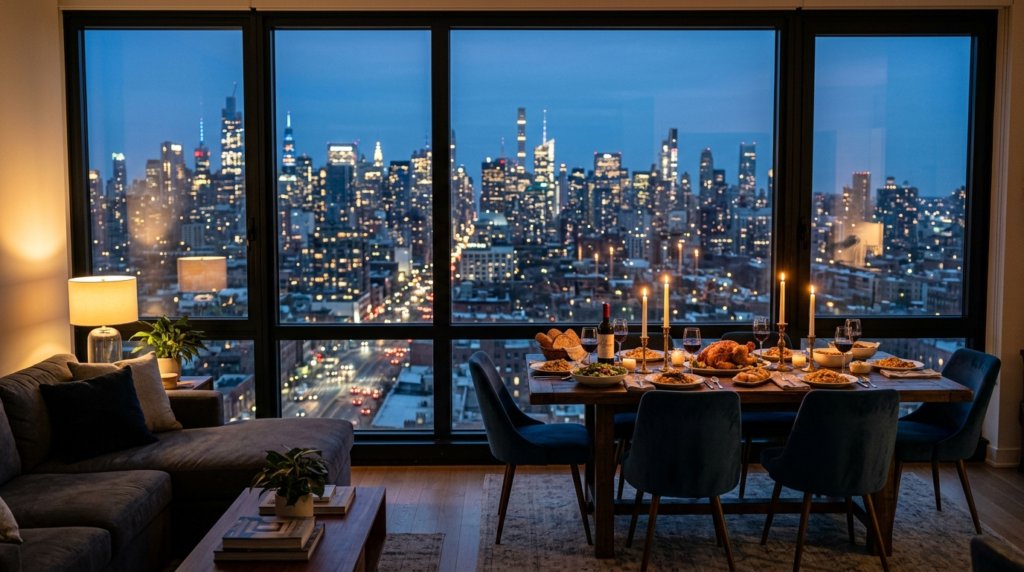
Place your dining table right next to the largest window. Natural light makes every meal better. I noticed that people stay at the table longer when there is a view. This leaves the darker part of the room for the living area.
A dark corner is actually better for watching movies. It reduces glare on the screen. Use sheer curtains from Anthropologie to soften the light. If the window is low, use a low back dining chair so you do not block the view. This layout feels fresh and bright. It connects your indoor space with the outside world. I have found this works best in apartments with floor to ceiling windows.
9. The Fireplace Focus
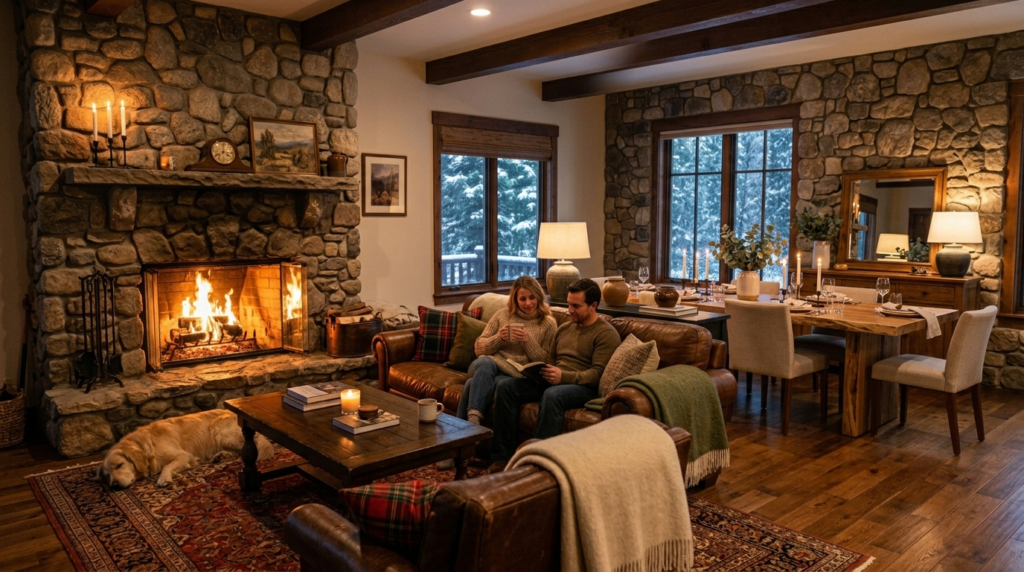
If you have a fireplace, it usually dictates the living room. But you can share the heat. Arrange the sofa and chairs to face the fire. Then, place the dining table behind the seating area but still within view of the flames.
I worked on a house where the fireplace was the only heat source. We used a low back sofa so the heat could reach the dining table. It made dinner feel very special. Use a dark rug near the fireplace to hide any ash or soot. This layout is classic and warm. It centers the home around a single point of comfort. It is one of the most effective 22 dining room living room combo layouts that work for cold climates.
10. The Diagonal Shift
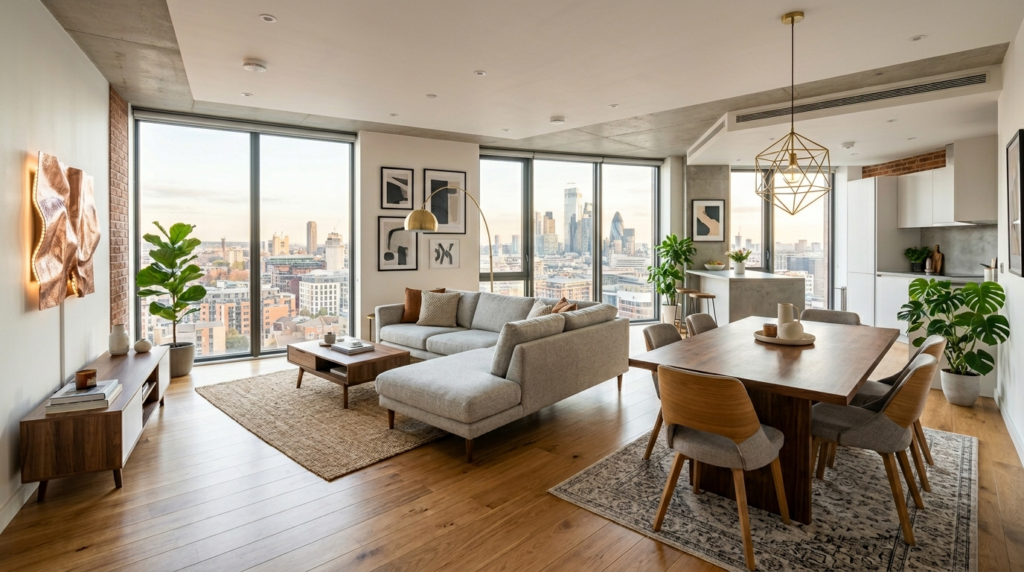
Square rooms can feel stiff. Try turning your furniture at a 45 degree angle. Place the sofa and the table on a diagonal. I saw this in a modern condo in Austin. It instantly made the room feel bigger.
The diagonal lines draw your eye to the corners, which are the furthest points. This creates an illusion of depth. It also breaks up the “boxy” feel of standard furniture. You will need more space for this layout. It creates some “dead” zones in the corners, which are perfect for tall plants or floor lamps. Use a round rug under the table to balance the sharp angles. It is a bold move, but it pays off in visual interest.
11. The Entryway Buffer
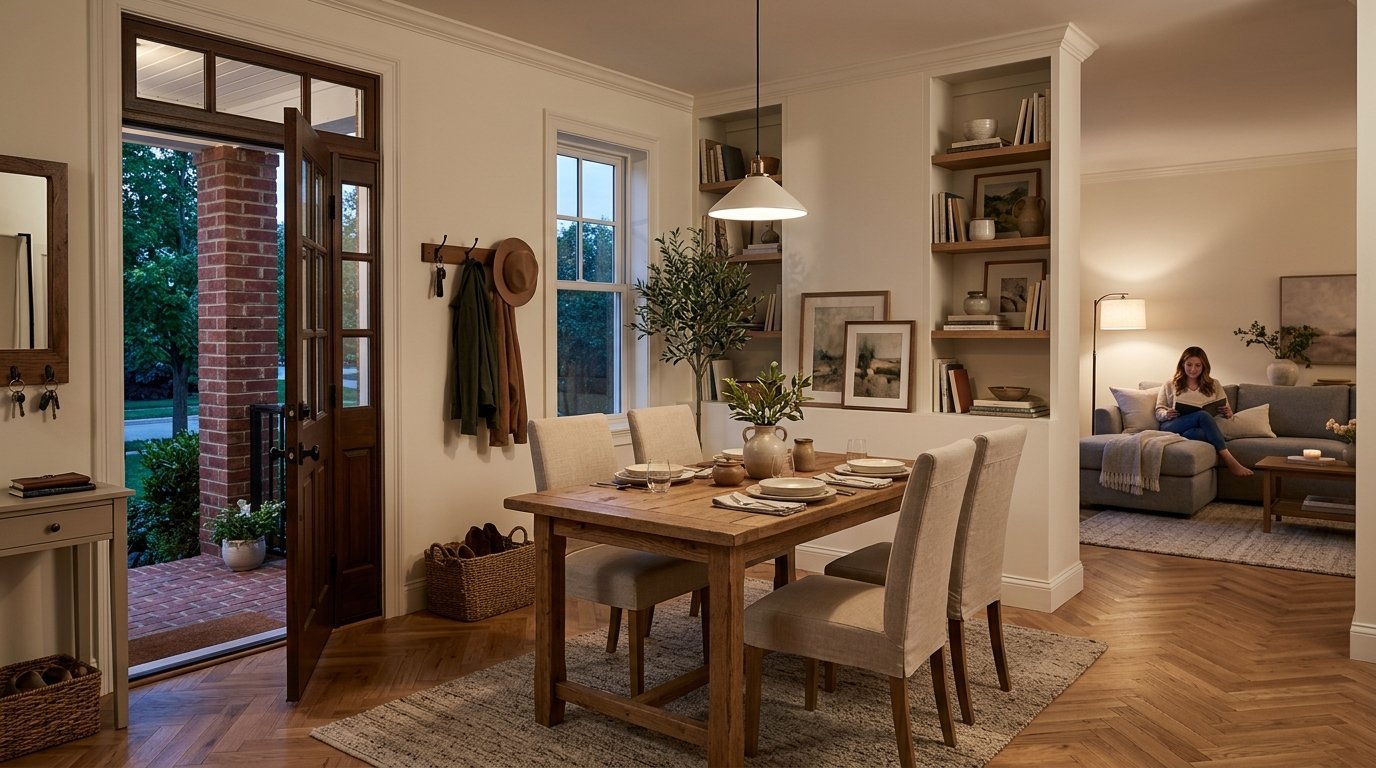
Sometimes your front door opens right into the living room. Use your dining table as a foyer. Place the table near the entrance. It acts as a place to drop keys or mail before you reach the “inner” living zone.
I saw a clever use of a long farmhouse table for this. It felt like a grand entry hall. The living area was shielded by the dining chairs. Use a durable table top that can handle daily life. This layout keeps the living room private. It creates a transition zone between the outside world and your relaxation space. It works well in older homes with wide entryways.
12. The Small Space Galley
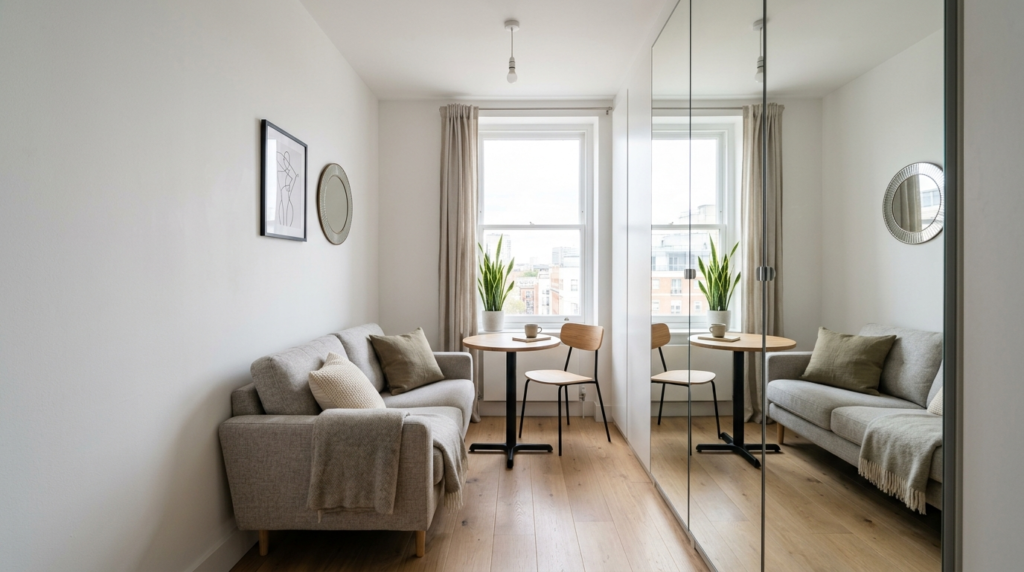
In a very narrow “galley” style room, you must be vertical. Put the living area at one end and the dining at the other. Use a long, narrow rug to connect them visually. I once lived in a place like this. I used a small bistro table from IKEA and a two seater sofa from Joybird.
Everything was scaled down. We used wall mirrors to make the narrow walls feel further apart. Avoid heavy furniture. Choose pieces with legs so you can see the floor. This makes the room feel less crowded. This layout is all about simplicity. Do not try to fit too much. Stick to the essentials and the room will feel intentional.
13. The Round Table Pivot
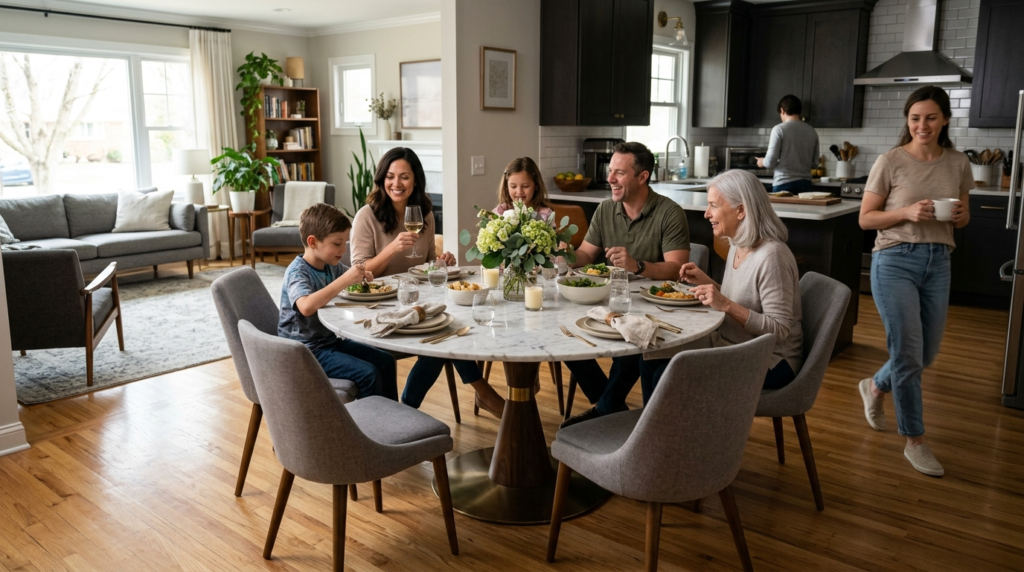
A round table is the best “pivot” point for a combo room. Because it has no corners, it fits into awkward gaps easily. I often recommend a round pedestal table for rooms with weird traffic flows.
You can walk around it without catching your hip on a sharp edge. Place it in the transition zone between the kitchen and the living room. I saw a beautiful marble round table used this way in a New York apartment. It acted like a piece of art. Pair it with four chairs. When you have guests, you can easily pull more chairs around it. It feels less formal and more social than a rectangular table.
14. The Bench Seating Space Saver
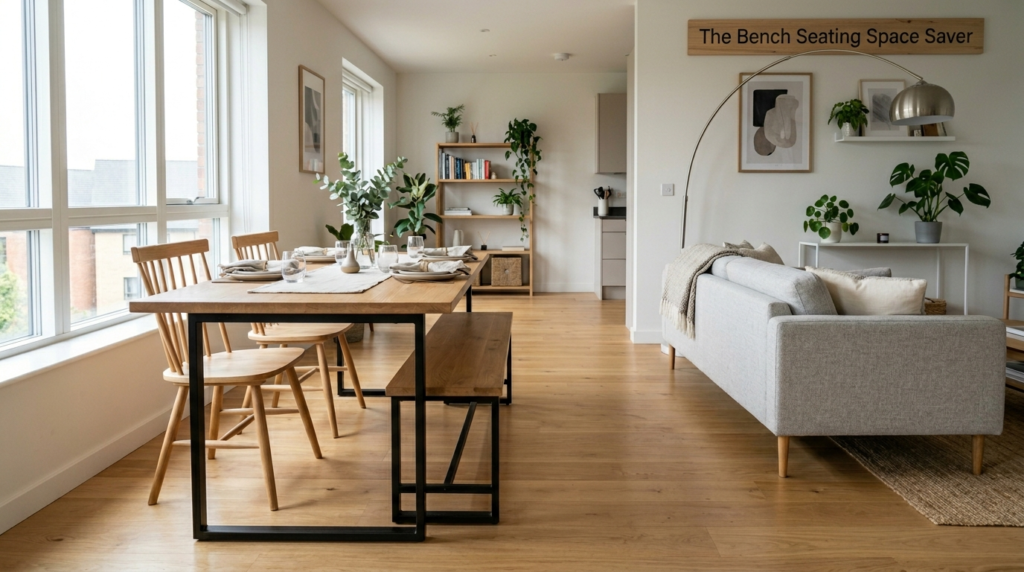
If you are short on inches, use a bench. You can tuck a bench completely under the table when you are not using it. This opens up a walkway. I noticed this works great in “pass through” dining rooms.
In the living area, use a sofa with slim arms. Every inch counts. I once used a bench from West Elm that had storage inside. This helped hide blankets for the living room. Using multi functional furniture is key for these 22 dining room living room combo layouts that work. The bench makes the dining area feel less bulky. It is a smart choice for active households with kids.
15. The Statement Lighting Split
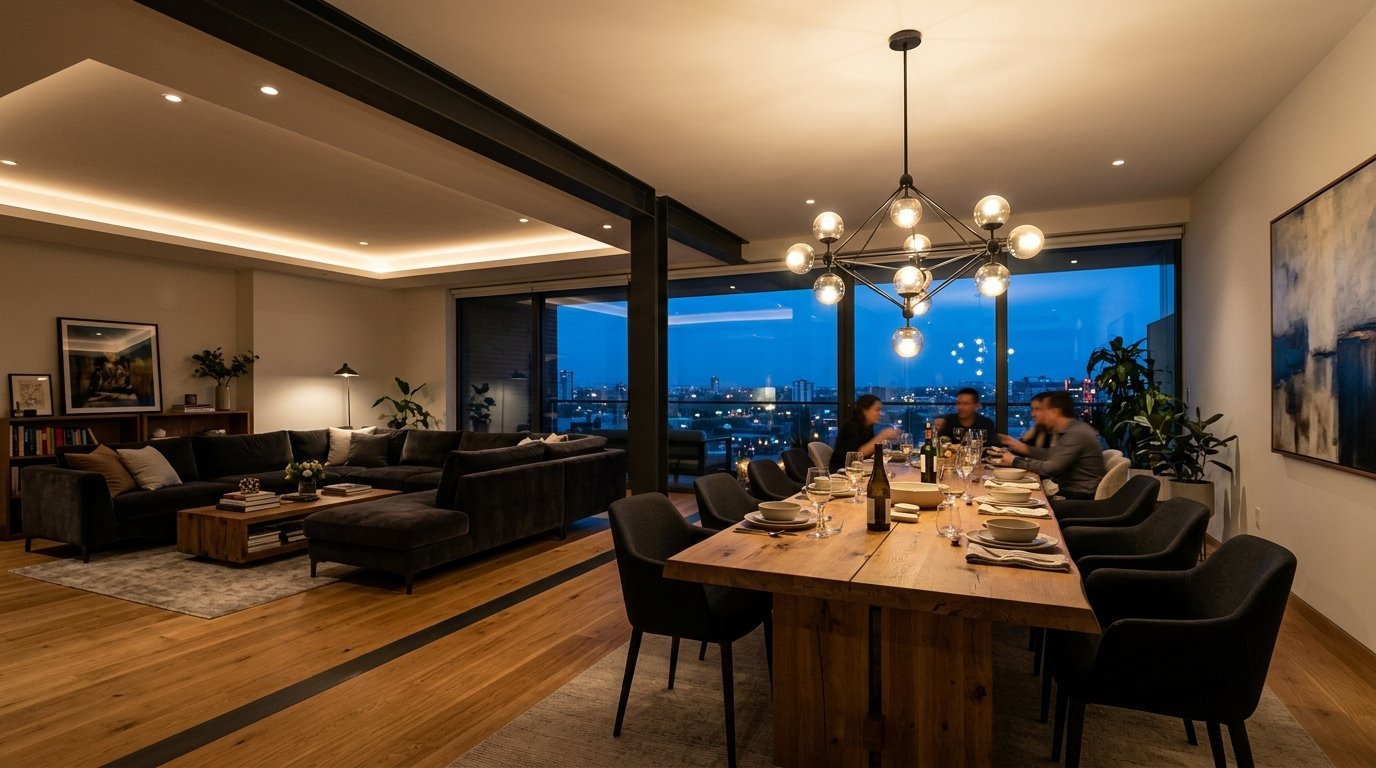
Use your ceiling to define your zones. Hang a large, dramatic pendant light over the dining table. Then, use recessed lighting or a flush mount in the living area. I saw a designer use a massive wicker light in a coastal home.
It clearly marked the dining zone as the “place to be.” Even without a rug or a divider, the light creates a “room” beneath it. Make sure the bottom of the light is about 30 inches above the table. In the living room, use floor lamps for a softer glow. This vertical separation is very effective. It keeps the floor clear but organizes the space perfectly.
16. The Bookshelf Divider
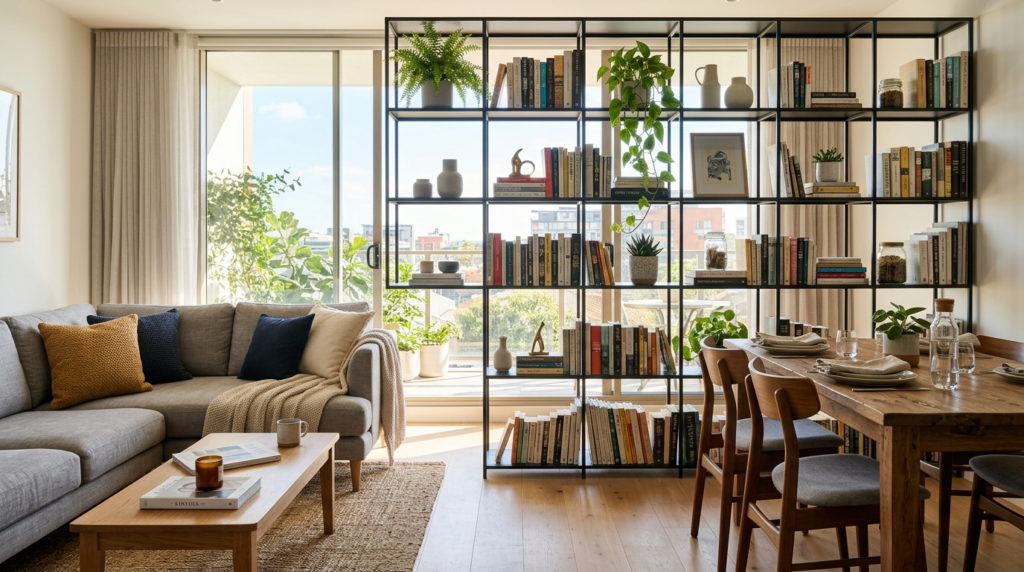
A tall, open bookshelf is a great way to separate rooms. Use a unit like the IKEA Elvarli or a custom wood piece. It provides storage and a visual wall. I saw this in a studio apartment where the owner wanted a “real” dining room.
They filled the shelves with books, plants, and clear glass vases. Because it was open, light still passed through. It did not feel like a dark wall. It gave the living room a sense of privacy. On the dining side, the shelves held wine glasses and cookbooks. This is a practical and beautiful way to split a room. Just make sure the bookshelf is sturdy and won’t tip over.
17. The Minimalist Path
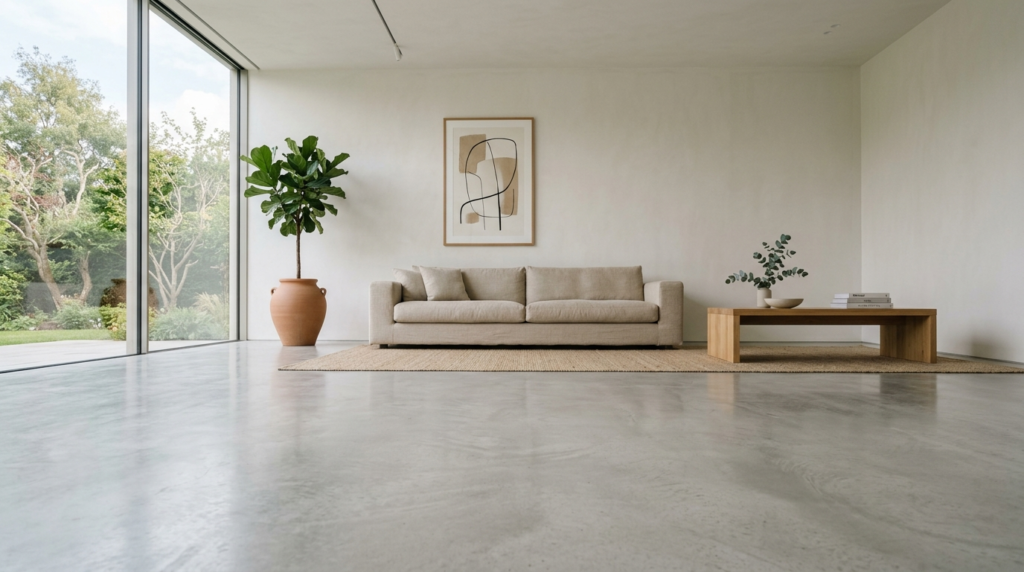
Sometimes the best layout is the most simple one. Align your sofa and your table in a straight line along one wall. Leave the entire other side of the room empty for walking. I saw this in a Japanese inspired home.
It felt incredibly calm. They used low furniture and a neutral color palette. This works if you hate clutter. It makes the room feel twice as large. Use a single long rug that covers both areas if you want to unify them. Or use no rugs at all for a very modern look. This layout requires discipline. You cannot have many extra chairs or side tables. It is about the beauty of the floor space.
18. The Color Block Zone
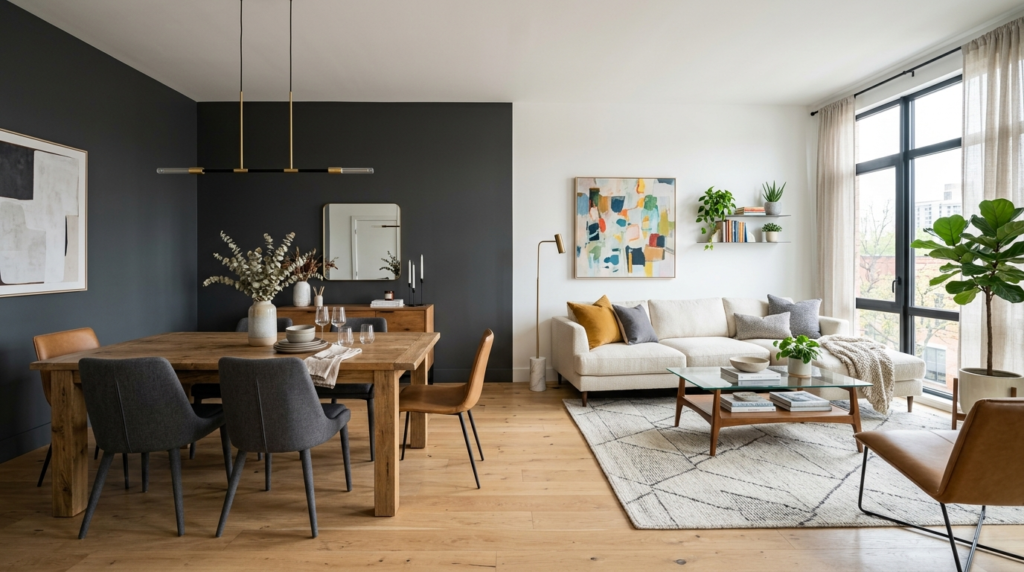
Use paint or wallpaper to define your areas. Paint the wall behind the dining table a dark, moody color. Keep the living room walls white or light. I saw this in a flat in London.
The dining “nook” was painted deep navy. It felt like a separate room even though there was no physical barrier. This is a cheap and fast way to fix a confusing layout. You can also use a large piece of art to anchor the dining side. In the living room, use colorful pillows that match the dining wall color. This creates a “thread” that pulls the whole room together. It is a visual trick that works every time.
19. The Mirrored Expansion
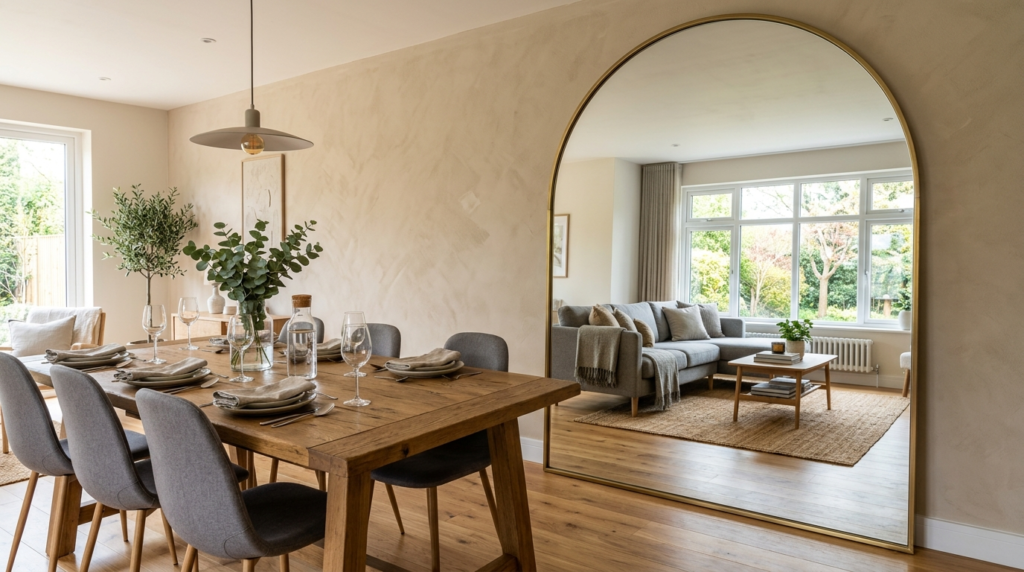
If your combo room feels dark, use mirrors. Place a large floor mirror behind the dining table. It will reflect the living room and the windows. I once used a giant arched mirror from Wayfair in a basement apartment.
It doubled the light instantly. It also makes the layout feel less “stuck.” Mirrors add depth. They make the dining area feel like it has its own window. In the living area, keep the furniture light and reflective. Glass coffee tables work well here. This layout is about brightness and energy. It is great for rooms that do not get much morning sun.
20. The Low Profile Lounge
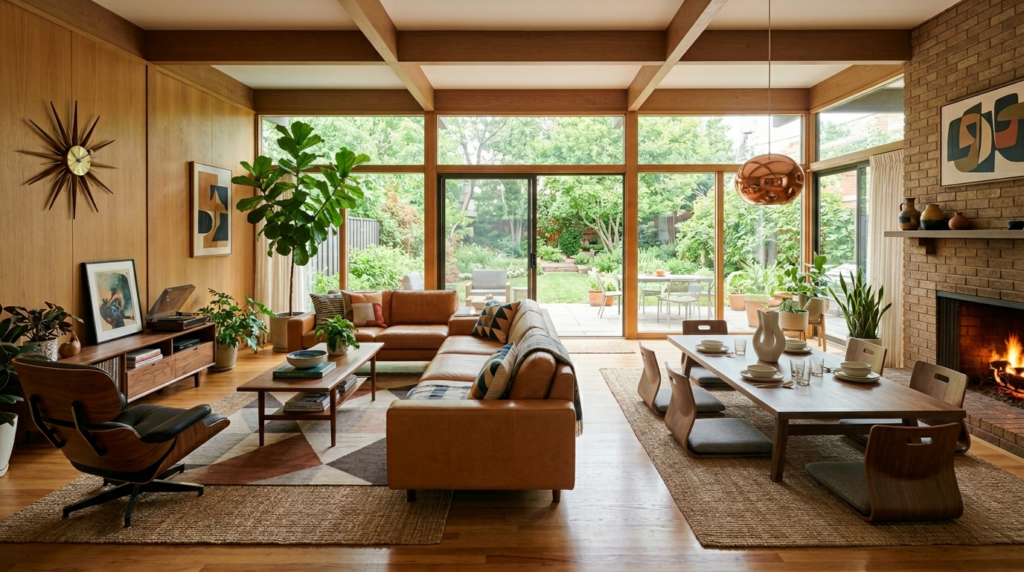
Use low furniture to keep the room feeling vast. A low sofa and a low dining table (like a Japanese “chabudai” style or just a standard height table with low back chairs). I saw this in a mid century modern home.
The sightlines were never broken. You could see from the front door all the way to the back garden. It felt very high end. This works best if you have beautiful floors you want to show off. Use a low console for the TV. This layout is very relaxing. It feels less formal and more like a space meant for lounging. It is one of the most comfortable 22 dining room living room combo layouts that work.
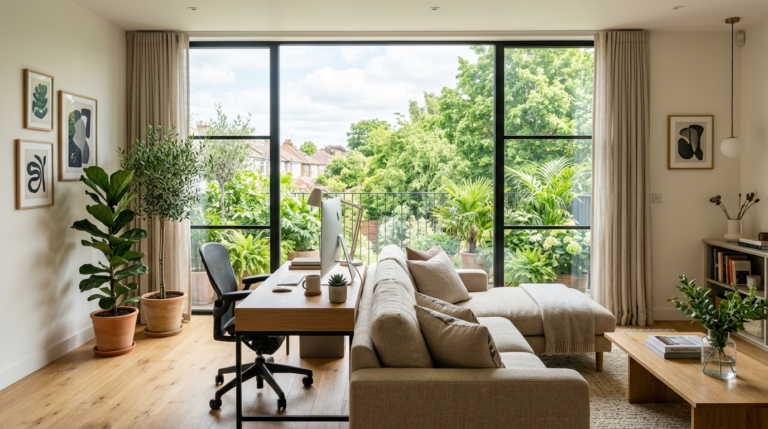
21. The Multi Functional Desk Combo
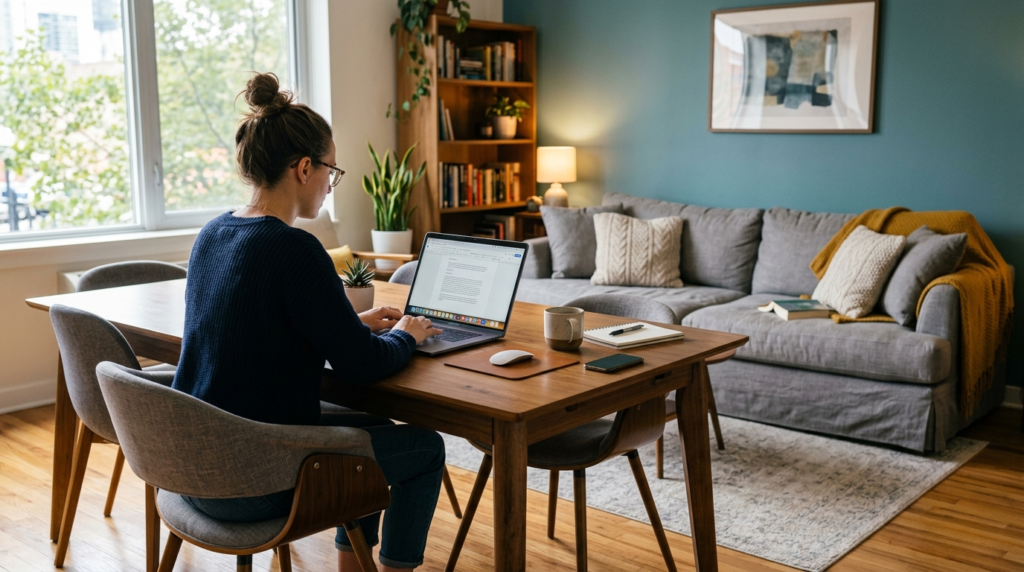
Many people work from home now. Your dining table might also be your office. In this layout, place the table against a wall or window. Use a comfortable chair that looks like a dining chair but supports your back.
In the living area, keep things strictly for relaxation. I saw a setup where the owner used a “Burrow” desk and a matching sofa. The room felt cohesive. When work is done, you clear the laptop and it becomes a dining room. This is the ultimate “real life” layout. It acknowledges that we use our rooms for many things. Keep a small cabinet nearby to hide work supplies at dinner time.
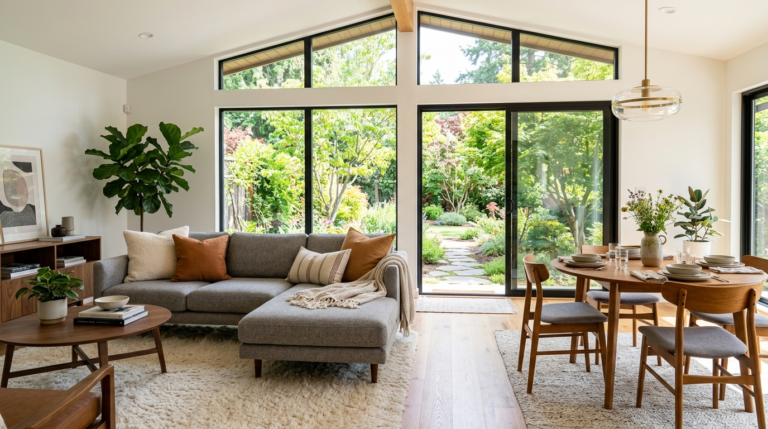
22. The Garden View Connection
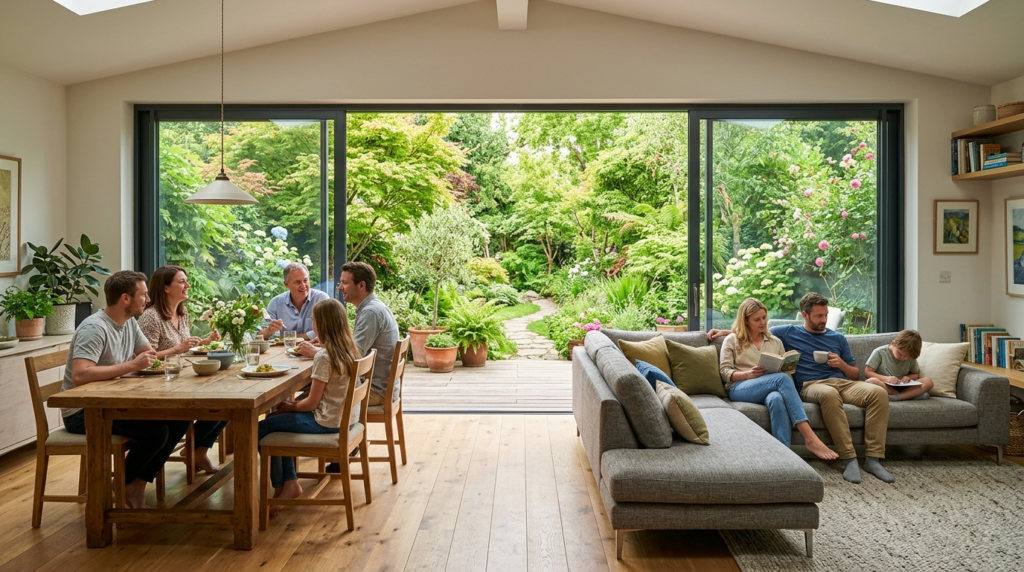
If you have a glass door to a patio, use it as your anchor. Place the dining table so you look out the door while eating. Place the living room so the sofa faces the door too. I saw this in a home in Florida.
The outdoor space felt like a third room. The indoor layout was just a frame for the view. This makes the combo room feel massive. Use indoor plants to blur the line between inside and out. It creates a very peaceful environment. This layout is all about the “lifestyle” of the home. It is perfect for people who love nature and want to feel connected to it every day.
🔹 Tools for Planning Your Combo Layout
Planning a room is hard without a visual. I have tried many tools to help my clients. Here are the ones I recommend for 22 dining room living room combo layouts that work.
- Floorplanner: This is a web based tool. It is very easy to use. You can draw your room and drag in furniture.
- IKEA Home Planner: Great if you are buying IKEA furniture. It helps you see exactly how much space a “Billy” bookcase will take.
- RoomPlanner: This is an app for your phone. It uses augmented reality. You can “see” a sofa in your actual room.
- Wayfair Room Visualizer: This is built into their site. You can see their specific products in a 3D version of your room.
- SketchUp: This is for more advanced users. It is powerful and gives you total control.
- West Elm Design Crew: This is a free service. You can talk to a real person who will help you plan your layout.
- Pottery Barn Room Planner: Similar to IKEA but for more classic styles.
- Home Designer Suite: This is paid software. It is professional grade for serious renovators.
In my experience, even a simple sketch on graph paper works. Each square can represent six inches. This prevents you from buying a sofa that is way too big. I once bought a sectional that blocked my front door. I learned my lesson the hard way. Measure everything twice.
🔹 Common Mistakes in Dining Living Combos
I have seen many rooms that just don’t feel right. Usually, it comes down to a few simple errors.
Using one giant rug. People think one rug will unify the room. It actually makes the furniture look like it is floating in a sea of carpet. Use two rugs. This creates “islands” of function. It makes the room feel organized.
Blocking the flow of traffic. If you have to turn sideways to walk to the kitchen, your layout is wrong. You need at least 30 inches of clear walking space. I see people put large coffee tables in the middle of paths all the time. Move the furniture back.
Matching everything too much. A “set” of furniture from one store can look like a hotel room. Mix your woods. Mix your fabrics. If your table is dark oak, maybe your coffee table is glass or metal. This makes the room feel like it grew over time. It feels more human.
Poor lighting. One big overhead light is the enemy of a cozy room. You need layers. Use a pendant over the table. Use a floor lamp by the sofa. Use a small lamp on a sideboard. This allows you to change the mood for dinner or movie night.
🔹 Frequently Asked Questions
How do I choose the right rug size for a combo room?
The rug under the dining table must be big enough for all chairs to stay on it. This is non negotiable. For the living room, the rug should at least touch the front legs of the sofa. If the rug is too small, the room looks cheap. In my experience, go one size larger than you think you need.
Can I mix different styles of furniture?
Yes. In fact, you should. A mid century sofa looks great with a rustic wooden table. The trick is to keep one element the same. Maybe the legs are all black metal. Or the colors are all warm tones. This creates a “theme” without being boring.
What is the best way to hide a TV in an open plan?
Place the TV on a dark wall or inside a cabinet. I saw a client use a “Frame” TV that looks like art when it is off. This prevents the living room from looking like a tech center while you are trying to have a nice dinner.
How far should the sofa be from the dining table?
You want at least three to four feet. This allows someone to sit at the table while another person walks behind them. If you are tight on space, use a low back sofa to keep the room from feeling closed in.
Should I use a round or rectangular table?
Round tables are better for traffic flow. Rectangular tables are better for defining a “zone.” If your room is very long and narrow, a rectangular table fits the shape better. If your room is square or awkward, go round.
How do I handle different ceiling heights?
If one part of the room has a lower ceiling, make that the cozy living area. Use the higher ceiling for the dining area. This creates a natural hierarchy in the room.
Conclusion
Creating a dining room living room combo is a puzzle. But it is a puzzle you can solve. Remember to focus on rugs, lighting, and walking paths. Use the 22 dining room living room combo layouts that work as your starting point. Don’t be afraid to move your furniture. I move mine every few months just to see how it feels. Your home should work for you. Whether you are hosting a big dinner or just watching TV on a Tuesday, your layout should make it easy. Start with one change today. Maybe move your rug. Or swap your table’s direction. You will feel the difference immediately.

Amelia Hart is the Senior Design Editor at Vellora Interiors, where she curates small-space and apartment content. With a background in color theory and years spent designing under-500-square-foot rentals, she’s the editor who’ll tell you exactly which paint sheen, curtain length, and lamp height to choose, no guessing. A former design lead at a boutique studio, her work has been featured in several home and lifestyle publications. Her guiding belief: “Good design isn’t about more, it’s about choosing better.”