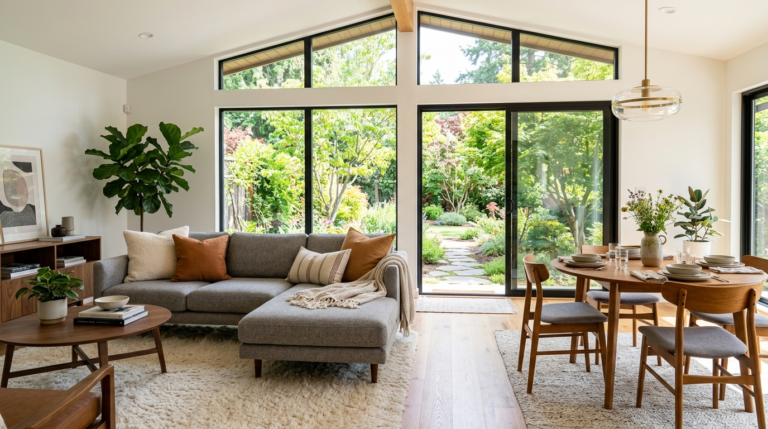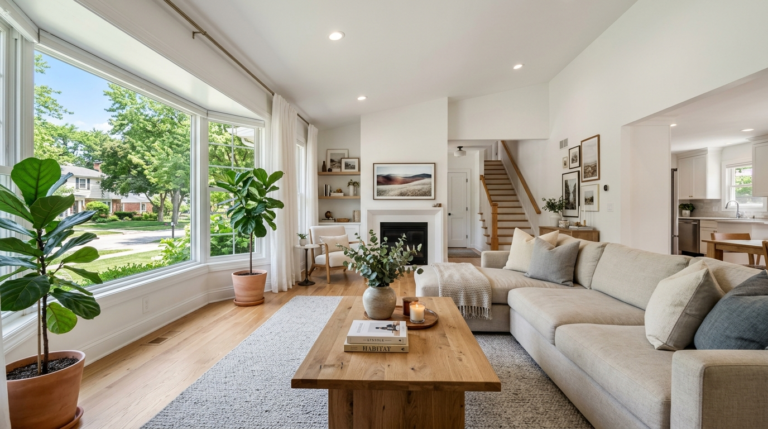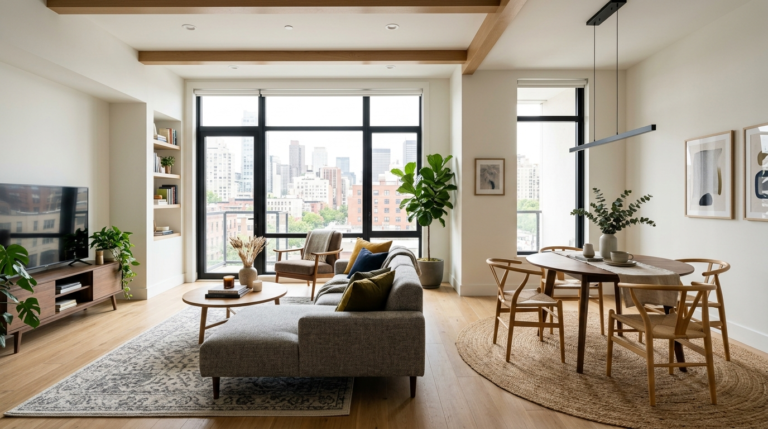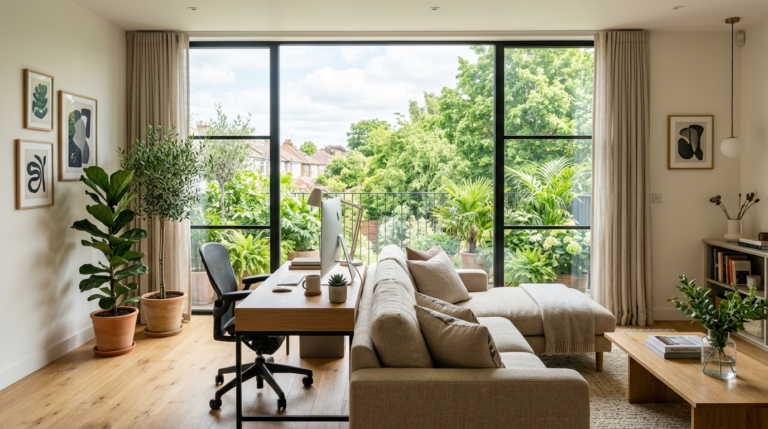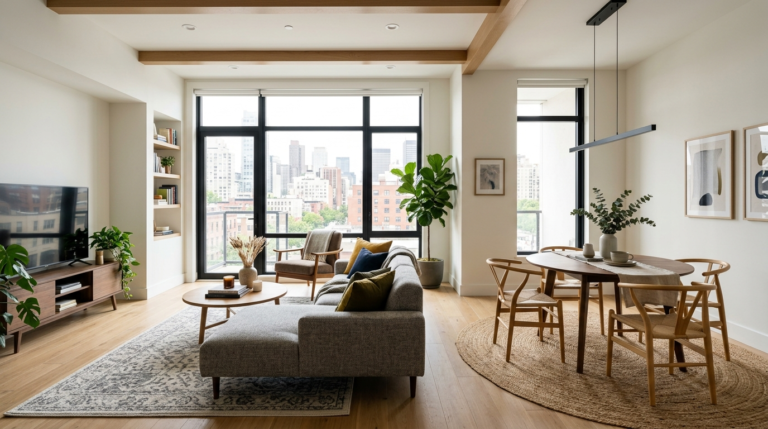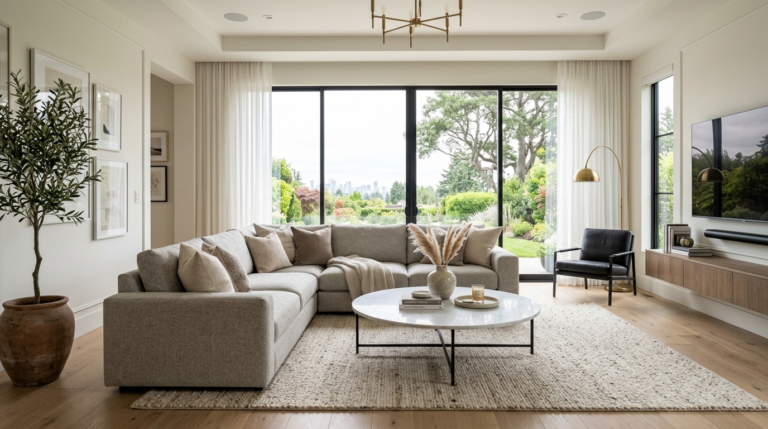
Imagine hosting a dinner party where you never turn your back on your guests. You are sautéing garlic at the stove while your friends laugh on the sofa just feet away. This is the dream of open plan living. However, without a clear plan, a large open room can feel cold or chaotic. I have seen many homeowners struggle with furniture that floats aimlessly in the middle of a room.
The right layout creates “zones” without using walls. It guides people through the house naturally. In my experience, the best homes balance the energy of the kitchen with the peace of the living area. I once helped a family in Seattle who felt their open home was too loud. By shifting their sofa and adding a specific rug type, we turned a noisy hall into a peaceful retreat. These 23 layouts solve those exact problems.
1. The Classic L-Shape with Central Island
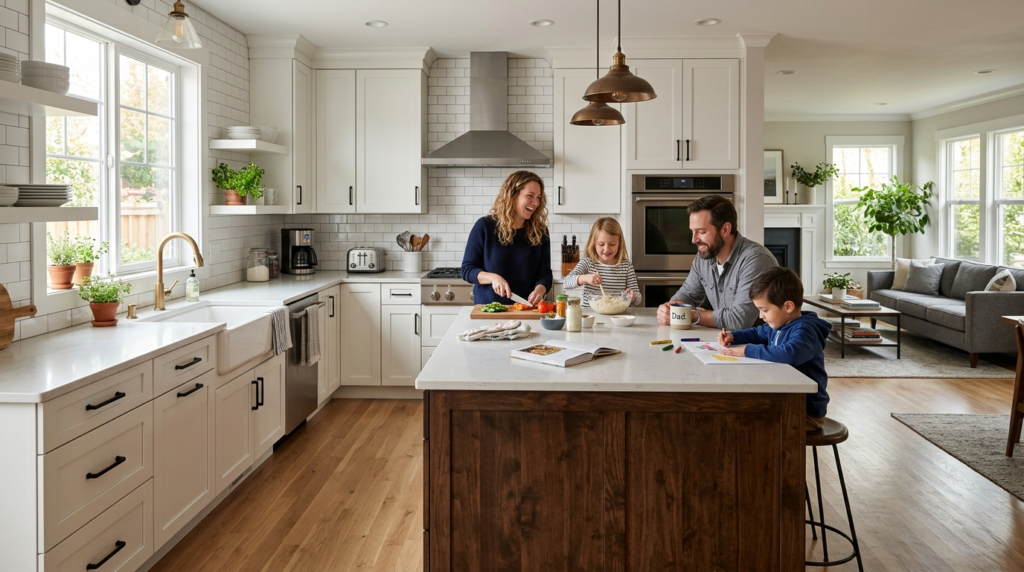
This is the most popular choice for a reason. The kitchen occupies two corner walls while a large island faces the living room. It creates a clear boundary without blocking the view. I suggest keeping at least 42 inches of space between the island and the counters. This allows two people to pass each other without bumping elbows.
2. The Parallel Galley and Sofa Back
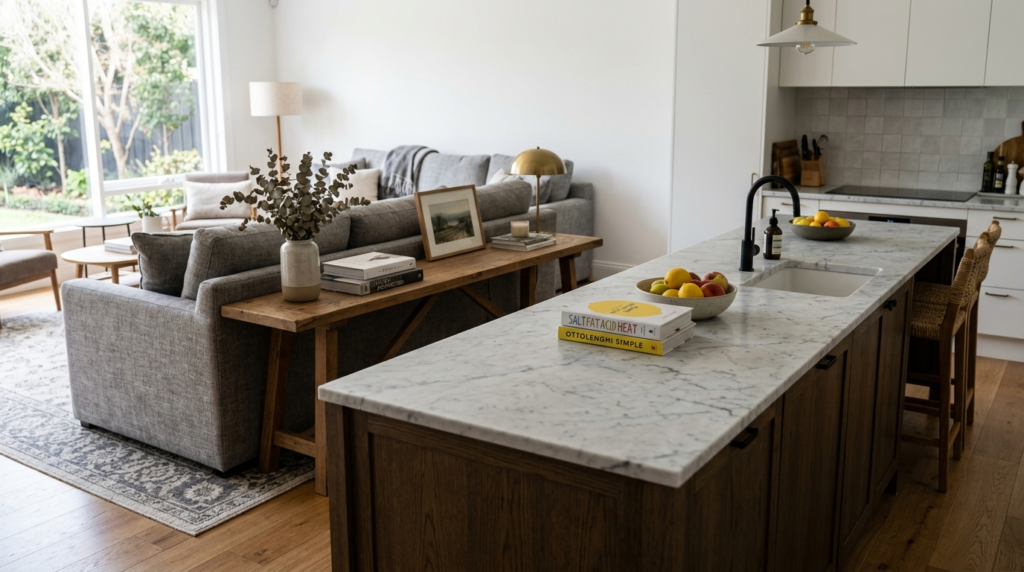
In this setup, the kitchen runs along one wall with a long island parallel to it. The back of your sofa sits right against the island or a few feet away. This uses the furniture as a physical divider. It works perfectly for narrow homes. I have noticed this layout makes a small space feel much longer and more organized.
3. The Peninsula Pivot for Small Spaces
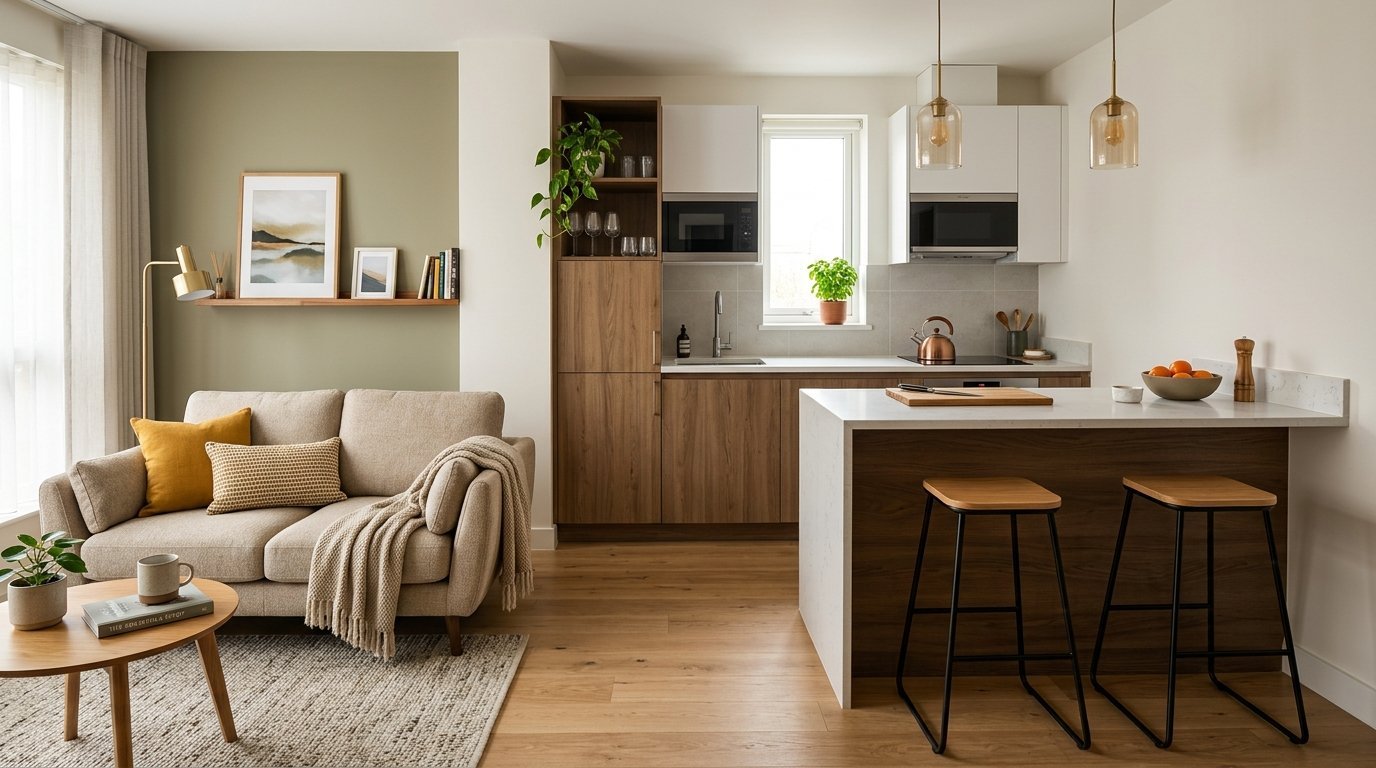
If you do not have room for a full island, a peninsula is your best friend. It attaches to the wall or cabinets and juts out into the room. This creates a “U” shape that keeps kids or pets out of the cooking zone. Use bar stools on the living room side to invite conversation while you prep meals.
4. The Zoned Rug Anchor Method
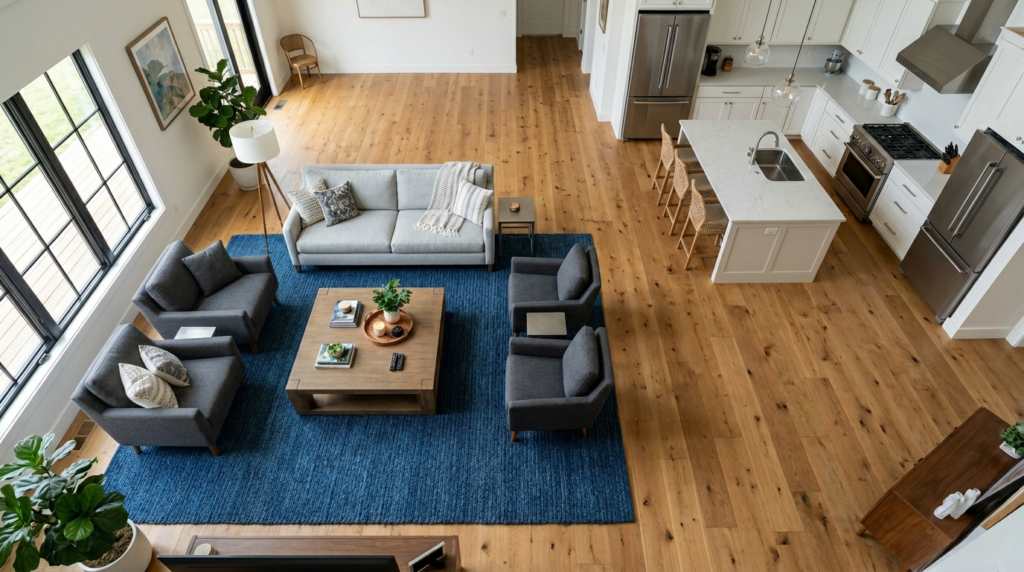
Large rugs are the secret to open floor plans. Place a massive rug in the living area to “ground” the furniture. All legs of the sofa and chairs should sit on the rug. This tells the brain that the living room is a separate island of comfort. In my own home, I use a jute rug under a wool one for extra texture and sound dampening.
5. The Sunken Living Room Transition
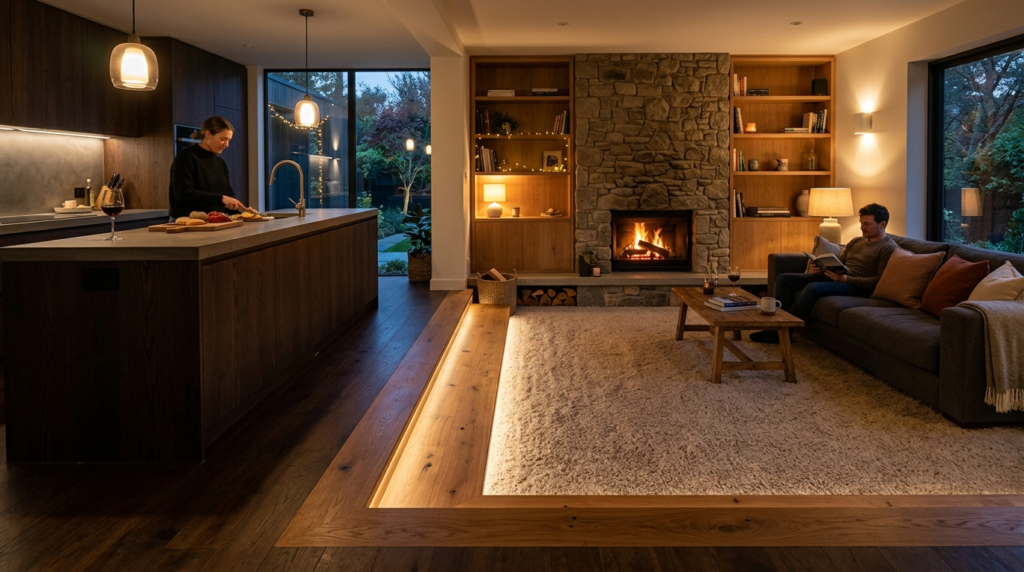
If you are building new or doing a major gut renovation, consider a step down. Lowering the living room floor by just two steps creates a massive sense of separation. It feels like a cozy den while remaining part of the kitchen flow. I saw this work beautifully in a 1970s remodel where the “pit” became the heart of the home.
6. The Double Island Bridge Layout
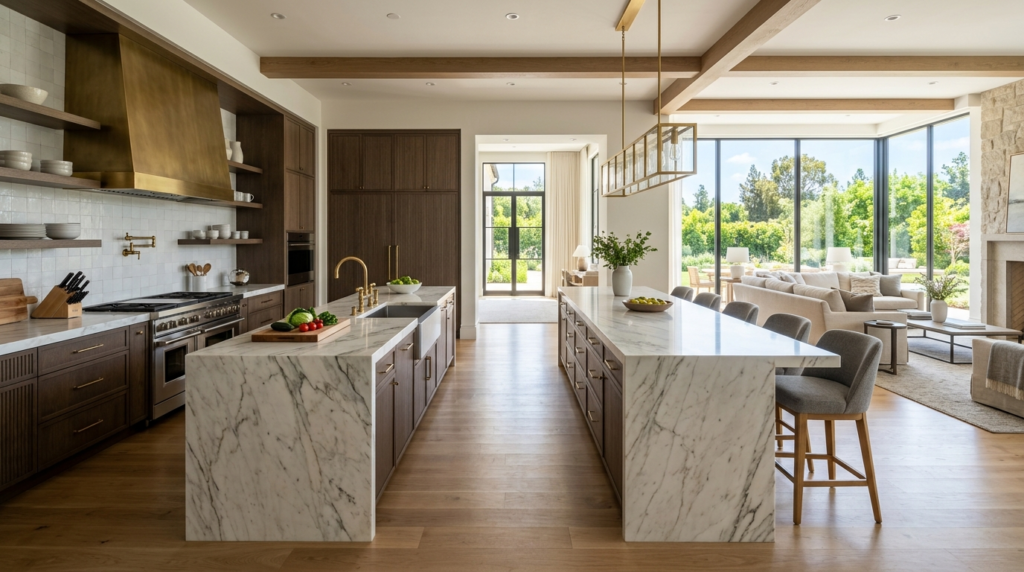
For very large homes, one island is often not enough. Use two islands in a row. One serves as the prep station with a sink. The second acts as a dining table or bar that faces the living room. This prevents the “warehouse” look by filling the floor space with functional furniture.
7. The Sofa Back Console Table
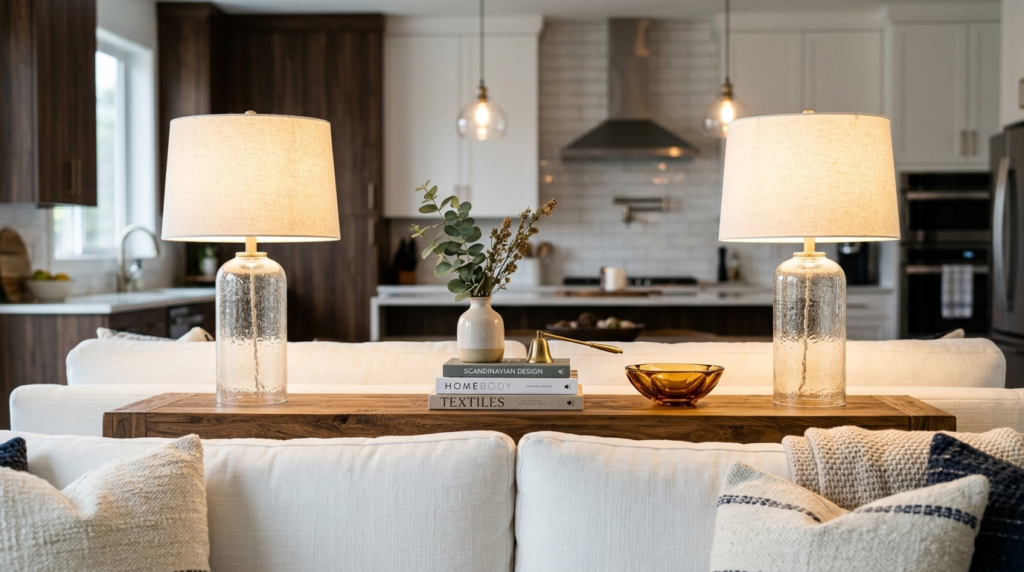
Sometimes a sofa back looks messy from the kitchen side. Place a long, thin console table against the back of the couch. Add two lamps and some books. This creates a visual “wall” that is only waist-high. It hides the back of the upholstery and provides a spot for drinks or decor.
8. The Glass Partition Wall Divider
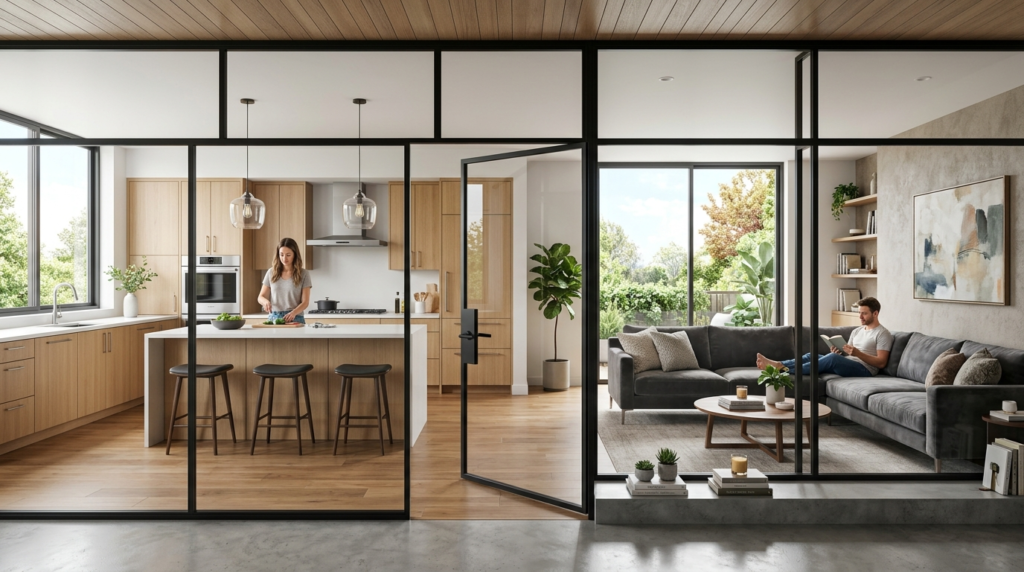
If you want the look of an open home but need to stop cooking smells or noise, use glass. A black framed glass wall between the kitchen and living room keeps the light flowing. It feels modern and high end. I’ve seen this used in London flats to make tiny spaces feel like grand estates.
9. The Breakfast Bar Connection
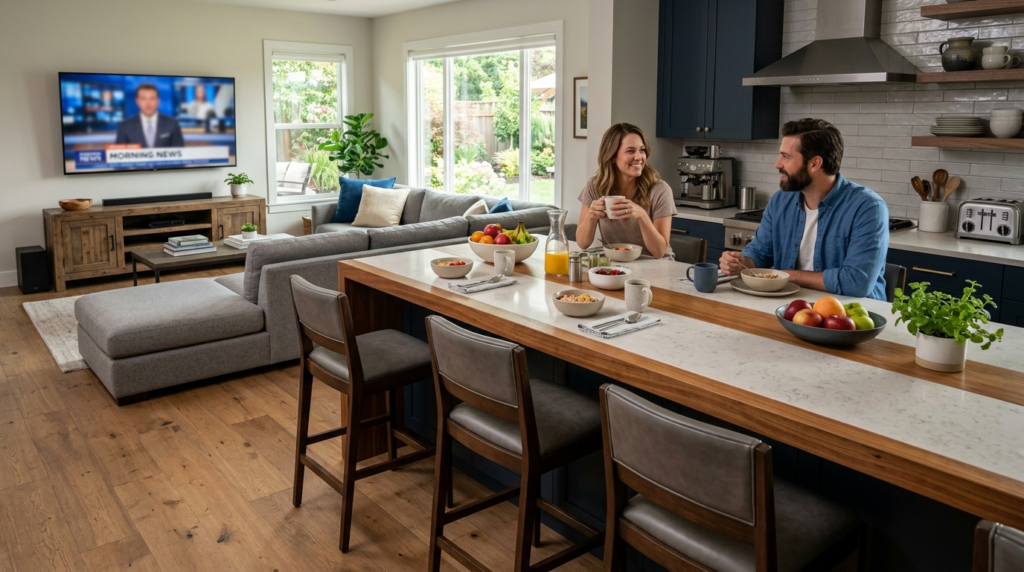
Extend your kitchen counter into a long overhang. This becomes the primary dining spot, eliminating the need for a formal table. It opens up floor space for a larger living room setup. This is a top choice for young couples or people who love casual morning coffee moments.
10. The Wrap Around Kitchen with Corner Nook
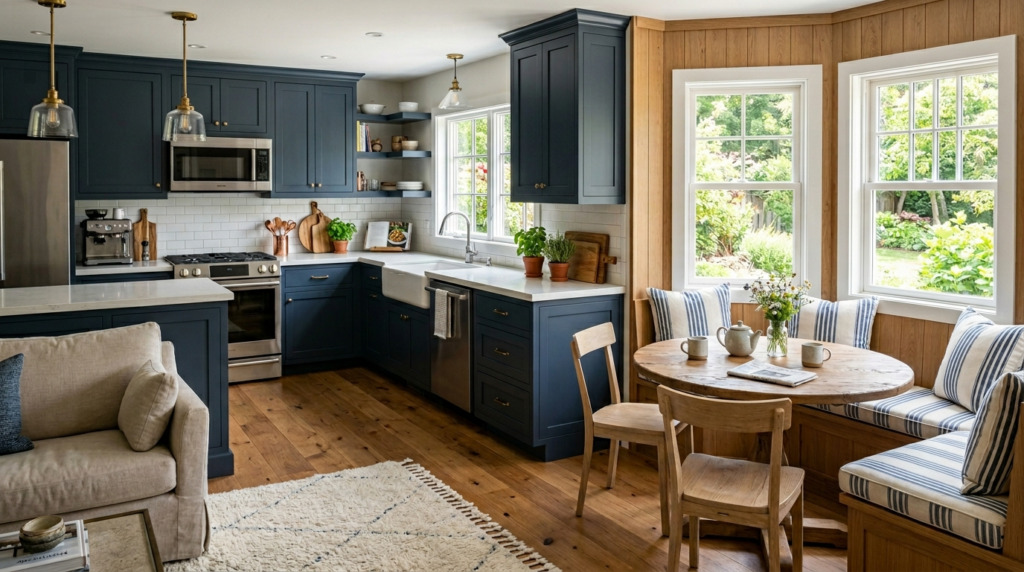
Use the corners of your room. A wrap around kitchen provides endless storage. In the corner where the kitchen meets the living area, build a custom banquet or breakfast nook. This creates a soft transition between the hard surfaces of the kitchen and the soft fabrics of the lounge.
11. The Window Seating Flow
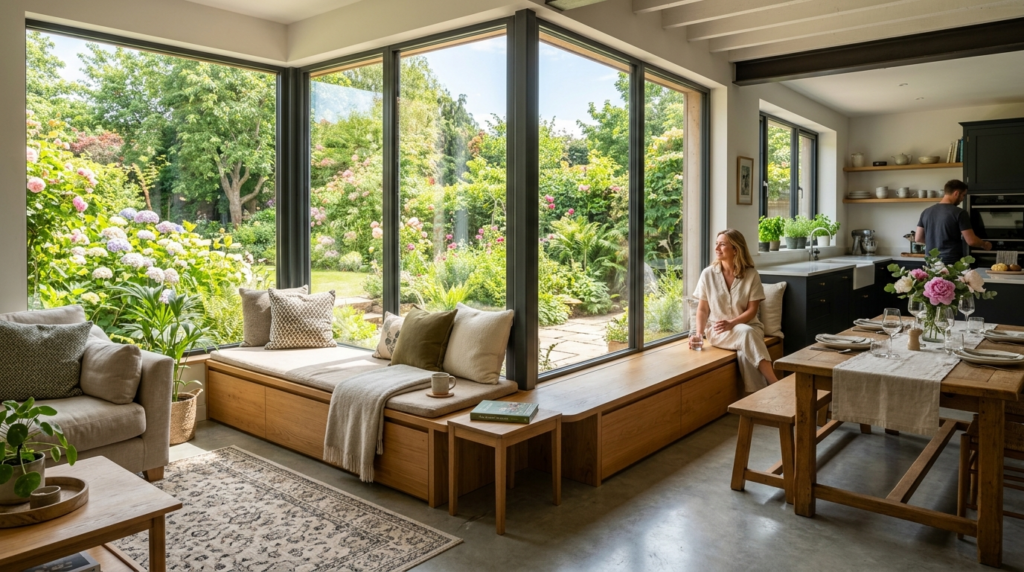
Align your kitchen and living room along a wall of windows. Place a long bench seat under the windows that spans both areas. This creates a unified “path” that draws the eye outside. It makes the entire floor feel twice as wide. I recommend using indoor-outdoor fabrics for the cushions to prevent sun fading.
12. The Minimalist Linear Wall
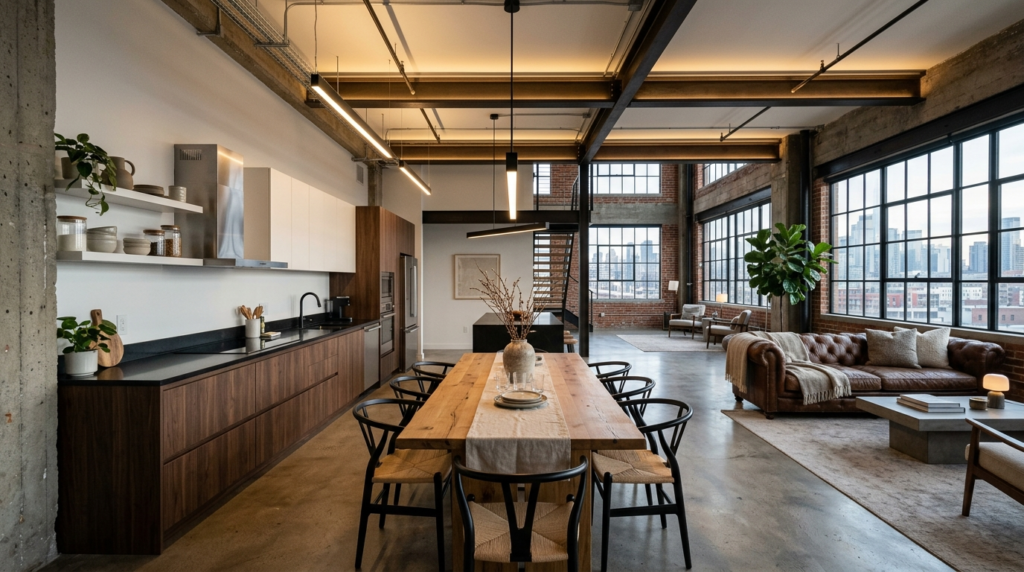
Put all your kitchen appliances and cabinets on a single long wall. Leave the rest of the floor completely open. This works best in modern lofts. Place your dining table in the middle and the living room at the far end. It provides a clean, gallery-like feel that is very easy to clean.
13. The Fireplace Anchor Layout
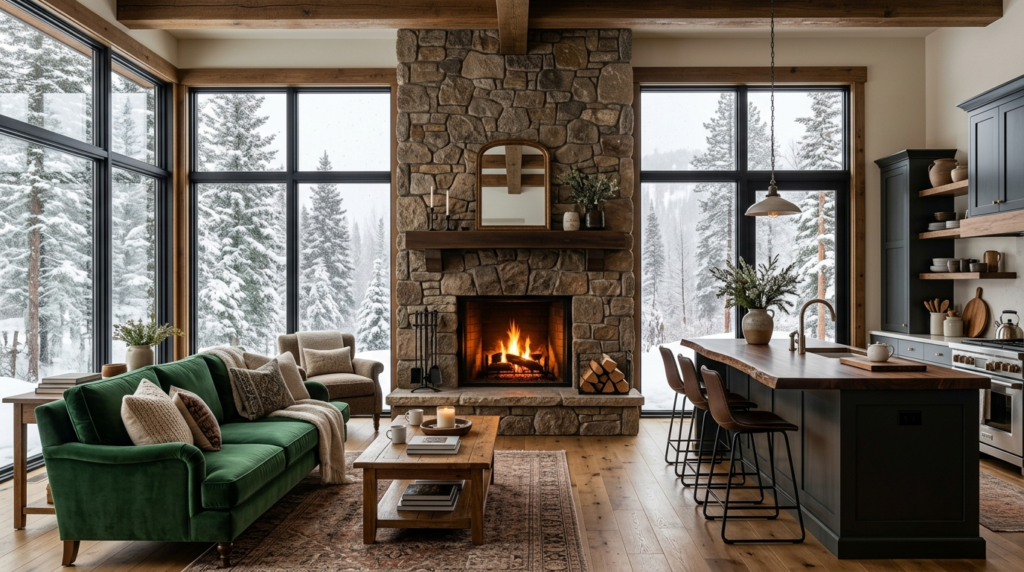
If you have a fireplace, make it the center point between both rooms. Angle your kitchen island and your living room chairs toward the hearth. This creates a shared focal point. Even when you are washing dishes, you can enjoy the glow of the fire. It is the ultimate way to make an open plan feel warm.
14. The Ceiling Height Zone
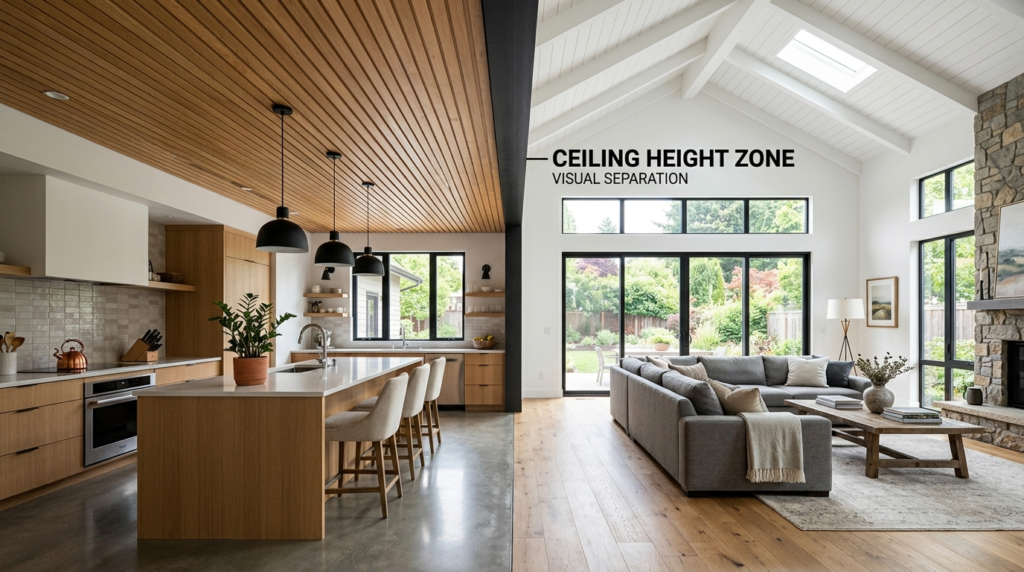
Use architecture to define space. You can have a vaulted ceiling in the living room and a lower, dropped ceiling over the kitchen. This change in height creates a mental boundary. I’ve noticed that people feel more “tucked in” and safe in the kitchen while feeling “free” in the living area.
15. The Floating Shelving Break
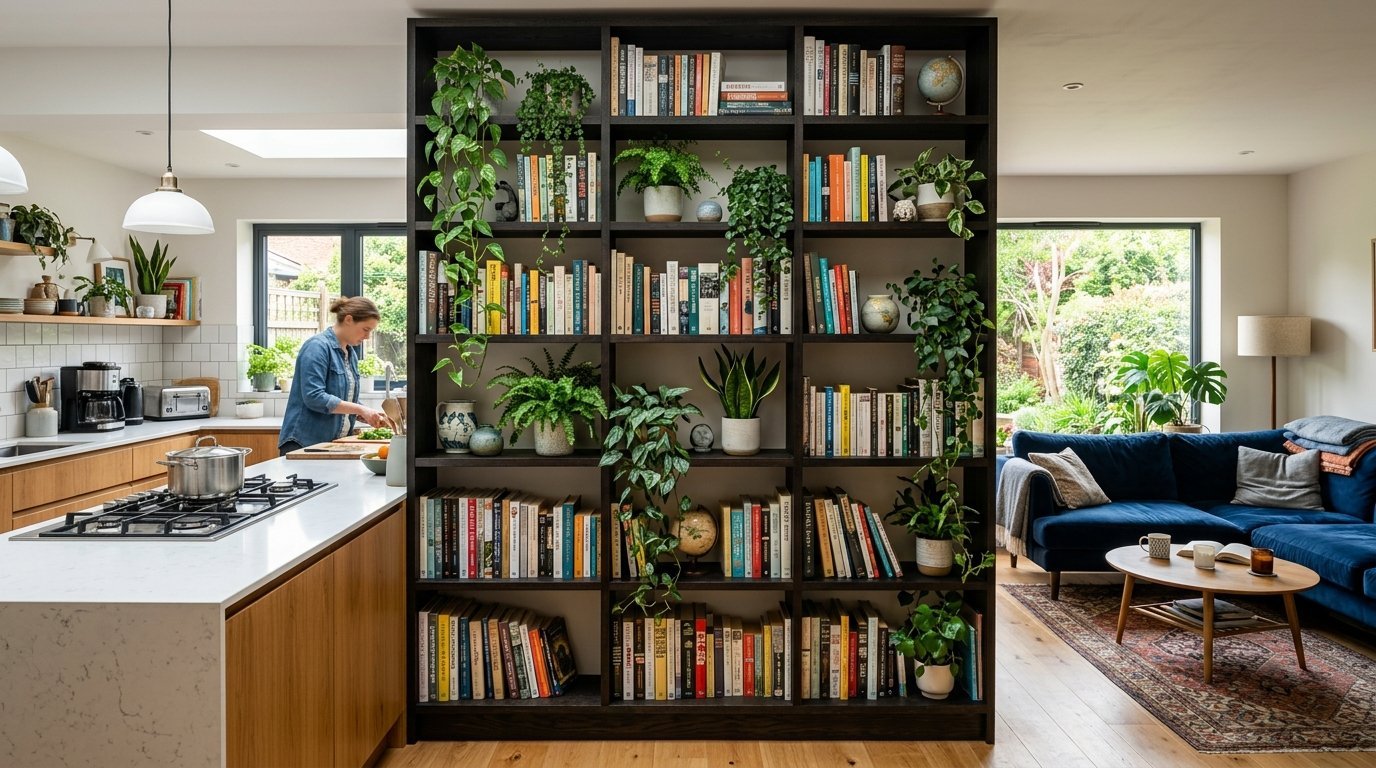
Install floor to ceiling open shelving between the two areas. Do not put a back on the shelves so light can pass through. Fill them with plants, pottery, and books. This acts as a “breathable” wall. It provides privacy for the sofa without making the kitchen feel like a dark box.
16. The Symmetrical Split
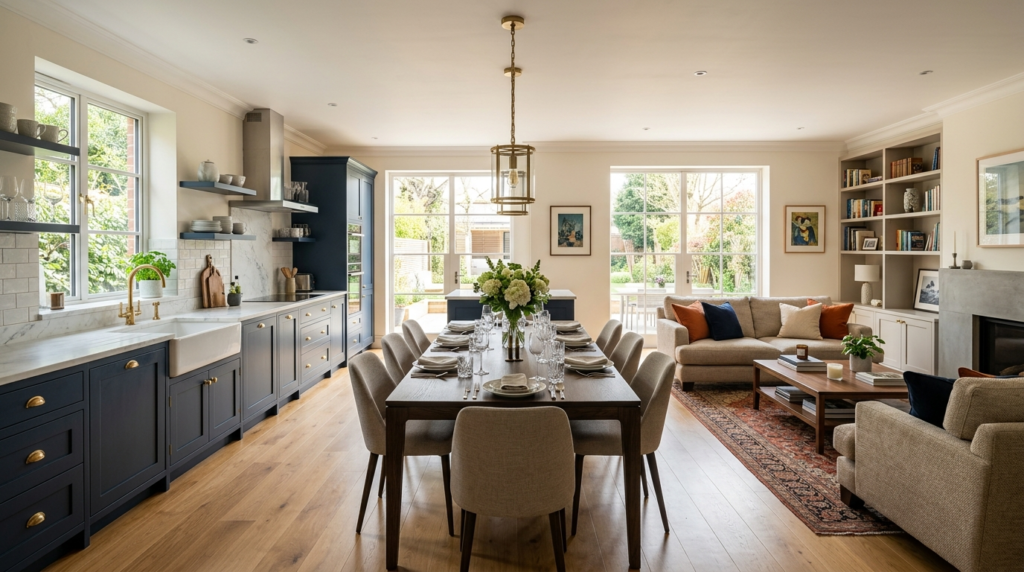
Place the dining table exactly in the center of the room. Put the kitchen on the left and the living room on the right. This balanced look is very pleasing to the eye. It works best in rectangular rooms. Use matching light fixtures over the island and the dining table to tie the look together.
17. The Hidden Pantry Entry
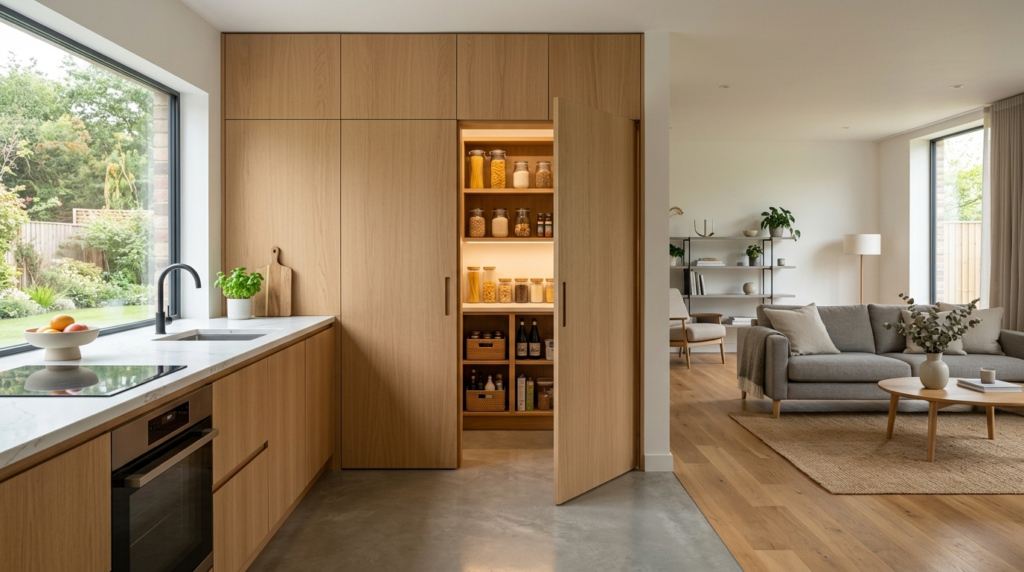
To keep an open home looking “cozy” and not “cluttered,” hide the mess. Create a layout where the fridge and pantry are tucked behind a small partition wall or inside a “butler’s pantry.” This keeps the visible part of the kitchen sleek and beautiful for anyone sitting on the sofa.
18. The Indoor Outdoor Extension
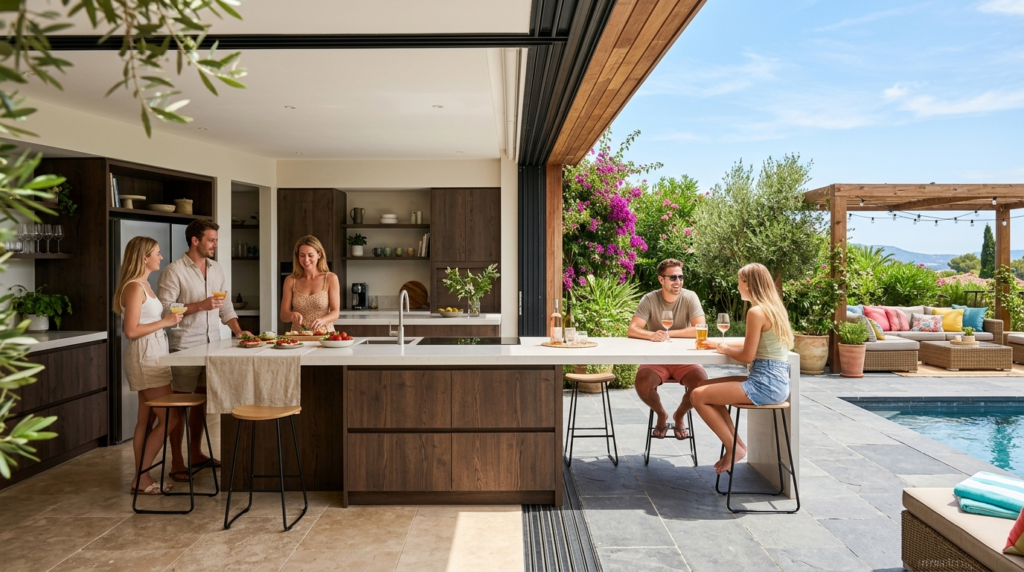
Use large sliding glass doors that pocket into the wall. Arrange your living room furniture to face the deck or patio. Position the kitchen island so it serves both the indoor living room and the outdoor dining area. This layout is perfect for summer hosting and makes your home feel infinite.
19. The Circular Traffic Flow
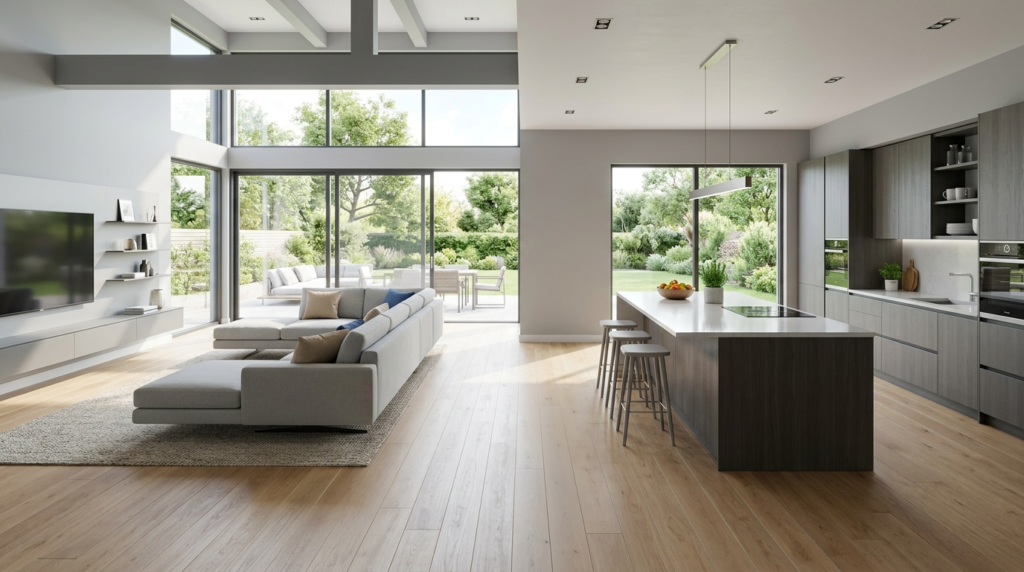
Avoid “dead ends” in your layout. Ensure there are at least two ways to enter and exit the kitchen and living areas. A circular path around a central island or a central wall unit prevents traffic jams during busy mornings. I have seen this improve the “mood” of a home significantly.
20. The Multi Level Platform
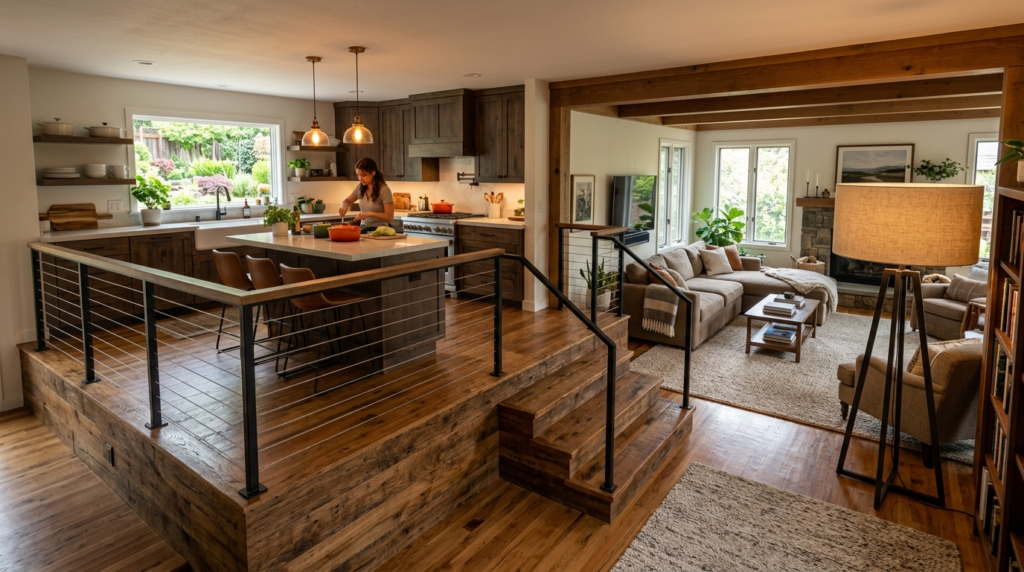
Build the kitchen on a platform that is six inches higher than the living room. This is the opposite of the sunken living room. It gives the “chef” a great view of the entire house. It also creates a natural “bench” where the platform edge meets the lower floor.
21. The Mobile Island Flexibility
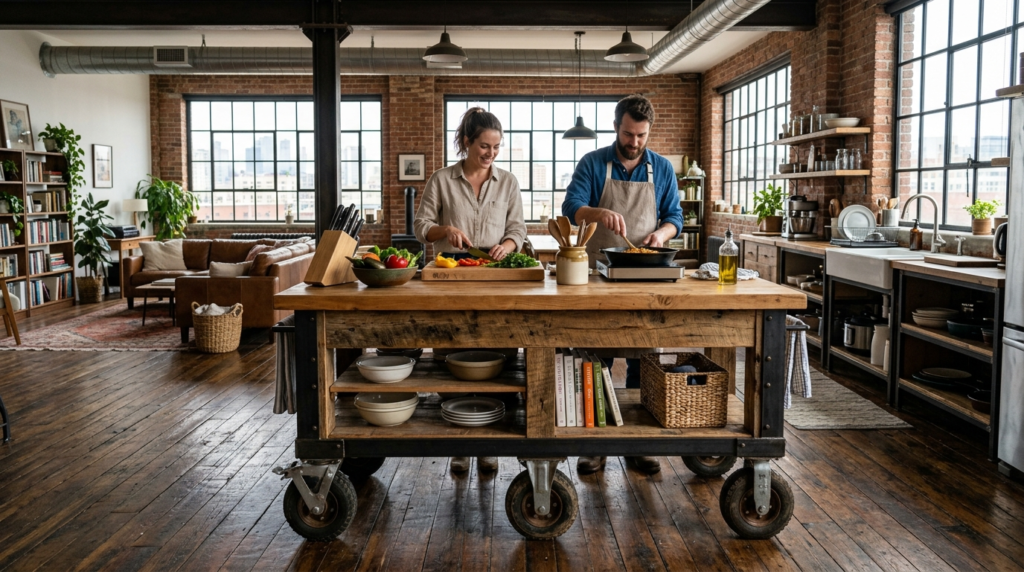
For small apartments, use a kitchen island on heavy duty wheels. You can push it against the wall for more living space or pull it into the center when you need to cook. This “fluid” layout adapts to your life. I once worked with a client who used a vintage carpenter’s bench as their mobile island.
22. The Color Block Zone
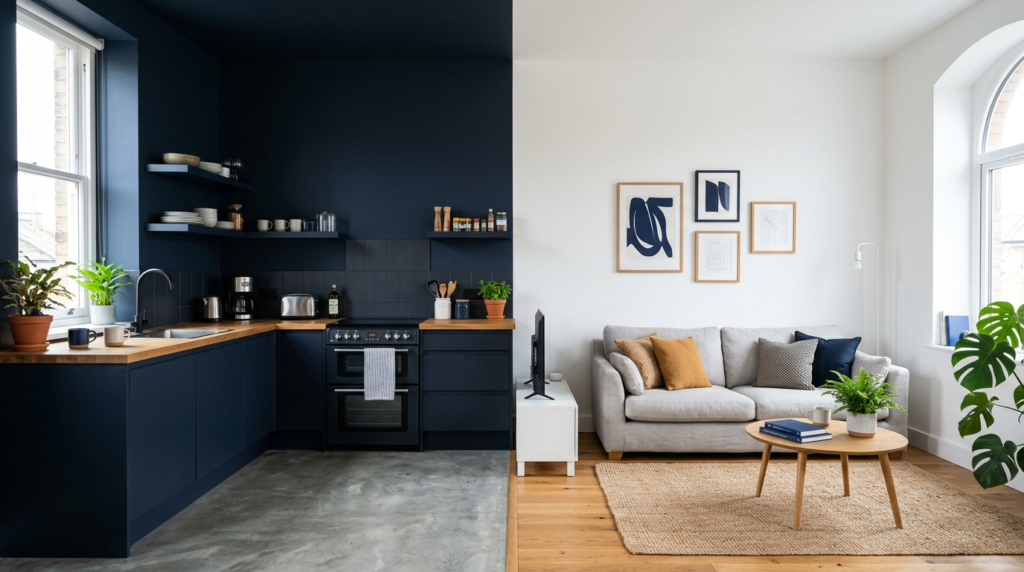
Paint the kitchen walls a dark, moody green and the living room walls a warm white. This visual “split” defines the rooms without a single piece of furniture moving. It is a cheap and fast way to fix a “boring” open floor plan. Use the same flooring throughout to keep it from looking choppy.
23. The Corner TV Lounge
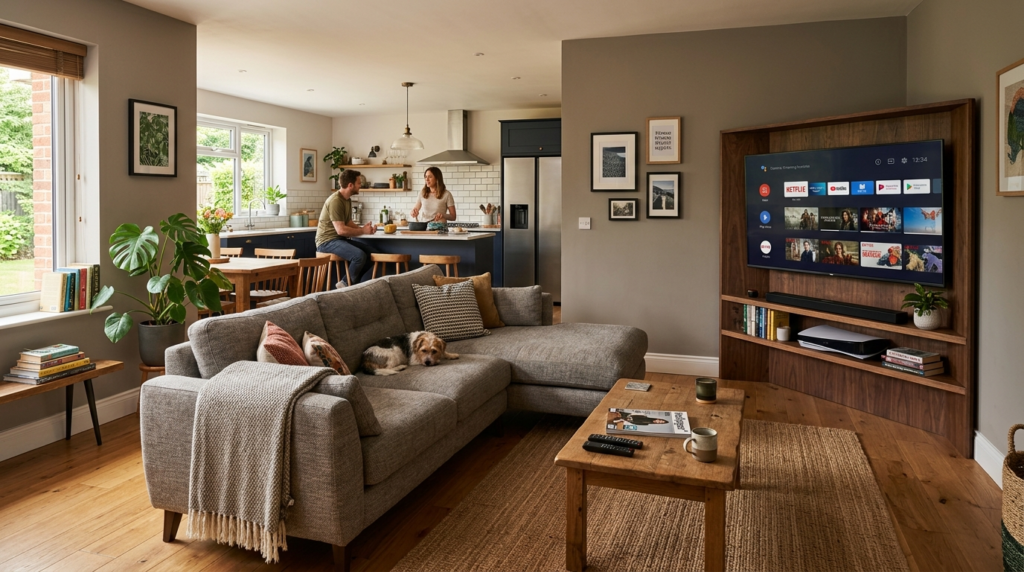
Many people struggle with where to put the TV in an open plan. Place the TV in a corner of the living room, angled away from the kitchen. This creates a dedicated “media zone” that does not distract someone working at the island. Use swivel chairs so people can turn toward the kitchen to chat or toward the TV to watch.
Comparison of Open Layout Styles
| Layout Type | Best For | Noise Level | Cost Range |
| L-Shape + Island | Families | Medium | $15,000 – $40,000 |
| Galley + Sofa Back | Narrow Homes | Low | $10,000 – $25,000 |
| Sunken Lounge | Large Custom Builds | Very Low | $30,000+ |
| Peninsula Pivot | Small Apartments | Medium | $5,000 – $15,000 |
| Linear Wall | Modern Lofts | High | $12,000 – $30,000 |
Essential Tools for Planning Your Layout
Before you move a single heavy sofa, use these tools to visualize the space. I have tested dozens, and these are the most reliable.
- Floorplanner: This is great for beginners. It is web based and very easy to drag and drop furniture.
- SketchUp: This is more advanced. It allows you to see the room in 3D and check how light hits your “zones.”
- Home Designer Suite: This is the tool I use for more detailed renovations. It handles walls and cabinets perfectly.
- Houzz App: Use the “View in My Room” feature to see how specific rugs or islands look in your actual space.
- Blueprints and Tape: Never underestimate blue painter’s tape. Tape the outline of your new island on the floor and walk around it for two days. This prevents “buyer’s remorse.”
Troubleshooting Common Layout Failures
The “Hallway” Problem
Sometimes an open plan feels like a long hallway. This happens when all the furniture is pushed against the walls. To fix this, “float” your furniture. Move the sofa to the middle of the room. Let people walk behind it. This creates a cozy “nest” in the center.
The Lighting Gap
A big mistake is having one big light in the kitchen and one in the living room. This leaves a “dark zone” in the middle. You need “bridge” lighting. Use recessed lights or small wall sconces to connect the two spaces. I like to use dimmers so I can turn the kitchen lights low while we watch a movie.
The Noise Issue
Open homes are loud. Hard counters and wood floors bounce sound everywhere. Add “soft” elements. Use floor to ceiling curtains, thick rugs, and fabric wall art. In a recent project, we added acoustic panels behind a gallery wall to stop an echo that was driving the owners crazy.
Frequently Asked Questions
How do I separate my kitchen and living room without a wall?
Use furniture as boundaries. A kitchen island, the back of a sofa, or a large area rug are the most effective tools. You can also use “visual” dividers like a change in paint color or different ceiling heights.
What is the best flooring for an open plan?
Engineered hardwood or Luxury Vinyl Plank (LVP) is best. These materials are durable enough for the kitchen but warm enough for the living room. Using the same flooring in both areas makes the home feel larger and more cohesive.
Where should I put the dining table in an open layout?
The table usually acts as the “bridge” between the kitchen and the lounge. Place it in the “neutral zone” between the island and the sofa. This creates a natural flow from cooking to eating to relaxing.
Is an open floor plan more expensive to heat?
It can be. Without walls to trap heat, your HVAC system has to work harder. I suggest using ceiling fans to circulate air and heavy drapes on the windows to keep the warmth inside during winter.
How much space do I need for a kitchen island?
You need at least 36 to 42 inches of “clearance” on all sides. If you have less than that, the room will feel cramped and difficult to move through. A peninsula is a better choice for tight spaces.
Creating Your Dream Home Flow
Designing an open home is about more than just picking a sofa. It is about how you move, how you cook, and how you connect with your family. I have seen these 23 layouts work in homes ranging from tiny city studios to massive suburban estates. The key is to be intentional with every “zone.”
Start with one big change, like a new rug or a sofa reposition. You will notice the difference in how the room “breathes” almost immediately. Don’t be afraid to try a “contrarian” move like floating your sofa. Often, the layouts that feel the scariest are the ones that provide the most comfort.

Sloane Whitaker is the Editor-in-Chief at Home Wall Trends, leading editorial direction with over a decade of experience in residential interior design and home styling. Her specialty is space planning and layout, the unglamorous fundamentals that make a beautiful room actually function. A graduate of the New York School of Interior Design, Sloane has styled over 200 client homes before turning her focus to digital publishing. Her editorial standard: “If a reader can’t picture themselves doing it on a Saturday afternoon, we haven’t explained it well enough.”