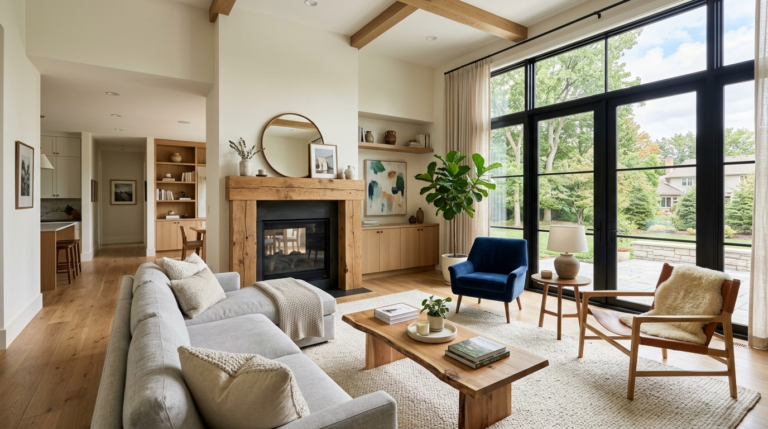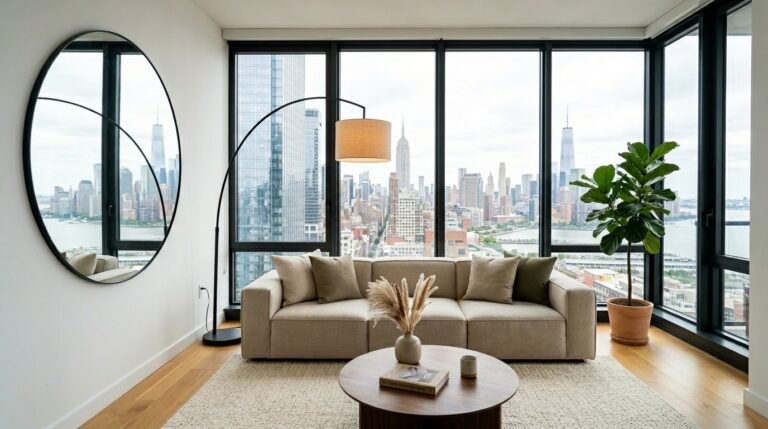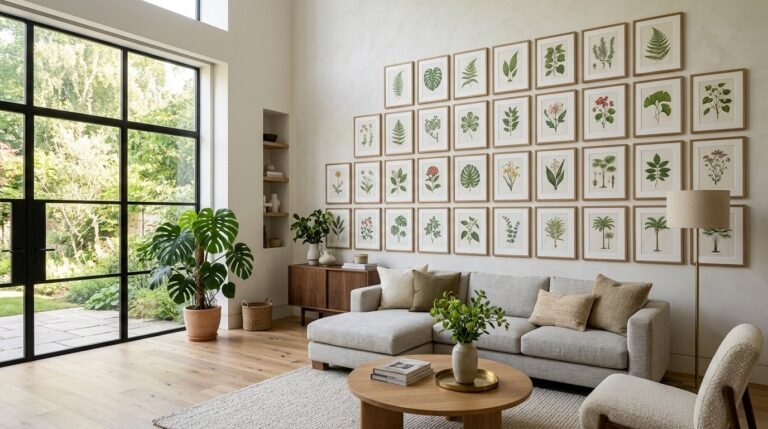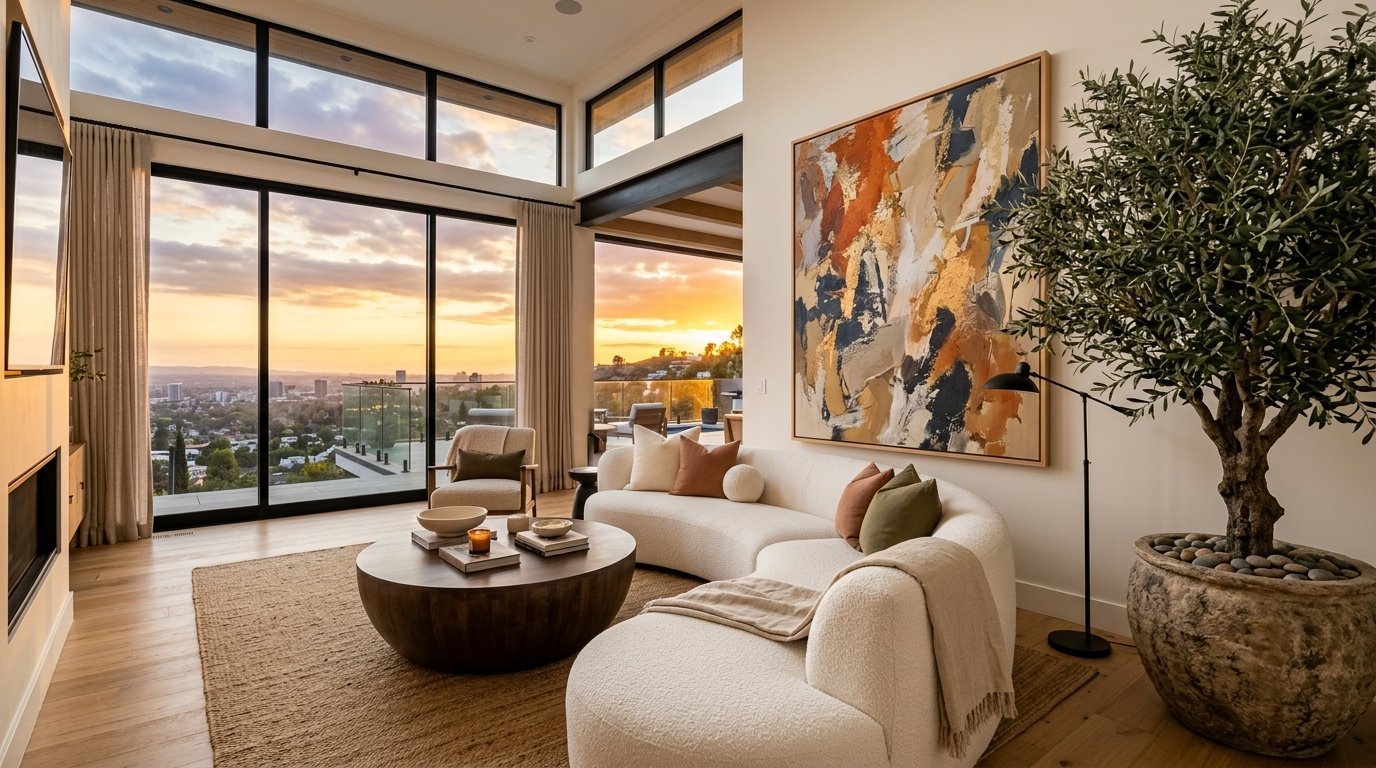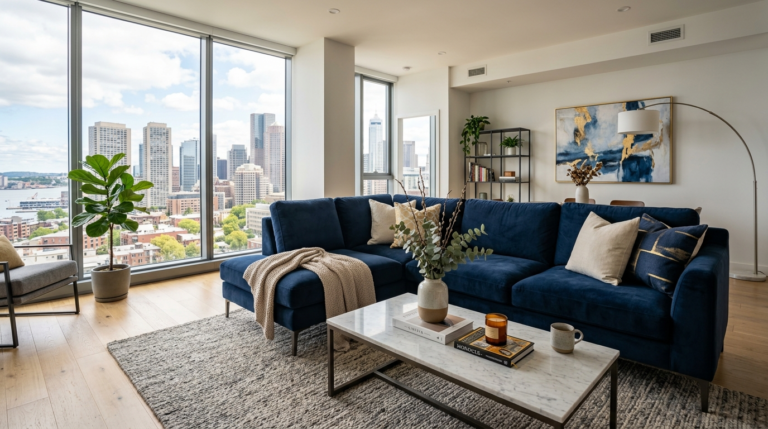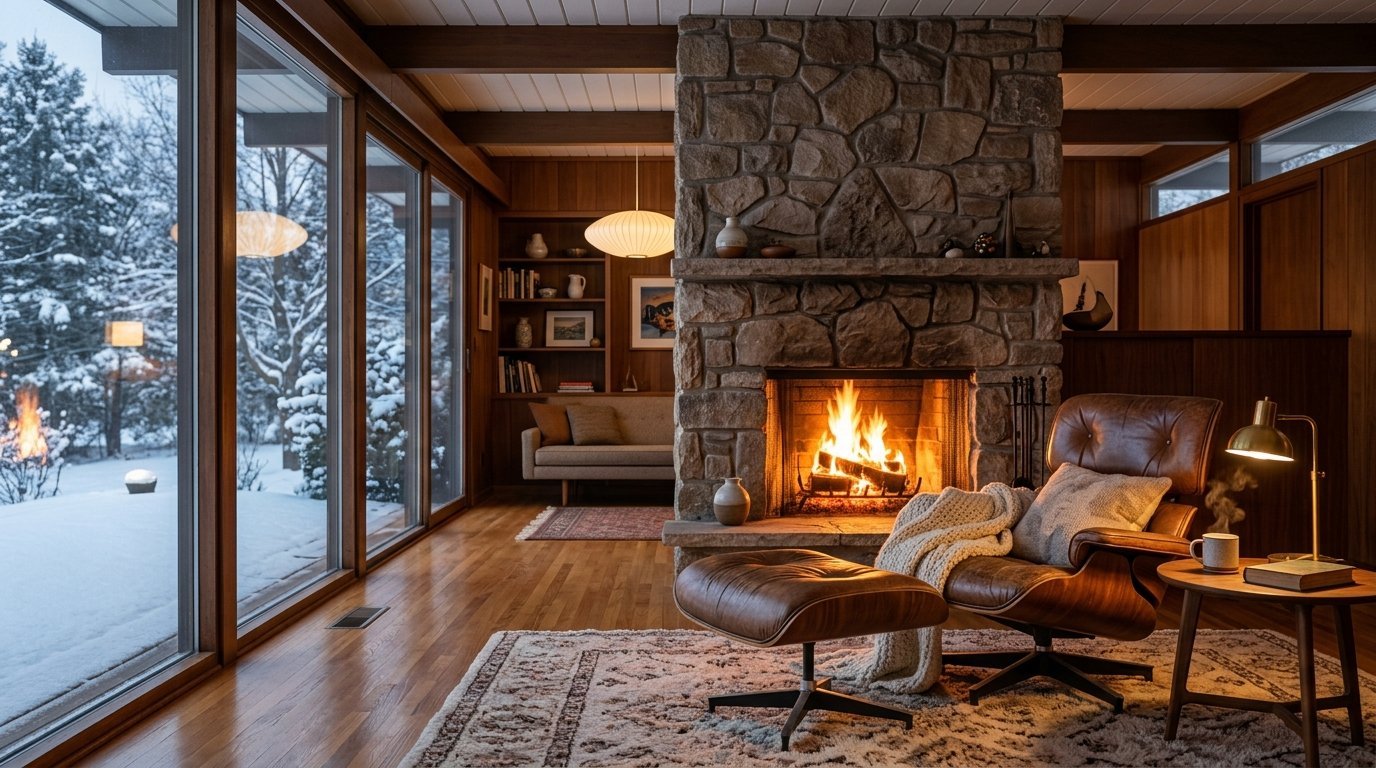
You might have just spent $12,000 on a living room refresh only to feel like the space lacks soul. It happens often. Last summer, I helped a client who had purchased expensive designer furniture, yet her home felt cold and cluttered. The issue wasn’t the quality of her items; she had fallen into several modern interior design mistakes that crushed the room’s flow. Why does a room with high-end pieces sometimes feel cheaper than a budget-friendly DIY space? Can you spot the difference between a curated home and a showroom floor? Most homeowners struggle because they focus on buying things instead of creating a cohesive system. I’ve seen how these small errors lead to expensive regrets. These insights will help you avoid common decor mistakes while achieving a professional look on a realistic budget.
Executive Summary
Successful styling requires a balance of function and aesthetics to produce a home that feels both intentional and lived-in. You will gain specific strategies to fix lighting gaps, scale issues, and color imbalances that often plague DIY projects. We will cover 21 distinct areas of the home, ranging from foundational furniture choices to the final sculptural details. I use a minimal contemporary lens to show you how to reduce visual noise while increasing comfort. This guide references industry tools like Sherwin-Williams color visualizers and IKEA planning software to keep costs manageable. We intentionally exclude structural renovations to focus purely on high-impact styling and layout changes you can implement this weekend. By following these methods, you can expect to save $1,500 to $5,000 in avoided purchase mistakes.
1. Layered Lighting
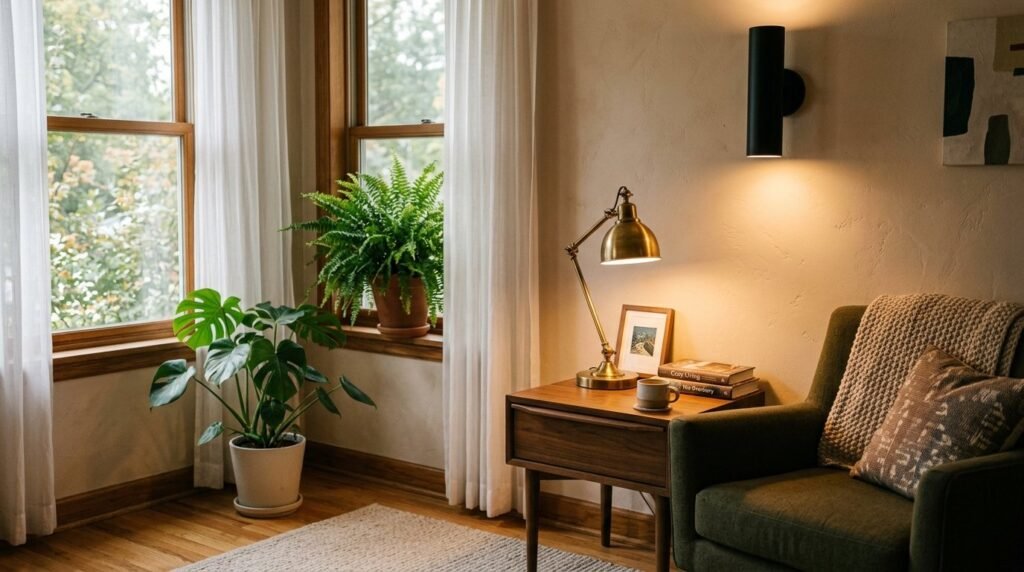
Ambient lighting should never stand alone in a room. I’ve noticed that most people rely on a single overhead “boob light” which creates harsh shadows and a flat atmosphere. In my experience, the best rooms use at least three light sources per area. For example, a living room needs an overhead fixture, a floor lamp for reading, and a small table lamp for mood. One practical action is to swap standard bulbs for 2700K warm LEDs to instantly cozy up the space. This change costs under $50 and takes ten minutes. A common mistake is buying cool-white bulbs for bedrooms, which can disrupt your sleep cycle and make your wall paint look clinical.
2. Neutral Palettes
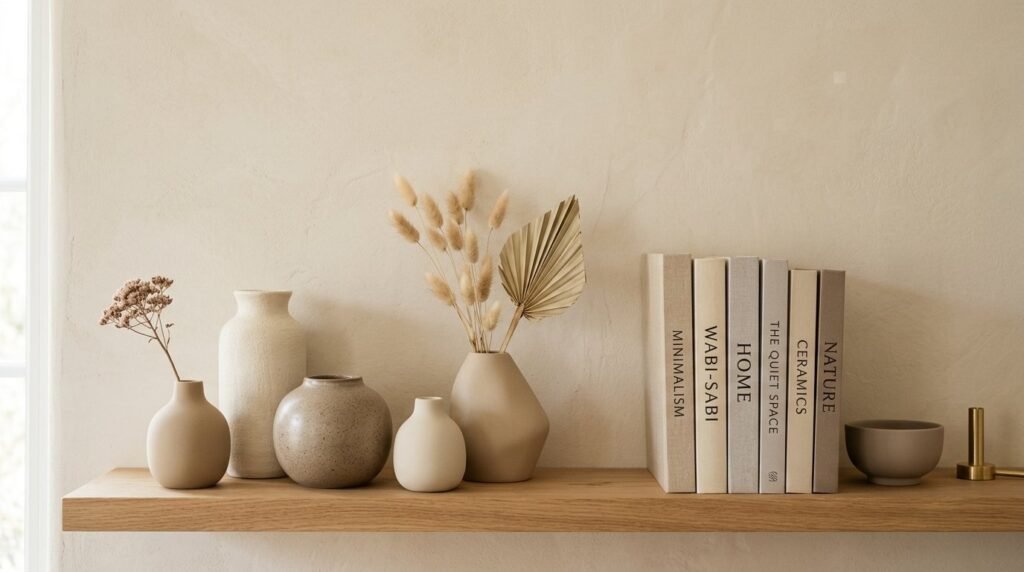
A stunning space relies on a solid base of quiet colors. Most DIY designers try to use too many bold colors at once, leading to visual exhaustion. I suggest using the 60-30-10 rule: 60% neutral base, 30% secondary color, and 10% accent. I’ve seen this work perfectly with Benjamin Moore’s Revere Pewter as a primary wall color. Buy small sample pots first because paint looks different in every house. You should paint a two-foot square on every wall to see how it shifts with the sun. A contrarian note is that “all white” isn’t always the answer. Sometimes a soft mushroom or greige adds the depth a room needs to feel expensive.
3. Statement Rugs
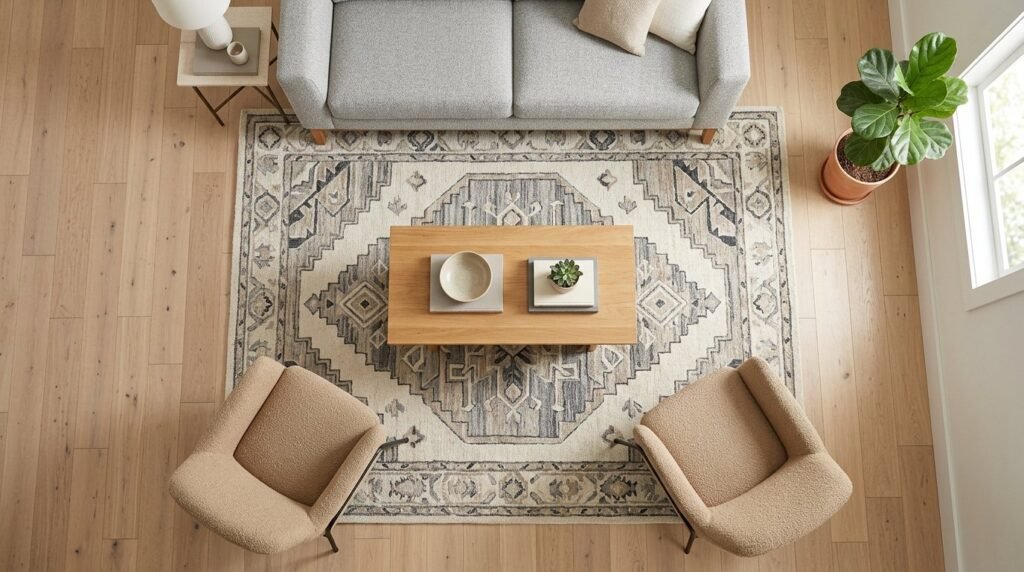
Rugs are the anchor of any room and often the biggest scale error I see. Most people buy rugs that are far too small, creating a “floating island” effect where the furniture looks unattached. I’ve tried putting a 5×7 rug in a large living room, and it ruined the entire flow. The rule is simple: all furniture legs, or at least the front two, must sit on the rug. If you have a tight budget, buy a large jute rug as a base and layer a smaller, prettier rug on top. This costs about $300 but looks like a $2,000 custom job. Don’t skip the rug pad; it prevents slipping and makes cheap rugs feel plush.
4. Multi-functional Furniture
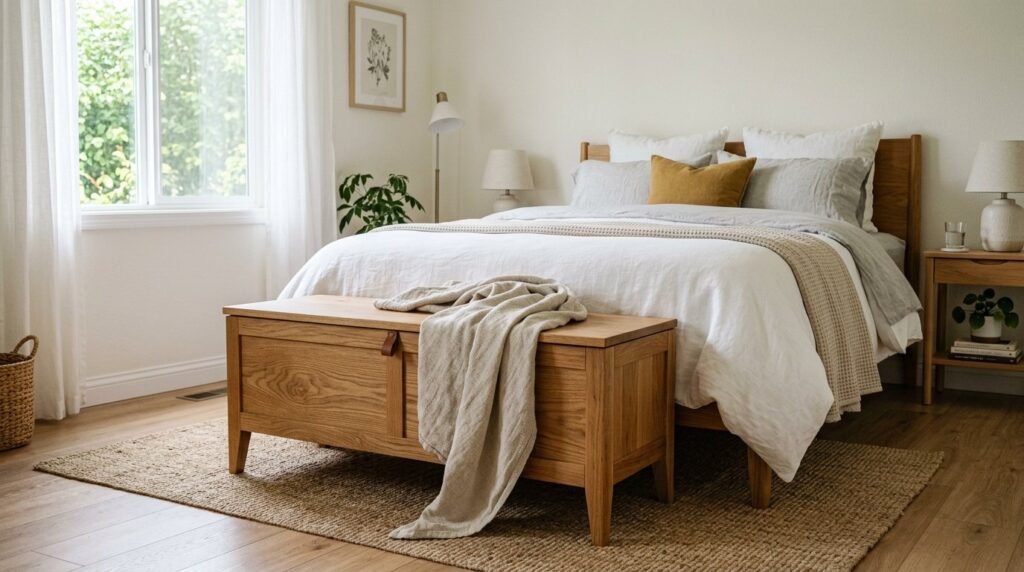
In modern homes, every piece must earn its keep. I recently helped a couple in a 600-square-foot apartment who felt cramped. We swapped their heavy coffee table for two nesting stools that could serve as seating or tables. This is a core part of low cost interior design because you buy fewer items overall. Look for ottomans with hidden storage for blankets or media consoles that can double as desks. These pieces usually cost between $150 and $450. A mistake people make is buying “sets” from big-box stores. Sets are often bulky and lack the flexibility of individual, curated pieces.
5. Indoor Greenery
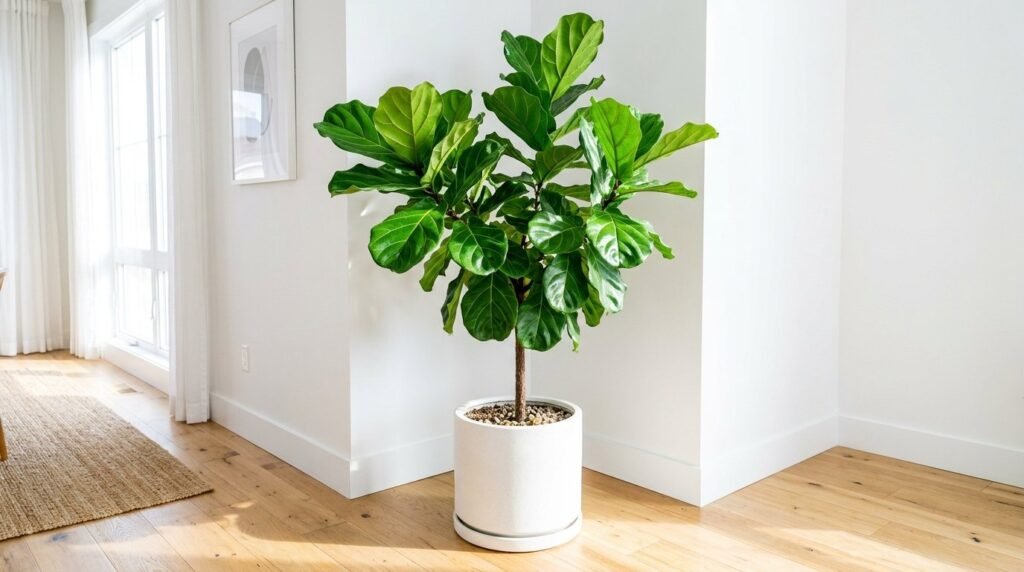
Plants are the most affordable way to add life to a dull corner. I’ve seen many people benefit from adding a large Fiddle Leaf Fig or a group of Snake Plants to their space. They act as “living sculptures” that soften the hard lines of furniture. Go to a local nursery rather than a grocery store for better plant health and expert advice. Start with a Pothos if you are a beginner; they are nearly impossible to kill. A large floor plant might cost $80, but it fills a corner better than a $300 chair. Be careful with drainage; always use a saucer to protect your flooring from water damage.
6. Architectural Hardware
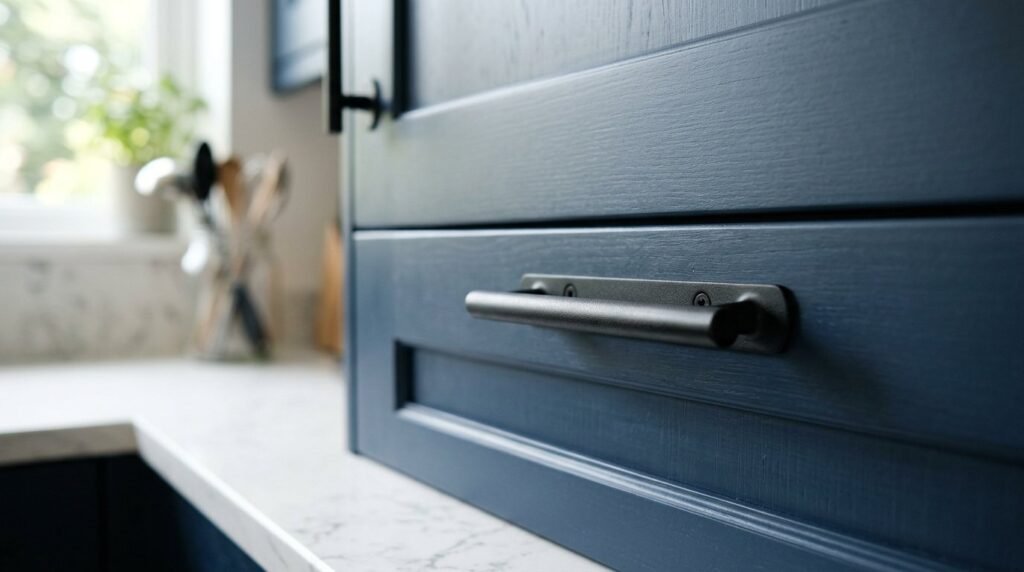
Swapping out basic cabinet handles can change the entire vibe of a kitchen or bathroom. I’ve seen this work with simple brass or matte black pulls from brands like Rejuvenation or even Amazon. It is one of the easiest do and don’t interior design tips: don’t settle for the “contractor grade” silver knobs that come with the house. Use a screwdriver to replace them yourself in under an hour. It usually costs $5 to $15 per handle. A common error is mixing too many different metal finishes in one small room. Stick to two finishes max to keep the space looking intentional and high-end.
7. Oversized Art
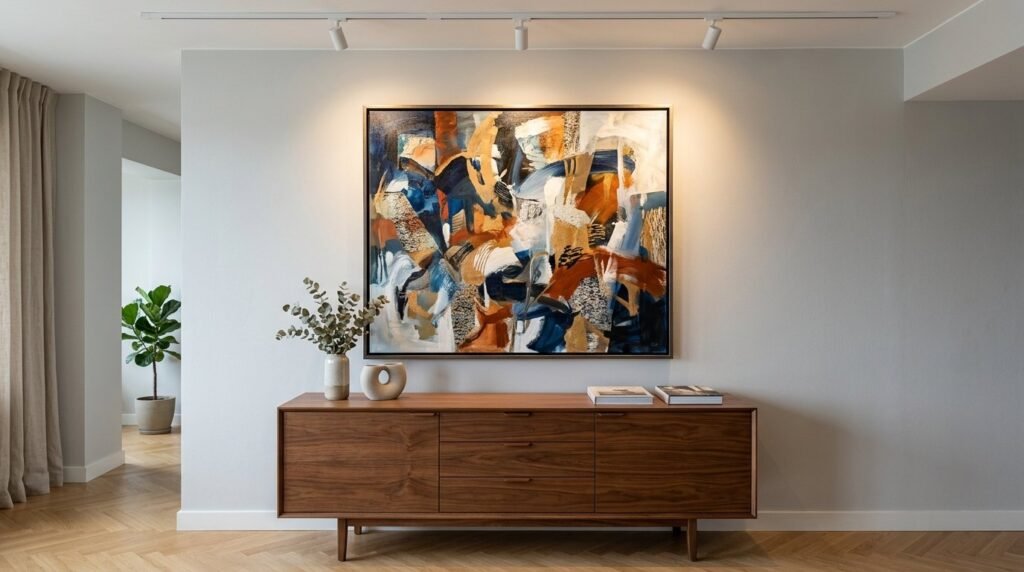
Small frames scattered across a large wall make a room feel cluttered and messy. In my experience, one large piece of art creates a much stronger focal point. I once saw a client hang five tiny 8×10 photos on a giant living room wall, and it looked like an afterthought. Instead, go for a 24×36 frame or larger. If you can’t afford expensive art, frame a large piece of interesting fabric or a high-quality digital print from Etsy. This takes about an hour to hang and costs under $100. Avoid hanging art too high; the center of the piece should be at eye level.
8. Minimal Layouts
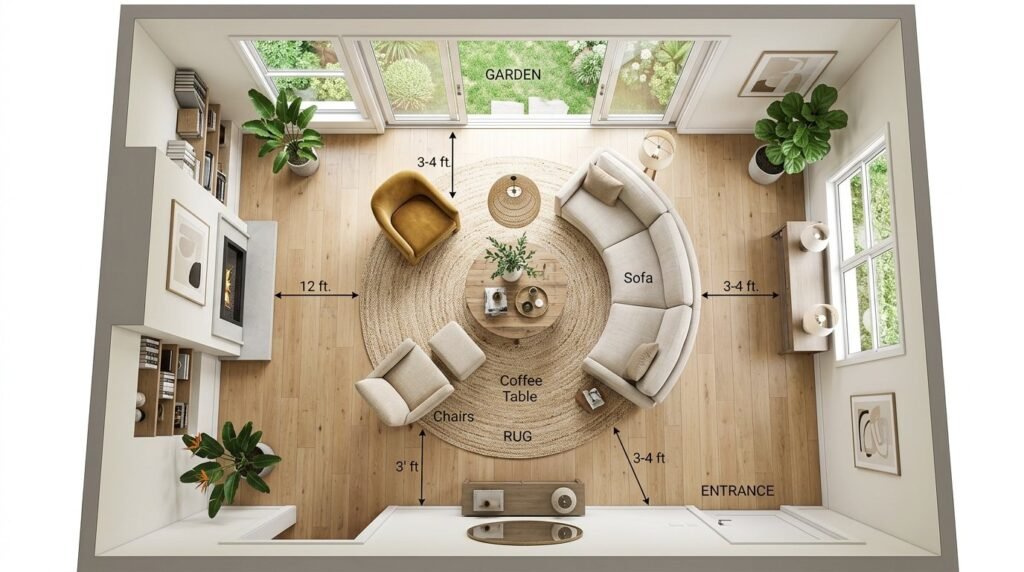
Creating breathing room is essential for a stunning space. People often feel the need to push all their furniture against the walls, but this actually makes a room feel smaller and less inviting. I’ve noticed that “floating” the sofa just six inches off the wall creates a sense of airiness. This costs nothing and takes five minutes to try. This approach is key for anyone wanting to avoid common interior design mistakes related to flow. A contrarian view is that you don’t need a chair in every corner. Empty space allows the eye to rest and highlights your favorite pieces.
9. Vintage Accents
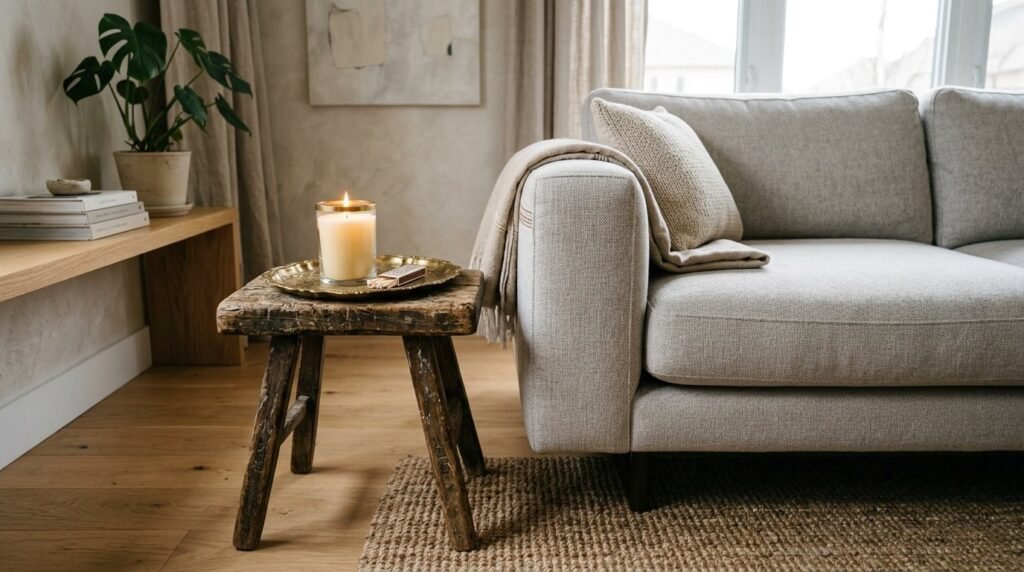
Every room needs something old to feel grounded. I’ve tried decorating rooms with only brand-new items, and they always feel like a hotel room rather than a home. I’ve seen many people benefit from a single vintage wooden stool or an antique mirror. Check local thrift stores or Facebook Marketplace for unique finds. A solid wood side table can often be found for $40 and adds more character than a new particle-board version. Don’t be afraid of a little wear and tear. A few scratches on a vintage piece tell a story and make the space feel more authentic.
10. Zone Lighting
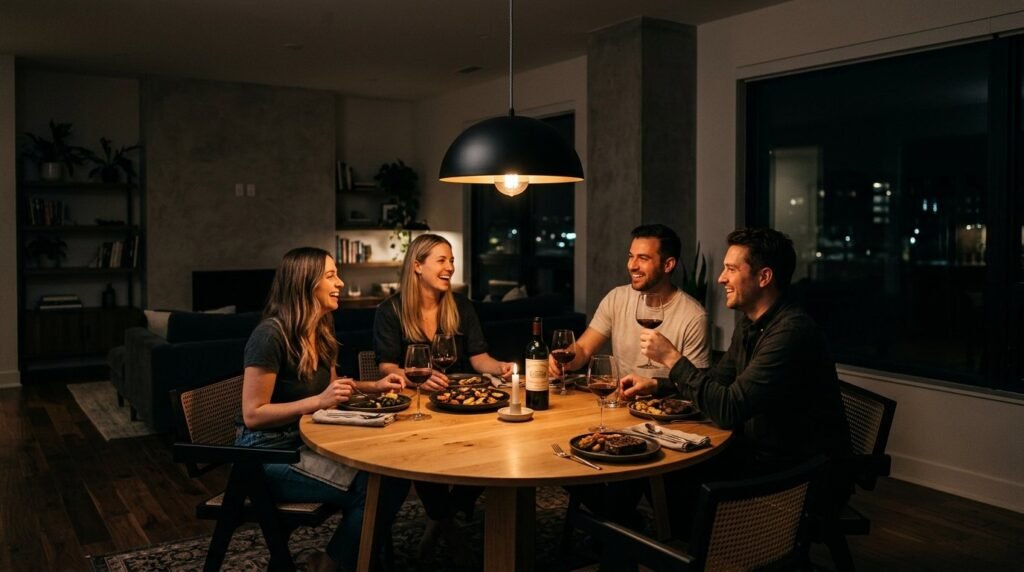
In open-concept homes, you must use light to define different areas. I’ve seen homeowners struggle with “one giant room” syndrome where the dining area blends into the lounge. Use a pendant light over the dining table to anchor that specific zone. I once installed a simple $120 plug-in pendant for a friend, and it immediately made her apartment feel like it had separate “rooms.” This helps solve common interior design mistakes and solutions for large spaces. Avoid using the same brightness level across the whole house. Dimming the “zones” you aren’t using creates a cozy, professional atmosphere.
11. Hidden Storage
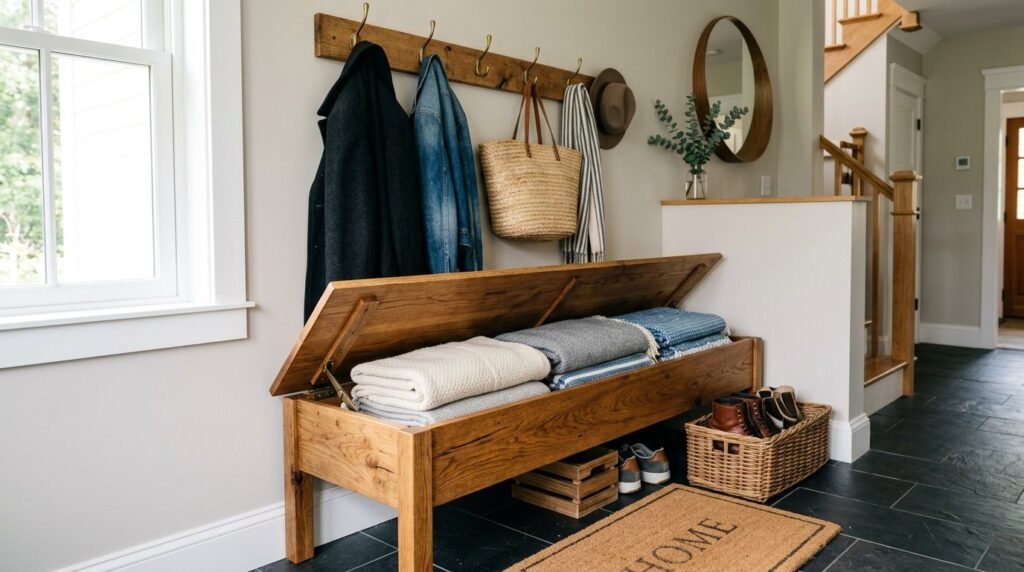
Clutter is the enemy of a stunning space. I’ve seen beautiful homes ruined by piles of mail, shoes, and remote controls. My favorite fix is using “sneaky” storage like a bench in the entryway with a flip-top lid. You can find these at Target or Wayfair for under $200. It takes thirty minutes to assemble and cleans up the visual noise instantly. This is a vital part of how to avoid common decor mistakes in high-traffic areas. A common mistake is buying open shelving for everything. Open shelves require constant styling; use closed cabinets for the messy items you actually use.
12. Textured Walls
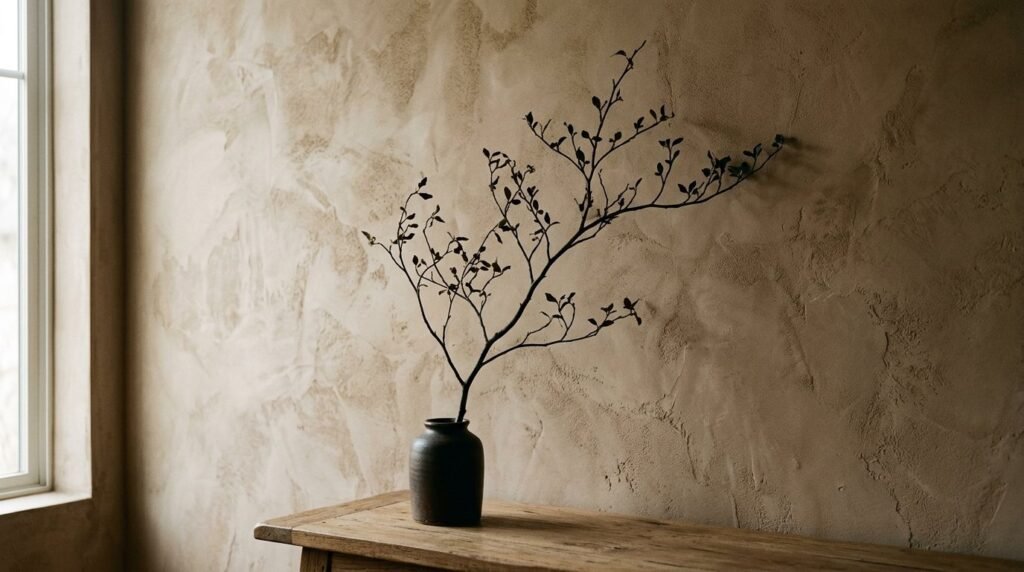
Flat drywall can feel sterile and boring. I’ve seen many people benefit from adding texture through removable wallpaper or lime wash paint. Roman Clay is a product I love for DIYers because it hides imperfections and looks like old-world plaster. Applying it to a small accent wall takes a weekend and costs about $150. This is a great way to fix modern interior design mistakes where a room feels “one-dimensional.” Don’t do the whole house; pick one wall behind the bed or the sofa to add depth. If you rent, stick to high-quality peel-and-stick options that won’t ruin the paint.
13. Reflective Surfaces
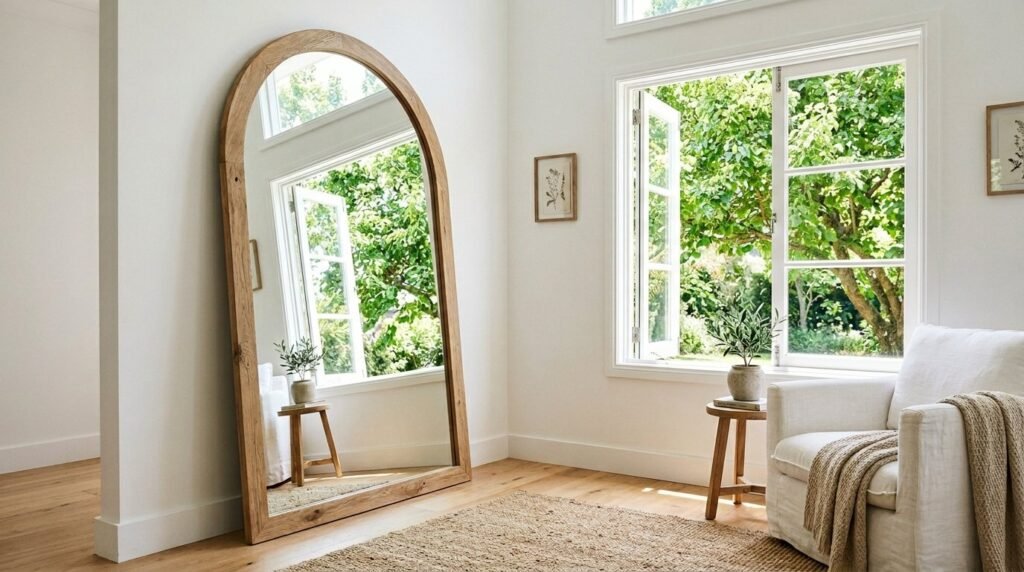
Mirrors are a designer’s secret weapon for small or dark rooms. I’ve noticed that placing a large floor mirror opposite a window can double the amount of natural light in a space. I once helped a client with a windowless hallway by adding a gallery of mirrors, which made the space feel three feet wider. You can find large arched mirrors for around $150. This is a classic low cost interior design move that has a massive impact. Avoid placing mirrors where they will reflect clutter or the bathroom door. Always aim the reflection toward something beautiful, like art or a window.
14. Sustainable Materials
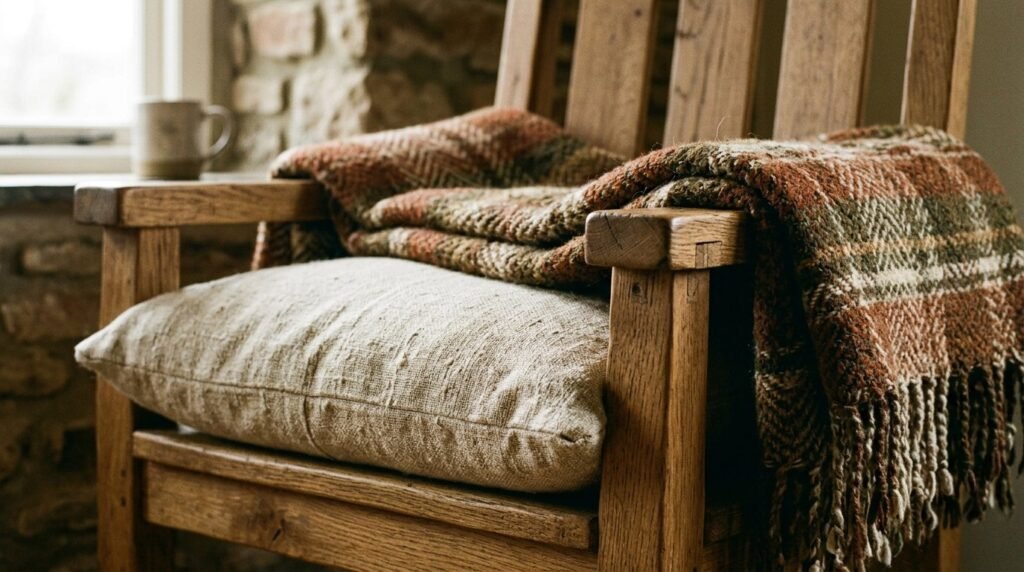
Choosing quality over quantity is better for your home and the planet. I’ve seen this work when people invest in a solid wood table instead of three cheap veneers over five years. Look for materials like linen, wool, and FSC-certified wood. A linen throw pillow might cost $40 compared to a $10 polyester one, but it will age beautifully and feel better. This aligns with the minimal contemporary aesthetic which prioritizes longevity. Avoid “fast furniture” that relies on heavy glues and plastics. These items often off-gas chemicals and fall apart during a move, costing you more in the long run.
15. Custom Millwork
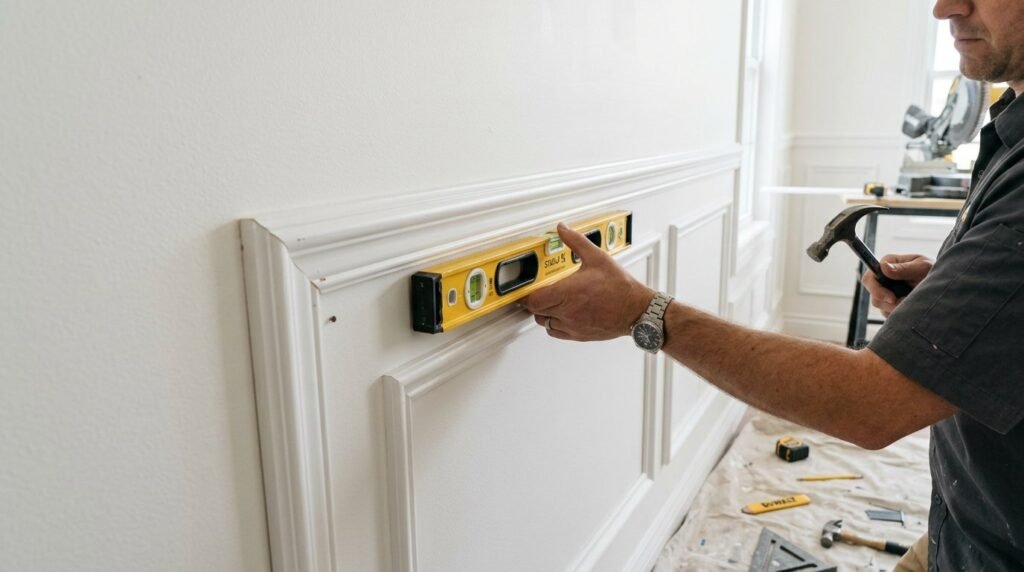
Adding trim or molding can make a standard room look like a custom build. I’ve seen many people benefit from adding simple picture frame molding to their dining room walls. It is a straightforward DIY project involving a miter saw and some liquid nails. The materials for a standard room usually cost under $200. This is one of the best interior design mistakes and solutions for “boring” new-build homes. A common error is making the molding too small for the wall height. Always aim for proportions that match the scale of your ceiling to keep the look sophisticated.
16. Tonal Textures
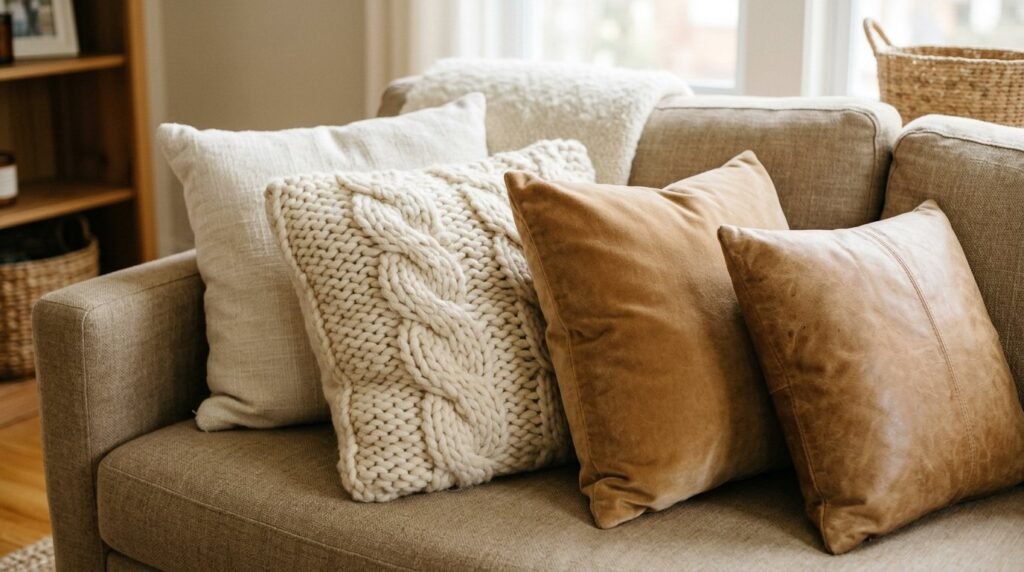
If you prefer a neutral home, you must play with texture to keep it from looking flat. I’ve tried using different shades of the same color—like oatmeal, cream, and sand—to create a rich, layered look. In my experience, mixing a chunky wool throw with a smooth leather sofa and a velvet pillow makes a room feel expensive. This costs nothing if you already have the items; just rearrange them! This helps you avoid common decor mistakes where a room feels “unfinished.” Don’t forget the floor; a high-pile rug paired with a sleek coffee table provides the perfect tactile contrast.
17. Sculptural Decor
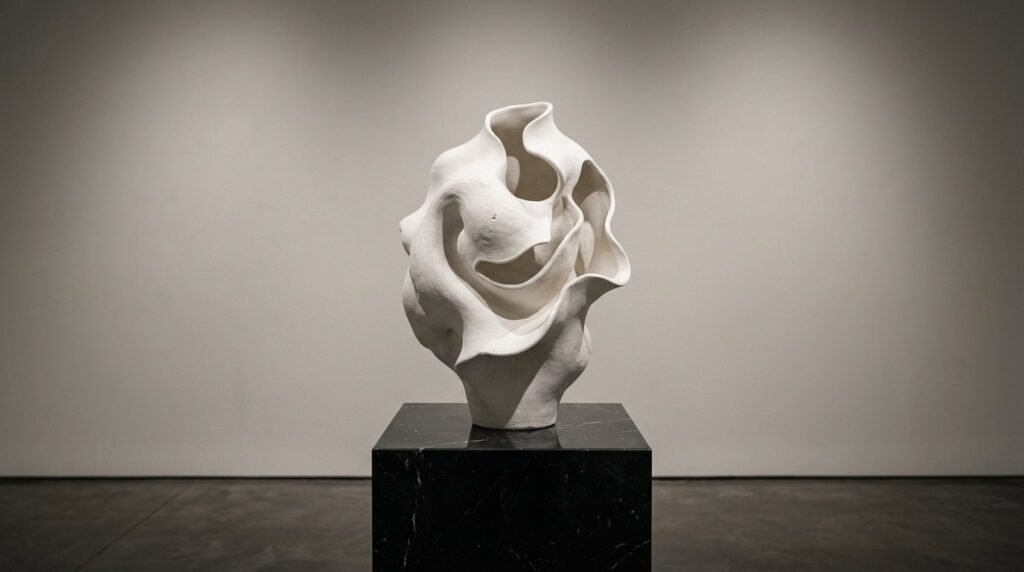
Every surface needs one object that feels like art. I’ve seen homeowners fill their shelves with tiny “dust collectors” rather than a few significant pieces. I’ve seen many people benefit from swapping ten small candles for one large, interesting ceramic vase. You can find unique vessels at local potteries or antique malls for $30 to $60. This is a core part of the do and don’t interior design philosophy: do choose one bold shape over many small ones. A contrarian note is that you can use a found object, like a large piece of driftwood, as a free sculptural element.
18. Balanced Proportions
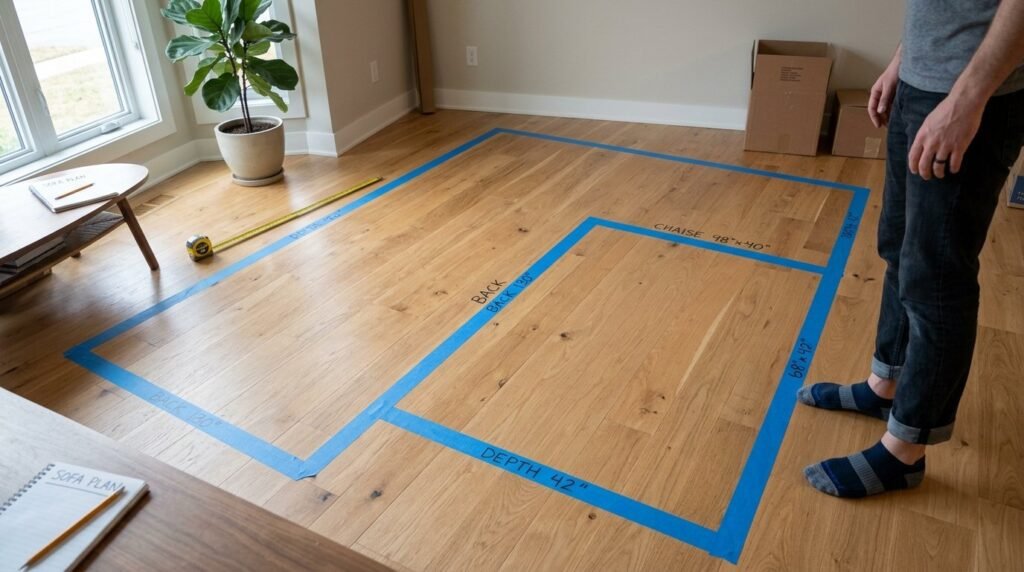
Scale is the hardest thing for most people to get right. I’ve noticed that many homeowners buy furniture that is too large for the room, which makes the space feel suffocating. Before buying anything, tape out the dimensions on your floor using blue painter’s tape. This takes ten minutes and saves you the $200 return shipping fee. I once saw a king-sized bed crammed into a room so small the doors wouldn’t open. This is a classic example of worst interior design mistakes to avoid. Ensure there is at least 30 inches of walking space between major pieces of furniture.
19. Smart Technology
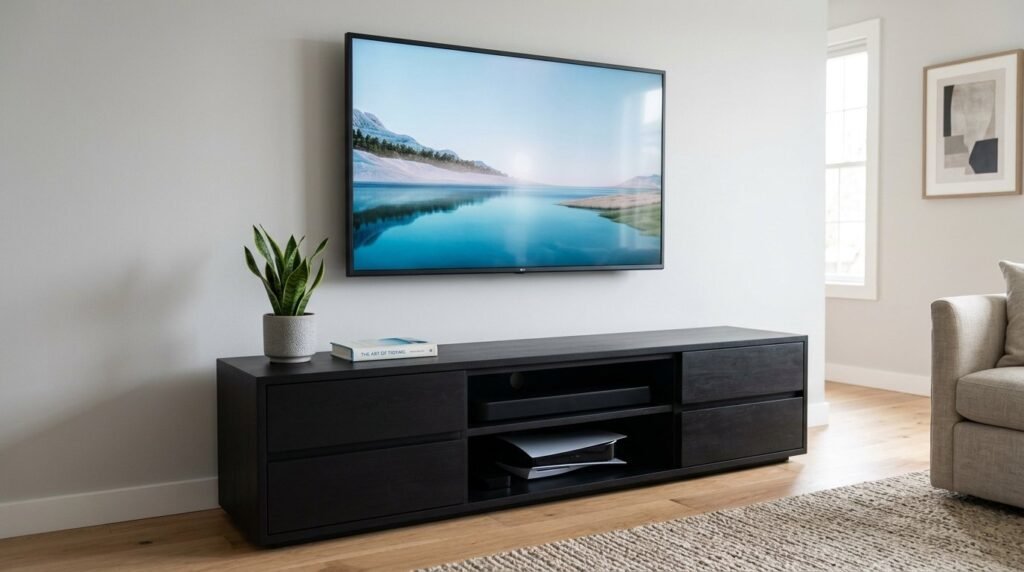
Integrating tech seamlessly is a modern necessity. I’ve seen beautiful living rooms ruined by a “nest” of black wires under the TV. Use cord hiders or a media console with built-in cable management to fix this. I recently helped a client hide her router inside a decorative basket, which cost $20 and took five minutes. This is a simple way to address modern interior design mistakes that disrupt visual harmony. Avoid having the TV as the only focal point in the room. Consider a “Frame” style TV that displays art when not in use to blend technology with decor.
20. Natural Light
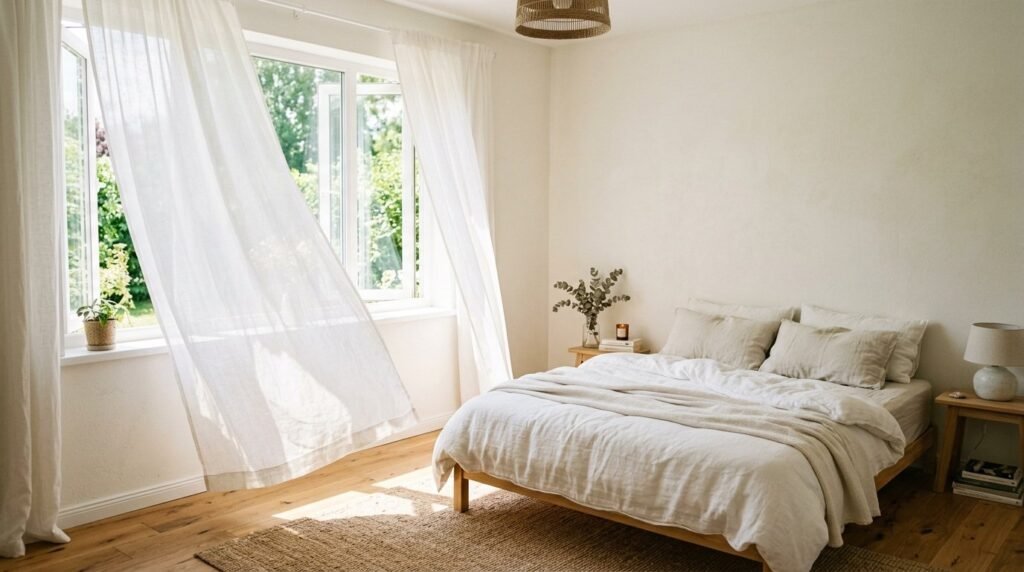
You should maximize every bit of sun your home receives. I’ve noticed that heavy, dark curtains can make even a large room feel depressing. Swap them for sheer linen panels that allow light in while providing privacy. I once helped a friend remove dark blinds in her kitchen, and she said it felt like she had gained 100 square feet. This costs about $50 for new rods and curtains. This is a top tip for low cost interior design. A common mistake is blocking windows with tall furniture. Keep your layout low near the windows to let the light wash across the floor.
21. Cohesive Hardware
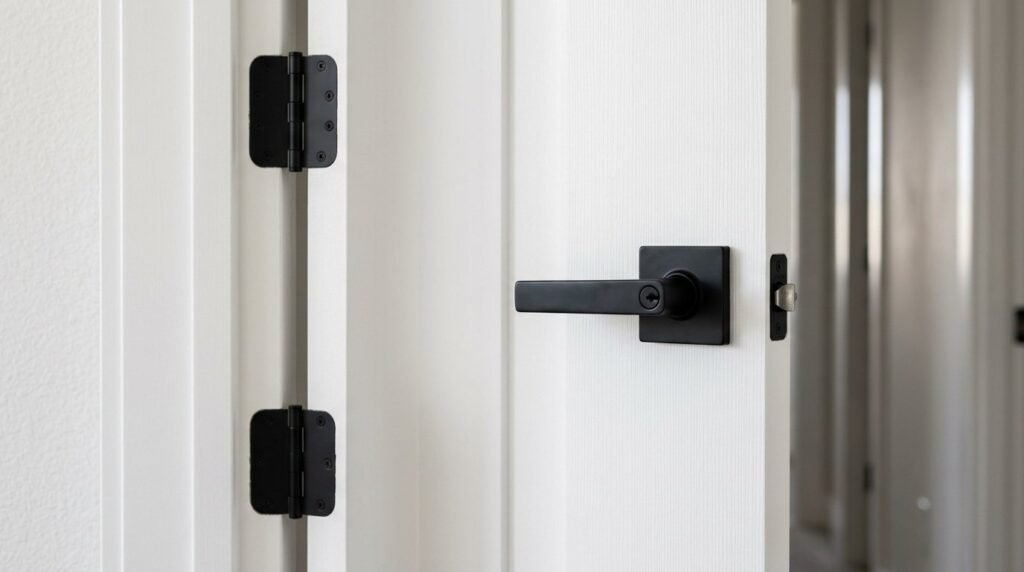
Consistency across your home creates a professional, “designed” feel. I’ve seen this work when a homeowner uses the same style of door levers and hinges throughout the house. It’s a subtle detail that people notice subconsciously. If your kitchen has brass handles, try to incorporate brass accents in the nearby living room to tie the spaces together. Swapping door hardware takes about 20 minutes per door and costs $30 to $50. Avoid “themed” rooms that don’t match the rest of the house. A cohesive flow makes the entire home feel larger and more expensive than it actually is.
Frequently Asked Questions
What are the worst interior design mistakes to avoid?
The most damaging mistake is improper scale, specifically using rugs that are too small and furniture that is too large for the footprint of the room. This makes a space feel uncoordinated and cramped. I’ve seen many people benefit from measuring their rooms twice and using floor tape to visualize pieces before buying. Another major error is poor lighting; relying on a single overhead source creates a harsh environment. By layering your lighting and respecting the scale of your room, you can avoid the “showroom” look that feels uncomfortable and impersonal.
How can I achieve low cost interior design that looks expensive?
Focus on high-impact, low-cost changes like swapping cabinet hardware, adding indoor greenery, and using paint to create accent walls. I’ve seen homeowners save $2,000 by refinishing existing furniture rather than buying new. Paint is the most affordable tool in your kit; a fresh coat of a modern neutral can transform a dated room in a weekend for under $100. Additionally, thrifted vintage accents add a layer of sophistication that brand-new, cheap furniture simply cannot replicate. Prioritize “living” elements like plants and natural light to breathe life into the space.
What is minimal contemporary style?
Minimal contemporary design focuses on clean lines, a neutral color palette, and a “less is more” philosophy. It emphasizes quality materials like wood, stone, and linen over excessive ornamentation. In my experience, this style works best when you focus on functional beauty—items that look good but also serve a clear purpose. It’s about creating a sense of calm through decluttering and intentional furniture placement. You can achieve this by removing unnecessary decor and focusing on a few large, sculptural pieces that make a statement without overwhelming the room.
How do I fix modern interior design mistakes in a rental?
Renters should focus on “reversible” upgrades like peel-and-stick wallpaper, plug-in pendant lights, and area rugs. I’ve noticed that most rental lighting is poor, so adding floor lamps can completely change the mood without touching the wiring. Use Command hooks for art and mirrors to avoid wall damage. Swapping out standard showerheads or kitchen knobs is another quick fix—just remember to keep the original parts to put back before you move out. These small changes help the space feel like yours without risking your security deposit.
How do I avoid common decor mistakes with wall art?
The biggest mistake is hanging art too high or choosing pieces that are too small for the wall. Art should generally be hung so the center is 57 to 60 inches from the floor, which is the average human eye level. If you are hanging art above a sofa, it should span about two-thirds the width of the furniture. I’ve tried using “gallery walls” to solve the small-art problem, which works well if the frames are spaced consistently (about 2-3 inches apart). Always use a level to ensure your pieces are straight.
What are some easy do and don’t interior design tips for beginners?
Do prioritize comfort and functionality; if a chair looks great but is painful to sit in, it’s a mistake. Don’t buy everything from one store, as this creates a flat, uninteresting look. Do use various textures like wool, leather, and wood to add depth to neutral rooms. Don’t push all your furniture against the walls; floating pieces creates a better flow for conversation. Finally, do invest in a few high-quality “anchor” pieces like a sofa or dining table, and save money on smaller decor items like pillows and vases.
How can I make a small room feel larger?
Use mirrors to reflect light and keep the floor visible by choosing furniture with legs rather than “skirted” or blocky bases. I’ve seen this work in tiny apartments where a glass coffee table made the room feel twice as big because the eye could see through it. Keep the color palette light and consistent across the walls and ceiling to avoid “cutting” the room in half visually. Using long, floor-to-ceiling curtains also draws the eye upward, making the ceilings feel higher than they actually are.
What is the best way to handle interior design mistakes and solutions for color?
If a paint color looks wrong once it’s on the wall, don’t try to “fix” it with more decor; it’s usually cheaper and faster to just repaint. I’ve seen people spend $500 on new pillows trying to make a bad wall color work, only to end up repainting anyway. Use the 60-30-10 rule to maintain balance. If a room feels too dark, increase the wattage of your bulbs and add reflective surfaces rather than painting everything stark white, which can sometimes look gray in low light.
Why is architectural hardware important?
Hardware is the “jewelry” of your home. Standard, builder-grade handles are often cheap and generic. By upgrading to solid brass, bronze, or matte black, you add a tactile sense of quality every time you open a door or drawer. It’s a very low-cost project that provides a high-end, custom feel. I’ve seen this work especially well in kitchens where the cabinets are basic; the right handles make them look like expensive custom millwork. Consistency in hardware finish across a room is key to a polished look.
How do I choose the right rug for my space?
Ensure the rug is large enough for all the major furniture pieces to sit on it. For a living room, an 8×10 or 9×12 is usually the standard. If you have a beautiful hardwood floor you want to show off, you still need a rug to define the seating area; just leave a 12-inch border of wood visible around the edges. I’ve noticed that natural fibers like wool or jute are more durable and look better over time than synthetic materials. Always use a rug pad to add comfort and prevent the rug from bunching.
How do I mix vintage and modern styles?
The secret is the 80/20 rule: 80% one style and 20% the other. If your home is mostly minimal contemporary, adding 20% vintage items like an old wooden trunk or a traditional landscape painting adds soul. I’ve seen many people benefit from this “mixed” look because it feels more personal and less like a furniture catalog. Look for common threads, such as similar wood tones or a shared color palette, to tie the different eras together. Vintage items provide the character that new-build homes often lack.
What should I do if my room feels “cold”?
Add soft textures and warm lighting. “Cold” rooms usually have too many hard surfaces like tile, glass, and metal. Bring in a plush rug, velvet curtains, or a wooden coffee table to add warmth. Ensure your light bulbs are “warm white” (2700K) rather than “cool white” or “daylight.” In my experience, adding even one or two items made of natural materials like wicker or wood can instantly change the temperature of a room. Plants also help by adding organic shapes and vibrant color.
How do I hide messy electronics?
Use decorative boxes with holes cut in the back for cords, or choose a media console with perforated doors that allow remote signals to pass through while hiding the boxes. I’ve seen this work with simple IKEA hacks where a basket is used to house a router. Cord clips are also helpful for running wires down the legs of tables so they stay out of sight. Managing your cables is a small task that yields a massive improvement in the overall “cleanliness” of your design.
How do I pick the right size art?
Art should fill about 60% to 75% of the available wall space. If you are hanging a piece above a piece of furniture, it should be about two-thirds the width of that furniture. I’ve seen many people benefit from using a large “statement” piece rather than many small ones. If you have a small piece you love, put it in a much larger frame with an oversized mat to give it more presence. This is a great way to make affordable prints look like expensive gallery art.
What is the most common mistake in lighting?
The most common mistake is having only one light source in a room. This creates “flat” lighting that doesn’t highlight the room’s best features. You need a mix of task lighting (for reading or cooking), ambient lighting (for general visibility), and accent lighting (to highlight art or architecture). I’ve seen rooms transformed just by adding two small lamps in dark corners. Using dimmers is also a game-changer, allowing you to adjust the mood of the room throughout the day.
How do I create a focal point in a room?
A focal point is the first thing you see when you walk into a space. It could be a fireplace, a large window, or a piece of statement art. If your room doesn’t have a natural focal point, create one with a bold piece of furniture or a gallery wall. Once you identify the focal point, arrange your furniture to highlight it. I’ve noticed that rooms without a clear focus often feel disorganized and confusing. Don’t try to have more than one or two focal points per room.
Conclusion
Creating a stunning home doesn’t require a professional decorator or an unlimited bank account. By applying these 21 Home Interior Design Tips, you can move past common interior design mistakes and build a space that feels authentically yours. I’ve seen how small changes—like fixing a rug’s scale or layering your lamps—can completely change how you feel when you walk through your front door. Start with one room, focus on the layout and lighting, and let the rest evolve naturally. If you found these insights helpful, save this post on Pinterest so you can refer back to it during your next project. Share this article with a friend who is starting a renovation, and try implementing at least one idea this weekend to see the transformation for yourself.

Sloane Whitaker is the Editor-in-Chief at Home Wall Trends, leading editorial direction with over a decade of experience in residential interior design and home styling. Her specialty is space planning and layout, the unglamorous fundamentals that make a beautiful room actually function. A graduate of the New York School of Interior Design, Sloane has styled over 200 client homes before turning her focus to digital publishing. Her editorial standard: “If a reader can’t picture themselves doing it on a Saturday afternoon, we haven’t explained it well enough.”