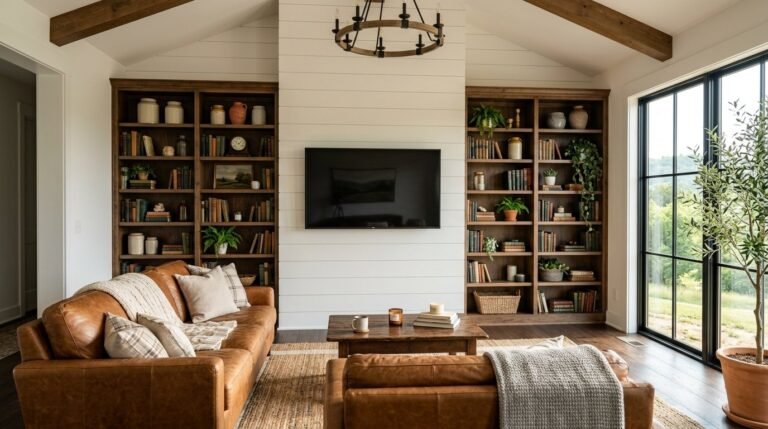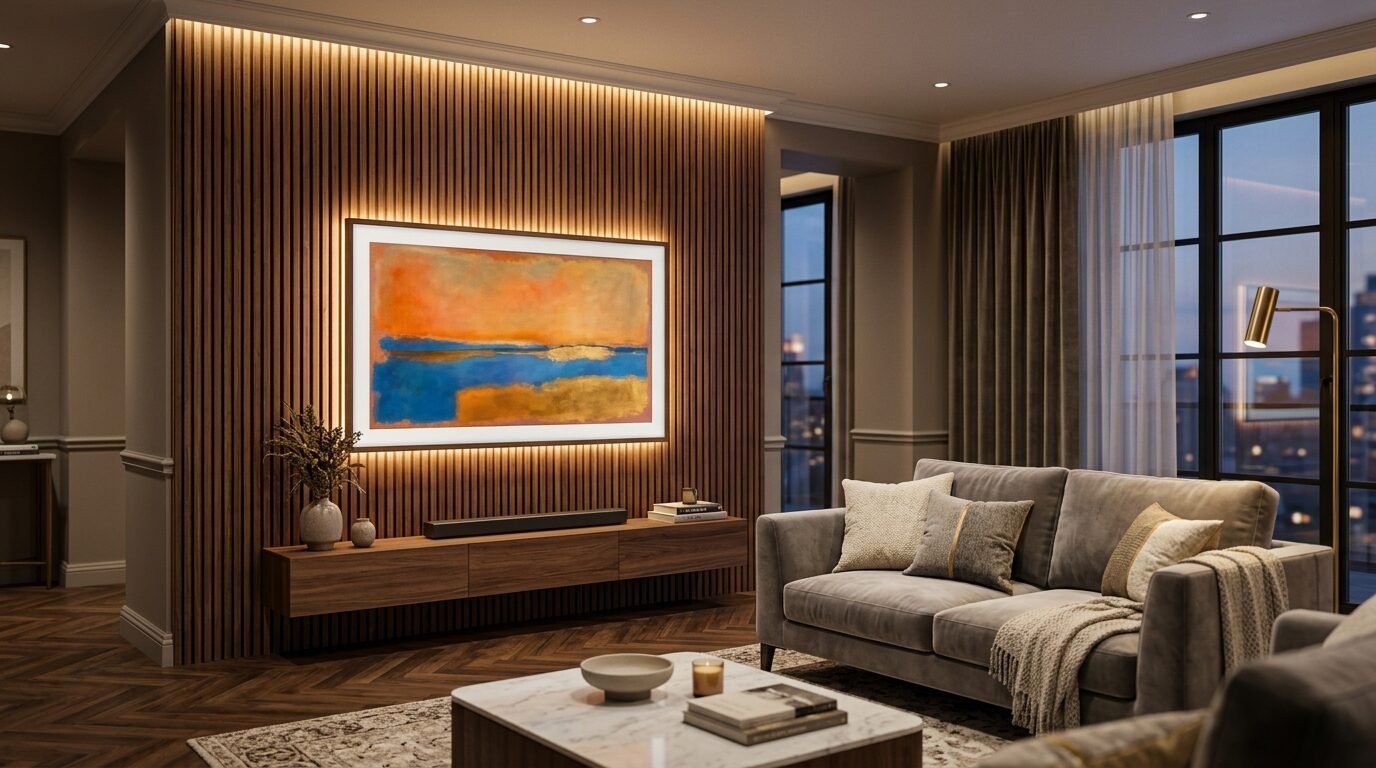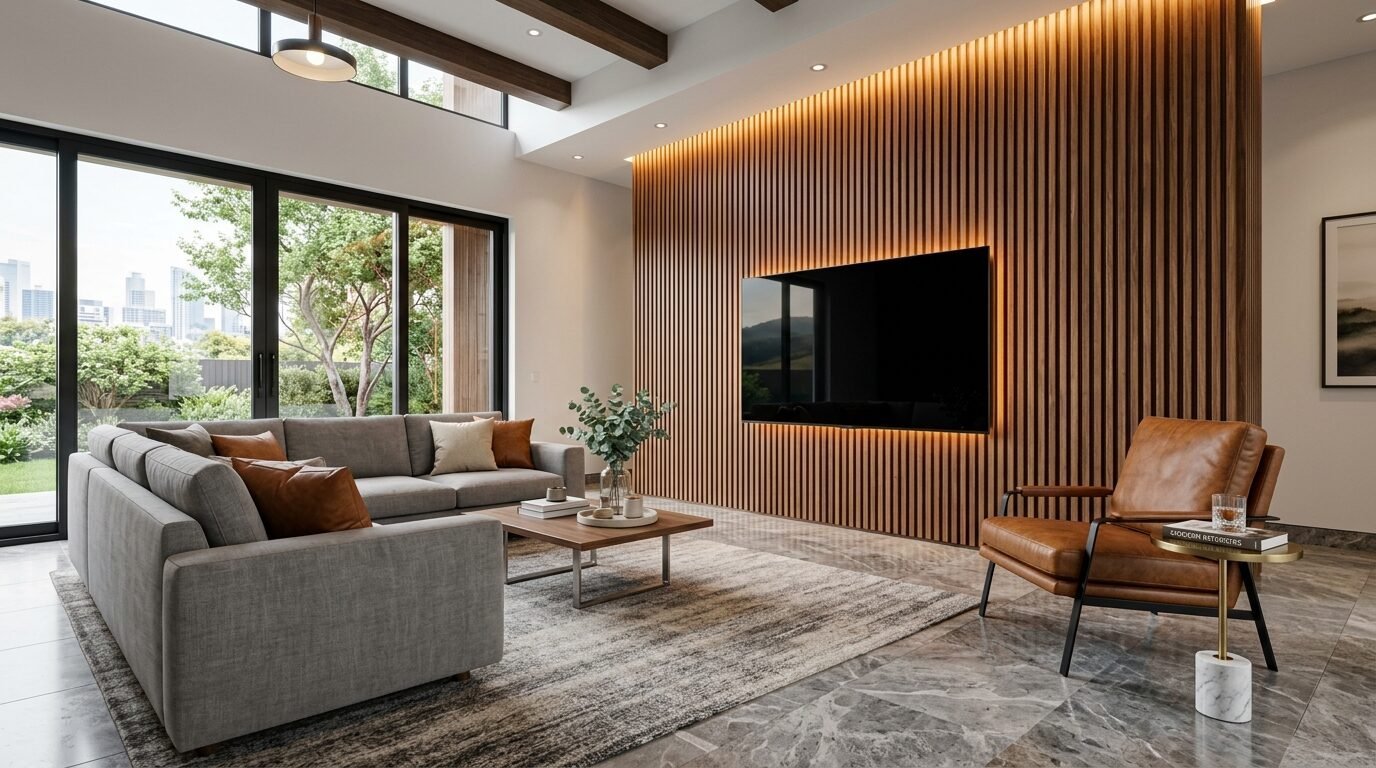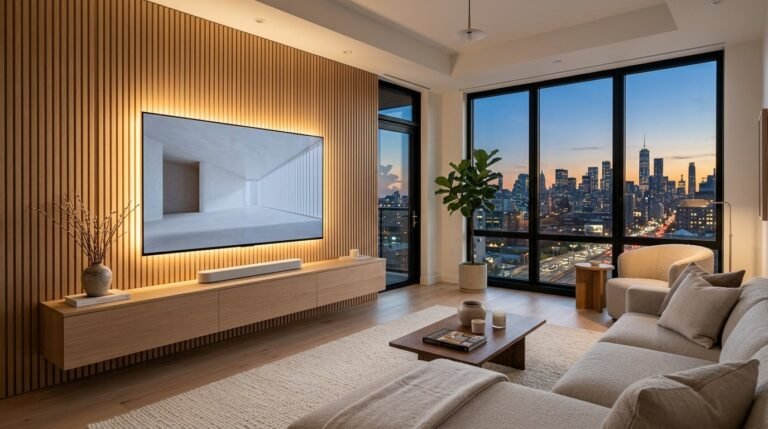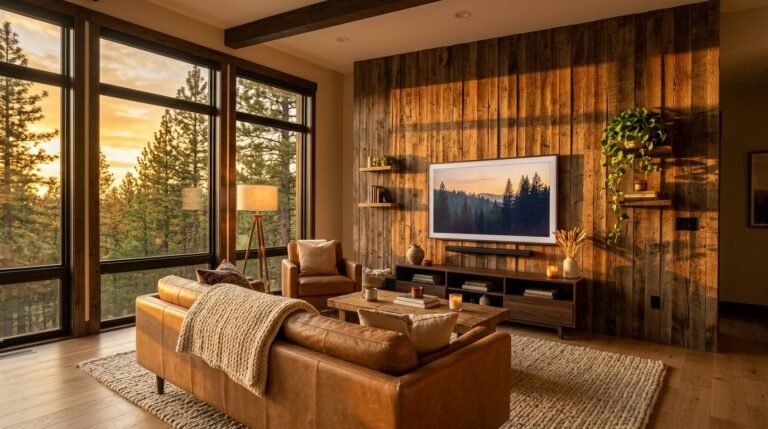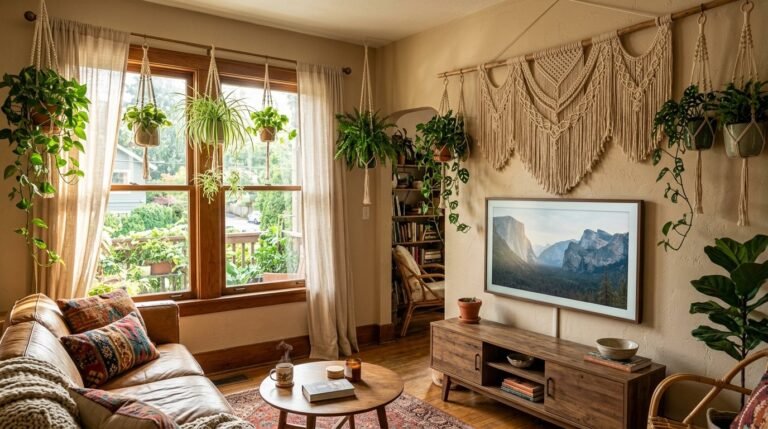
Your living room center point often feels like a giant black void when the screen is off. I spent years visiting homes where the television was an afterthought. It sat on a dusty stand with a tangled mess of wires spilling out like a tech monster. Last year, I helped a family in Austin who had a gorgeous vaulted ceiling living room. They spent thousands on a sofa but their TV area looked like a college dorm. We fixed it using a recessed media wall and the change was instant. The room felt calmer and more expensive.
A sleek lounge depends on how you treat the screen. It should look like a piece of art or a part of the architecture. If you see wires, you lose the luxury feel immediately. I have noticed that the best designs hide the tech and highlight the textures. You want a setup that makes people stop scrolling when they see your home photos online. This guide covers the exact steps to turn a boring wall into a high end feature. We will look at materials, lighting, and layout secrets that professional designers use. These 20 hacks work for small apartments and large open plan homes alike.
Strategic Executive Summary
This guide provides a blueprint for creating a luxury TV wall that balances style and function. You will find 20 specific hacks that cover everything from floating units to textured backdrops. I include a list of 10 essential brands for hardware and electronics. We also look at the exact costs for professional versus DIY projects. You will see how to handle tricky spaces like corner units or rooms with high ceilings.
The main goal is to remove visual clutter. We focus on recessed media wall setups that keep the screen flush with the surface. I share my personal experience with cable management and the tools I use to hide every single cord. By the end of this deep dive, you will have a clear plan to update your modern TV area. We skip the generic advice and focus on actionable steps that produce real results. This is about making your home feel intentional and refined.
1. Floating Credenzas for Floor Space
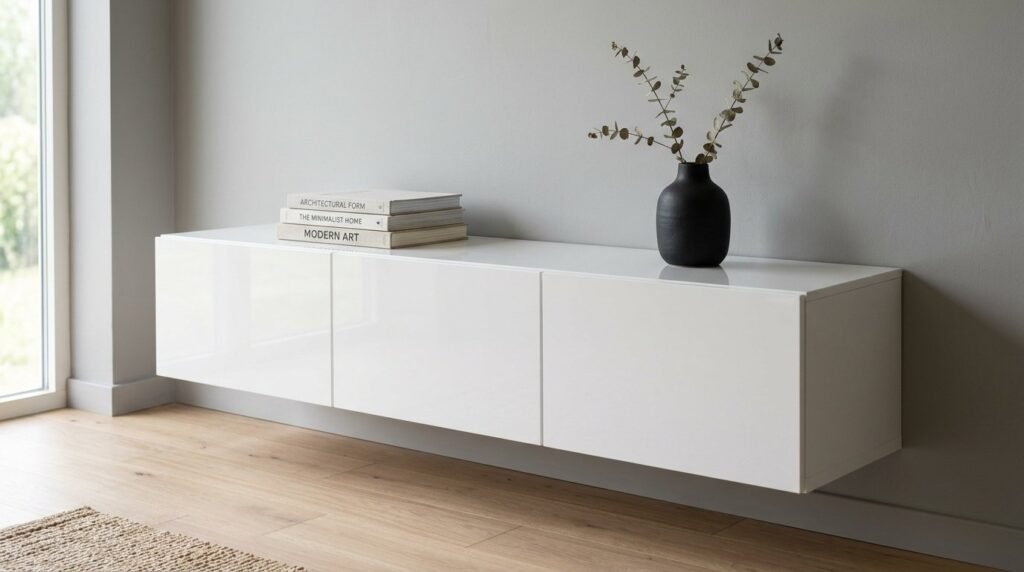
Floating units change the feel of a lounge instantly. I once worked on a project where the floor space was tiny. We installed a long white gloss floating unit under a 65 inch screen. It made the room feel three feet wider. You get a clean look that prevents dust from gathering in corners.
Installation Success
Use heavy duty anchors to ensure the unit stays level. I prefer the Sanus wall mounts for the screen and ToggleBolt anchors for the cabinetry. I always recommend keeping the unit about twelve inches off the floor. This height allows your robot vacuum to pass under it without getting stuck. It also keeps the sightline low and sleek.
Styling the Top
Do not clutter the top of the floating unit. I usually place one or two coffee table books and a single ceramic vase. Keep the items on one side to create an asymmetrical balance. This draws the eye across the wall rather than just at the screen.
2. Recessed Media Walls for a Flush Look
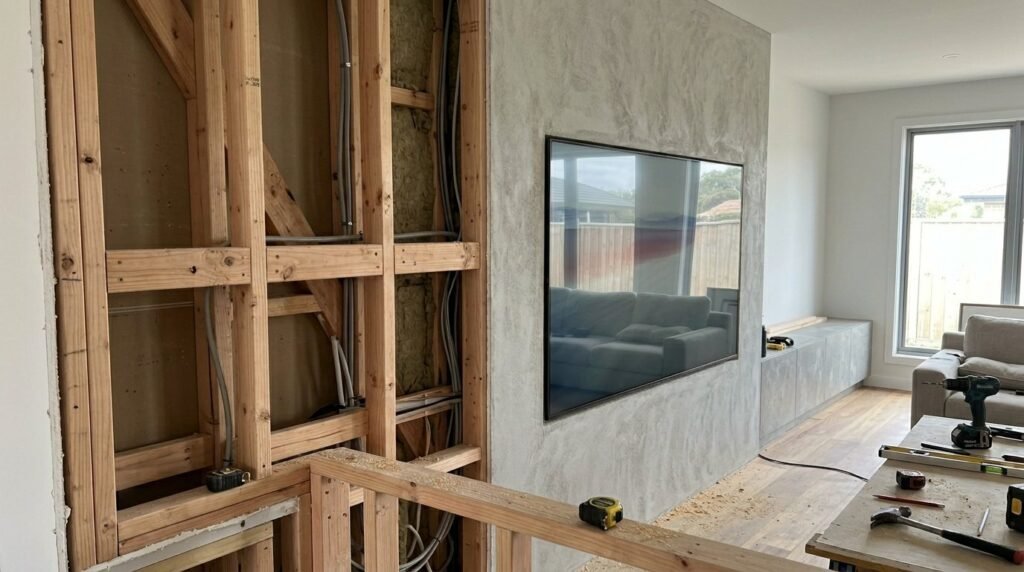
A recessed media wall is the gold standard for a luxury TV wall. This involves building a false wall or a niche where the TV sits perfectly flat. I saw this work perfectly in a modern farmhouse design last fall. The screen looked like a framed picture rather than a plastic box.
The Construction Phase
You need to build a timber frame that sticks out about six to eight inches from the original wall. This creates enough depth for the TV and the mounting bracket. I suggest using the Samsung Frame TV for this specific hack. The thin profile makes the flush look much easier to achieve.
Internal Cooling
Remember that electronics get hot in tight spaces. I always include small vents at the top and bottom of the niche. You can hide these with shadow gaps or decorative trim. If you skip this, your TV life span might drop by years.
3. Vertical Slat Backdrops
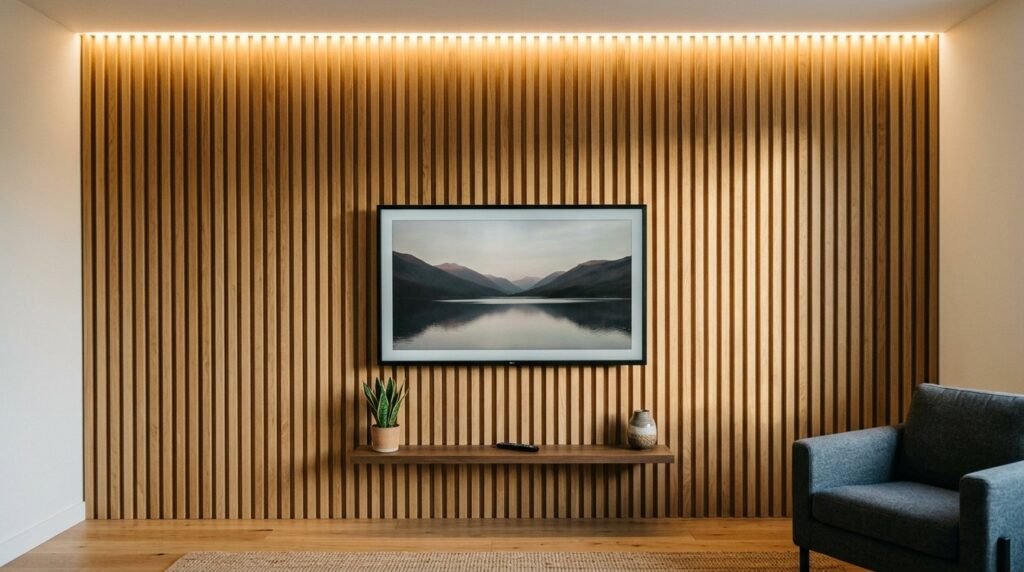
Vertical slats add height and texture to any modern TV unit designs. I have used oak and walnut slats to warm up cold, white rooms. The repetition of the wood lines creates a rhythmic feel that is very pleasing to the eye.
Choosing Materials
I often buy pre-made slat panels from brands like The Wood Veneer Hub. They are much easier to install than individual pieces of wood. You can glue them directly to the drywall using construction adhesive. It takes a boring wall and makes it a focal point in three hours.
Sound Benefits
Slats do more than just look good. They help with the acoustics of your lounge. The gaps between the wood help break up sound waves. This reduces the echo when you are watching movies or playing music.
4. Hidden Cable Management Systems
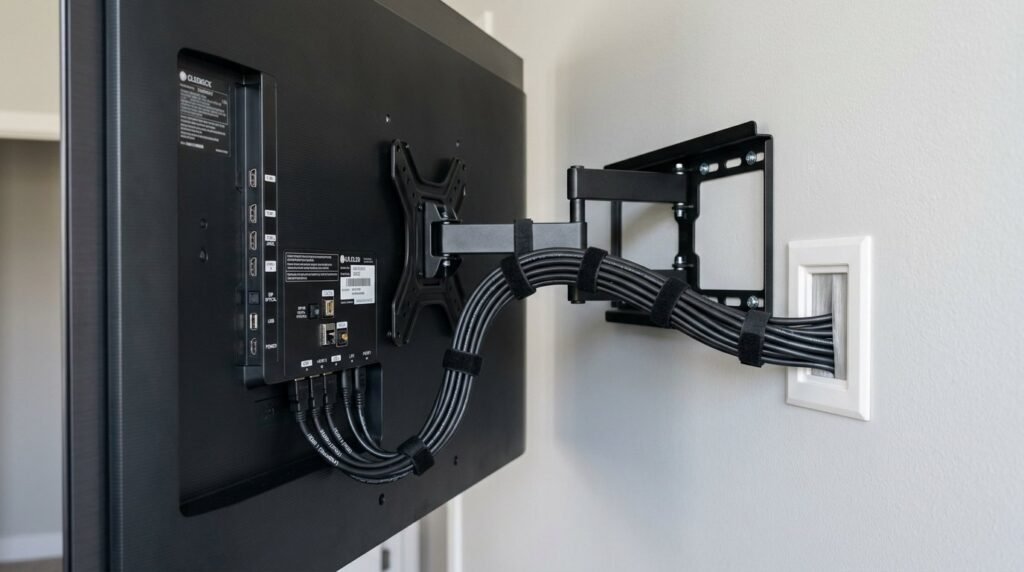
Nothing ruins a modern TV area faster than a single visible wire. I have seen beautiful rooms look cheap because of one black cord hanging down. My secret is using in wall rated power kits.
Use the Right Kit
I trust the Legrand in wall power kit for most of my projects. It allows you to run power and HDMI cables behind the drywall safely. You do not need an electrician if you are comfortable cutting two small holes in the wall.
Organizing the Back
Even behind the TV, things get messy. Use Velcro straps instead of plastic zip ties. Velcro allows you to add or remove cables later without cutting anything. I always label both ends of the HDMI cables so I know which one goes to the gaming console.
5. Layered LED Lighting
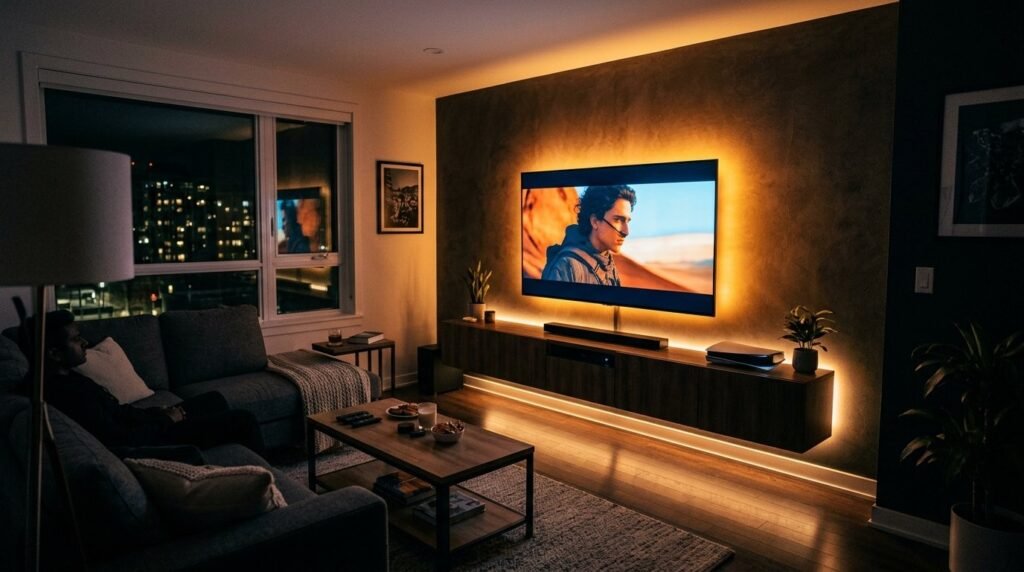
Lighting is the “secret sauce” of TV room decor. I avoid using harsh overhead lights while watching TV. Instead, I use layered LED strips to create a soft glow.
Placement Strategy
I place LED strips behind the TV and along the bottom of the floating cabinet. I highly recommend the Philips Hue Gradient lightstrip. It syncs with the colors on your screen to make the image feel larger.
Choosing the Temperature
Avoid cool blue lights. I stick to warm white or “sunset” tones. This makes the lounge feel cozy and inviting. I use the Lutron Caseta system to dim the lights automatically when the TV turns on.
6. Asymmetrical Shelving Units
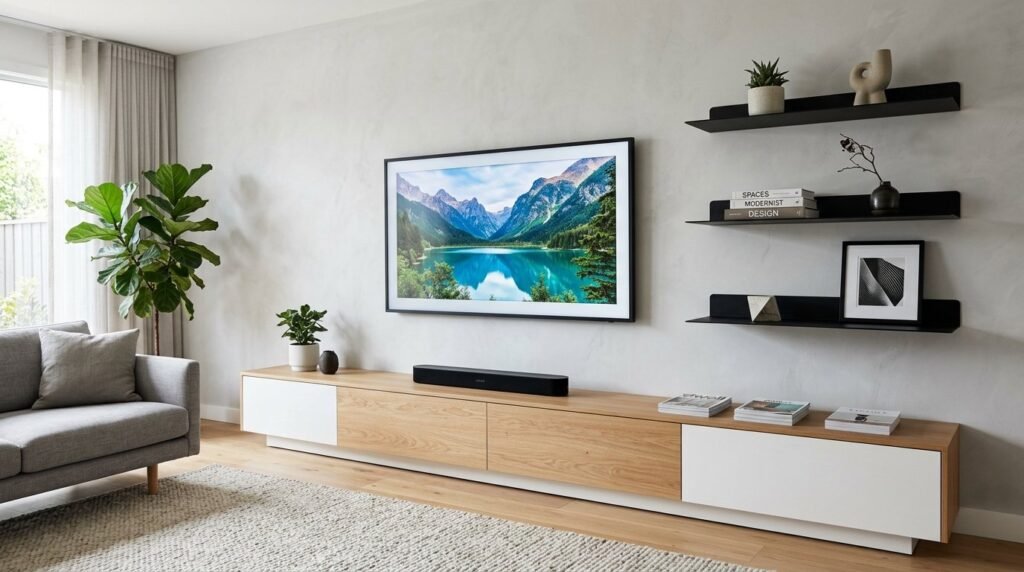
Symmetry can sometimes feel too formal or stiff. Asymmetrical shelving adds a modern, playful energy to the wall unit decor. I like to have a long unit on the bottom and a few floating shelves on just one side of the TV.
Balance vs Symmetry
You want the wall to feel balanced even if the sides are different. If you have a heavy shelf on the left, place a large floor plant on the right. This creates a visual weight that feels natural.
Functional Decor
Use these shelves for items that tell a story. I saw a client use black and white family photos in simple frames. It made the tech heavy area feel more human and personal.
7. Textured Stone Panels
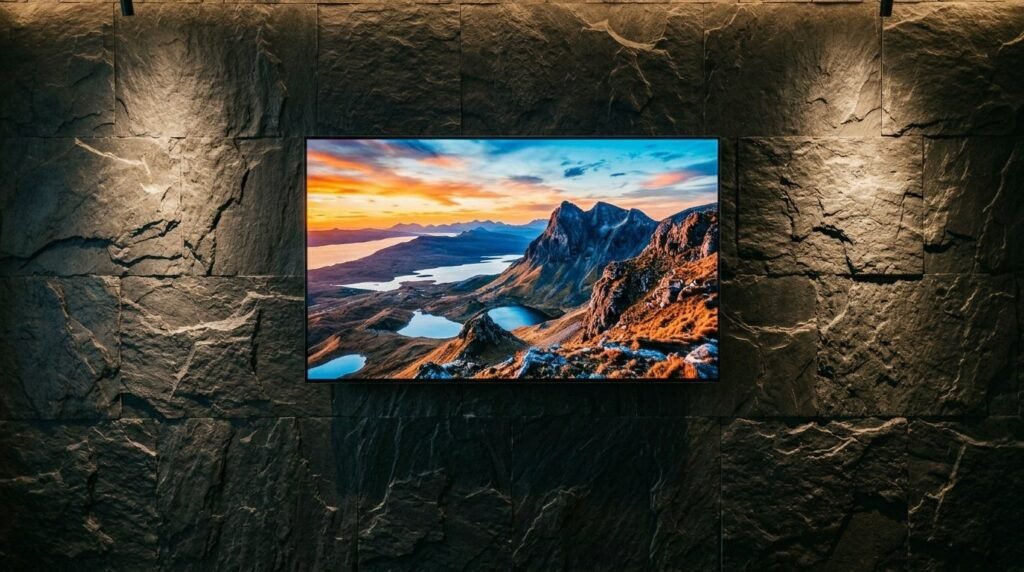
Adding stone or concrete panels behind the TV creates a high end architectural look. I used large format porcelain slabs that look like Calacatta marble for a project in Miami. It looked stunning under the lounge lights.
Modern Materials
Real stone is heavy and expensive. I suggest using thin stone veneers or 3D wall panels. Brands like WallArt offer bamboo fiber panels that look like concrete but weigh very little.
Lighting the Texture
Always use “grazing” light for textured walls. Place your LED strips at the very top of the wall so the light hits the texture at an angle. This creates deep shadows and highlights that make the stone pop.
8. Integrated Soundbar Solutions
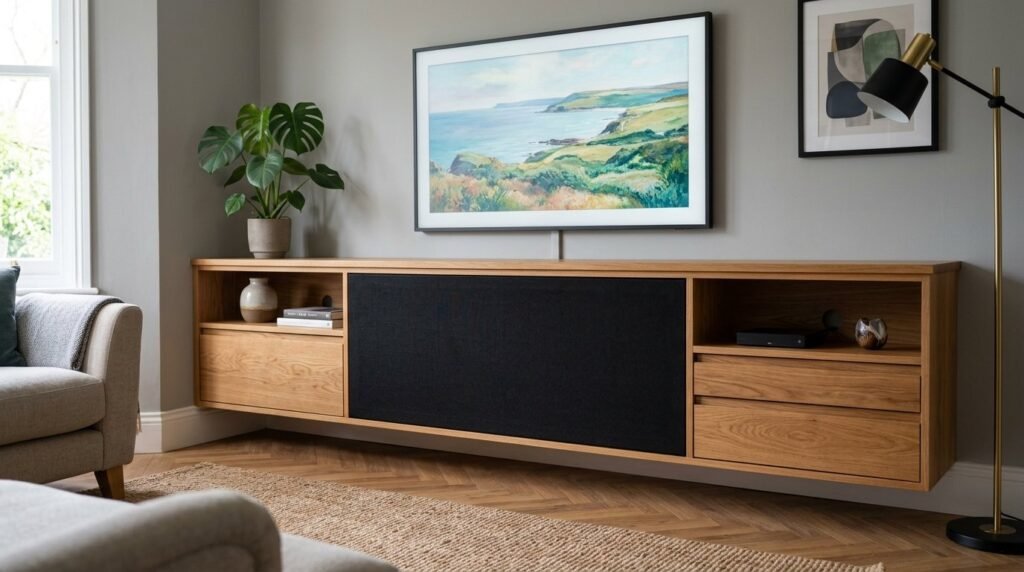
A soundbar sitting on a shelf can look clunky. I prefer to integrate the audio into the unit itself. I once built a custom cabinet with a fabric front specifically to hide a Sonos Arc.
Using Acoustic Fabric
You can buy acoustic cloth that allows sound to pass through without any loss in quality. I use this to cover the middle section of a media unit. The sound is crystal clear but the black plastic bar is invisible.
Mounting Options
If you cannot hide the soundbar, mount it to the bottom of the TV. This ensures the sound moves with the screen if you have a swivel mount. It keeps the lines of the unit clean.
9. Matte Black Finishes
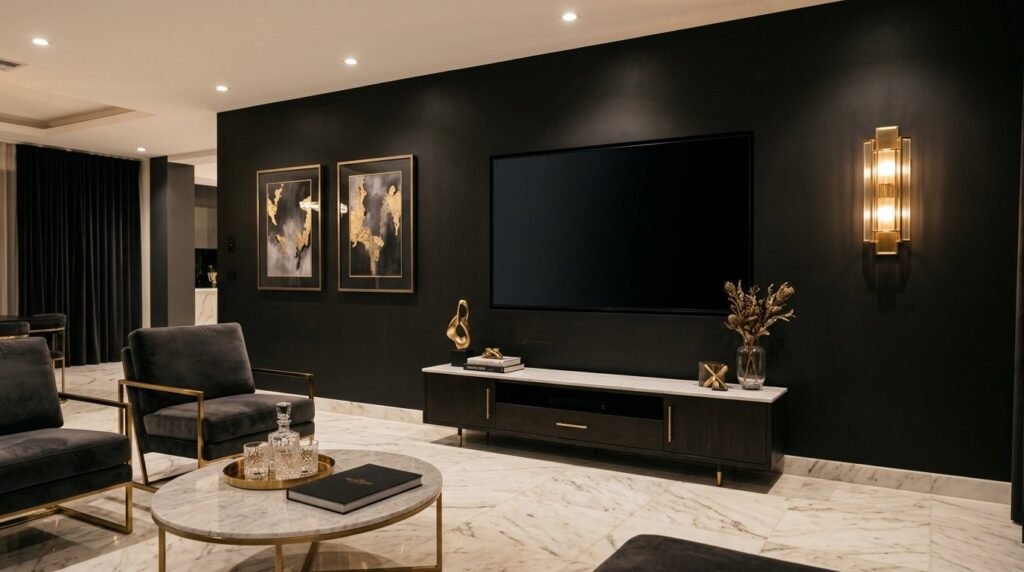
Matte black is the ultimate color for a sleek lounge. It absorbs light and makes the screen edges disappear. I often paint the wall behind the TV a deep charcoal or matte black.
The “Disappearing” Effect
When the TV is off, it blends into the dark wall. This stops the TV from being a “black hole” in a white room. I use Sherwin Williams Iron Ore for a perfect soft black finish.
Fingerprint Control
Matte finishes can show fingerprints. I recommend using a high quality paint like Benjamin Moore Scuff-X. It is durable and stands up to kids and pets touching the walls.
10. Mirrored Accents for Depth
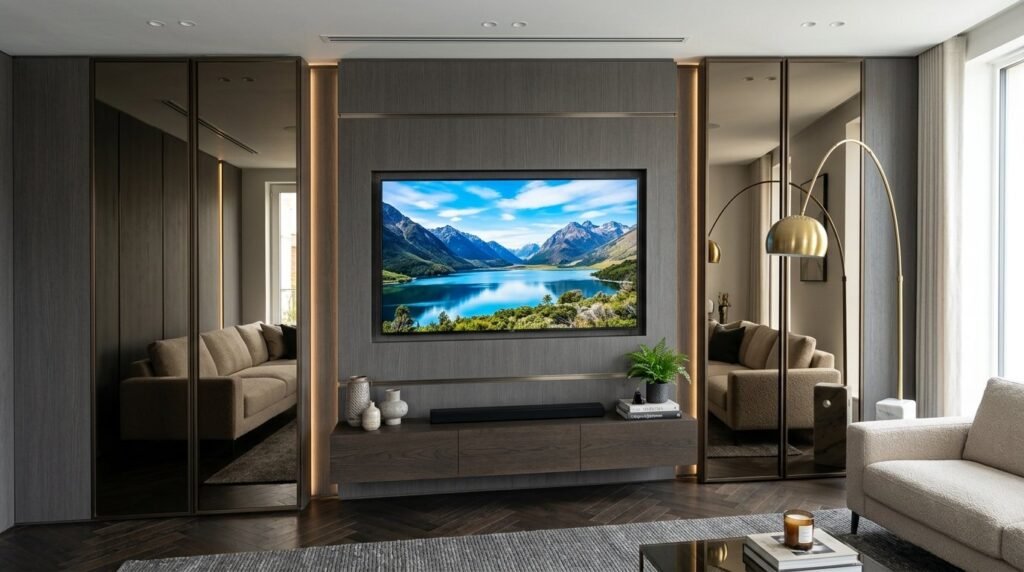
Using mirrors near your TV unit ideas might sound strange, but it works. I use smoked or tinted mirrors on the sides of a recessed wall. This adds depth and reflects light without being distracting.
Smoked Mirror Panels
Avoid clear mirrors as they reflect too much light. Smoked grey or bronze mirrors add a layer of luxury. I saw this in a hotel lobby once and adapted it for home use.
Placement Rules
Never place a mirror directly opposite the TV screen. The reflection will drive you crazy while you watch. Place them on the sides or inside the shelving units.
11. Sliding Artwork Covers
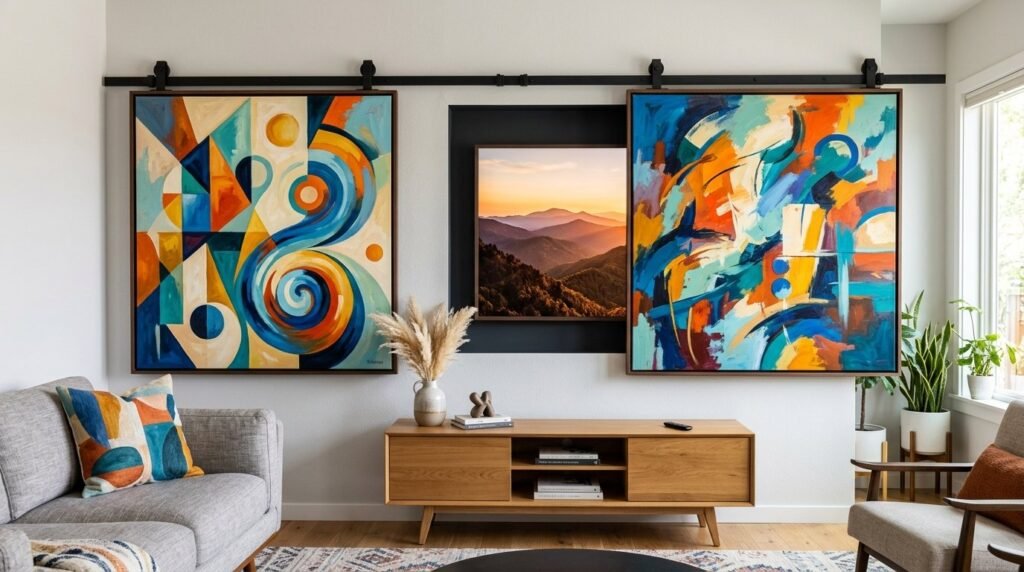
If you hate seeing a TV at all, hide it behind art. Sliding panels are a clever way to keep your lounge looking like a gallery. I’ve seen this work with large canvas paintings on a track.
Motorized vs Manual
Motorized tracks are expensive but very impressive. For a budget version, I use simple barn door hardware. You can hang two light canvases that slide apart to reveal the screen.
Scale Matters
The art must be significantly larger than the TV. If it is too small, it looks like an afterthought. I suggest one large horizontal piece for a modern look.
12. Metallic Inlays and Trim
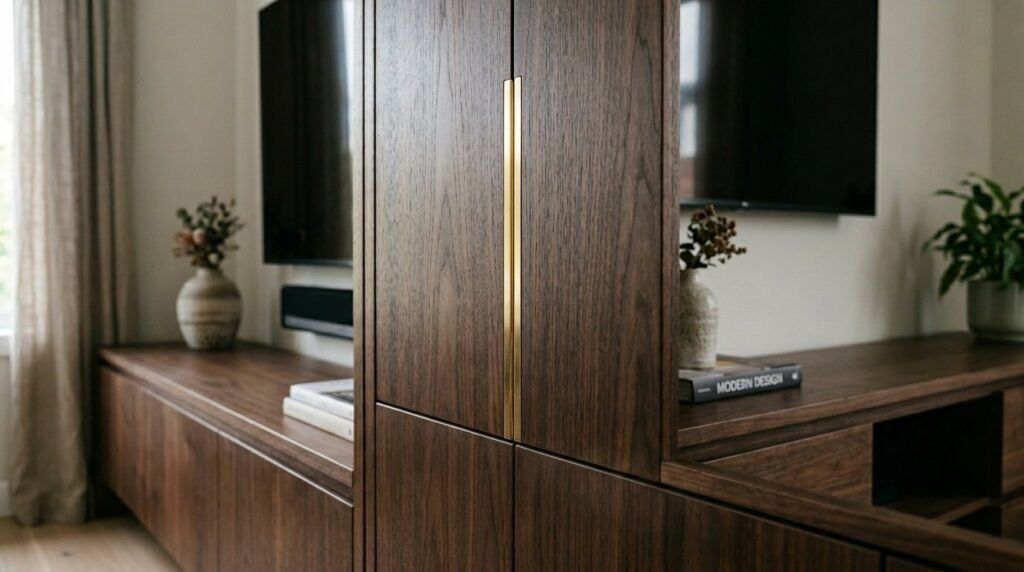
Small details make a big difference in luxury TV walls. I like adding brass or gold metallic strips between wood panels or stone slabs. It catches the light and adds a jewelry like finish to the room.
Using T-Strips
You can buy metal T-strips from hardware stores. I glue them into the gaps between my wall panels. This creates a sharp, professional finish that looks custom made.
Matching Hardware
Try to match the metal trim to other items in the room. If your coffee table has brass legs, use brass trim on the TV wall. This creates a cohesive design language.
13. Floor to Ceiling Units
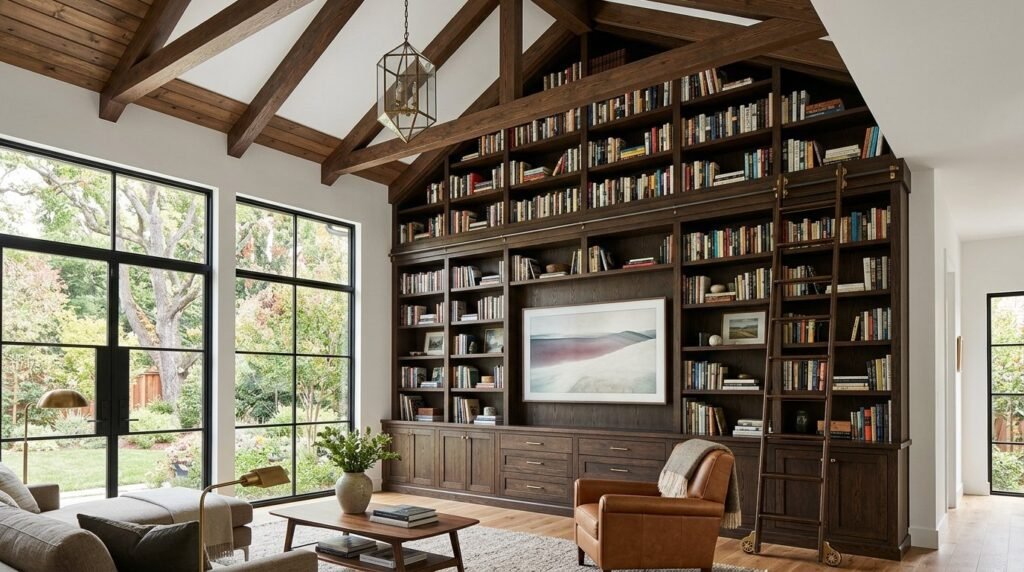
A floor to ceiling unit makes a room feel taller and more grand. This works exceptionally well in a vaulted ceiling living room. I often design these with a mix of closed storage and open display nooks.
Creating Height
Use vertical lines to draw the eye up. I prefer to keep the sides of the unit simple and put the detail in the center. This prevents the large unit from overwhelming the room.
Library Ladders
If your unit is very tall, add a rolling library ladder. It is functional for reaching high shelves and adds a classic touch to a modern space. I’ve seen this become a major talking point for guests.
14. Built-in Linear Fireplaces
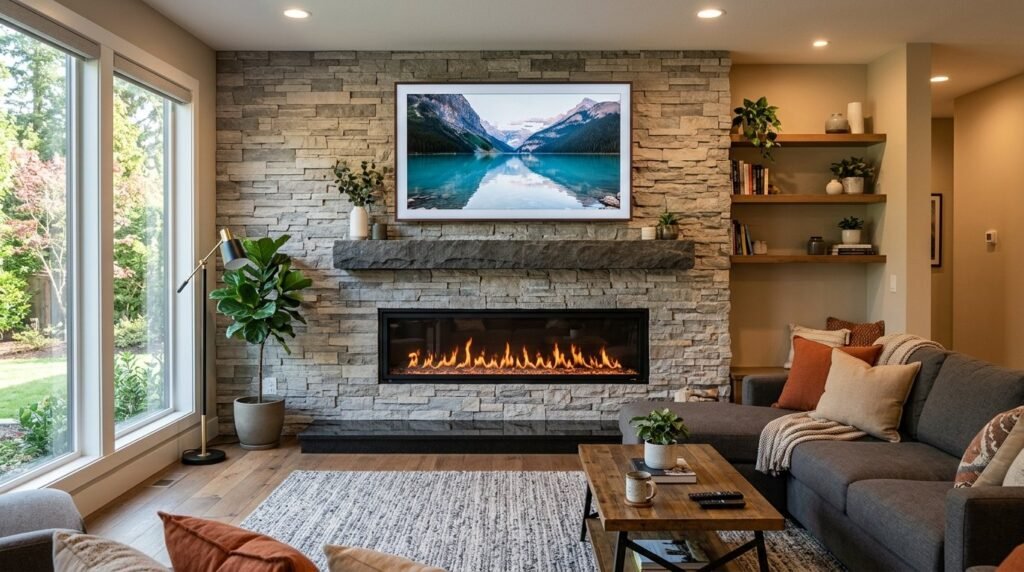
The combination of a TV and a fireplace is a classic lounge layout. To make it modern, use a long, linear electric fireplace. I always place the fireplace below the TV with a heat mantle in between.
Protecting the Tech
Heat is the enemy of your screen. I use a “Cool Wall” system from brands like Napoleon. This diverts the heat away from the TV. I’ve seen screens fail because they were mounted too close to a fireplace without protection.
Electric vs Gas
Electric fireplaces are easier to install for TV walls. You don’t need a vent or a gas line. The modern LED flames look very realistic and you can change the colors to match your mood.
15. Minimalist Glass Shelving
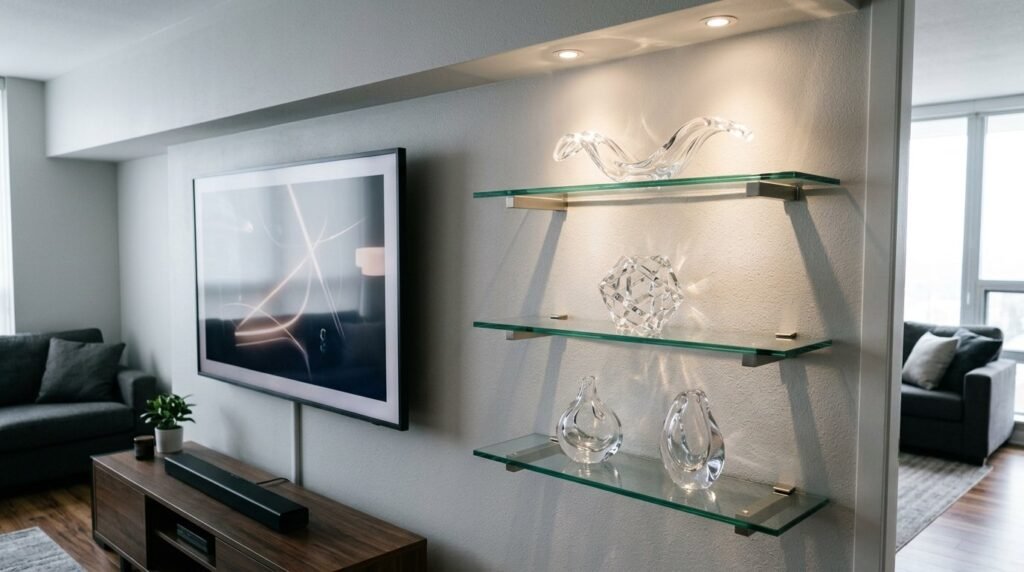
Glass shelves feel light and airy. They are perfect for a modern tv area that feels too heavy with wood or stone. I use thick tempered glass with hidden brackets.
The Floating Effect
When you use clear glass against a painted wall, the items look like they are floating. This is great for displaying small sculptures or glass art. I once used this for a client who collected vintage cameras.
Lighting Glass
Use small LED puck lights at the top of the glass unit. The light travels through the edges of the glass and makes the whole shelf glow. It is a very high end look for a low cost.
16. Bold Color Blocking
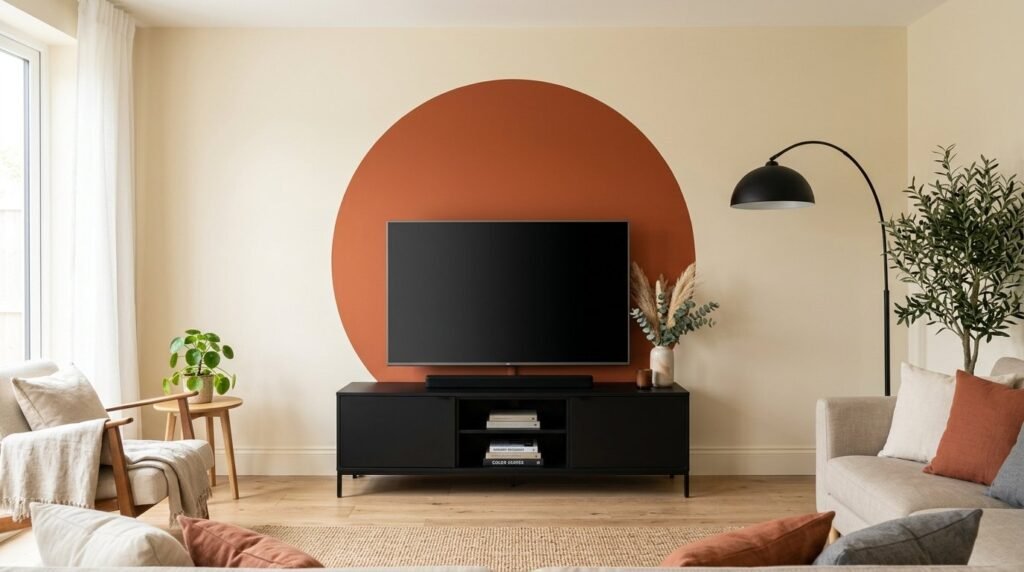
Don’t be afraid of color. I sometimes use a bold color block behind the TV to define the space. A deep navy or an earthy terracotta can make the TV area feel like a separate “zone” in an open plan house.
Choosing the Zone
The color should extend slightly past the edges of the TV and the cabinet. This creates a frame for the electronics. I find that matte finishes work best for color blocking to avoid glare.
Complementary Decor
Match your throw pillows or rugs to the color block on the wall. This pulls the whole lounge together. I’ve seen this work beautifully with a dark green wall and gold accents.
17. Natural Wood Textures
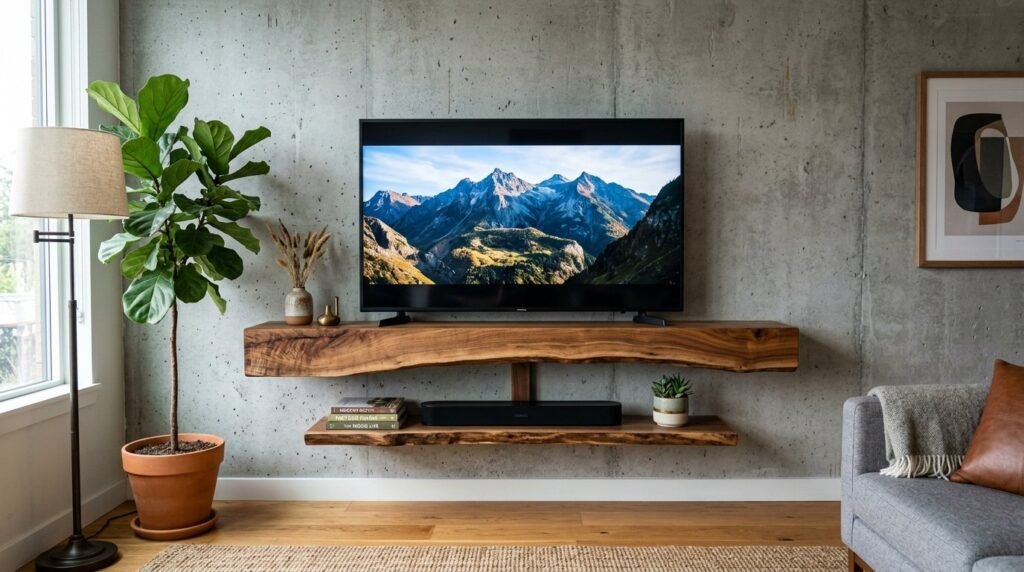
Raw wood adds a sense of warmth that balance out the cold glass and metal of a TV. I love using reclaimed wood or “live edge” slabs for a single shelf under the screen.
Mixing Grains
You can mix different wood tones if you keep the undertones the same. If you have light oak floors, use a light oak or maple for the TV unit. Avoid mixing red woods with grey woods as it looks messy.
Tactile Finishes
I prefer a matte oil finish over a shiny lacquer. It feels better to the touch and looks more natural. I often use Rubio Monocoat for a durable and beautiful wood finish.
18. Corner Floating Units
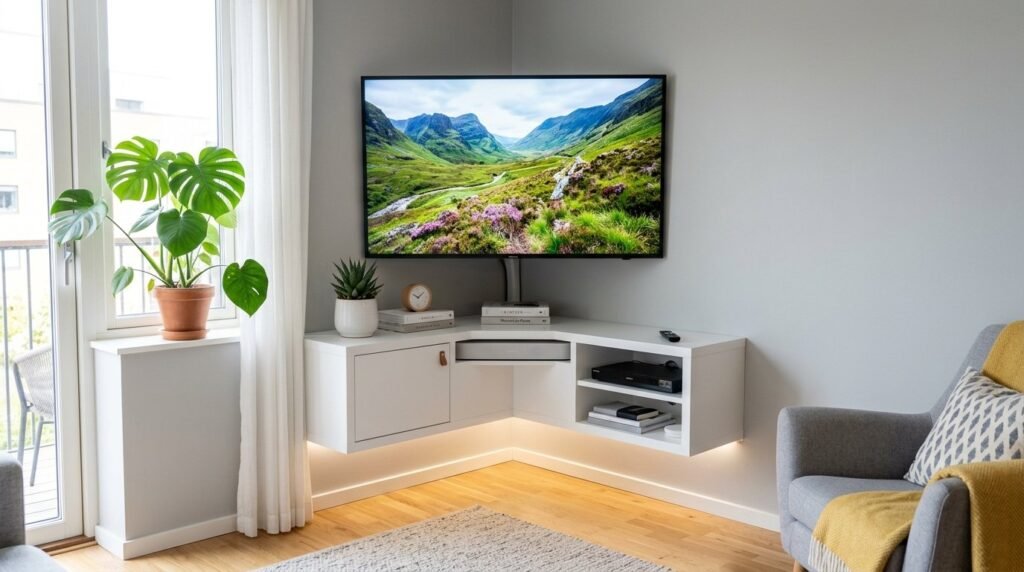
Corners are often wasted space. A custom corner floating unit can turn an awkward nook into a sleek lounge feature. I designed a curved corner unit for a small apartment in New York that saved a lot of floor space.
Custom Angles
Standard furniture rarely fits corners well. I suggest building a simple triangular frame and cladding it with wood panels. This allows you to hide the cables in the corner gap behind the unit.
Swivel Mounts
Use a full motion wall mount for corner TVs. This allows you to pull the screen out and angle it toward the seating. When you are done, it pushes back into the corner for a clean look.
19. Pop-up TV Cabinets
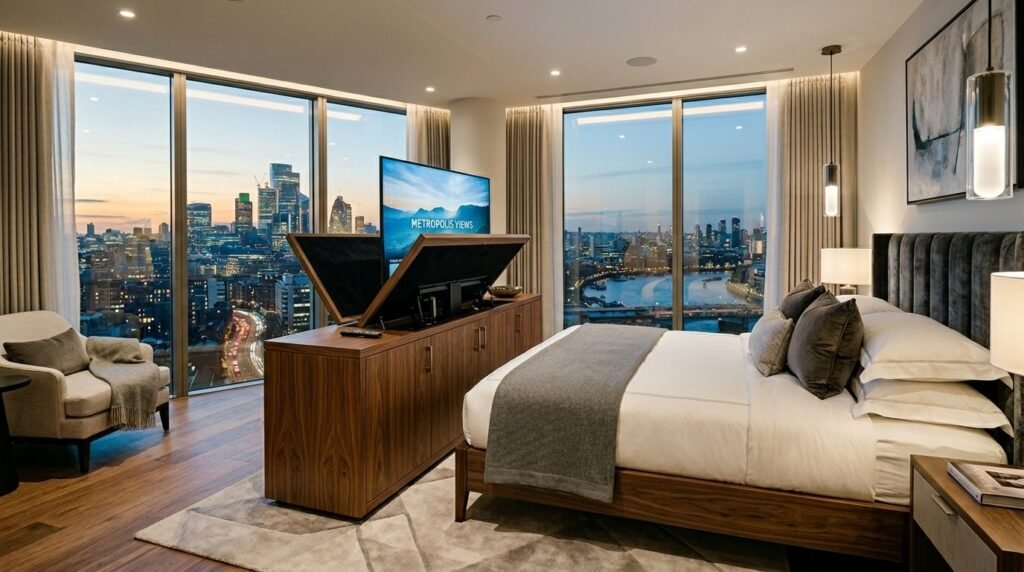
If you really want the TV out of sight, use a lift system. I’ve installed these in several luxury bedrooms and lounges where the view was more important than the screen.
The Mechanism
I trust Nexus 21 for TV lift systems. They are quiet and very reliable. You can build the lift into a custom sideboard or even into the floor.
Multi-functional Furniture
A pop-up cabinet can sit at the end of a bed or behind a sofa. When the TV is down, the top is a flat surface for decor. It is the ultimate “now you see it, now you don’t” hack.
20. Smart Home Integration
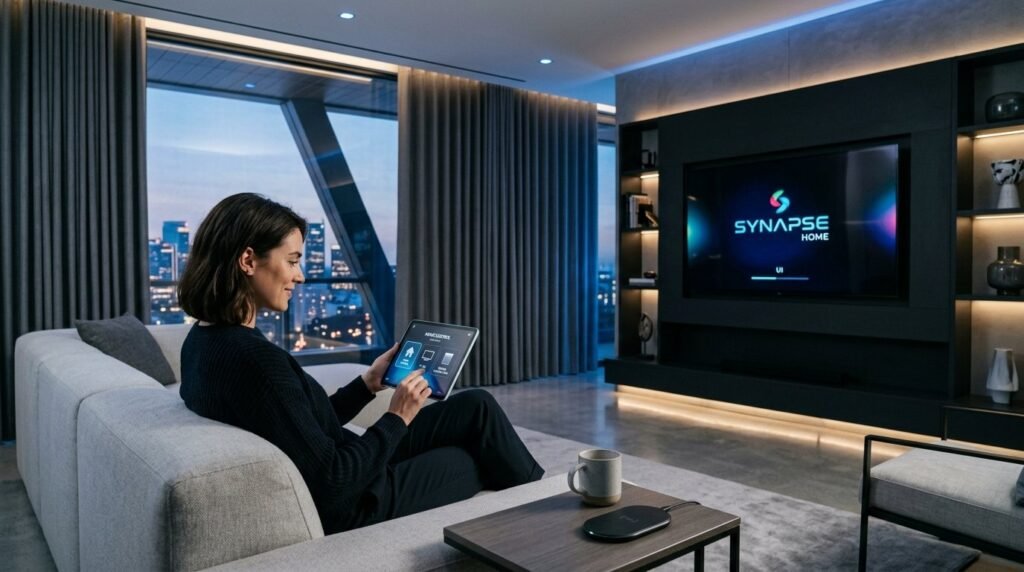
The final hack is making the TV part of your smart home. I use the Logitech Harmony or a Savant system to control everything from one remote.
Voice Control
I love saying “Movie Time” and having the shades close, the lights dim, and the TV turn on. You can set this up using Alexa or Google Home. It adds a layer of convenience that feels very futuristic.
Hidden Tech
Store your cable boxes and game consoles in a ventilated closet or cabinet. Use an IR repeater so your remote still works through the cabinet doors. This removes all the plastic boxes from your visual field.
Comparison of Popular TV Unit Materials
| Material | Look & Feel | Durability | Cost Level | Best For |
| Walnut Wood | Warm, Luxury | High | $$$ | Modern Farmhouse |
| Matte Laminate | Sleek, Minimal | Medium | $ | Budget Modern |
| Sintered Stone | Industrial, High-End | Very High | Luxury Media Walls | |
| Painted MDF | Versatile, Clean | Medium | $$ | Custom Color Blocks |
| Tempered Glass | Airy, Modern | Medium | $$ | Small Spaces |
Essential Brands for Your TV Unit Project
I have tested dozens of brands over the years. These are the ones I trust for my own clients.
- Samsung (The Frame): The best screen for a flush, art-like look.
- Sanus: My go-to for secure and slim wall mounts.
- Sonos: Excellent sound quality that is easy to hide or integrate.
- Philips Hue: The industry standard for smart bias lighting.
- IKEA (Besta): A great base for DIY hacks with custom doors.
- Semihandmade: High quality doors to upgrade basic IKEA units.
- Lutron: The most reliable smart dimmers and shades.
- Nexus 21: The top choice for motorized lifts and hidden tech.
- The Wood Veneer Hub: Perfect for easy to install slat panels.
- Legrand: Safe and simple in-wall cable management kits.
Frequently Asked Questions
How high should I mount my TV?
I see people mount TVs too high all the time. This is called “r/TVTooHigh” syndrome online. Your eyes should be level with the middle of the screen when you are sitting down. For most sofas, this means the center of the TV is about 42 inches from the floor. I’ve noticed that mounting it lower makes the lounge feel more relaxed and less like a sports bar.
Can I hide my gaming console inside a closed cabinet?
Yes, but you must have airflow. I always install a small AC Infinity cabinet fan. These fans are silent and pull the hot air out. If you keep a PS5 in a closed box without a fan, it will overheat in less than an hour. I’ve seen consoles die because of poor ventilation.
What is the best way to hide messy cables?
The best way is to go behind the wall. Use a “brush plate” or a power bridge kit. This allows the cables to exit the wall directly behind the TV and enter again behind the cabinet. If you cannot cut the wall, use a paintable cable race way. It is a plastic strip that covers the wires and blends in when painted the same color as the wall.
Is a recessed media wall expensive to build?
A basic recessed wall costs between 500 and 1500 dollars if you do the work yourself. If you hire a professional, expect to pay 3000 to 7000 dollars depending on the materials. Adding stone or custom lighting will increase the price. In my experience, it is the single best investment for increasing the “wow factor” of a living room.
How do I choose the right size TV for my wall?
Measure your wall first. You want at least 10 inches of space on each side of the TV. If the TV fills the entire wall, it looks cramped. I find that a 65 inch screen is the “sweet spot” for most average lounges. If you have a very large room, go for 75 or 85 inches but ensure the unit below it is even wider.
What lighting is best for reducing eye strain?
Bias lighting is the answer. This is a light source that sits behind the TV and shines onto the wall. It reduces the contrast between the bright screen and the dark room. I use warm white LED strips for this. It makes long movie marathons much more comfortable for your eyes.
Conclusion
Creating a modern TV area is about more than just buying a big screen. It is about how that screen lives in your lounge. I have seen how a few small changes, like hiding cables or adding a floating unit, can transform a home. Start with one hack, like the LED lighting, and see how it feels. You don’t need to do everything at once. Focus on clean lines and hidden tech. I’ve noticed that when the clutter is gone, the room becomes a place where you actually want to spend time. Your home should be a reflection of your style, not a storage unit for electronics. Take a weekend to plan your layout and your lounge will feel brand new.

Sloane Whitaker is the Editor-in-Chief at Home Wall Trends, leading editorial direction with over a decade of experience in residential interior design and home styling. Her specialty is space planning and layout, the unglamorous fundamentals that make a beautiful room actually function. A graduate of the New York School of Interior Design, Sloane has styled over 200 client homes before turning her focus to digital publishing. Her editorial standard: “If a reader can’t picture themselves doing it on a Saturday afternoon, we haven’t explained it well enough.”