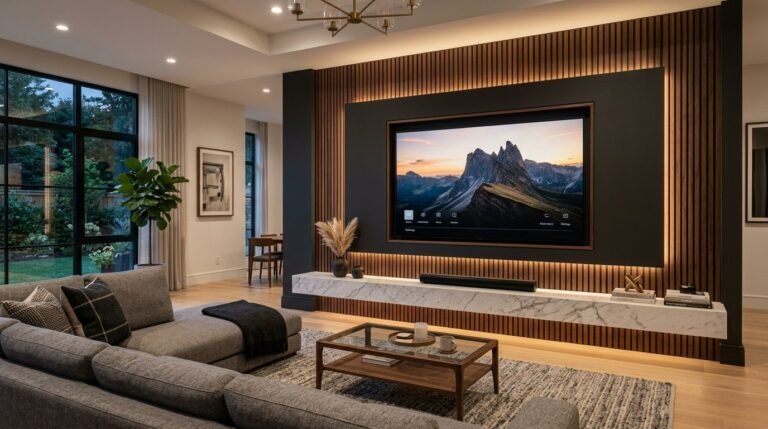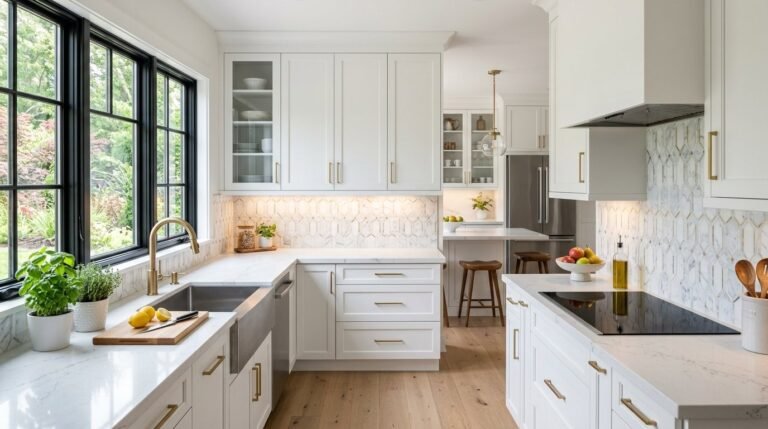
Walking into a kitchen filled with mail and dirty dishes feels heavy. I spent years in a kitchen that felt like a storage closet. It was dark. It was loud. My coffee didn’t even taste good there. Then I saw a Japandi space in a small Tokyo apartment. It changed my life. Japandi blends Japanese minimalism with Scandinavian warmth. It removes the noise. It focuses on what matters. You feel a shift in your heart when the clutter goes away. Your pulse slows down. You start to enjoy the act of chopping a carrot. This style is not about having a perfect home. It is about having a home that serves your soul. I want to show you how to get that feeling. These ideas come from my years of trial and error in home design.
Strategic Executive Summary
This guide gives you 23 clear steps to create a Japandi kitchen. You will see how to mix light wood with dark accents. You will see why texture is better than color. I cover specific wood types like white oak and walnut. I list brands that offer the best matte finishes. You will see how to handle small spaces without losing style. This article covers lighting and storage too. I explain why some materials fail in high moisture areas. My goal is to save you money on mistakes I already made. You will find ways to use what you have. You will also see what is worth a splurge. This deep dive is for people who want a home that feels like a deep breath.
1. Use Light Oak Cabinets
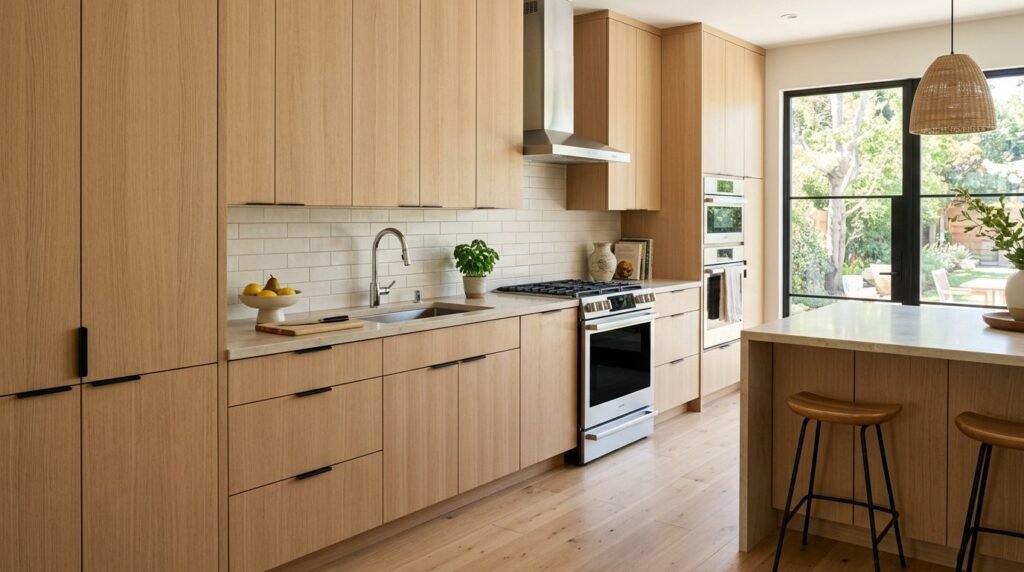
Light oak is the heart of this look. It feels warm but stays bright. I saw a project in Seattle where the owner used dark cherry wood. It felt dated and heavy. We swapped it for flat front light oak. The room felt twice as big. Oak has a tight grain that looks clean. It hides fingerprints better than painted cabinets. I suggest a matte clear coat. Shine makes wood look cheap. You want to see the natural pores of the wood. This is the Scandi part of the mix. It stays airy even in a small room. Use vertical grain to make your ceilings look taller.
2. Install Matte Black Hardware
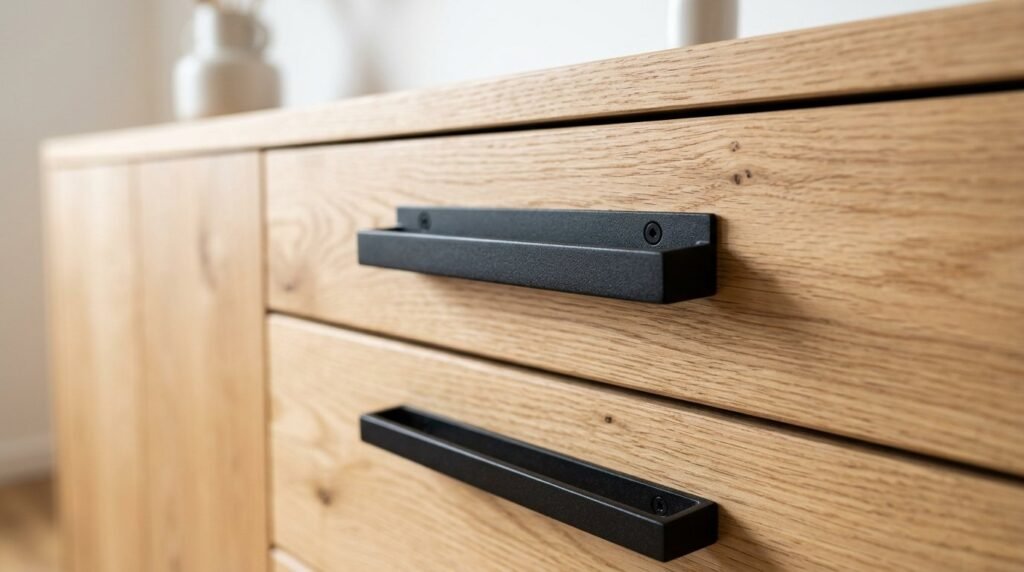
Black hardware provides the Japanese edge. It creates a focal point against the light wood. I tried brass in a Japandi kitchen once. It felt too glam and distracted from the calm. Matte black feels grounded and modern. Look for slim finger pulls or simple knobs. Avoid ornate designs. The goal is a sharp line. I like brands like Schoolhouse or Rejuvenation for their finishes. Cheap black paint chips off in six months. Get powder coated metal. It stays dark and smooth for years. This contrast is what makes the space look designer.
3. Choose Low Profile Stone Counters
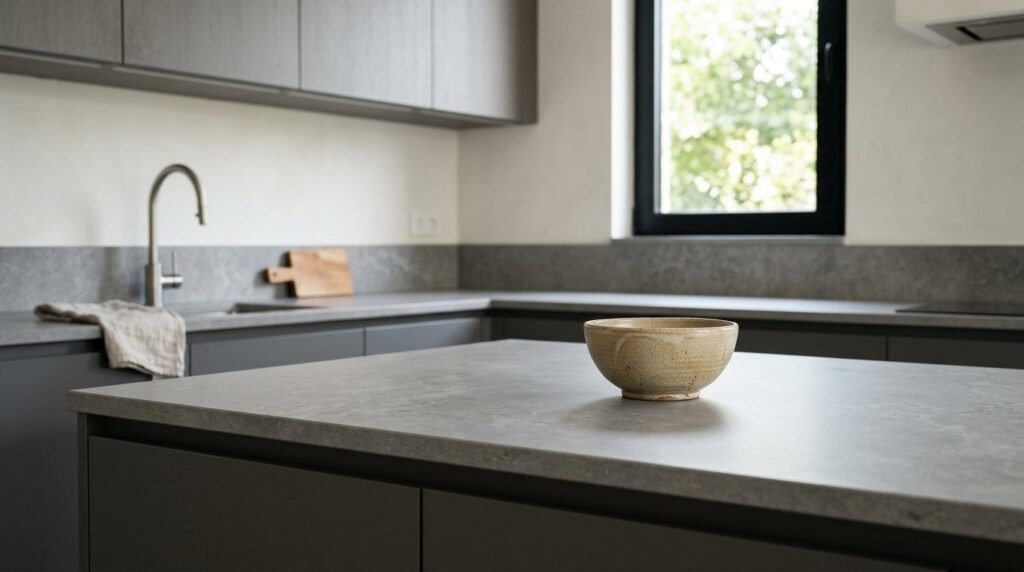
Big thick marble slabs belong in mansions. Japandi needs a thin profile. I recommend a two centimeter thickness instead of four. It looks sleek. Choose a stone with very little veining. Gray quartz or honed black granite works best. I once used a busy Calacatta marble for a client. We both regretted it. The patterns fought with the wood grain. A solid color lets the wood be the star. Honed finishes are better than polished. They feel soft to the touch. They don’t reflect harsh light into your eyes.
4. Hang Woven Paper Pendants
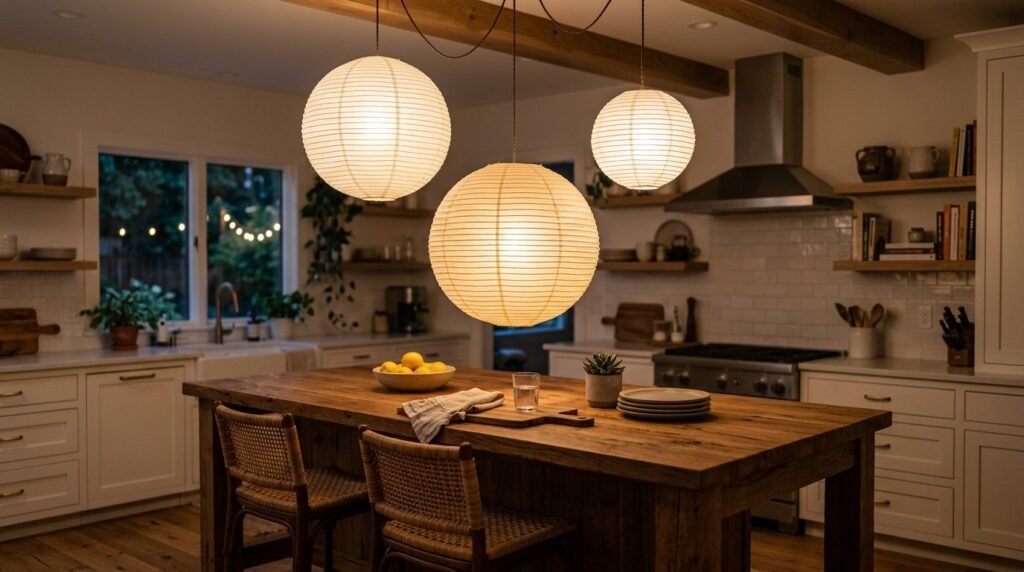
Lighting should feel like art. Large paper lanterns are a classic Japanese element. They soften the light. Hard glass or metal lights feel cold. I love the Akari style lamps. They cast a warm glow that makes people want to stay. I noticed that high ceilings need two or three of these. In my own home I used a single large rice paper shade over the island. It became the only thing people talked about. It looks like a cloud. Keep the cord black to match your hardware. This balance of soft and hard is vital.
5. Build Slatted Wood Walls
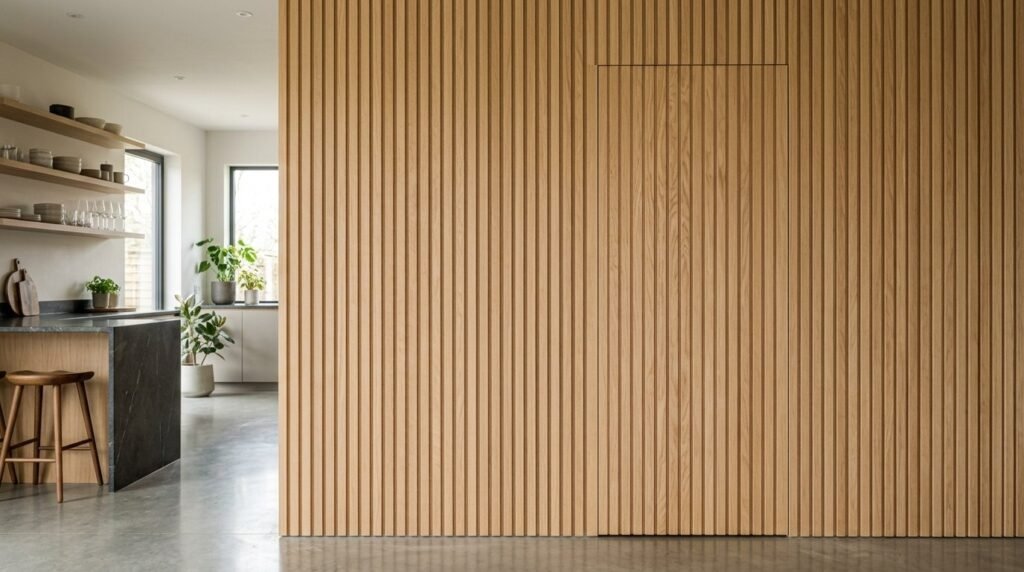
Slats add texture without clutter. This is a great way to hide a pantry door. I’ve seen this work in tight hallways off the kitchen. The vertical lines create a rhythm. Use the same oak from your cabinets. Space the slats about half an inch apart. It creates a shadow line. This adds depth to a flat wall. I tried this in a rental with adhesive wood strips. It looked high end for a low cost. It also helps with sound. Hard kitchens can be echoey. Wood slats break up the sound waves.
6. Select Handmade Ceramic Backsplashes
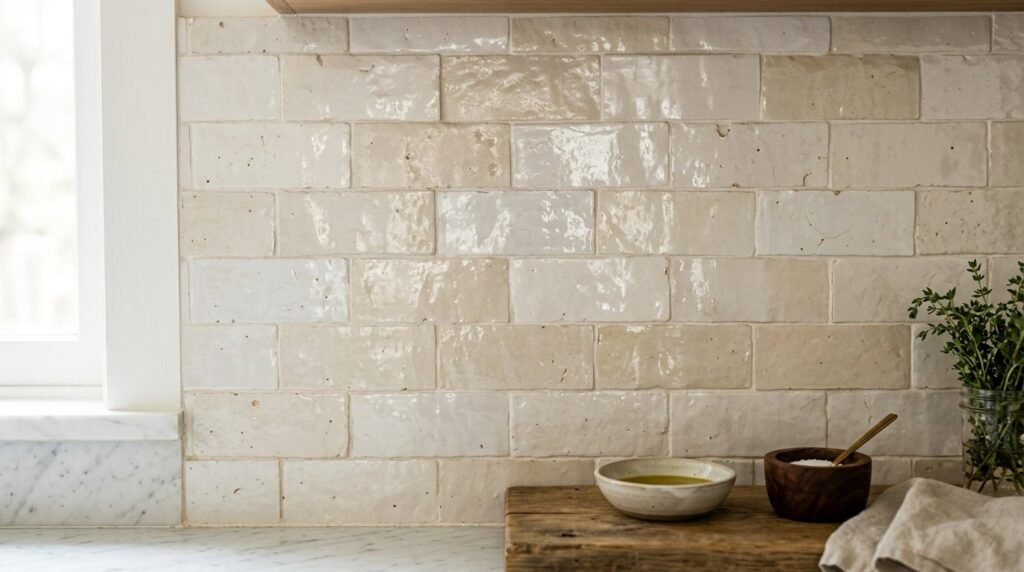
Perfect subway tile is boring. Japandi loves wabi sabi or the beauty of imperfection. Look for zellige tiles or handmade ceramics. The edges are slightly uneven. The glaze has different tones. When the sun hits the wall it looks like water. I saw a kitchen in Copenhagen that used off white square tiles. They were not perfect. The result was organic and soft. Don’t use dark grout. Use a color that matches the tile. You want the texture to show but not the grid. It feels more like a piece of pottery than a wall.
7. Hide Your Appliances
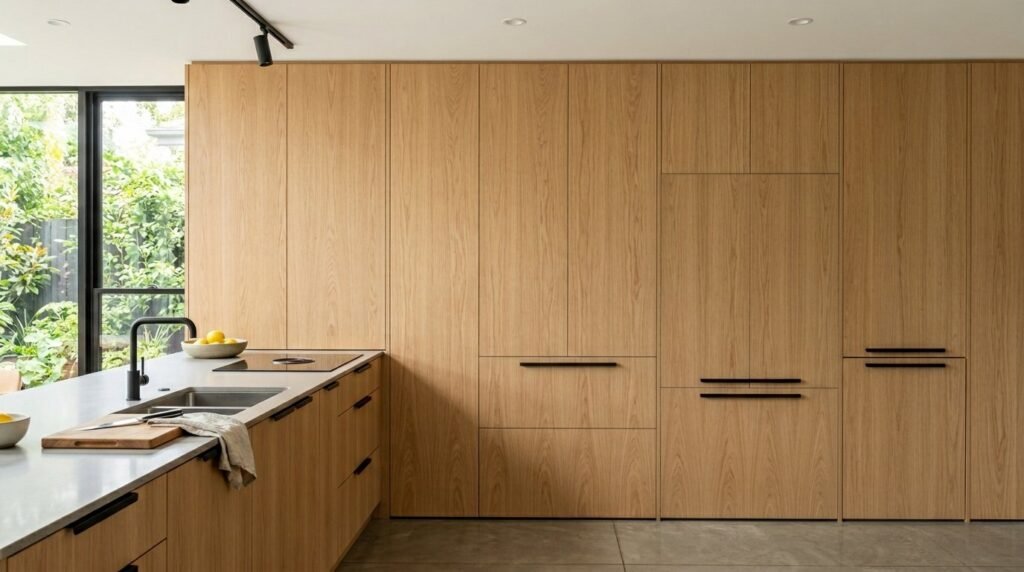
Nothing ruins a calm view like a giant stainless steel fridge. Integrated appliances are a must. Put a wood panel on the dishwasher. Hide the fridge behind oak doors. I worked with a family who couldn’t afford all new built ins. We used a matte black wrap on their old fridge. It helped it disappear into the shadows. If you can’t hide them then buy black stainless steel. The silver glare of standard steel is too industrial for this look. You want your kitchen to look like a living room.
8. Focus on Open Shelving
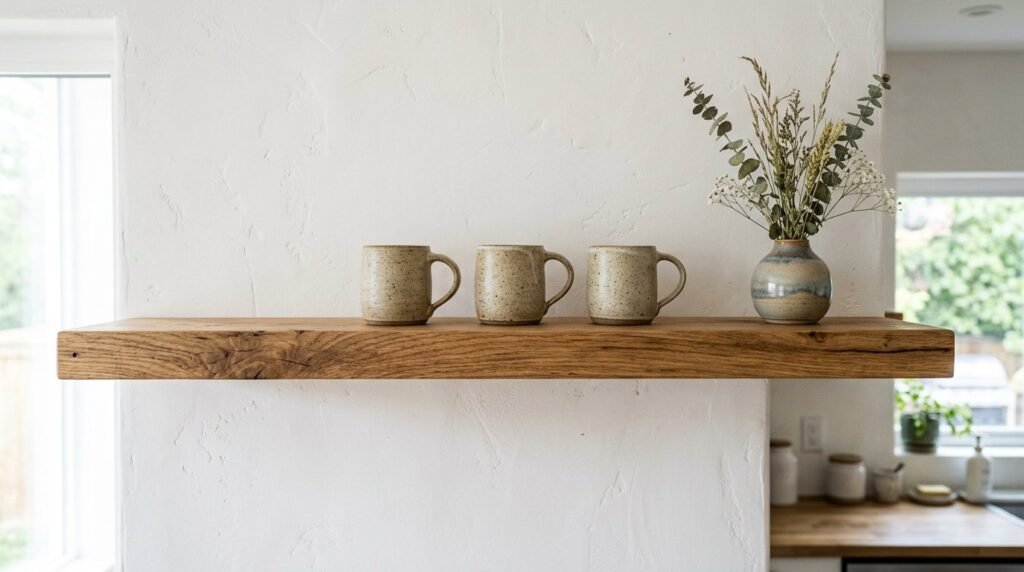
Heavy upper cabinets make a kitchen feel small. Swap them for a single long wood shelf. Put your daily bowls there. I notice that this forces people to stay organized. If you only have six beautiful bowls you don’t need a huge cupboard. Use ceramic jars for dry goods. Wood shelves against a white wall look like a gallery. I tried this in my small condo. It made the eight foot ceilings feel ten feet tall. Use hidden brackets for a floating look. It keeps the lines clean.
9. Place a Large Bonsai Tree
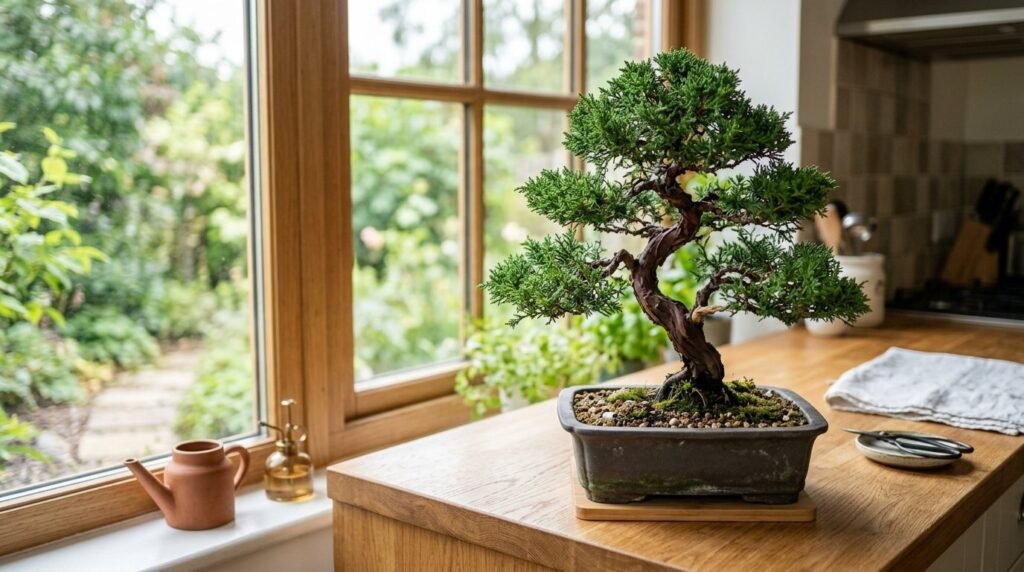
Greenery is the life of the room. A single bonsai or a branch in a tall vase is enough. Avoid small cluttered herb pots on the sill. One tall focal point is better. I like using a Juniper bonsai for its rugged look. It brings a sense of age and nature. I’ve seen olive trees work too if you have enough light. The pot should be raw clay or dark stone. This ties the design back to the earth. It reminds you to slow down. Taking care of a plant is a meditative part of your morning.
10. Use Concrete Flooring
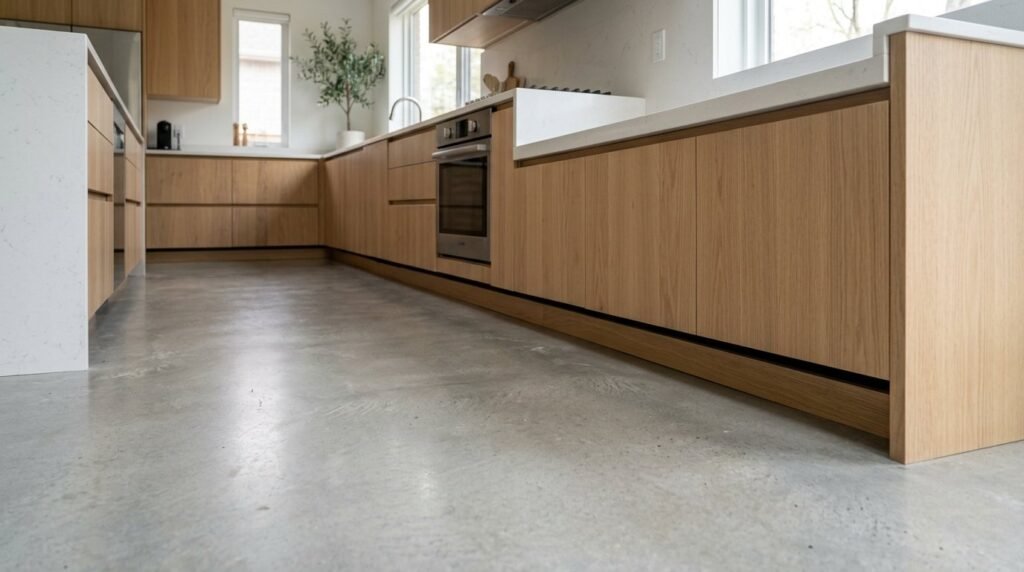
Concrete is the perfect neutral base. It is cool underfoot and looks raw. If you can’t do real concrete then look at large format gray tiles. Avoid wood floors that match the cabinets exactly. You need a break in the color. I’ve seen kitchens where the floor and cabinets are the same oak. It looks like a wooden box. Gray concrete provides a foundation. It feels like a Japanese temple floor. It is easy to clean. Use a matte sealer to keep it looking natural.
11. Invest in a Quality Wood Table
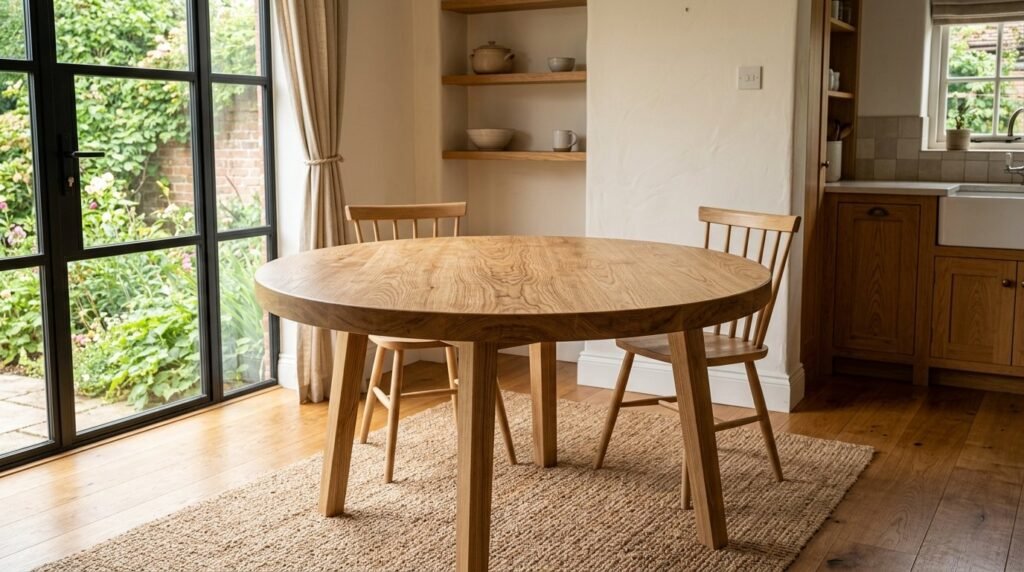
The kitchen table is the heart of the Scandi side. Choose a round table for better flow. I prefer light ash or pine for the table. It should feel sturdy and thick. I saw a thin metal table in a minimalist kitchen once. It felt cold and shaky. A wood table feels permanent. It invites you to sit for hours. I use a table from Muuto in my projects. The joints are simple and strong. No tablecloths are needed. Let the wood show its scars. Each mark is a memory of a meal.
12. Add Bamboo Window Shades
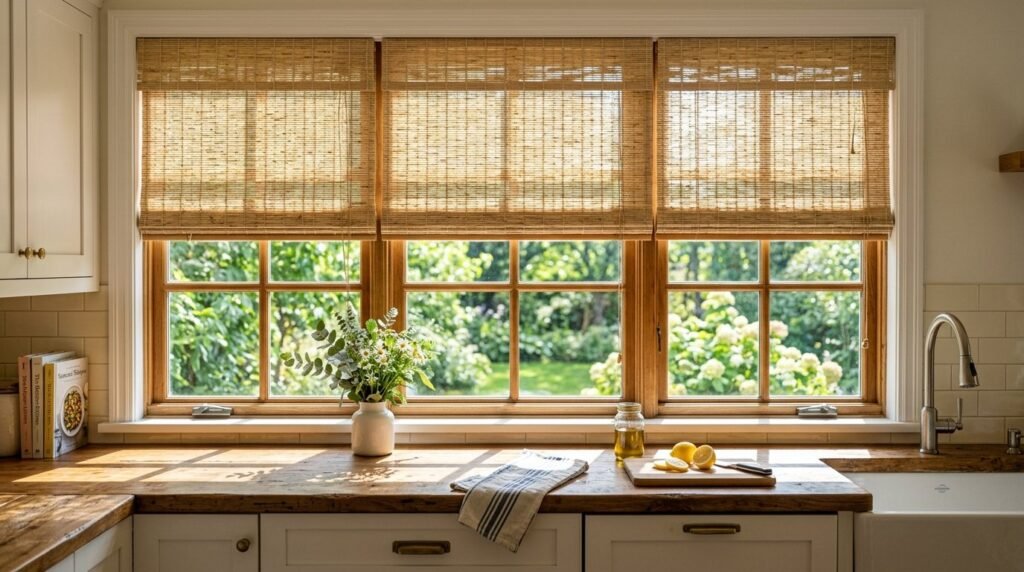
Plastic blinds look cheap. Bamboo shades add a natural texture. They filter the light into soft stripes. I’ve seen these work in both modern and traditional homes. They match the oak cabinets perfectly. Get the cordless version for a cleaner look. I noticed that they provide great privacy while still letting you see the trees outside. This connection to the outdoors is a core part of Japandi. It makes the room feel like it belongs in the garden.
13. Create a Coffee Nook
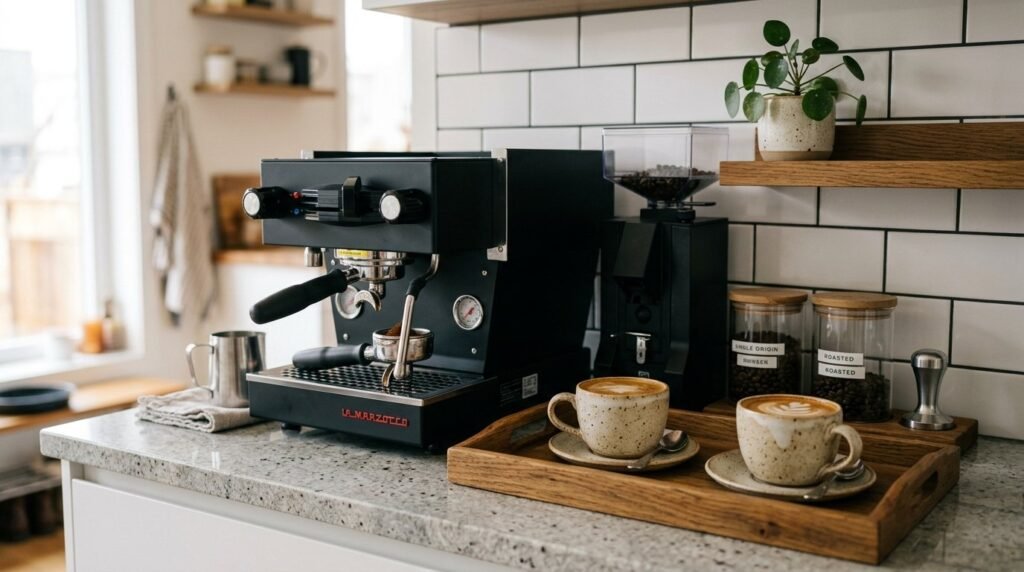
Mornings are sacred. Dedicate a small corner to your coffee ritual. Use a matte black espresso machine. Keep your ceramic mugs on a small wooden tray. I see people clutter their counters with every appliance they own. Hide the toaster. Keep the coffee area beautiful. I used a small piece of dark stone on top of a wood cabinet for this. It defines the space. It feels like a small cafe in Kyoto. Starting your day in a beautiful spot changes your mood.
14. Choose Low Profile Bar Stools
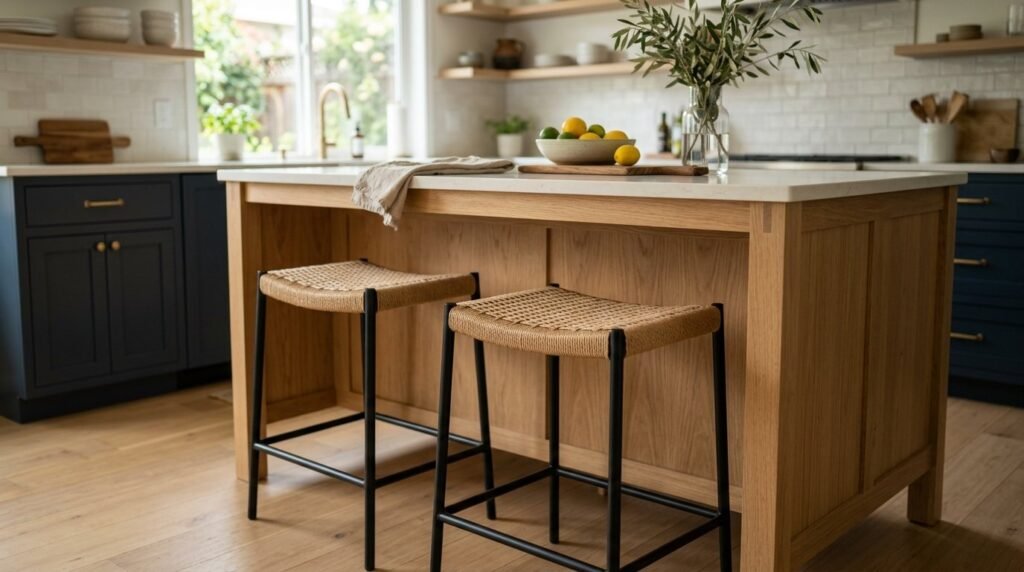
If you have an island you need stools that tuck away. Look for stools without backs. They shouldn’t peek over the counter. I like black metal legs with a paper cord seat. The Wegner style is perfect for this. I saw a kitchen where the stools were huge leather chairs. They blocked the view of the beautiful island wood. Simple stools keep the horizontal lines of the room. They are also easier to move around. Paper cord is surprisingly comfortable for long chats.
15. Opt for Recessed Lighting
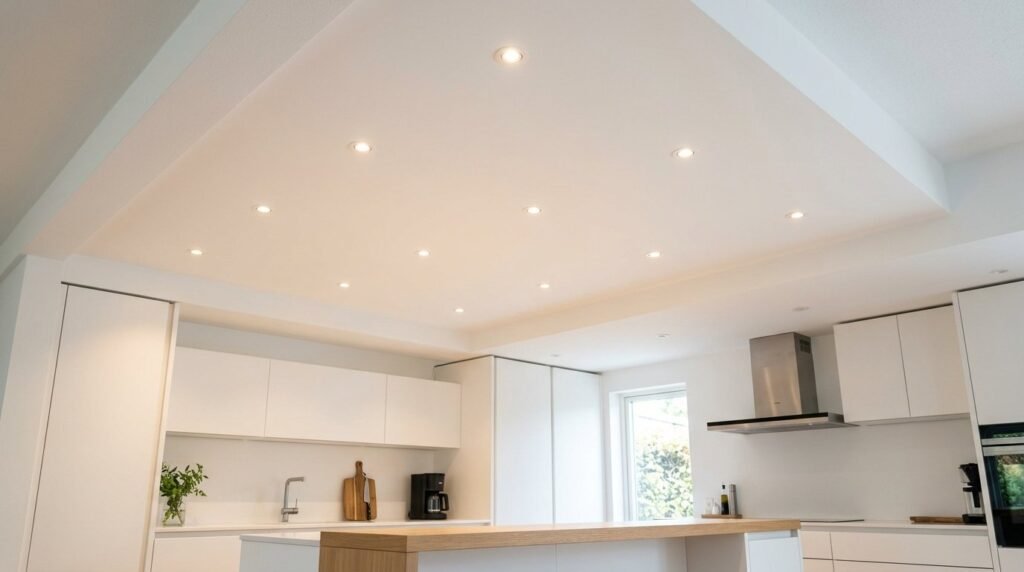
Big track lights are too busy. Use small recessed lights in the ceiling. Space them out so there are no dark corners. I recommend 3000K bulbs. They are warm but not yellow. I’ve seen people use 5000K bulbs and it feels like a hospital. You want a soft glow. Put everything on a dimmer switch. At night you can turn the lights low. The kitchen becomes a glowing sanctuary. This is the “hygge” or cozy part of the design. It makes a cold night feel safe.
16. Incorporate Linen Accents
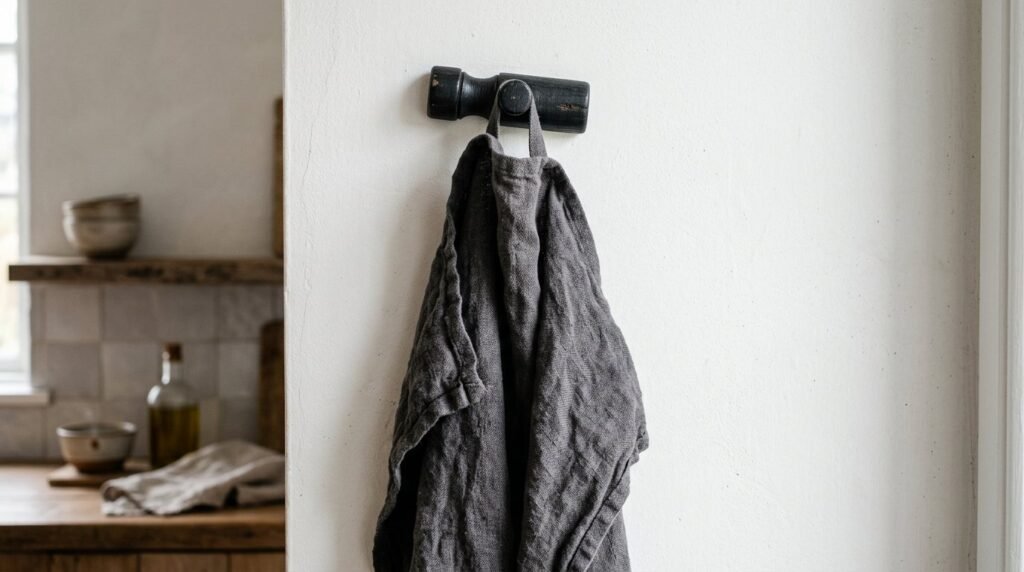
Linen is the best fabric for this style. Use linen tea towels in flax or charcoal gray. Use a linen runner on the table. It is a natural fiber that gets better with age. I tried cotton towels but they look too flat. Linen has a beautiful rumpled texture. It feels high quality but humble. Hang them on a simple black peg. This small detail brings a human touch to a minimalist room. It says that people live here and cook here.
17. Design a Hidden Pantry
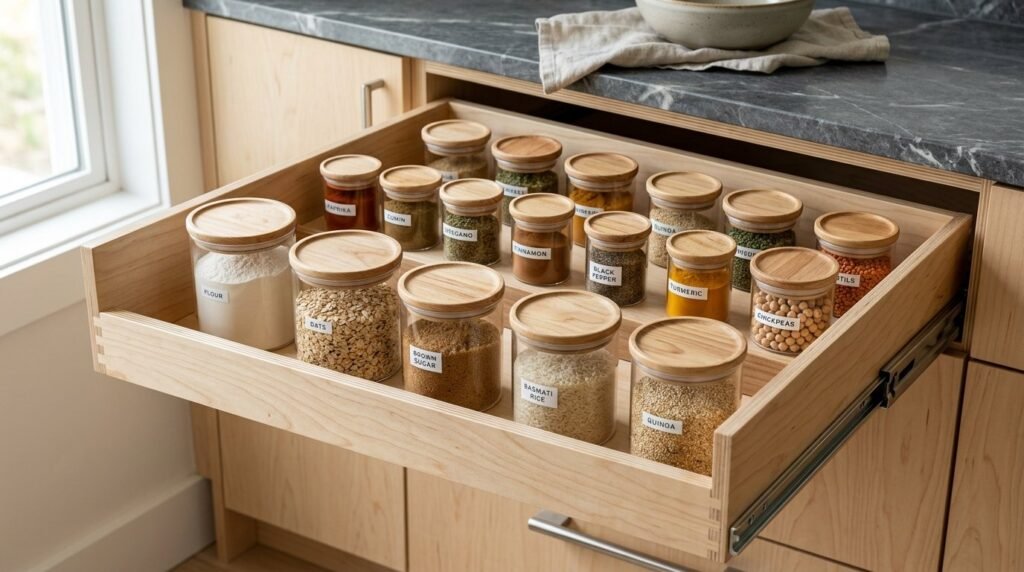
Visual clutter is the enemy of calm. A walk in pantry with a pocket door is the dream. If you don’t have space then use deep drawers. I hate searching through high cabinets for a can of beans. Drawers pull out so you see everything at once. I helped a friend organize their pantry with glass jars and wood lids. It looked so good they almost didn’t want to close the door. Keeping the food out of sight makes the kitchen feel like a peaceful room instead of a grocery store.
18. Use Earthy Wall Colors
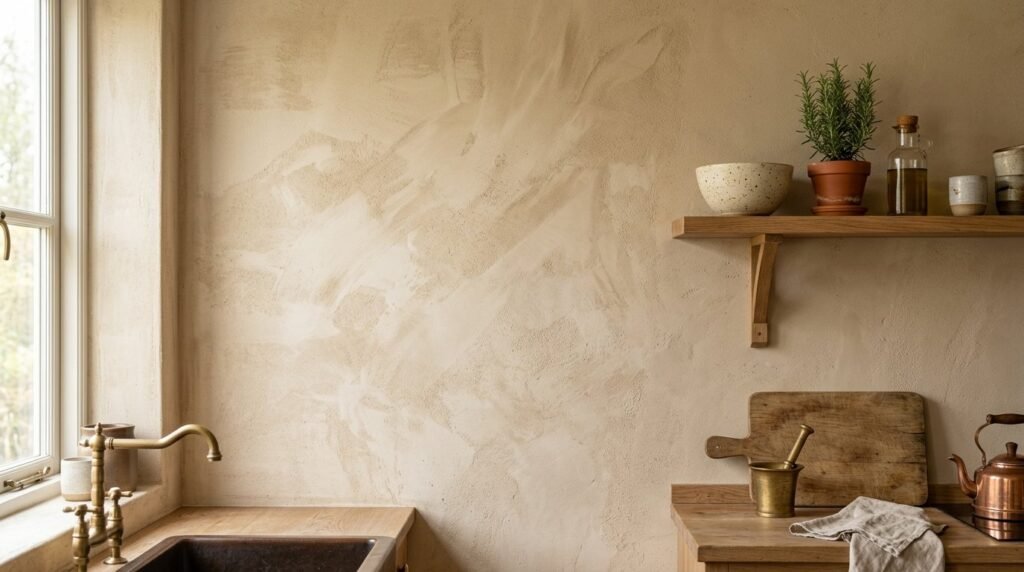
Pure white can feel sterile. Look for “off white” with a drop of beige or gray. I like Swiss Coffee by Benjamin Moore. It feels like a warm hug. If you want more drama go for a limewash finish. It creates a chalky soft texture. I saw a kitchen in London with sand colored limewash walls. It looked like an old stone cottage. It felt timeless. Avoid bright colors or cool blues. You want colors that you find in a forest or on a beach.
19. Integrate a Waterfall Island
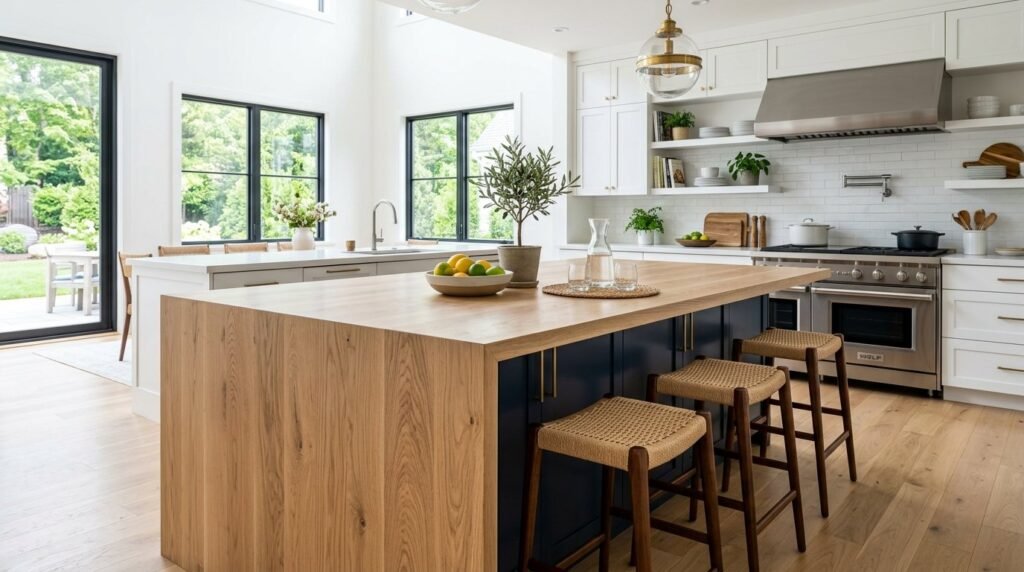
A waterfall island is when the countertop continues down the sides. It creates a solid block of stone or wood. It looks like a piece of sculpture. I’ve seen this done in light oak and it is stunning. It anchors the room. It hides the sides of the cabinets which can sometimes look messy. It is a bold move that stays minimal. Keep the stools on the other side so the “waterfall” is the first thing you see. It creates a sense of luxury through simple shapes.
20. Select Minimalist Faucets
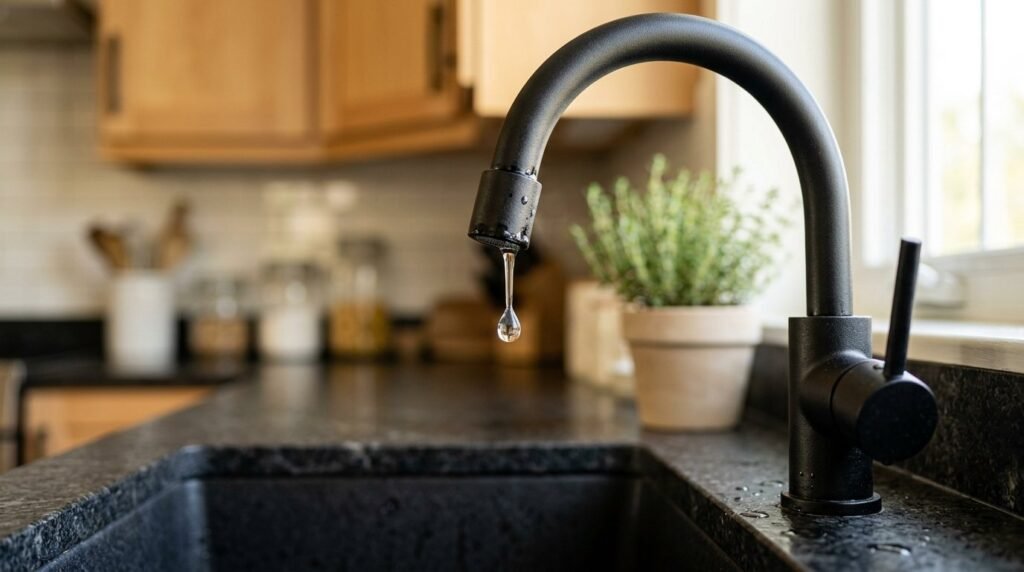
The sink is a workspace but the faucet is a feature. Look for a gooseneck shape in matte black or brushed gold. I prefer a single handle. It looks cleaner than two separate taps. I used a Delta Trinsic faucet in my last three projects. It is simple and works forever. Avoid industrial coils or shiny chrome. You want something that looks like it was shaped by water. A pull down sprayer is helpful but keep the lines slim.
21. Add Raw Wood Elements
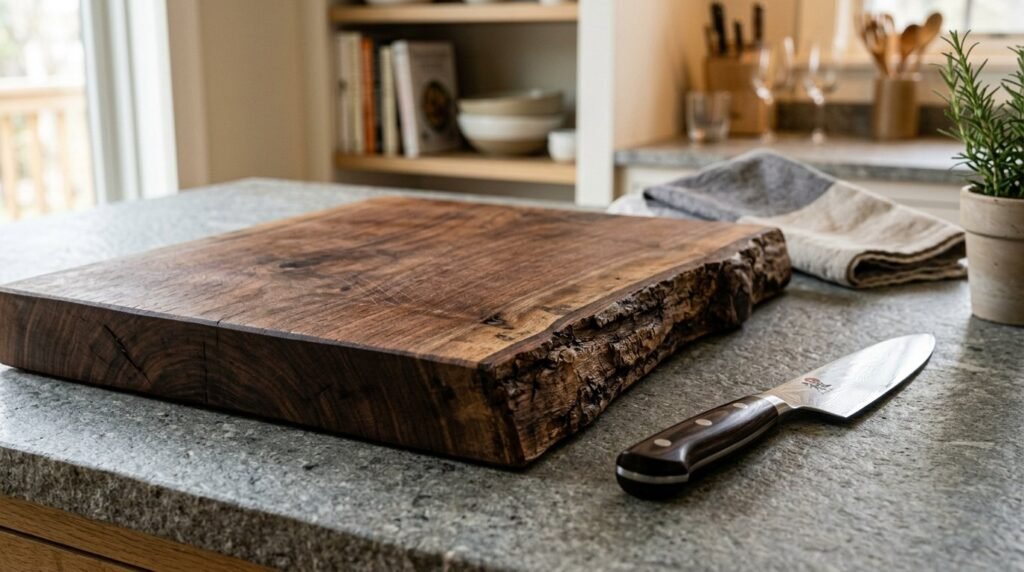
Don’t finish every piece of wood. A raw wood bowl or a thick cutting board adds soul. I like using a large oak board as a permanent fixture on the counter. It protects the stone and looks rustic. I noticed that people are afraid to use wood near water. Just oil it once a month. It will last for decades. This “raw” look connects the high design to the natural world. It feels authentic and honest.
22. Focus on Symmetrical Layouts
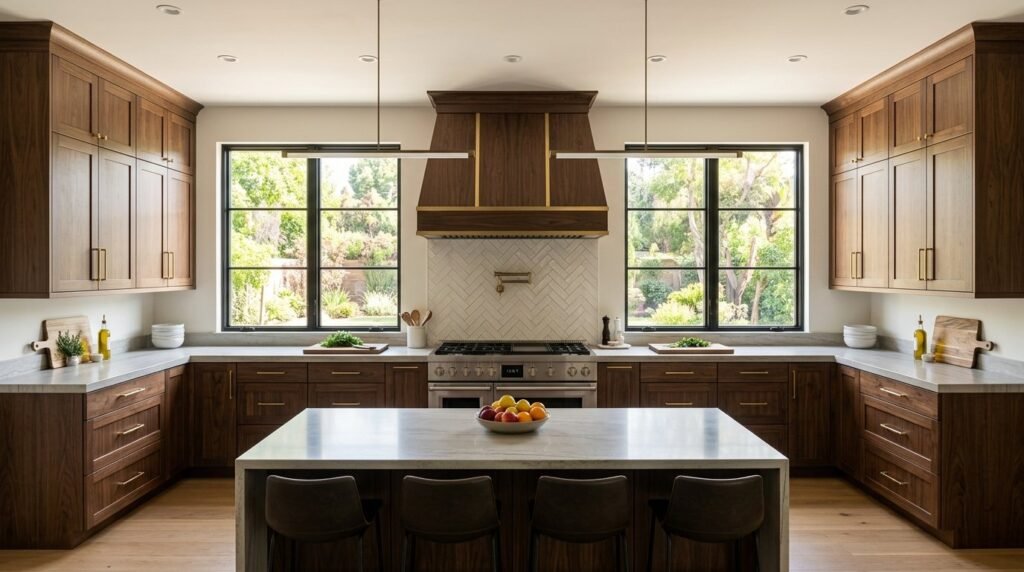
Balance is key to a calm mind. If you have a window center the sink under it. If you have two pendants space them evenly. I saw a kitchen where the stove was off center and it felt “wrong” every time I looked at it. Symmetry creates a sense of order. You don’t have to be perfect but aim for a visual weight that is even. This is a very Japanese approach to space. It allows the eye to rest instead of jumping around.
23. Curate Your Countertop
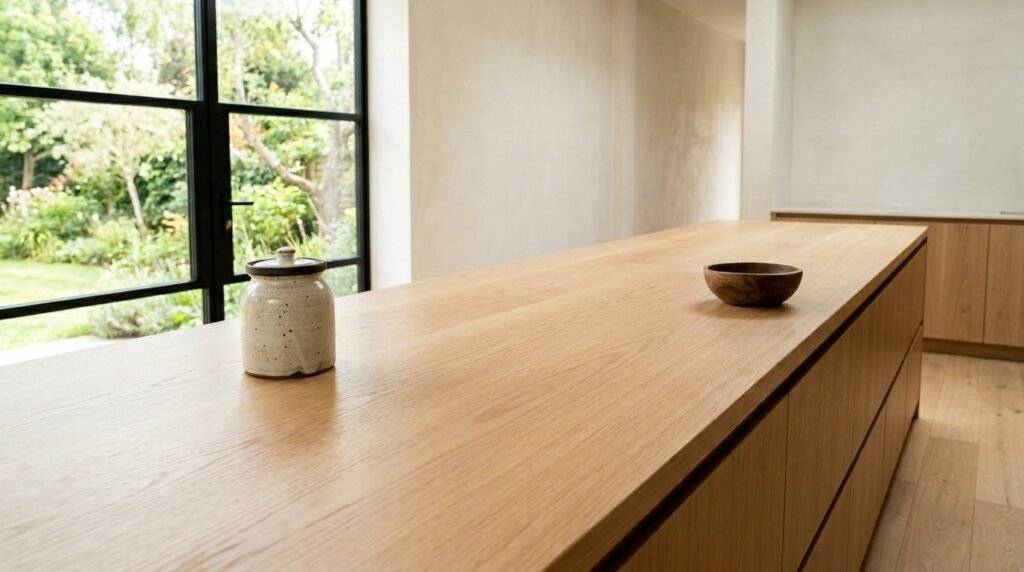
The best decor is the stuff you actually use. Only keep three items on your counter. A ceramic jar for spoons. A wood board. A single plant. Put the rest away. I’ve seen kitchens with five different appliances on the counter. It feels like a shop. When you clear the decks the room feels huge. You have space to breathe. You have space to create. This is the final step in the Japandi journey. It is about choosing what is enough.
Material Comparison and Brand Guide
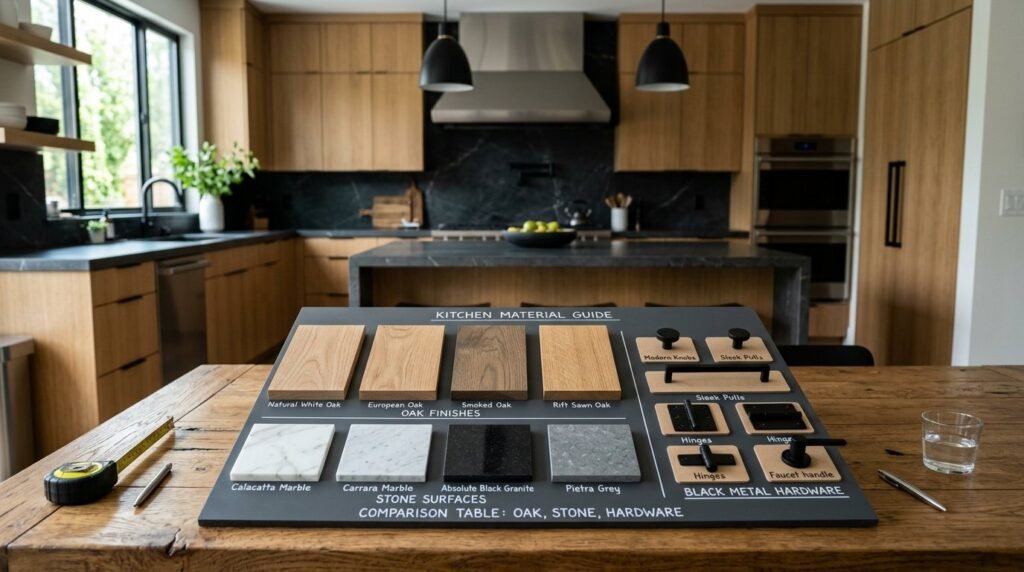
| Element | Top Japandi Choice | Why It Works | Suggested Brand |
| Cabinetry | Flat Panel White Oak | Warm, clean, airy | Reform CPH |
| Hardware | Matte Black Slim Pulls | Sharp contrast, modern | Rejuvenation |
| Lighting | Rice Paper Pendants | Softens glow, organic | Vitra (Akari) |
| Faucet | Gooseneck Matte Black | Sleek, functional | Delta Faucet |
| Tiles | Zellige Off-White | Wabi-sabi texture | Zia Tile |
| Counter | Gray Honed Quartz | Durable, quiet visual | Caesarstone |
Best Tools for a Japandi Kitchen
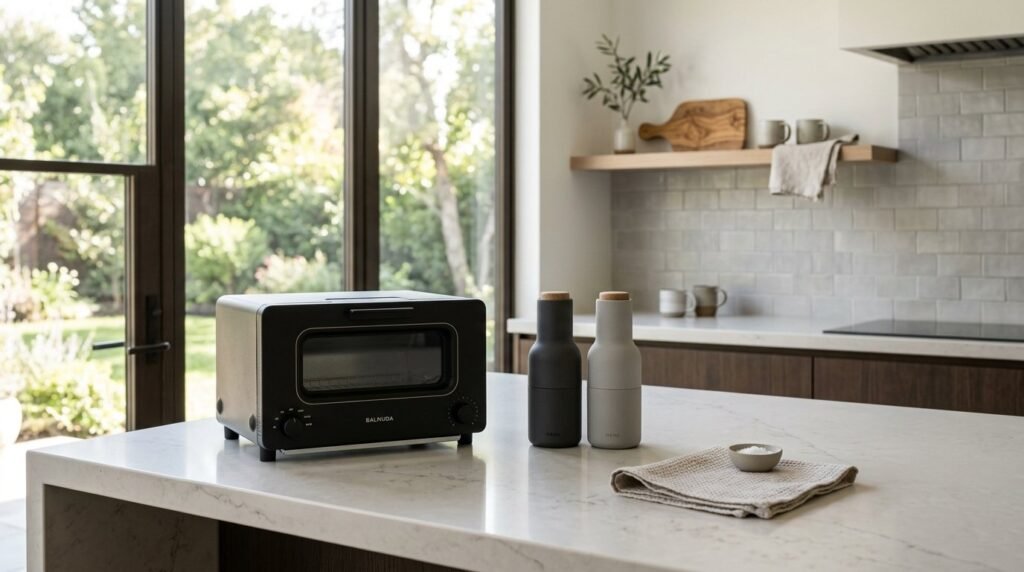
Getting the look requires the right tools. I always suggest starting with high quality ceramics. Brands like Hasami Porcelain from Japan are perfect. Their pieces stack neatly and have a raw feel. For appliances look at Balmuda. Their toaster and kettle are designed with a minimalist aesthetic. They look like art on your counter. I also recommend a set of wood salt and pepper grinders from Menu. They have a “bottle” shape that hides the mess of salt on the table. For cleaning use Murchison-Hume. Their bottles look great and the scents are natural. These small brands understand that every object in your home matters.
Frequently Asked Questions
Is Japandi good for small kitchens?
Yes it is perfect for small spaces. The focus on light wood and hidden storage makes a room feel open. I’ve seen tiny studio kitchens look like luxury spas using these rules. Avoid dark upper cabinets to keep it airy. Use mirrors or glass to bounce light around.
How do I keep a Japandi kitchen from looking cold?
Texture is the secret. If you use too much flat plastic it feels like a lab. Use linen towels and woven rugs. Use wood with a visible grain. The “Scandi” part of the mix adds the warmth you need. It should feel lived in and cozy.
What is the best wood for Japandi design?
White oak is the gold standard. It is strong and has a beautiful light color. Ash and pine also work for a more budget friendly option. Avoid woods with red or orange tones like cherry or mahogany. You want cool or neutral yellows.
Can I mix metals in a Japandi kitchen?
I suggest sticking to one main metal. Matte black is the safest bet. If you want to mix try a tiny bit of brushed gold for lighting. I noticed that too many metals make the space feel busy. Consistency is what creates the “calm” feeling.
Is Japandi expensive to implement?
It can be but it doesn’t have to be. You can start by decluttering and painting your walls. Swapping hardware is a cheap way to change the vibe. You can buy second hand wood furniture and sand it down. The goal is quality over quantity.
Your Next Steps
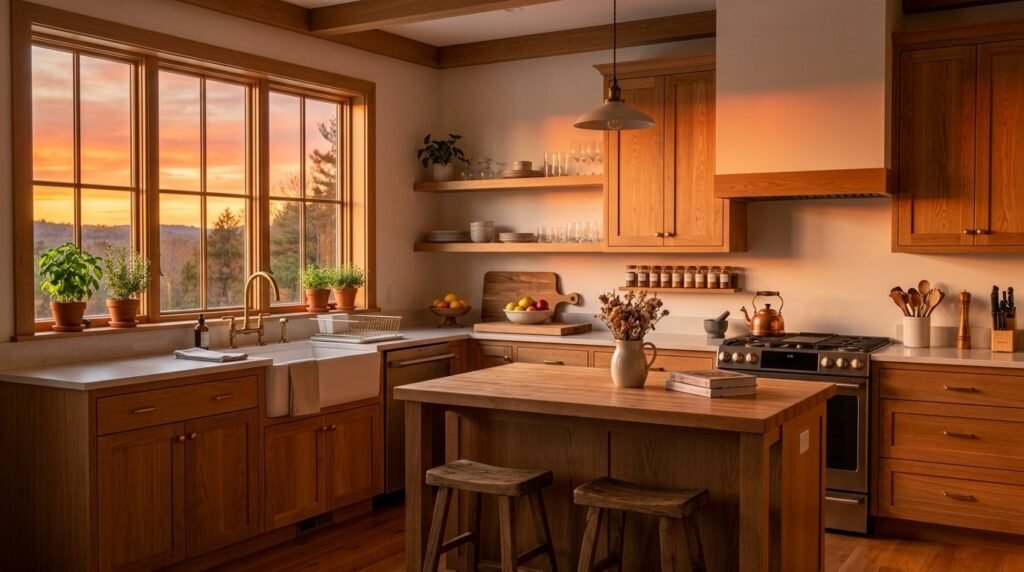
Creating a Japandi kitchen is a journey of letting go. It starts with one drawer. It ends with a home that supports your peace. I’ve seen people transform their whole lives by changing their environment. When your home is quiet your mind follows. Start with the light. Look at how the sun hits your walls. Choose one of these 23 ideas and try it this weekend. You don’t need a full remodel to feel the shift. Just a commitment to simplicity. I hope you find the calm you are looking for. Your kitchen is the perfect place to start.

Meet Sloane Whitaker
Sloane Whitaker is the creative force and lead editor behind Vellora Interiors. With a background in architectural design and a passion for coastal-inspired living, Sloane specializes in bridging the gap between high-end luxury and everyday comfort.
After spending years curateing spaces in the Charleston market, she launched this platform to share her “elevated-yet-attainable” design philosophy. Whether she’s exploring the quiet simplicity of Japandi aesthetics or the storied charm of Craftsman architecture, Sloane’s goal is to help homeowners create spaces that feel both timeless and deeply personal.