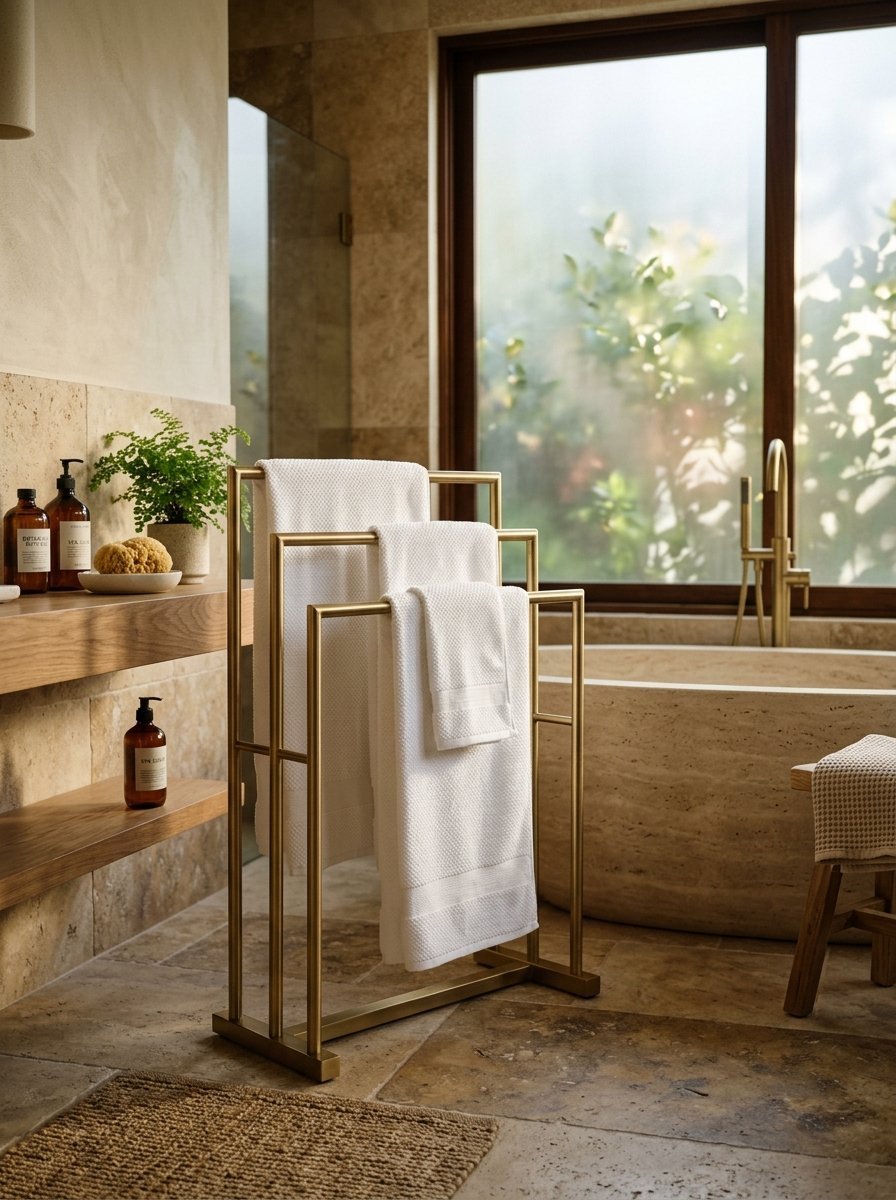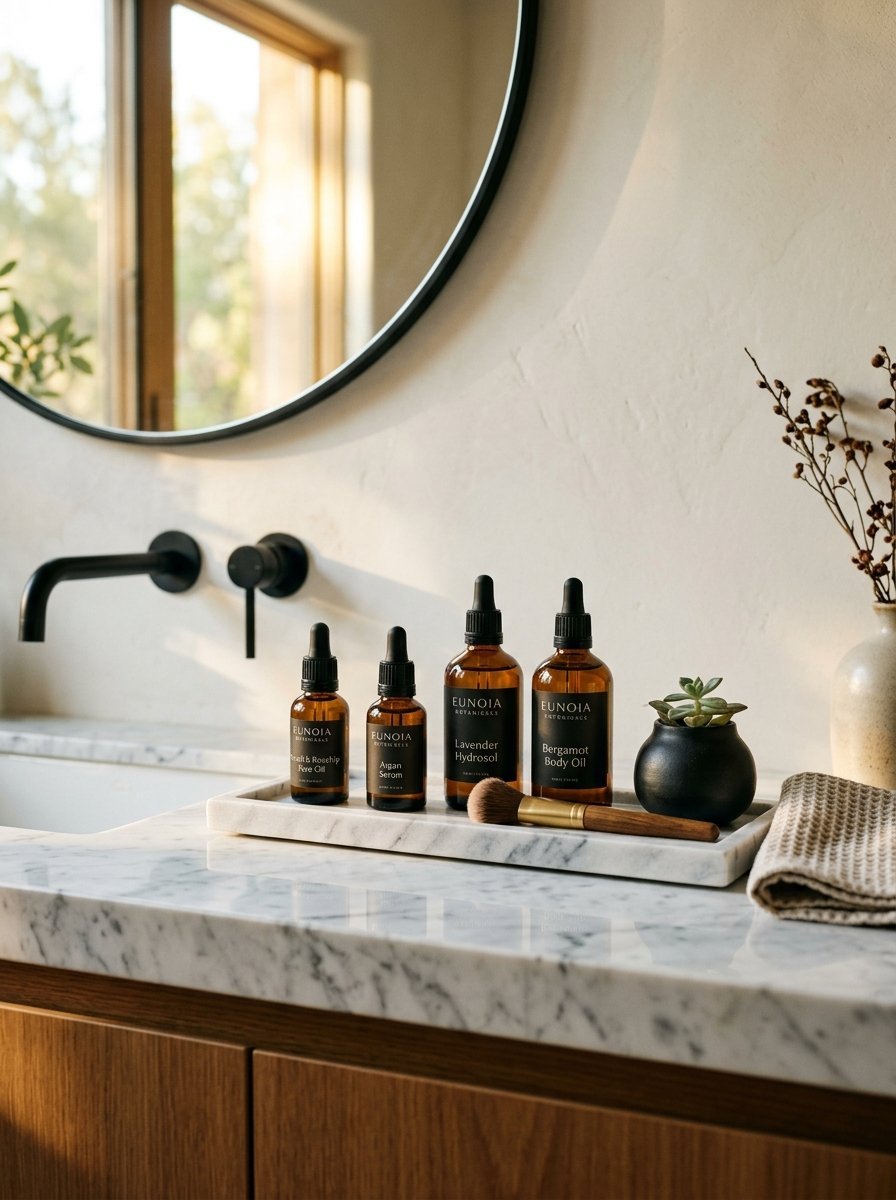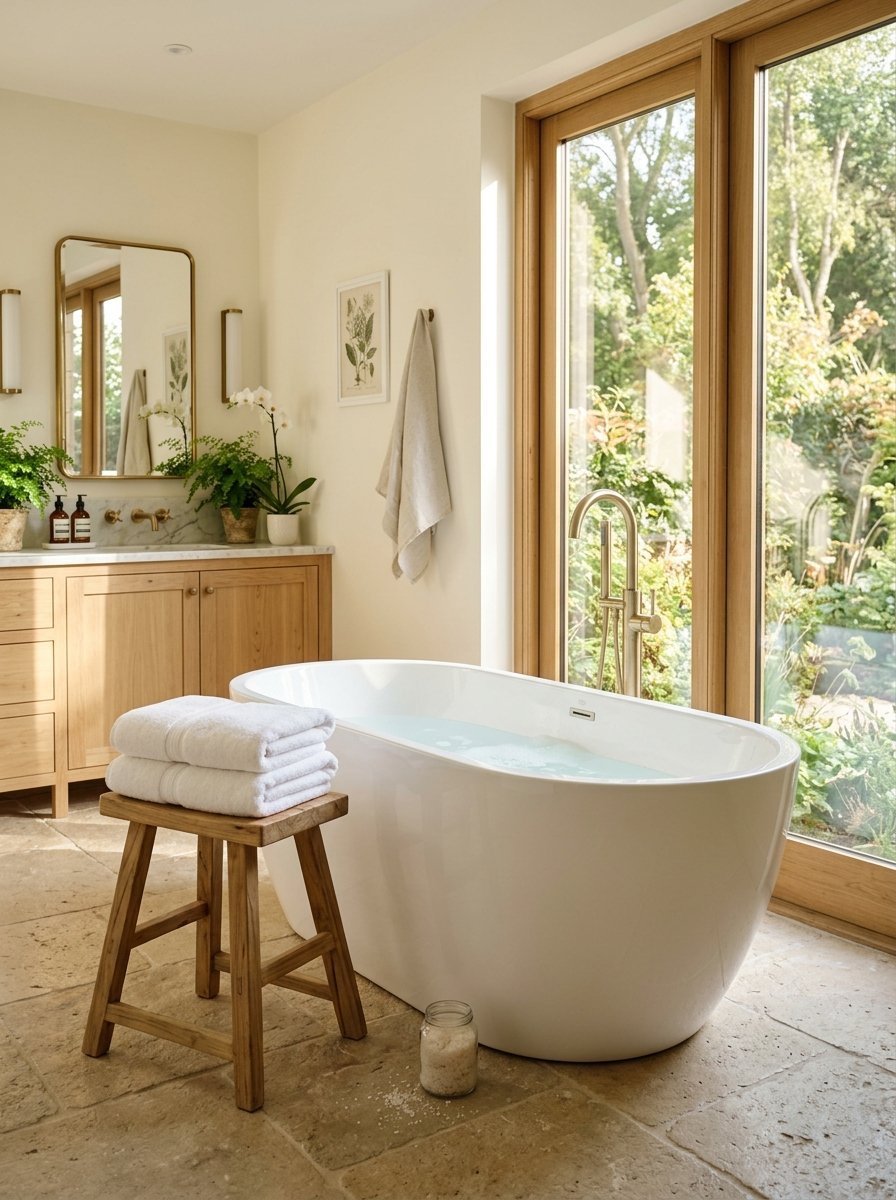
Three months ago I walked into a high-end hotel in Chicago. The space felt incredibly expensive. I realized the secret was right by the sink. The hand towels were styled with deliberate intention. Most of us just throw a damp cloth over a ring. I used to do exactly that. The room looked messy and cheap. A wrinkled piece of fabric ruins the entire aesthetic. I tested dozens of folding rules and styling tricks over the last year. These small details change everything. You can make a basic space feel like a luxury spa for under forty dollars.
You will upgrade your space using simple folding rules and strategic placement. I will show you how to mix textures and colors for maximum visual appeal. We cover:
- Exact ways to roll, drape, and layer fabrics
- Specific hardware choices from brass rings to matte black bars
- Costs ranging from ten to fifty dollars
- Ideas perfect for a Modern Bathroom or a Tiny Bathroom
I share my exact routines for keeping everything fresh and visually appealing. This guide completely replaces standard towel habits with designer-level execution. You will execute these ideas in under five minutes.
1. The Spa Roll Pyramid
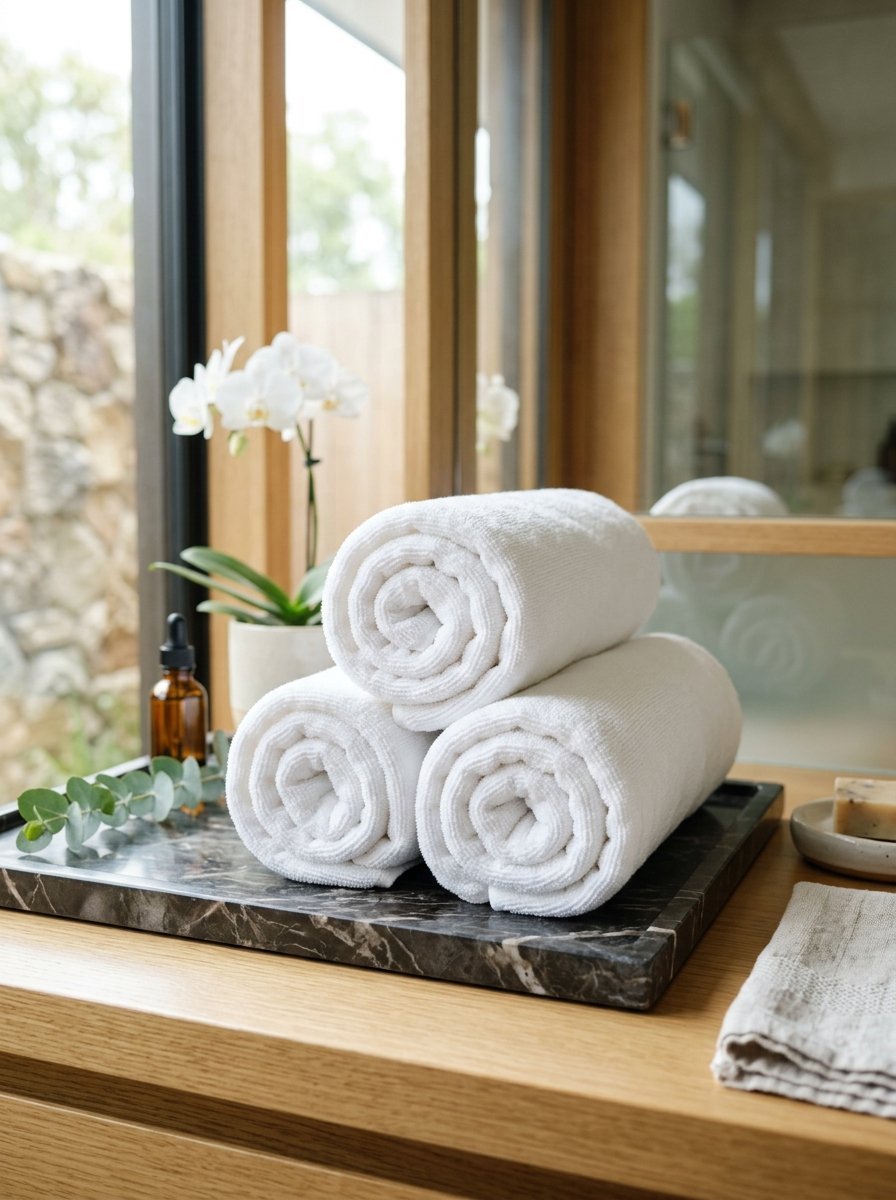
I first saw this at a resort in Miami. You fold the fabric in half lengthwise. Roll it tightly from one end to the other. Stack three rolled pieces in a pyramid shape on a vanity tray. I use a marble tray from West Elm that costs about thirty dollars. This works beautifully for a Modern Bathroom with ample counter space. It looks incredibly intentional. The tight roll prevents wrinkles and hides raw edges. I noticed guests hesitate to use them because they look so perfect. Keep a separate functional cloth nearby. This is pure Bathroom Towel Decor at its finest.
2. The Asymmetrical Drape
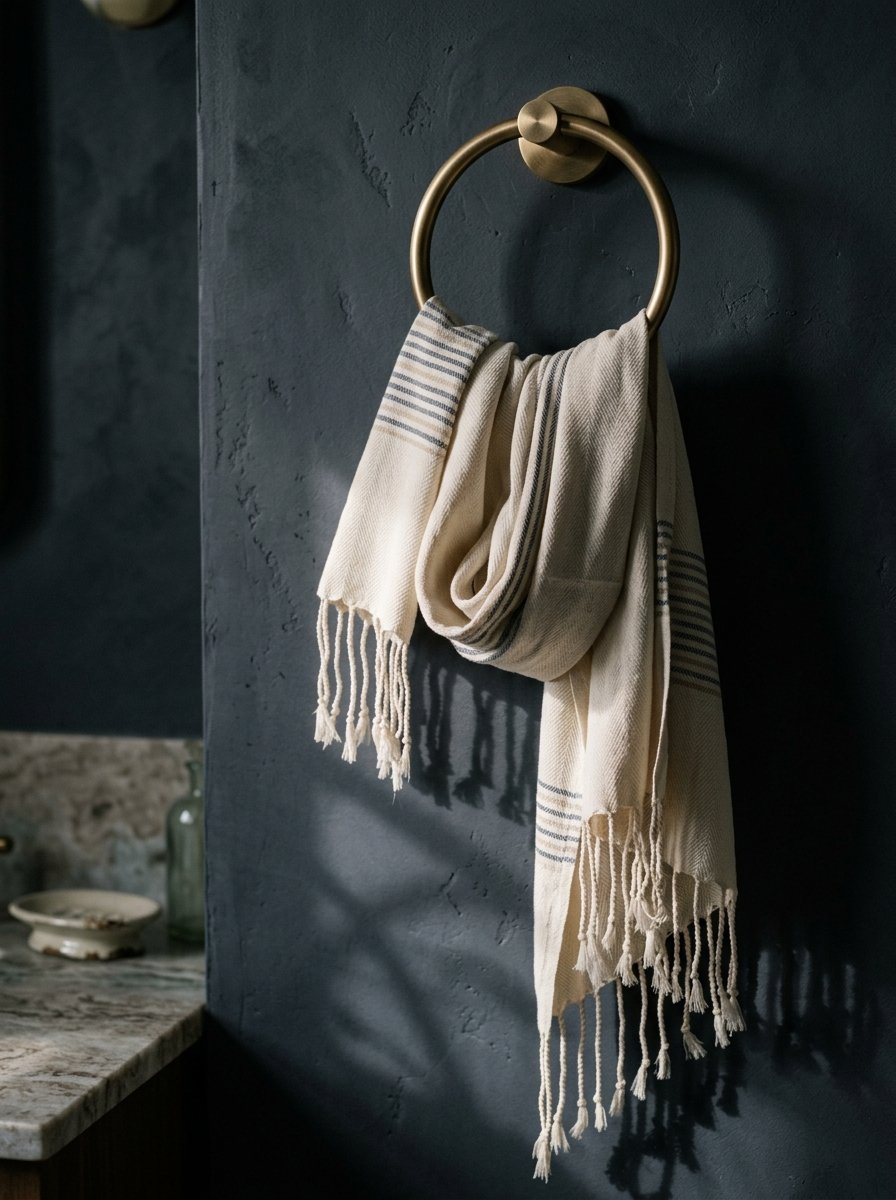
This breaks the rules of traditional folding. You grab the fabric off-center and let it fall naturally over a towel ring. I tried perfectly centered folds for years. They always looked stiff and boring. The asymmetrical look feels relaxed but highly curated. I pair this with a brushed brass ring from CB2. The drape works best with Turkish cotton. The fringe hangs at different lengths. It creates beautiful visual tension. I find this is the best way to make a basic hardware setup look custom. You spend zero dollars and ten seconds to get this look.
3. The Double Layer Setup
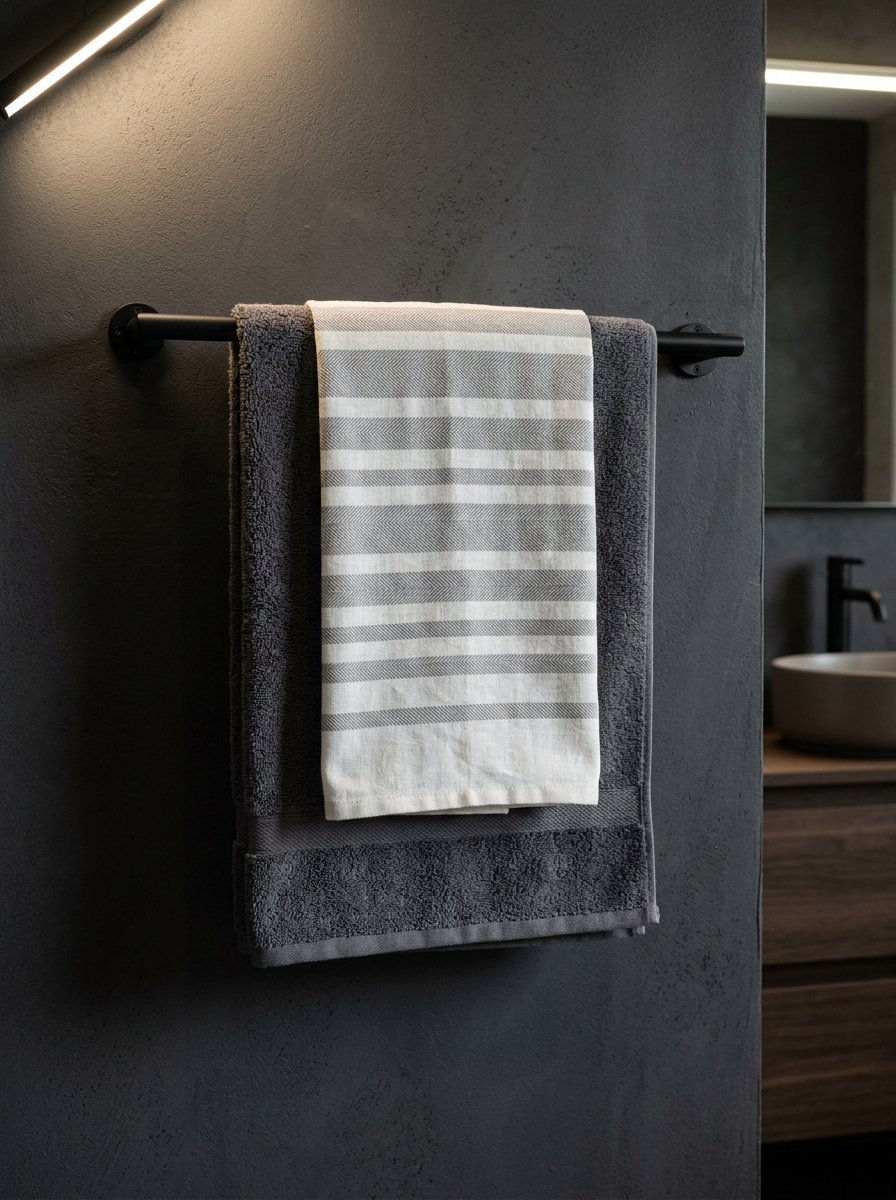
Layering fabrics instantly elevates the room. You start with a solid colored base layer. Fold it in thirds and hang it flat on a bar. Take a smaller patterned cloth. Fold it narrower and place it directly over the center of the base layer. I use a charcoal gray base with a striped top layer. This creates depth and texture. I learned this while studying high-end real estate listings. The layered look implies luxury and abundance. You need a standard eighteen-inch bar to make this work properly. This setup completely masks cheap hardware.
4. The Pocket Fold
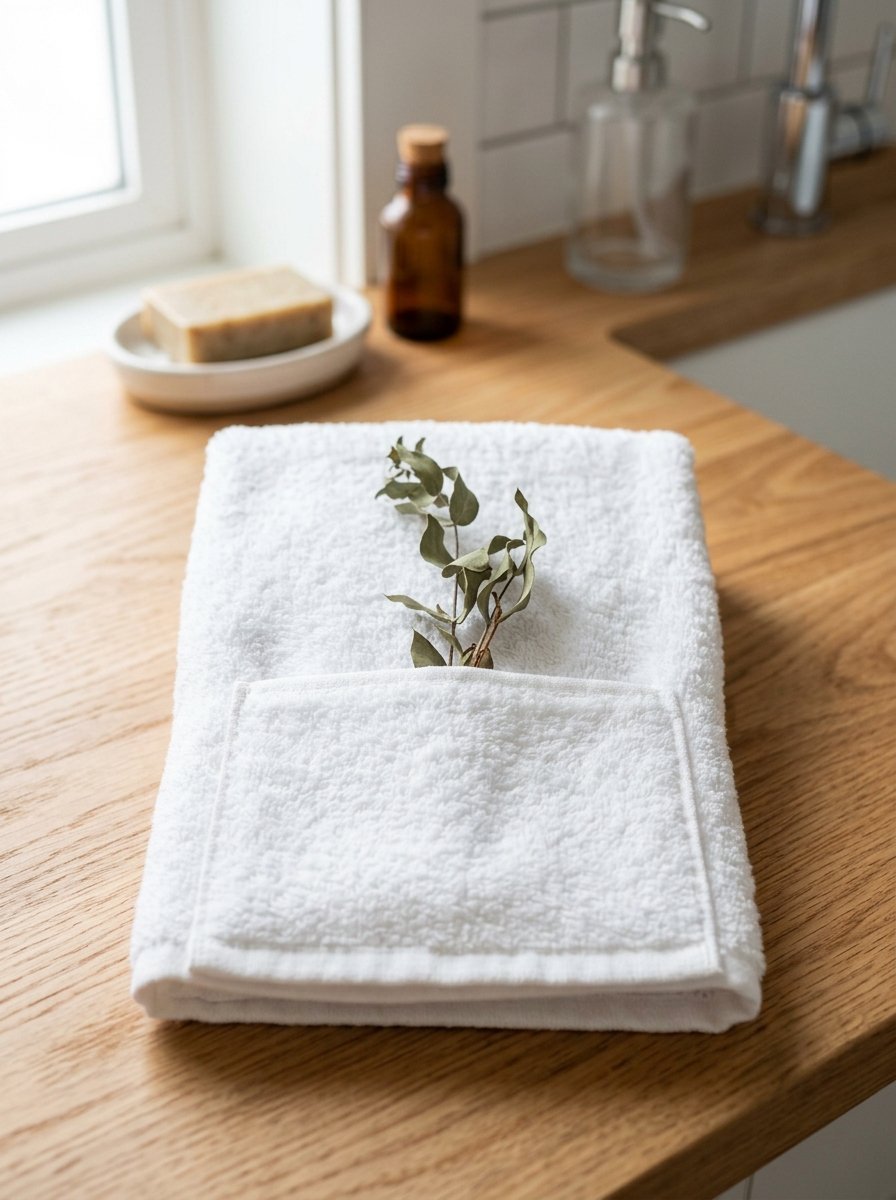
This involves folding the fabric to create a small pouch on the front. I fold the bottom quarter up. Turn the whole thing over. Fold the sides into the center. Tuck the bottom up again. You get a neat little pocket. I place a sprig of dried eucalyptus or a tiny wrapped soap inside. This feels incredibly welcoming for houseguests. I do this in my guest suite. People constantly ask me for the tutorial. It takes about forty seconds to fold. You need a thicker material to hold the pocket shape properly. Thin fabrics will just collapse.
5. The Basket Weave Stack
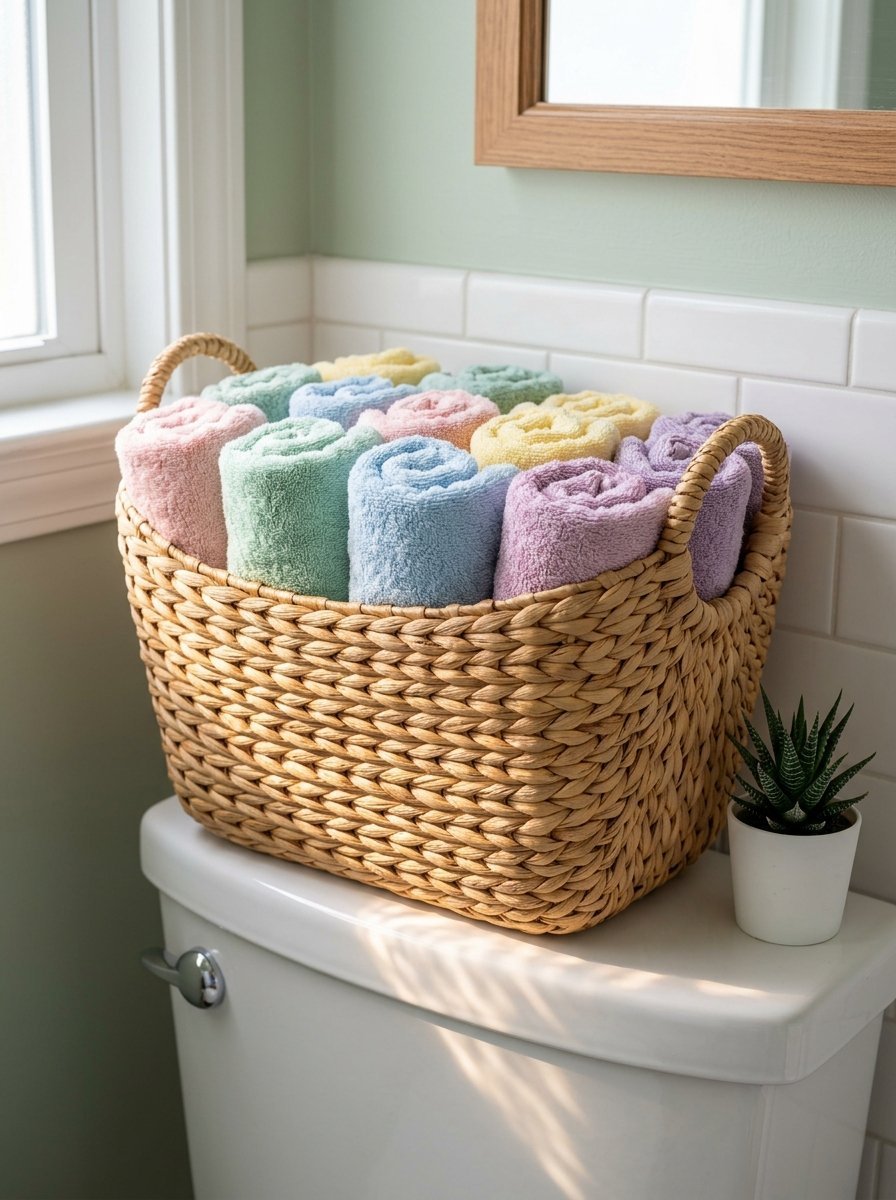
You need a shallow woven basket for this setup. I bought a water hyacinth basket from Target for fifteen dollars. You fold the fabrics tightly and stand them upright inside the basket. Pack them tightly together. The texture of the basket contrasts beautifully with the soft cotton. This fixes major Bathroom Organization Ideas for a Tiny Bathroom. You use vertical space properly. I keep this on the back of the toilet or a narrow shelf. The upright positioning makes it very easy to grab one without ruining the rest.
6. The Knotted Hang
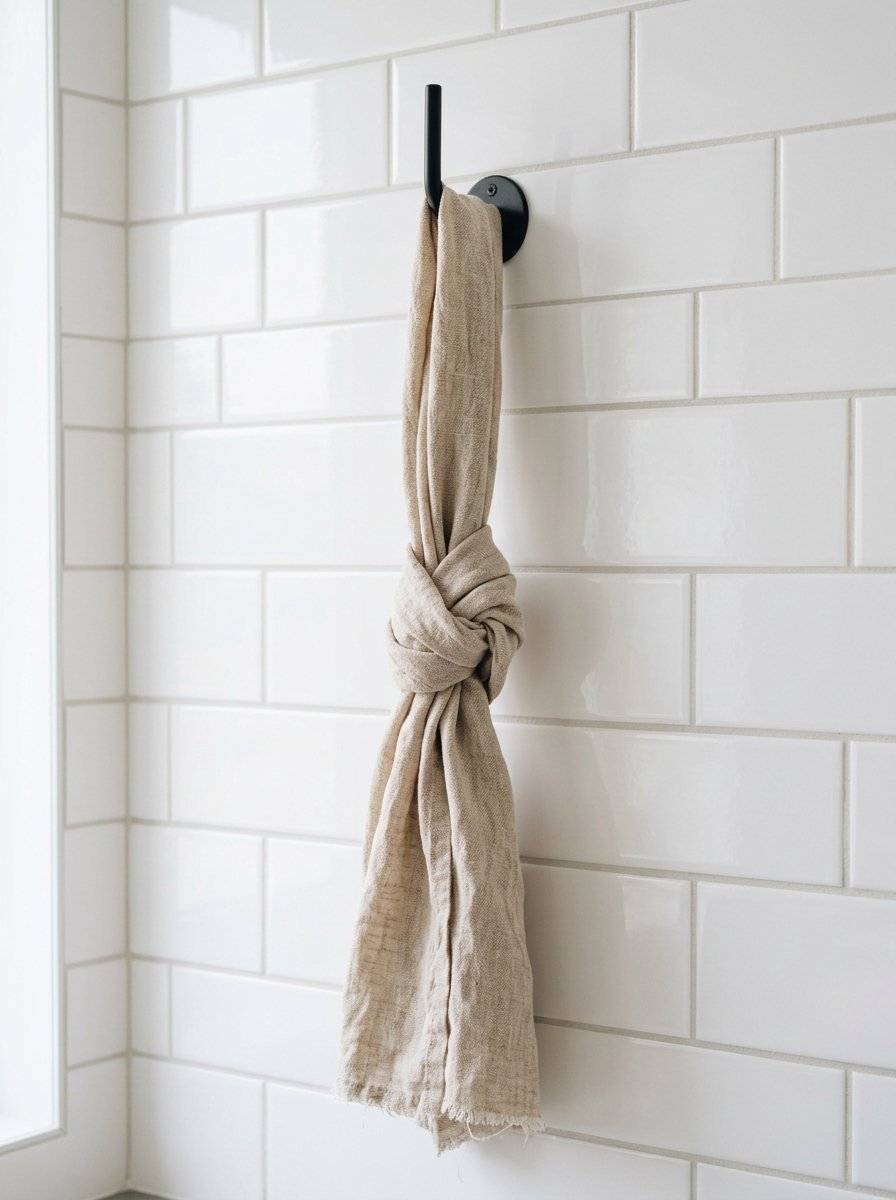
I tie a loose knot right in the middle of a thin Turkish towel. I then hang the knotted piece from a single hook. This looks very bohemian and relaxed. Thick terrycloth will not work for this. You must use a thin woven cotton. I use a matte black hook from Rejuvenation. The knot creates a beautiful sculptural piece. I use this trick when I want to hide a frayed edge. It feels very unstudied and effortless. This takes exactly five seconds. The knot also prevents the fabric from slipping off the hook.
7. The Hardware Drape
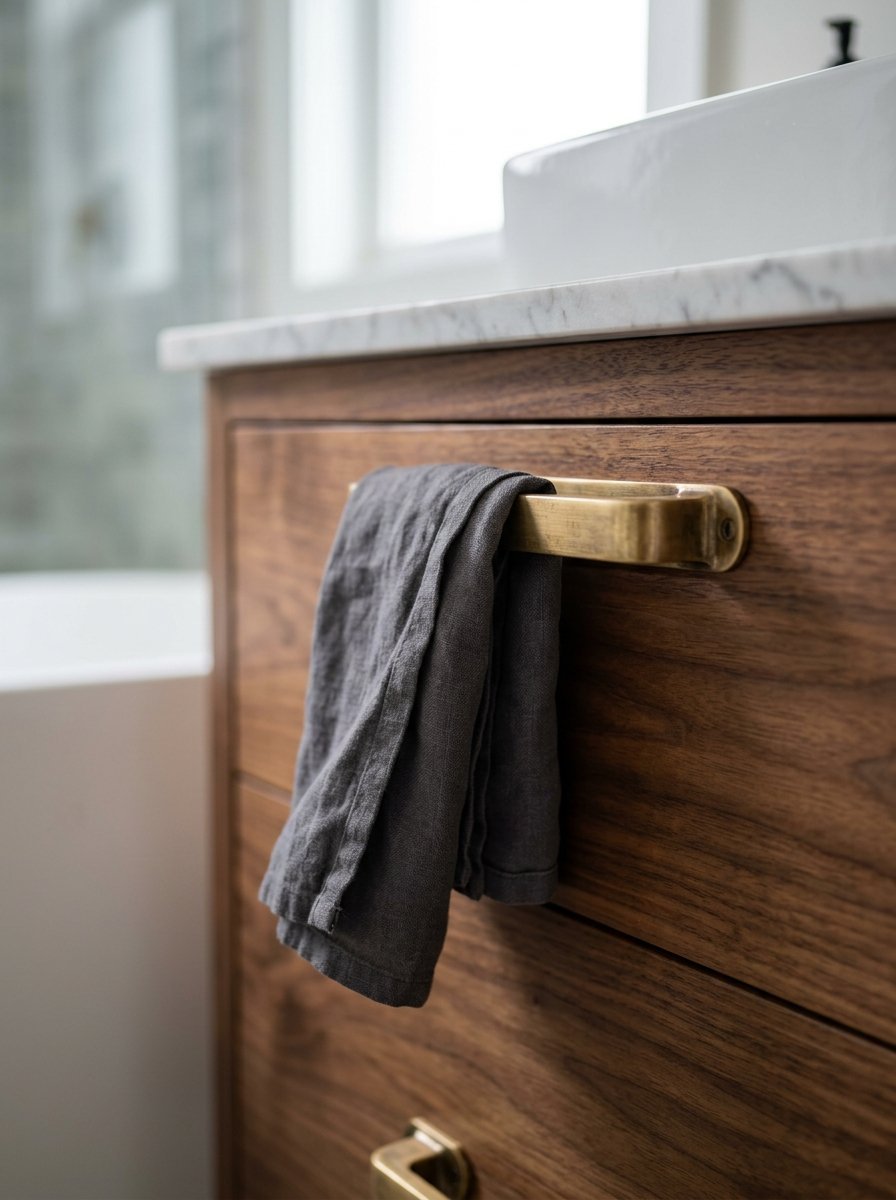
Instead of using a ring or a bar, I drape the fabric over a drawer pull or cabinet knob. I have oversized brass pulls on my vanity. Folding the cloth narrowly and hanging it right on the hardware looks incredibly chic. This saves wall space in a Tiny Bathroom. I first tried this out of necessity when my wall ring broke. I ended up loving the look. It places the cloth right where you need it. You need a pull that extends at least two inches from the cabinet face.
8. The Color Block Display
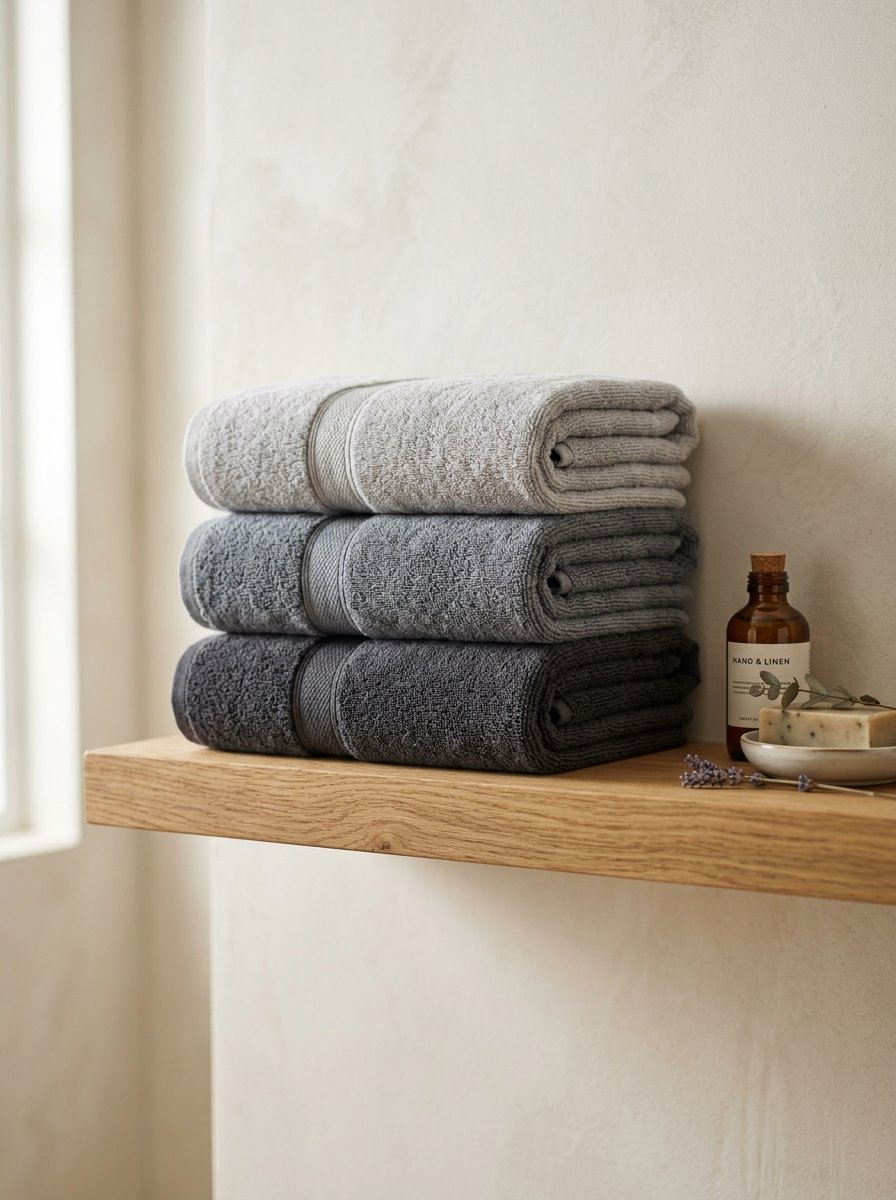
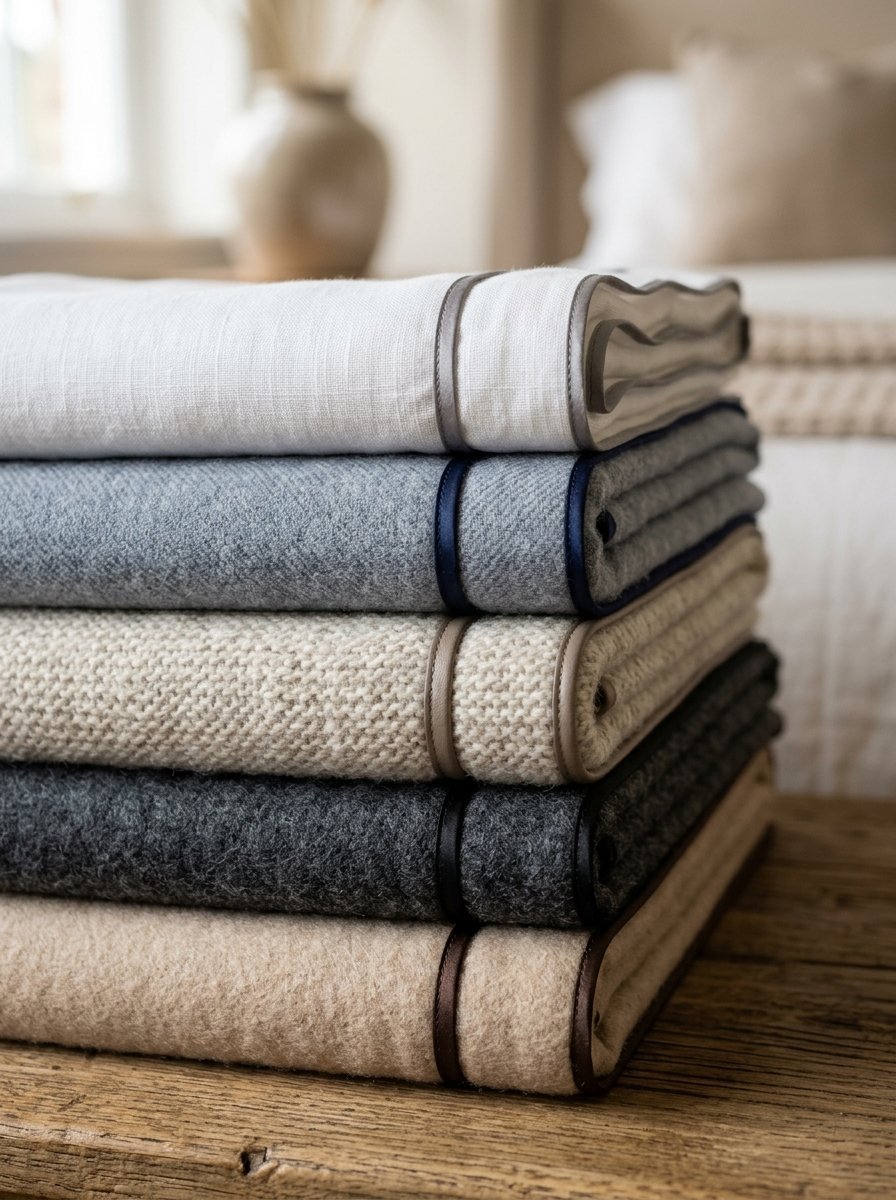
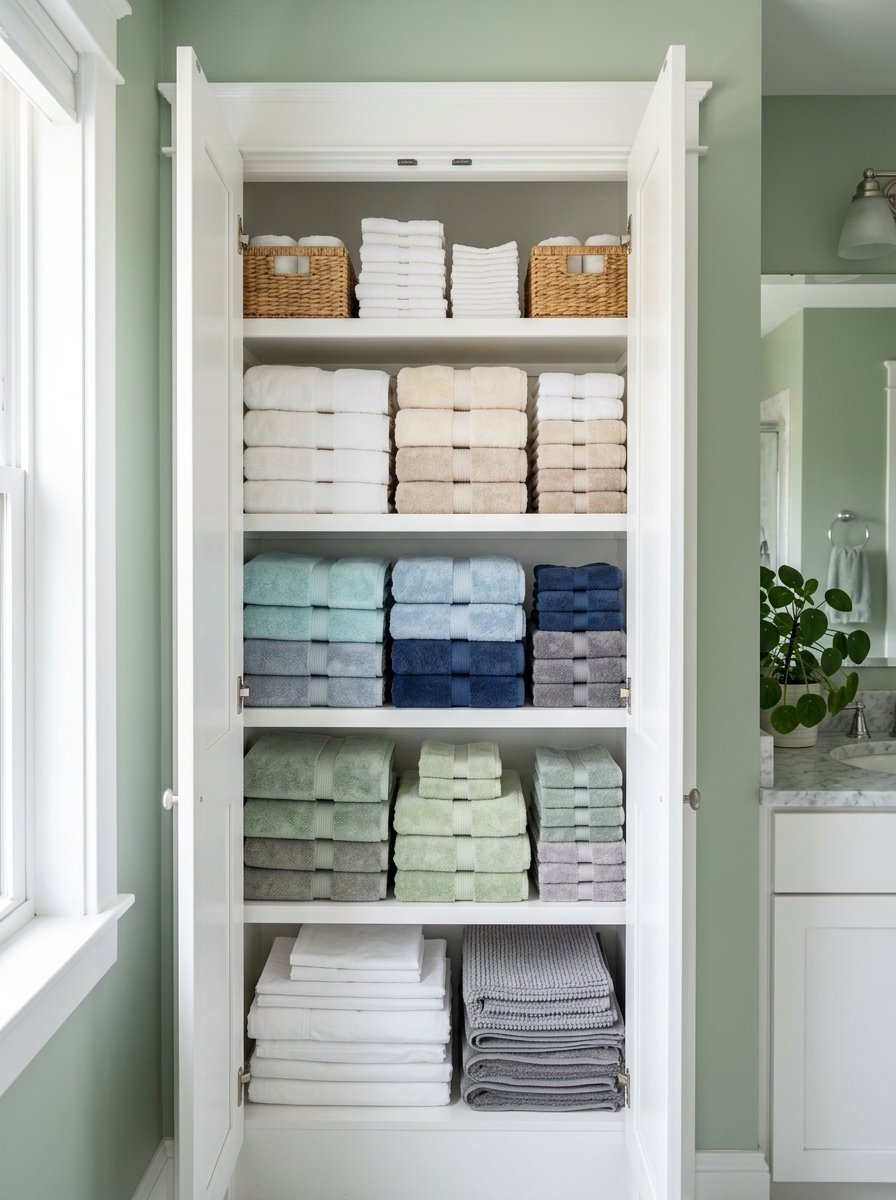
I buy three fabrics in different shades of the same color family. I use light gray, medium gray, and charcoal. I fold them flat and stack them on an open shelf. The gradient looks visually striking. This turns basic utility items into a deliberate art piece. I buy my sets from Brooklinen for about forty dollars. The color blocking draws the eye. This is one of my favorite Organisation Hacks. It forces you to keep the stack neat. A messy stack ruins the color gradient entirely.
9. The Waffle Knit Focus
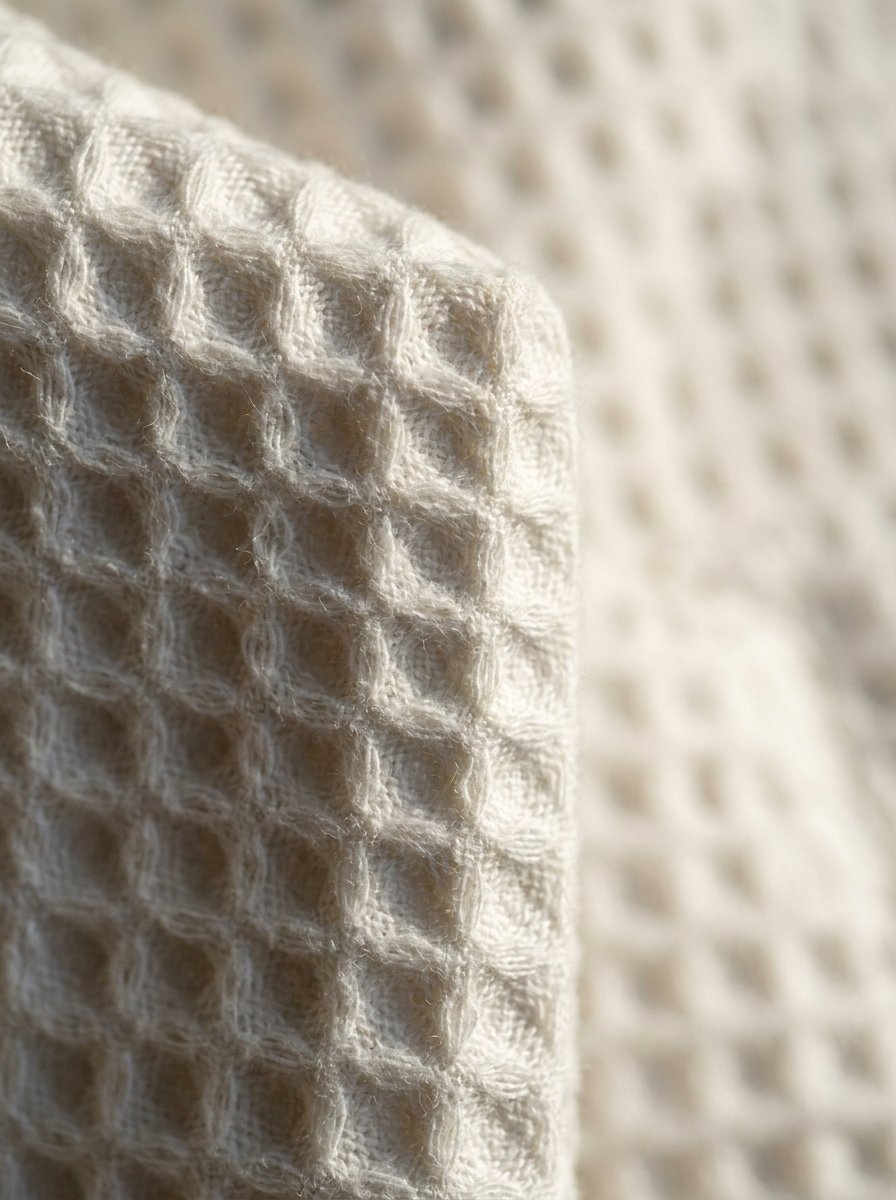
The material you choose matters more than the fold. I switched completely to waffle knit fabrics last year. The geometric texture catches the light beautifully. I fold them in simple thirds and stack them flat. Waffle knit dries much faster than terrycloth. This stops that terrible damp smell. I buy mine from Parachute Home. They cost a bit more upfront. The visual reward is massive. The texture does all the heavy lifting for the design. You do not need complicated folding rules when the fabric itself is beautiful.
10. The Floating Shelf Display
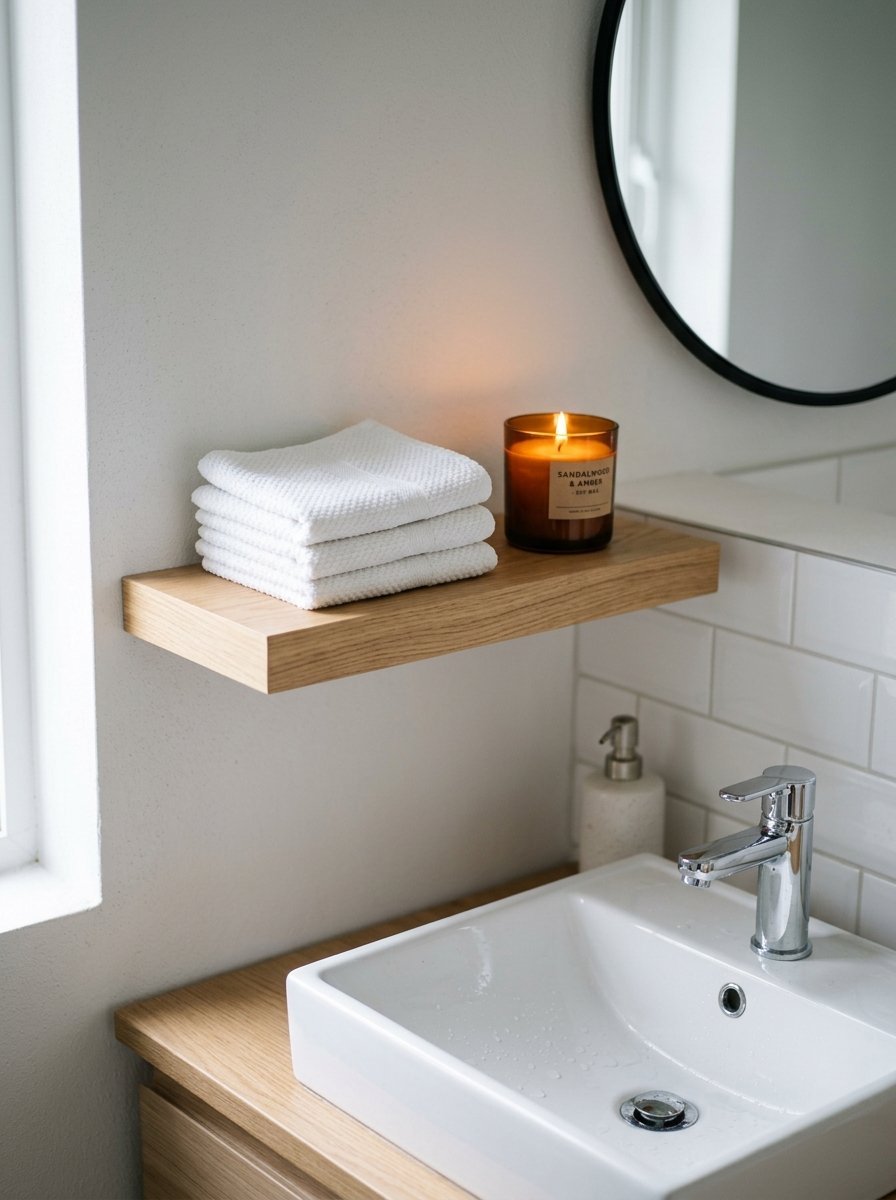
I installed a narrow floating wood shelf right above my sink. I stack three neatly folded white squares on it. I place a small amber glass candle next to them. This creates a beautifully curated vignette. The shelf cost me twenty dollars on Amazon. This keeps the counter completely clear. A clear counter is the fastest way to make a space feel larger. This perfectly blends Bathroom Towel Decor with strict functionality. I use a spirit level to ensure the stack is perfectly straight. Crooked stacks look terrible.
11. The Leather Strap Holder
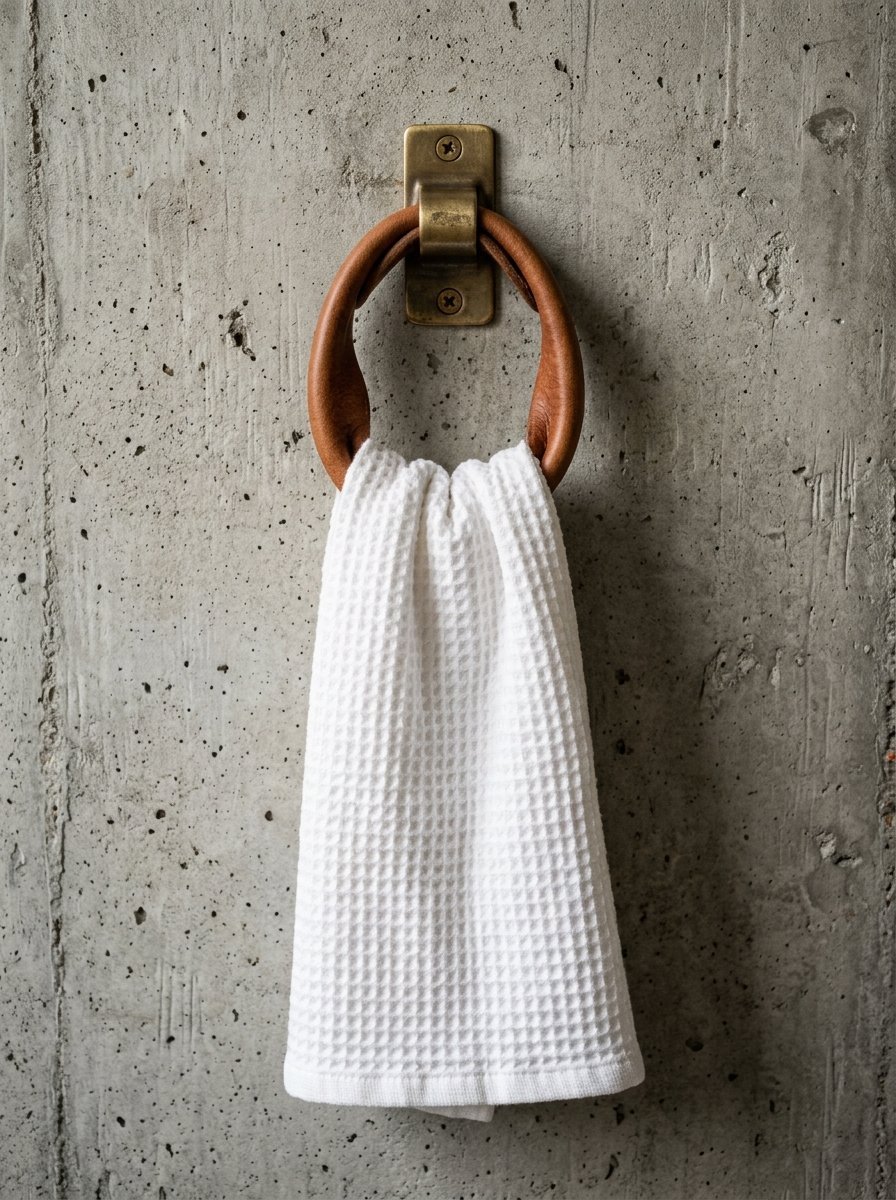
I replaced my metal ring with a loop of genuine leather. You can buy leather strap holders on Etsy for under twenty dollars. You thread the fabric through the loop. The warmth of the leather looks amazing against crisp white cotton. I installed this in my powder room last spring. Guests compliment it constantly. The leather softens the hard lines of the tile and mirrors. You just need to ensure the leather is sealed properly. Untreated leather will stain from the damp fabric.
12. The Monogram Reveal
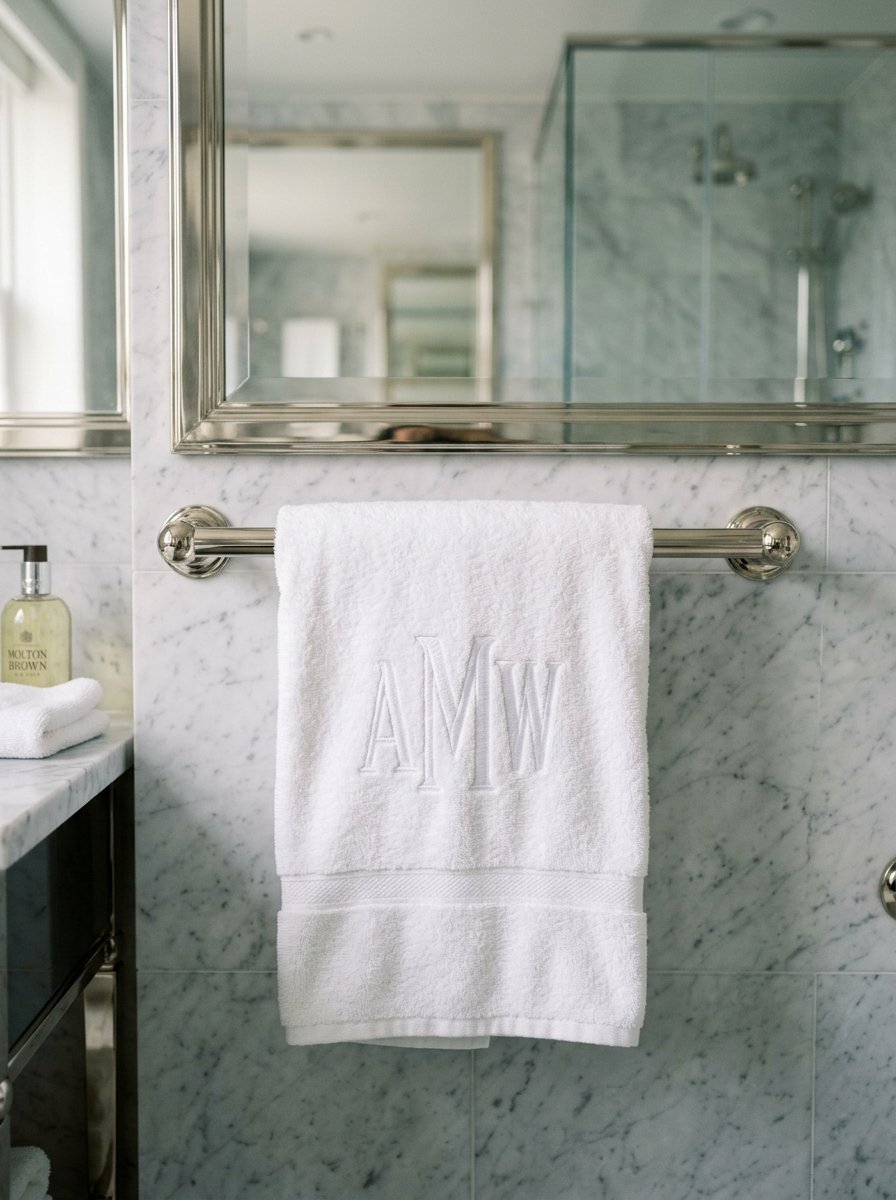
A monogram feels incredibly traditional and expensive. I order mine with a subtle tone on tone thread. White thread on a white cloth looks very sophisticated. The trick is the folding. You must fold the sides back so the monogram sits dead center. I drape this perfectly centered over a polished nickel bar. I learned this exact placement from a boutique hotel manager. You cannot be lazy with the fold. If the monogram sits off center the entire look fails. I pay an extra ten dollars per piece for the embroidery.
13. The Wooden Ladder Lean
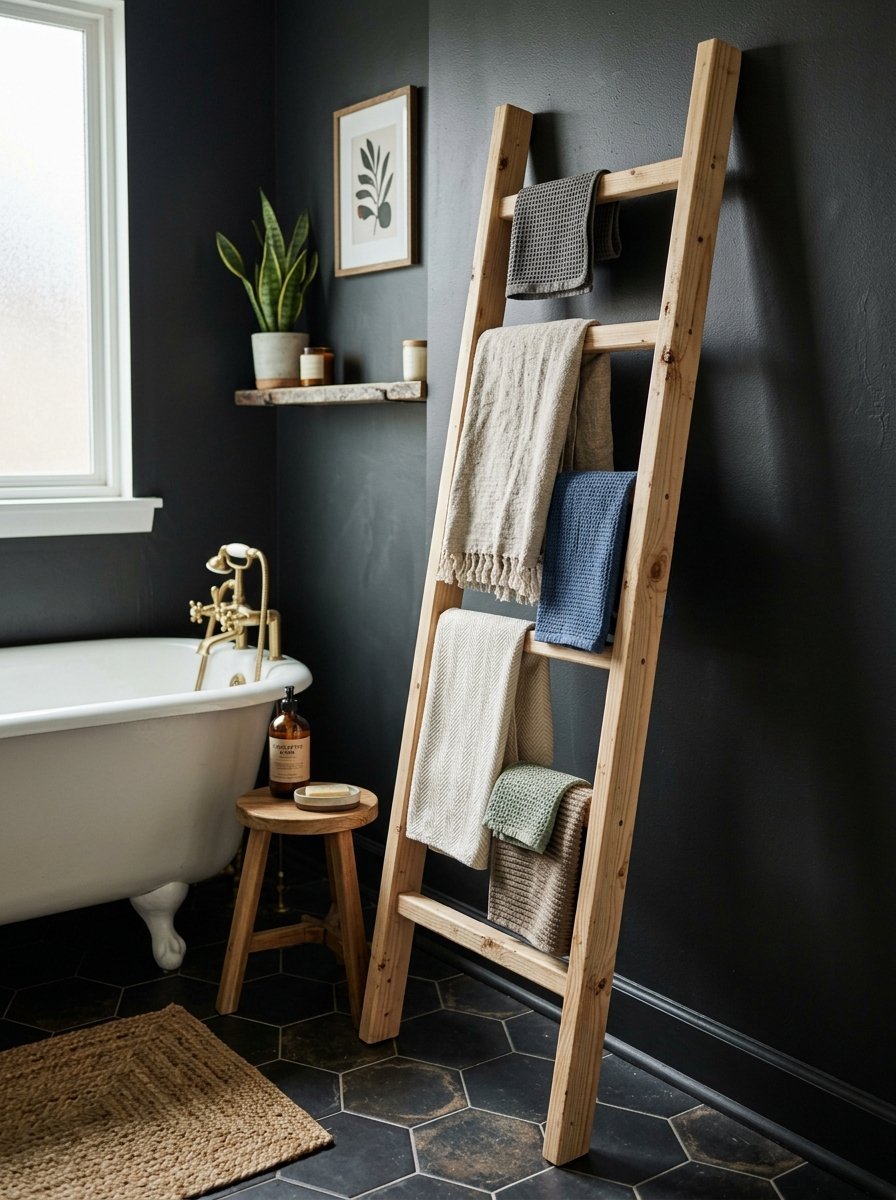
I lean a decorative wooden ladder against the wall. I fold multiple fabrics in half and drape them over the rungs. This fills an empty corner beautifully. I built a ladder out of simple pine boards for fifteen dollars. This is a brilliant way to display your Bathroom Towels. You can mix colors and patterns on different rungs. This works perfectly if you lack wall blocking for traditional hardware. The ladder simply leans securely against the drywall. It gives vertical interest to the room.
14. The Minimalist Hook Spread
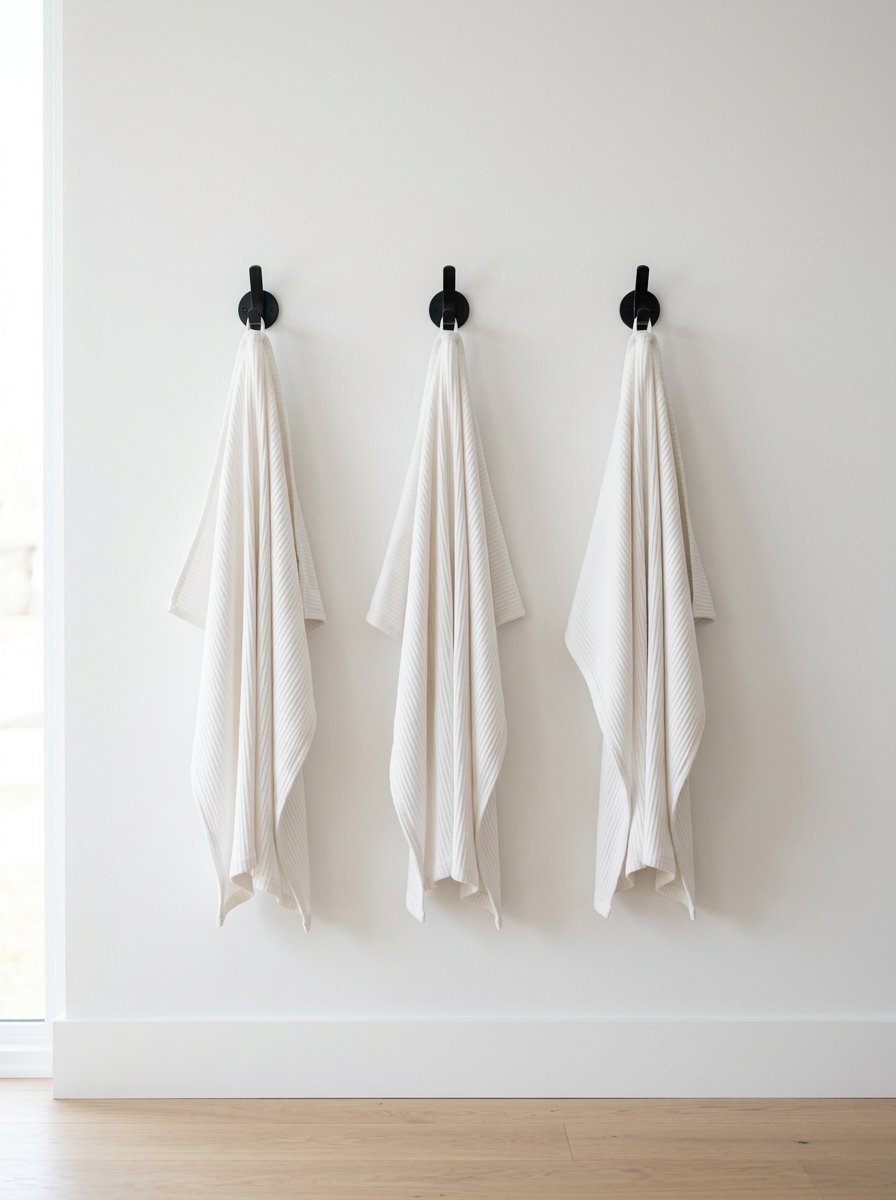
I hate clustered hardware. I install three simple hooks spaced twelve inches apart on a large wall. I hang one piece from each hook. The negative space between the hooks feels very deliberate. This needs a Modern Bathroom aesthetic to work properly. I use very thick ribbed cotton for this. The wide spacing allows the fabric to dry incredibly fast. I switched to this routine after dealing with mildew issues. The visual rhythm of three evenly spaced items looks very pleasing.
15. The Hidden Ring Trick
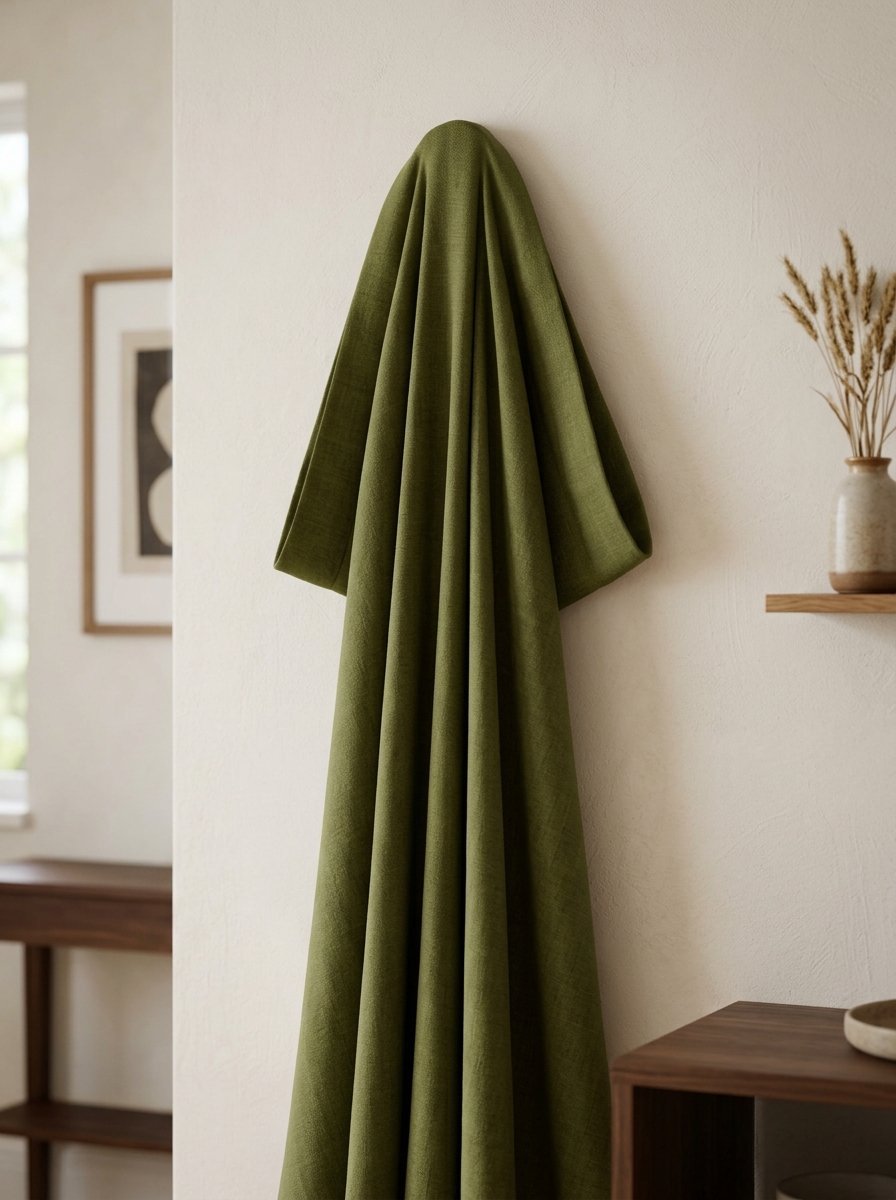
I fold the fabric so it completely covers the hardware ring. You fold it in thirds lengthwise. You thread it through the ring and pull it down until the front flap covers the metal entirely. I do this when I cannot afford to replace cheap builder grade hardware. The fabric hides the ugly metal. The cloth looks like it is floating against the wall. I figured this out when renting a terrible apartment in 2024. You need a piece at least thirty inches long to pull this off well.
16. The Ribbon Tie
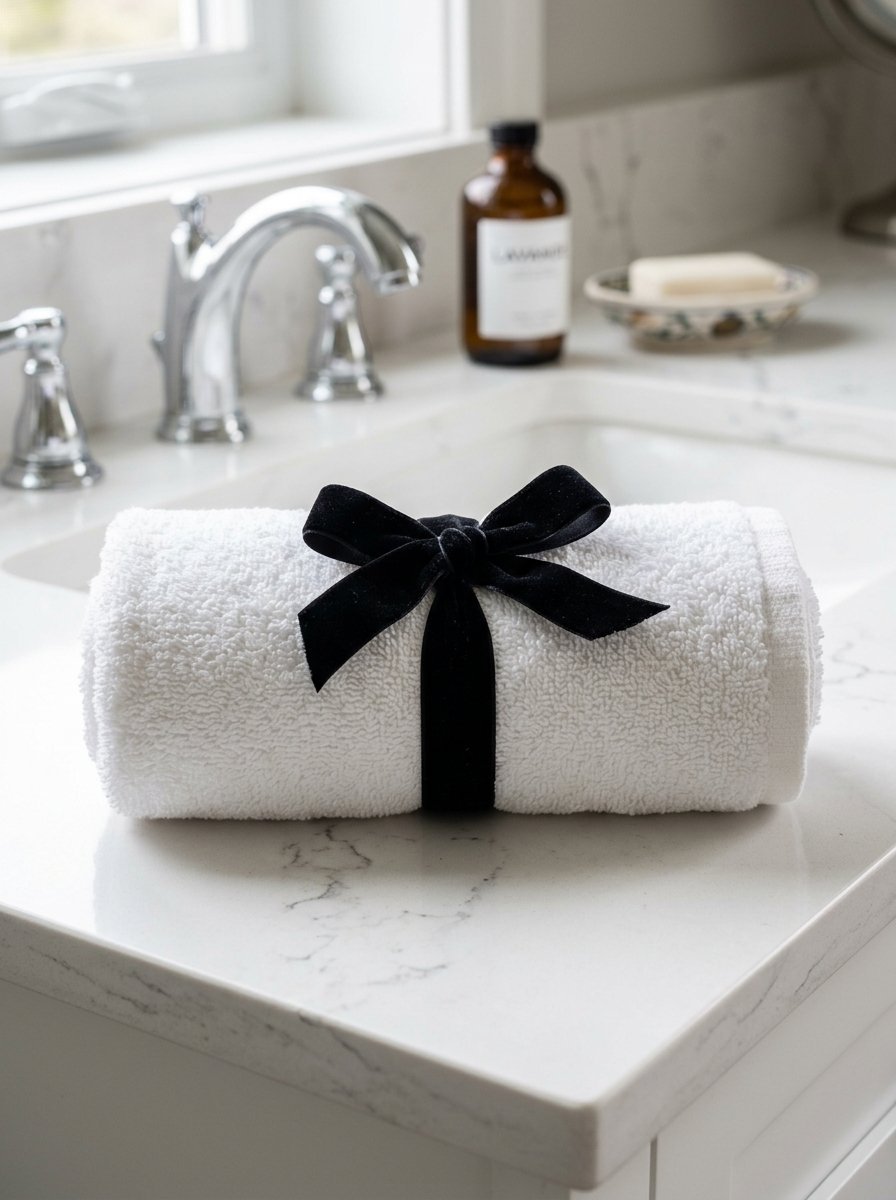
I roll the fabric tightly and tie a piece of velvet ribbon around the center. I use black velvet against white cotton. I stack these on a marble vanity top. This feels very formal and dressed up. I use this specifically for holiday hosting or dinner parties. The ribbon costs three dollars at a craft store. You untie it when you actually need to use it. It creates a very gift like appearance. This requires precise Rolling and Folding Clothes routines to look right.
17. The Vintage Clamp
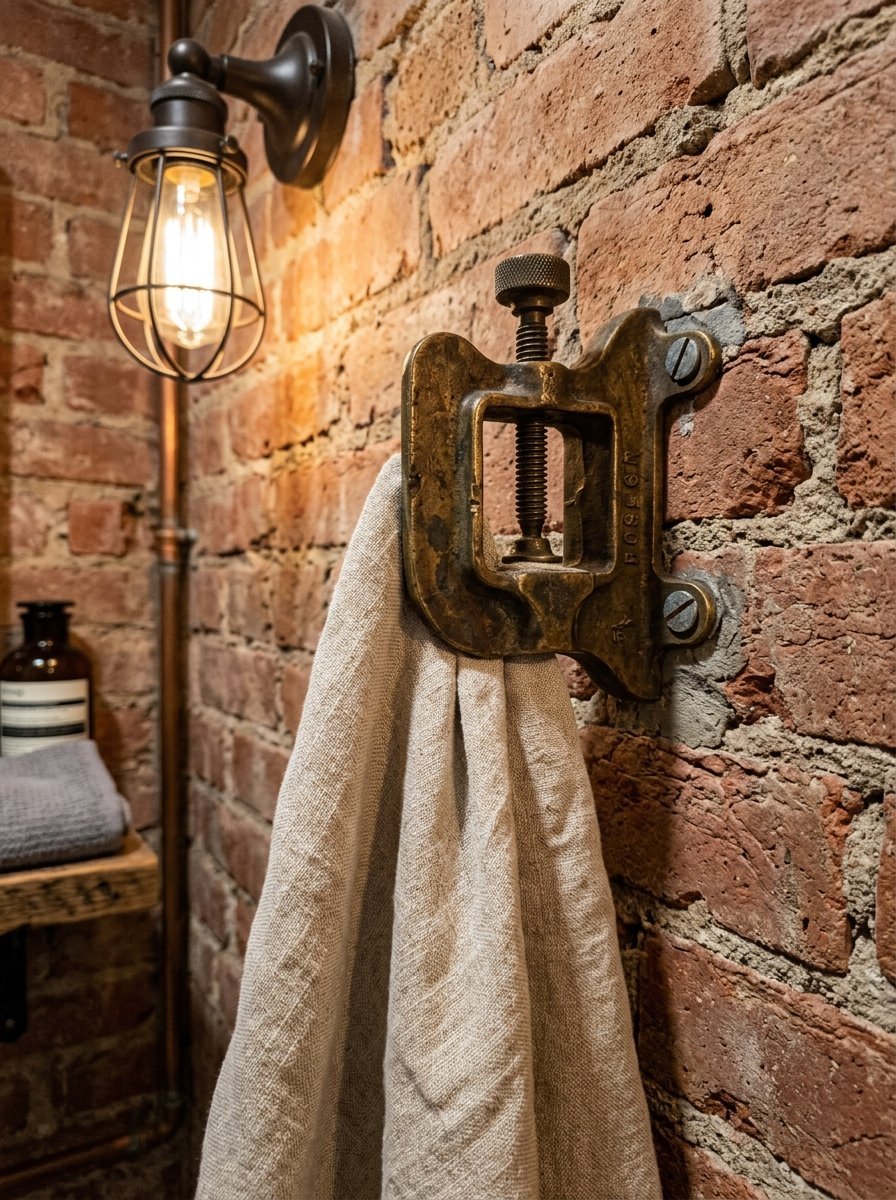
I found heavy brass paper clamps at a flea market. I screw them directly into the wall. I clip the top corner of the fabric into the clamp. This looks very industrial and distinctive. I spent eight dollars on the clamps. The brass patinas beautifully over time. This works incredibly well for thin linen fabrics. Thick terrycloth will pop right out of the clamp. I love the unexpected hardware choice. It shows a level of creativity most people miss.
18. The Symmetrical Vanity Pair
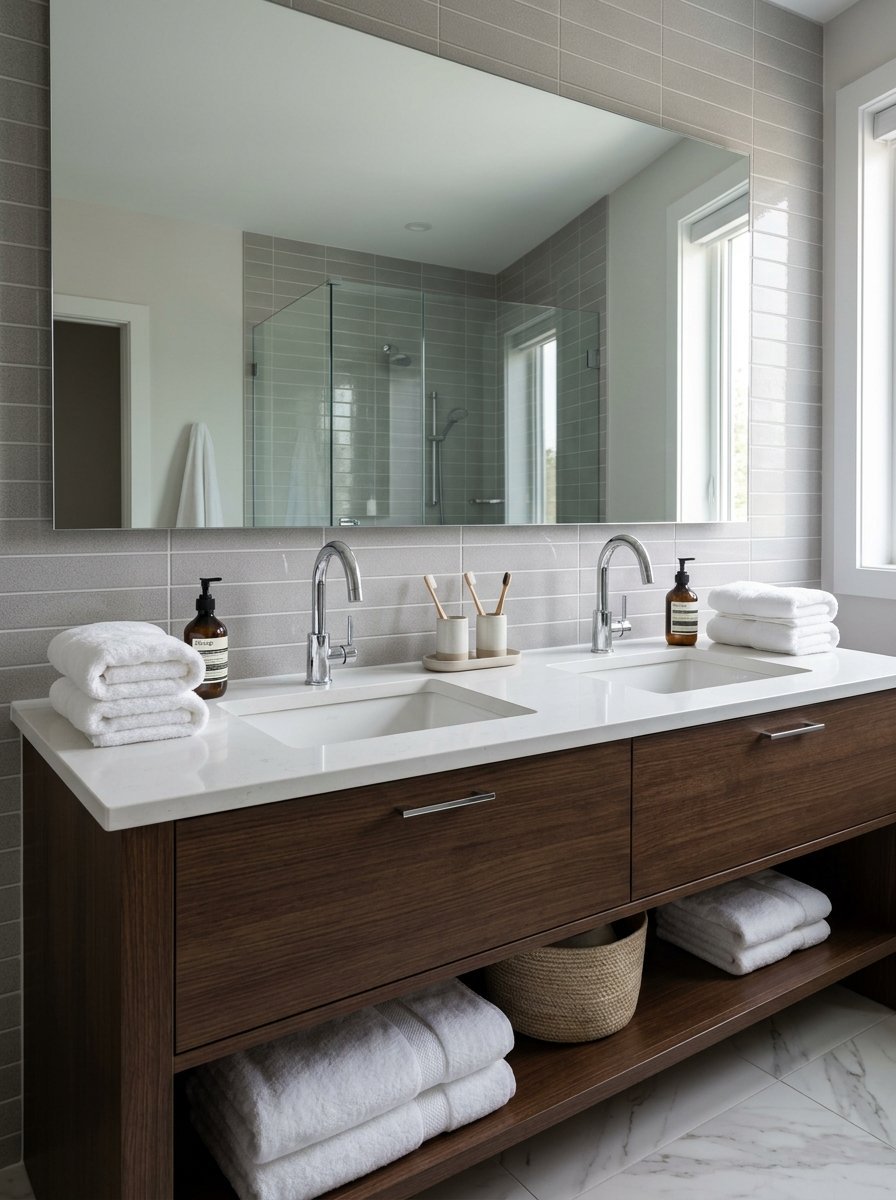
If you have a double vanity you must use symmetry. I place an identical folded piece next to each sink. They must mirror each other exactly. I use the exact same fold and the exact same placement distance from the faucet. I measure this with a ruler. Asymmetry on a double vanity just looks messy. The repetition creates a very calming and ordered visual. I use basic white hotel collection pieces for this. The strict order provides a very calming feeling in the mornings.
19. The Fringed Edge Display
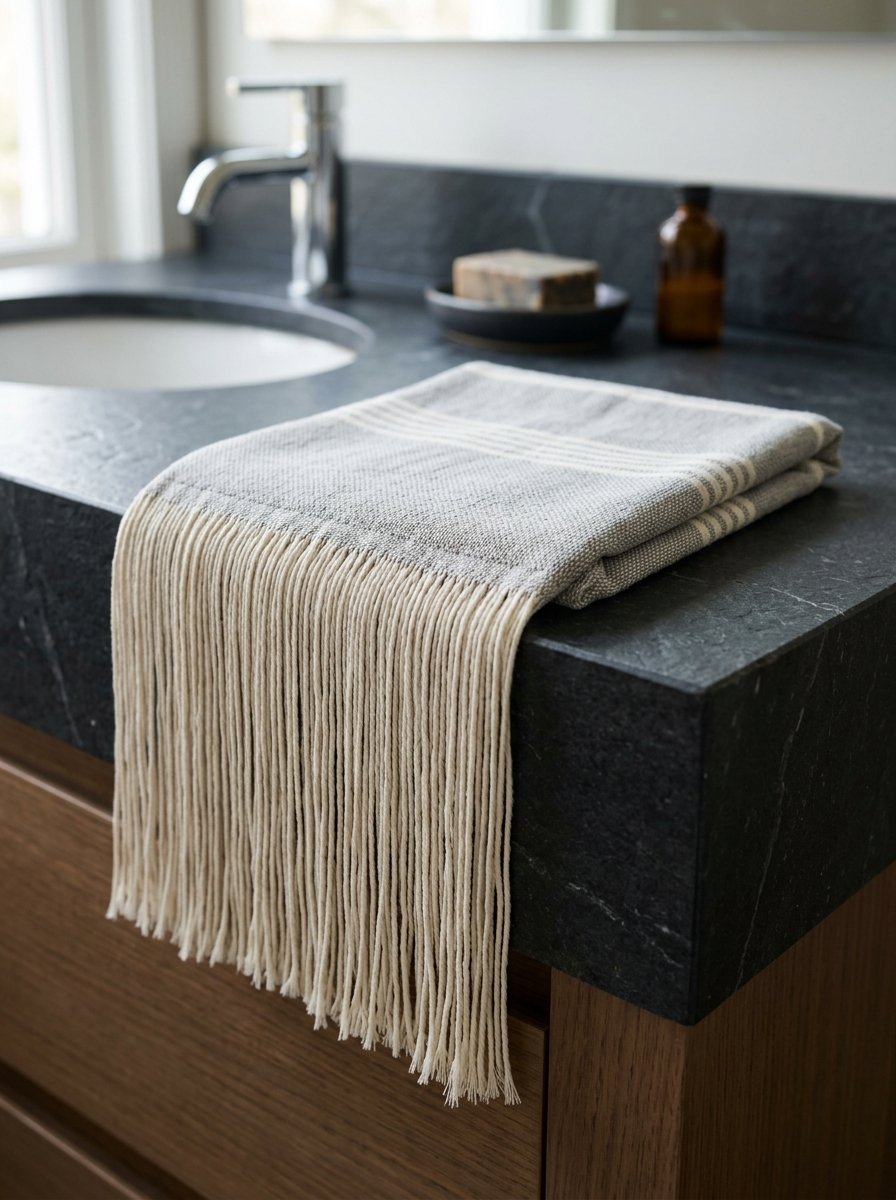
I specifically buy pieces with long dramatic fringe. The fringe is the focal point. I fold the main body of the fabric in half. I lay it flat on the counter with the fringe hanging off the edge. This works perfectly over the edge of a deep sink. The movement of the fringe gives great texture. I buy Turkish cotton pieces from Amazon for fifteen dollars each. You have to comb the fringe out with your fingers so it lays flat. Tangled fringe ruins the visual entirely.
20. The Contrasting Piping
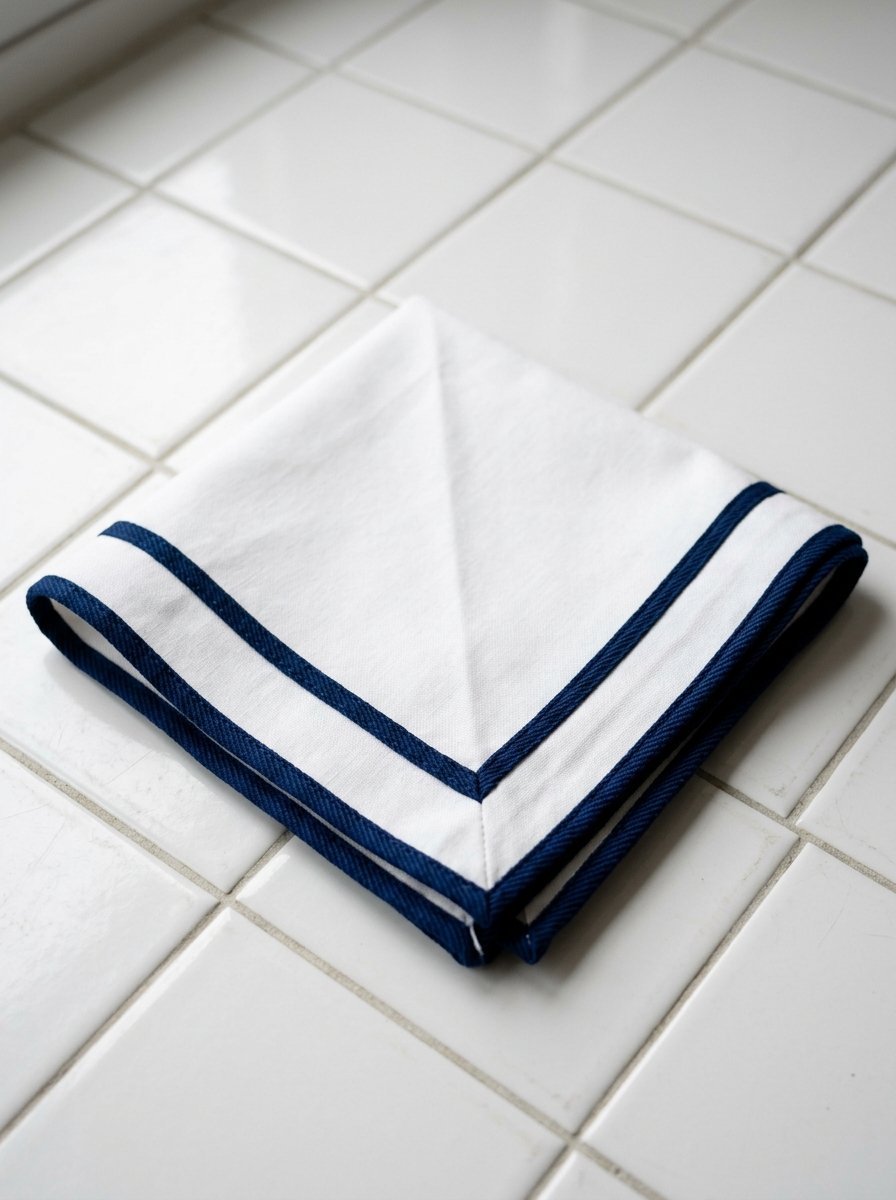
I buy fabrics that feature a bold contrasting piped edge. I have white pieces with a thick navy blue border. The folding routine must showcase this border. I fold it so the piped edge frames the front flap. This outlines the shape perfectly. It looks incredibly tailored and sharp. I learned this by studying men’s tailored suits. The crisp edge defines the geometry of the space. I keep the rest of the Bathroom Towel Decor very minimal to let the piping stand out.
21. The Tension Rod Hack
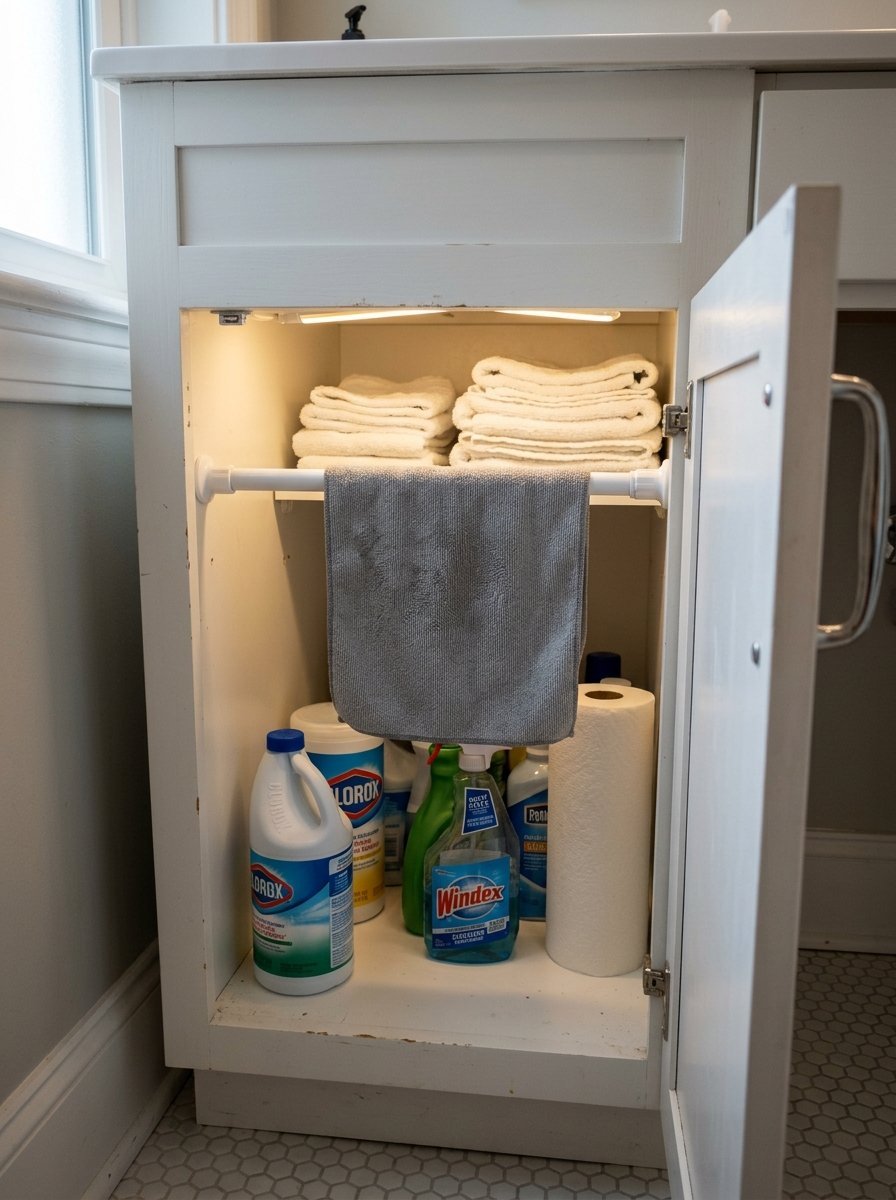
I place a small tension rod inside the cabinet right under the sink. I drape my daily use pieces over this rod. I keep the designer pieces on display on the counter. This hides the damp ugly cloths completely. A small tension rod costs four dollars. This is one of the smartest Organisation Hacks I use. You keep the visible space looking like a magazine. You hide the reality of daily life behind a closed door. The damp items dry perfectly fine out of sight.
22. The Geometric Fold
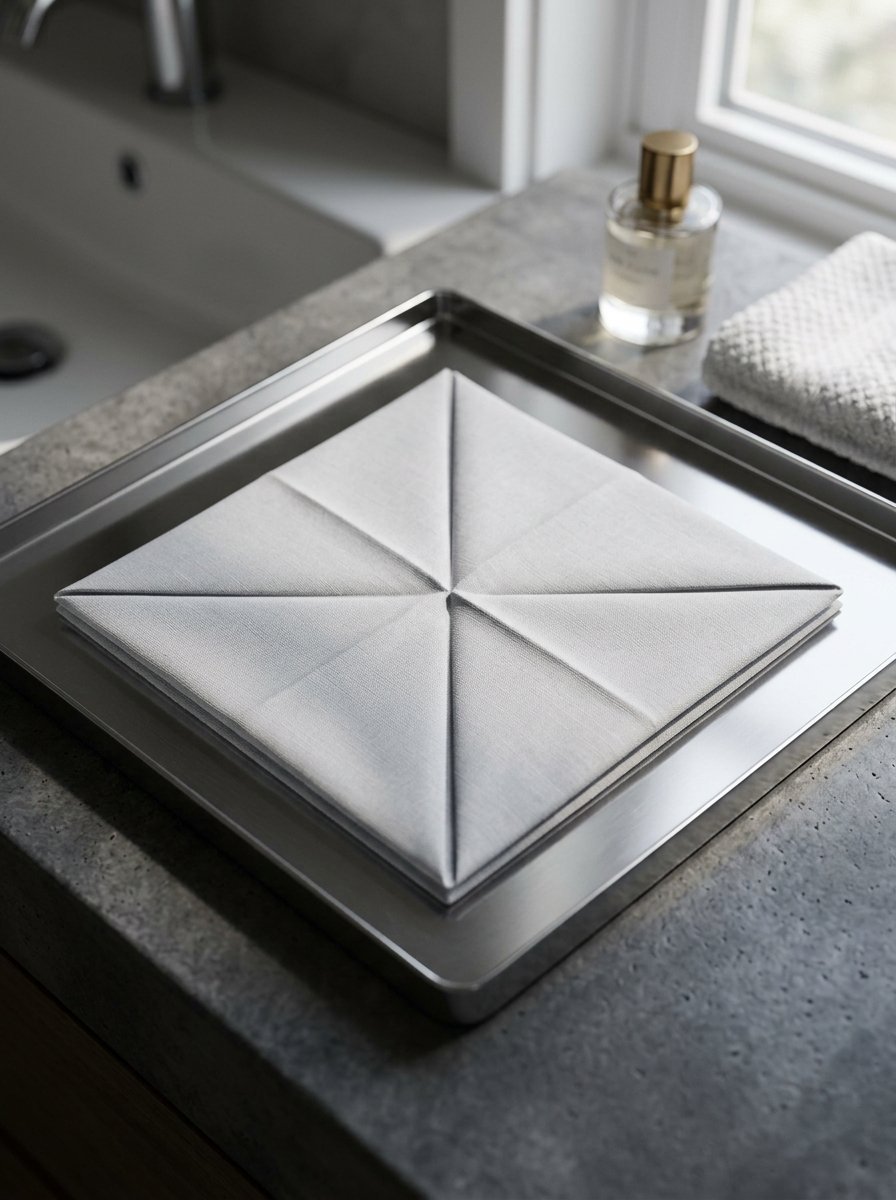
I fold the square piece diagonally to create a large triangle. I fold the points in to create a diamond shape. I lay this flat on the vanity tray. This breaks up the endless rectangles and squares in the room. The angles draw your eye immediately. It takes some practice to get the points perfectly sharp. I iron the fabric lightly before making this fold. Crisp creases are strictly required here. A sloppy geometric fold looks terrible. This looks incredibly precise and intentional.
23. The Open Weave Linen
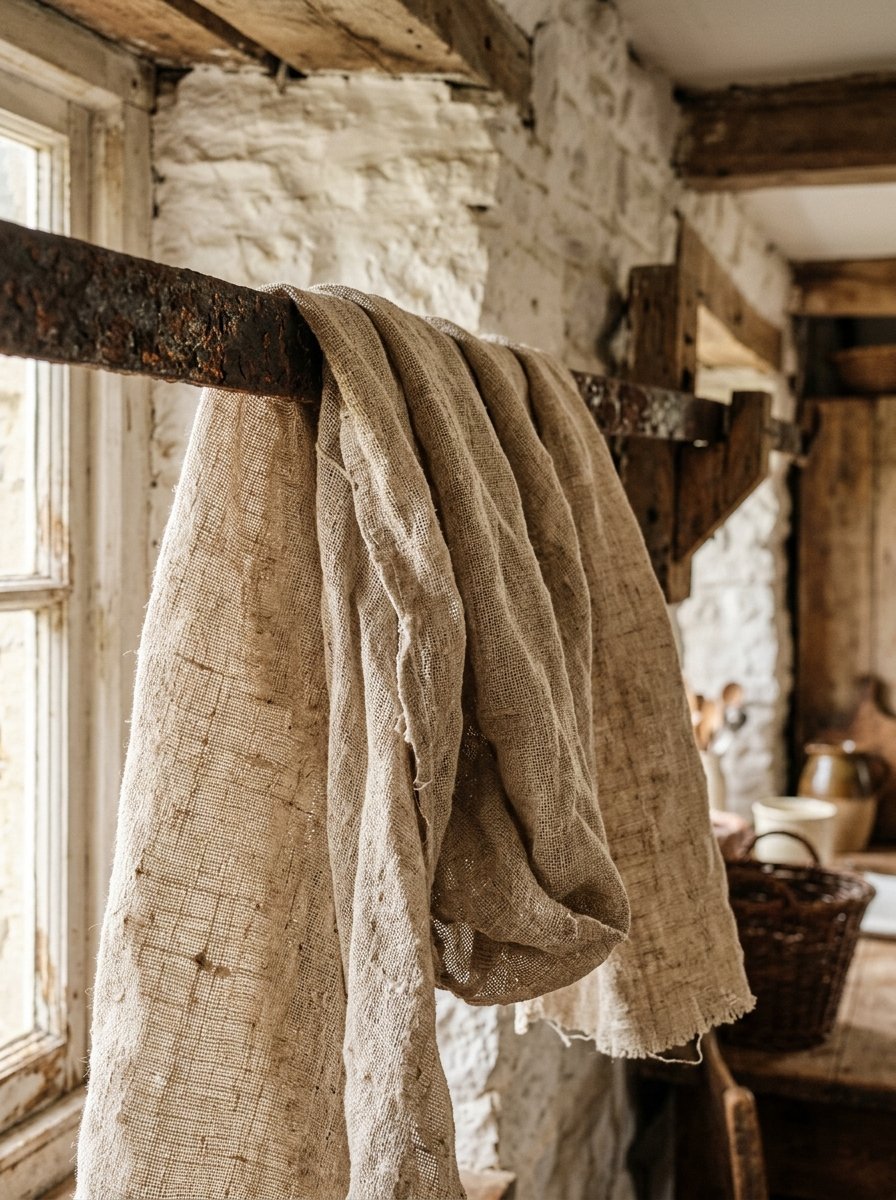
I use raw unbleached linen pieces with an open weave. They look like they belong in a rustic farmhouse. I drape them very casually over an iron bar. They wrinkle naturally. The wrinkles are part of the aesthetic. You do not iron these. They absorb water instantly. I buy raw linen yards and hem them myself. This costs about twelve dollars per piece. The organic texture warms up a sterile Modern Bathroom incredibly well. They get softer every single time you wash them.
24. The Seasonal Swap
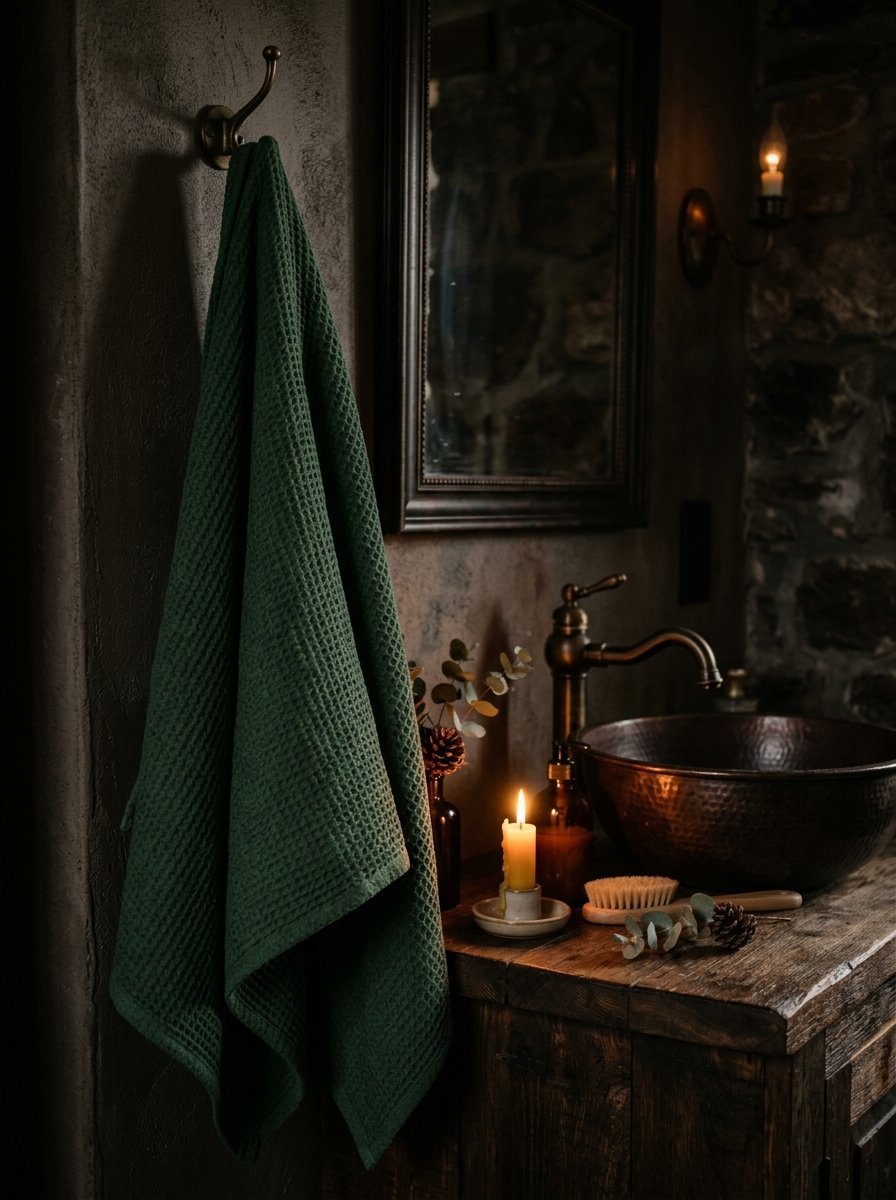
I change the textures and colors based on the calendar. I use thick heavy cotton in deep greens during winter. I switch to lightweight white linen in the summer. This shifts the entire mood of the room without changing any hardware. I store the off season pieces in vacuum sealed bags. This keeps them fresh. I spend about sixty dollars a year maintaining this rotation. The seasonal shift makes the space feel very alive and cared for. This is the ultimate designer secret.
Frequently Asked Questions
How often should I wash these decorative pieces?
I wash the heavily used pieces every three days. True decorative pieces that nobody touches get washed every two weeks. Dust settles on them even if they remain unused. I use a gentle cycle with cold water. Hot water ruins the fibers and shrinks the borders. I dry them on a low heat setting to prevent the edges from curling.
Can I use fabric softener on them?
I completely avoid fabric softener. The chemicals coat the fibers and ruin their absorbency. The fabric becomes slick and repels water. I use a quarter cup of distilled white vinegar in the rinse cycle instead. The vinegar strips away detergent residue. The fabric comes out feeling incredibly soft and smelling perfectly neutral.
What is the best material for a damp room?
I find Turkish cotton and thin waffle weaves work the best. They dry extremely fast. Thick plush terrycloth traps moisture and breeds mildew very quickly in small spaces. Fast drying materials stop terrible smells. I replaced all my thick plush fabrics two years ago. I never deal with mildew smells anymore.
How do I stop the edges from fraying?
I check the stitching on the edges before buying. A double stitched hem lasts years. A single stitched hem will unravel after ten washes. If I see a loose thread I cut it immediately with sharp scissors. You never pull a loose thread. Pulling destroys the entire seam in seconds.
What size do I need to buy?
A standard cloth measures sixteen by thirty inches. I sometimes use slightly oversized pieces measuring eighteen by thirty two inches for a more luxurious feel. Anything smaller than sixteen by thirty looks skimpy and cheap on a standard wall ring. I measure my hardware before purchasing any new fabrics.
How many should I keep on display?
I keep two on display for a single sink and four for a double vanity. Any more than that looks like a retail store display. You need negative space to make the setup look intentional. Crowding the wall or counter ruins the clean aesthetic entirely. I store the backups in a nearby linen closet.
Can I mix different brands together?
I strictly avoid mixing different brands in the same visual grouping. The white tones will never match perfectly. One will look slightly yellow or blue next to the other. The textures will clash. I buy sets from the exact same manufacturer and dye lot. This ensures a perfectly matching look.
How do I get makeup stains out of white fabric?
I treat makeup stains immediately with a clear dish soap. I rub the soap directly into the stain with my fingers. I let it sit for ten minutes before washing. I never use bleach. Bleach breaks down the cotton fibers and turns them yellow over time. Dish soap breaks down the oils perfectly.
Do I need to iron them?
I iron the borders and the hem specifically. I skip the main body of the fabric. The edges tend to curl in the dryer. A quick pass with a hot iron makes the edges lay perfectly flat. Crisp edges make the fold look professional. It takes one minute per piece.
Where should I place the hardware?
I mount a wall ring exactly eighteen inches above the vanity counter. This leaves enough room for the fabric to hang straight down without bunching on the counter. If the hardware sits too low the fabric pools at the bottom. Pooling fabric looks sloppy and stays damp much longer.
Are colored fabrics a bad idea?
I love colored fabrics but they fade. I use dark charcoal and deep olive green. I wash them inside out on a cold cycle to save the dye. Bright colors fade quickly and look old. Deep muted tones hide stains very well. They give great contrast to a stark white space.
How do I fold them like a hotel?
I lay the piece flat. I fold the long edges into the middle so they meet. I fold the whole thing in half lengthwise again. I fold the ends toward the center. Finally I fold it in half one last time. You get a perfect thick square with no exposed edges.
Conclusion
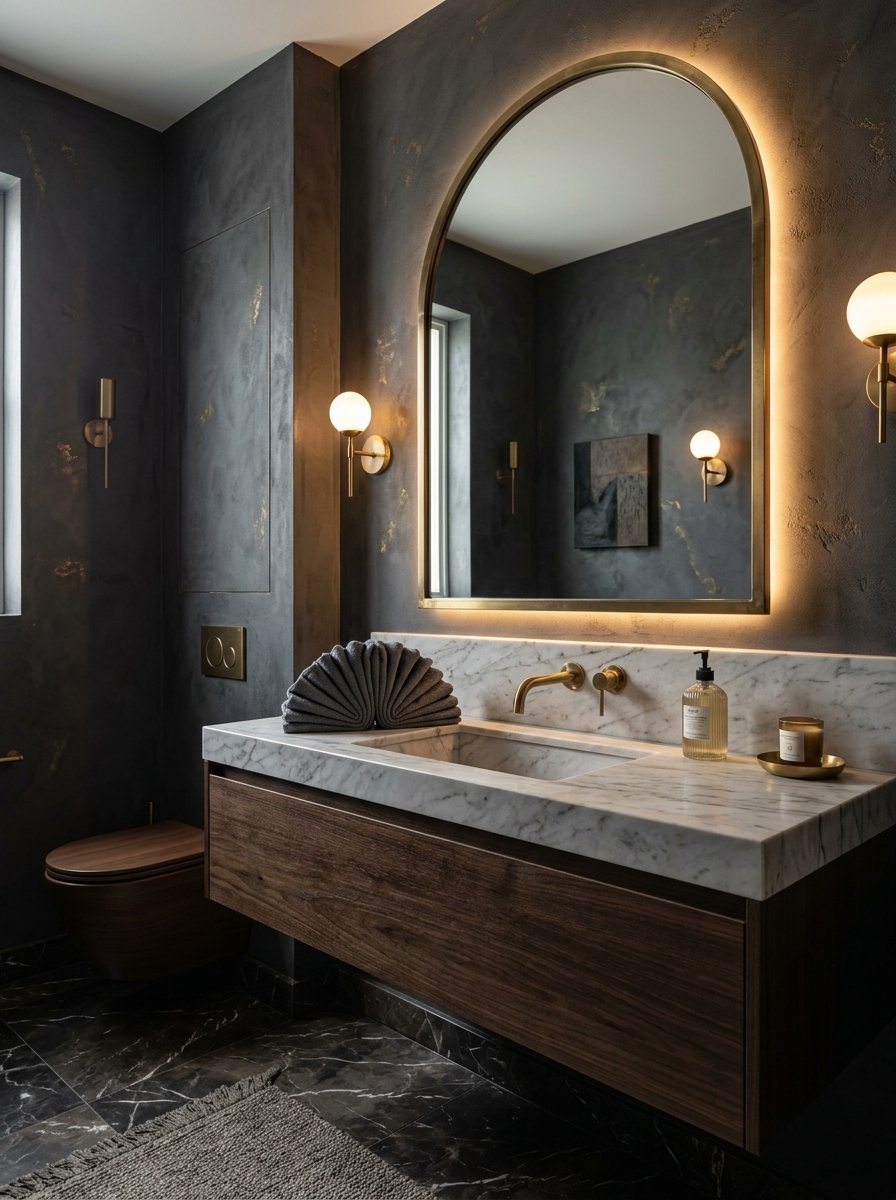
Your daily habits define your living space. You do not need a massive renovation budget to create a stunning room. You just need intention and a few spare minutes. I upgraded my own spaces by simply refusing to tolerate messy styling. You have twenty four specific routines to test right now. Start with the asymmetry drape or the tight pyramid roll today. Pick one routine and execute it. Your space will instantly feel more curated and expensive.

Amelia Hart is the Senior Design Editor at Vellora Interiors, where she curates small-space and apartment content. With a background in color theory and years spent designing under-500-square-foot rentals, she’s the editor who’ll tell you exactly which paint sheen, curtain length, and lamp height to choose, no guessing. A former design lead at a boutique studio, her work has been featured in several home and lifestyle publications. Her guiding belief: “Good design isn’t about more, it’s about choosing better.”