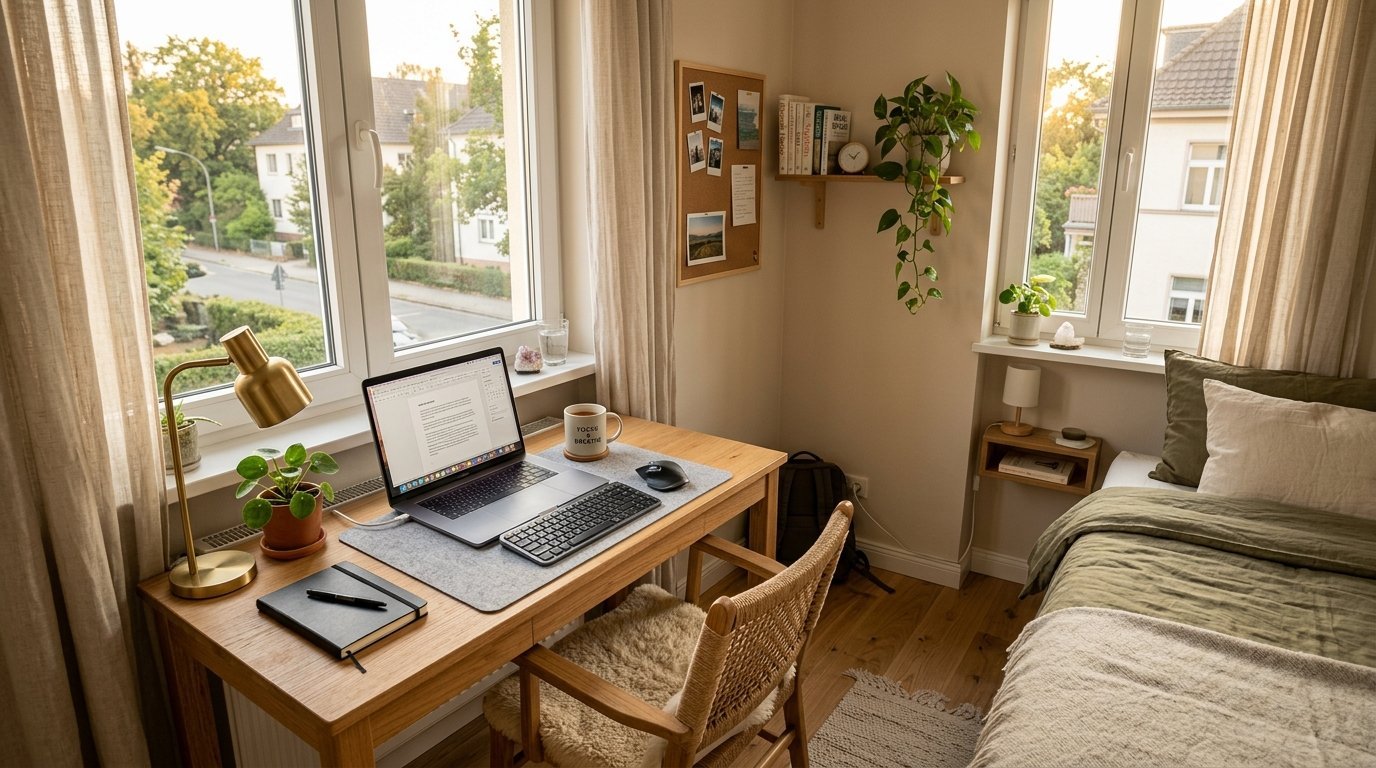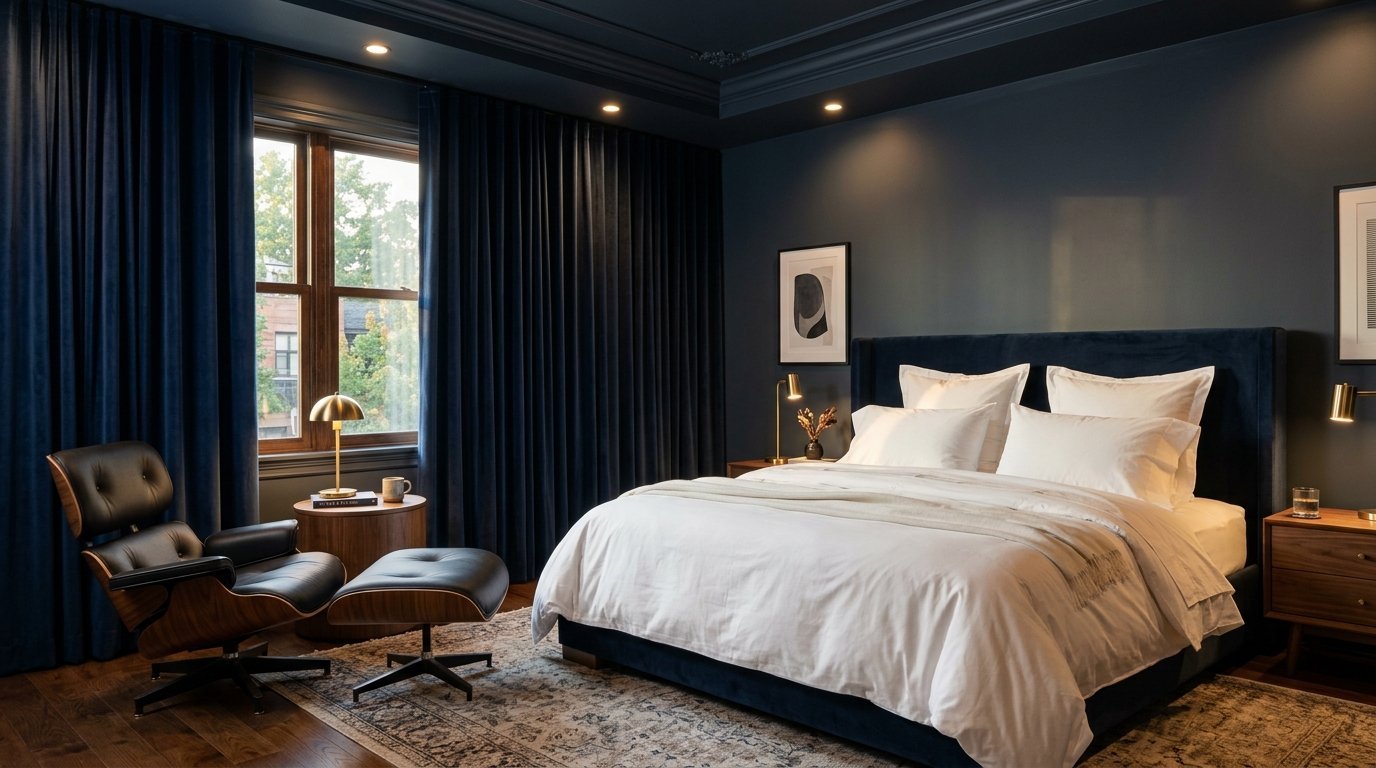
It costs around $1,500 to furnish a sleep space entirely. Many people waste their budget buying pieces that block natural pathways completely. I have seen clients stumble over poorly placed benches in the dark constantly. A bad setup ruins your morning routine instantly. Good placement costs nothing but makes the space feel twice as large. Your physical environment dictates your mental state every single morning. I have arranged hundreds of sleeping quarters over the years. You just need to follow basic spatial rules to make your room breathe.
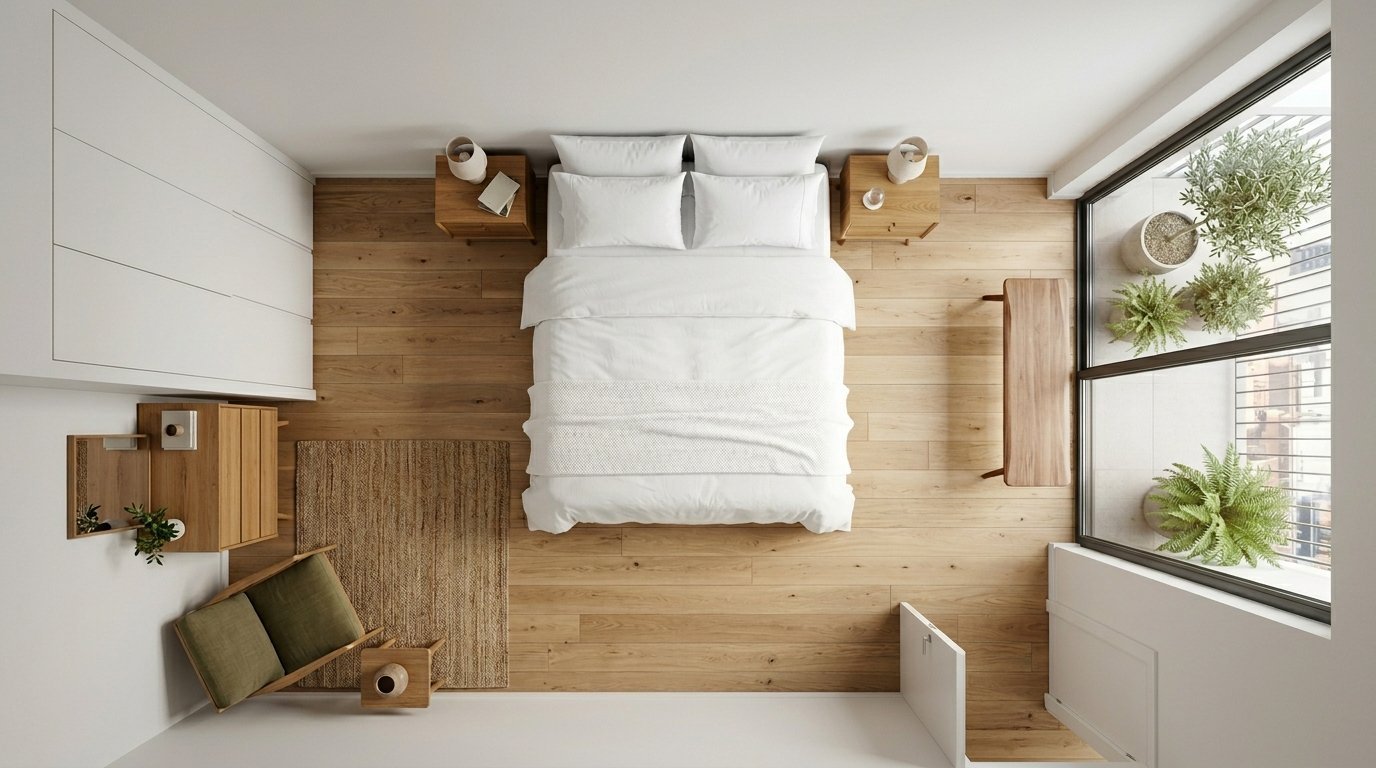
You will get exact spacing rules for beds and nightstands right now. I detail exact clearance measurements for walkways and closet doors. We cover exact setups for tight spaces and sprawling lofts alike.
- Exact setups for 10×10 spaces
- Clearance rules for walking paths
- Brand specific furniture suggestions This guide gives you actionable floor plans you can copy today. You will bypass the usual planning mistakes completely. Small bedroom layout planning does not have to feel restrictive.
1. The Symmetrical Anchor
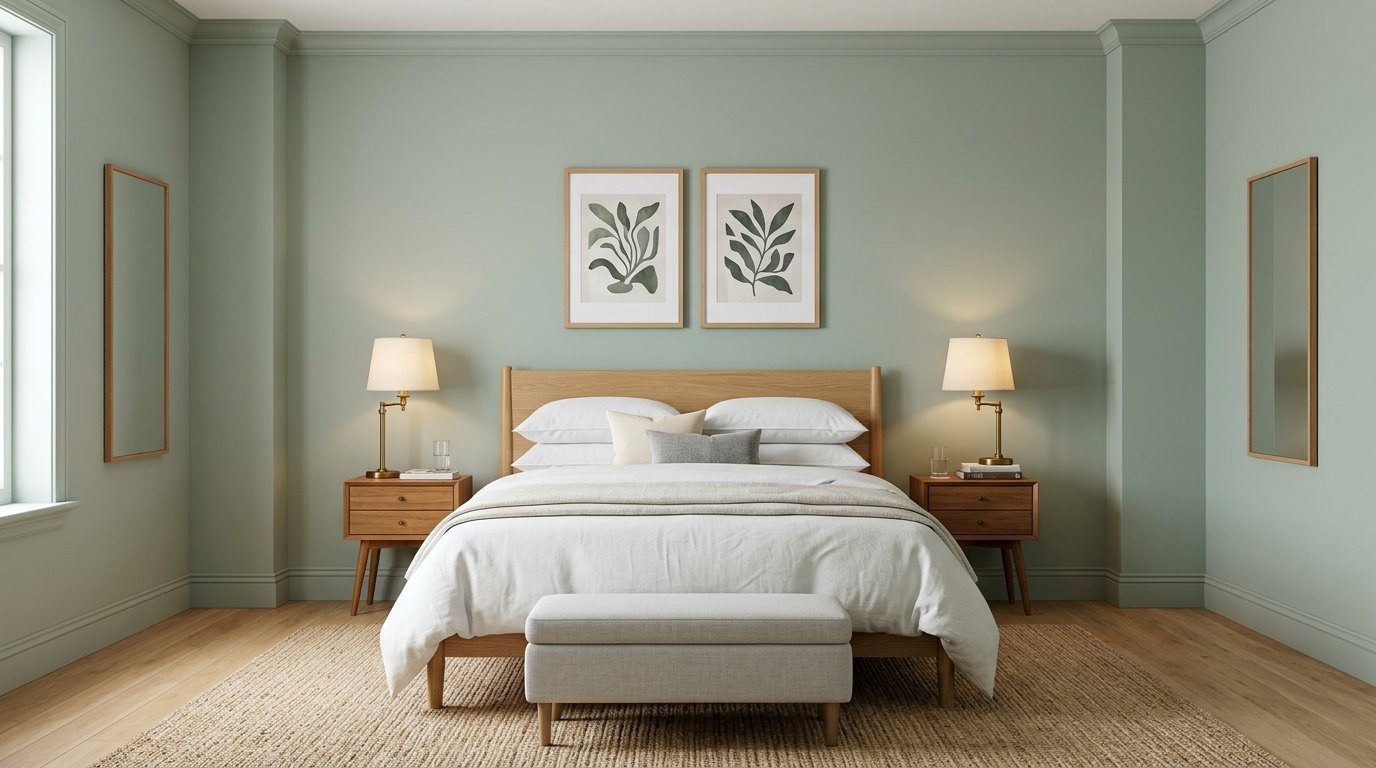
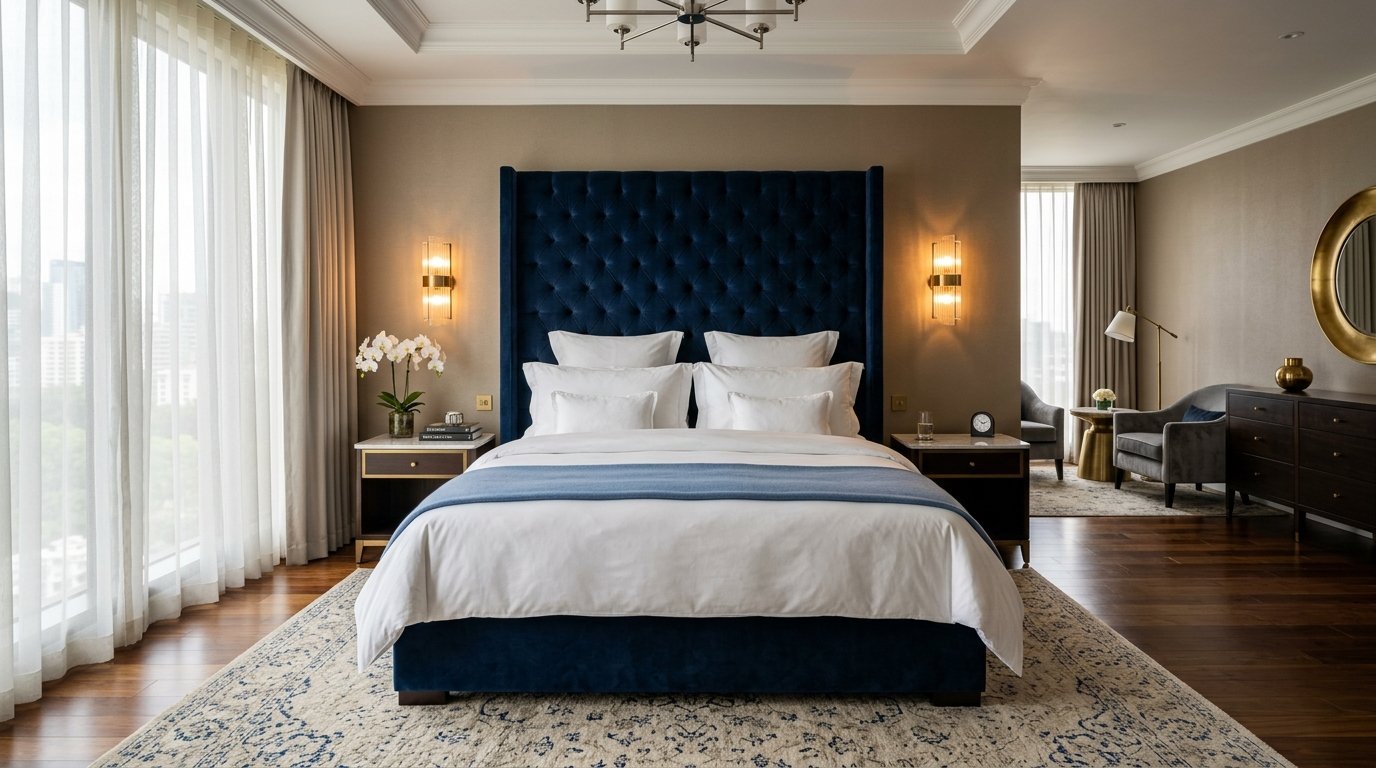
Centering your bed on the longest wall anchors the entire room. I have tried putting beds in corners to save floor space. It usually makes making the bed a complete nightmare daily. Leaving 30 inches on both sides creates perfect walking paths. You can place matching West Elm nightstands flanking the mattress. This symmetry calms the mind immediately upon entering the room. You only need a 10×12 room to make this setup work well. Small bedroom layout planning starts with finding your longest unbroken wall. Place a large Ruggable rug partially under the bed frame. This visually extends the footprint of your dedicated sleep zone. Symmetrical arrangements work best with standard rectangular room shapes. You avoid bumping your shins on sharp furniture edges in the dark. Keep your bedside lighting identical on both sides for visual balance. I advise using plug-in wall sconces to save nightstand surface space.
2. The Window-Facing Setup
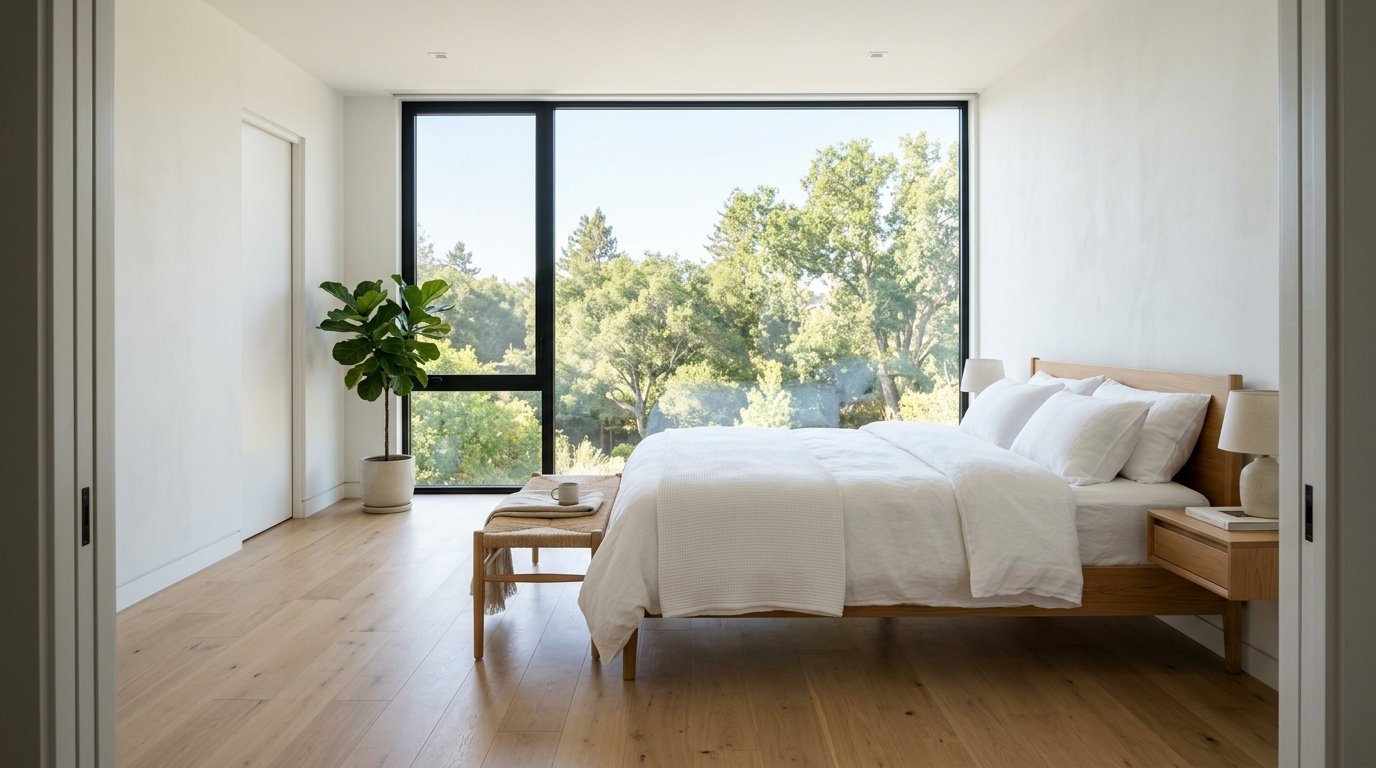
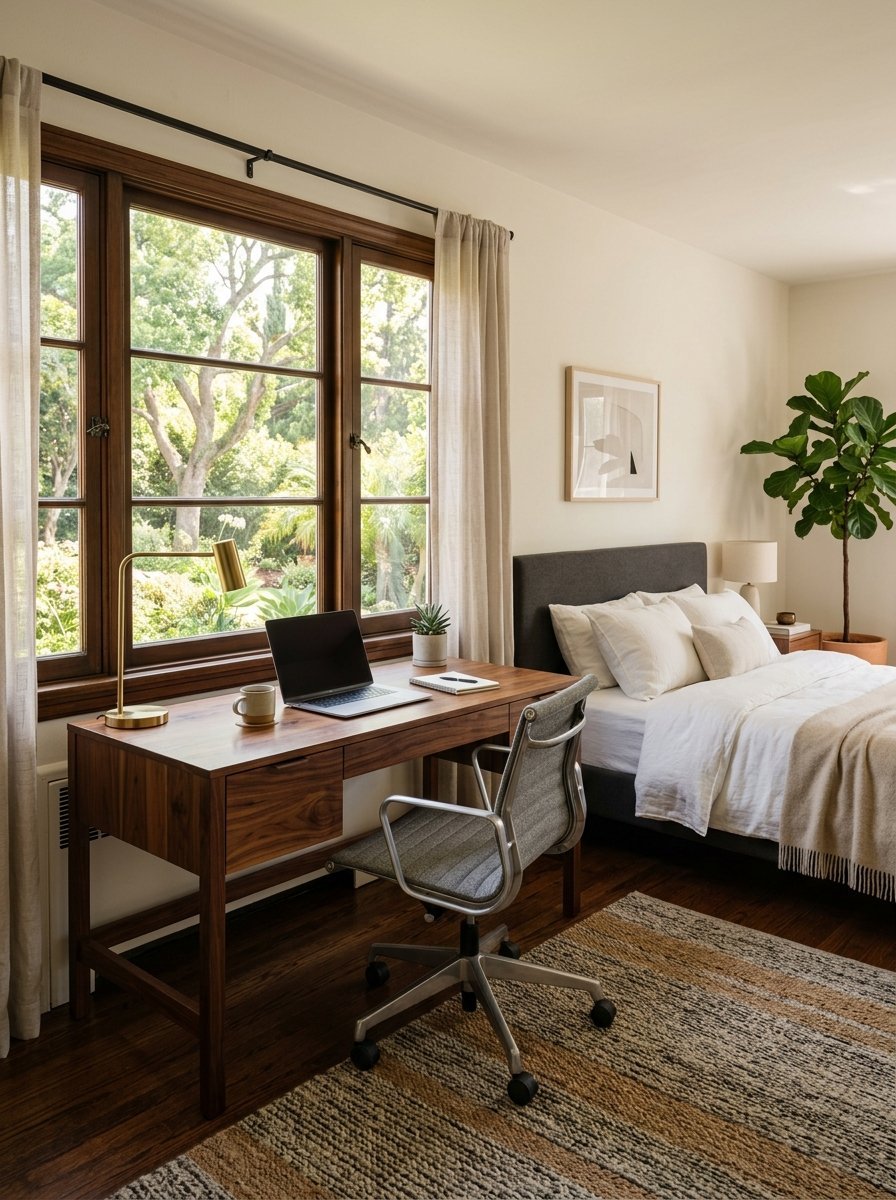
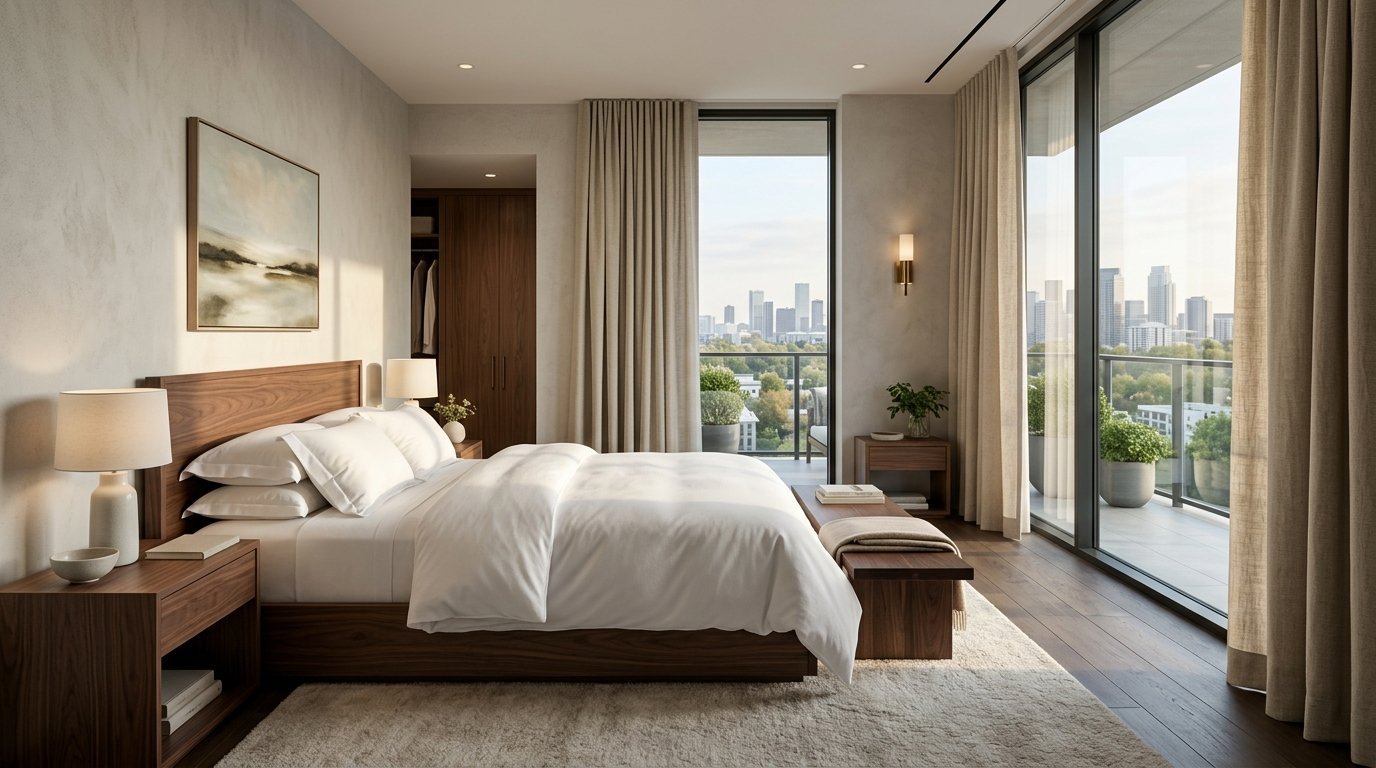
Waking up to natural light changes your morning routine entirely. I frequently position beds directly facing the largest window. You want to leave at least three feet between the footboard and the glass. This bedroom layout prioritizes the view above all else. You might need blackout curtains from Pottery Barn for weekend mornings. I find this setup makes getting out of bed much easier. The natural light signals your brain to wake up gracefully. Keep the window sill clear of clutter for a clean sightline. Placing a low bench at the foot of the bed works well here. Just make sure the bench height stays lower than the mattress top. This prevents the bench from blocking your morning view outdoors. I use this trick in historic homes with massive original windows constantly.
3. The Floating Wardrobe Divider
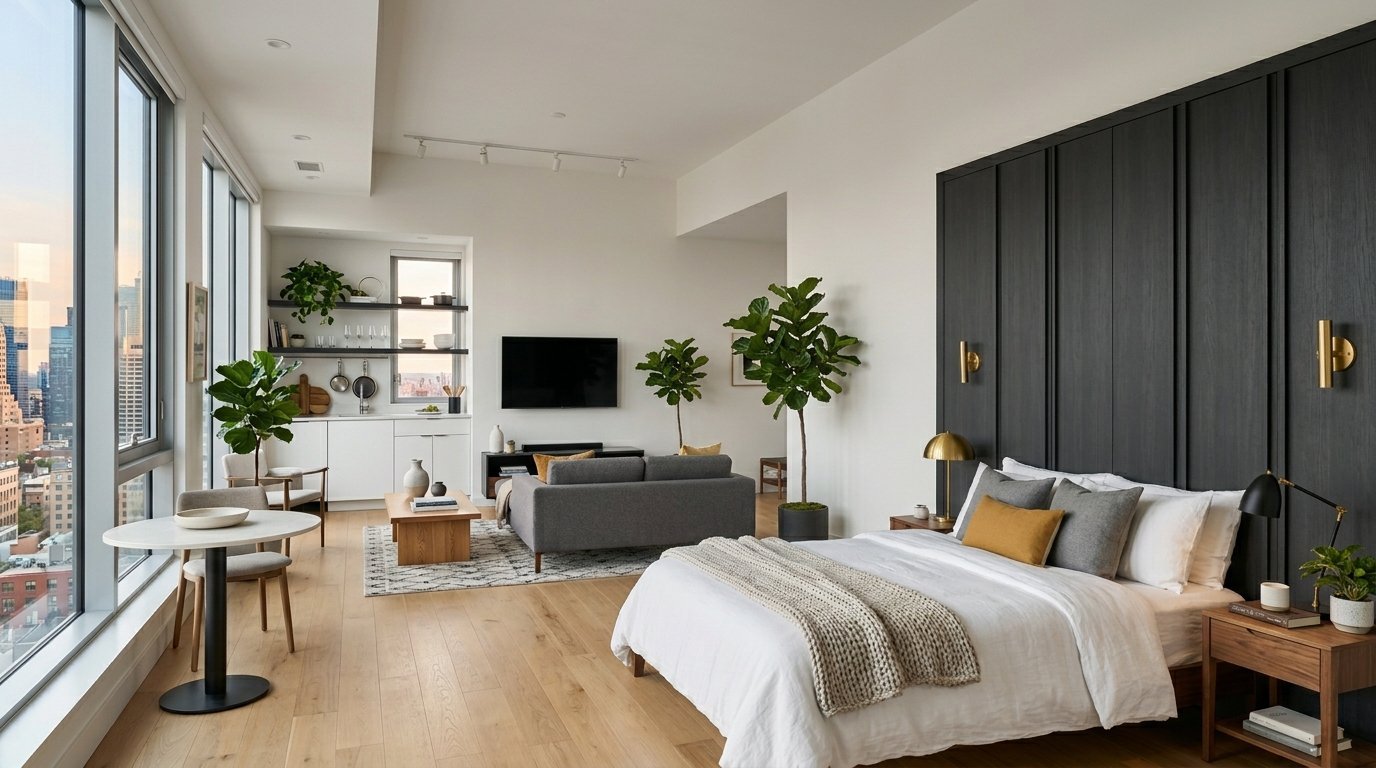
Open concept spaces demand creative zoning to feel livable. You can place an IKEA PAX wardrobe freestanding in the middle of the room. The back of the wardrobe acts as a solid headboard wall. I have seen this work beautifully in massive studio apartments. This creates a dedicated sleep zone and a separate dressing area. You secure the wardrobe to the floor or use ceiling tension rods. This apartment organization trick mimics the feel of a one-bedroom unit perfectly. You can apply peel-and-stick wallpaper to the back of the wardrobe. This makes it look like a customized painted accent wall. Keep the walking path around the wardrobe at least 36 inches wide. You never want to feel squeezed while carrying laundry baskets. This setup hides your messy clothes behind a solid visual barrier completely.
4. The Corner Nook
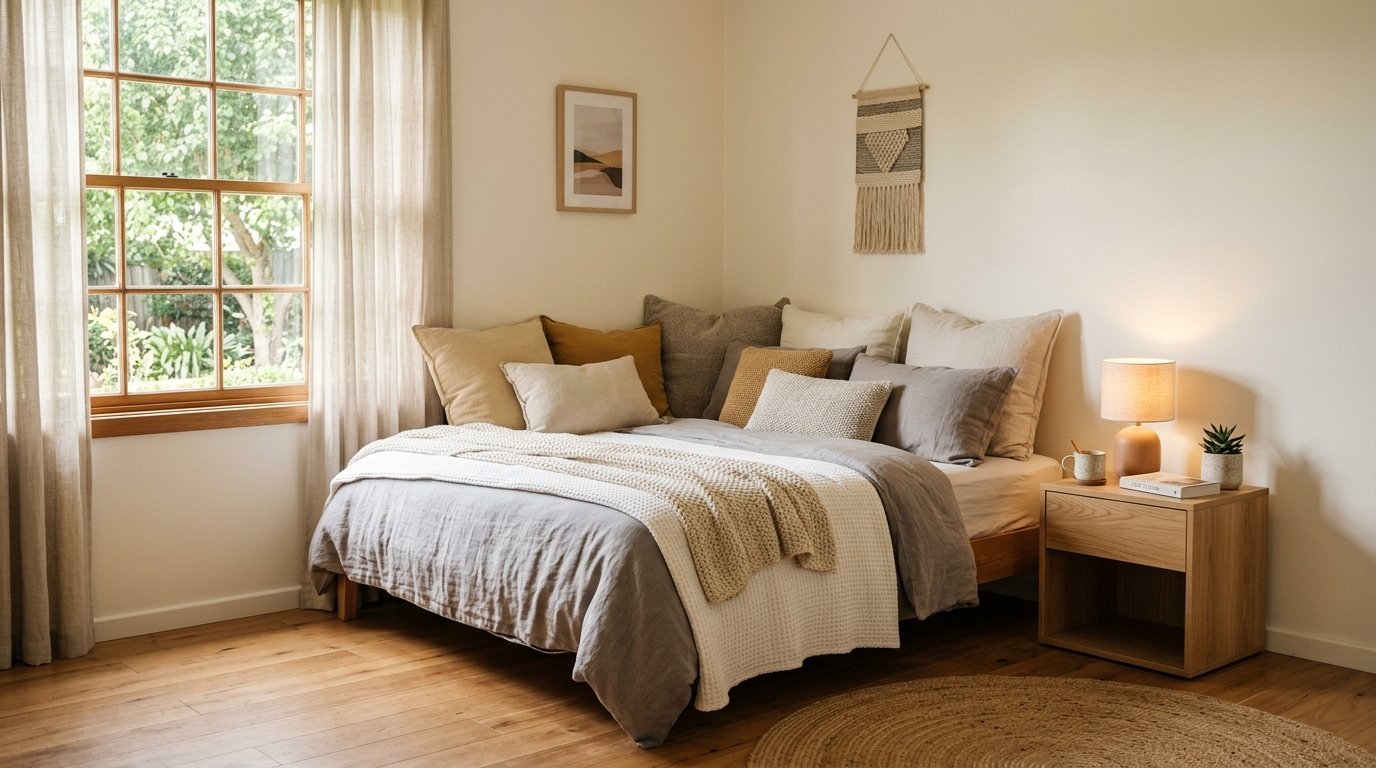
Sometimes pushing the bed into the corner makes the most sense. Small room layout planning requires hard choices about walking paths. I place twin or full beds tight against two walls often. This opens up the center of the room completely. You can fit a desk or a yoga mat in the newly freed space. Making the bed becomes slightly harder with this arrangement. I advise using a lightweight duvet instead of heavy tucked sheets. Place a single Thuma nightstand on the open side. You can mount a plug-in sconce on the wall to free up surface space. This setup works perfectly for rooms smaller than 10×10 feet. Kids and guests usually love the enclosed feeling of a corner bed. It feels like a safe den tucked away from the main door.
5. The Off-Center Statement
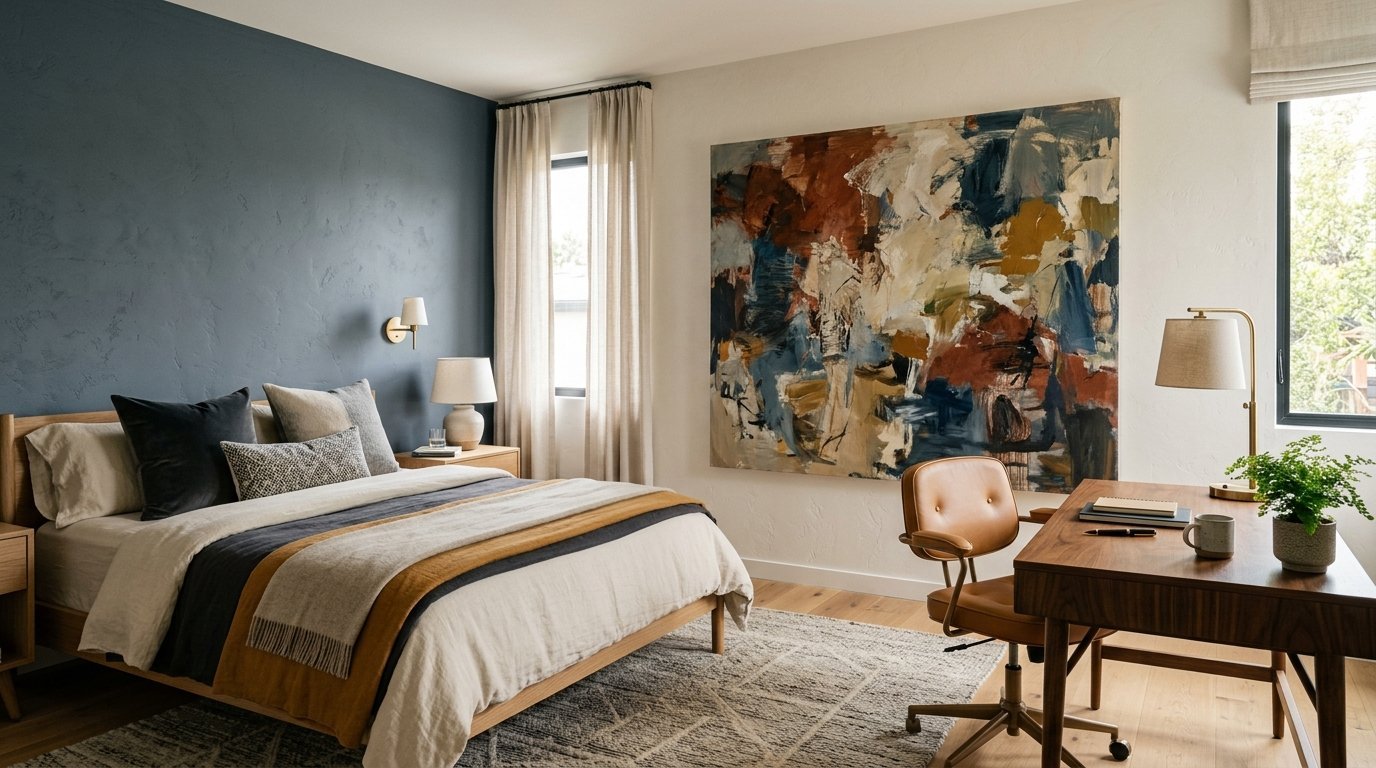
You do not always have to center the bed on the wall. I have intentionally placed beds closer to one side many times. This leaves room for a reading chair or a small writing desk. Asymmetrical bedroom layout ideas work well around awkward closet doors. You might place a narrow table on one side and a wider dresser on the other. This creates visual balance without needing identical furniture pieces. I regularly use this tactic when dealing with offset windows. The secret is balancing the visual weight with large artwork. Hang a large canvas over the smaller nightstand to fill the void. This draws the eye up and makes the arrangement feel intentional. It gives you permission to mix and match vintage furniture pieces freely.
6. The Rug-Defined Zone
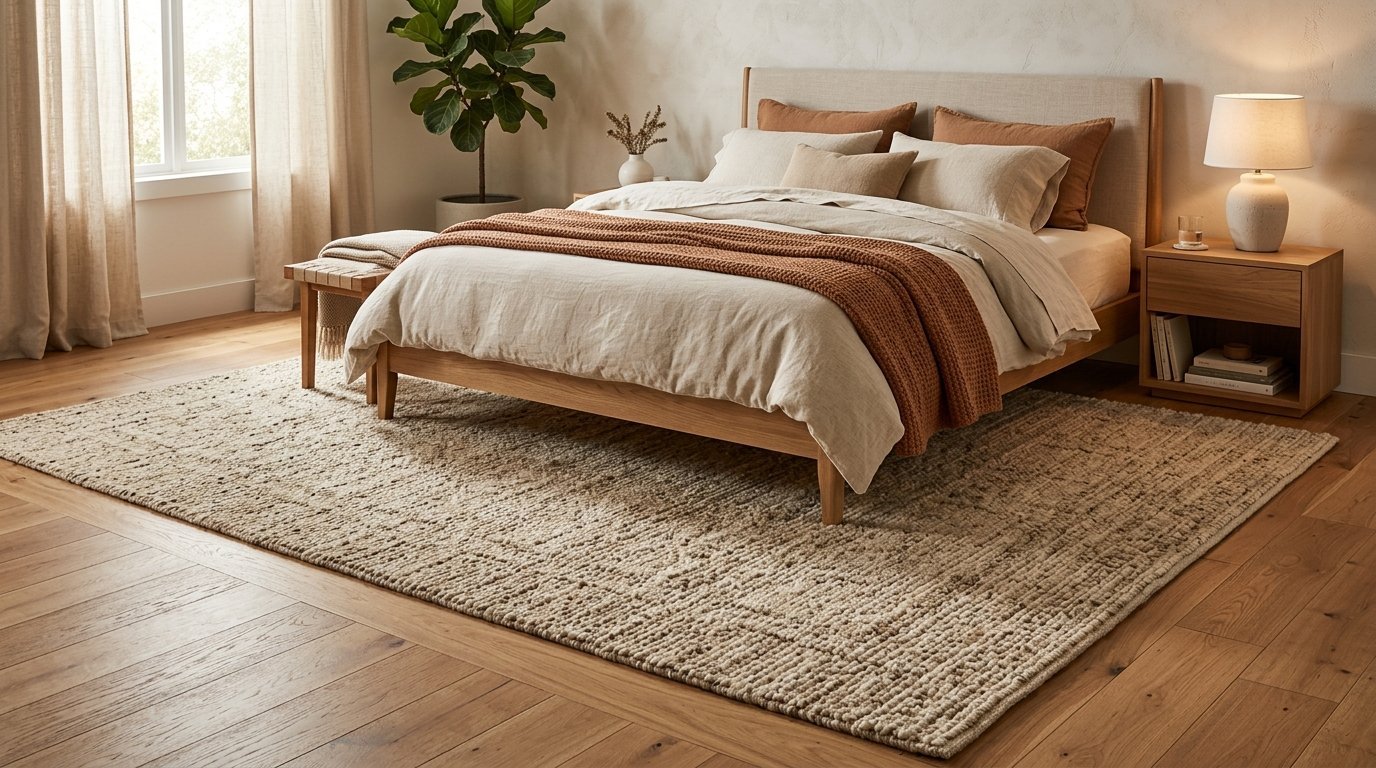
Rugs create invisible walls in open living spaces. Place an 8×10 rug under the lower two-thirds of your bed. I always leave the nightstands off the rug entirely. This grounds the sleep space visually without boxing it in. Apartment organization relies heavily on these subconscious visual cues. You can use a patterned rug to hide minor coffee stains. I prefer solid colored rugs from CB2 for a calmer resting feel. The rug should extend at least 18 inches on the sides. This ensures your feet hit a soft surface in the cold morning. This simple trick makes any floating furniture arrangement feel rooted and purposeful. You define the sleeping territory clearly without building physical walls.
7. The Bookshelf Frame
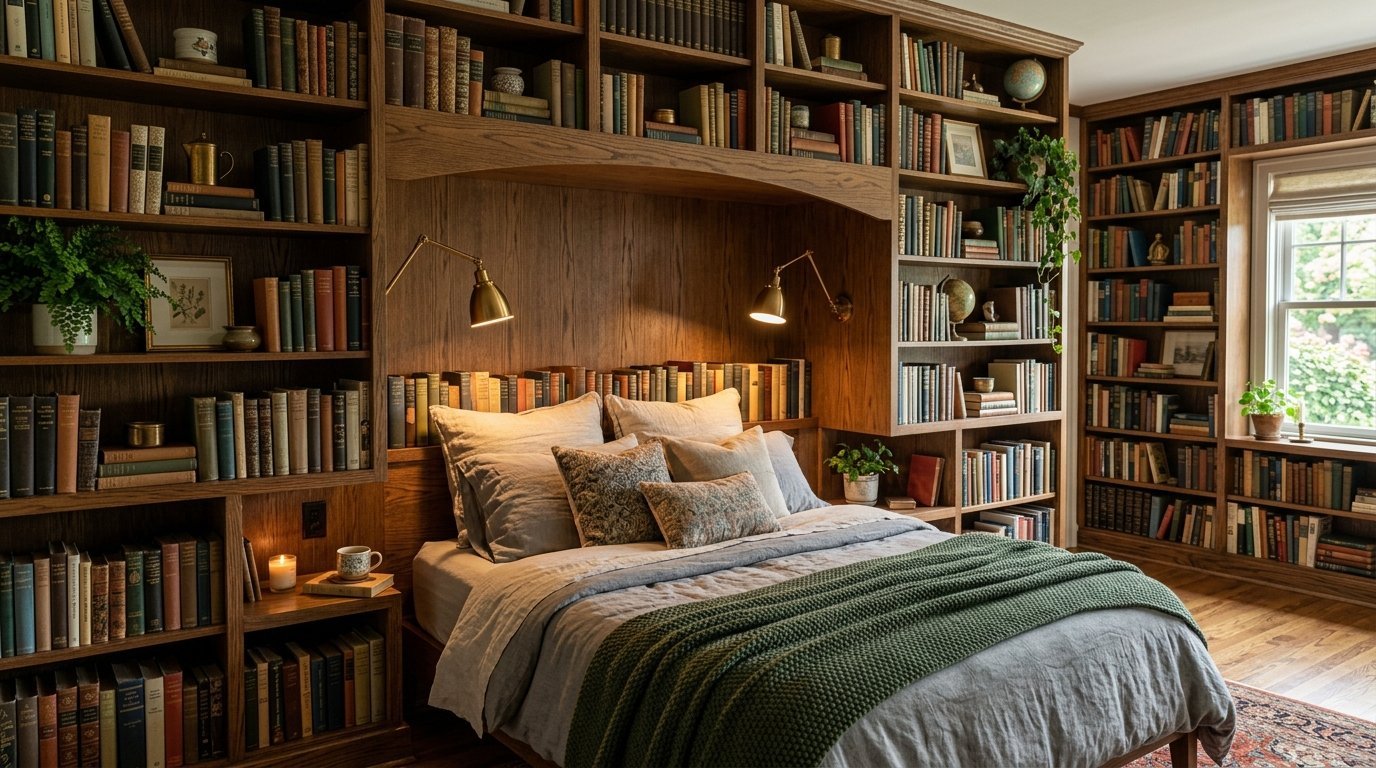
Surrounding the headboard with tall bookshelves creates massive vertical storage. I have used IKEA BILLY bookcases to frame queen beds frequently. You leave exactly enough space between them for the mattress width. Small bedroom layout needs demand these vertical storage solutions. You can install a plank of wood connecting the top of both shelves. This forms a continuous bridge over the bed naturally. It provides a built-in library look for a fraction of the cost. I keep heavy art books on the bottom shelves for physical stability. Display lighter decorative items on the shelves directly above your head. This setup eliminates the need for freestanding nightstands entirely. You clear the floor space completely while doubling your storage capacity.
8. The Diagonal Placement
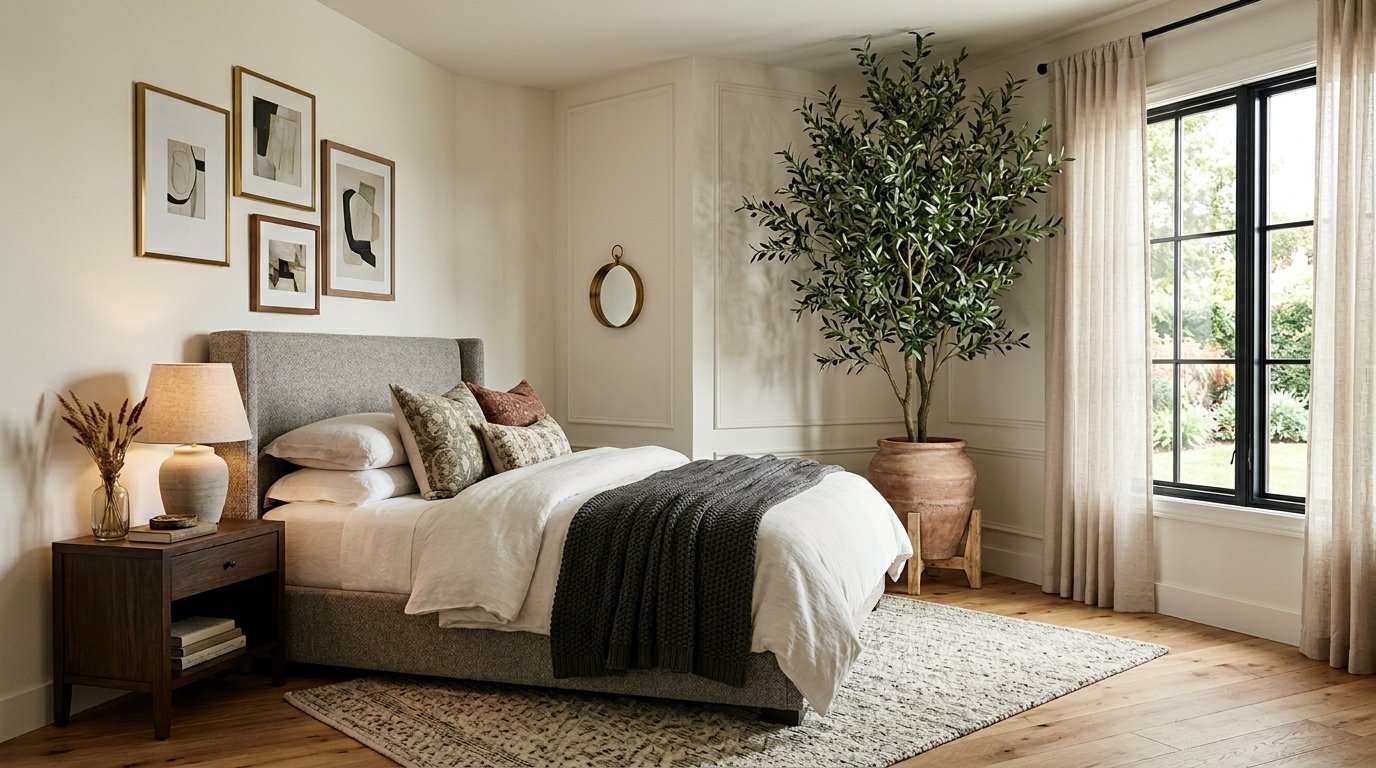
Angling the bed across a corner breaks all the traditional rules. I rarely use this bedroom layout but it works for specific awkward rooms. You place the headboard across a 90-degree room corner. This leaves a triangular empty space hidden behind the headboard. I often place a tall faux olive tree in that hidden space. This arrangement softens harsh square rooms instantly. You need a large room to pull this off without feeling cramped. It works well if you have multiple awkwardly placed closet doors. The angled bed redirects traffic flow smoothly around the center. Keep other furniture parallel to the walls to prevent visual chaos. This makes the bed the absolute undisputed focal point of the space.
9. The Daybed Hybrid
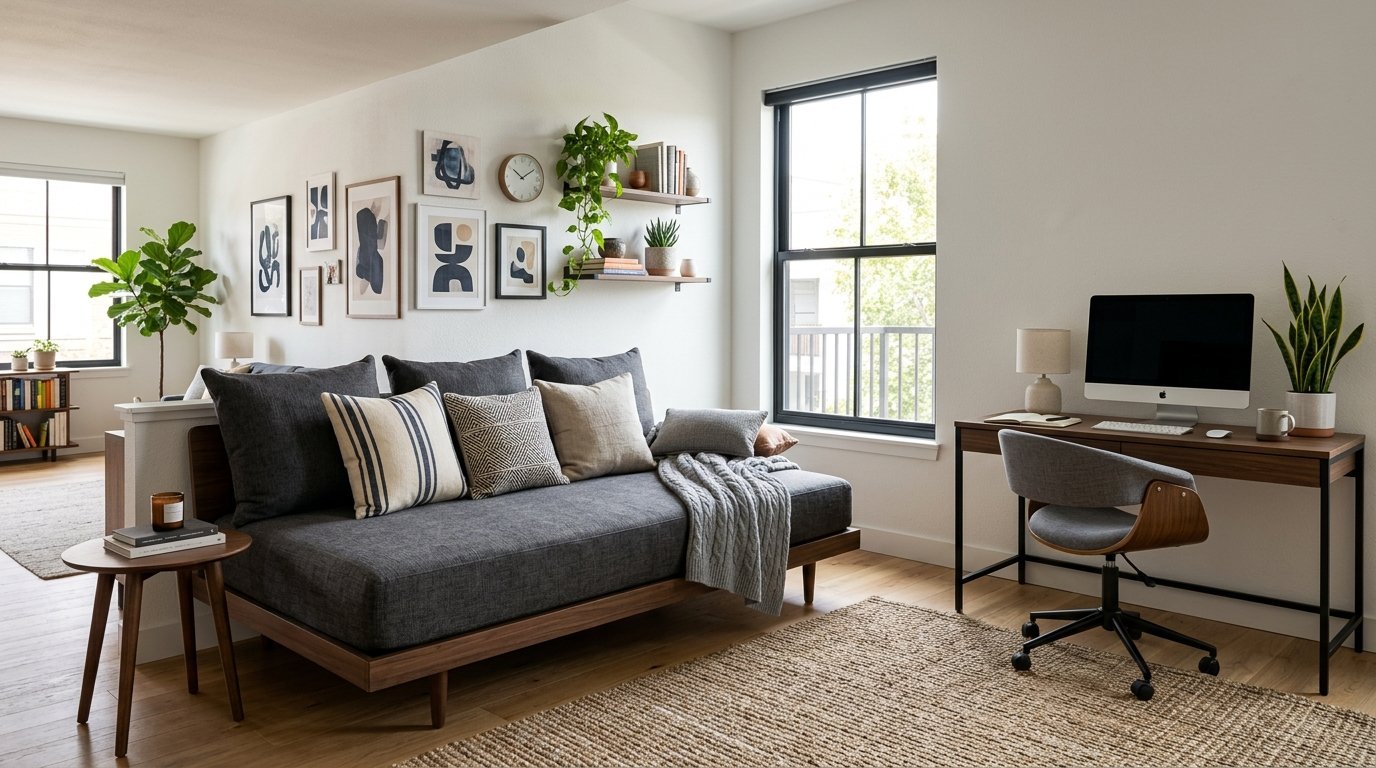
Daybeds function as deep couches during the day and beds at night. I advise this setup for home offices or casual guest rooms. Push the daybed lengthwise against the longest solid wall. You can arrange large firm pillows along the back wall for support. This small room layout makes the space feel like a dedicated lounge. I frequently use the Article Sven daybed for a sleek modern look. You maintain plenty of floor space for your daily office activities. This works perfectly for studio apartments where you host friends often. Use a tailored mattress cover to make it look like actual seating. Keep your soft sleeping bedding hidden in storage drawers underneath the frame.
10. The Lofted Sleep Space
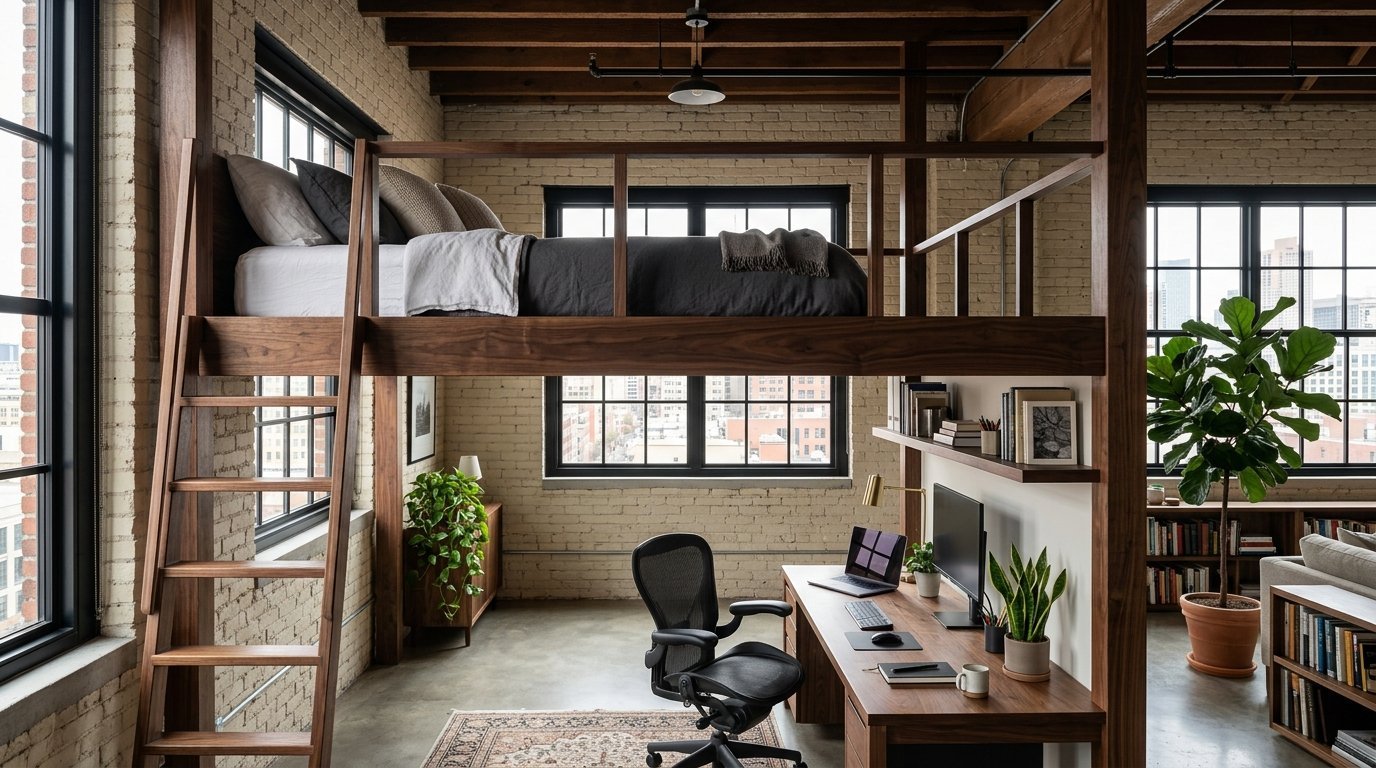
Raising the bed frees up the entire floor footprint instantly. Loft beds are not just for cramped college dorm rooms anymore. I have seen adult-sized lofts built from rich dark walnut wood. You can fit a full home office directly underneath the mattress. This small bedroom layout uses all cubic volume entirely. You need ceilings at least nine feet high for daily comfort. Make sure you have 33 inches of clearance above the mattress. Getting into bed requires climbing a steep ladder daily. I advise against this setup if you wake up frequently at night. It remains the absolute best space-saving tactic for tight urban quarters. You essentially gain a second room without paying extra rent.
11. The Window Wall Headboard
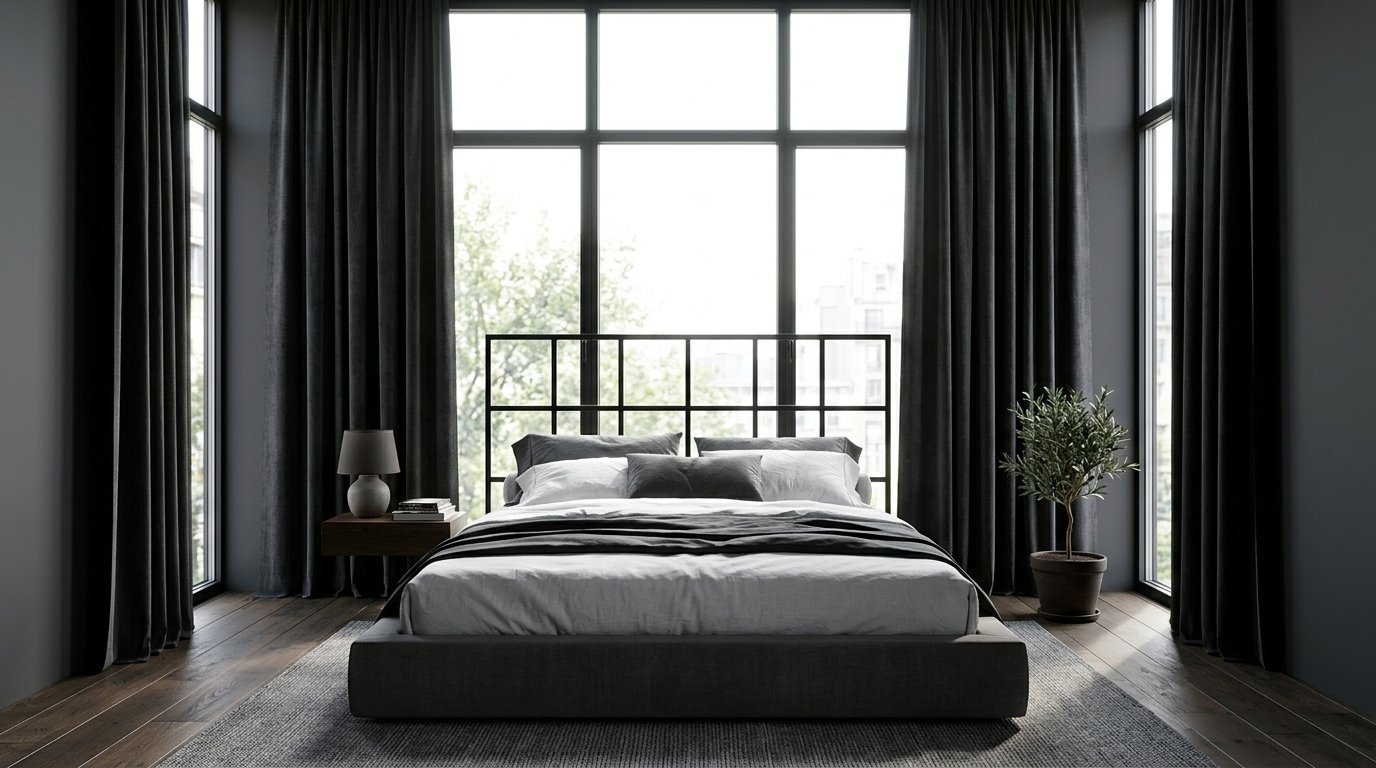
Placing the headboard against a window breaks a common design rule. Sometimes the window wall is the only unbroken wall available. I have done this in dozens of charming historic homes. You must use a low profile headboard to avoid blocking the glass. Small bedroom layout ideas often require these bold rule-breaking moves. Use heavy blackout drapes mounted high behind the bed. You close them at night to create a solid visual backdrop. Open them during the day to let natural light flood the room. Make sure your headboard material will not fade in direct sunlight. Leather or metal frames work much better than dark fabrics here. This setup turns an architectural flaw into a dramatic design statement.
12. The Curtain Divider
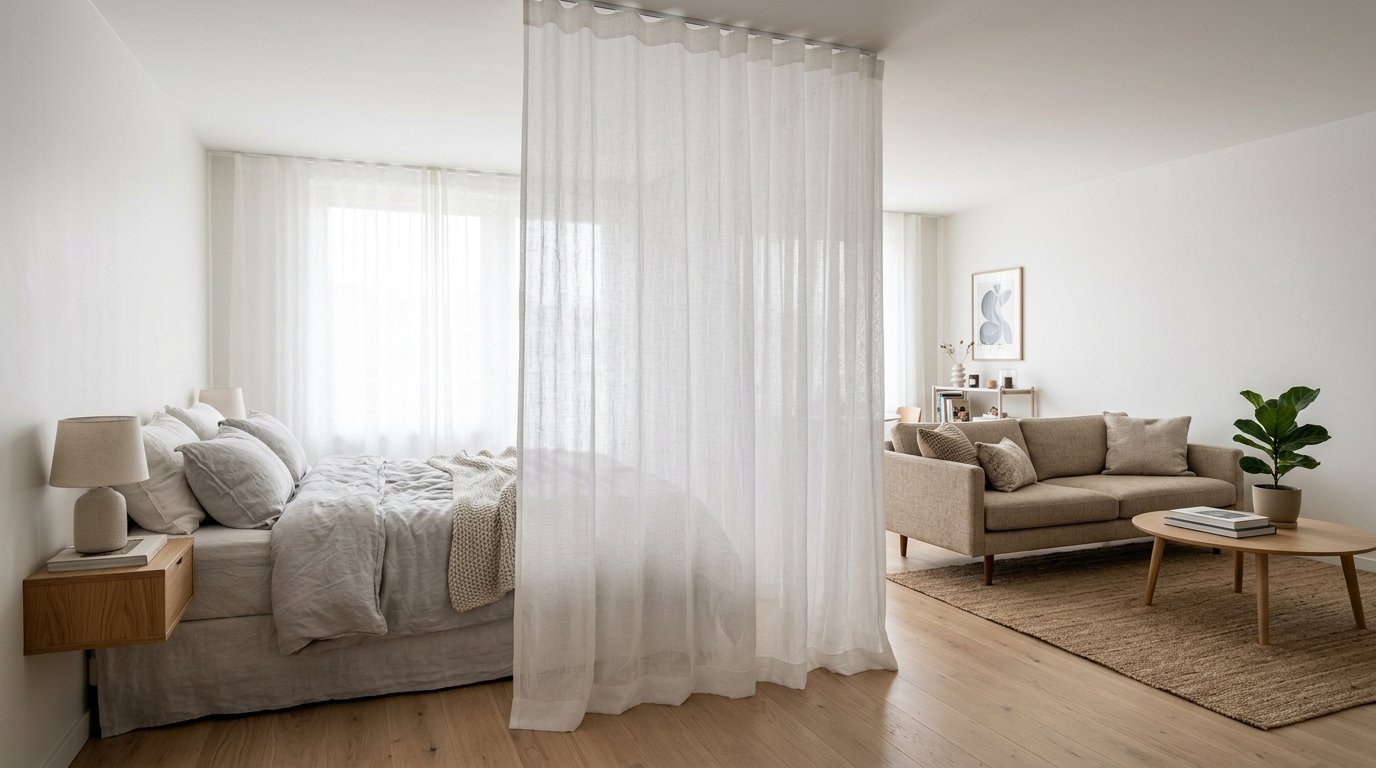
Hanging soft curtains creates a wall without loud construction costs. I install ceiling-mounted track systems from RoomDividersNow in open studios. You can pull the curtain shut to hide an unmade bed instantly. This apartment organization trick works beautifully for shared living spaces. Use a heavy linen fabric to dampen ambient sound slightly. The curtain should barely graze the hardwood floor for a tailored look. I prefer keeping the bed in a tight corner when using this method. The flowing fabric softens the harsh right angles of the room. You can leave it open during the day to spread natural light. It provides instant visual privacy when hosting casual guests for dinner.
13. The Wall-to-Wall Headboard
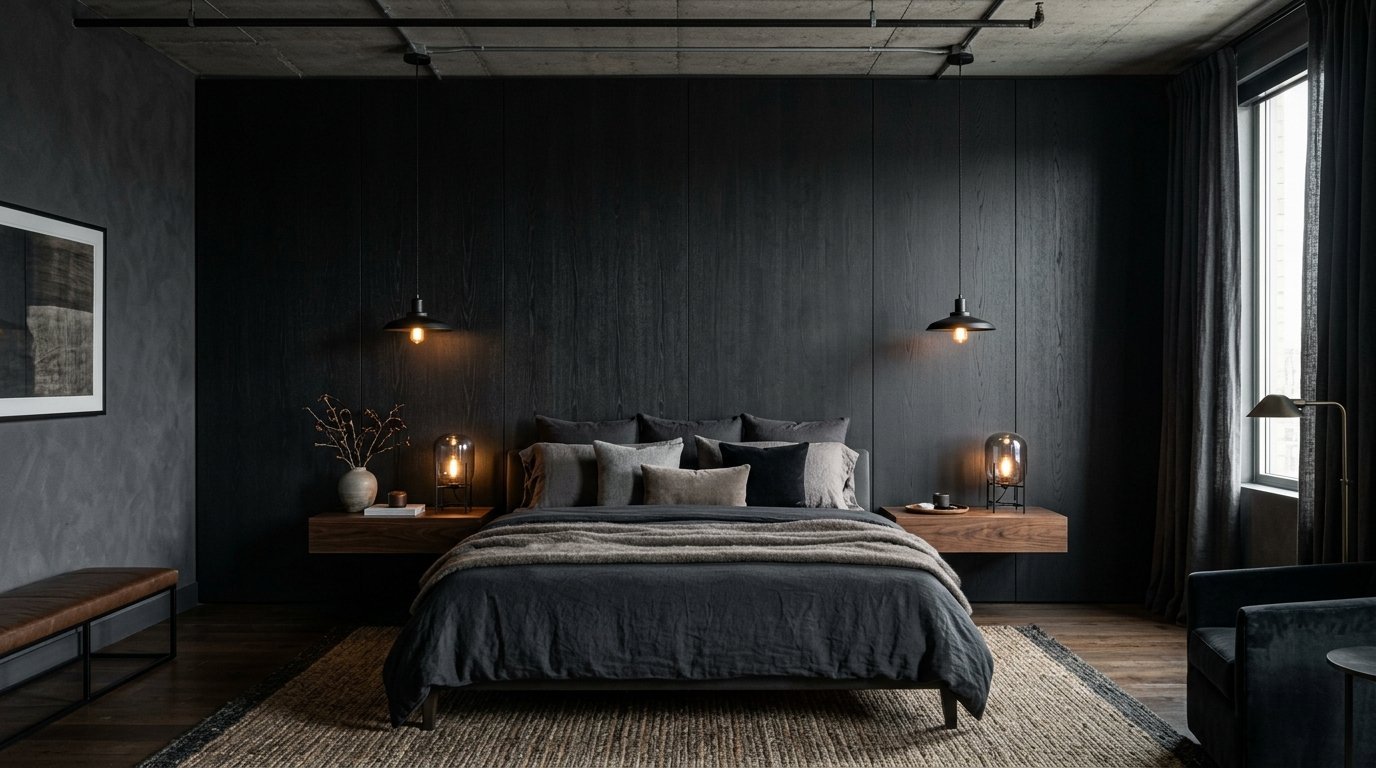
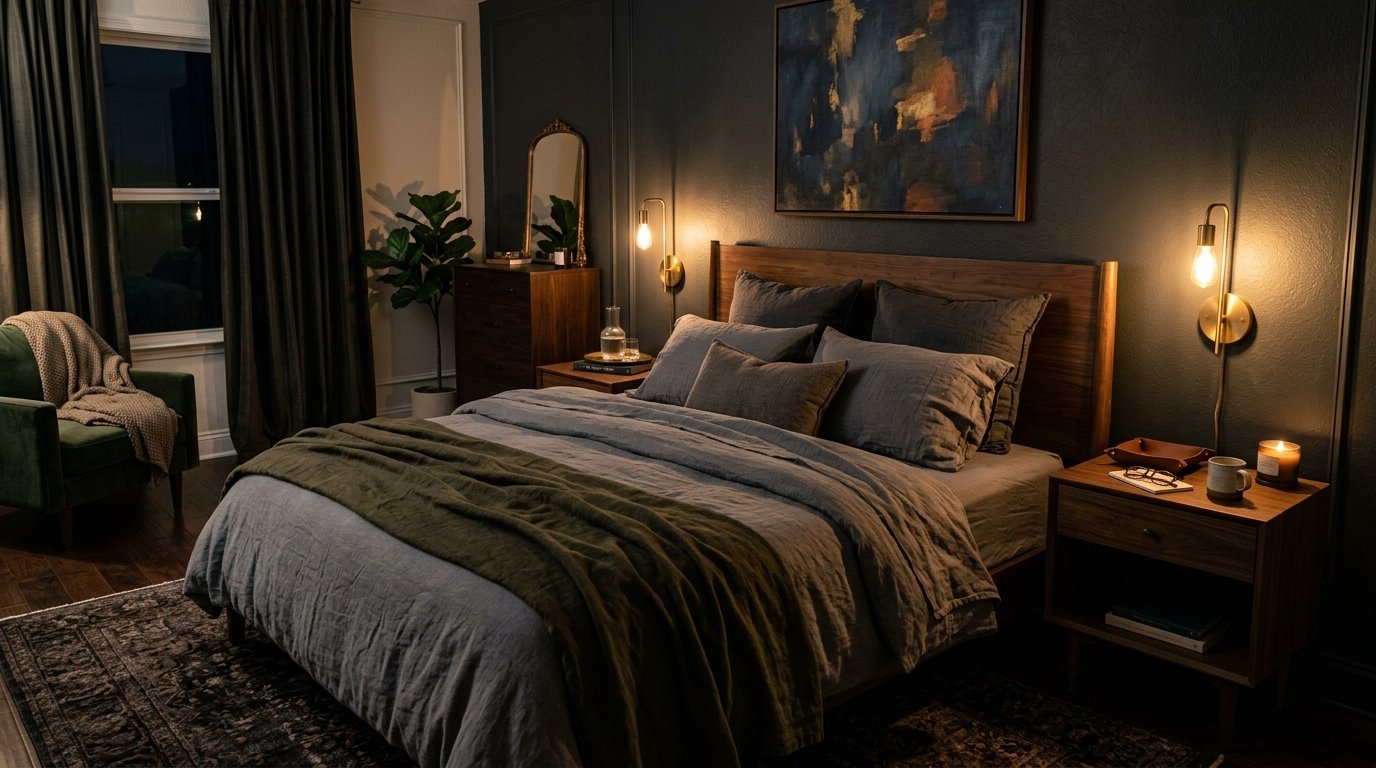
A custom headboard spanning the entire back wall unifies the room. I have installed vertical wood paneling across the entire back wall. You can attach floating nightstands directly to this wood paneling. This quarto industrial look feels highly tailored and incredibly premium. It visually widens a narrow cramped room instantly. You do not need matching side furniture when the wall ties everything together. I often paint this wall a dark charcoal using Benjamin Moore Iron Mountain. The dark color makes the edges of the room recede visually. This bedroom layout eliminates the clutter of mismatched furniture legs entirely. It creates a seamless luxury hotel experience right at home.
14. The Low Profile Setup
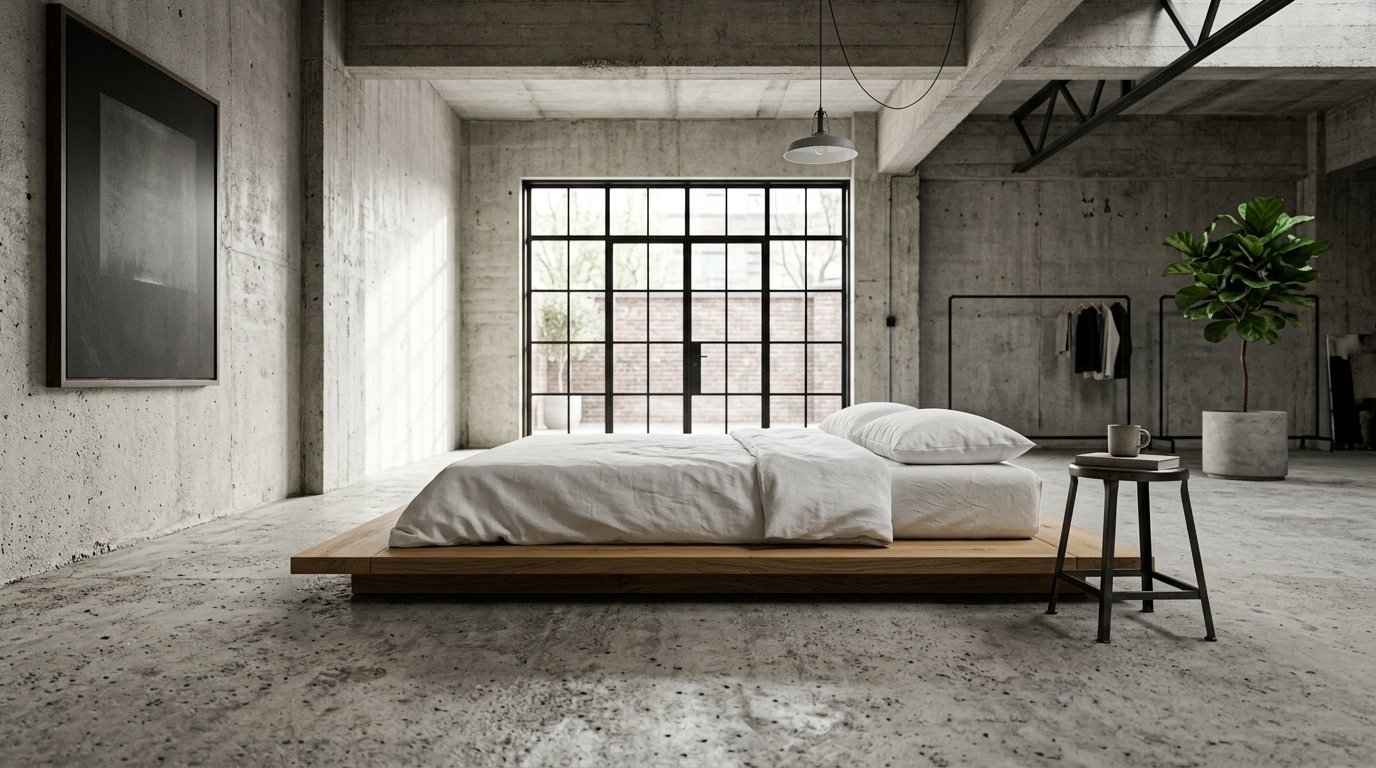
Placing the mattress directly on a low platform grounds the entire room. I love the quarto industrial aesthetic for raw city lofts. A mattress sitting just six inches off the floor changes your perspective. Ceilings feel much higher immediately upon lying down. Small room layout planning benefits greatly from low horizontal lines. I use the Floyd platform bed for this exact minimalist purpose. You do not need thick box springs or tall bulky nightstands. Stack three heavy coffee table books to serve as a phone rest. This minimalist approach forces you to keep the floor perfectly clean. Clutter ruins the sleek straight lines of a low profile arrangement completely. It forces you to live with less physical baggage daily.
15. The Peninsula Arrangement
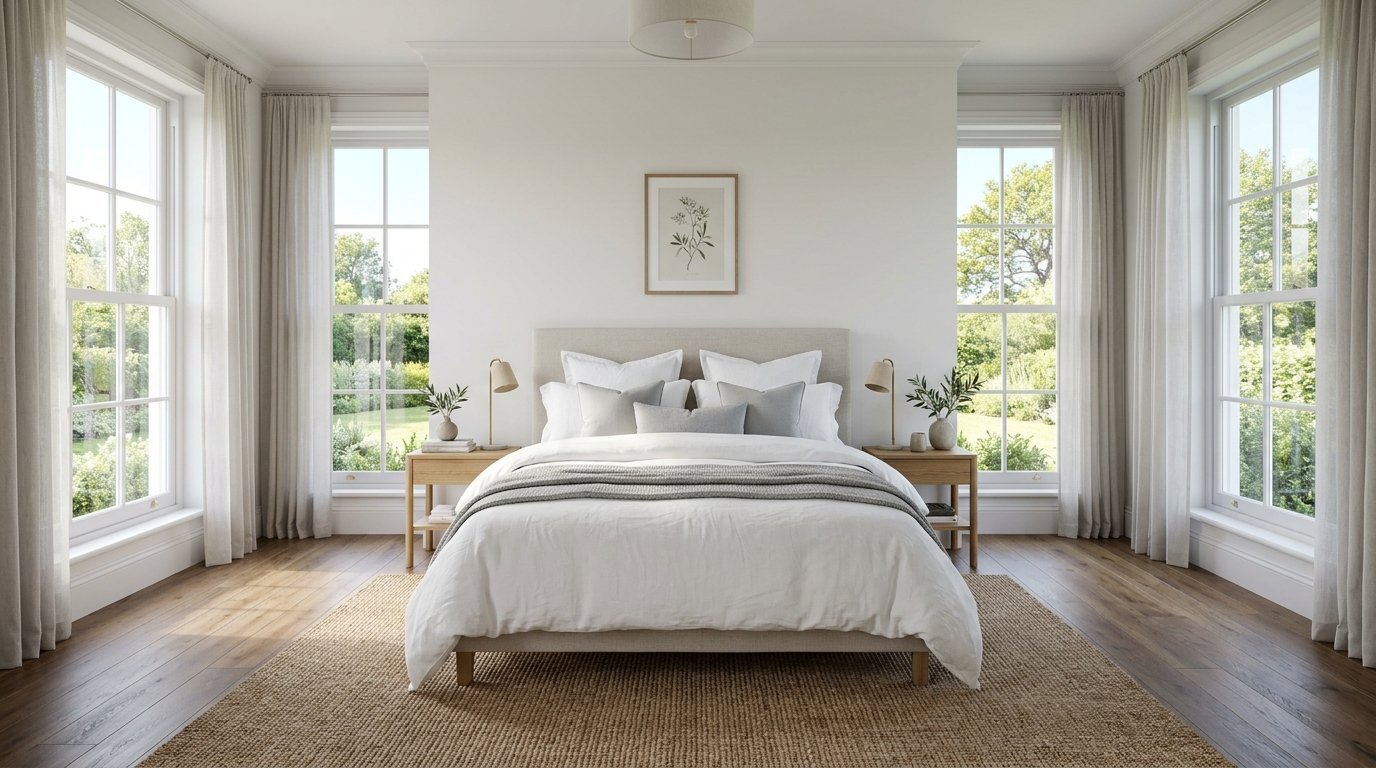
The bed extends from the wall exactly like a kitchen peninsula. I place the headboard against a short wall between two large windows. This creates equal walking paths on three sides of the mattress. This bedroom layout ideas option works exceptionally well in square rooms. You can place a narrow leather bench at the foot of the bed. I like leaving 36 inches of clearance around the entire perimeter. You avoid feeling trapped in a dark corner completely. It makes changing the fitted bedsheets remarkably easy on laundry day. This arrangement demands the bed remain the absolute focal point. Keep peripheral wall furniture sparse to let the bed breathe.
16. The Dual-Purpose Vanity
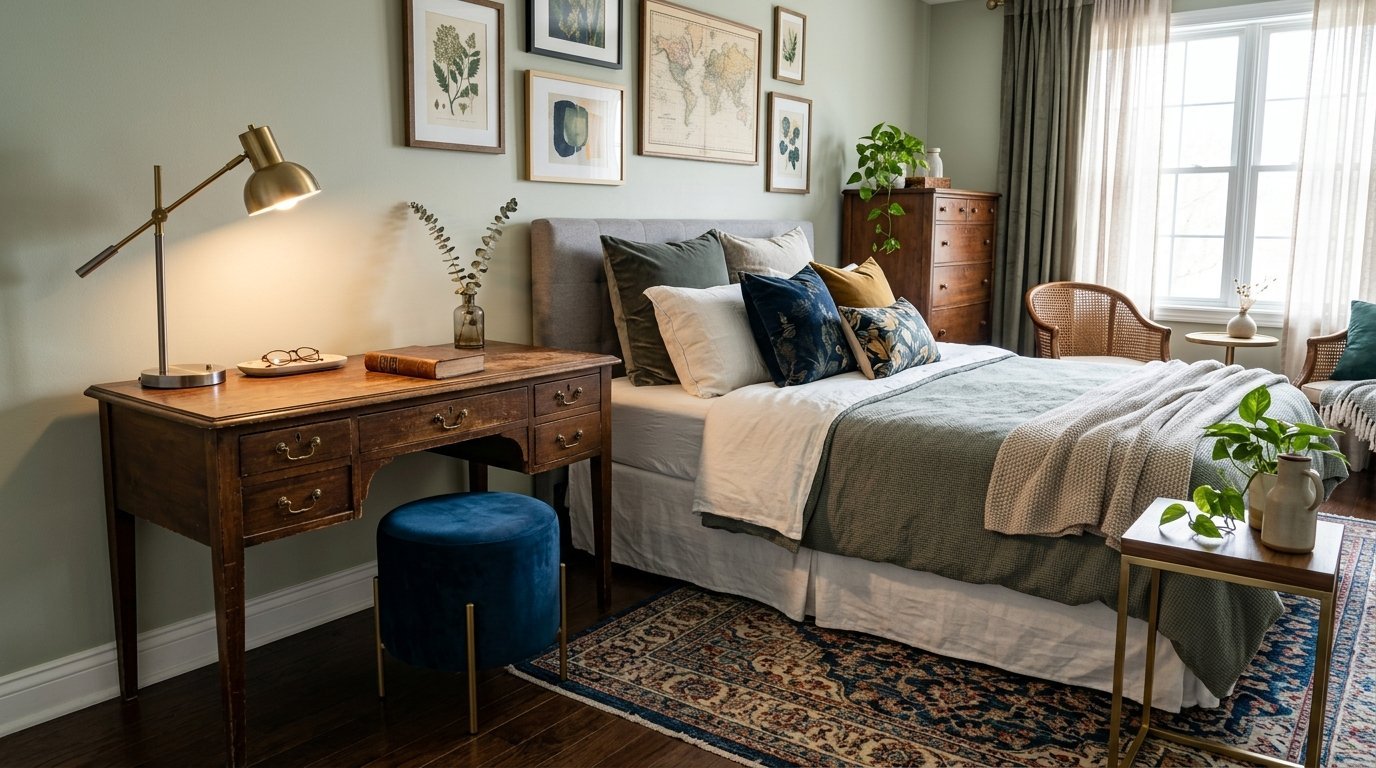
Combining a traditional nightstand with a vanity saves massive floor space. I replace one nightstand with a small wooden writing desk. You pull up a low stool to get ready in the morning. At night the desk surface holds your reading lamp and phone. Apartment organization requires your furniture to serve two distinct functions. I frequently pair a vintage wood desk with a modern metal bed frame. This breaks up the boring matching furniture set look entirely. Make sure the desk height aligns somewhat with the mattress height. Keep the desk surface completely clear of daily makeup clutter. Store everything in the desk drawers to maintain a calm sleeping environment.
17. The Narrow Room Parallel
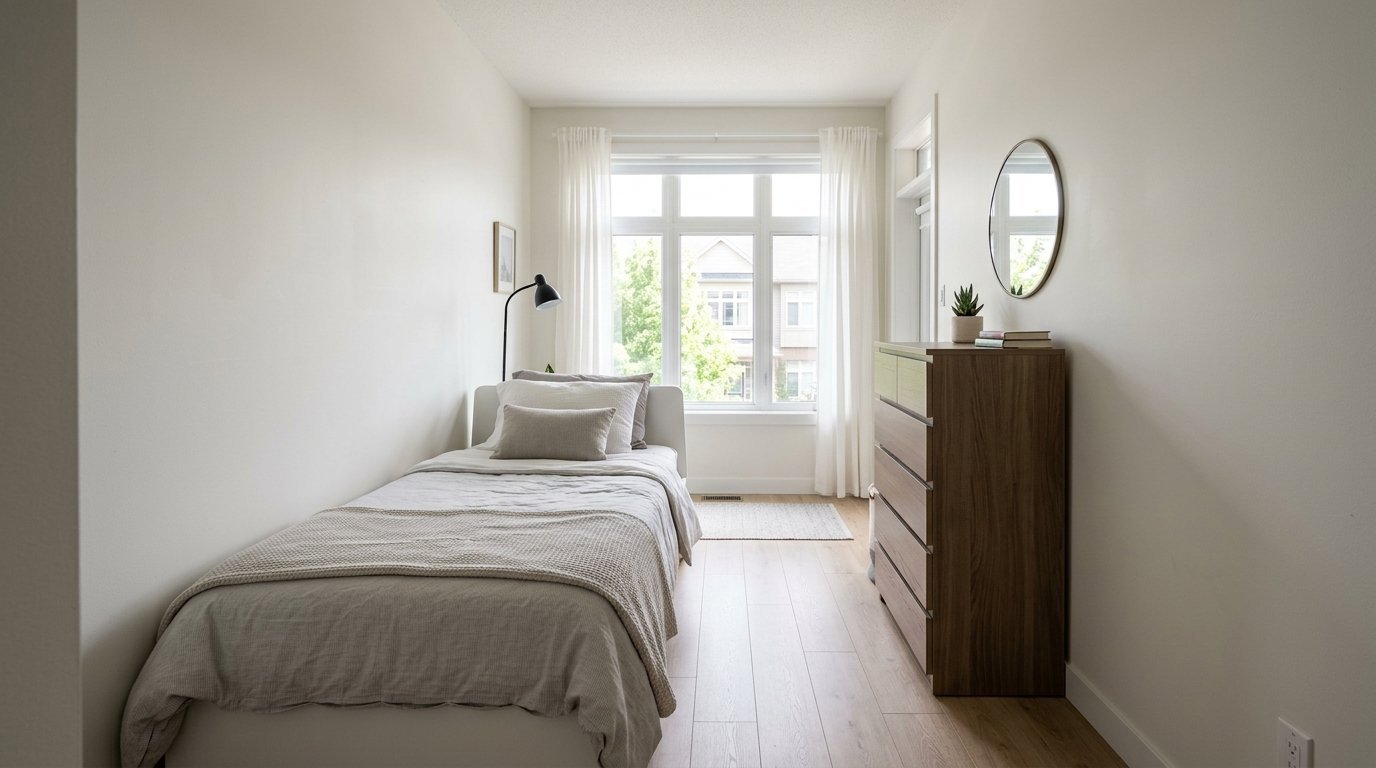
Long narrow rooms require a very specific linear spatial approach. You place the bed exactly parallel to the longest room wall. I leave a tight 24-inch walking path alongside the mattress edge. Small bedroom layout ideas for rectangular spaces demand strict compromise. You place low dressers on the opposite wall facing the bed directly. Use a narrow profile dresser to keep the tight walkway clear. I find this works better than blocking the room entirely with a horizontal bed. You create a distinct walking corridor from the door to the window. Keep wall art flat and avoid protruding metal sconces in the walkway. The room acts just like a cozy vintage train sleeper car.
18. The L-Shaped Configuration
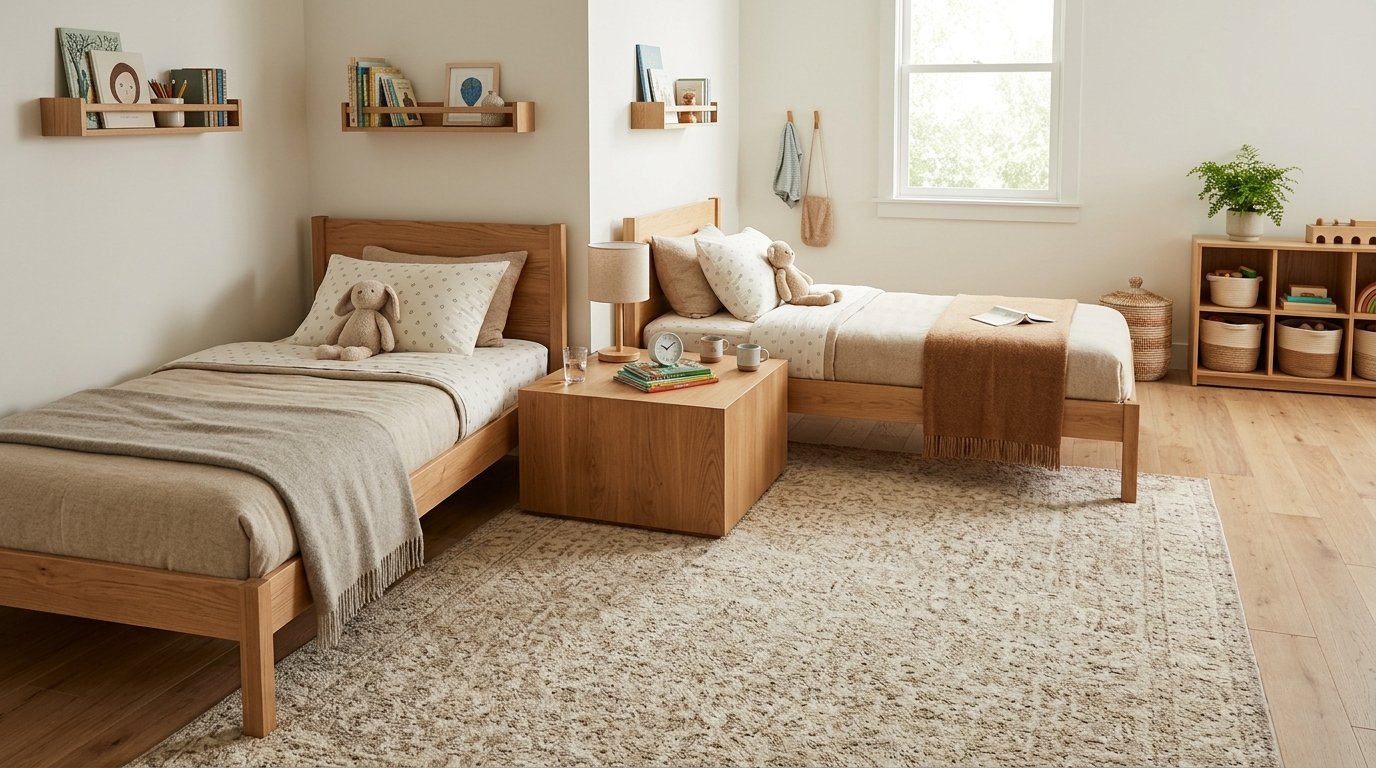
Two twin beds placed in an L-shape maximize shared bedroom spaces. I push both beds into the same corner meeting at a shared square table. This leaves the entire center of the room open for daily play. Small room layout planning for young siblings relies on this specific trick. You use one large square table as a massive shared nightstand. I place a single rotating brass lamp on this center table. You get maximum open floor space without resorting to tall bunk beds. The beds can function as deep comfortable sofas during the daytime. Use structured stiff bolsters along the wall for upright back support. This setup easily accommodates loud sleepovers and daily casual lounging.
19. The Integrated Desk Footboard
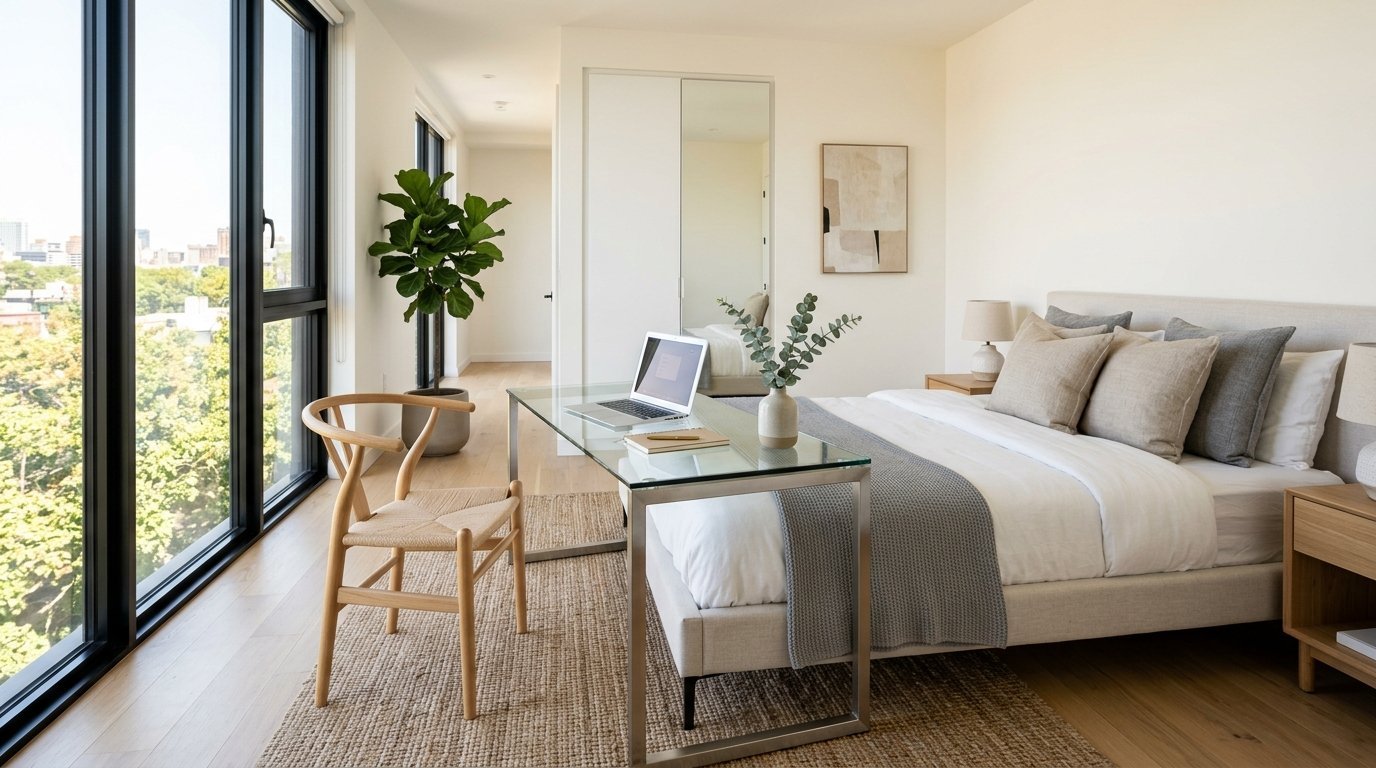
Placing a writing desk directly against the footboard reclaims wasted middle space. I position a wooden writing desk facing away from the pillows. Your desk chair sits in the open room facing the mattress. This bedroom layout creates a dedicated workspace without touching the outer walls. You can use the desk surface to hold extra heavy blankets at night. I like using a clear glass desk to keep the visual weight incredibly light. This arrangement works perfectly in deep rooms with plenty of sheer length. Make sure your large computer monitors do not block the window view. Keep all power cables managed tightly along the metal desk legs.
20. The Alcove Inset
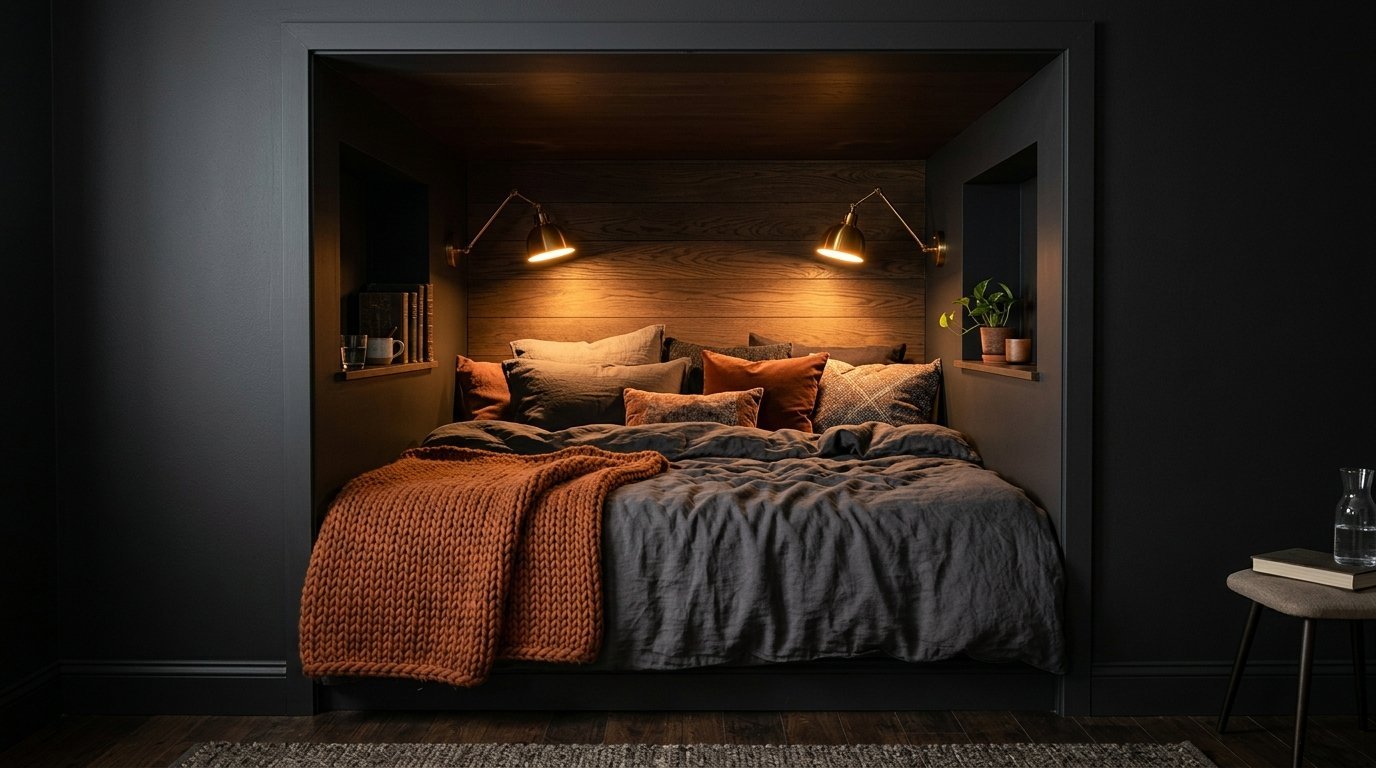
Tucking the bed entirely into an existing architectural niche feels completely custom. I have seen old deep closets converted into perfect sleeping alcoves. You slide the soft mattress perfectly between the three solid walls. Small bedroom layout perfection happens when your furniture fits exactly right. You can hang a heavy velvet curtain across the opening for total darkness. I install hardwired wall-mounted reading lights directly inside the dark niche. You do not need any bulky nightstands for this enclosed setup. Build small recessed wooden shelves into the wall cavity to hold phones. This creates a dark cave-like sleeping experience many tired people crave. It frees up the main room footprint completely for other living activities.
21. The Floating Center Island
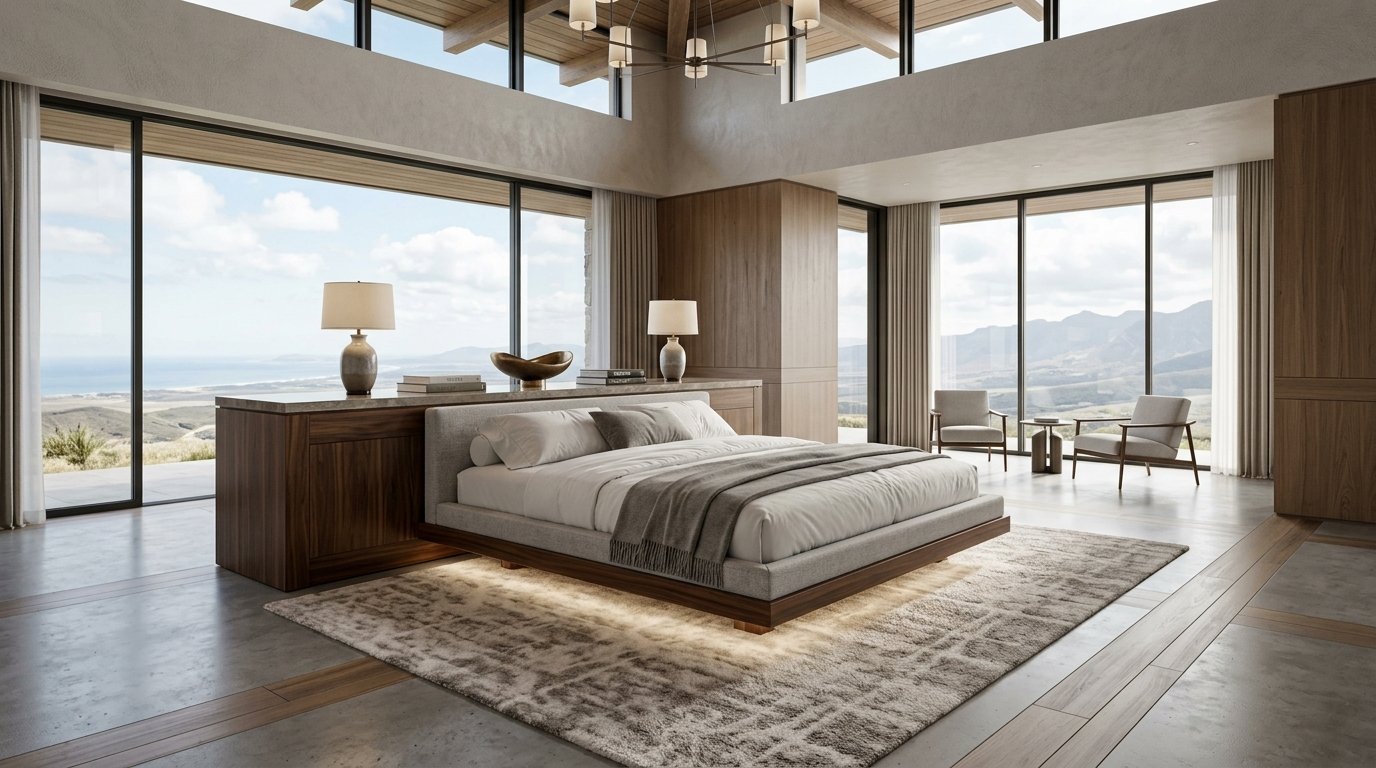
Placing the bed entirely in the center of a massive room feels luxurious. I have floated king beds with at least five feet of clearance everywhere. You anchor the tall headboard with a heavy console table directly behind it. This bedroom layout ideas rule requires a truly massive physical footprint. You can place a separate seating zone in the remaining empty corner. I use this trick for primary suites larger than 400 square feet often. The bed commands the large room like a grand sculptural art piece. You must run heavy power cords under the rug to plug in bedside lamps. Floor electrical outlets make this dramatic arrangement much easier to execute safely.
22. The U-Shaped Flow
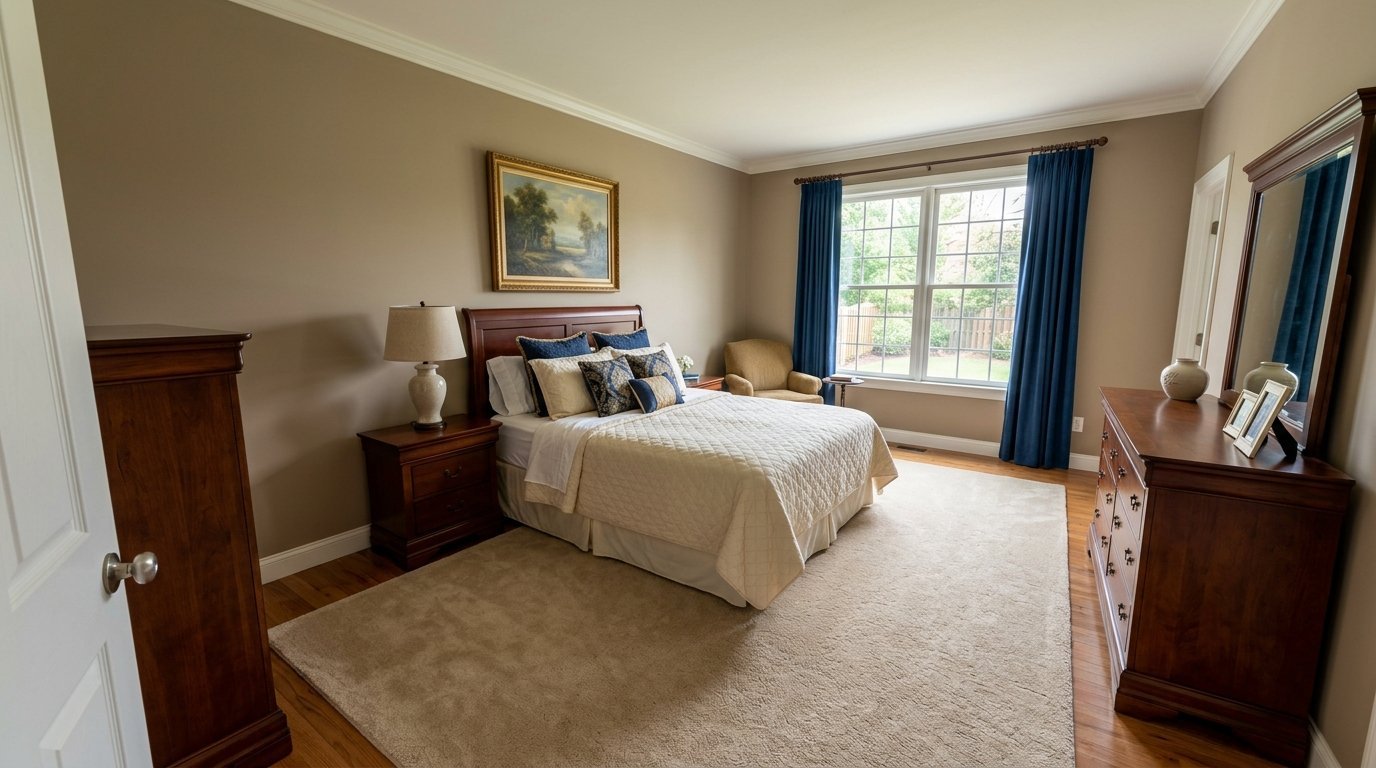
Arranging furniture in a U-shape around the bed creates a cozy protective nest. I place the tall headboard against the most solid interior wall. Dressers and chairs hug the remaining three exterior walls tightly. This leaves a clear U-shaped walking path around the entire mattress. Small bedroom layout planning often defaults to this very classic setup. It works beautifully because it distributes visual weight evenly around the perimeter. You want to match the height of your dressers to keep the eye moving horizontally. I strictly avoid placing tall wooden armoires in a U-shaped layout. High bulky furniture blocks the natural light and breaks the cohesive visual line.
23. The Open Flow Minimalist
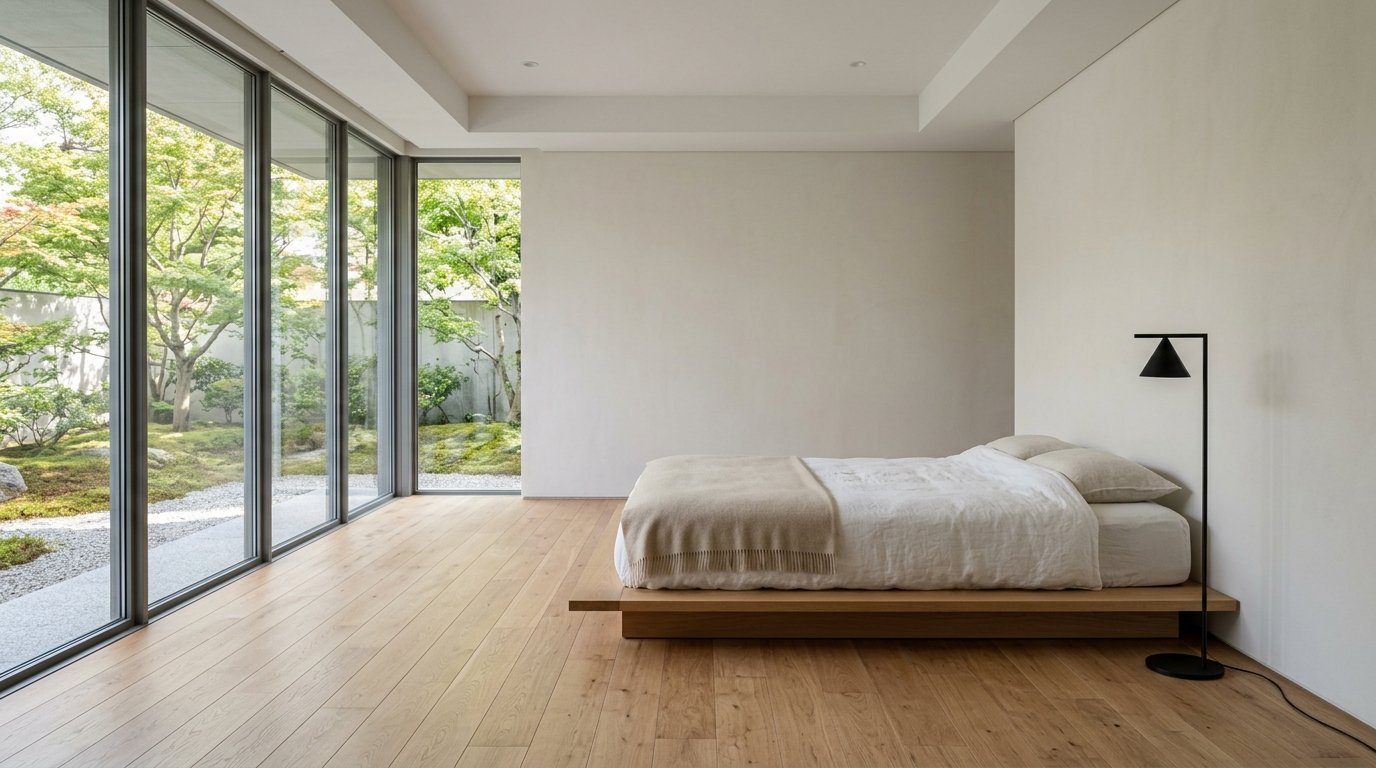
Keeping only a bare bed and one lamp in the room clears the anxious mind. I strip everything out except the flat mattress and a simple floor lamp. You keep your clothes in another room or a totally hidden closet. Apartment organization reaches its absolute peak with this strict minimalism. This quarto industrial vibe relies entirely on bare floors and exposed windows. I have busy clients who swear this exact setup cured their insomnia completely. The total lack of visual distraction signals the tired brain to shut down fast. You sweep the bare hardwood floor easily without moving heavy furniture. The room echoes slightly but feels incredibly peaceful and quiet.
24. The Dresser Stand-In
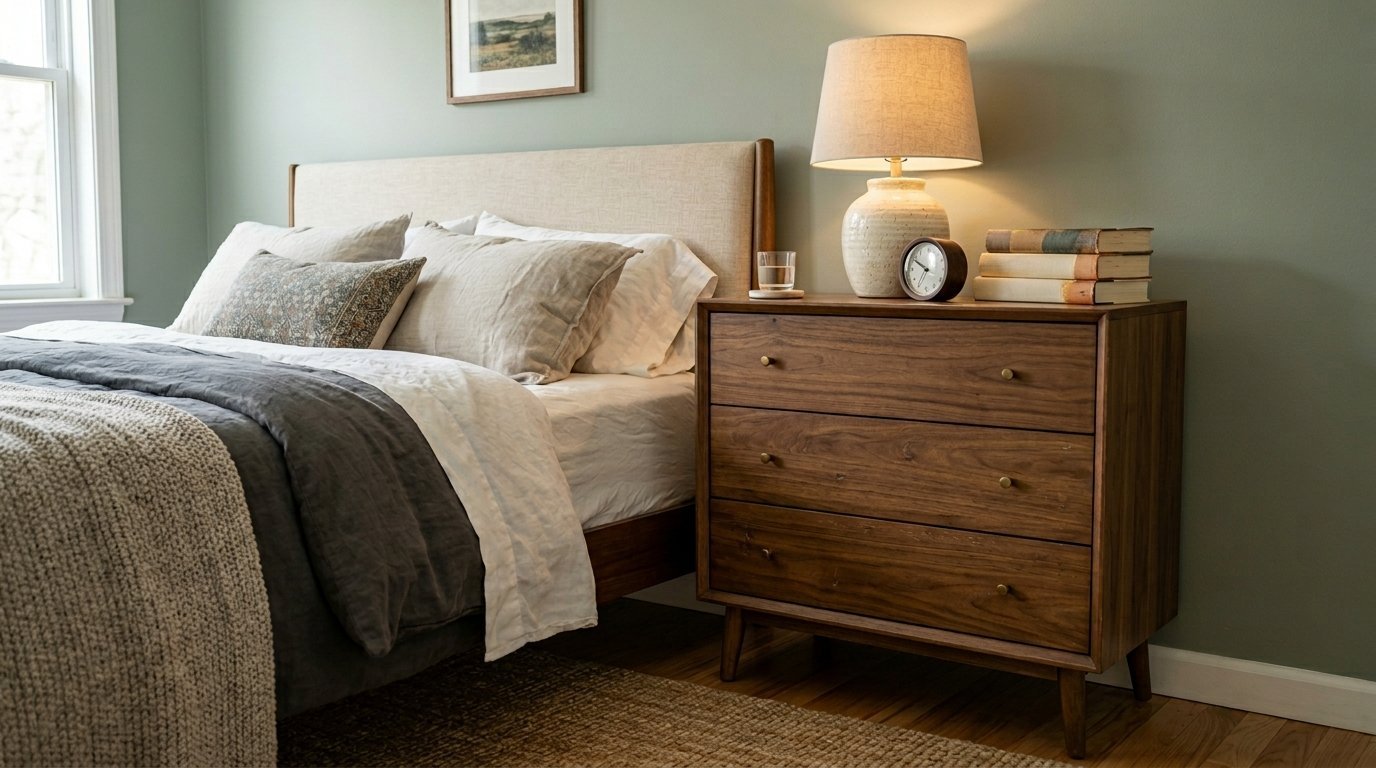
Using a small tall dresser as a nightstand provides massive hidden clothes storage. I swap flimsy metal side tables for sturdy three-drawer wooden chests. You get triple the usable storage space in the exact same footprint. Small room layout survival depends on using vertical cubic inches ruthlessly. I often use the simple IKEA MALM or vintage mid-century wooden pieces here. You have plenty of flat surface area for large lamps and heavy books. The deep sliding drawers hold thick seasonal clothing or extra linens easily. Make sure the top dresser height remains reachable from the soft mattress. This single smart swap removes the need for a secondary massive wardrobe completely.
Frequently Asked Questions

How much space do I need around my bed?
You need exactly 30 inches of clear space on both sides of the bed. This allows a normal person to walk normally without turning sideways. I find that leaving 36 inches provides a much more comfortable daily living experience. You need a strict minimum of three feet at the foot of the bed. This prevents the room from feeling completely cramped and stressful. Never block your primary walking path to the doorway or the closet door.
Can I put a queen bed in a 10×10 room?
You can easily fit a standard queen mattress inside a 10×10 space. The mattress takes up roughly 60 by 80 inches of actual floor space. This leaves you with just enough room for two small floating nightstands. I advise keeping all other bulky furniture completely out of the small room. Use the deep closet for all your daily clothing storage needs entirely. A minimalist quarto industrial setup keeps the walls totally bare and the floor clear.
Where should a rug be placed under a bed?
Place a large 8×10 rug perfectly perpendicular to a queen or king bed. The soft rug should sit entirely in front of the bedside nightstands. I slide the heavy rug under the bottom two-thirds of the mattress frame. This gives you a warm soft landing spot on the sides and the foot. You should see at least 18 inches of rug extending beyond the bed frame. Do not push the rug all the way to the back headboard wall.
What is the best way to arrange a small bedroom?
Start by finding the absolute longest unbroken wall in the entire space. Place your heavy bed directly in the center of that specific solid wall. I always advise using tall vertical storage instead of wide bulky dressers. This small bedroom layout uses your usable floor footprint instantly and perfectly. Keep your bedside nightstands visually light with open thin legs or floating wall mounts. Push everything tightly against the outer walls to open the center walkway completely.
How do you arrange furniture with a lot of windows?
Place the bed on the only solid blank wall available first. If you lack solid walls, place the headboard directly against the largest glass window. I use a low thin metal frame to let natural light flow over the bed. Keep low dressers positioned exactly between windows rather than blocking the glass completely. You can mount thin curtain rods high near the ceiling to draw the eye upward. Never block your natural light sources with heavy solid wooden wardrobes.
Should my bed face the door?
Your bed should give you a clear direct view of the main doorway. I position beds so you can easily see who enters without sitting up completely. Do not align the foot of the bed perfectly straight with the door opening. A slightly diagonal view of the entrance provides a deep psychological sense of security. I avoid placing the headboard on the exact same wall as the door frame. You want to see the main entrance easily from your pillows.
How do I fit a desk in my bedroom?
Swap out your traditional square nightstand for a small thin writing table. I often use a 36-inch wide wooden table right next to the bed frame. You place a tall reading lamp on one side and your laptop on the other. This apartment organization trick prevents the need for a separate dedicated home office. You can also place a slim glass desk directly against the solid footboard. Keep your daily work materials hidden in drawers at night to maintain a calm environment.
Does a dark color make a small room look smaller?
Dark saturated colors make the flat walls recede visually and blur the sharp corners. I frequently paint incredibly small rooms in deep charcoal or rich navy blue. This quarto industrial style creates a deeply cozy jewelry box visual feeling. The room actually feels much larger because your eyes cannot clearly define the hard boundaries. Paint the flat ceiling the exact same dark color as the four walls. This eliminates the harsh sharp visual break line at the very top.
How do you arrange a long narrow bedroom?
Place your bed exactly parallel to the longest unbroken wall in the room. I never turn the bed horizontally right across a very narrow tight space. This creates a totally blocked off bowling alley visual effect. Keep your wide dressers completely off the main daily walking path. You want to create a perfectly straight unobstructed hallway from the door to the window. Small room layout success requires directly respecting the strict architectural shape of the space.
Can you put a bed in the corner of a room?
Pushing a bed tightly into a dark corner saves massive open floor space. I do this constantly for tight kids rooms and very small guest spaces. You only need one single nightstand placed directly on the open accessible side. Making the bed takes much more physical effort since you cannot walk around it. I suggest using a simple light duvet without a top sheet to make mornings easier. It opens up the entire center of the room for other daily activities.
Where should a dresser go in a bedroom?
Place your heavy dresser on the solid wall directly opposite the foot of the bed. This creates a perfectly balanced visual weight across the entire square room. I keep all dressers completely out of the main daily walking path to the bathroom. You can place a flat television securely on top of the wide wooden dresser. If your room lacks physical depth, use the closet to hide your dresser entirely. Keep the top surface totally clear of daily messy clutter.
How do you divide a studio apartment bedroom?
Hang a heavy thick ceiling-mounted curtain to create a soft temporary visual wall. I have used freestanding open bookshelves like the IKEA KALLAX as thick room dividers. The open square shelves let natural light pass through while defining the private sleep zone. You can also place your deep sofa at the foot of your bed facing away. This apartment organization method clearly separates the living area from the sleeping area without blocking light.
Wrapping Up
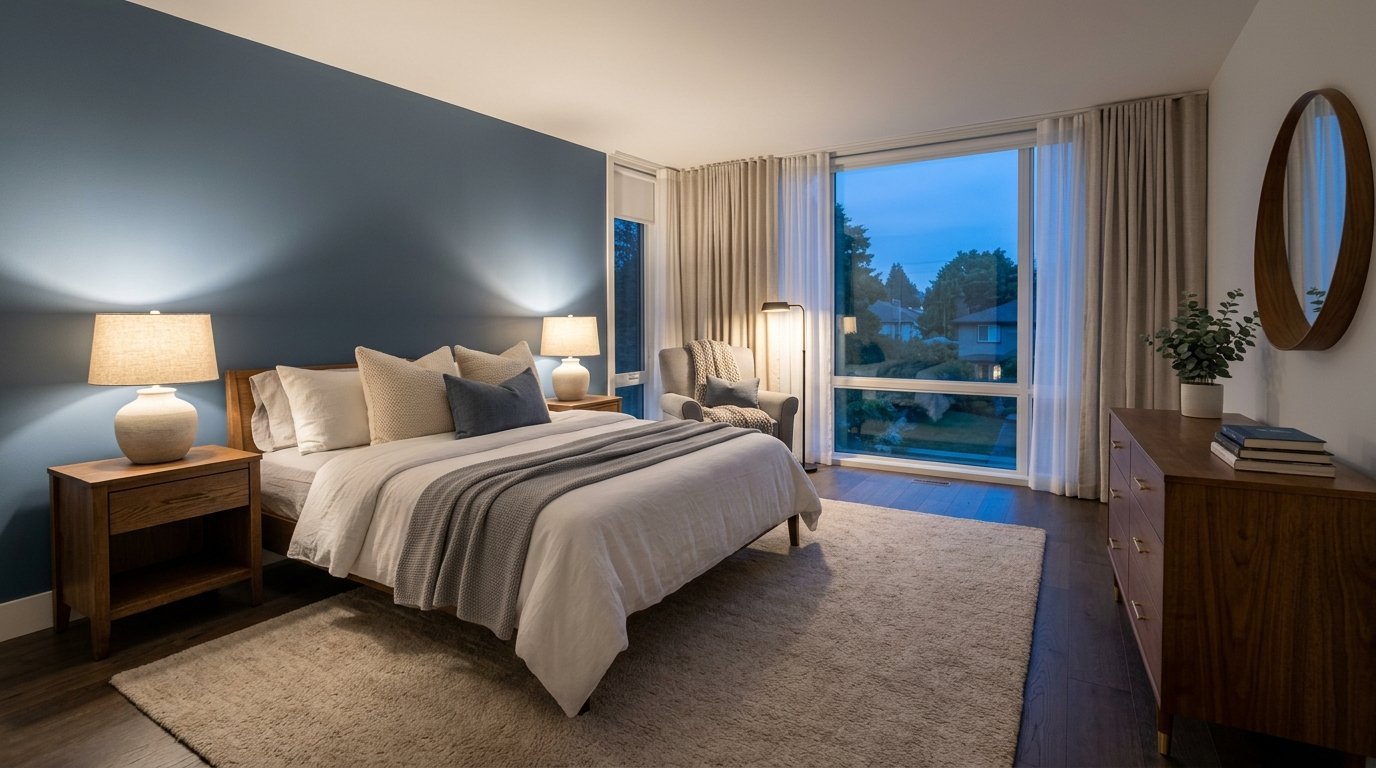
Small room layout planning dictates exactly how your entire day begins and ends. You dictate the exact physical flow of the room by where you place the mattress first. I have changed cramped dark boxes into peaceful bright retreats using just a simple tape measure. You do not need expensive designer furniture to make a tight space feel perfectly right. You just need to respect the exact walking paths and the visual room balance. Keep your flat room surfaces totally clear of daily messy clutter constantly. Let your master bedroom become the completely quiet safe sanctuary you deserve every single night.

Amelia Hart is the Senior Design Editor at Vellora Interiors, where she curates small-space and apartment content. With a background in color theory and years spent designing under-500-square-foot rentals, she’s the editor who’ll tell you exactly which paint sheen, curtain length, and lamp height to choose, no guessing. A former design lead at a boutique studio, her work has been featured in several home and lifestyle publications. Her guiding belief: “Good design isn’t about more, it’s about choosing better.”