
Last winter, a homeowner in Seattle spent $14,000 on high-end marble only to watch it stain from a single spilled glass of red wine during their housewarming party. It was a heartbreaking moment that proved beauty often fails without durability. Choosing a floor for the heart of your home involves more than just picking a pretty color from a showroom catalog. You are making a ten-year commitment to a surface that must survive dropped cast iron pans, muddy dog paws, and daily spills. This guide breaks down the most reliable and stylish choices available right now to ensure your investment lasts as long as your mortgage.
Executive Summary
Selecting the right surface involves balancing upfront costs with long-term resilience and maintenance requirements. You will find that modern manufacturing has bridged the gap between aesthetics and function, offering porcelain that mimics wood and vinyl that feels like stone. We cover 25 specific directions ranging from $3 per square foot to over $30, including insights into installation timelines and resale value. You will discover why natural stone remains a top choice for luxury builds and how new waterproof technologies are changing the way we view hardwood in wet areas. This article excludes temporary solutions like peel-and-stick tiles to focus on permanent, high-value renovations.
1. Large Format Porcelain
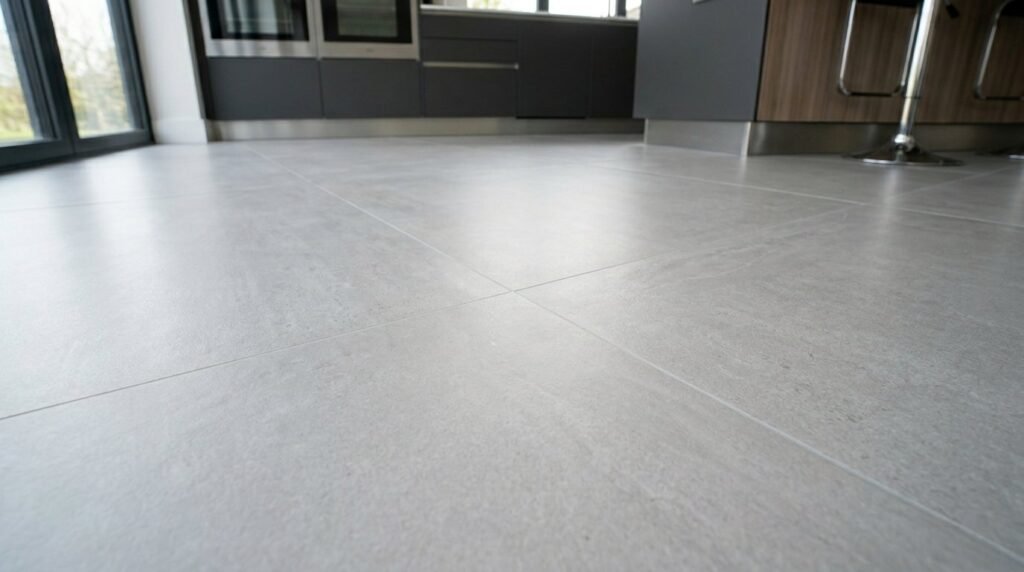
Porcelain slabs measuring 24 by 48 inches create a nearly seamless appearance that makes small rooms feel significantly larger. In my experience, reducing the number of grout lines is the most effective way to minimize cleaning time. I recently worked with a family who chose Daltile large format pieces in a soft gray, and the lack of visible joints transformed their cramped 1990s kitchen into a gallery-like space.
Example: Daltile Delegate series in a 24×48 size offers a contemporary look with minimal maintenance.
Action: Request a 1/16-inch grout joint from your installer to maximize the seamless effect.
Cost/Time: Expect to pay $8 to $12 per square foot for material plus a premium for labor due to the weight of the tiles.
Contrarian Note: Large tiles require a perfectly level subfloor, or they will crack under pressure.
2. Honed Black Slate
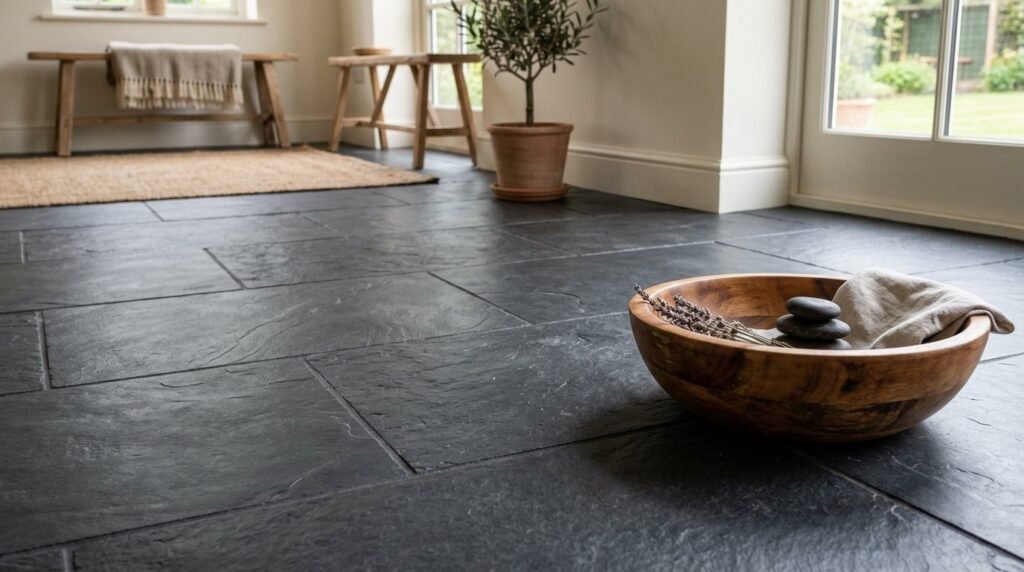
Natural slate offers a unique texture that provides excellent slip resistance, which is vital for busy families. The honed finish provides a smooth, matte surface that looks sophisticated without the shiny glare of polished stone. I’ve noticed that black slate hides pet hair and dust better than almost any other material.
Example: MSI Montauk Black Slate provides a deep, consistent color that grounds a bright white kitchen.
Action: Apply a high-quality impregnating sealer twice a year to prevent oil spots from soaking in.
Cost/Time: Materials range from $4 to $7 per square foot and installation takes about three days including sealing.
Contrarian Note: Slate can feel cold underfoot, so consider installing electric radiant heat mats underneath.
3. Reclaimed White Oak
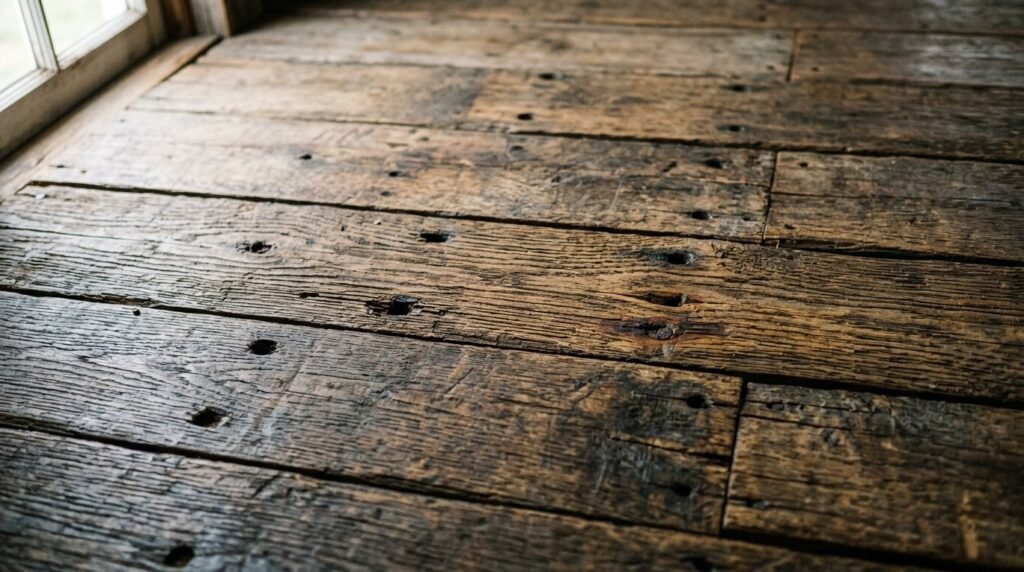
Using wood salvaged from old barns or factories adds a sense of history and warmth that new materials cannot replicate. Each plank tells a story through nail holes and natural weathering. I’ve tried many wood substitutes, but nothing matches the authentic feel of 100-year-old oak.
Example: Olde Wood Limited provides authentic wide-plank reclaimed oak that works beautifully in farmhouse designs.
Action: Opt for a matte oil finish rather than a thick polyurethane to keep the wood feeling natural.
Cost/Time: This is a premium choice at $15 to $25 per square foot and requires a specialist installer.
Contrarian Note: Reclaimed wood has varied moisture levels, so it must acclimate in your home for at least two weeks before installation.
4. Geometric Cement Tiles
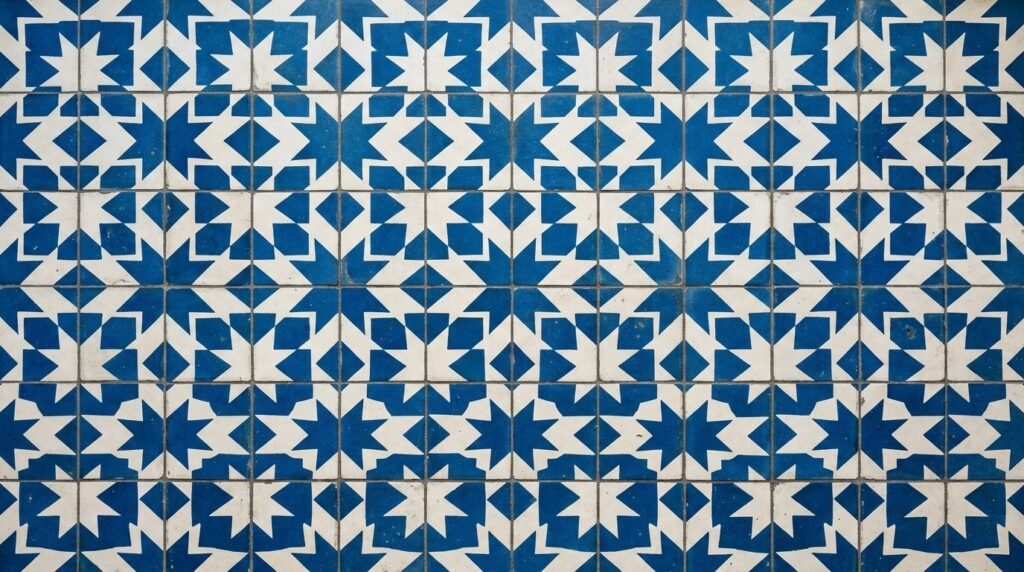
Handmade encaustic cement tiles allow for bold patterns and vibrant colors that act as a focal point. These tiles are thick and durable, but they are porous and require careful handling. I’ve seen many people benefit from using these in smaller galley kitchens where a busy pattern doesn’t overwhelm the senses.
Example: Cle Tile offers the “Big G” pattern which creates a stunning visual rhythm on the floor.
Action: Seal the tiles before grouting to prevent the grout pigment from staining the tile surface.
Cost/Time: $15 to $20 per square foot with a slow installation process due to the weight.
Contrarian Note: Cement tiles will develop a patina over time, so do not choose them if you want a “perfect” look forever.
5. Herringbone Pattern Wood
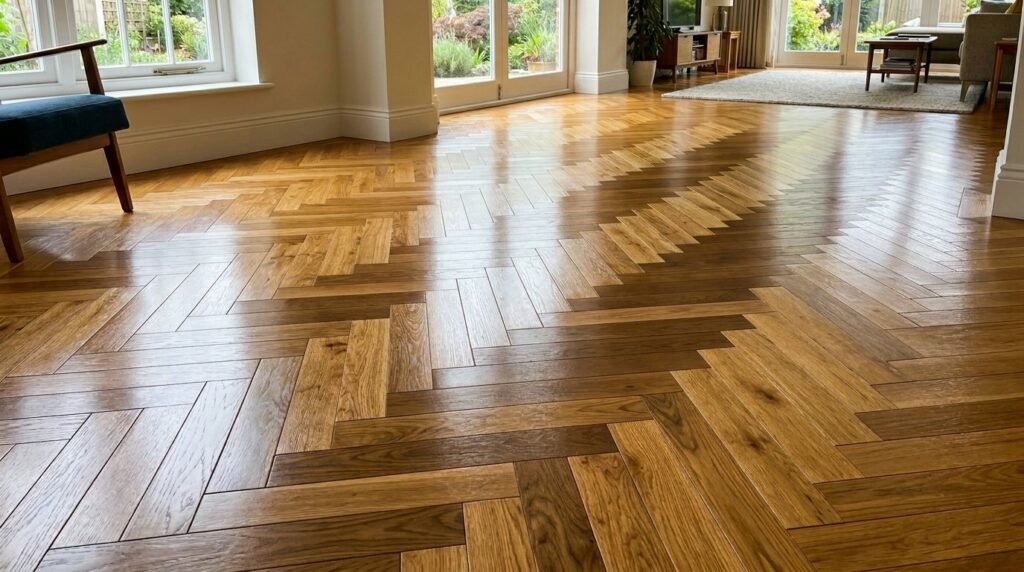
Laying standard wood planks in a 45-degree V-shape adds instant architectural interest to a simple room. This classic layout has seen a massive resurgence in modern kitchen floor styles lately. It directs the eye through the room and creates a sense of movement.
Example: Bruce Hardwood offers pre-finished oak strips that are perfect for creating this traditional layout.
Action: Purchase 15% extra material to account for the heavy amount of cutting required for the pattern.
Cost/Time: Labor costs are often 30% higher for herringbone than for standard straight-lay floors.
Contrarian Note: In very small kitchens, the complex pattern can make the floor look cluttered rather than elegant.
6. Industrial Polished Concrete
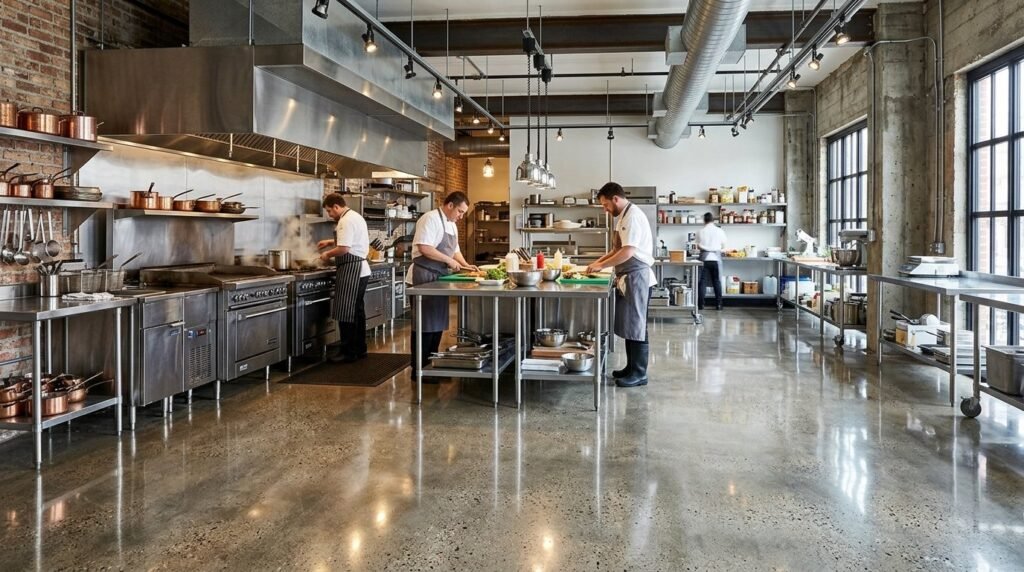
For those seeking a minimalist or industrial aesthetic, grinding down the existing concrete slab is a brilliant move. It is virtually indestructible and incredibly easy to mop. In my experience, it is the most durable floor for kitchen environments with heavy foot traffic.
Example: Scofield concrete stains can add subtle earth tones to the gray base for a warmer feel.
Action: Hire a professional with a heavy-duty planetary grinder to ensure a level, mirror-like finish.
Cost/Time: $5 to $10 per square foot depending on the level of polish requested.
Contrarian Note: Dropped glassware will almost certainly shatter on impact due to the extreme hardness of the surface.
7. Natural Travertine Stone
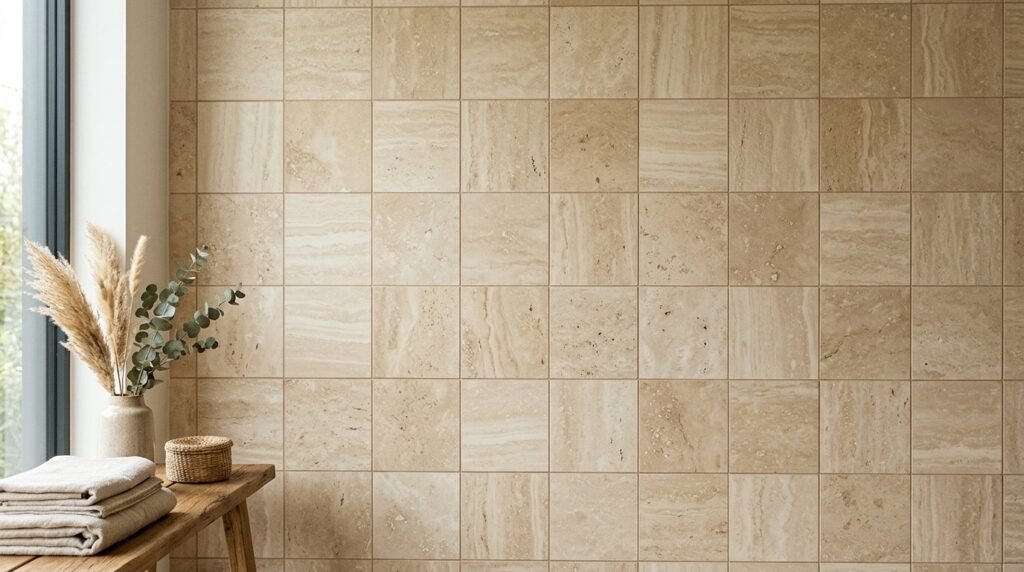
Travertine provides a soft, buttery texture and warm beige tones that fit perfectly in Mediterranean or traditional homes. The natural pits in the stone are usually filled with resin at the factory for a smoother finish. I’ve noticed that light-colored travertine helps reflect light in kitchens with small windows.
Example: Travertine Mart offers “Premium Select” tiles that have fewer holes and more consistent coloring.
Action: Use a pH-neutral cleaner to avoid etching the stone with acidic chemicals.
Cost/Time: $6 to $11 per square foot with a moderate installation difficulty.
Contrarian Note: Travertine is sensitive to acids like lemon juice or vinegar, which can dull the finish instantly.
8. Luxury Vinyl Plank
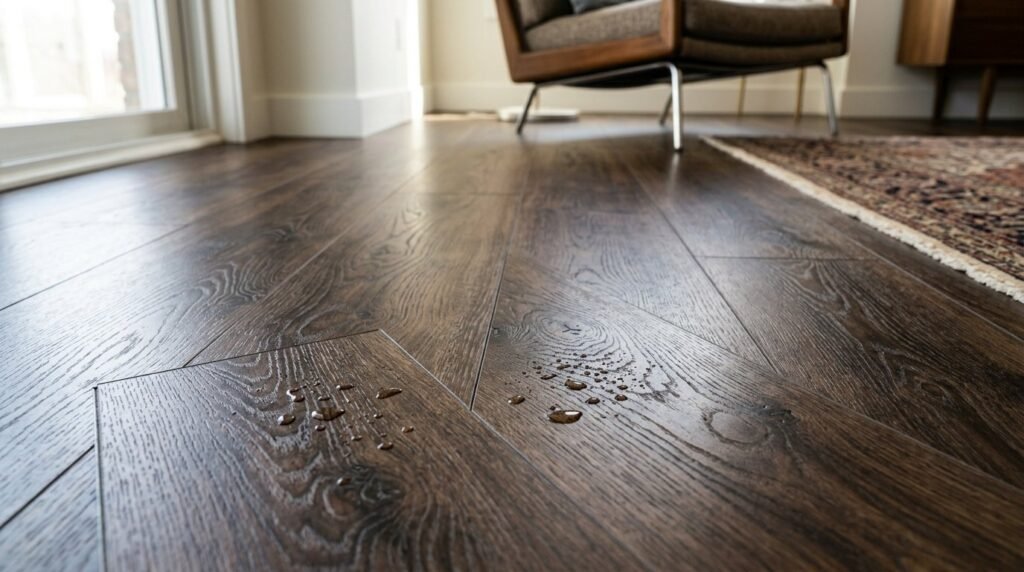
Known as LVP, this material has evolved into a high-performance floor for kitchen spaces that is 100% waterproof. It mimics the look of real wood so closely that most guests won’t know the difference. I’ve seen this work exceptionally well in basements or homes with frequent spills.
Example: Karndean Designflooring offers the Korlok Select range which features incredibly realistic wood grain textures.
Action: Choose a version with a 20-mil wear layer or higher for maximum scratch resistance.
Cost/Time: $3 to $6 per square foot and it is a DIY-friendly “click” installation.
Contrarian Note: Low-quality LVP can look “plasticky” under direct sunlight, so check samples in your own home first.
9. Classic Marble Checkerboard
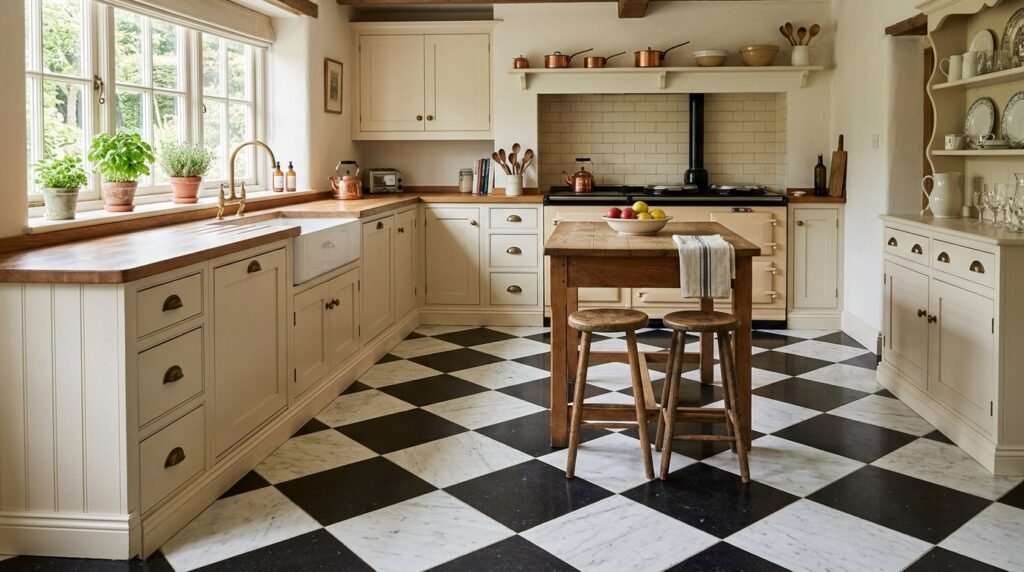
Alternating black and white marble tiles create a timeless look that feels both historic and fresh. This style has been used for centuries and never goes out of fashion. I often recommend this for homeowners who want a high-contrast, “designer” feel in their remodel.
Example: Carrara White and Nero Marquina marble tiles from TileBar are the standard for this look.
Action: Use a dark gray grout for the black tiles and a white grout for the white tiles to keep the lines crisp.
Cost/Time: $12 to $18 per square foot plus skilled labor for precise alignment.
Contrarian Note: Keeping the white tiles pristine requires constant maintenance in a high-traffic kitchen.
10. Modern Terrazzo Flecks
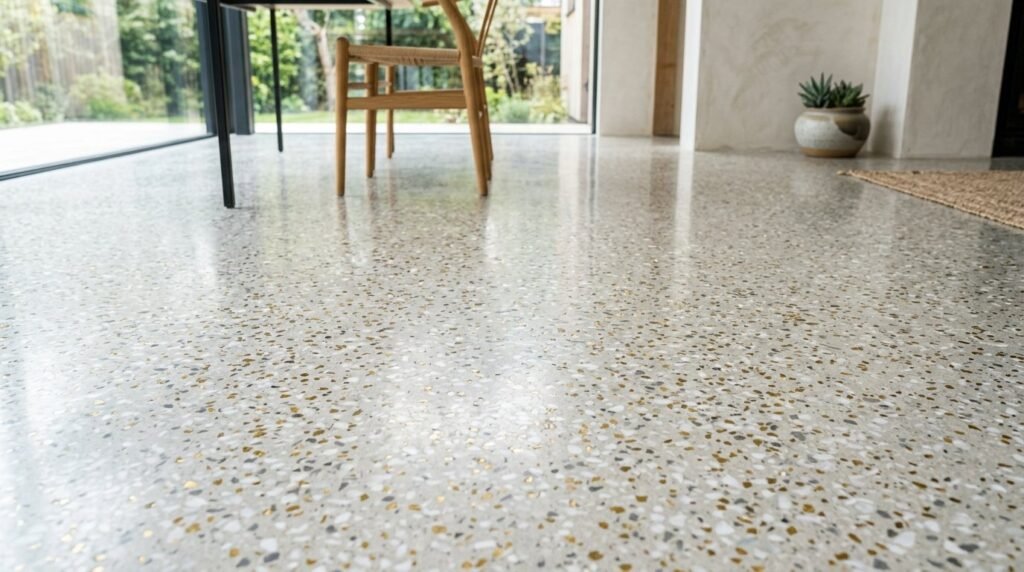
Terrazzo consists of chips of marble, quartz, or glass set in cement or resin. It offers a playful yet sophisticated look with endless color possibilities. In my observation, terrazzo is making a huge comeback in mid-century modern kitchen renovations.
Example: Terrazzio offers large tiles that provide the look of a poured floor with an easier installation process.
Action: Pick a neutral base color with colorful chips to make it easier to change your wall paint later.
Cost/Time: $15 to $30 per square foot for authentic poured terrazzo.
Contrarian Note: Repairs can be difficult to blend if the floor ever cracks due to house settling.
11. Rustic Terracotta Pavers
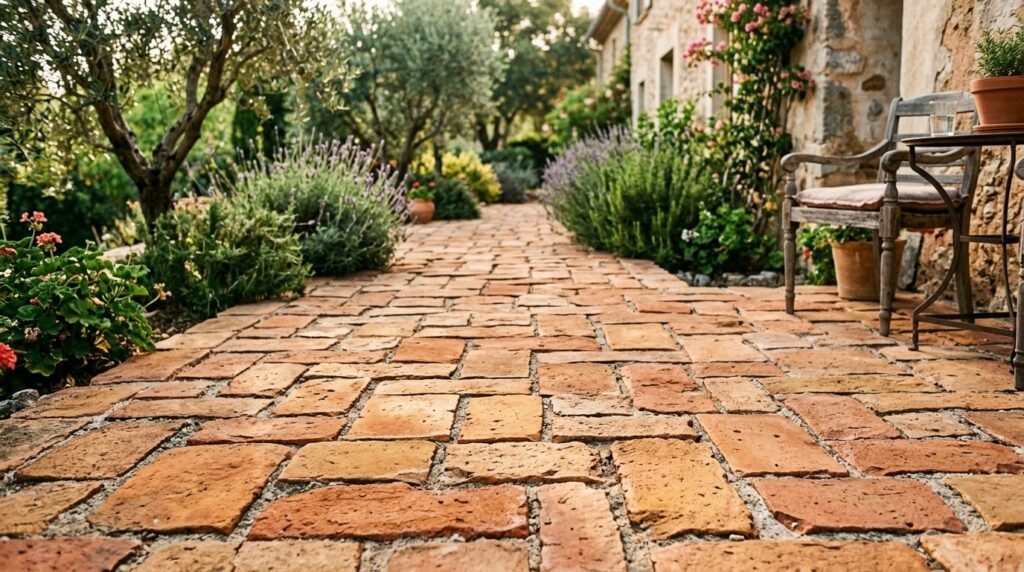
Hand-molded clay tiles bring an earthy, organic feel to the home. They are warm underfoot and provide a great deal of character. I’ve tried these in sun-drenched kitchens, and they hold the heat beautifully during the winter.
Example: Saltillo tiles from San Felipe provide that classic orange and red clay look.
Action: Ensure the tiles are pre-sealed before installation to prevent them from absorbing the wet grout.
Cost/Time: $4 to $9 per square foot but requires a very thick mortar bed.
Contrarian Note: The uneven surface of handmade terracotta can make furniture like kitchen islands wobble slightly.
12. Wide Plank Hickory
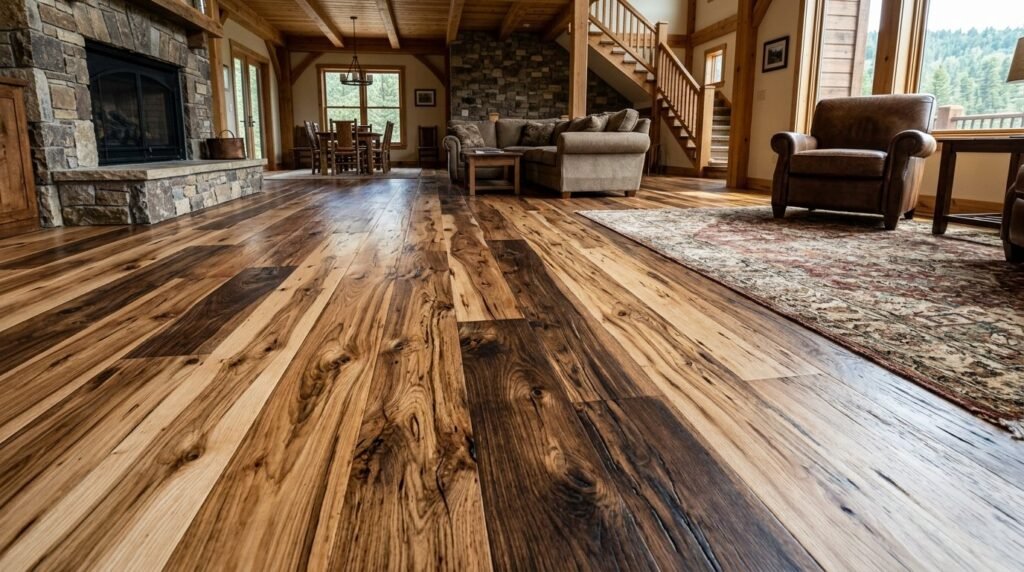
Hickory is one of the hardest domestic woods available, making it ideal for the heavy wear of a kitchen. Wide planks (6 inches or more) show off the dramatic grain patterns and color shifts of the wood. I’ve seen many people benefit from hickory’s natural toughness when they have large dogs.
Example: Mohawk Industries offers several solid hickory options with a durable aluminum oxide finish.
Action: Use a humidor or whole-house humidifier to keep wood from shrinking during dry winters.
Cost/Time: $8 to $13 per square foot for the material.
Contrarian Note: The busy grain of hickory can look overwhelming in a very small space.
13. Sustainable Bamboo Strip
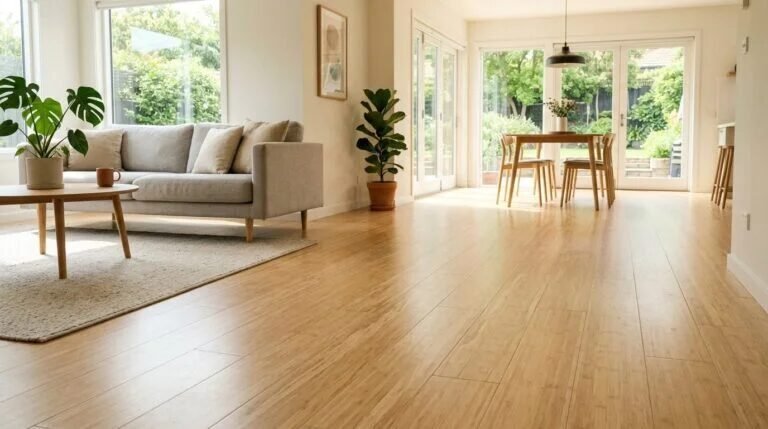
Bamboo is a fast-growing grass that provides a wood-like finish with a much lower environmental impact. Strand-woven bamboo is twice as hard as oak and resists moisture well. In my experience, it is a great alternative for those who want a modern, “zen” aesthetic.
Example: Cali Bamboo provides Fossilized planks that are specifically designed to withstand high-traffic kitchens.
Action: Look for “FloorScore” certified products to ensure low chemical emissions in your home.
Cost/Time: $5 to $9 per square foot and installs just like traditional hardwood.
Contrarian Note: Bamboo can be susceptible to scratching if you don’t use felt pads under your chairs.
14. Natural Cork Flooring
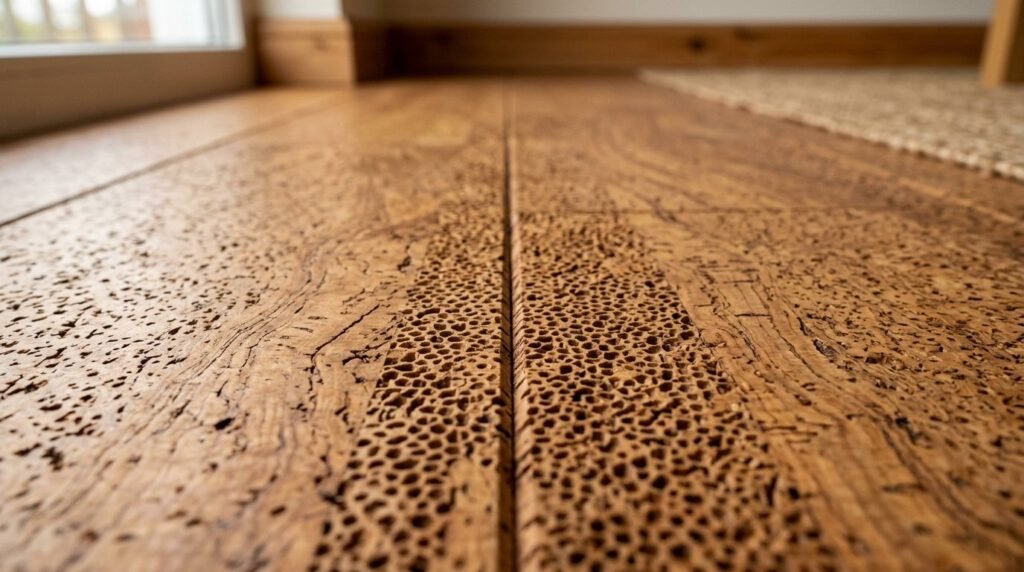
Cork is harvested from the bark of trees without harming them, making it an eco-friendly standout. It is soft, quiet, and naturally resistant to mold and pests. I’ve noticed that older homeowners love cork because it is much easier on the joints during long periods of cooking.
Example: Wicanders offers cork planks with a tough ceramic finish for extra durability.
Action: Polyurethane the floor after installation to seal the joints against liquid spills.
Cost/Time: $4 to $8 per square foot and takes about two days to install.
Contrarian Note: Heavy appliances will leave permanent indentations in cork if you don’t use floor protectors.
15. Hexagon Ceramic Tile
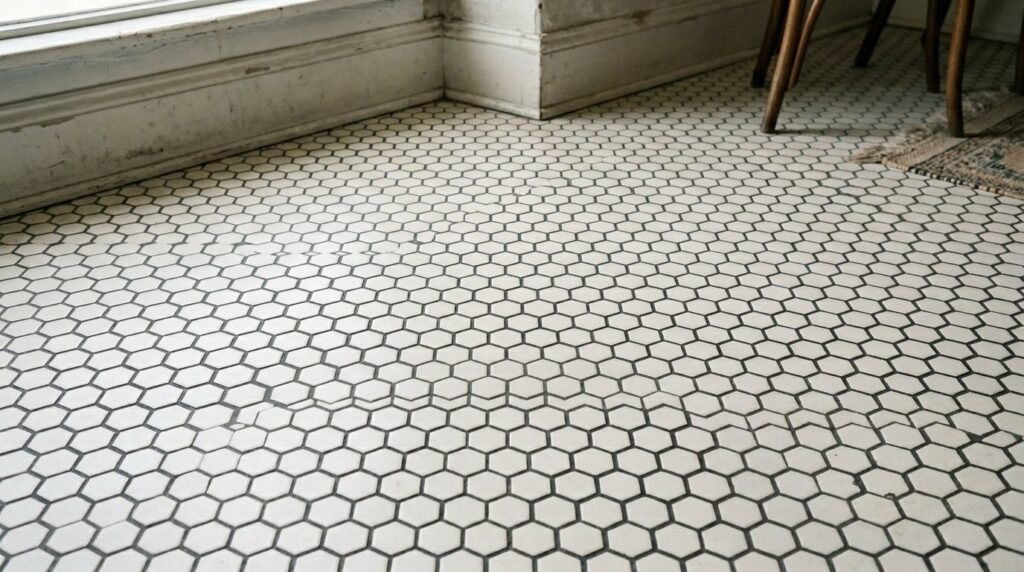
Small to medium-sized hexagons provide a vintage charm that works well in bathrooms and kitchens alike. They offer many grout lines, which increases slip resistance naturally. I’ve seen many people benefit from using a contrasting grout color to make the geometric shape pop.
Example: Merola Tile offers the “Heritage” series which has a slightly weathered, antique look.
Action: Use an epoxy grout to ensure the lines never stain or discolor over time.
Cost/Time: $5 to $10 per square foot with a slightly tedious installation due to the shape.
Contrarian Note: All those grout lines can be a nightmare to clean if you choose a light-colored, standard cement grout.
16. Wire Brushed Textures
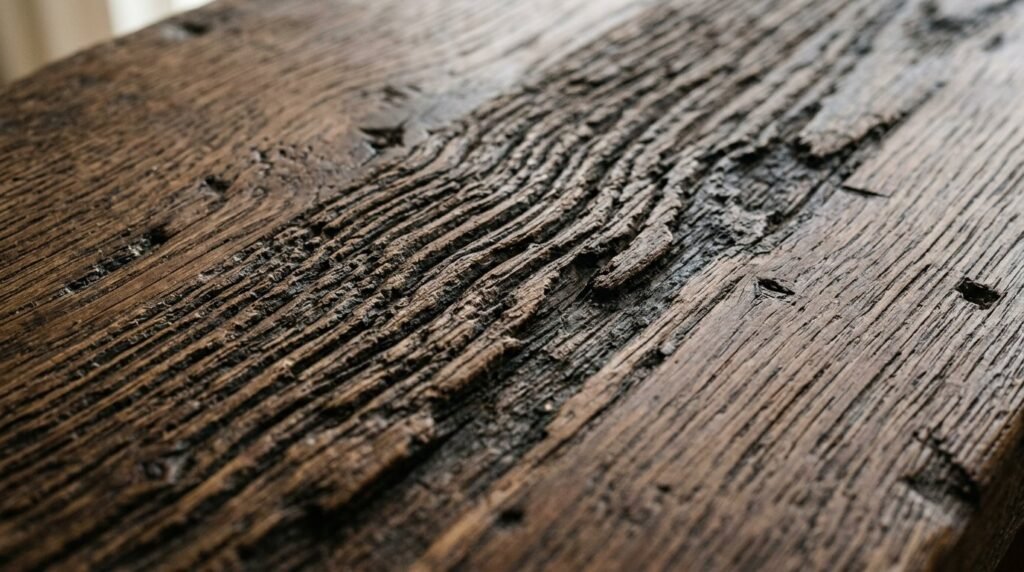
This finishing technique removes the softest parts of the wood grain, leaving the harder wood and a textured surface. It hides scratches and dents exceptionally well because the floor already has a distressed feel. In my experience, this is the best finish for families who don’t want to worry about every little scuff.
Example: Shaw Floors has a variety of wire-brushed oak and hickory collections.
Action: Use a vacuum with a soft brush attachment to get dust out of the textured grain.
Cost/Time: Expect to pay a small premium of $1 to $2 more per foot than smooth wood.
Contrarian Note: The texture can feel slightly rough on bare feet or delicate socks.
17. Thin Brick Floors
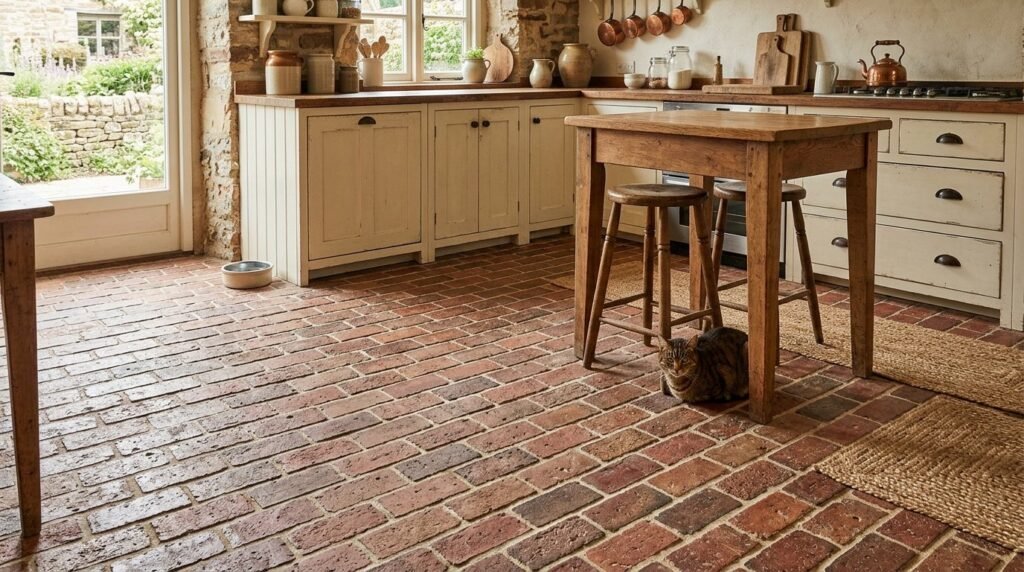
Using real clay brick veneers on the floor creates a historic, “old-world” kitchen vibe. It is incredibly durable and provides a completely unique look. I’ve seen this work beautifully in mudrooms that transition directly into the kitchen.
Example: Old Mill Brick offers “BrickWebb” sheets that make installing a brick floor much faster.
Action: Use a specialized brick sealer that prevents the porous clay from absorbing kitchen grease.
Cost/Time: $10 to $15 per square foot and requires a professional who is comfortable with masonry.
Contrarian Note: Brick is very hard and very cold, making it less comfortable for those who stand while cooking.
18. Blue Encaustic Patterns
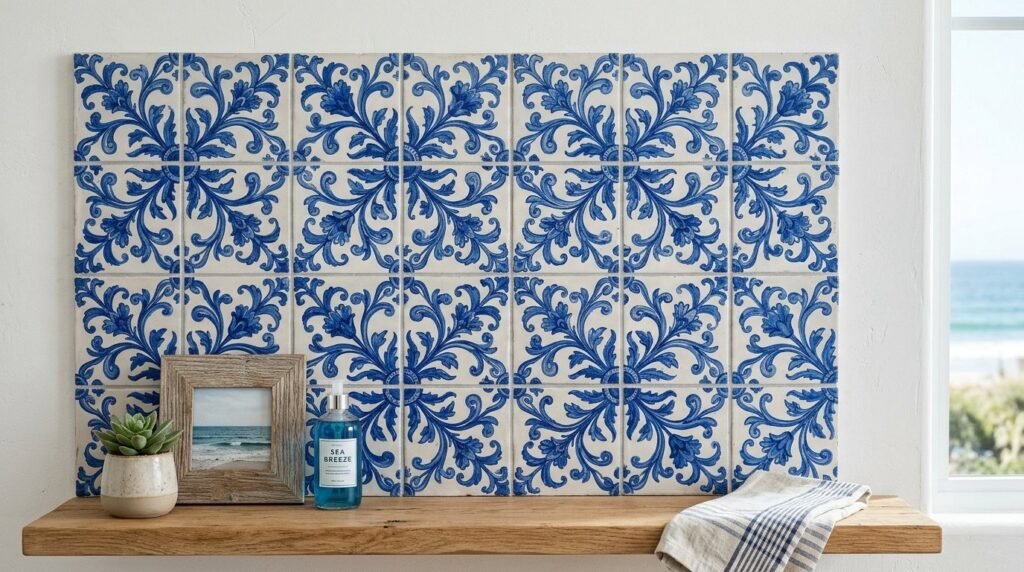
Blue and white patterns are trending as people move away from all-gray interiors. It adds a splash of color that feels classic and coastal. I’ve noticed that these patterns hide small crumbs and debris remarkably well between cleanings.
Example: Bedrosian Tile’s “Enchante” series offers a beautiful dusty blue pattern that isn’t too overwhelming.
Action: Keep your cabinetry simple and neutral when using a patterned floor to avoid visual chaos.
Cost/Time: $7 to $12 per square foot for porcelain versions which are easier to maintain than cement.
Contrarian Note: Patterned floors can be a deterrent for some buyers if you plan to sell your home within two years.
19. Acid Stained Concrete
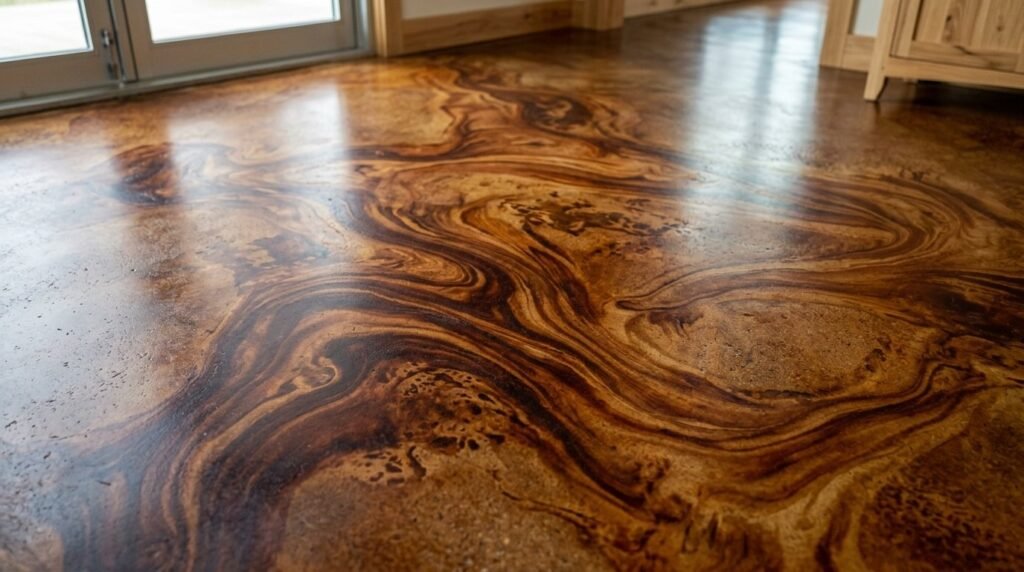
Unlike paint, acid stain reacts chemically with the concrete to create permanent, variegated colors. It looks more like natural stone or aged leather than a flat gray slab. In my experience, it is a great way to save money if you already have a decent concrete subfloor.
Example: Kemiko Stone Tone Stain is the industry standard for achieving those deep, mottled effects.
Action: Always do a test patch in a closet area to see how your specific concrete reacts to the acid.
Cost/Time: $3 to $8 per square foot depending on the complexity of the design.
Contrarian Note: The final color is unpredictable and depends entirely on the mineral content of your concrete.
20. Bleached Wood Tones
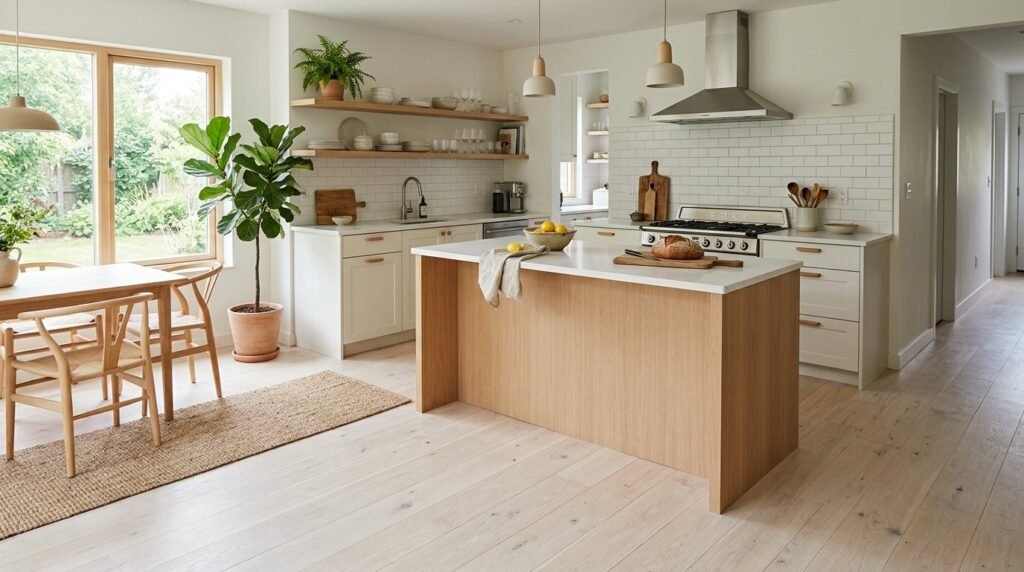
Light, airy floors make a room feel expansive and clean. This “Scandi” look involves using light oaks or maple with a very pale finish. I’ve seen many people benefit from this style in kitchens with low natural light.
Example: Pergo offers several light-toned laminates that are remarkably water-resistant.
Action: Choose a matte or “extra matte” finish to avoid a cheap, shiny look on light wood.
Cost/Time: $4 to $8 per square foot and a relatively fast installation.
Contrarian Note: Light floors show dark pet hair and dirt much faster than medium-toned floors.
21. Espresso Walnut Finish
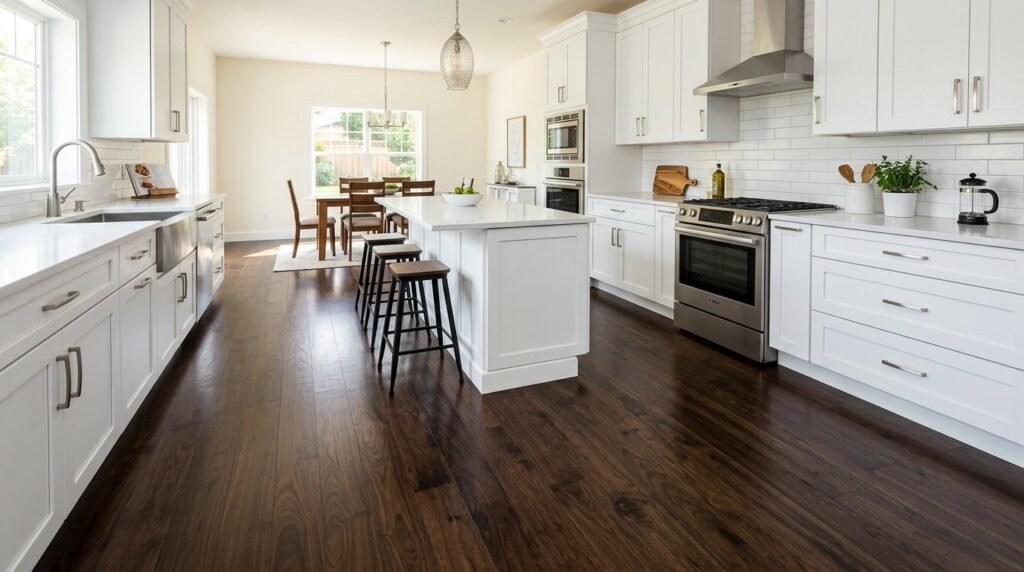
For a high-end, luxurious feel, deep dark wood provides a stunning contrast against white or cream cabinets. Walnut has a smooth grain and a rich color that feels very formal. I often see this in high-end penthouse remodels.
Example: Bellawood Select Walnut offers a deep, natural color without the need for heavy staining.
Action: Dust daily with a microfiber mop, as dark floors show every speck of dust.
Cost/Time: $10 to $15 per square foot for solid walnut.
Contrarian Note: Dark floors can make a small kitchen feel like a cave if the lighting isn’t perfect.
22. Satin Matte Sealant
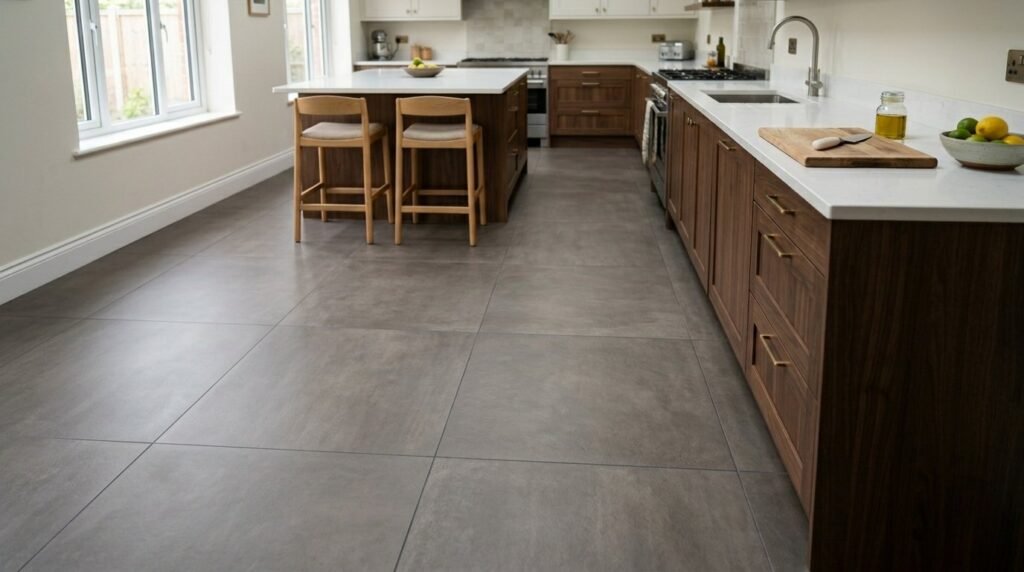
Moving away from high-gloss finishes, the industry is shifting toward satin or matte sealants. They hide micro-scratches and footprints much better than shiny surfaces. In my experience, this is the most practical choice for a real-life kitchen.
Example: Bona Traffic HD is a professional-grade matte finish that is incredibly tough.
Action: Apply three coats of finish instead of the standard two for a kitchen floor that lasts longer.
Cost/Time: Adds about $1 per square foot to the finishing cost of the floor.
Contrarian Note: Matte finishes don’t reflect light, so your room might feel slightly dimmer than with a gloss finish.
23. High Gloss Resin
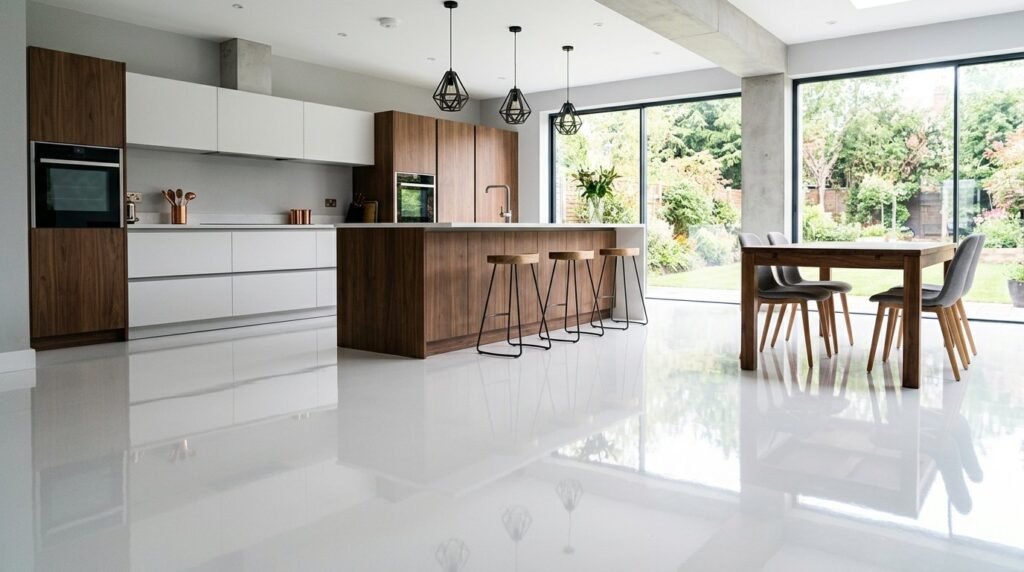
For a completely seamless, waterproof, and modern look, epoxy resin is an interesting choice. It can be poured in any color and creates a solid surface with no joints. I’ve seen this used in ultra-modern “white-box” designs with great success.
Example: Leggari Products offers DIY epoxy kits that allow for artistic, metallic, or solid finishes.
Action: Ensure your subfloor is perfectly rigid, as any movement will cause the resin to crack.
Cost/Time: $7 to $15 per square foot and takes about 4 days to cure fully.
Contrarian Note: Resin is very slippery when wet, so you must add an anti-skid additive to the final coat.
24. Tumbled French Limestone
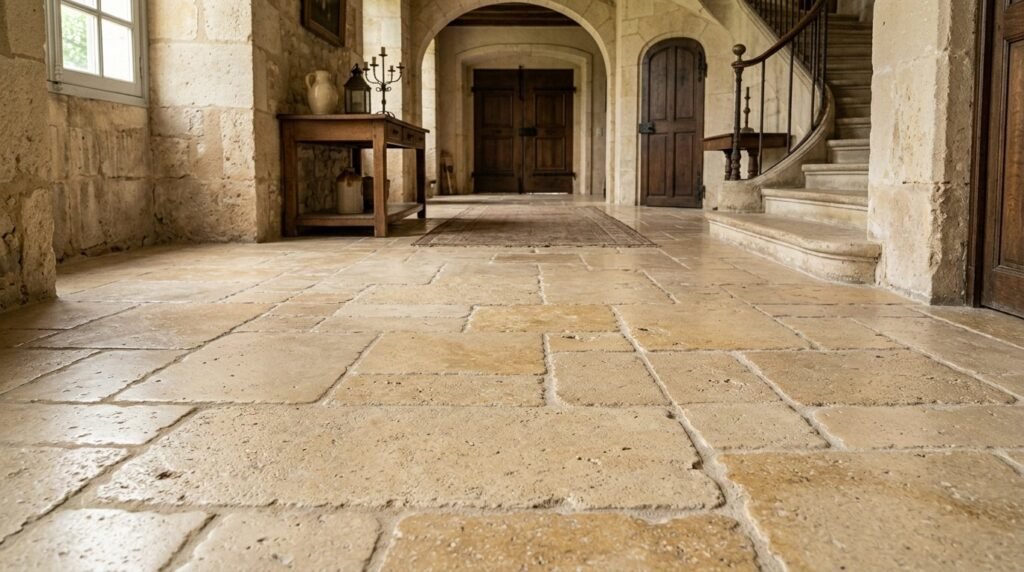
Tumbled edges give limestone an aged look as if it has been walked on for generations. The soft beige and cream tones provide a very high-end “chateau” aesthetic. I’ve noticed that limestone is naturally cool, which is wonderful in hot climates.
Example: French Heritage Limestone from authentic stone suppliers provides that rough-hewn, historical edge.
Action: Use a wide grout joint (1/4 inch) to complement the irregular, tumbled edges of the stone.
Cost/Time: $20 to $35 per square foot. It is a slow, expensive installation.
Contrarian Note: Limestone is soft and can “spall” or flake if exposed to heavy moisture or improper cleaning.
25. Porcelain Wood Planks
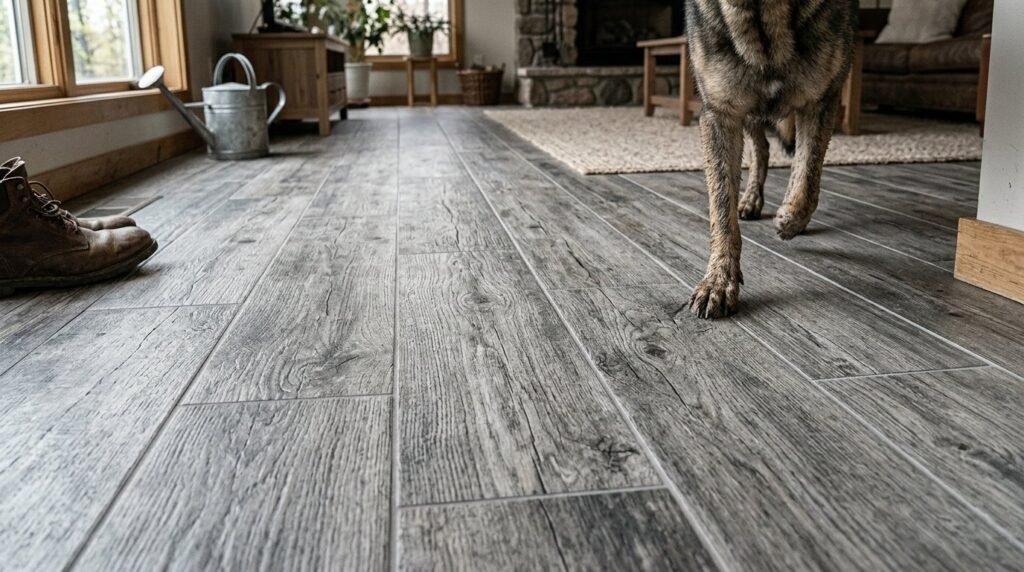
These combine the beauty of hardwood with the indestructible nature of porcelain tile. They are the ultimate solution for people who love the wood look but hate the maintenance. I’ve seen many people benefit from these in “wet” kitchens where children and pets are constantly coming in from outside.
Example: Marazzi’s “American Reserve” collection has incredibly realistic grain and knot details.
Action: Buy planks of varying lengths and widths if available to make the “wood” look more authentic.
Cost/Time: $5 to $10 per square foot and requires a professional tile setter.
Contrarian Note: Unlike real wood, you cannot sand and refinish these if you decide you want a different color in ten years.
Comparison of Popular Kitchen Floor Options
| Material | Average Cost/Sq Ft | Durability | DIY Friendly? | Best For |
| Luxury Vinyl (LVP) | $3 – $7 | High | Yes | Budget & Waterproofing |
| Porcelain Tile | $5 – $12 | Extreme | No | Long-term Resale |
| Hardwood | $8 – $20 | Moderate | No | Warmth & Aesthetic |
| Concrete | $5 – $10 | Extreme | No | Industrial Style |
| Cork | $4 – $8 | Moderate | Yes | Comfort & Sustainability |
Frequently Asked Questions
Which kitchen floor is the easiest to maintain?
Luxury vinyl plank and porcelain tile are the winners here. Both can be mopped with standard cleaners and do not require periodic sealing like natural stone or wood. In my experience, LVP is slightly easier because it doesn’t have grout lines that can discolor over time. You simply vacuum up the crumbs and use a damp mop once a week to keep it looking new.
Can I put hardwood in a kitchen?
Yes, but you must be diligent. I’ve seen many people benefit from hardwood’s warmth, but you have to wipe up spills immediately. Choosing a species like hickory or white oak with a tough factory finish will help. I’ve noticed that engineered hardwood is often better for kitchens because it is more stable than solid wood when exposed to humidity changes.
What is the most durable floor for a home with large dogs?
Porcelain tile is virtually scratch-proof and is the best choice for heavy claws. If you want a wood look, go with “strand-woven” bamboo or a high-quality LVP with a thick wear layer. Avoid soft woods like pine or cherry, as they will show every single scratch within weeks.
Is natural stone too cold for a kitchen?
Stone does hold the temperature of the room, so it can feel chilly in the winter. However, it is an excellent conductor of heat. Installing an electric radiant heating system under your tile floor is a common and effective solution. It costs about $500 to $1,000 for a standard kitchen but makes the floor incredibly comfortable.
How much extra flooring should I buy for my remodel?
The standard rule is to buy 10% more than your square footage to account for cuts and waste. If you are doing a complex pattern like herringbone or chevron, you should increase that to 15%. I always recommend keeping one extra box in your attic or garage in case a tile breaks or a plank gets damaged years down the road.
What flooring increases home value the most?
Real hardwood and natural stone are the top choices for ROI. Buyers view these as “permanent” and high-quality materials. While LVP is popular, it is still seen as a “synthetic” choice in luxury markets. If you are remodeling to sell, sticking with neutral-toned hardwood is usually the safest bet for a high return.
Does the floor have to match the rest of the house?
It doesn’t have to be identical, but it should be harmonious. If you have light oak in your living room, you might choose a complementary stone or a darker wood for the kitchen. I’ve noticed that using the same flooring throughout an open-concept floor plan makes the entire home feel much larger and more cohesive.
Are dark floors a bad idea in a kitchen?
Dark floors are beautiful but they are “high-maintenance” in terms of cleaning. They show every drop of flour, every dog hair, and every dried water spot. If you don’t mind quick daily cleaning, they offer a stunning look. If you prefer a “low-effort” home, go with a medium-toned wood or a variegated tile.
How long does it take to replace a kitchen floor?
A standard 200-square-foot kitchen usually takes 3 to 5 days. This includes removing the old floor, prepping the subfloor, laying the new material, and letting any adhesives or grouts dry. If you are doing a poured floor like concrete or resin, it can take up to a week due to curing times.
What is the cheapest way to update a kitchen floor?
If your current floor is level and in good shape, you can often lay luxury vinyl planks right over the top of it. This saves you hundreds of dollars in demolition and disposal fees. It’s a great weekend project for a DIYer and provides a completely new look for just a few hundred dollars.
Is tile better than wood for resale?
In “wet” areas like kitchens, many buyers actually prefer tile because they don’t have to worry about water damage from a leaking dishwasher or a spilled sink. However, in open-concept homes, the seamless look of wood from the living room into the kitchen is currently very desirable. Both offer excellent resale value if installed professionally.
Why is my new grout cracking?
This usually happens if the subfloor is flexing or if the grout was mixed with too much water. In my experience, using a “large format” tile on a standard plywood subfloor without a proper cement backer board is a recipe for cracked grout. Always ensure your installer uses a high-quality “decoupling” membrane like Schluter-Ditra.
Transforming your kitchen begins with the surface beneath your feet. Whether you choose the timeless elegance of white oak or the rugged durability of porcelain, the right floor will anchor your design and provide a foundation for years of memories. I’ve seen how small changes like these can completely transform a space, turning a dated room into a modern sanctuary. Take your time with samples, test them in your own lighting, and choose the material that fits both your style and your daily habits. Save this post on Pinterest so you can reference these Kitchen Flooring Trends when you meet with your contractor.

Sloane Whitaker is the Editor-in-Chief at Home Wall Trends, leading editorial direction with over a decade of experience in residential interior design and home styling. Her specialty is space planning and layout, the unglamorous fundamentals that make a beautiful room actually function. A graduate of the New York School of Interior Design, Sloane has styled over 200 client homes before turning her focus to digital publishing. Her editorial standard: “If a reader can’t picture themselves doing it on a Saturday afternoon, we haven’t explained it well enough.”