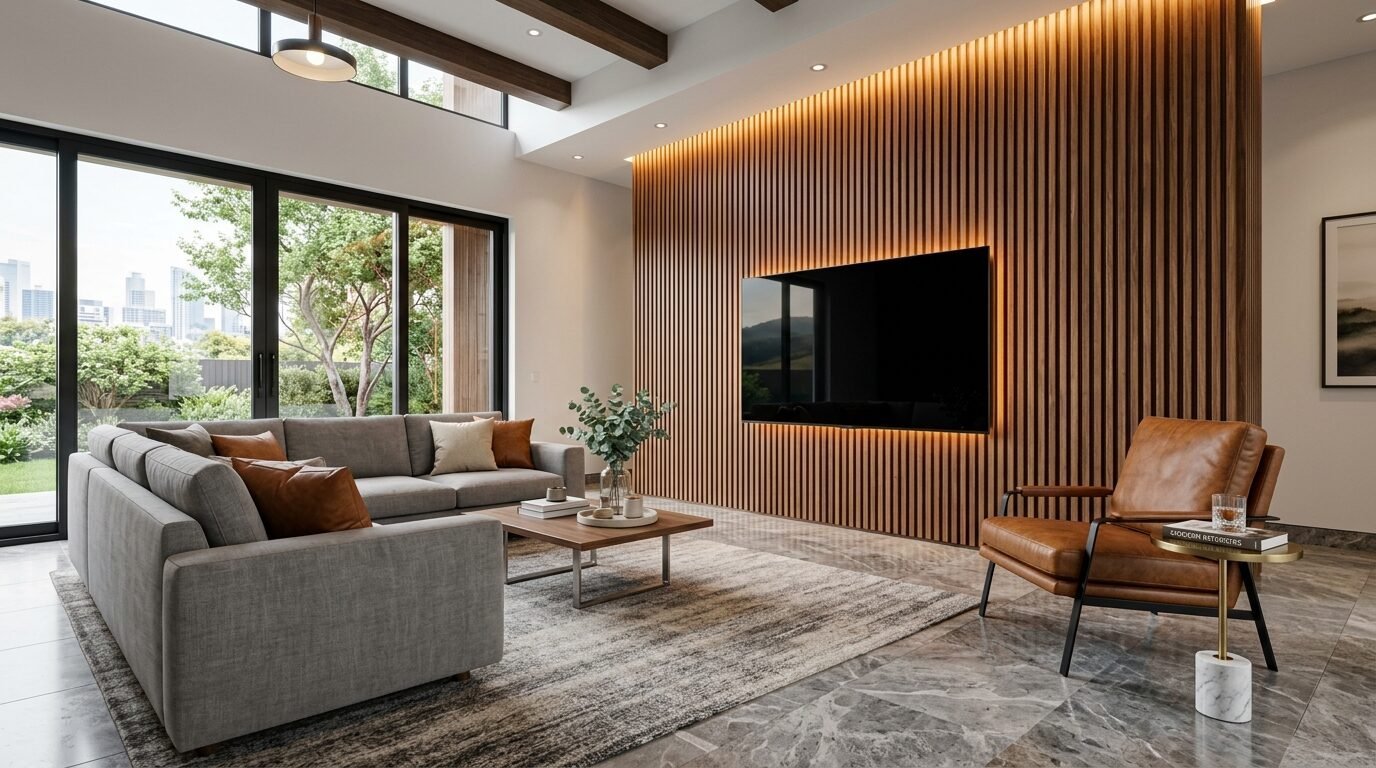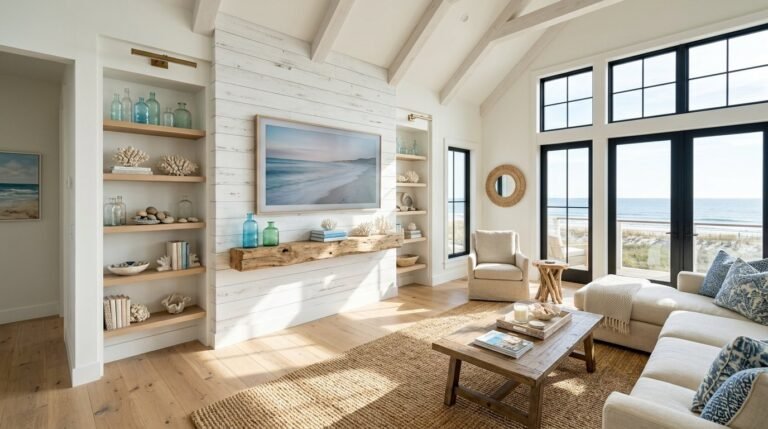
Living rooms serve as the heart of the home. For many of us, the television is a central part of that space. However, a large black screen often feels like a cold interruption in a warm farmhouse setting. I have spent years helping homeowners bridge the gap between high tech screens and rustic comfort. The goal is to make the technology feel like it belongs there. You want a space that looks as good when the TV is off as it does during movie night.
In my own home, I struggled with a massive wall that felt empty despite a 65 inch screen. I tried different layouts until I found the right balance of texture and scale. This guide covers 25 practical ways to design your media area. We will look at materials like shiplap, reclaimed wood, and stone. We will also talk about furniture choices and decorative accents that soften the look of electronics.
Executive Summary of Farmhouse Media Wall Strategies
Creating a farmhouse media wall requires a focus on texture and layers. Most successful designs use a mix of hard and soft elements. You might pair a sleek TV with rough-cut wood shelves or a soft woven basket.
I have found that the most popular choice remains the shiplap wall behind the TV. It provides a clean, linear backdrop that adds interest without being distracting. Another major trend involves styling wall decor around a fireplace with a TV. This requires careful planning for height and heat management.
In this article, you will see 25 specific tips. Each one focuses on making your living room with a TV wall feel intentional and curated. We will cover budget-friendly DIY options and high-end custom built-ins. Whether you have a vaulted ceiling or a small apartment wall, these ideas will work for you.
| Feature | Average Cost | Effort Level | Best For |
| Shiplap Backdrop | $200 – $600 | Moderate | Classic Farmhouse Look |
| Reclaimed Wood | $400 – $1,200 | Moderate | Rustic Texture |
| Stone Surround | $1,500 – $5,000 | High | Luxury Focal Point |
| Floating Shelves | $50 – $300 | Easy | Small Space Storage |
| Barn Doors | $300 – $800 | Moderate | Hiding the TV |
1. Install White Shiplap Behind the TV
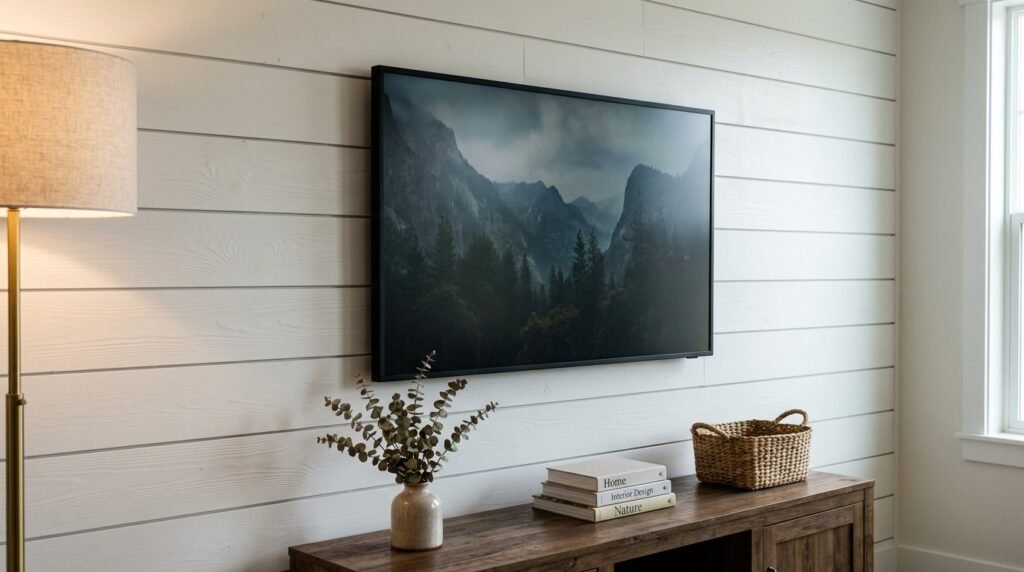
White shiplap is the gold standard for farmhouse interiors. It creates a bright and airy feel while adding subtle architectural detail. When you use a shiplap wall behind the TV, the horizontal lines help the room feel wider.
I usually recommend six-inch or eight-inch planks. These wider boards feel more modern and less busy than thin ones. In my experience, painting the shiplap in a matte or eggshell finish prevents glare from the screen. It also provides a neutral base that allows your colorful decor to stand out.
2. Arrange Symmetrical Floating Shelves
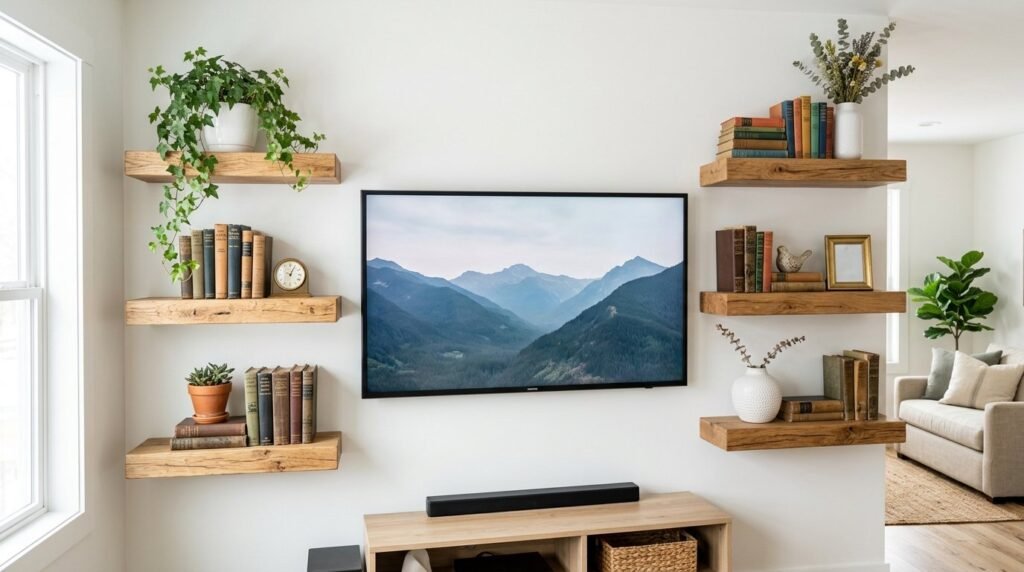
Balance is vital in a farmhouse living room with a TV wall. Adding floating wood shelves on both sides of the screen creates a sense of order. Use thick, chunky wood beams for these shelves.
I have seen people use light oak or dark walnut to contrast with white walls. On these shelves, place items in groups of three. Mix books, small plants, and ceramic jars. This draws the eye away from the TV and toward your personal treasures.
3. Use a Reclaimed Wood Mantel
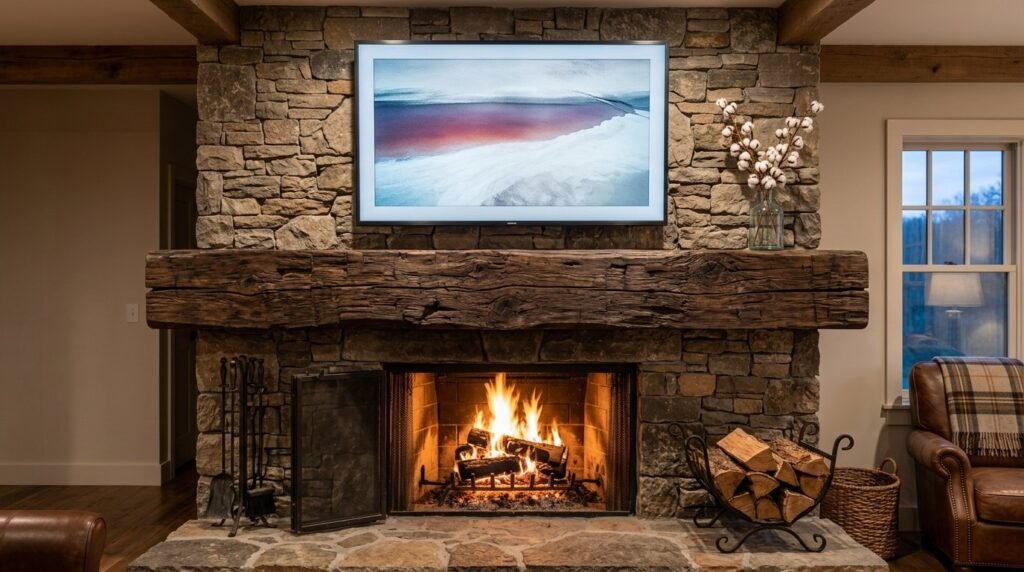
If your TV sits above a fireplace, the mantel is your best friend. A heavy reclaimed wood mantel acts as a visual anchor. It separates the heat of the fire from the electronics above.
I once worked with a family who used a beam from an old barn in Kentucky. The history and texture of that wood made the modern TV feel less out of place. It provides a natural ledge for seasonal decor like garland or small framed photos.
4. Design a Modern Farmhouse Media Wall
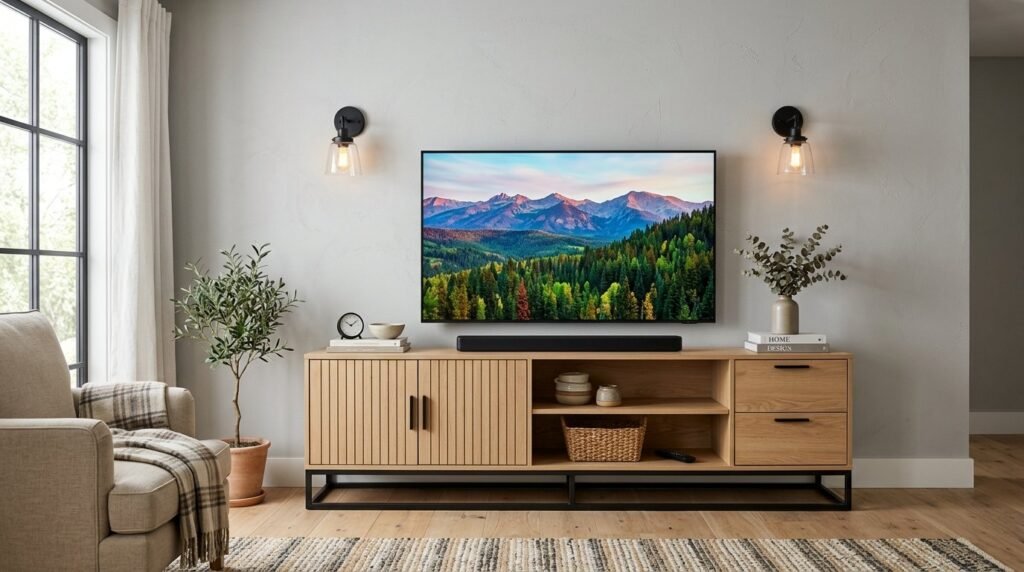
A modern farmhouse media wall blends clean lines with rustic materials. Think black metal hardware paired with light wood. You might use a sleek black TV stand with wooden doors.
Keep the colors simple. Stick to whites, blacks, and greys. I’ve found that using black picture frames around the TV helps the screen blend in when it is turned off. This look is perfect for those who want a farmhouse feel without the clutter.
5. Extend Stone to the Ceiling
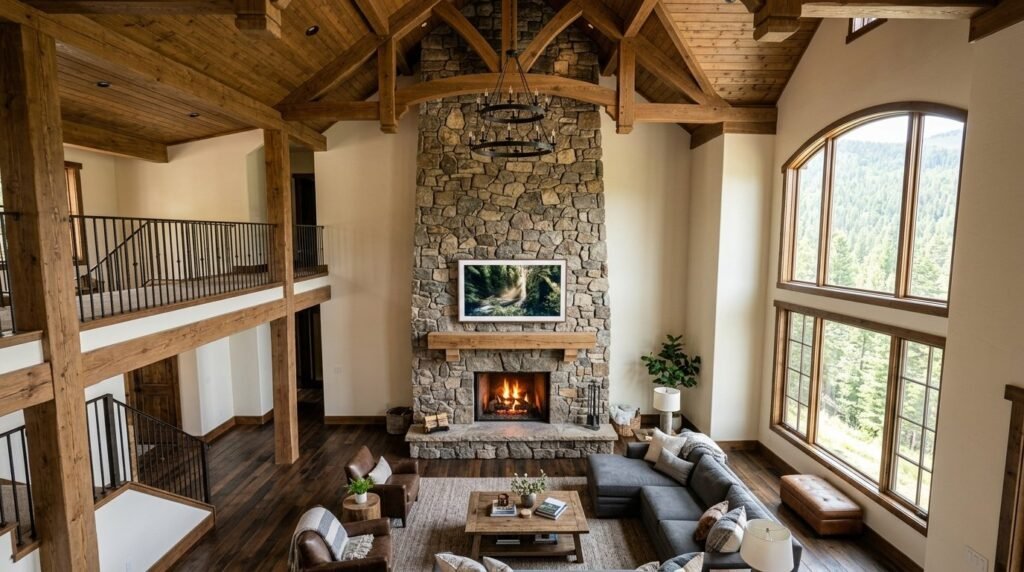
For rooms with vaulted ceilings, a full-height stone wall is breathtaking. Use natural fieldstone or stacked ledge stone. This creates a massive focal point that dwarfs the TV.
When the stone goes all the way up, it emphasizes the height of the room. I noticed that this works best when the TV is recessed into the stone slightly. It makes the installation look custom and high-end.
6. Hang Sliding Barn Doors
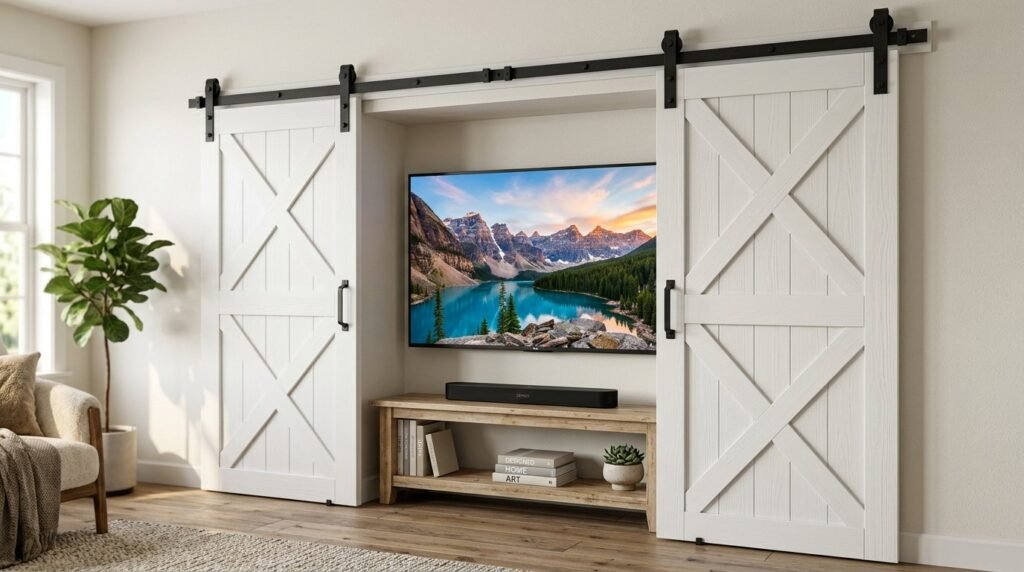
Some people prefer to hide their TV when it is not in use. Sliding barn doors are the perfect solution for a farmhouse TV wall. You can mount a track above the TV and use two small doors to cover the screen.
I’ve seen this work beautifully in formal living rooms. When the doors are closed, you have a beautiful wood feature. When you are ready for a movie, they slide open to reveal the screen. It is functional and adds a huge amount of character.
7. Frame the TV with a Gallery Wall
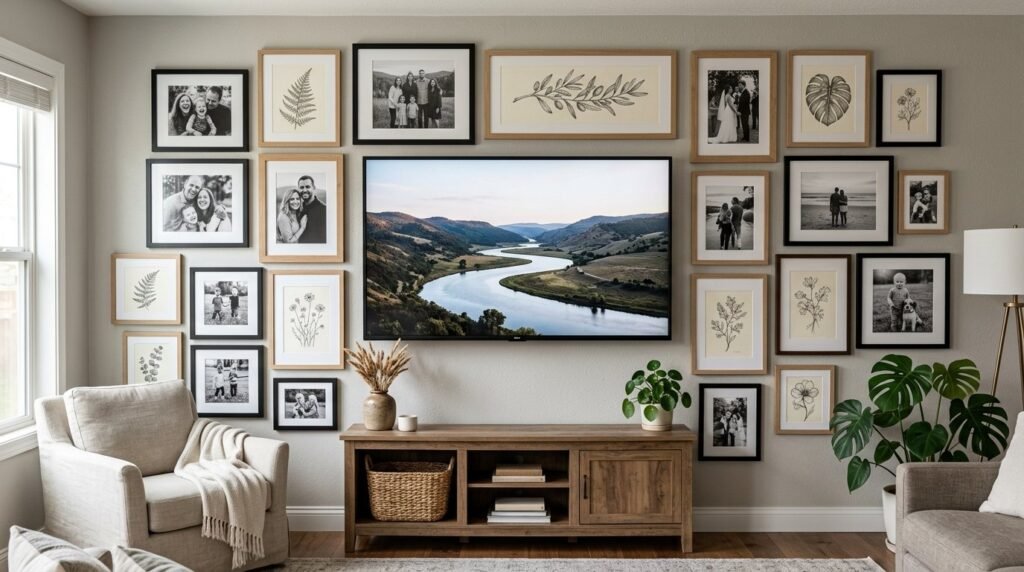
If you don’t want the TV to be the only thing on the wall, surround it with art. A gallery wall is a great way to incorporate wall decor around a fireplace with a TV. Use a mix of family photos, landscape paintings, and wooden signs.
The key is to keep the spacing consistent. I suggest using similar frame colors to keep it from looking messy. This makes the TV look like just another piece of art in your collection.
8. Build Custom Cabinets Below
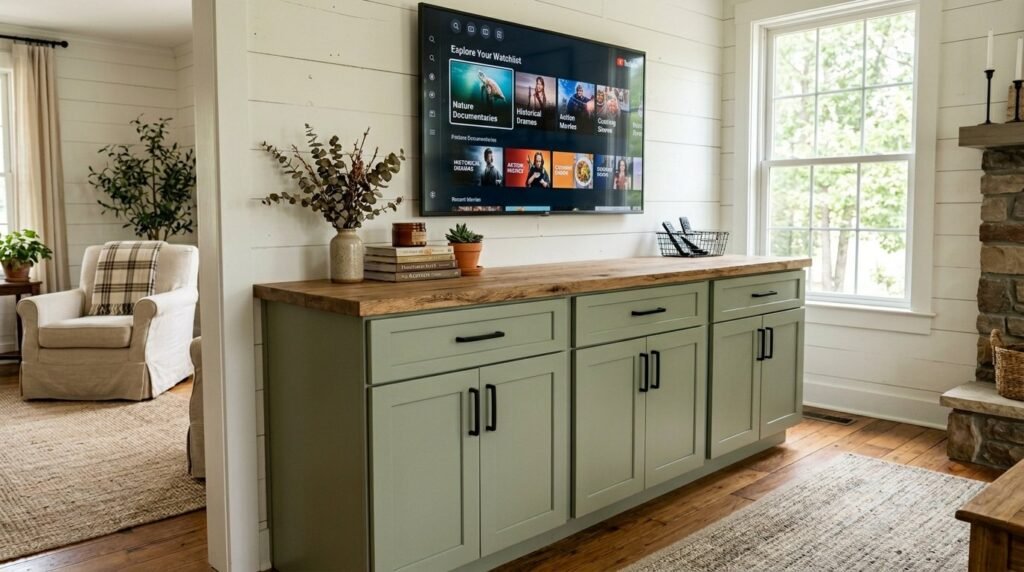
A solid foundation makes any TV wall look better. Instead of a small stand, consider wall-to-wall lower cabinets. These provide plenty of storage for wires, gaming consoles, and blankets.
I often recommend Shaker-style cabinet doors for that classic farmhouse look. Painting the cabinets a soft sage green or navy blue can add a pop of color to an otherwise neutral room.
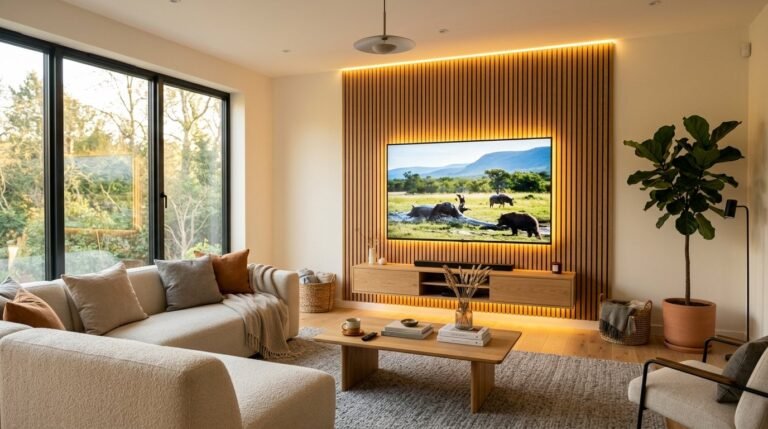
9. Add Vertical Shiplap for Height
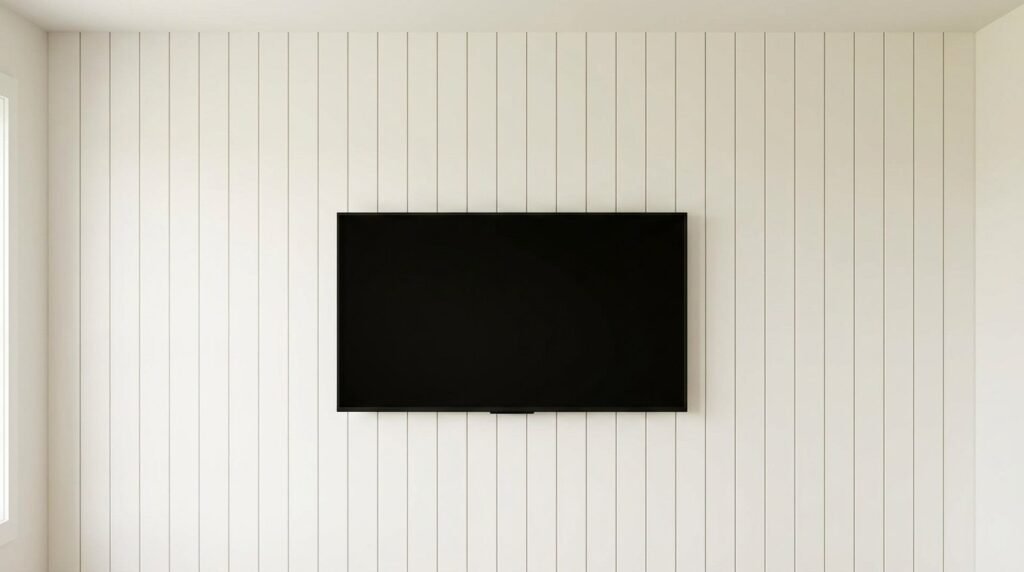
While horizontal planks are common, vertical shiplap is a rising trend. It makes short ceilings feel much taller. This works well for a farmhouse TV wall design in a basement or a small cottage.
I have tried this in a small guest house and it completely changed the feel of the room. It feels a bit more modern and tailored than the traditional horizontal style.
10. Integrate Woven Baskets for Texture
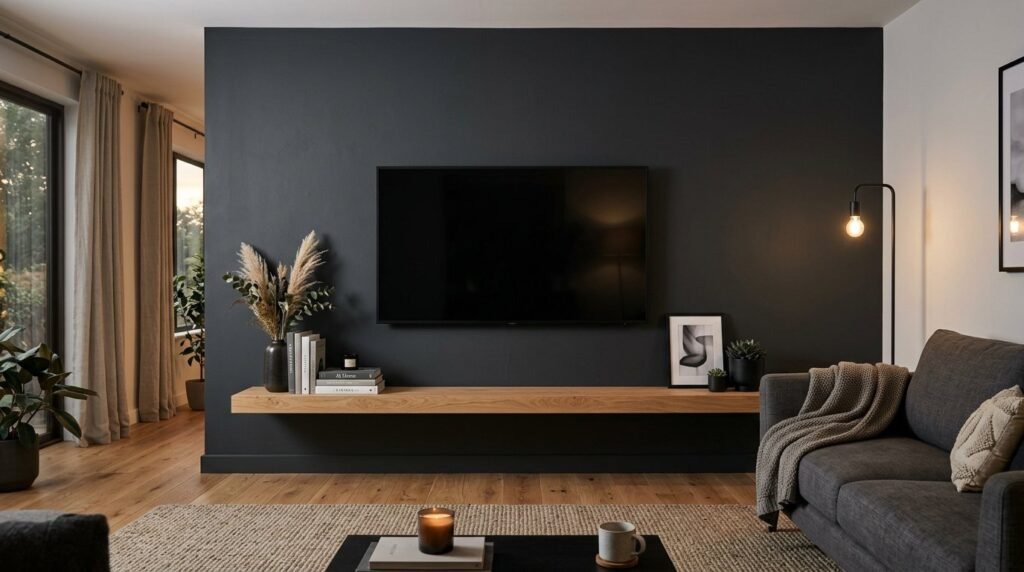
Electronics are hard and cold. Farmhouse style is soft and warm. To bridge this, place large woven baskets under your TV stand or on lower shelves.
Use them to store extra pillows or kids’ toys. The natural fiber adds a different texture that balances the glass and plastic of the TV. I find that seagrass or willow baskets work best for this.
11. Paint an Accent Wall in Charcoal
A dark accent wall can make a TV almost disappear. If you use a dark charcoal or black paint behind the screen, the black frame of the TV blends right in.
I’ve seen this work in modern farmhouse designs where the rest of the room is bright white. It creates a bold contrast that looks very sophisticated. Just make sure you have enough lighting so the room doesn’t feel too dark at night.
12. Mount Sconces on Each Side
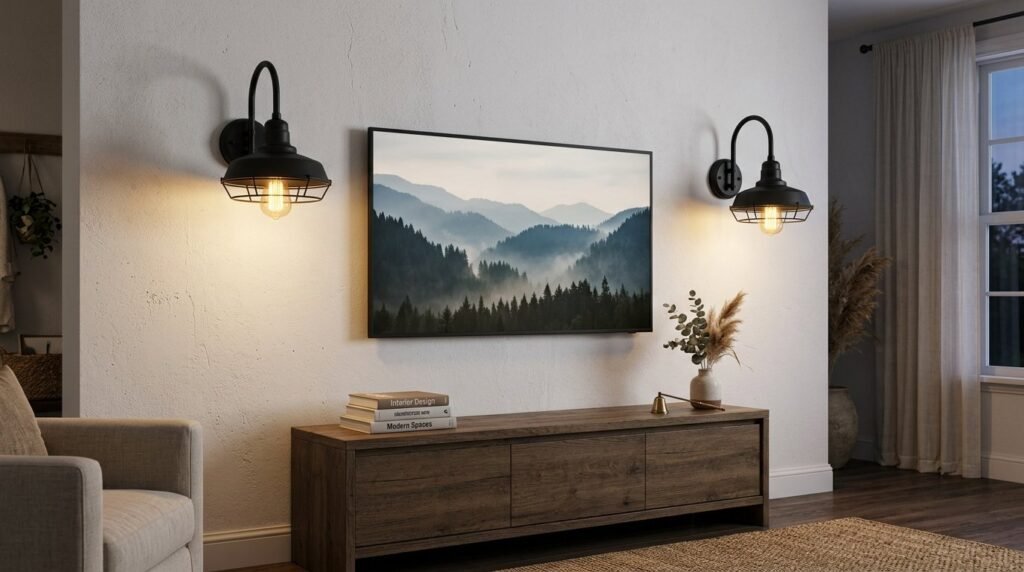
Lighting is often overlooked in media wall design. Adding hardwired or plug-in sconces on either side of the TV adds a warm glow.
Go for gooseneck lights or industrial style lanterns. I’ve noticed that having these lights on low during a movie reduces eye strain. It also makes the TV wall feel like a permanent part of the home’s architecture.
13. Use an Antique Dresser as a Stand
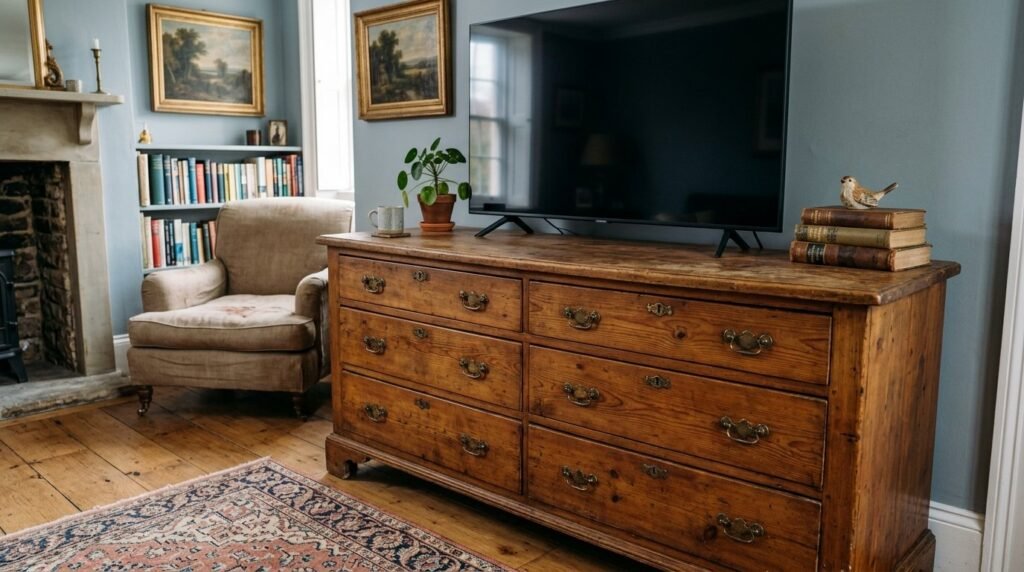
One of my favorite TV stand wall ideas is to repurpose an old piece of furniture. An antique wooden dresser or a long buffet table provides more character than a store-bought TV stand.
I once used an old pine sideboard for a client. We drilled a small hole in the back for wires. It looked incredible and provided deep drawers for storage. It’s a great way to bring a piece of history into your modern living room.
14. Place Oversized Vases on the Floor
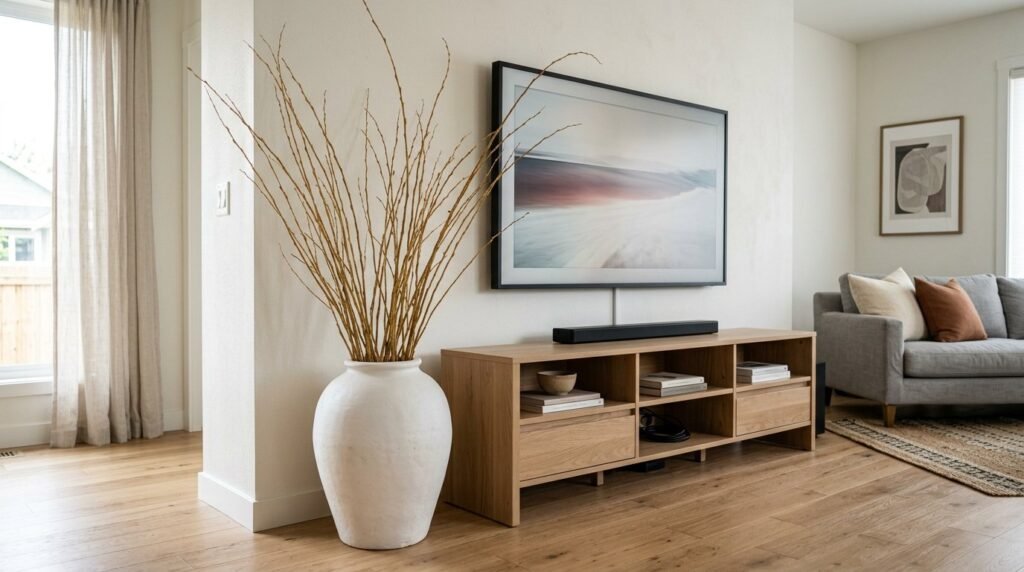
If your TV wall feels a bit top-heavy, add something to the floor. Large ceramic or glass vases can sit next to your TV stand.
Fill them with tall dried branches or eucalyptus. This adds height and organic shapes to the corners of the room. I’ve seen this work well to fill the empty space between the TV stand and the side walls.
15. Create a Window Pane Mirror Grid
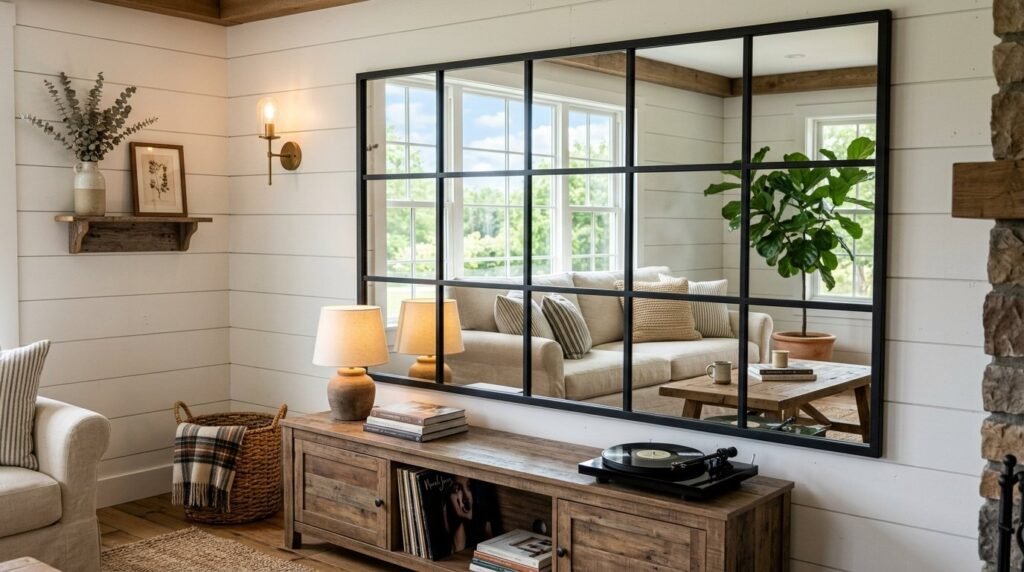
Mirror grids look like old window frames and are a staple of farmhouse decor. Placing two of these on either side of a TV reflects light and makes the room feel larger.
It is a simple way to add wall decor around a fireplace with a TV without adding more “stuff.” The mirrors catch the light from nearby windows and brighten up the media area during the day.
16. Incorporate Reclaimed Beam Shelving
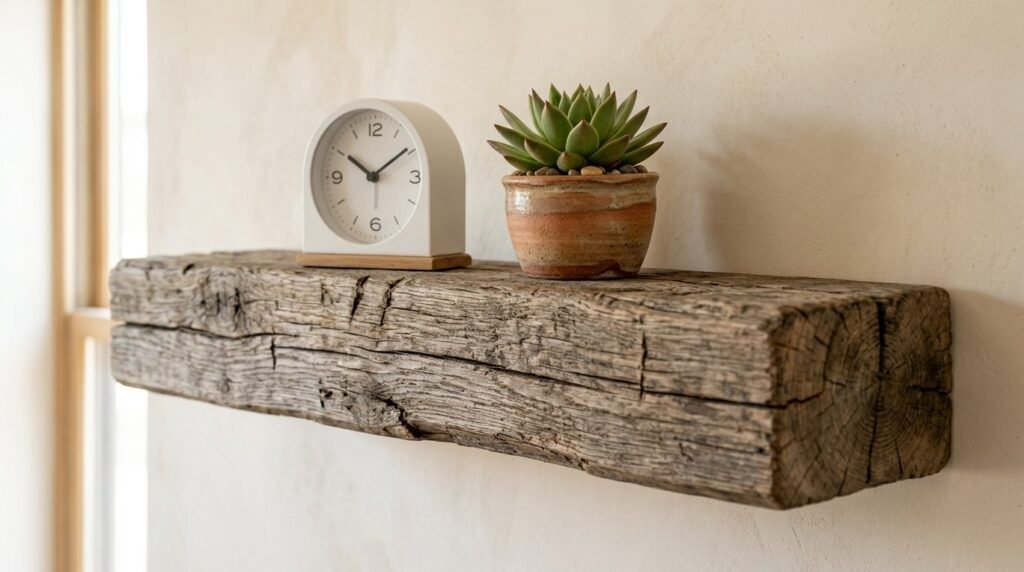
For a very rustic look, use thick reclaimed beams as your only shelving. These heavy pieces of wood have knots and cracks that tell a story.
I’ve seen these mounted with hidden brackets so they look like they are floating. They are strong enough to hold heavy decor and add a massive amount of visual weight to a living room with a TV wall.
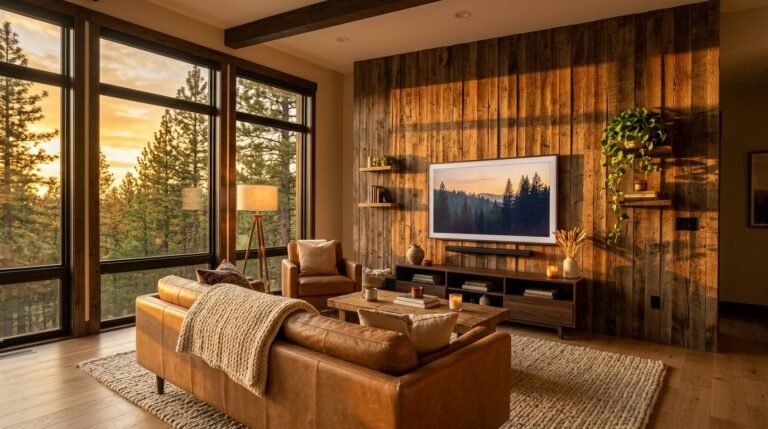
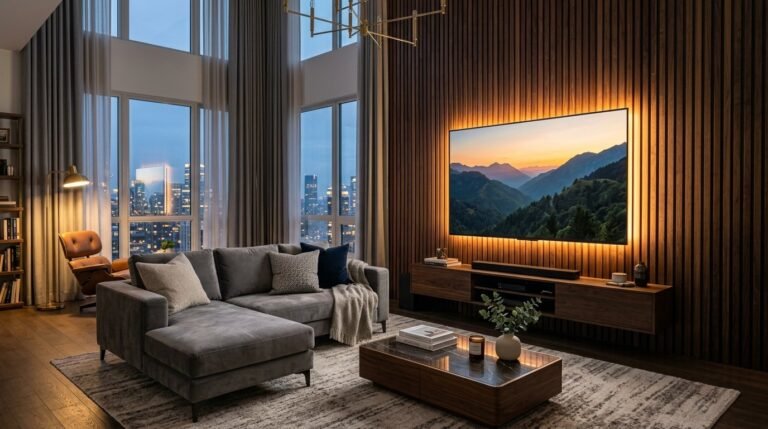
17. Use a Dark Wood Shiplap
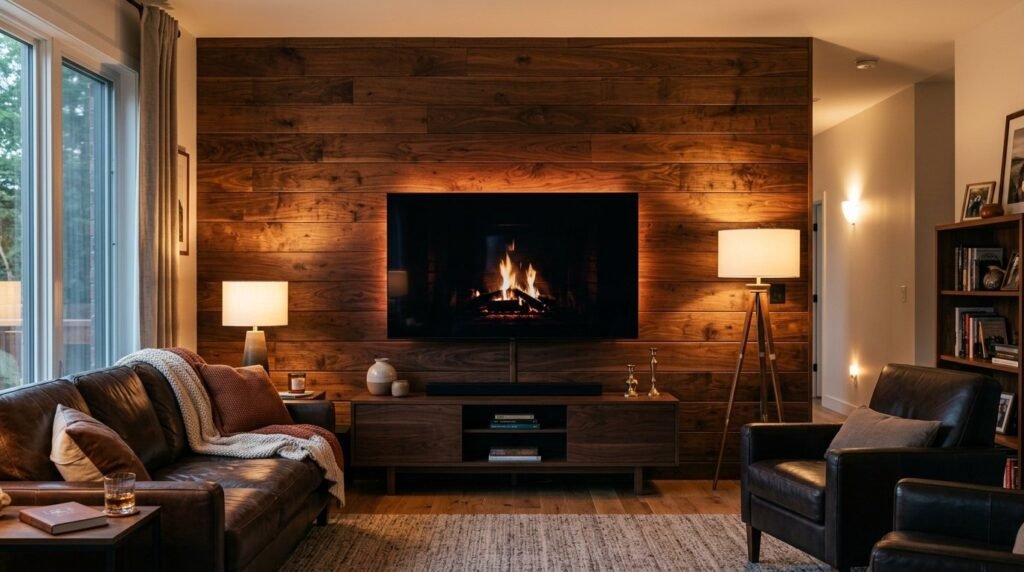
While white is popular, dark wood shiplap is stunning for a cozy den. Think walnut or stained cedar. It creates a “moody farmhouse” vibe that feels very high-end.
In my experience, dark wood backdrops are great for home theaters. They absorb light and keep the focus on the screen while still providing that rustic texture we love.
18. Hang a Large Clock Above the TV
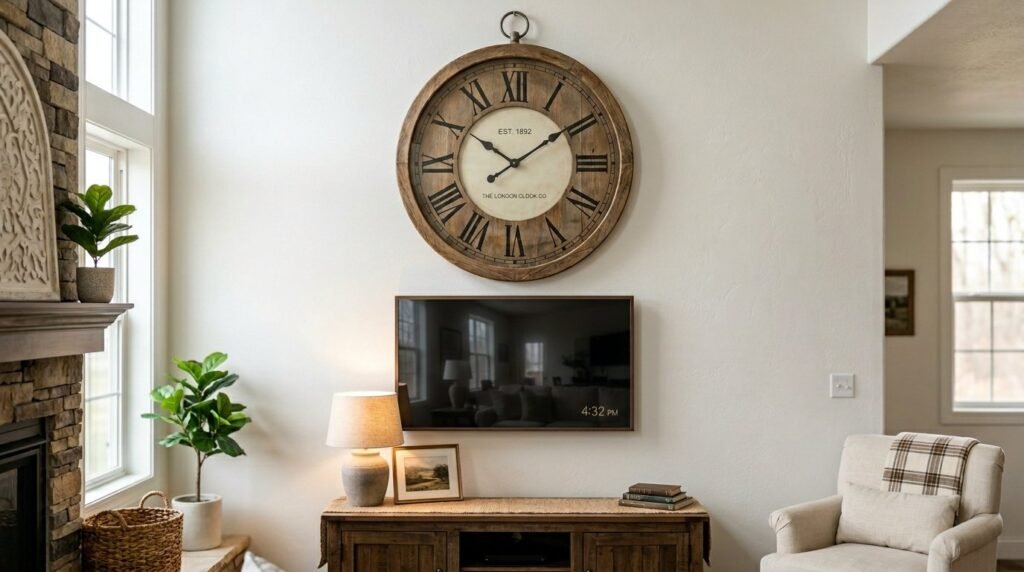
If your TV is mounted lower, you might have a gap above it. A large oversized wooden clock is a classic farmhouse element.
It fills the space perfectly and adds a functional piece of art. I recommend a clock that is at least 24 inches in diameter to ensure it has enough scale for the wall.
19. Install Brick Veneer
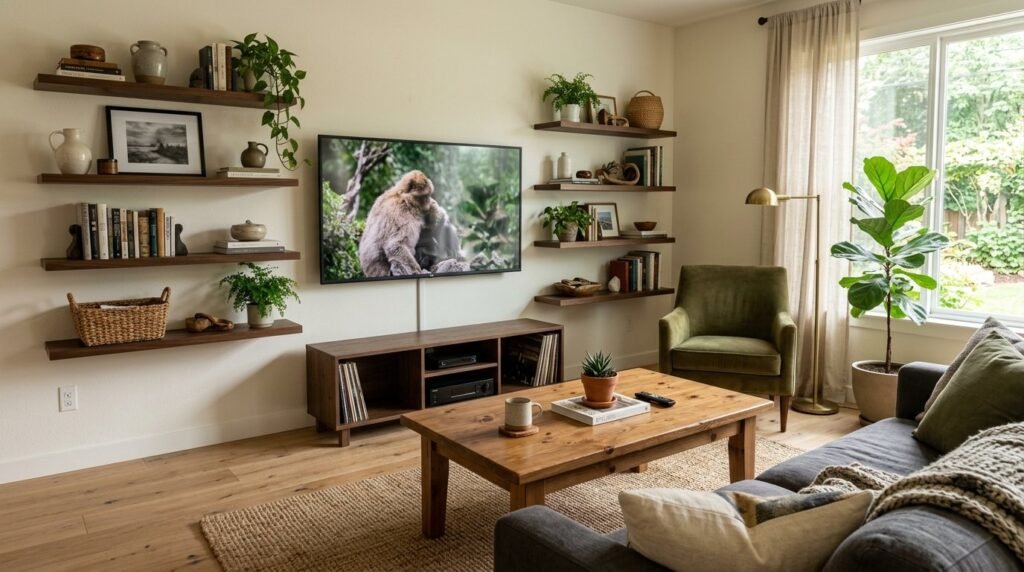
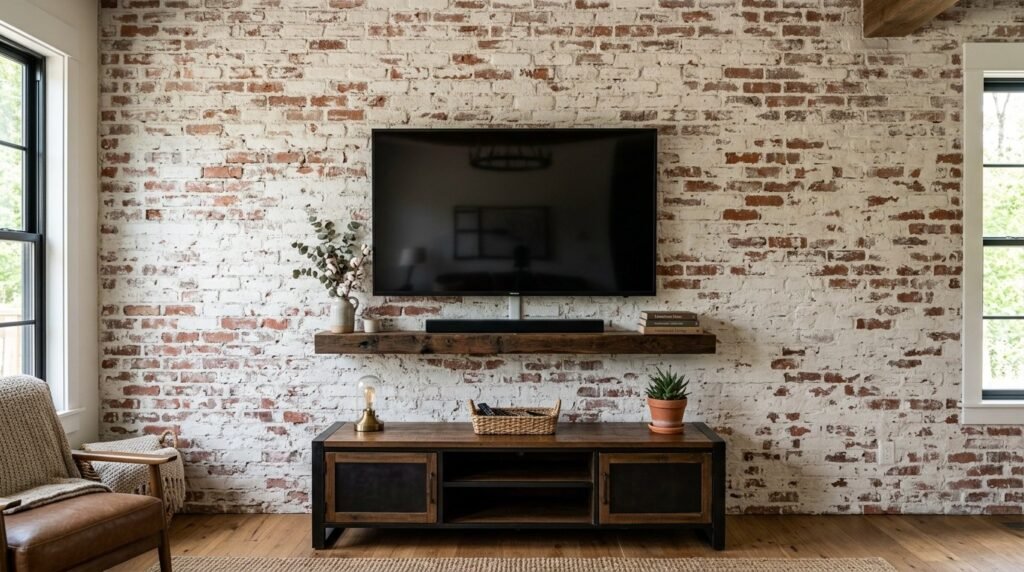
Brick adds a timeless, industrial farmhouse feel. You can install thin brick veneers over your existing drywall.
Painting the brick white or doing a “German smear” technique gives it an aged look. I’ve seen this used behind a modern farmhouse media wall to add a layer of history to a new construction home.
20. Mix Wood Tones
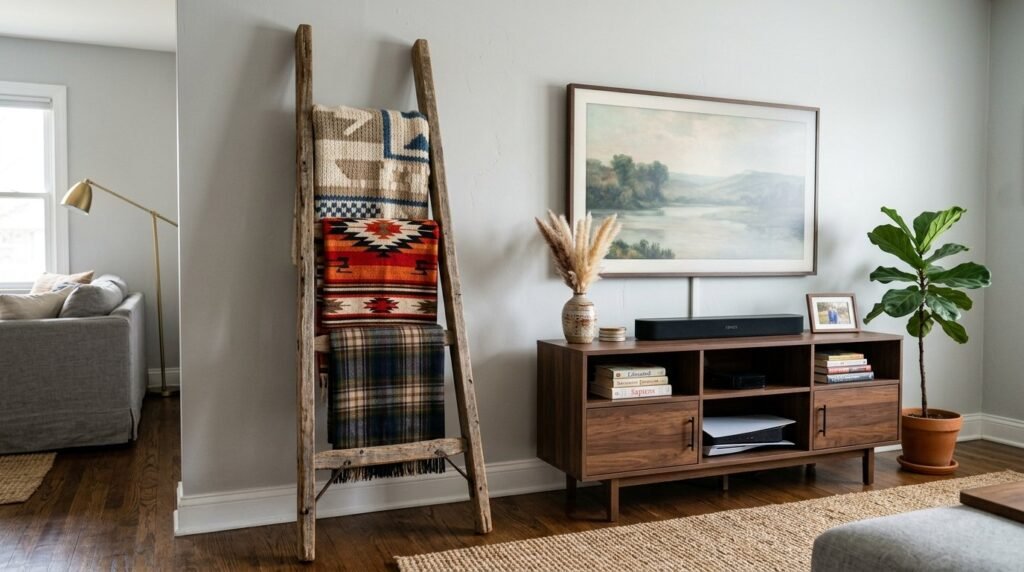
Don’t feel like all your wood has to match. A farmhouse look often thrives on a “collected” feel. You might have a light oak floor, a medium pine TV stand, and dark walnut shelves.
The key is to keep the undertones similar. I find that mixing wood tones makes the room feel more authentic and less like a furniture showroom.
21. Add a Ladder to the Side
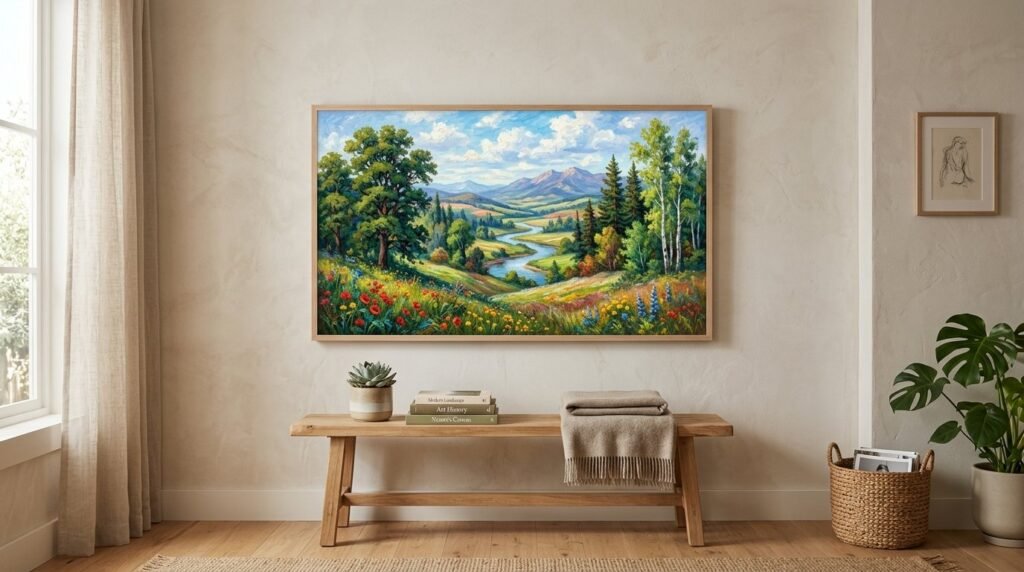
Leaning a wooden blanket ladder against the wall next to the TV is a great styling trick. It fills vertical space and provides a place to display colorful quilts.
This softens the overall look of the media area. I’ve noticed that it helps a living room with a TV wall feel more lived-in and comfortable.
22. Use a Frame TV
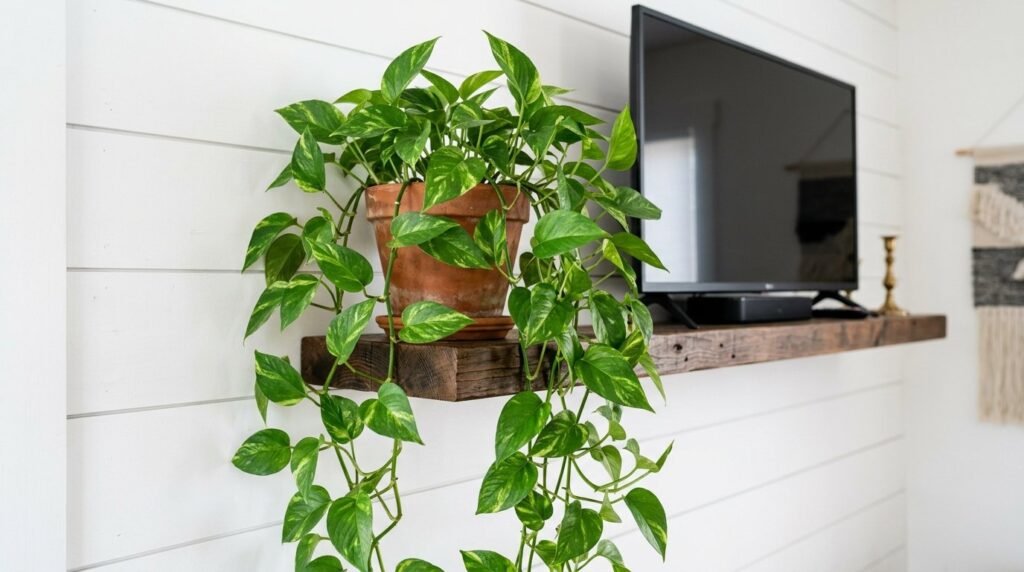
If you have the budget, a Frame TV is a game changer for farmhouse homes. When the TV is off, it displays high-quality art and has a literal wood frame around it.
I have one in my own living room. Most guests don’t even realize it’s a television until I turn it on. It is the ultimate way to handle wall decor around a fireplace with a TV because it looks exactly like a framed painting.
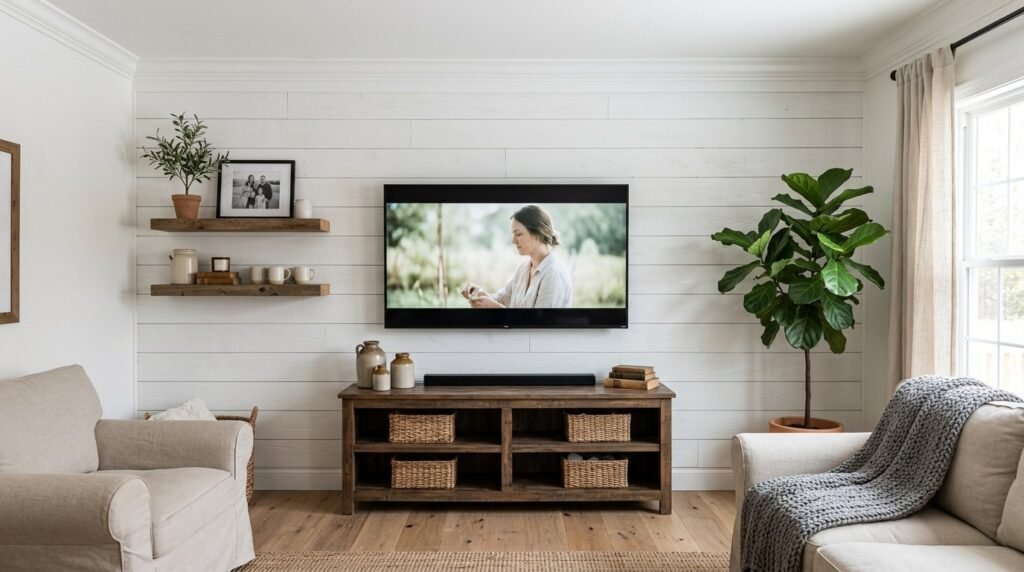
23. Style with Greenery
Never underestimate the power of a simple plant. A trailing pothos on a shelf or a small olive tree in the corner adds life to the room.
The green color pops against white shiplap or wood. I always suggest using at least one real plant in your TV wall design to keep the air fresh and the look natural.
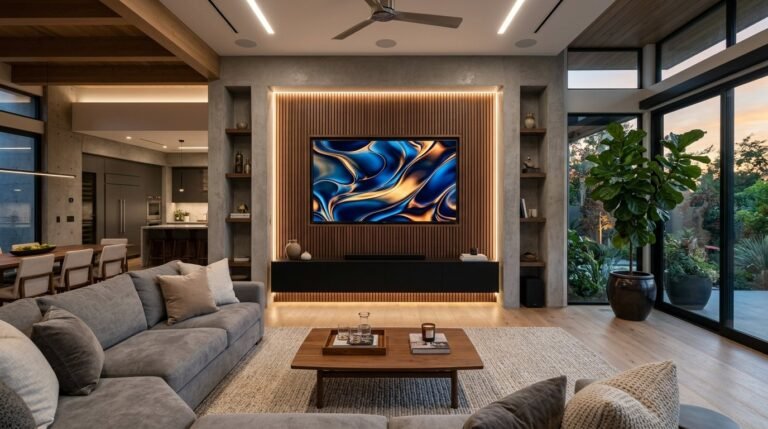
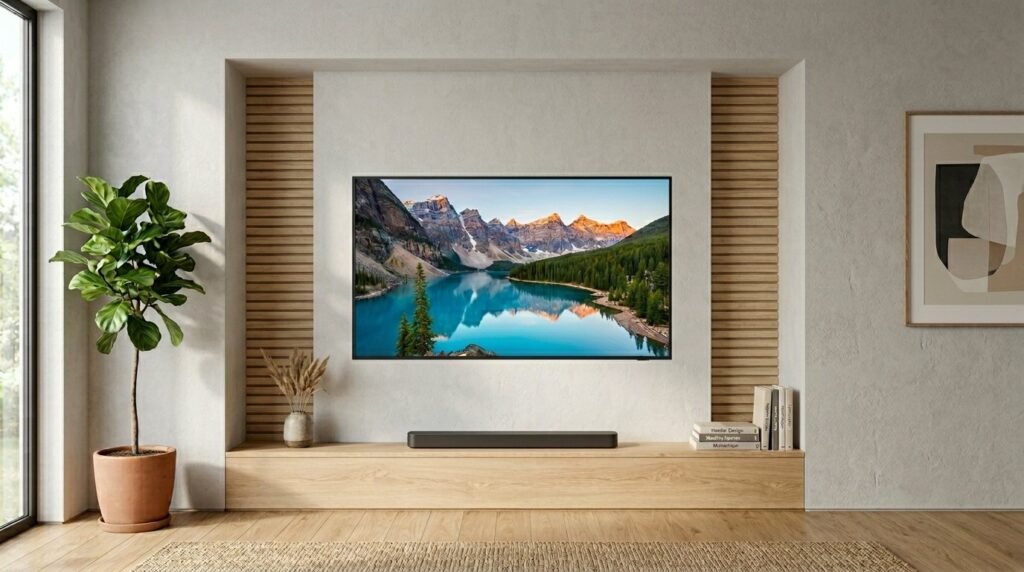
24. Create an Inset Niche
If you are building or remodeling, consider creating a recessed niche for the TV. This allows the screen to sit flush with the wall.
I’ve seen people line the inside of the niche with wood planks or a contrasting paint color. This keeps the TV from sticking out into the room and makes the whole setup look very intentional.
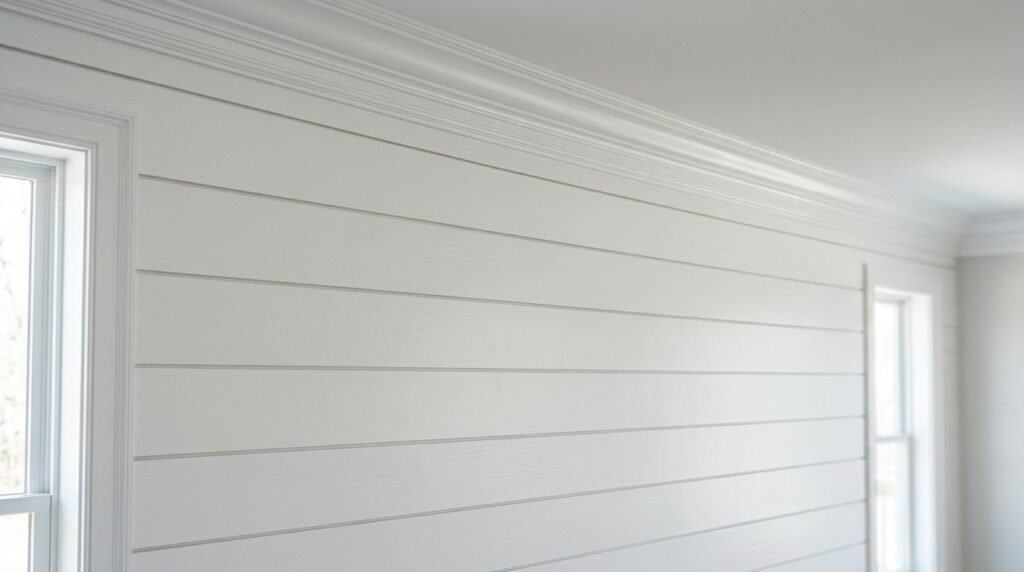
25. Add Crown Molding Above the Shiplap
To finish off your shiplap wall behind the TV, add a thick piece of crown molding at the top. This connects the feature wall to the rest of the room’s architecture.
It makes the DIY project look like a professional installation. I find that this small detail adds a lot of value and a polished look to a farmhouse home.
Comparison of Farmhouse TV Wall Materials
| Material | Pros | Cons |
| Shiplap | Clean look, easy to clean, brightens room | Can look dated if not styled right |
| Reclaimed Wood | Unique texture, eco-friendly, warm feel | Harder to install, can be expensive |
| Stone | Durable, high-end look, fire resistant | Permanent, very heavy, high cost |
| Brick | Classic feel, adds color, textured | Hard to remove later, dusty installation |
Essential Tools for Your TV Wall Project
If you are planning to tackle these farmhouse TV wall design ideas yourself, you will need a few basic tools. I have found that having the right equipment makes the process much faster.
- Stud Finder: Critical for mounting heavy TVs and shelves safely.
- Level: Nothing ruins a wall faster than a crooked TV or shelf.
- Power Drill: For securing brackets into the wall studs.
- Miter Saw: Necessary if you are cutting shiplap or wood planks to size.
- Brad Nailer: Best for attaching thin wood boards without leaving large holes.
- Cable Management Kit: To hide those ugly black wires behind the wall or in a decorative track.
Pros and Cons of Mounting a TV Above a Fireplace
Many farmhouse layouts place the TV above the mantel. While this is popular for saving space, there are things to consider.
Pros:
- Creates a single focal point in the room.
- Saves floor space in smaller living rooms.
- Keeps the room layout symmetrical and clean.
Cons:
- Can be too high for comfortable viewing, leading to neck strain.
- Heat from the fireplace can damage sensitive electronics over time.
- Limited space for decorative items on the mantel.
I suggest using a “pull-down” wall mount if your TV is high. These allow you to lower the screen to eye level when you are watching a movie.
Frequently Asked Questions
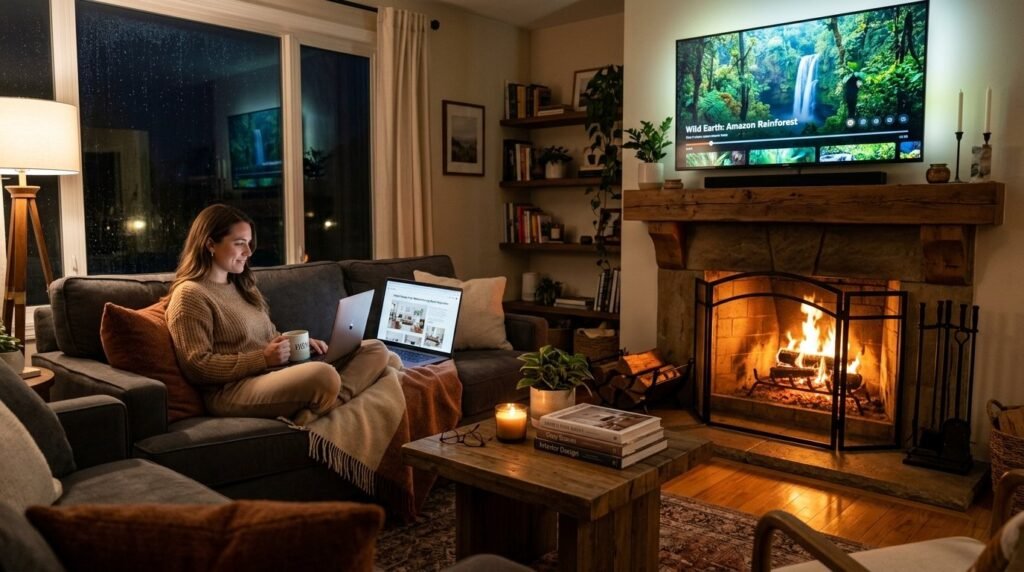
How high should I mount my TV in a farmhouse living room?
Ideally, the center of the screen should be at eye level when you are sitting down. This is usually about 42 inches from the floor. If you are mounting it above a fireplace, try to keep the mantel as low as possible to avoid looking up too much. I’ve seen many people mount their TVs way too high, which makes the room feel less cozy.
Does shiplap look good behind a TV?
Yes, it is one of the most effective ways to add texture. Horizontal shiplap provides a clean background that doesn’t compete with the screen. It also makes it easy to hide wires behind the planks during installation. In my experience, white shiplap is the safest and most popular choice for long-term style.
How can I hide my TV wires on a farmhouse wall?
You can use plastic cord covers and paint them the same color as your wall. A better option is to run the wires behind the wall through a cable management kit. If you are adding shiplap, you can run the wires in the gap between the drywall and the new planks. This creates a completely seamless look.
What decor goes around a TV?
Stick to items that aren’t too busy. Use floating shelves with a few well-placed books, small plants, or framed art. Avoid using glass or shiny objects that might reflect light from the TV. I find that matte ceramics and natural wood pieces work best.
Can I put a TV on a stone fireplace?
Yes, but you will need a masonry drill bit and specialized anchors to secure the mount. It is a more difficult installation than drywall but provides a very high-end look. Make sure the stone is flat enough for the mount to sit securely.
Is farmhouse style going out of fashion?
Modern farmhouse is evolving rather than disappearing. We are seeing a shift toward more natural wood tones and less “distressed” white paint. The goal is to create a timeless, comfortable space. A well-designed TV wall using these principles will look great for many years.
Conclusion
Creating a farmhouse TV wall is about finding the balance between modern technology and rustic charm. Whether you choose a shiplap wall behind the TV or a complex modern farmhouse media wall, the goal is comfort. I have found that starting with a clear focal point and adding layers of texture always leads to success.
Don’t be afraid to try different layouts. Sometimes a simple change, like adding a wood mantel or some woven baskets, can transform the entire space. Your living room should be a place where you can relax and feel at home.

Sloane Whitaker is the Editor-in-Chief at Home Wall Trends, leading editorial direction with over a decade of experience in residential interior design and home styling. Her specialty is space planning and layout, the unglamorous fundamentals that make a beautiful room actually function. A graduate of the New York School of Interior Design, Sloane has styled over 200 client homes before turning her focus to digital publishing. Her editorial standard: “If a reader can’t picture themselves doing it on a Saturday afternoon, we haven’t explained it well enough.”